Secrecy Letter Agreement
What this document covers
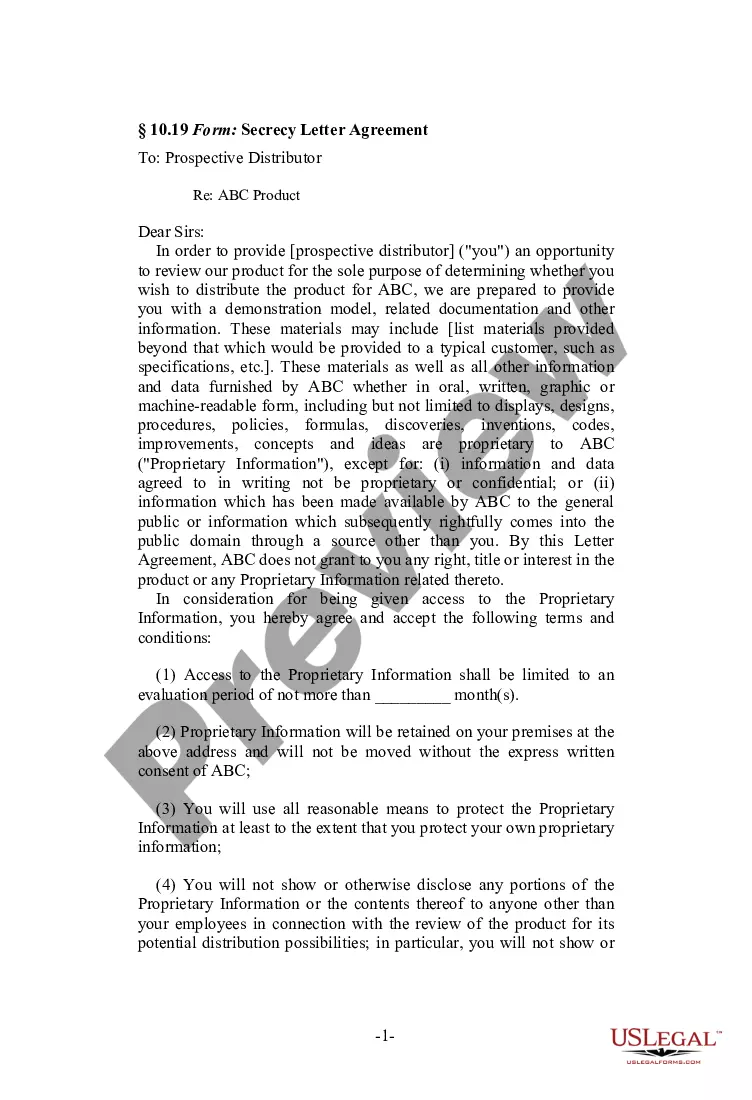
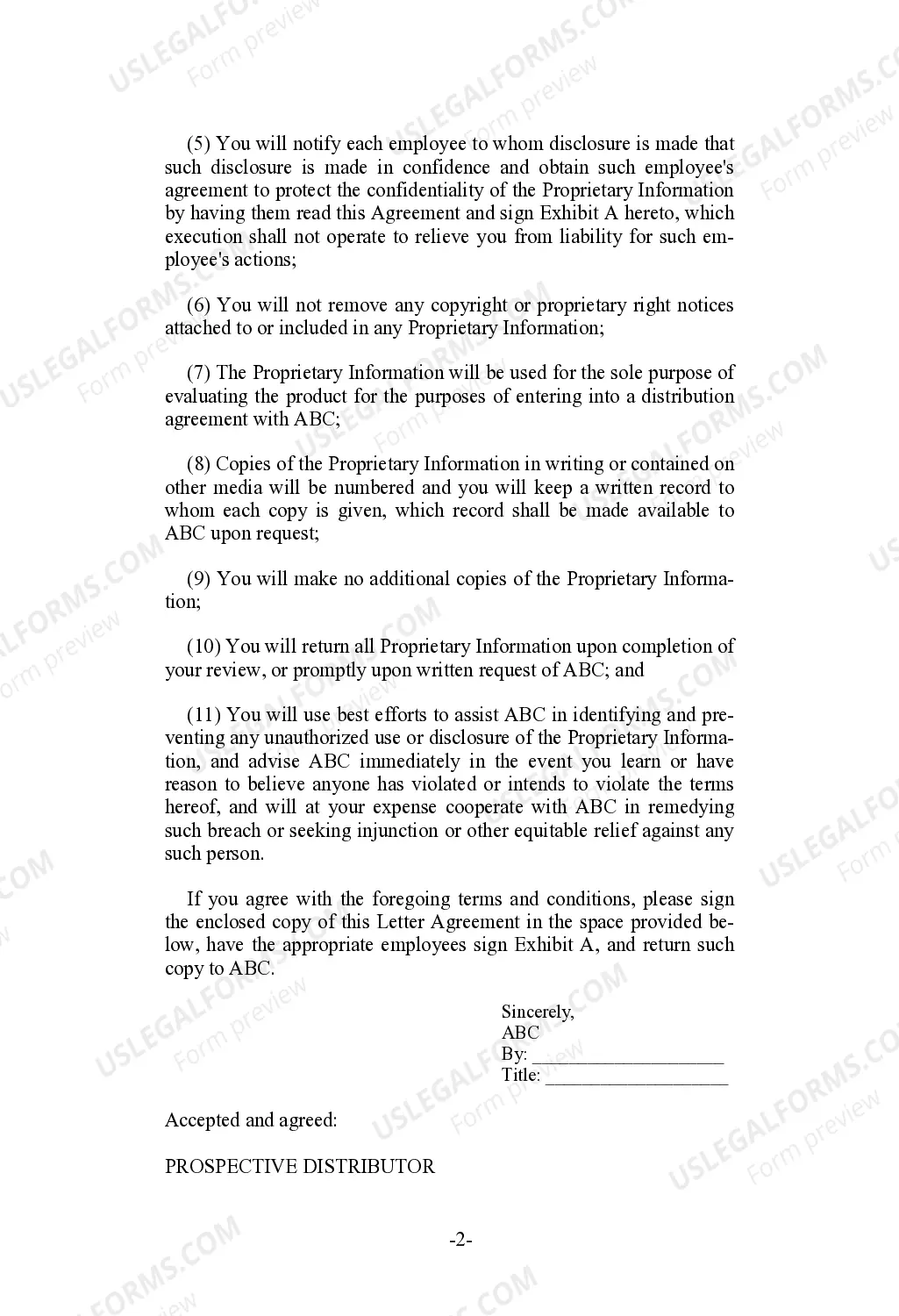
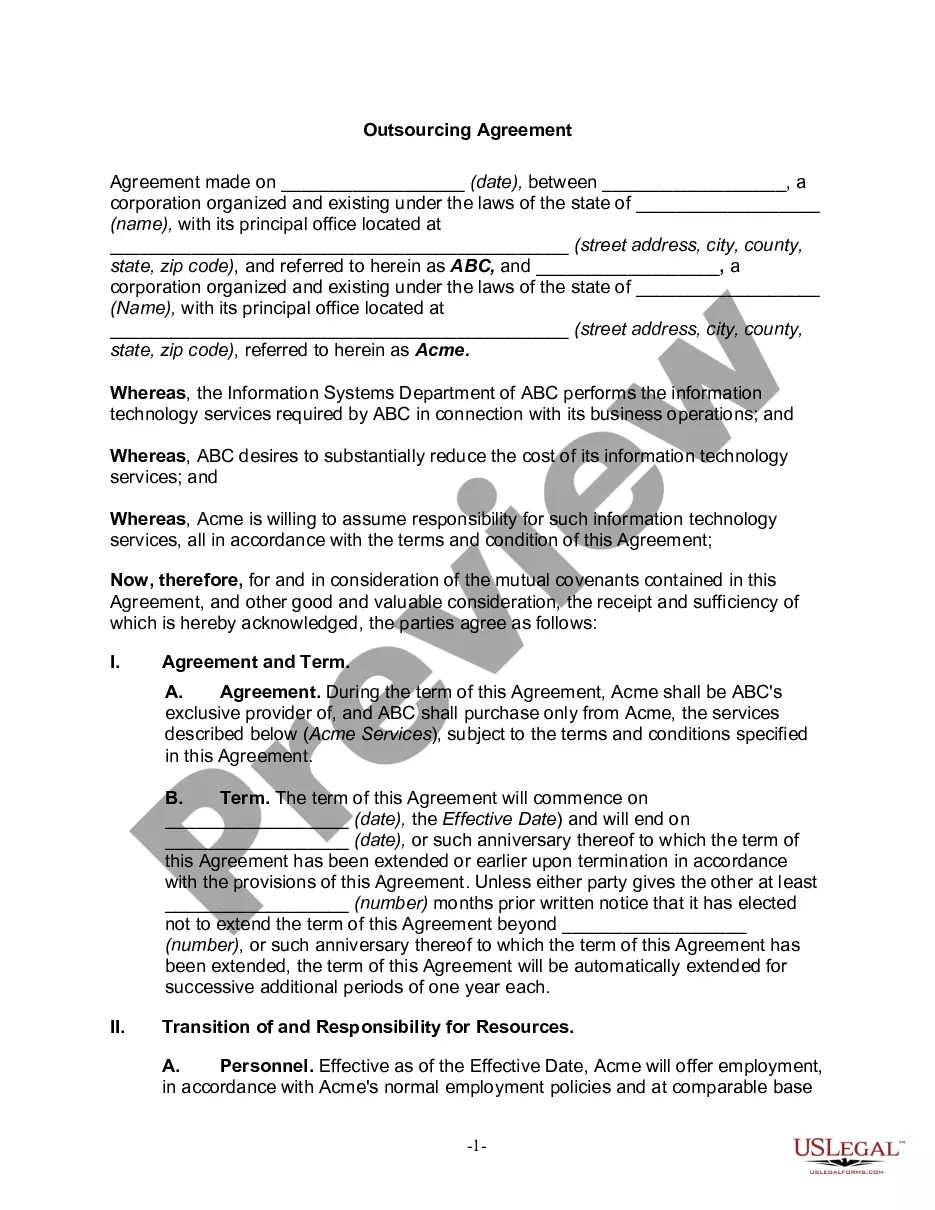
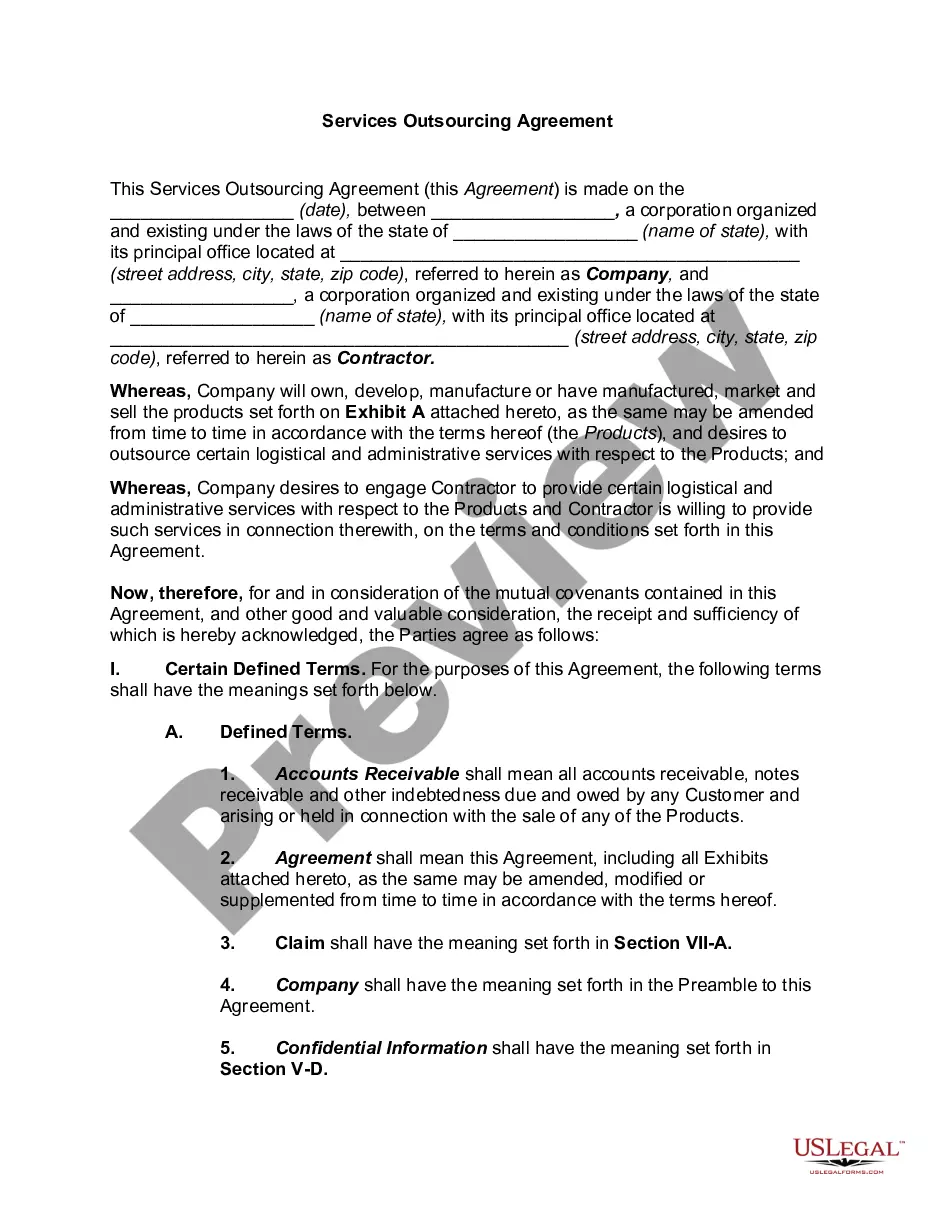
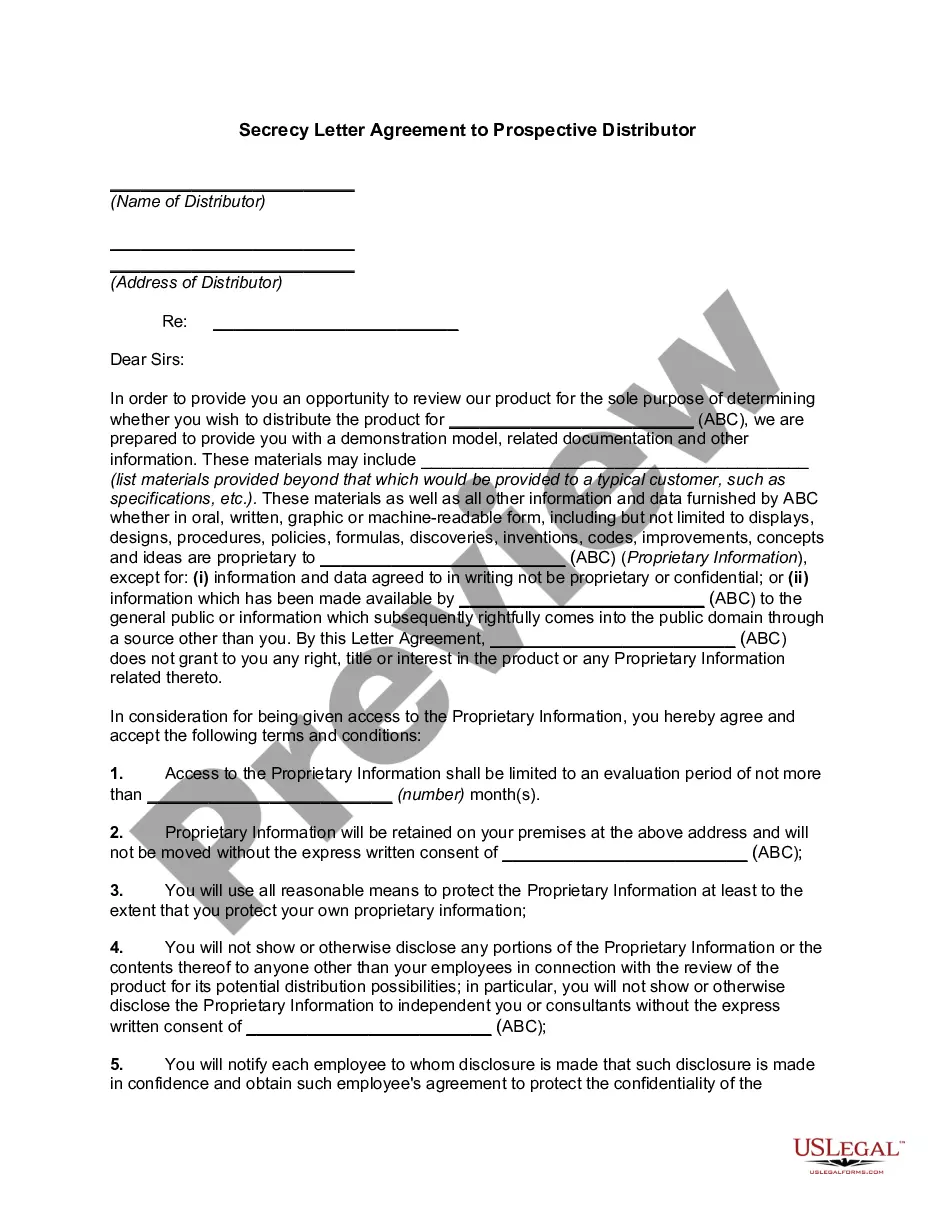
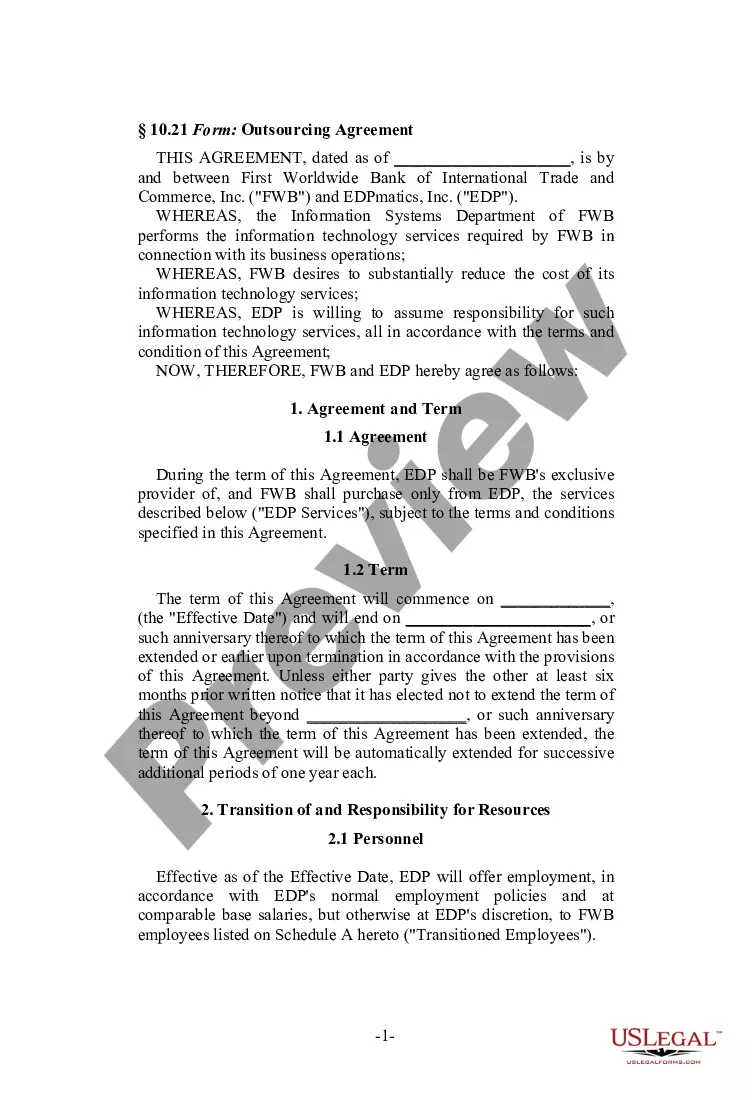
The Secrecy Letter Agreement is a legal document used primarily in the computer, internet, and software industries. This form is designed to protect proprietary information shared between a company and a prospective distributor. Unlike general confidentiality agreements, this specific form outlines terms for accessing and handling proprietary data during the evaluation of a product for potential distribution. It establishes clear legal boundaries and protections for sensitive information, ensuring that it is not disclosed improperly.
What’s included in this form
- Definition of Proprietary Information, outlining what qualifies as sensitive data.
- Restrictions on disclosure, including limitations on sharing information with third parties.
- Duration of access to proprietary information, specifying evaluation periods.
- Obligations for protecting proprietary information while in the distributor's possession.
- Conditions for returning or destroying proprietary information after the evaluation.
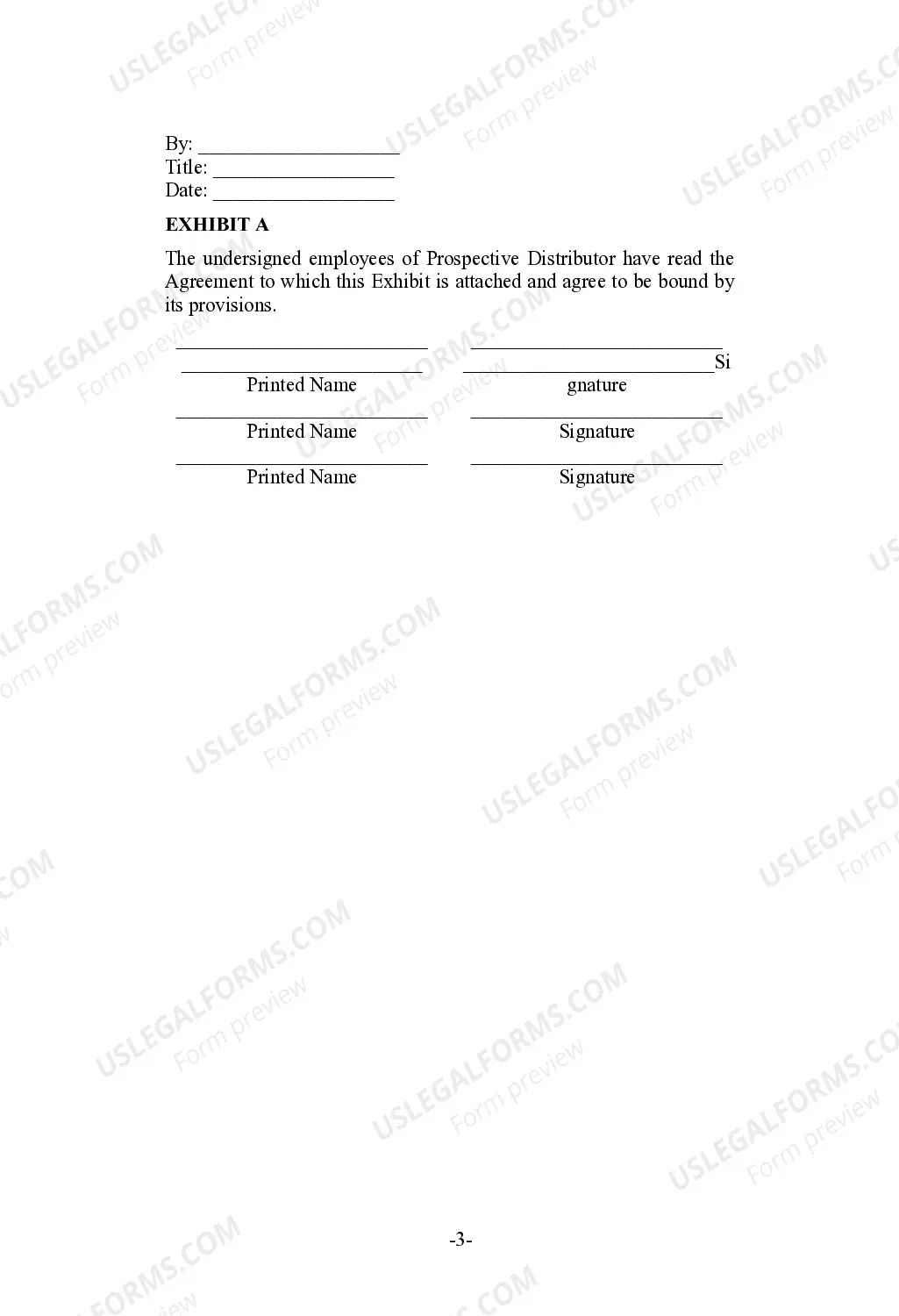
- Employee acknowledgments to ensure confidentiality at all organizational levels.
When to use this form
This form is essential when a company seeks to provide a prospective distributor with access to proprietary materials for evaluation. It is particularly useful during initial discussions about potential partnerships, distribution agreements, or product launches, where sensitive information needs protection against unauthorized disclosure. Utilize this form when sharing detailed product specifications, business strategies, or any proprietary processes with potential distributors.
Who needs this form
This form is intended for:
- Companies looking to protect their proprietary information while negotiating with potential distributors.
- Prospective distributors evaluating new products or technologies for market distribution.
- Legal professionals drafting agreements related to confidentiality and proprietary information.
Steps to complete this form
- Identify the parties involved, including the company providing the proprietary information and the prospective distributor.
- Specify the evaluation period for accessing the proprietary information.
- Complete the fields for signatures of both parties, indicating acceptance of the terms.
- Ensure that each employee who receives proprietary information reviews and acknowledges confidentiality by signing the attached Exhibit A.
- Retain copies of the signed agreement and records of any distributed proprietary materials.
Does this form need to be notarized?
Notarization is not commonly needed for this form. However, certain documents or local rules may make it necessary. Our notarization service, powered by Notarize, allows you to finalize it securely online anytime, day or night.
Get your form ready online
Our built-in tools help you complete, sign, share, and store your documents in one place.
Make edits, fill in missing information, and update formatting in US Legal Forms—just like you would in MS Word.
Download a copy, print it, send it by email, or mail it via USPS—whatever works best for your next step.
Sign and collect signatures with our SignNow integration. Send to multiple recipients, set reminders, and more. Go Premium to unlock E-Sign.
If this form requires notarization, complete it online through a secure video call—no need to meet a notary in person or wait for an appointment.
We protect your documents and personal data by following strict security and privacy standards.

Make edits, fill in missing information, and update formatting in US Legal Forms—just like you would in MS Word.

Download a copy, print it, send it by email, or mail it via USPS—whatever works best for your next step.

Sign and collect signatures with our SignNow integration. Send to multiple recipients, set reminders, and more. Go Premium to unlock E-Sign.

If this form requires notarization, complete it online through a secure video call—no need to meet a notary in person or wait for an appointment.

We protect your documents and personal data by following strict security and privacy standards.
Avoid these common issues
- Failing to specify the duration of the evaluation period, leading to ambiguity in access rights.
- Not informing employees about the agreement's terms, resulting in potential breaches of confidentiality.
- Neglecting to keep a record of distributed proprietary materials, which can complicate accountability.
Why complete this form online
- Convenience of downloading and editing the form as needed to suit specific circumstances.
- Accessibility from anywhere, allowing users to prepare agreements promptly.
- Reliability of having forms drafted by legal professionals, ensuring legal compliance and clarity.
Legal use & context
- This Secrecy Letter Agreement is legally binding once signed by both parties, ensuring protection for proprietary data.
- Failure to adhere to the terms outlined in the agreement can result in legal action for breach of contract.
- It is advisable to review the local laws governing confidentiality agreements for enforceability in specific jurisdictions.
Looking for another form?
Form popularity
FAQ
Employers must be prepared to terminate any employee who refuses to sign the agreement. If an employer allows even one employee to refuse and remain employed, the agreements signed by the other employees will not be legally binding.
"There are several key pieces of information that should be included in NDAs, or non-disclosure agreements. The most important items include customer lists, financial and profit margin information, product breakdowns, bestselling segments and sales scripting and messaging."
A definition of confidential information. Who is involved. Why the recipient knows the information. Exclusions or limits on confidential information. Receiving party's obligations. Time frame or term. Discloser to the recipient.
Depending on the complexity of what you need protected and the number of parties involved, the cost of having an NDA drafted can vary significantly. When you hire a lawyer in the Priori network, drafting an NDA typically costs anywhere from $175-$1,500.
Here's some breach of confidentiality examples you could find yourself facing: Saving sensitive information on an unsecure computer that leaves the data accessible to others. Sharing employees' personal data, like payroll details, bank details, home addresses and medical records.
2. Clearly label all confidential information as confidential. This means writing confidential on documents or any folder you keep them in. If you are sending an email, make sure the title clearly identifies it as confidential.
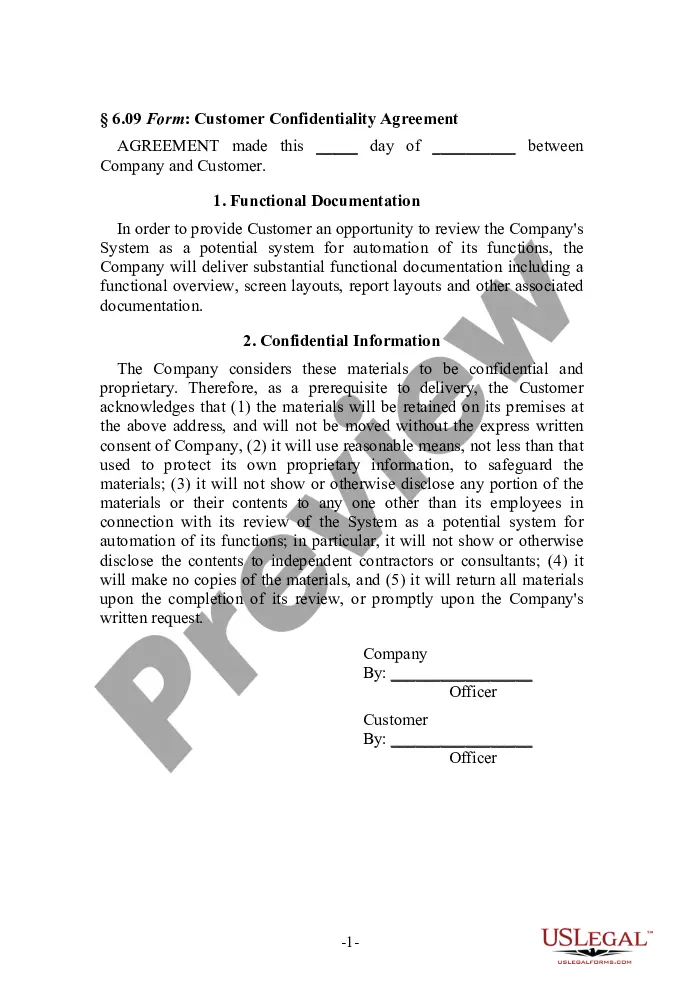
What is it? A confidential disclosure agreement (CDA) is a legal contract through which the parties involved in executing the agreement are obligated not to disclose any proprietary information covered under the CDA.A CDA is also known as a nondisclosure agreement (NDA), confidentiality agreement or secrecy agreement.
Set the date of the agreement. Describe the two parties, sometimes called the Disclosing Party and the Receiving Party.7feff Include names and identification, so there can be no misunderstanding about who signed the agreement.
Simply defined, a confidentiality statement for documents is a legally binding document stating that two parties won't profit from or share confidential information.