Outsourcing Agreement - Short
What this document covers
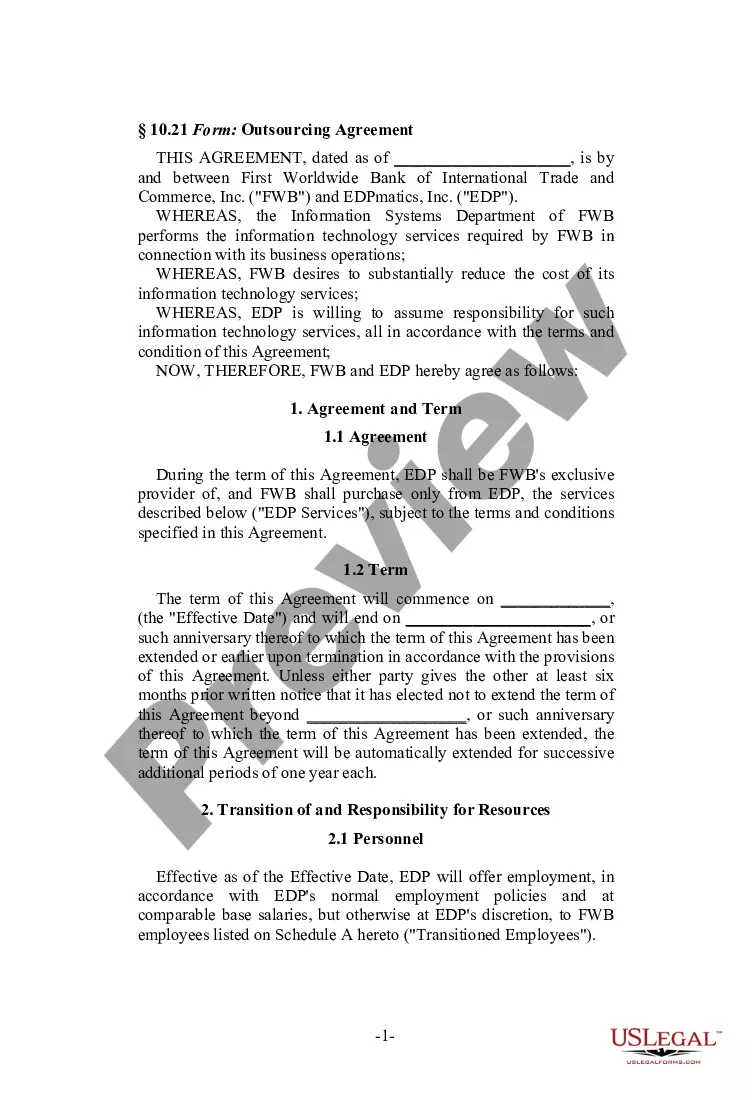
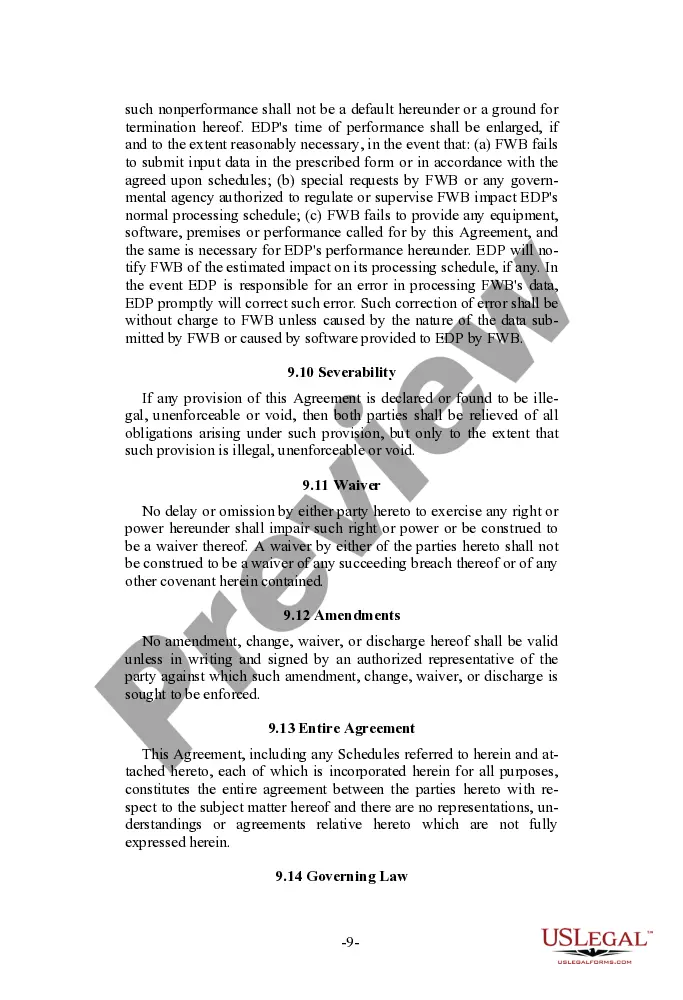
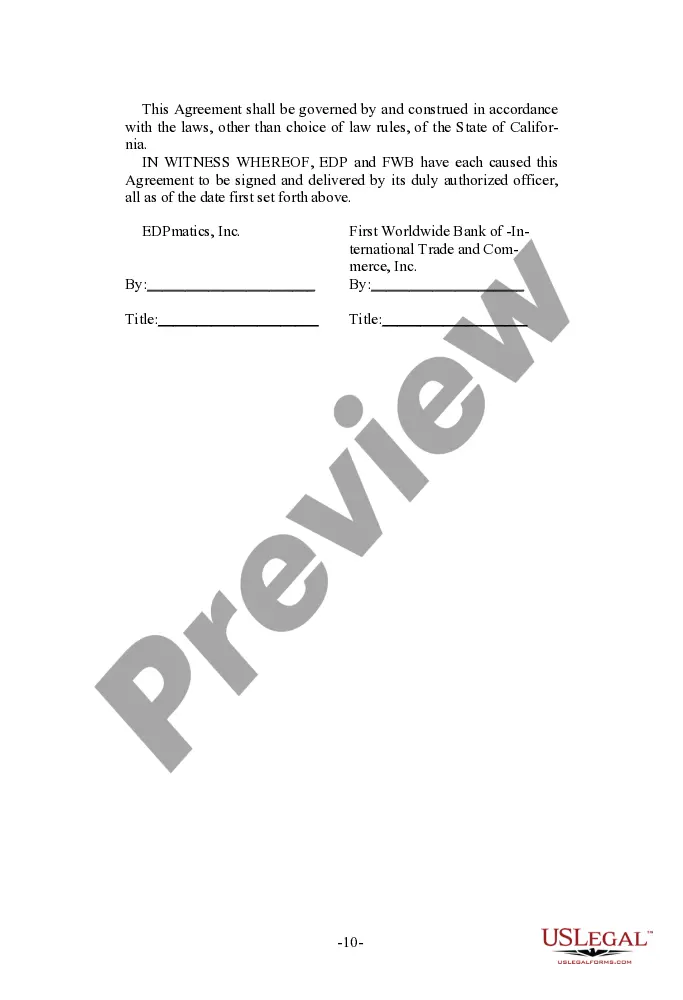
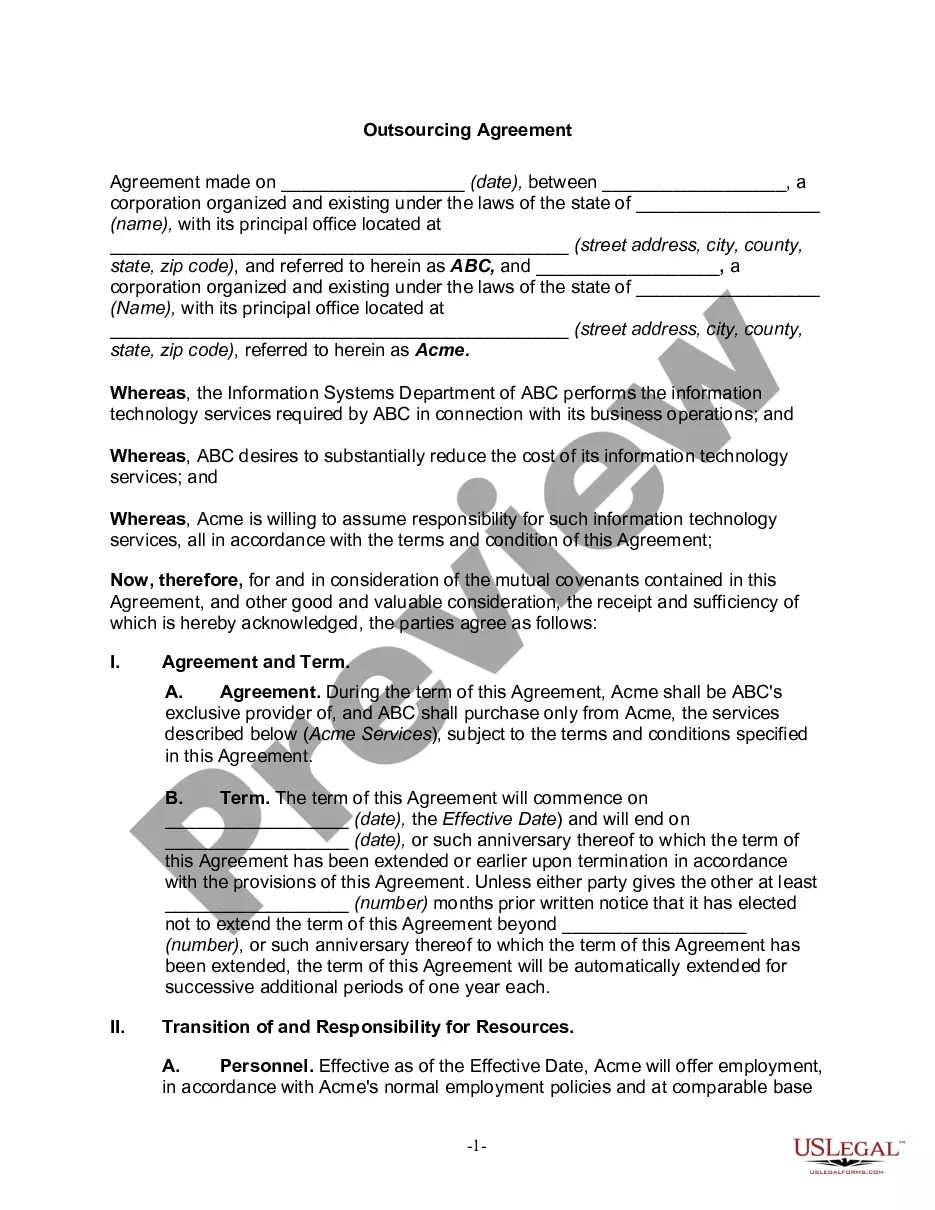
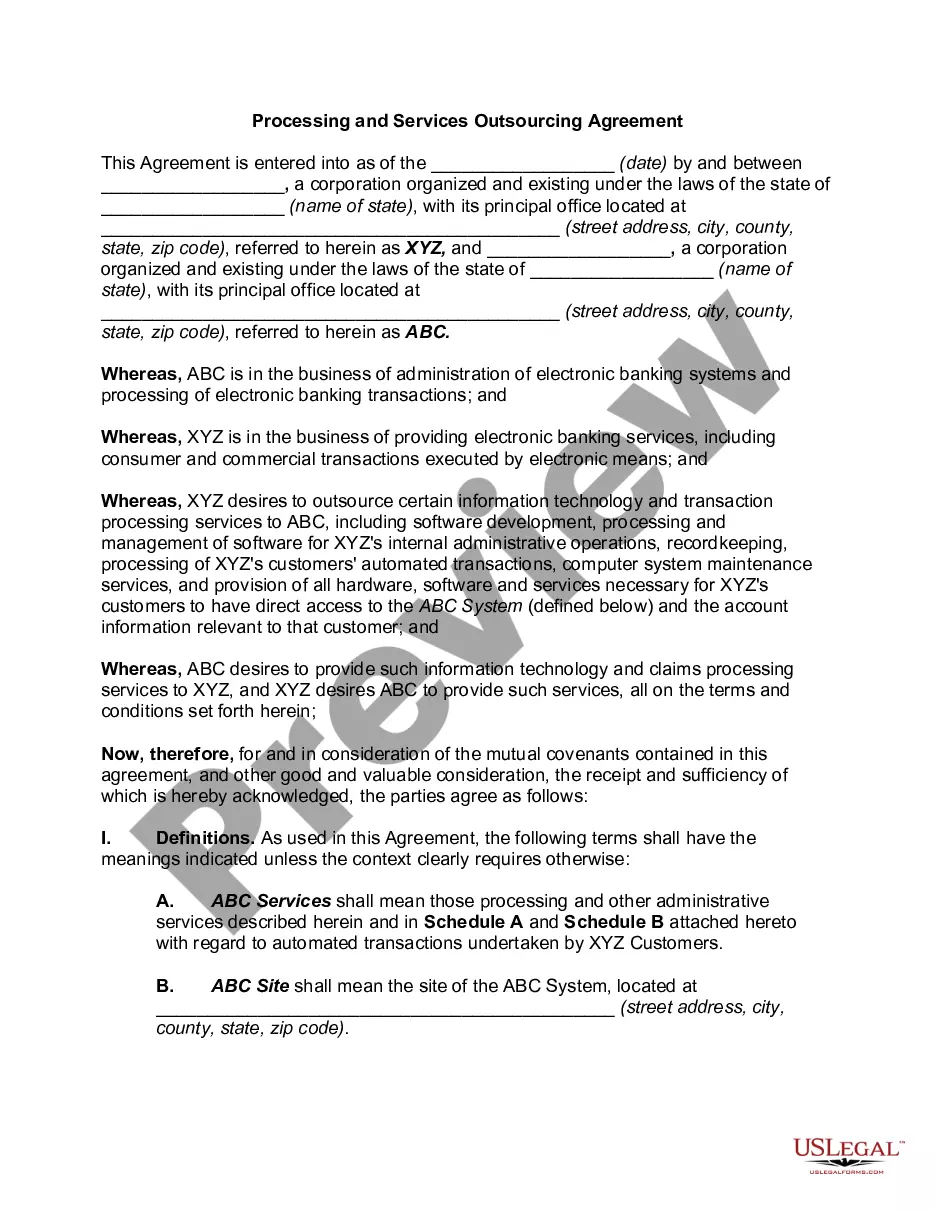
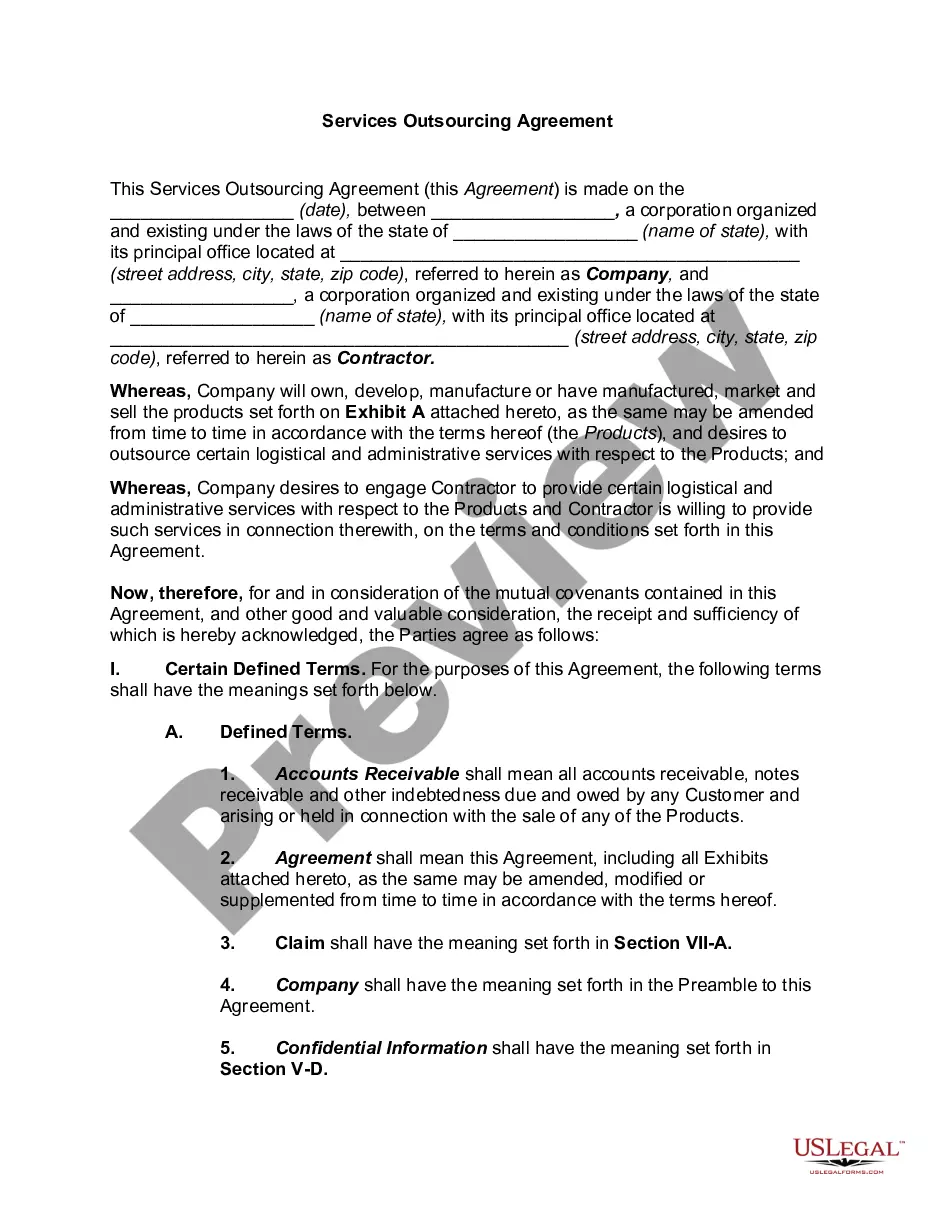
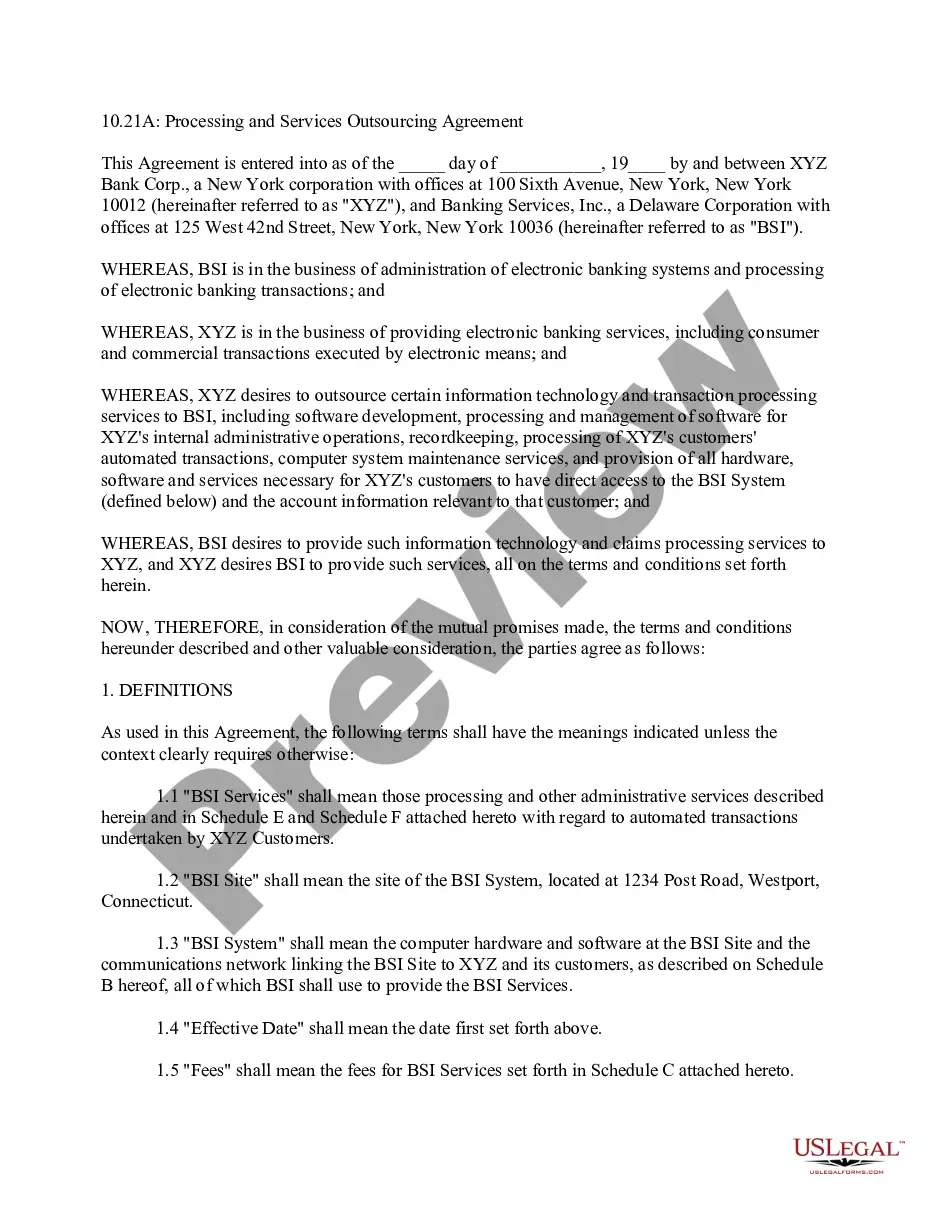
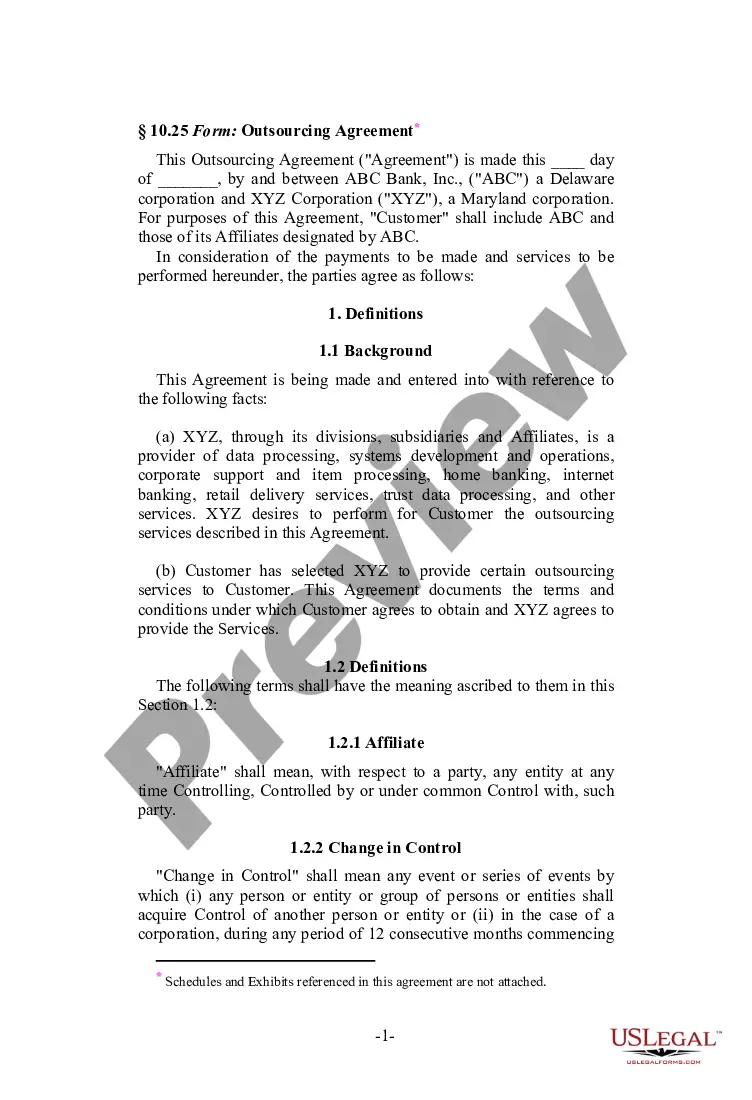
The Outsourcing Agreement is a legal document designed for businesses in the computer, internet, and software industries. This form facilitates the transfer of responsibilities for information technology services from one entity to another. It outlines the expectations of both parties, including the duration of the agreement, services provided, and payment terms. Unlike other contracts, this agreement specifically addresses outsourcing and the management of IT resources, making it crucial for organizations looking to reduce expenses while ensuring continuity in their technological operations.
Main sections of this form
- Agreement and Term: Specifies the length and conditions under which the agreement stays in effect.
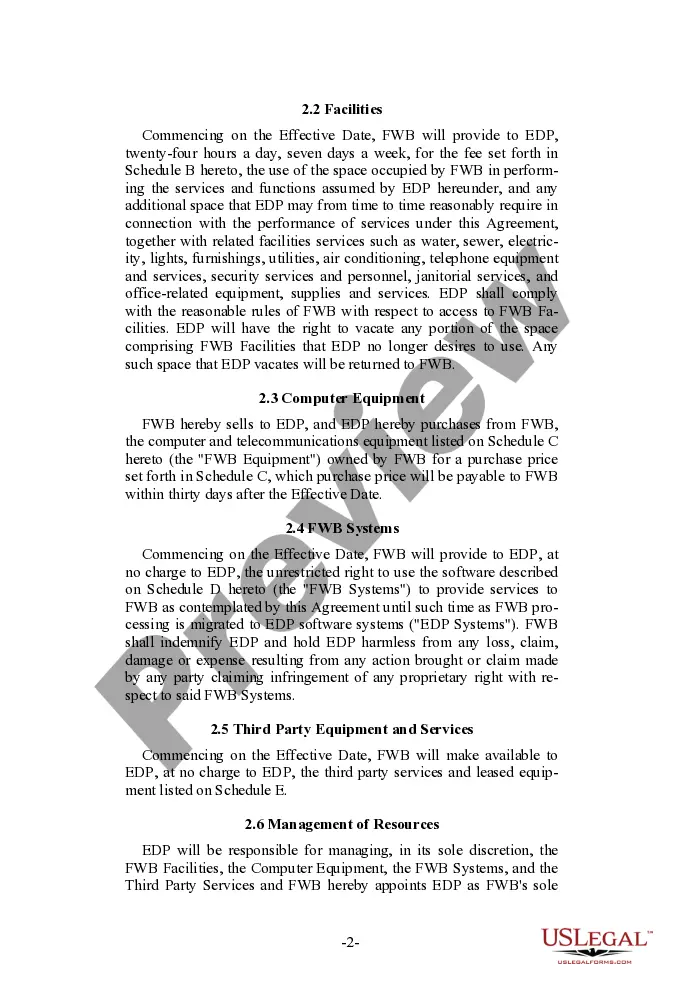
- Transition of Resources: Covers the transfer of personnel, facilities, and computer equipment.
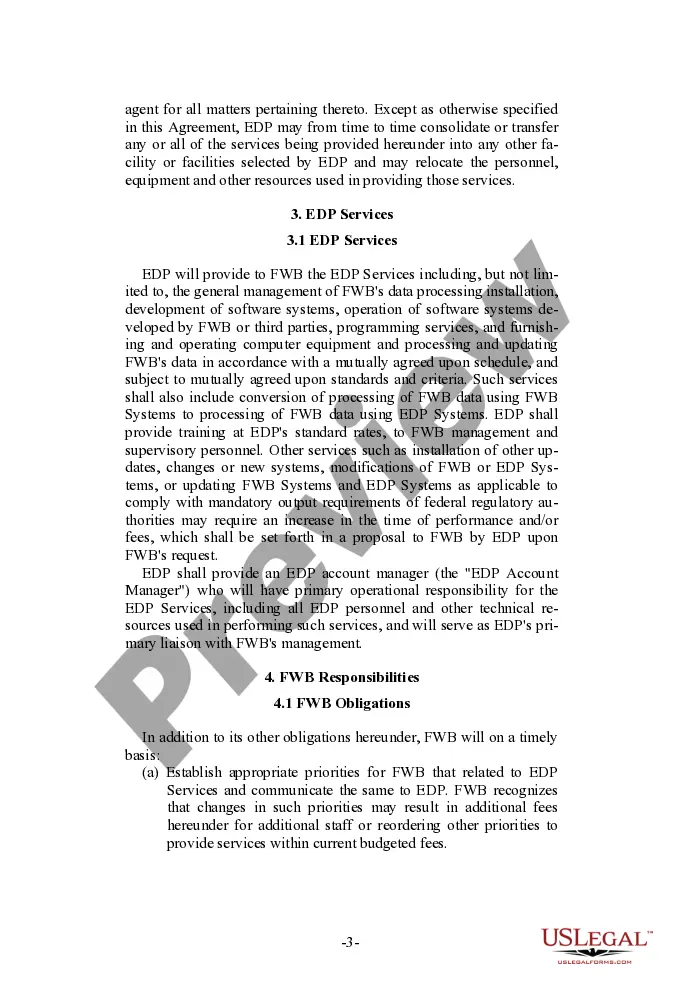
- EDP Services: Details the services to be provided by the outsourcing party.
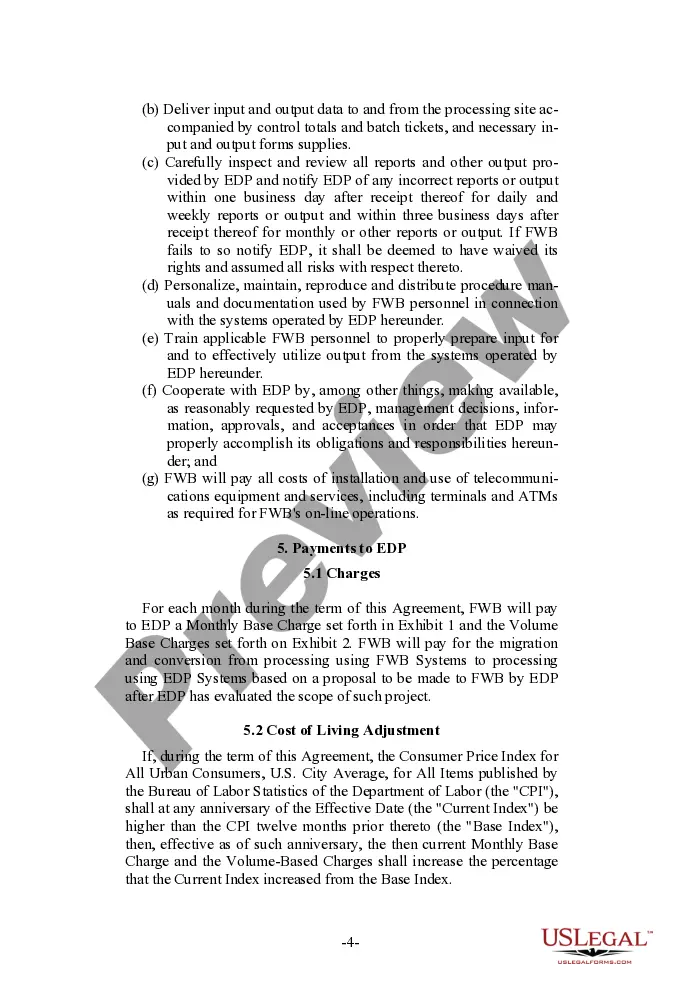
- FWB Responsibilities: Outlines the obligations of the original company retaining the managed services.
- Payments to EDP: Describes the payment structure and any potential adjustments.
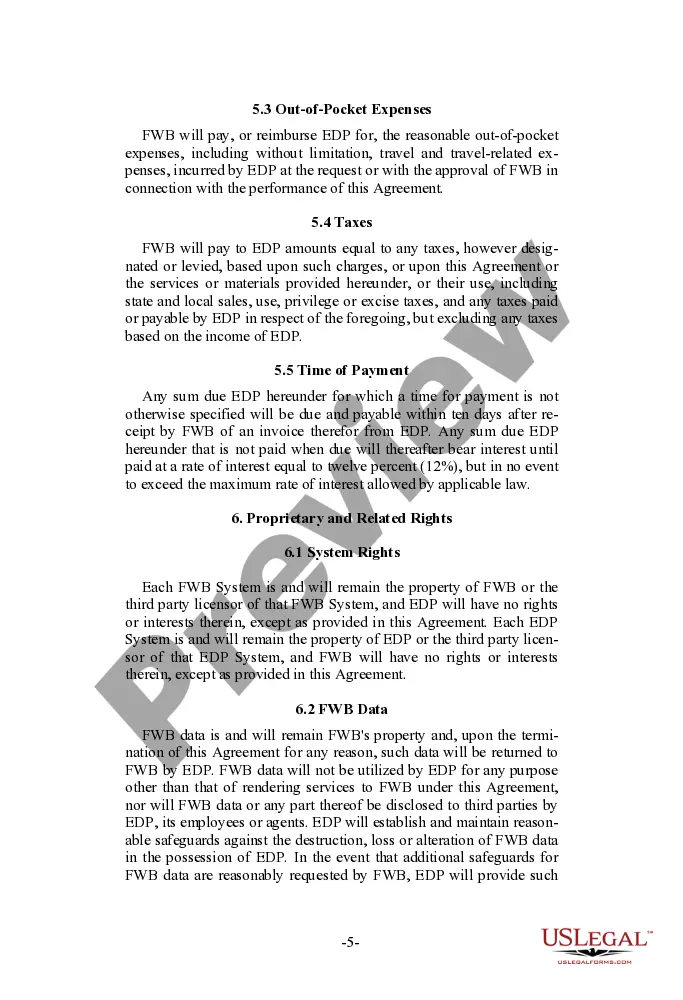
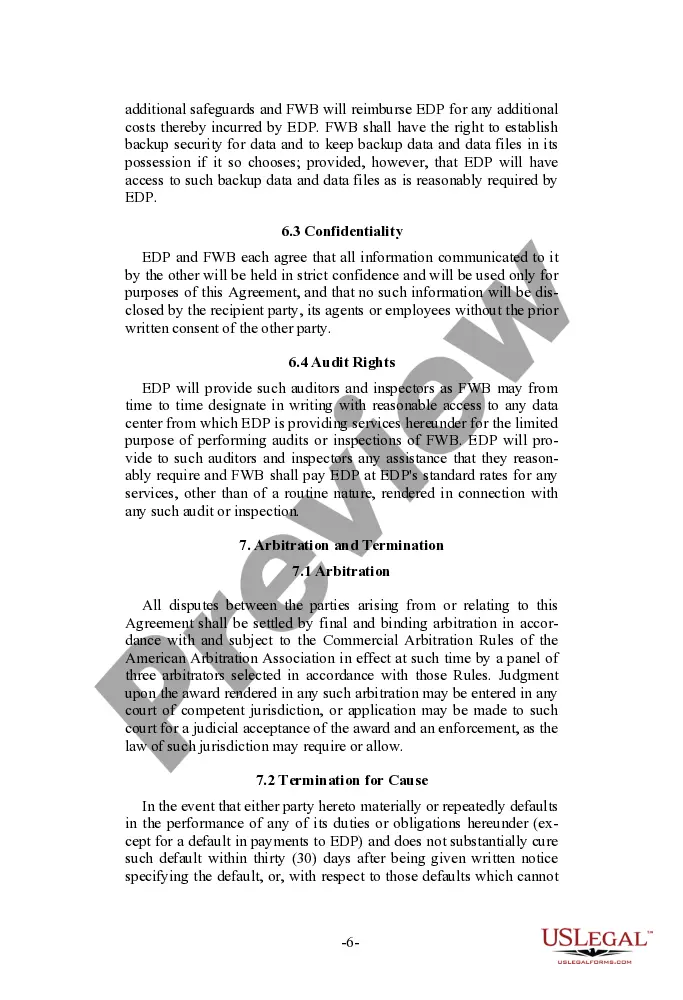
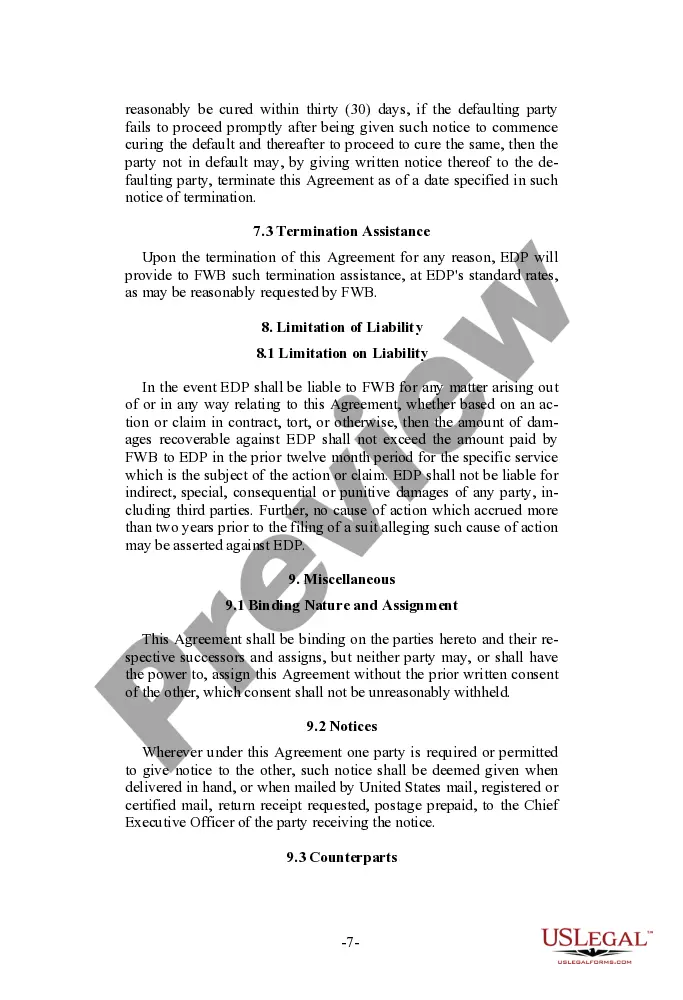
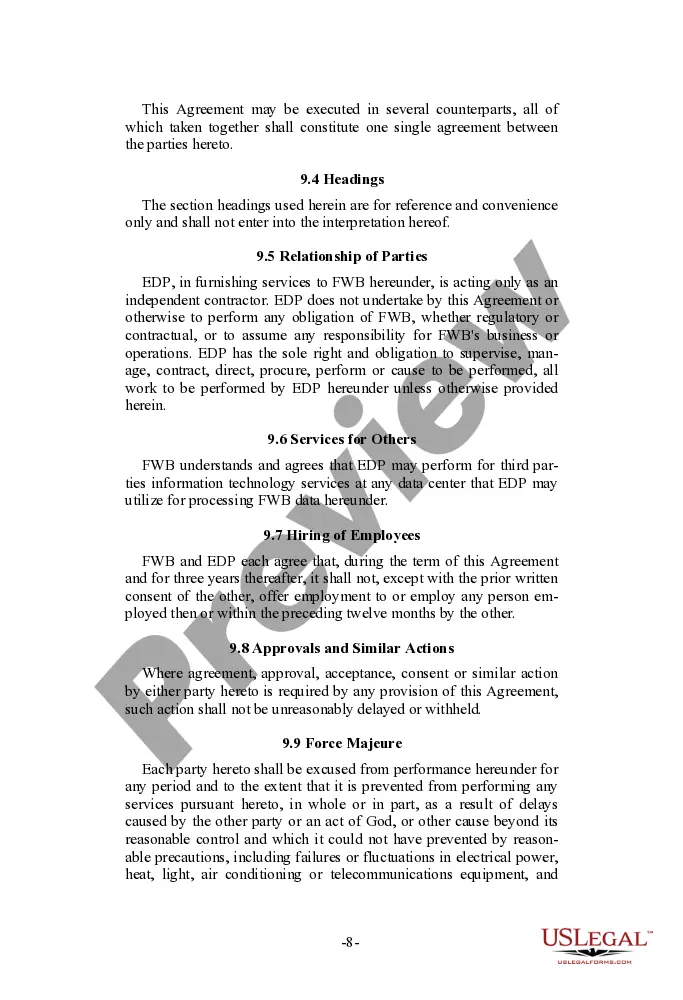
- Confidentiality and Data Rights: Addresses the ownership of data and confidentiality agreements between parties.
When this form is needed
This Outsourcing Agreement should be used when a business wants to outsource its information technology services to another company. It is applicable when a company seeks to cut costs or focus on core operations by delegating IT responsibilities to a specialized provider. This form is beneficial during instances of significant changes in operational capacity or when integrating new technological systems.
Who should use this form
- Businesses in the computer, internet, or software industries looking for cost-effective IT solutions.
- Organizations needing to transition responsibility for their IT services while ensuring compliance with industry standards.
- Companies aiming to streamline operations by outsourcing non-core functions to specialized service providers.
Steps to complete this form
- Identify the parties involved: Fill in the names and details of the outsourcing company and the company outsourcing the services.
- Specify the effective date: Enter the date when the agreement goes into effect.
- Outline the services: Clearly describe the information technology services to be provided under the agreement.
- Detail the payment terms: Specify the payment structure, including monthly charges and any adjustments.
- Include confidentiality clauses: Ensure that all proprietary data is protected according to the terms of the agreement.
Does this form need to be notarized?
This form usually doesn’t need to be notarized. However, local laws or specific transactions may require it. Our online notarization service, powered by Notarize, lets you complete it remotely through a secure video session, available 24/7.
Get your form ready online
Our built-in tools help you complete, sign, share, and store your documents in one place.
Make edits, fill in missing information, and update formatting in US Legal Forms—just like you would in MS Word.
Download a copy, print it, send it by email, or mail it via USPS—whatever works best for your next step.
Sign and collect signatures with our SignNow integration. Send to multiple recipients, set reminders, and more. Go Premium to unlock E-Sign.
If this form requires notarization, complete it online through a secure video call—no need to meet a notary in person or wait for an appointment.
We protect your documents and personal data by following strict security and privacy standards.

Make edits, fill in missing information, and update formatting in US Legal Forms—just like you would in MS Word.

Download a copy, print it, send it by email, or mail it via USPS—whatever works best for your next step.

Sign and collect signatures with our SignNow integration. Send to multiple recipients, set reminders, and more. Go Premium to unlock E-Sign.

If this form requires notarization, complete it online through a secure video call—no need to meet a notary in person or wait for an appointment.

We protect your documents and personal data by following strict security and privacy standards.
Common mistakes
- Failing to specify key dates and terms, which can lead to misunderstandings between parties.
- Omitting important details about services and obligations, which may result in unmet expectations.
- Not including provisions for confidentiality and data protection, risking the exposure of sensitive information.
Why complete this form online
- Convenience of downloading and printing from anywhere at any time.
- Edit and customize the form easily to meet specific needs without legal fees.
- Access to forms drafted by licensed attorneys, ensuring legal viability.
Legal use & context
- This agreement is enforceable as a legally binding contract when properly executed.
- Clear definitions of roles and responsibilities help prevent disputes between parties.
- The inclusion of confidentiality clauses protects sensitive information shared during the outsourcing process.
What to keep in mind
- The Outsourcing Agreement is essential for defining the relationship between the service provider and the company outsourcing services.
- Understanding and clearly documenting terms helps mitigate future conflicts.
- Using an online legal form provides flexibility and access to professionally drafted agreements, saving time and resources.
Looking for another form?

Form popularity
FAQ
Contract Types Overview. Express and Implied Contracts. Unilateral and Bilateral Contracts. Unconscionable Contracts. Adhesion Contracts. Aleatory Contracts. Option Contracts. Fixed Price Contracts.
Outsourcing is a business practice in which services or job functions are farmed out to a third party.
Some common outsourcing activities include: human resource management, facilities management, supply chain management, accounting, customer support and service, marketing, computer aided design, research, design, content writing, engineering, diagnostic services, and legal documentation.
Outsourcing is an arrangement under which an organisation contracts with a service provider to perform services that the organisation currently performs in-house or which are performed by an existing third party supplier.
An outsourcing agreement is a business contract between a service provider and a service receiver. It contains all of the terms and conditions of the business relationship, including service provider fees, services to be covered, etc.
Some common outsourcing activities include: human resource management, facilities management, supply chain management, accounting, customer support and service, marketing, computer aided design, research, design, content writing, engineering, diagnostic services, and legal documentation.
Outsourcing is an agreement in which one company hires another company to be responsible for a planned or existing activity that is or could be done internally, and sometimes involves transferring employees and assets from one firm to another.
Time-and-materials contracts, which bill the project at an agreed-upon rate based on actual resources used and time spent by developers. Fixed-price contracts, which bill the project at a flat rate, regardless of the time spent or resources used.