Louisiana Plaintiff's Interrogatories to Defendant and Request for Production of Documents
About this form
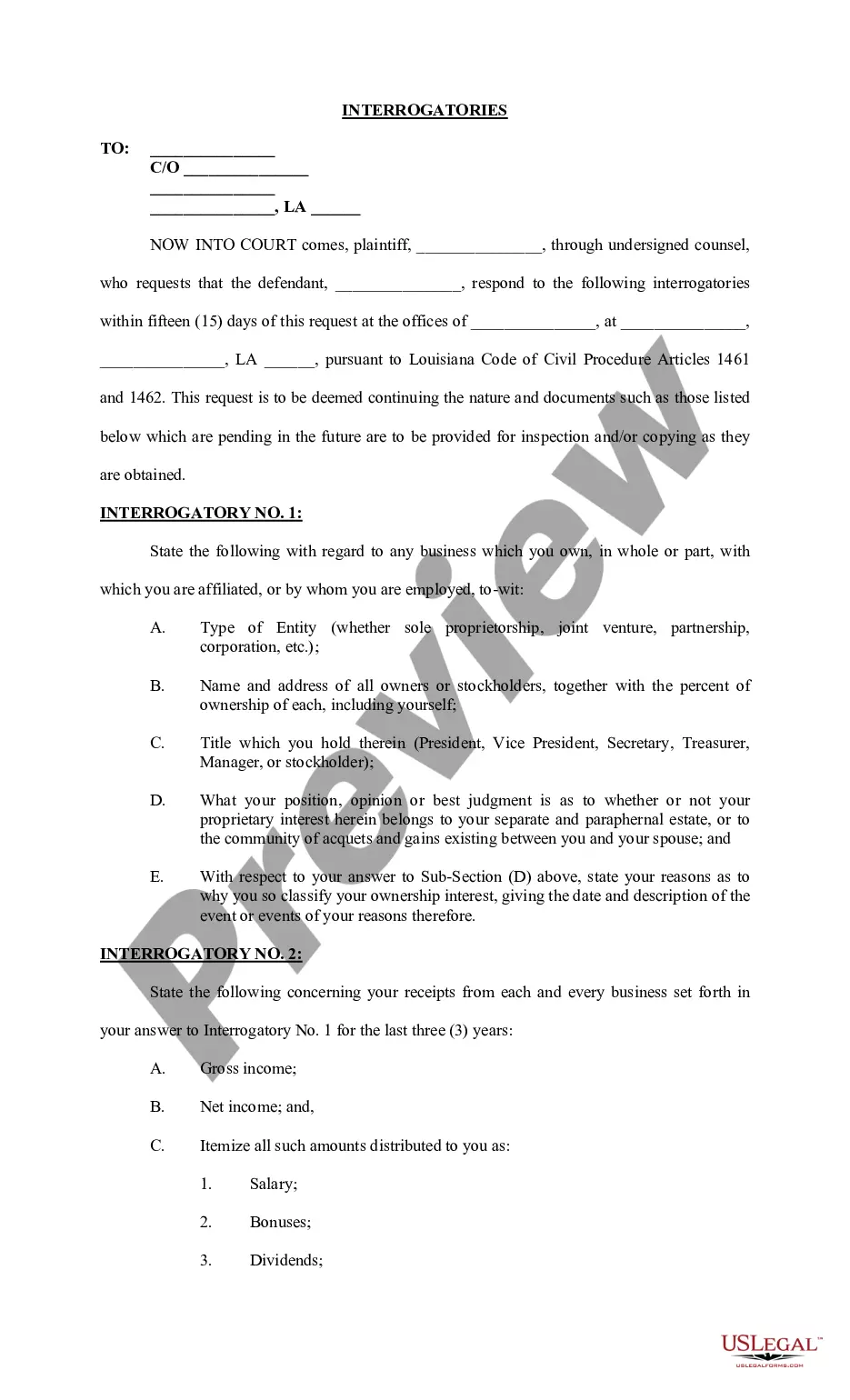
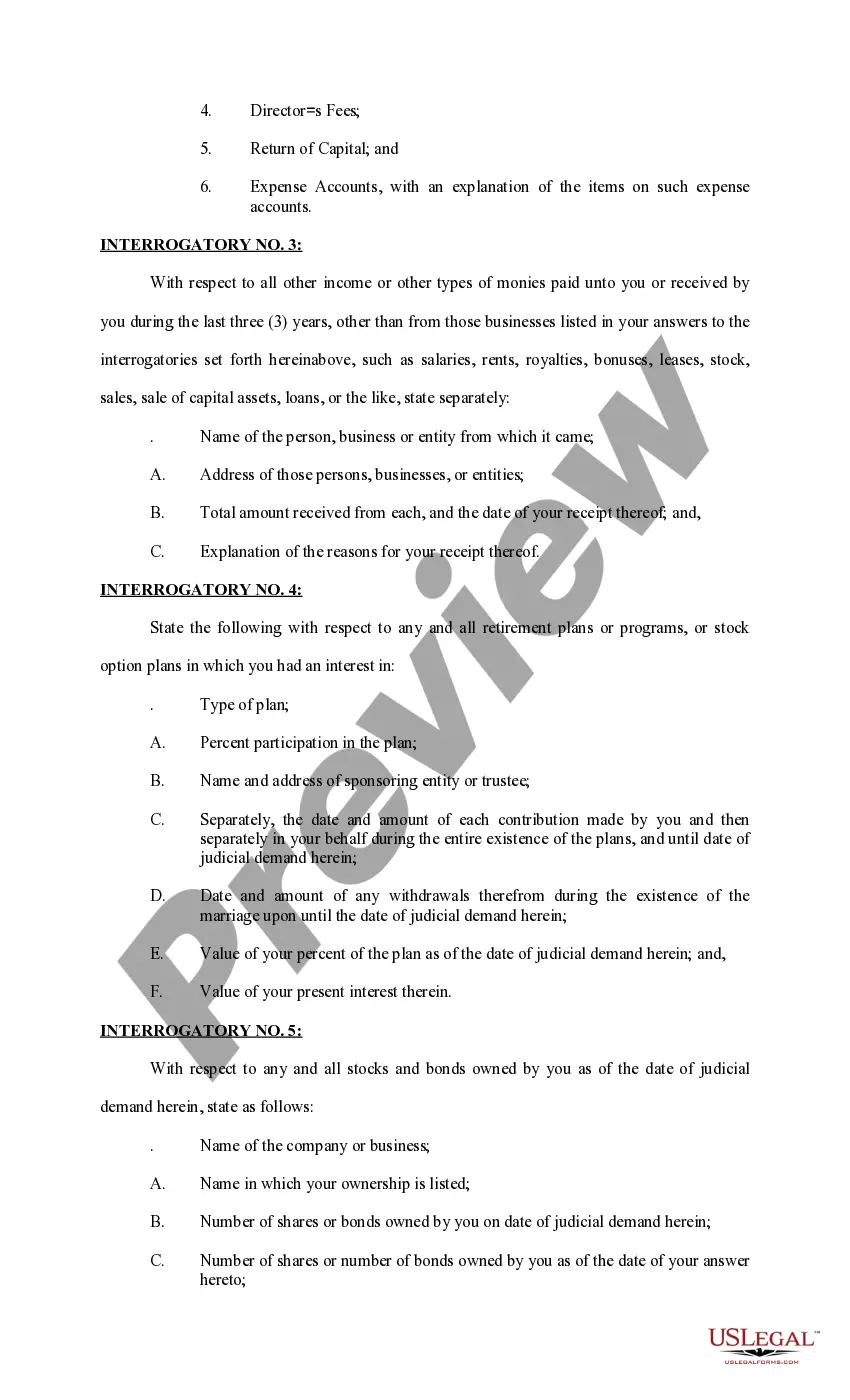
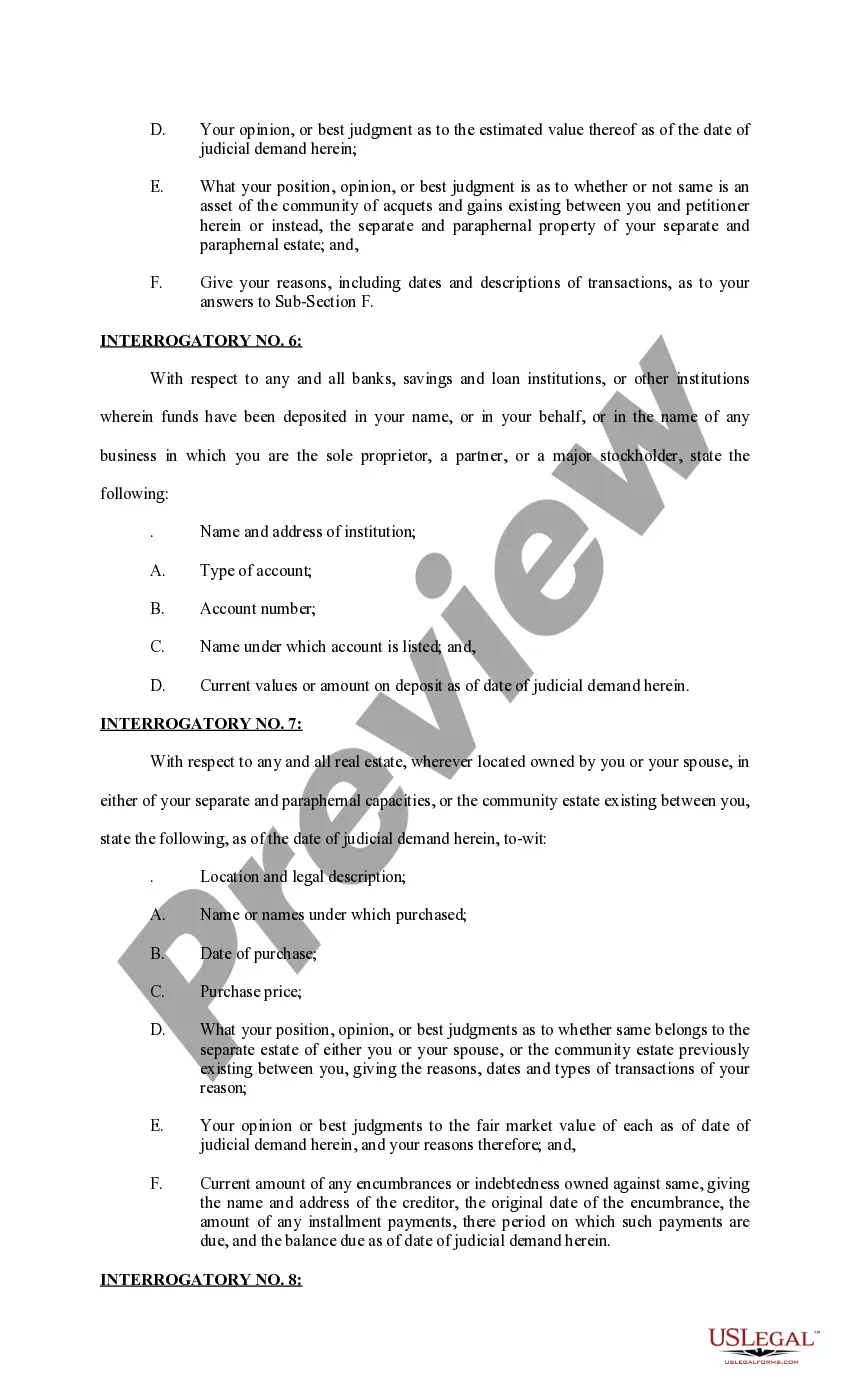
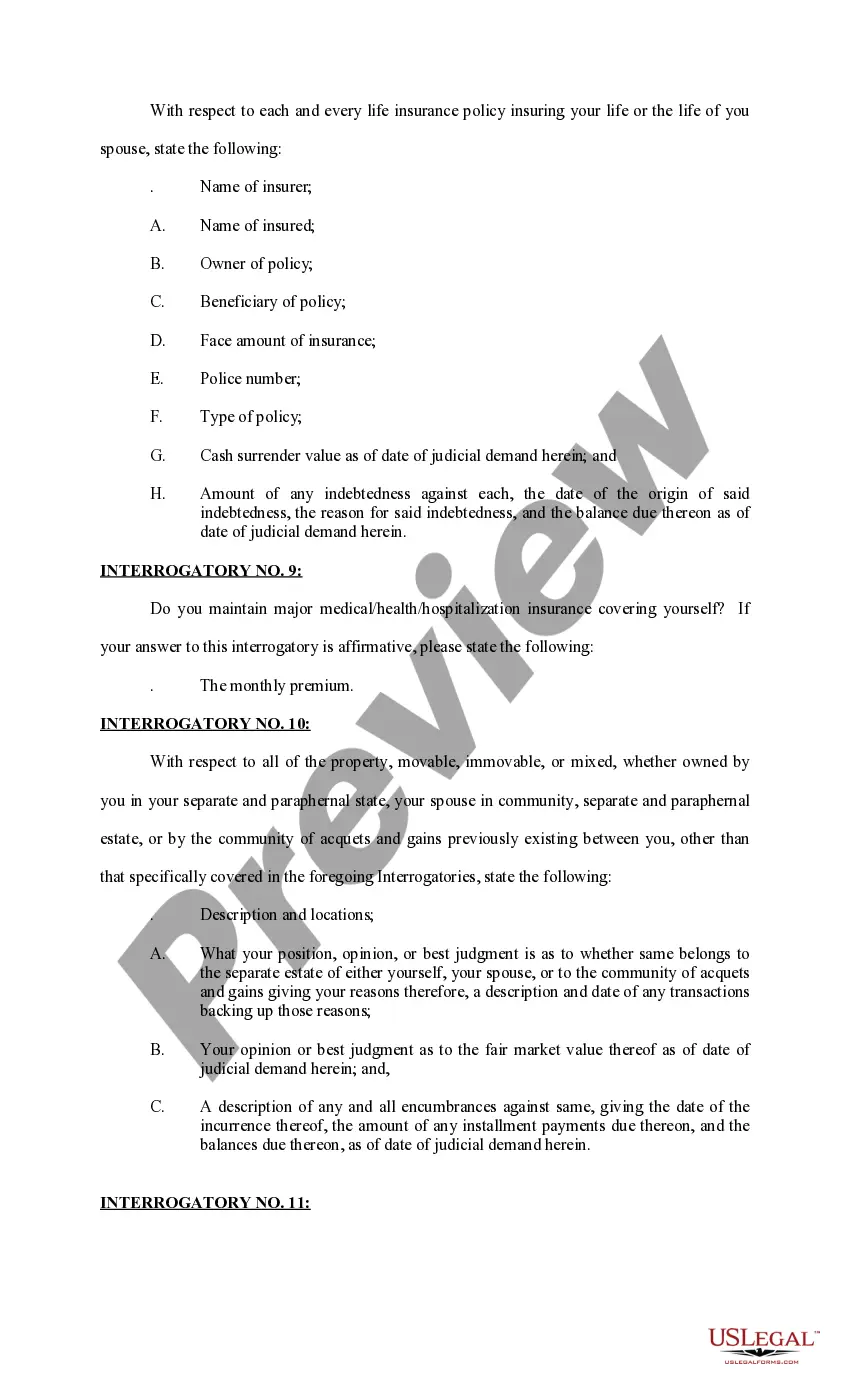
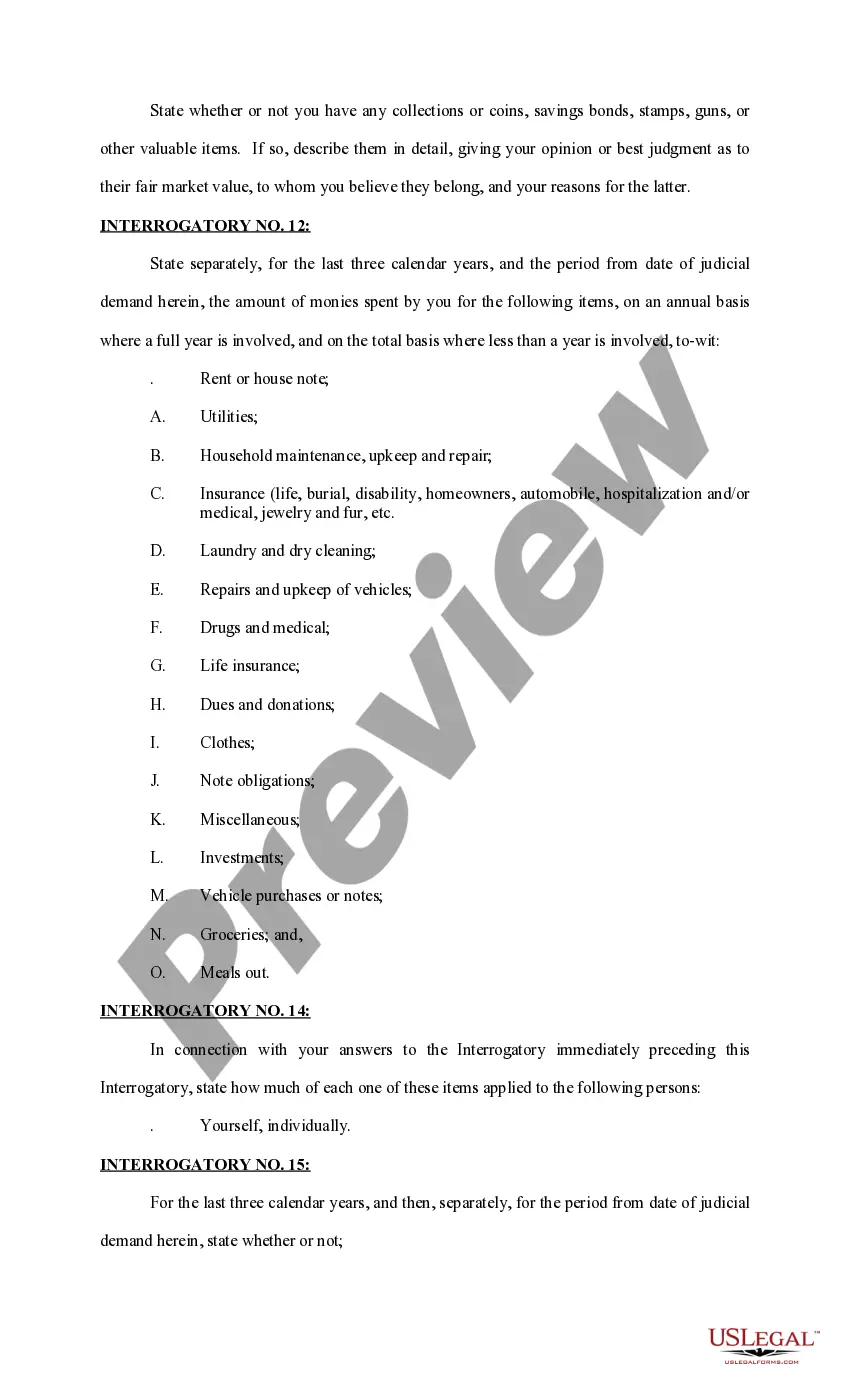
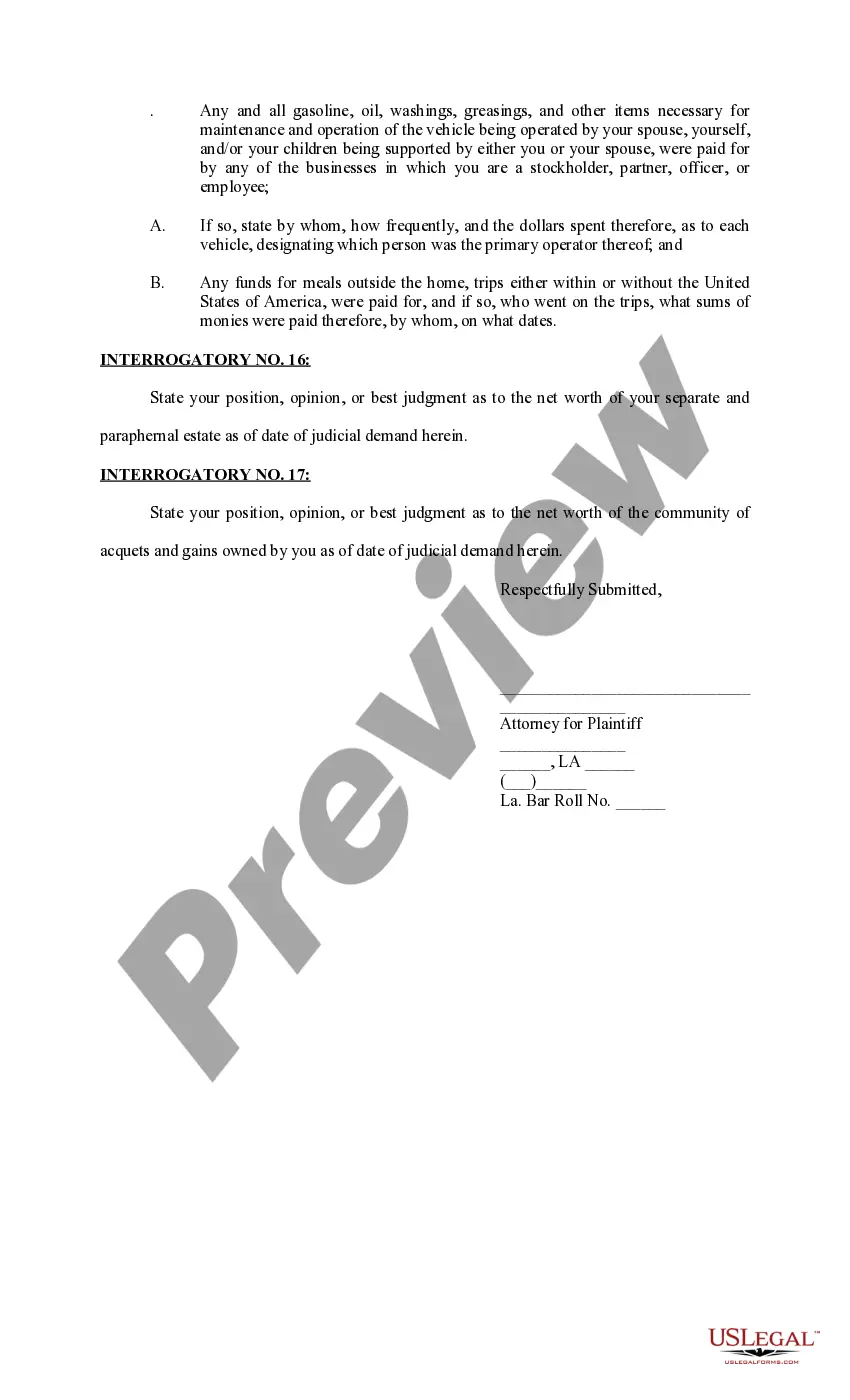
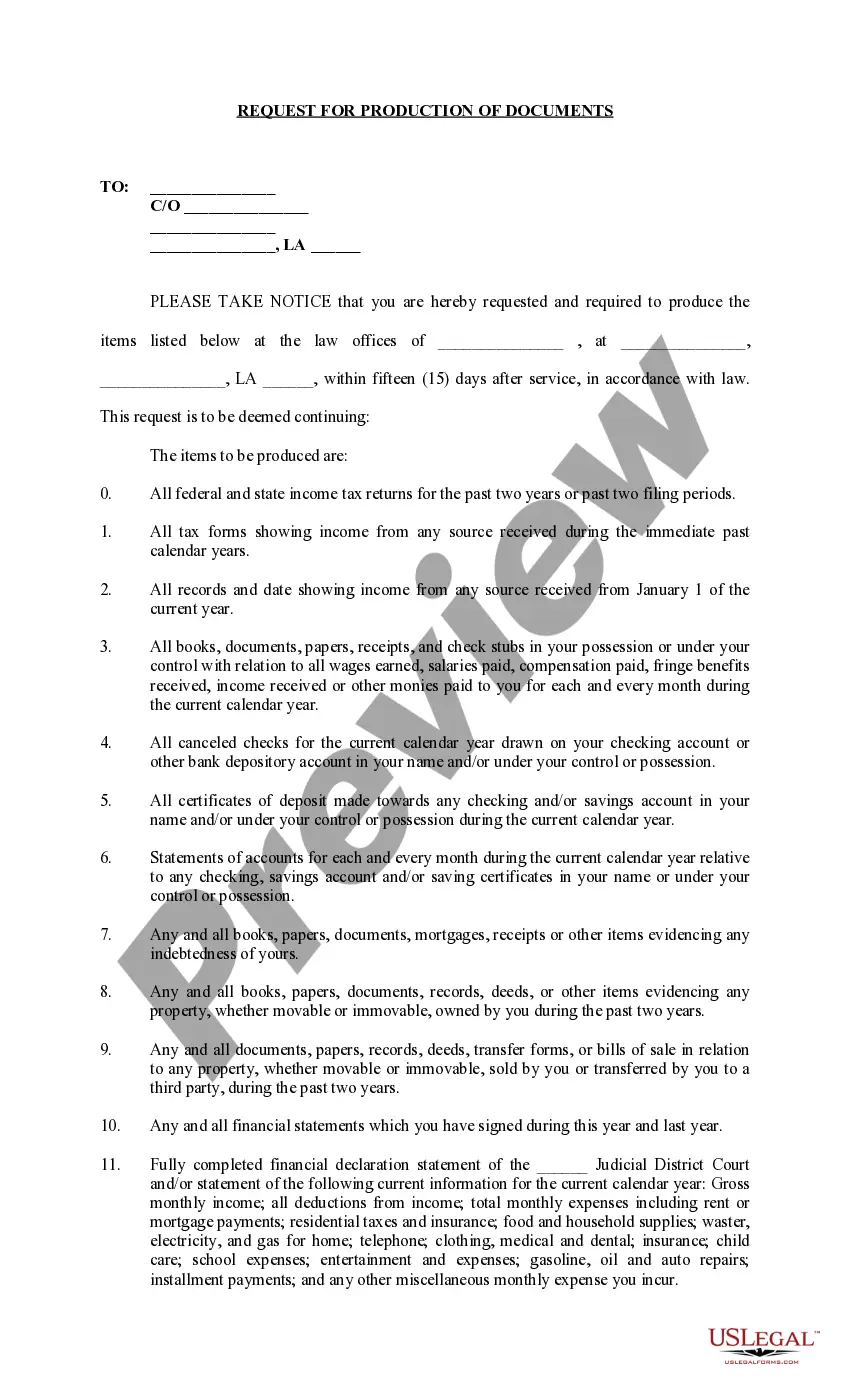
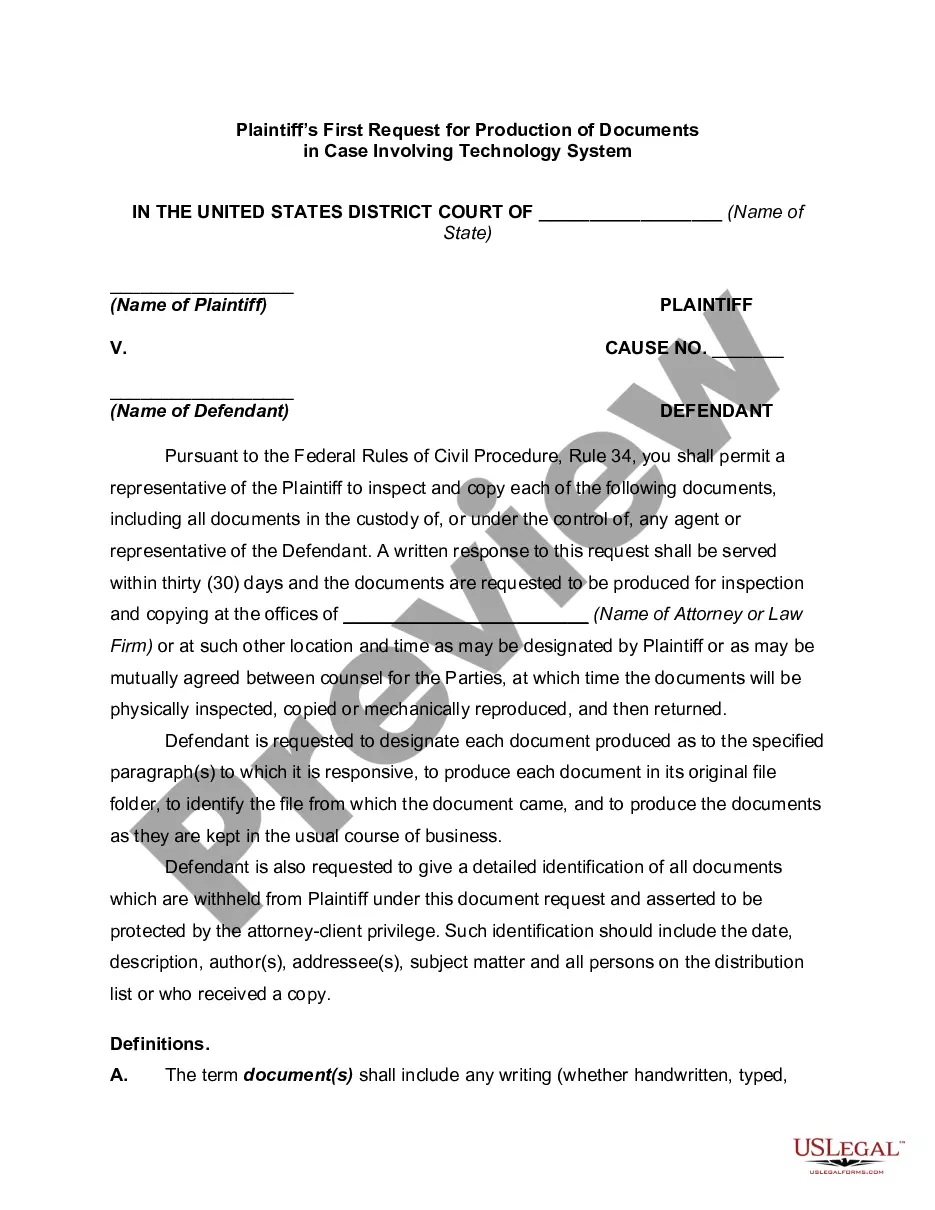
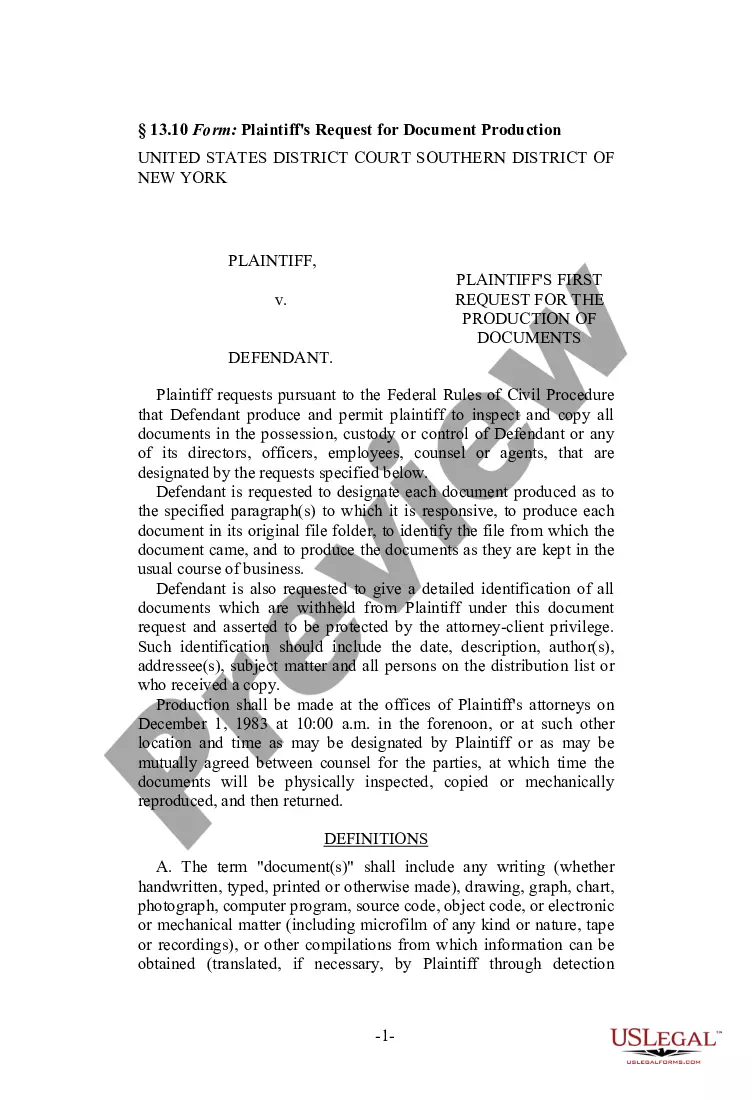
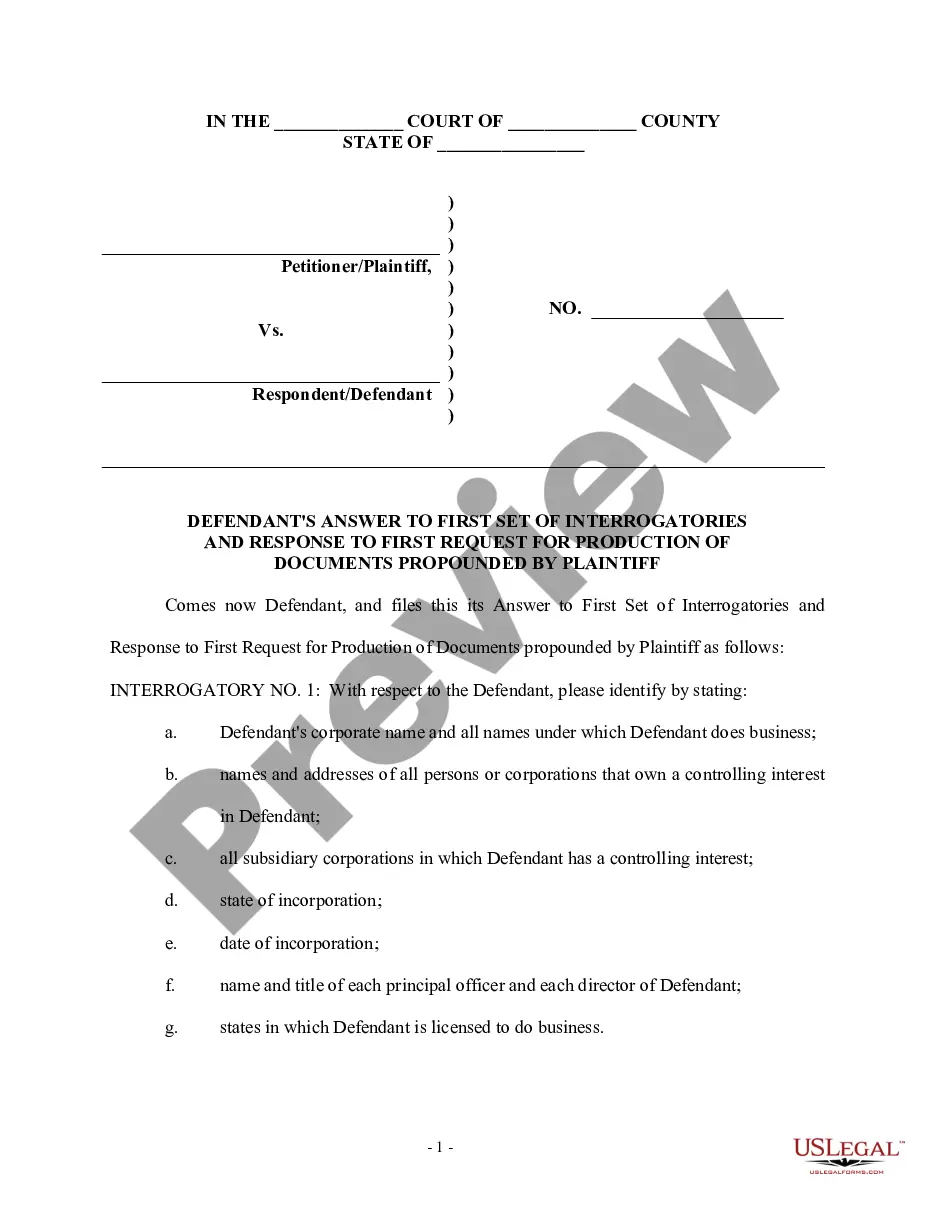
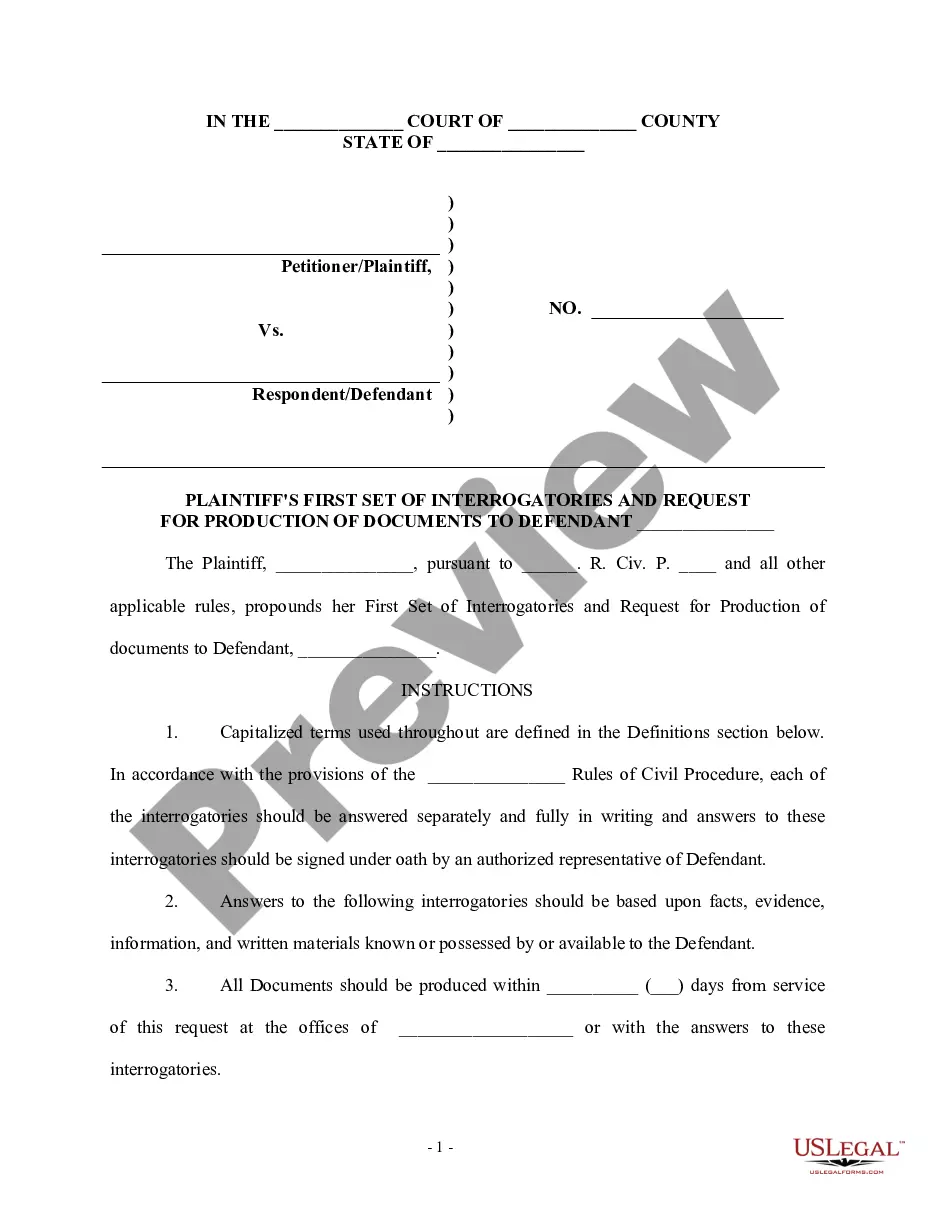
The Plaintiff's Interrogatories to Defendant and Request for Production of Documents is a legal document used in litigation to obtain detailed information and documents from the defendant. This form is particularly focused on a defendant's financial status and related assets, differing from other forms that may not request such specific financial disclosures. It is essential for gathering evidence and insights crucial for a case involving disputes over financial matters.
Key components of this form
- Identification of the parties involved, including the plaintiff and defendant.
- Specific interrogatories aimed at understanding the defendant's business interests and income sources.
- A request for various financial documents, such as tax returns and account statements.
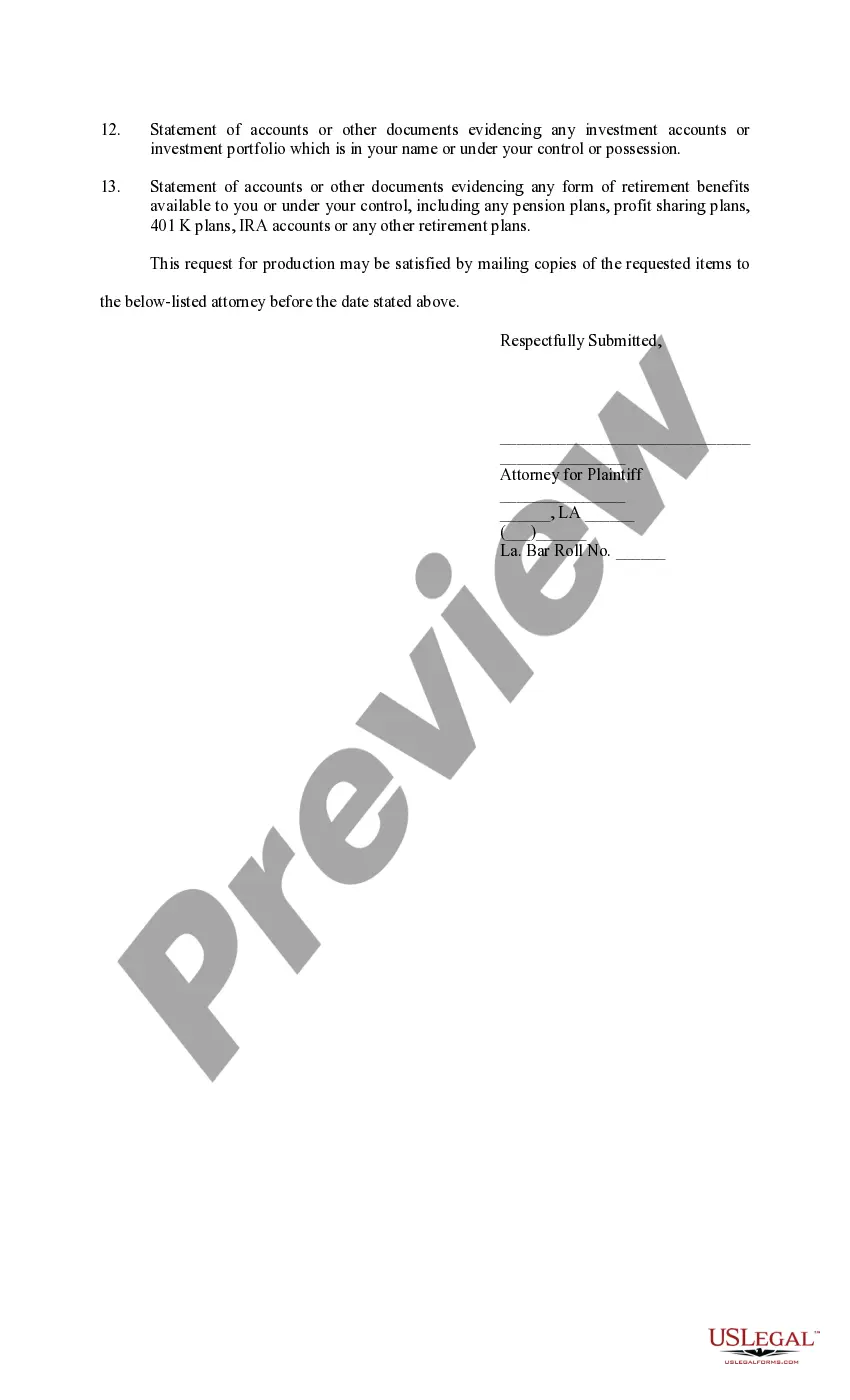
- Details on retirement plans and other investments.
- Queries regarding ownership and valuation of assets, including real estate and personal property.
- Information on expenses and liabilities related to the defendant's financial situation.
Situations where this form applies
This form should be used in civil litigation cases where the plaintiff seeks to clarify the financial standing of the defendant. Common scenarios include divorce proceedings, asset division disputes, personal injury claims, or any legal matter where proving the defendant's financial condition is necessary to establish entitlement to damages or equitable relief.
Who should use this form
- Planners and attorneys representing plaintiffs in a lawsuit.
- Defendants who need to understand the scope of information being sought in legal proceedings.
- Individuals involved in financial disputes or litigation.
How to complete this form
- Identify all parties involved and enter their names and addresses at the top of the form.
- Clearly outline the interrogatories, ensuring each question is specific and aimed at obtaining necessary information.
- List the documents requested in a clear format, making sure to cover all relevant financial records.
- Specify a deadline (typically fifteen days) for the defendant to respond to the interrogatories and provide the requested documents.
- Sign and date the form, and ensure it is filed appropriately according to court rules.
Is notarization required?
This form usually doesn’t need to be notarized. However, local laws or specific transactions may require it. Our online notarization service, powered by Notarize, lets you complete it remotely through a secure video session, available 24/7.
Get your form ready online
Our built-in tools help you complete, sign, share, and store your documents in one place.
Make edits, fill in missing information, and update formatting in US Legal Forms—just like you would in MS Word.
Download a copy, print it, send it by email, or mail it via USPS—whatever works best for your next step.
Sign and collect signatures with our SignNow integration. Send to multiple recipients, set reminders, and more. Go Premium to unlock E-Sign.
If this form requires notarization, complete it online through a secure video call—no need to meet a notary in person or wait for an appointment.
We protect your documents and personal data by following strict security and privacy standards.

Make edits, fill in missing information, and update formatting in US Legal Forms—just like you would in MS Word.

Download a copy, print it, send it by email, or mail it via USPS—whatever works best for your next step.

Sign and collect signatures with our SignNow integration. Send to multiple recipients, set reminders, and more. Go Premium to unlock E-Sign.

If this form requires notarization, complete it online through a secure video call—no need to meet a notary in person or wait for an appointment.

We protect your documents and personal data by following strict security and privacy standards.
Mistakes to watch out for
- Failing to provide clear and specific interrogatories which may lead to ambiguous answers.
- Neglecting to keep a record of responses and documents furnished by the defendant.
- Missing the deadline for responses, which can impact the case proceedings.
Advantages of online completion
- Convenience of downloading and editing the form as needed.
- Access to templates that have been drafted by licensed attorneys, ensuring legal compliance.
- Ability to quickly produce a document that adheres to your specific case requirements.
Main things to remember
- The Plaintiff's Interrogatories to Defendant and Request for Production of Documents is essential for gathering financial evidence in civil litigation.
- Being thorough and precise while completing this form can significantly impact the outcome of your case.
- Familiarity with Louisiana legal procedures regarding interrogatories is crucial for effective use.
Looking for another form?


Form popularity
FAQ
You must answer each interrogatory separately and fully in writing under oath, unless you object to it. You must explain why you object. You must sign your answers and objections.
Interrogatories are lists of questions sent to the other party that s/he must respond to in writing. You can use interrogatories to find out facts about a case but they cannot be used for questions that draw a legal conclusion.
Motions to Compel If a party doesn't respond to interrogatories or requests for production, then the party seeking those answers must file a motion to compel with the court. If the court grants the motion to compel, then the party who objected or failed to answer must then do so.
So, can you refuse to answer interrogatories? The answer is, no, you may not.That answer must either permit inspection of the requested information or object to the production of the information for a specific reason.