Second Motion Examination Formula
Description

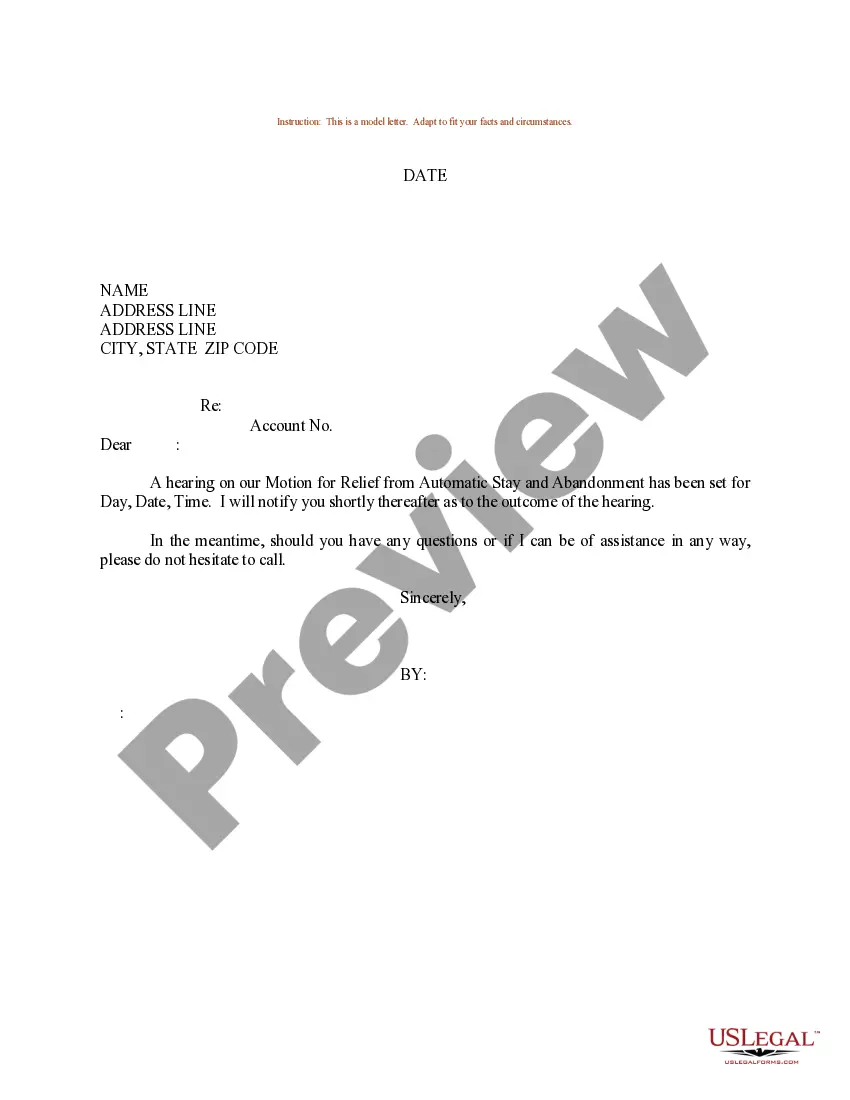

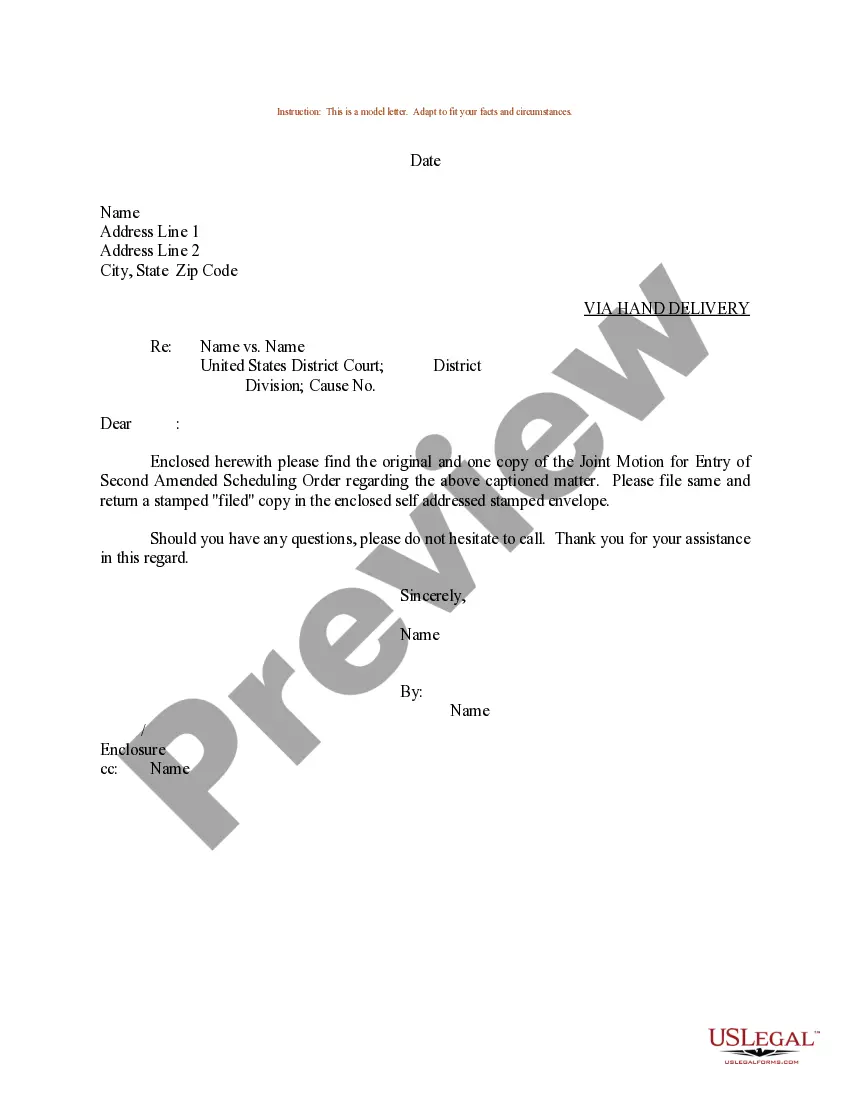
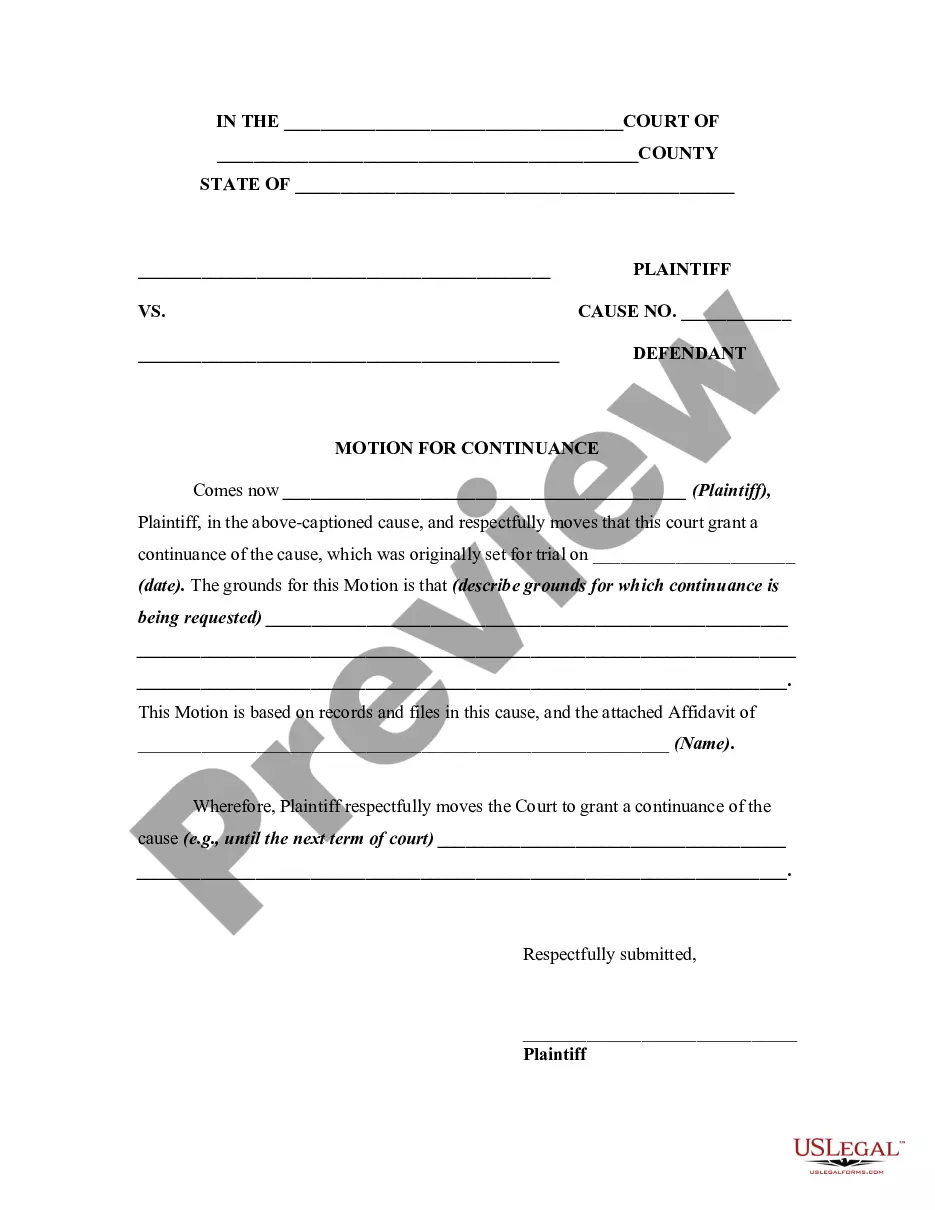
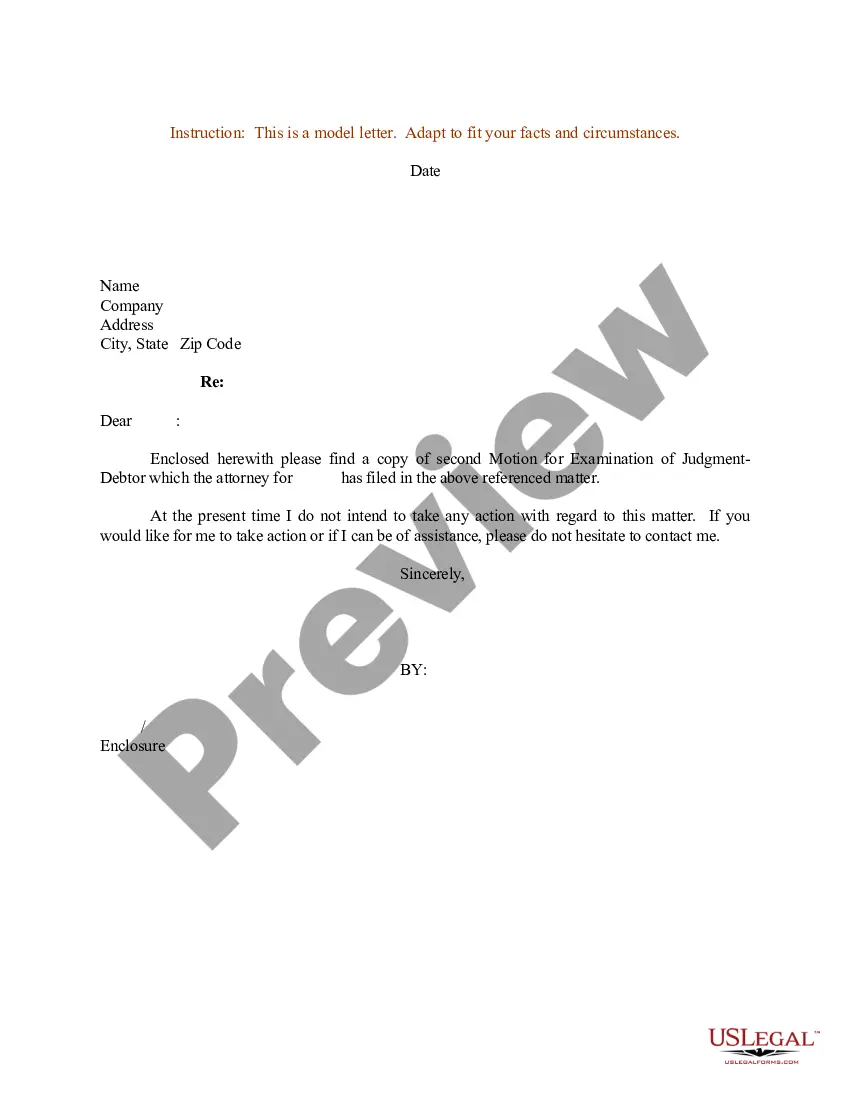
How to fill out Sample Letter For Second Motion For Examination Of Judgment - Debtor?
It’s clear that one cannot become a legal specialist instantly, nor can you swiftly learn how to draft the Second Motion Examination Formula without a specific set of expertise.
Assembling legal documents is a lengthy endeavor necessitating a certain level of education and proficiency. Thus, why not entrust the formulation of the Second Motion Examination Formula to the experts.
With US Legal Forms, one of the most comprehensive libraries of legal templates, you can discover anything from judicial paperwork to templates for internal communication.
If you need a different form, start your search anew.
Create a complimentary account and select a subscription plan to purchase the template. Click Buy now. Once the purchase is complete, you can download the Second Motion Examination Formula, complete it, print it, and deliver or mail it to the appropriate individuals or organizations.
- We understand the significance of compliance and adherence to both federal and state laws and regulations.
- That’s why, on our platform, all forms are location-specific and current.
- Let’s begin with our website and obtain the document you need in just minutes.
- Find the document you require using the search bar located at the top of the page.
- Preview it (if this option is available) and review the supporting description to verify if the Second Motion Examination Formula is what you are looking for.
Form popularity
FAQ
Calculating Newton's second law of motion involves using the standard formula, where force equals mass times acceleration (F = ma). To perform this calculation, you need to identify the mass of the object and its acceleration. By multiplying these two values, you can determine the net force acting on the object. This application of the second motion examination formula is crucial for solving problems related to dynamics in everyday situations.
The correct formula for Newton's second law of motion is F = ma. This equation states that the force acting on an object equals its mass multiplied by its acceleration. It highlights the direct relationship between force, mass, and motion, allowing you to predict how an object will respond to different forces. Mastering this concept is essential for understanding dynamics.
Deriving the formula s = ut + 1/2 at² involves understanding the relationship between acceleration, initial velocity, and distance. Start with the definition of acceleration and rewrite it in terms of change in velocity. By integrating over time, you arrive at the second motion examination formula, demonstrating how distance changes under constant acceleration. This derivation showcases the underlying principles of motion.
Equations of Motion VariableEquationVelocityv=u+atDisplacement with positive accelerations=ut+21at2Displacement knowing initial and final velocitiess=21(u+v)tVelocity squaredv2=u2+2as
A: The first equation of motion, v = u + is referred to as the velocity-time relation. On the other hand, the second equation of motion is s = ut + 1 / 2at2 can be called the position-time relation. Likewise, we call the third equation of motion, v2 = u2+ 2as, position ? velocity relation.
V = u + a t , s = ( u + v 2 ) t , v 2 = u 2 + 2 a s , s = u t + 1 2 a t 2 , s = v t ? 1 2 a t 2 . The quantities s , u , v and a are all vector quantities so therefore their sign represents the direction of motion.
Newton's second law of motion provides an explanation for the behavior of objects when forces are applied to the objects. The law states that external forces cause objects to accelerate, and the amount of acceleration is directly proportional to the net force and inversely proportional to the mass of the object.
Newton's second law of motion states that F = ma, or net force is equal to mass times acceleration. A larger net force acting on an object causes a larger acceleration, and objects with larger mass require more force to accelerate.