Affidavit Criminal Case With Denial
Description

Get your form ready online
Our built-in tools help you complete, sign, share, and store your documents in one place.
Make edits, fill in missing information, and update formatting in US Legal Forms—just like you would in MS Word.
Download a copy, print it, send it by email, or mail it via USPS—whatever works best for your next step.
Sign and collect signatures with our SignNow integration. Send to multiple recipients, set reminders, and more. Go Premium to unlock E-Sign.
If this form requires notarization, complete it online through a secure video call—no need to meet a notary in person or wait for an appointment.
We protect your documents and personal data by following strict security and privacy standards.

Make edits, fill in missing information, and update formatting in US Legal Forms—just like you would in MS Word.

Download a copy, print it, send it by email, or mail it via USPS—whatever works best for your next step.

Sign and collect signatures with our SignNow integration. Send to multiple recipients, set reminders, and more. Go Premium to unlock E-Sign.

If this form requires notarization, complete it online through a secure video call—no need to meet a notary in person or wait for an appointment.

We protect your documents and personal data by following strict security and privacy standards.
Looking for another form?

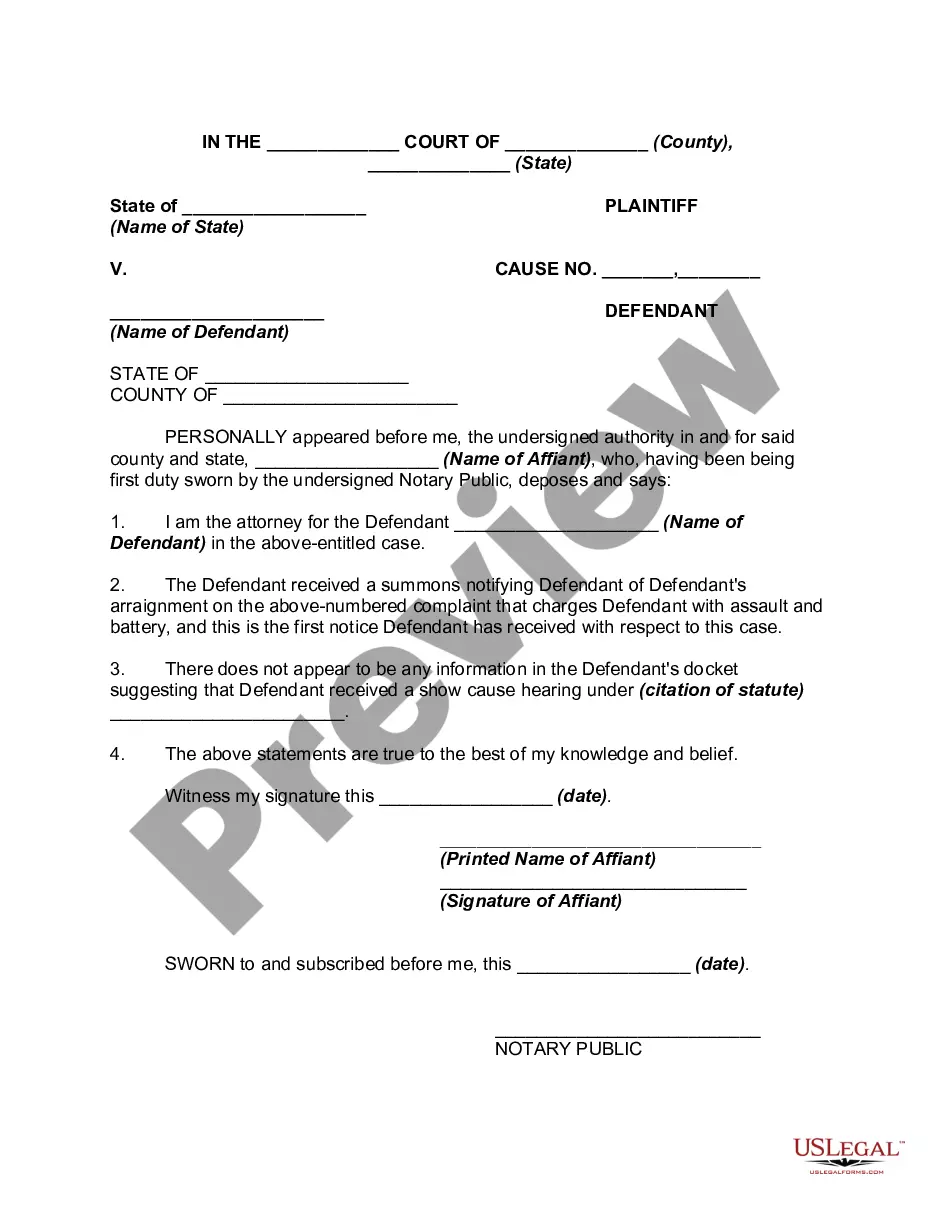
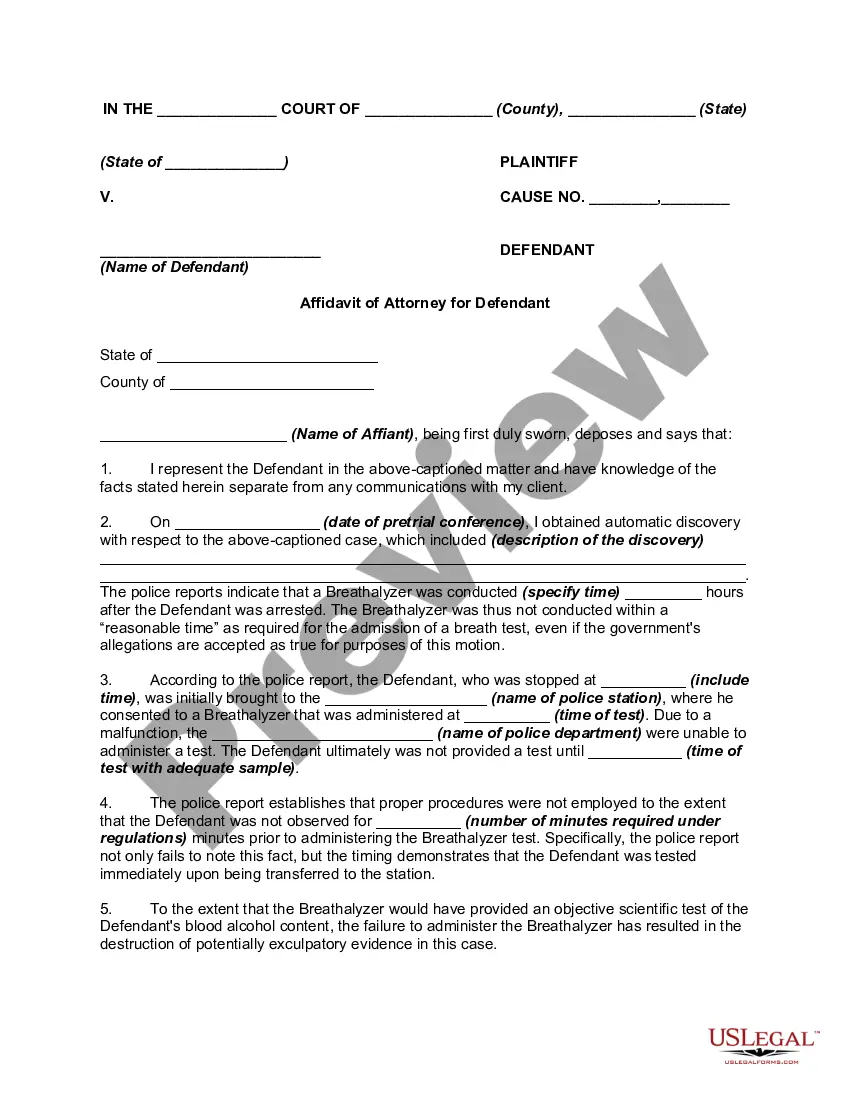
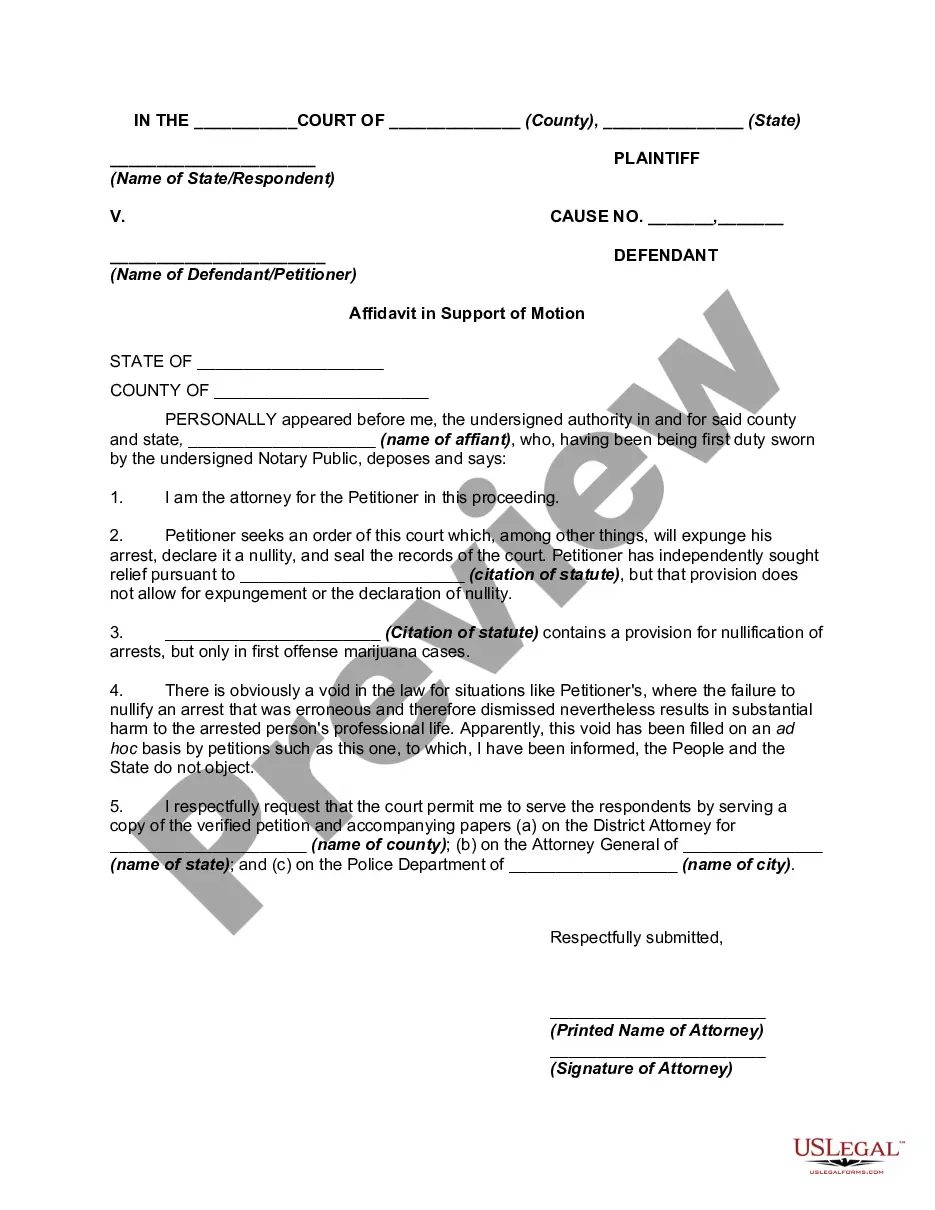
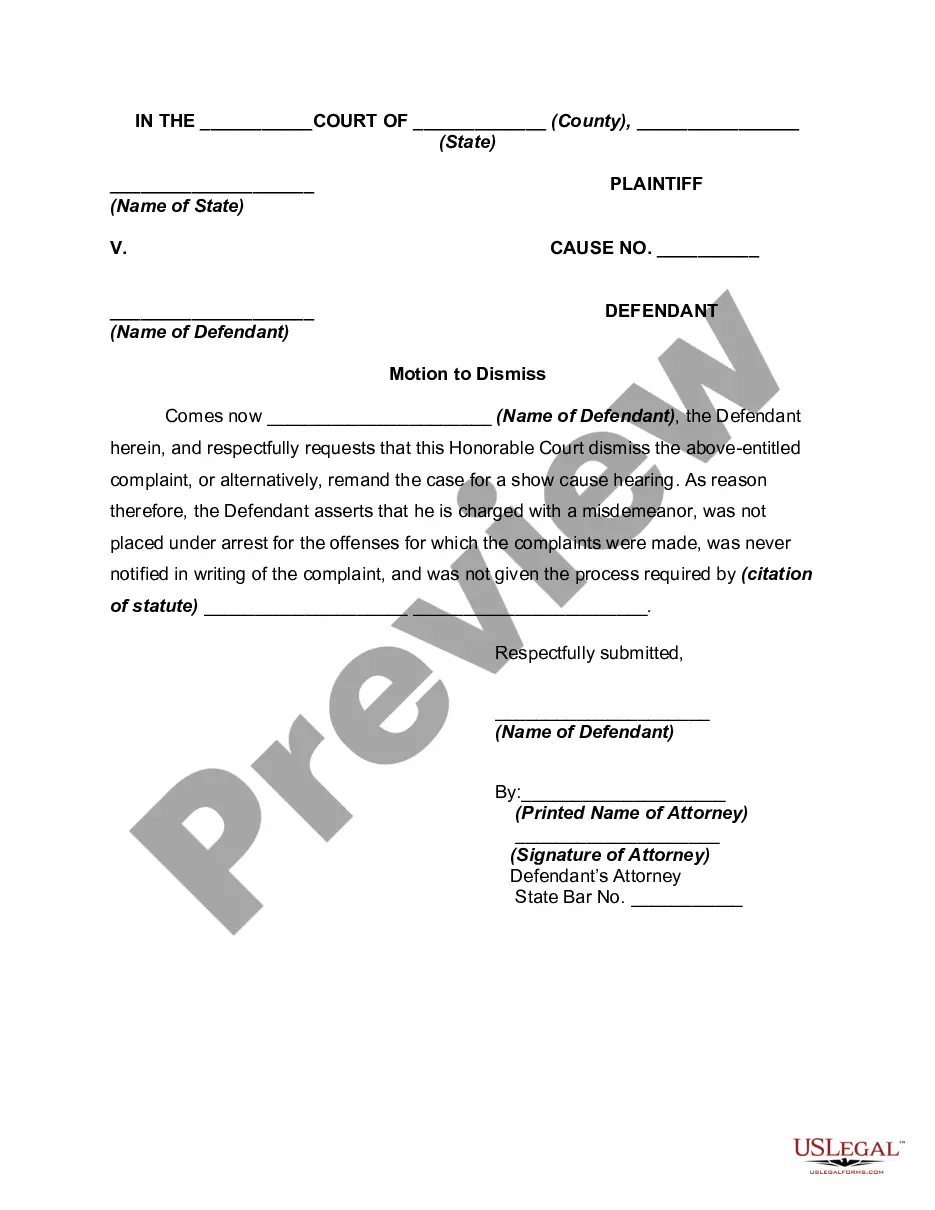
How to fill out Affidavit In Support Of Motion To Dismiss Criminal Charges For Failure To Grant Show Cause Hearing?
Regardless of whether for commercial reasons or personal issues, everyone must confront legal matters at some point in their life.
Filling out legal documents requires meticulous consideration, starting with choosing the correct form example. For example, if you select an incorrect version of an Affidavit Criminal Case With Denial, it will be turned down when you submit it. Thus, it is crucial to have a trustworthy source of legal documents like US Legal Forms.
With an extensive US Legal Forms catalog available, you do not need to waste time searching for the suitable template online. Take advantage of the library’s straightforward navigation to locate the fitting form for any circumstance.
- Obtain the template you require by utilizing the search bar or catalog browsing.
- Review the form’s description to confirm it aligns with your circumstances, state, and county.
- Click on the form’s preview to examine it.
- If it is the incorrect document, return to the search function to find the Affidavit Criminal Case With Denial template you need.
- Download the template once it meets your requirements.
- If you possess a US Legal Forms account, simply click Log in to access previously saved templates in My documents.
- If you do not have an account yet, you can acquire the form by clicking Buy now.
- Select the appropriate pricing option.
- Complete the profile registration form.
- Choose your payment method: you can use a credit card or PayPal account.
- Select the file format you desire and download the Affidavit Criminal Case With Denial.
- After it is saved, you can fill out the form using editing software or print it and complete it by hand.
Form popularity
FAQ
Getting an affidavit for a case involves drafting the document and having it notarized. For a criminal case with denial, ensure that your affidavit includes accurate details and serves the intended legal purpose. Using services like US Legal Forms can help you create an effective affidavit by providing the necessary templates and instructions. This way, you can focus on your case while ensuring your documents are legally sound.
To obtain an affidavit, you typically need to draft the document and have it signed in front of a notary public. If you are dealing with a criminal case with denial, it may be beneficial to consult with a lawyer to ensure your affidavit meets legal requirements. Alternatively, platforms like US Legal Forms allow you to fill out templates that comply with the law, simplifying the process for you.
You can obtain an affidavit from various sources, including legal professionals and online platforms. For a criminal case with denial, it is crucial to ensure the document is properly formatted and contains all necessary information. Consider accessing US Legal Forms, where you can find templates and guidance to create a compliant affidavit. This can save you time and ensure accuracy.
Yes, you can write an affidavit yourself if you understand the requirements. An affidavit for a criminal case with denial must contain clear, factual statements made under oath. However, ensure the document meets legal standards specific to your state to avoid complications. Using resources like US Legal Forms can guide you through the process and provide templates.
Common mistakes to avoid in an affidavit include including irrelevant information and failing to properly notarize the document. Make sure your affidavit is focused on the critical facts of your situation, particularly in an affidavit criminal case with denial. Additionally, avoid vague language and ensure all statements are clear and specific. Reviewing your affidavit or seeking assistance from platforms like US Legal Forms can help you catch these errors before submission.
Yes, you can write your own affidavit for court, and many people do. It's essential to ensure that your affidavit is clear, concise, and focused on the facts that matter, especially in an affidavit criminal case with denial. While you can draft it, consider using resources like US Legal Forms to guide you through the process and ensure that your document meets legal standards. This can help prevent mistakes that could undermine your affidavit.
To write an affidavit for criminal court, start by identifying the parties involved and the nature of the case. Clearly present the relevant facts, especially if you are addressing a denial in an affidavit criminal case with denial. Use concise language and avoid unnecessary details. After laying out the facts, affirm the truthfulness of your statement and ensure it is notarized to enhance its credibility in court.
When writing an affidavit for court, begin with a title that includes the word 'affidavit' and your name. Follow with a clear introduction that states your relationship to the case, then outline the facts in a straightforward manner. For an affidavit criminal case with denial, ensure that each fact is backed by evidence or witnesses. Finally, conclude with a statement affirming the truth of the contents and sign it in front of a notary.
To fill out an affidavit correctly, start by including your name, address, and other identifying information at the top. Next, clearly state the facts you are swearing to, ensuring they are relevant to your legal case, such as in an affidavit criminal case with denial. Finally, sign the document in front of a notary, which adds legal weight to your statement. This process helps ensure your affidavit is valid and will stand up in court.
A simple example of an affidavit is a sworn statement made by an individual about facts relevant to a legal matter. For instance, in an affidavit for a criminal case with denial, a person might declare their whereabouts during an alleged offense. This statement can help establish an alibi or provide critical evidence in a court proceeding. It's important that the affidavit is signed in front of a notary to verify its authenticity.