Termination For Tenancy
Description
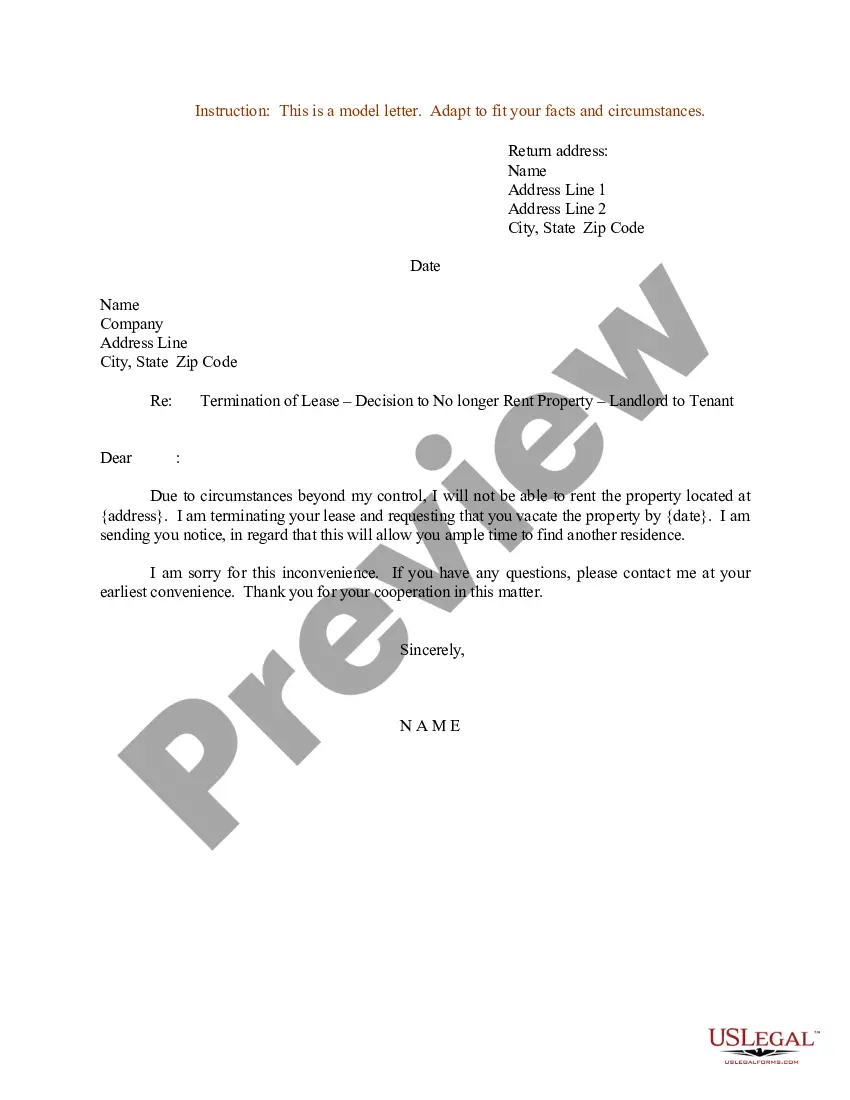
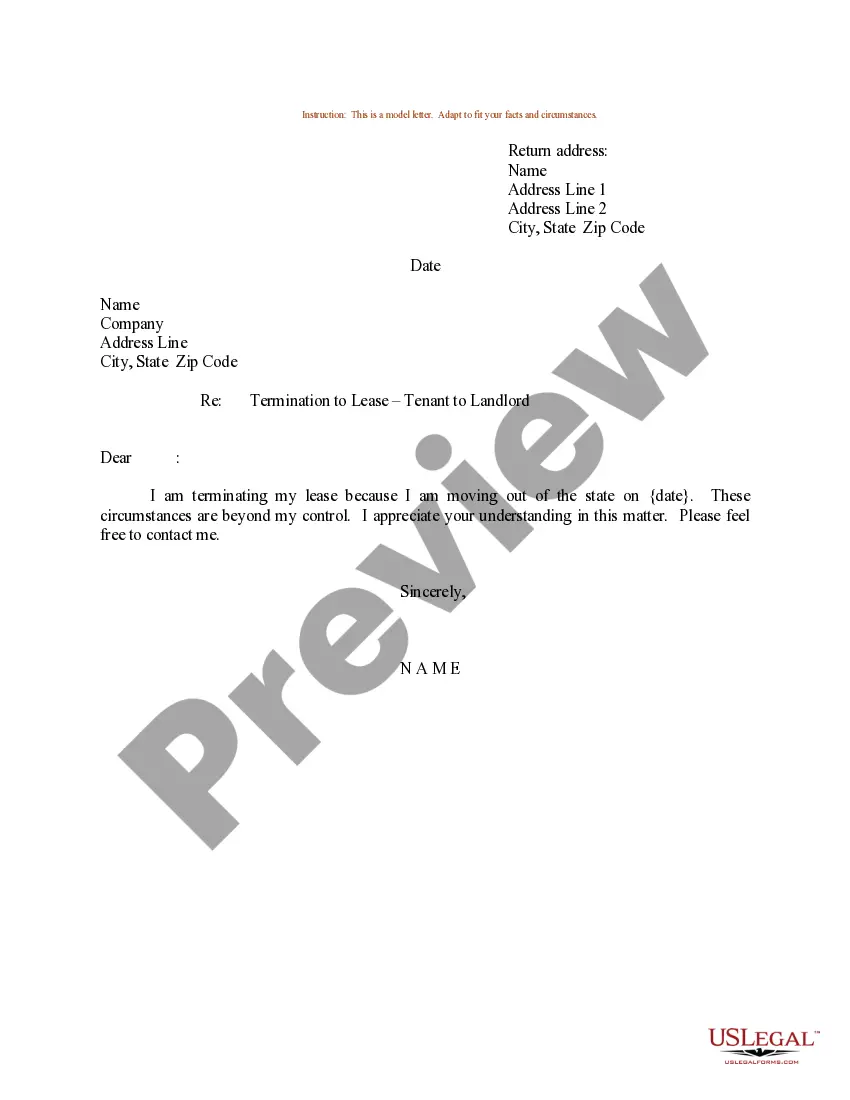


How to fill out Sample Letter For Termination Of Lease From Landlord To Tenant?
Whether for professional reasons or personal affairs, everyone must handle legal circumstances eventually in their lives.
Filling out legal paperwork requires meticulous focus, starting from selecting the suitable form template.
With a vast US Legal Forms collection available, you no longer have to waste time searching for the right template on the internet. Utilize the library’s straightforward navigation to find the correct template for any circumstance.
- Locate the template you need by using the search bar or catalog browsing.
- Review the form’s details to confirm it aligns with your situation, state, and county.
- Access the form’s preview to take a look at it.
- If it is the wrong document, return to the search option to find the Termination For Tenancy template you need.
- Download the template once it fits your requirements.
- If you already possess a US Legal Forms account, simply click Log in to access previously stored forms in My documents.
- If you don’t yet have an account, you can download the form by clicking Buy now.
- Select the correct pricing choice.
- Fill out the account registration form.
- Choose your payment option: you may utilize a credit card or PayPal account.
- Select the file format you desire and download the Termination For Tenancy.
- After it is saved, you can complete the form using editing software or print it and finish it manually.
Form popularity
FAQ
When writing a letter to your landlord to terminate a lease, begin with a clear statement of your intent and the date of your planned move-out. Include your lease details, such as the property address and lease dates. Make your reasons concise, and express gratitude for your time in the property. Using a professional template from USLegalForms can enhance your communication.
To request your landlord to terminate your lease, start with a formal communication expressing your intentions. Clearly explain your reasons, such as a job relocation or family needs. Be respectful and provide ample notice, as this increases your chances of a favorable response. Using a structured template from USLegalForms can help you articulate your request effectively.
A notice of termination and eviction are not the same. A notice of termination informs a tenant that their lease will end, while eviction is a legal process to remove a tenant from the property. It’s important to follow the legal procedures for termination for tenancy to avoid wrongful eviction claims. Understanding these differences helps ensure a fair process.
To write a notice of termination, begin with a formal greeting and state the date. Clearly outline the details of the tenancy, including the reason for termination and the effective date. Ensure you adhere to local laws regarding notice periods, and keep a copy for your records. Resources on platforms like USLegalForms can provide helpful templates.
The most common way a lease terminates is through the expiration of the lease term. Upon expiration, tenants and landlords may choose to renew the lease or vacate the property. Additionally, mutual agreement between both parties can also lead to lease termination. Each option has its implications, so it's essential to understand your rights.
To write a termination letter, start by clearly stating the date and the tenant's name. Include the specific reason for termination, such as non-payment or lease expiration. Make sure to mention the final date of tenancy and how the tenant should return the keys. Using a structured letter template can simplify this process.
No, a termination of tenancy is not the same as eviction. Termination for tenancy refers to the legal process of ending a tenant's lease, which may occur for various reasons, such as non-payment of rent or lease violations. While eviction follows termination, it is a distinct legal action initiated by the landlord to remove a tenant who has failed to vacate the property. Understanding these differences can help you navigate your rights and responsibilities as a tenant or landlord effectively.
When moving out, tenants are responsible for leaving the property in good condition, including cleaning and repairing any damage they caused. They must also fulfill the terms of the lease agreement, such as notifying the landlord in advance and returning the keys. Additionally, addressing any utility bills or rental payments before departure is essential. Being informed about these responsibilities can streamline terminations for tenancy.
In New Jersey, a tenant must provide at least 30 days’ notice to terminate a month-to-month tenancy. This notice should be given to the landlord in writing, allowing both parties ample time to adjust. It's important to refer to your lease agreement for any specific terms that may apply. Knowing your rights around terminations for tenancy ensures a smoother transition.
Termination of a lease means that the rental agreement between the landlord and tenant is ending. This can occur at the end of the lease term, through mutual agreement, or due to specific violations. When a lease is terminated, both parties should clarify the terms regarding the return of deposits and any other obligations. Understanding lease termination processes is crucial for smooth terminations for tenancy.