Successor Trustee Appointment Form For Trust
Description

Get your form ready online
Our built-in tools help you complete, sign, share, and store your documents in one place.
Make edits, fill in missing information, and update formatting in US Legal Forms—just like you would in MS Word.
Download a copy, print it, send it by email, or mail it via USPS—whatever works best for your next step.
Sign and collect signatures with our SignNow integration. Send to multiple recipients, set reminders, and more. Go Premium to unlock E-Sign.
If this form requires notarization, complete it online through a secure video call—no need to meet a notary in person or wait for an appointment.
We protect your documents and personal data by following strict security and privacy standards.

Make edits, fill in missing information, and update formatting in US Legal Forms—just like you would in MS Word.

Download a copy, print it, send it by email, or mail it via USPS—whatever works best for your next step.

Sign and collect signatures with our SignNow integration. Send to multiple recipients, set reminders, and more. Go Premium to unlock E-Sign.

If this form requires notarization, complete it online through a secure video call—no need to meet a notary in person or wait for an appointment.

We protect your documents and personal data by following strict security and privacy standards.
Looking for another form?








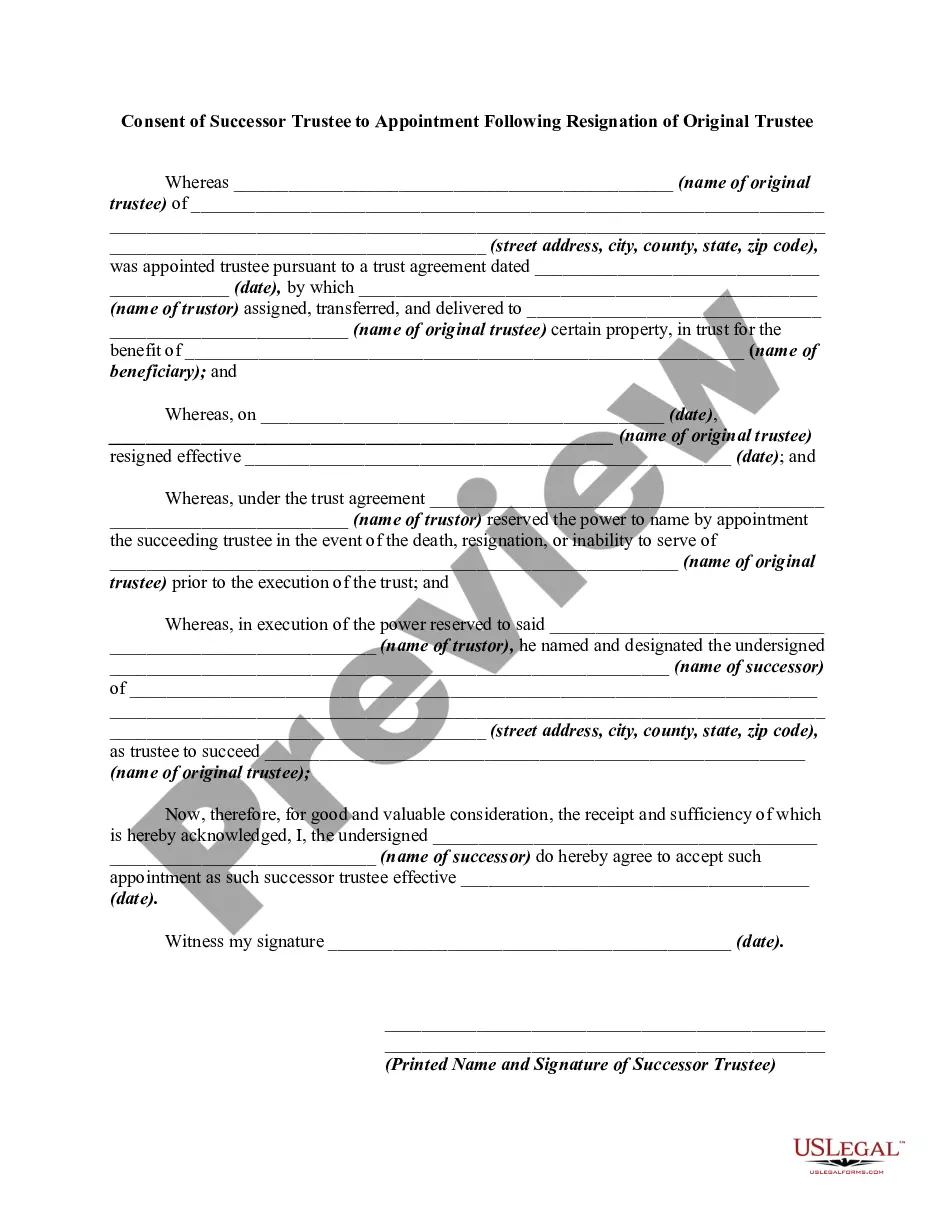
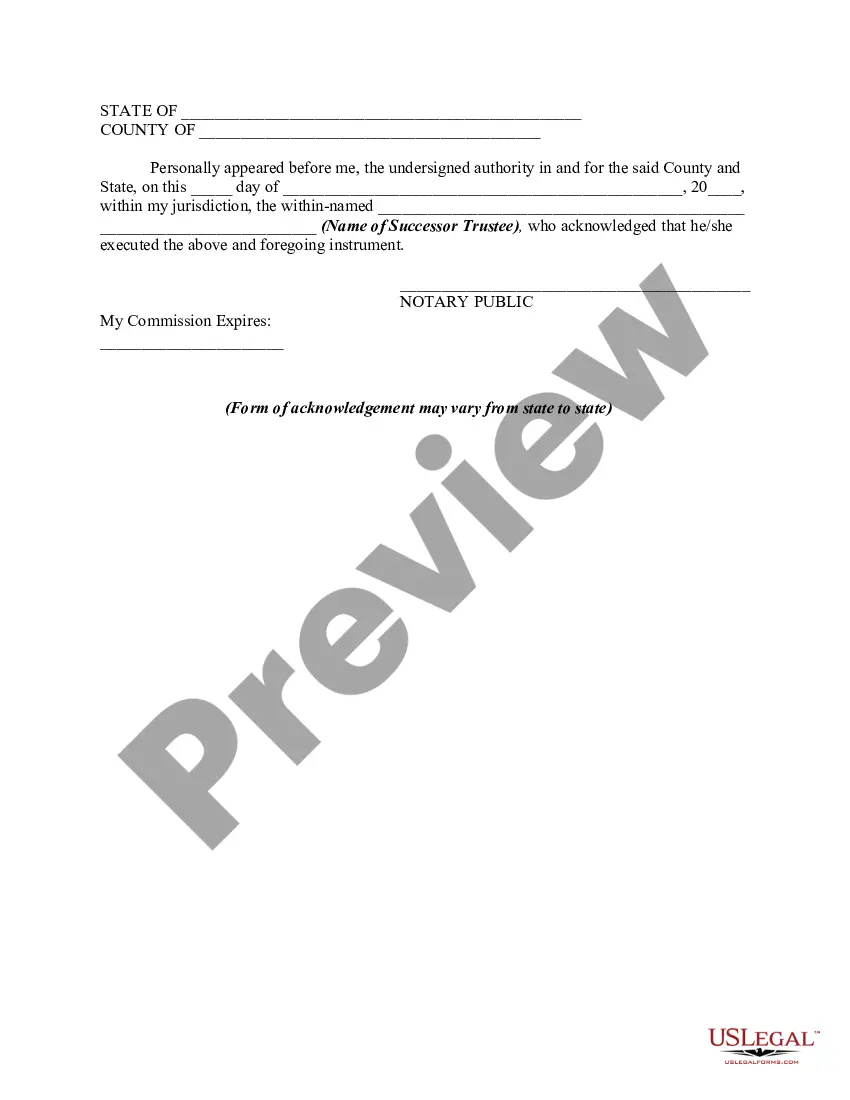
How to fill out Consent Of Successor Trustee To Appointment Following Resignation Of Original Trustee?
It’s clear that you cannot become a legal expert instantly, nor can you determine how to swiftly prepare the Successor Trustee Appointment Form For Trust without the necessity of a specific skill set.
Assembling legal documents is a labor-intensive task that necessitates certain education and expertise. Therefore, why not entrust the creation of the Successor Trustee Appointment Form For Trust to the professionals.
With US Legal Forms, one of the most extensive libraries of legal templates, you can access everything from court papers to templates for internal communication.
If you require another template, return to your search.
Create a free account and select a subscription plan to purchase the form. Click Buy now. Once the payment is finalized, you can obtain the Successor Trustee Appointment Form For Trust, complete it, print it, and send or mail it to the designated individuals or organizations.
- We recognize the significance of adhering to federal and state laws and regulations.
- That’s why all templates on our website are specific to your location and current.
- Here’s how you can initiate with our platform and acquire the document you need in just a few minutes.
- Find the form you need using the search bar located at the top of the page.
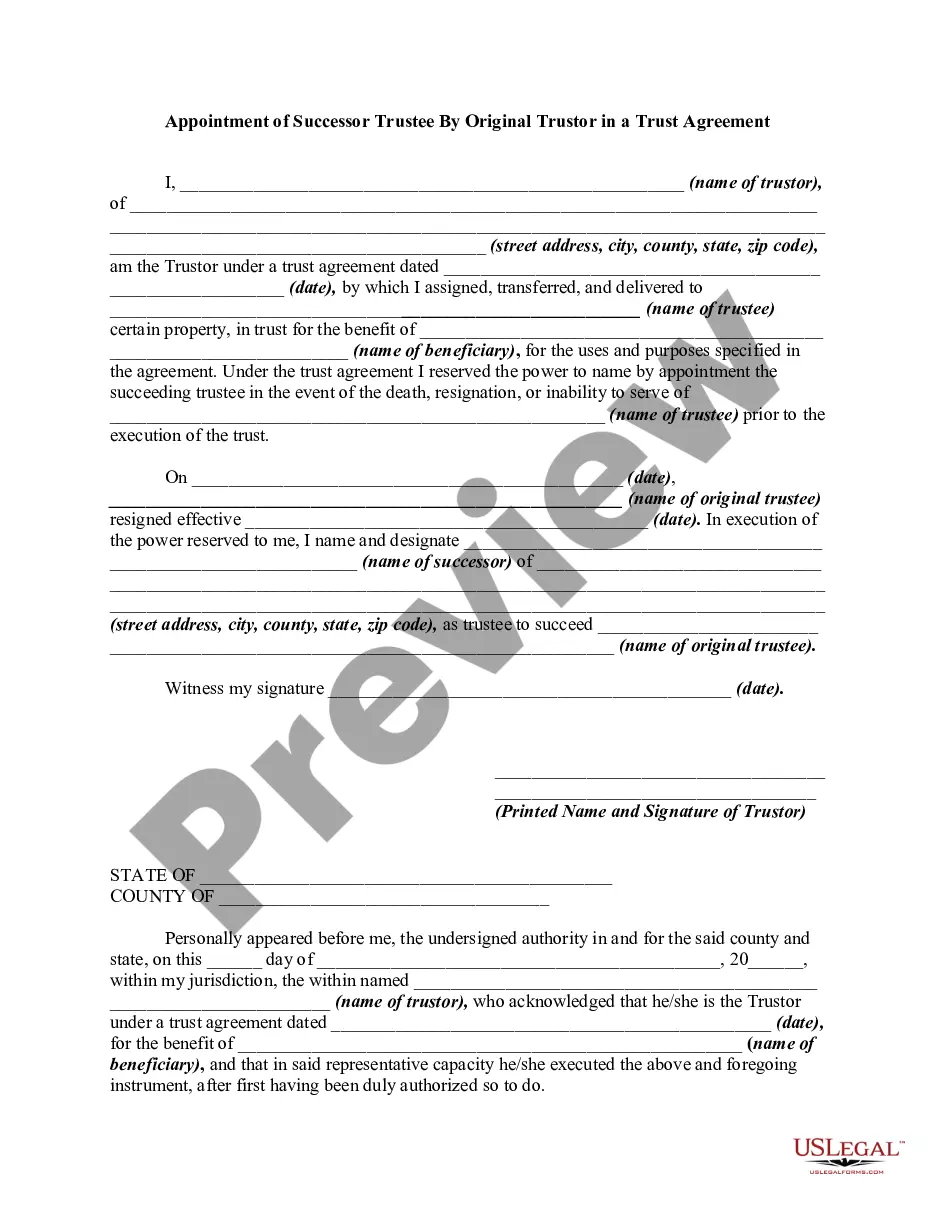
- Preview it (if this option is available) and verify the supporting description to ascertain if the Successor Trustee Appointment Form For Trust is what you need.
Form popularity
FAQ
A trustee is the individual responsible for managing a trust's assets during their tenure, whereas a successor trustee steps in when the original trustee can no longer serve. The successor trustee takes over the same responsibilities outlined in the trust document. Understanding this distinction is vital for trust management. Utilizing a successor trustee appointment form for trust can clarify these roles.
Successor trustees are typically granted immediate access to the assets held by the trust upon accepting their appointment; what they can do with these assets and their rights to withdraw money from a trust, however, are limited.
Under section 41 of the Trustee Act 1925, the court has a wide discretionary power to appoint new trustees either in addition to, or in substitution for existing trustees. The power may be exercised whenever the court considers it expedient to do so.
Successor Trustee is the person or institution who takes over the management of a living trust property when the original trustee has died or become incapacitated. The exact responsibilities of a successor trustee will vary depending on the instructions left by the creator of the trust (called the Grantor).
If a trustee has violated their fiduciary duties or poses a threat to the trust in some other way, it may be possible to suspend or remove them without their consent, but their alleged violations will need to be laid out in a trustee removal petition, which you file with the court.
EXAMPLE: Caroline names her two children, Eugene and Vanessa, as successor trustees. She names a close friend, Nicole, as alternate successor trustee. When Caroline dies, Vanessa is ill and can't serve as trustee, so Eugene acts as sole successor trustee. If he becomes unable to serve, Nicole would take over.