Letter to Proposed Client - Non-Representation Letter
What is this form?
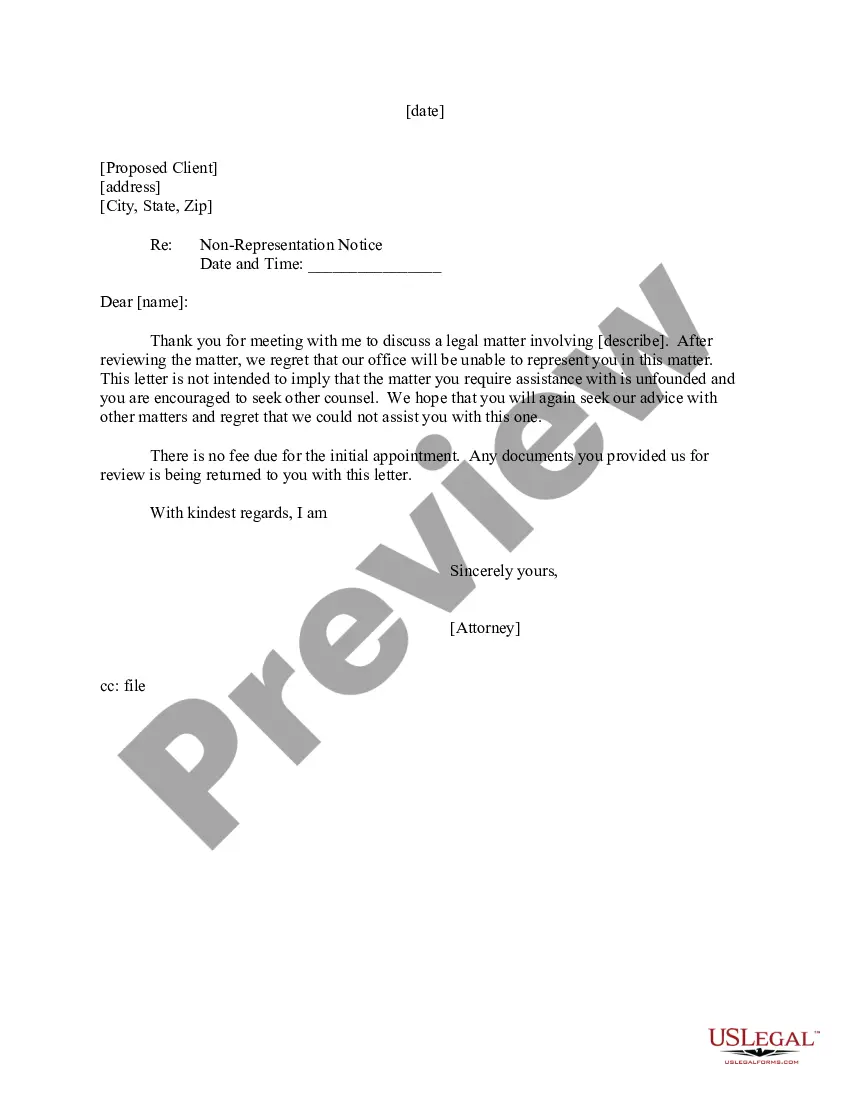
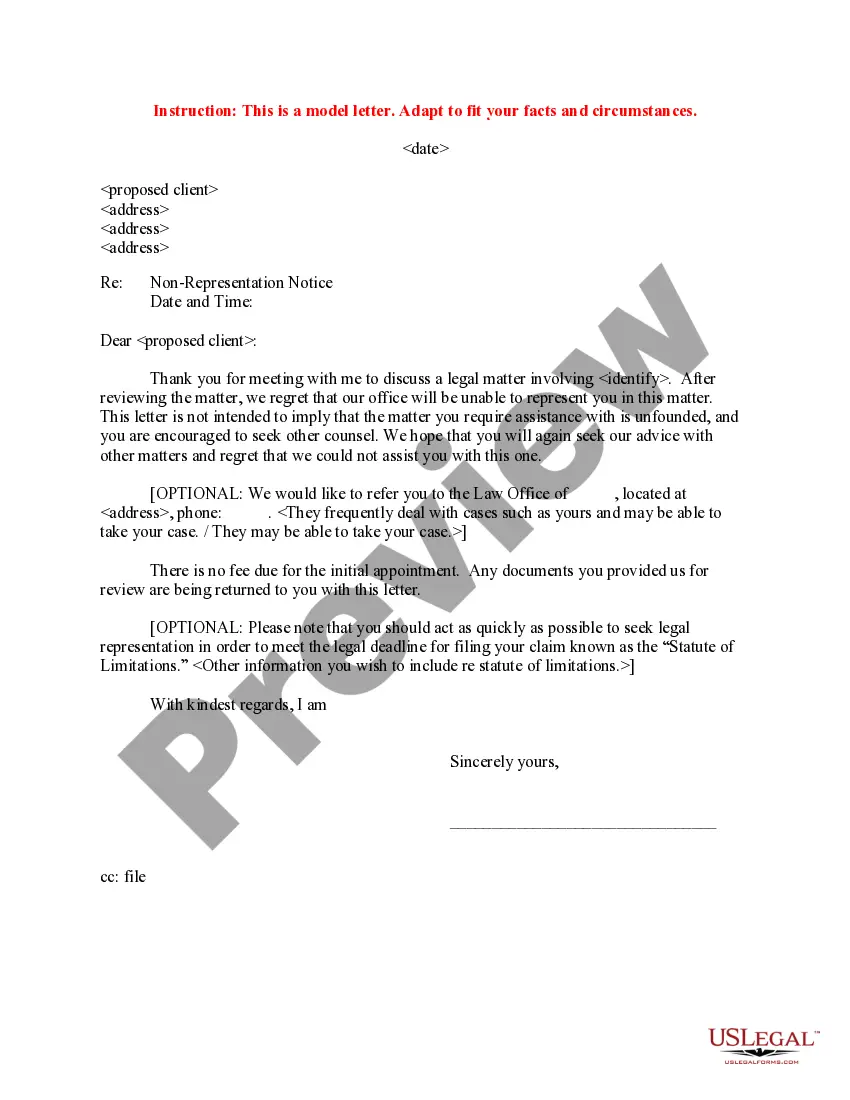
The Letter to Proposed Client - Non-Representation Letter is a document used by law firms to formally inform individuals that they will not be able to provide legal representation for a specific matter. This letter clarifies that not being able to represent the client does not imply that their case is weak or unfounded. Instead, it encourages the individual to seek alternative legal counsel, thus ensuring they find the support they need.
Form components explained
- Proposed Client address: Includes the client's address for proper identification.
- Date and time: Specifies when the letter is being sent.
- Legal matter description: Briefly describes the legal matter discussed.
- Non-representation notice: Clearly states that the law firm cannot represent the individual.
- Encouragement to seek other counsel: Advises the individual to pursue alternative legal representation.
- Return of documents: Confirms that any documents provided by the client will be sent back.
When to use this form
This form is essential in situations where a law firm has met with a potential client but determined they cannot take on the case. This may occur due to conflicts of interest, lack of expertise in the specific legal area, or capacity limits within the firm. It serves to ensure the individual understands their situation while encouraging them to seek necessary legal advice elsewhere.
Who can use this document
- Law firms responding to inquiries from potential clients.
- Attorneys who need to formally notify individuals of their inability to represent them.
- Legal practitioners looking to maintain professionalism in client relations.
Instructions for completing this form
- Enter the proposed client's address, including city, state, and zip code.
- Specify the date and time when the letter is being sent.
- Describe the legal matter discussed during the meeting.
- Include a clear statement of non-representation and advise seeking other counsel.
- Confirm that no fee is due for the initial consultation and return any documents to the client.
- Sign the letter and include the attorney's name and title.
Notarization guidance
This form does not typically require notarization to be legally valid. However, some jurisdictions or document types may still require it. US Legal Forms provides secure online notarization powered by Notarize, available 24/7 for added convenience.
Get your form ready online
Our built-in tools help you complete, sign, share, and store your documents in one place.
Make edits, fill in missing information, and update formatting in US Legal Forms—just like you would in MS Word.
Download a copy, print it, send it by email, or mail it via USPS—whatever works best for your next step.
Sign and collect signatures with our SignNow integration. Send to multiple recipients, set reminders, and more. Go Premium to unlock E-Sign.
If this form requires notarization, complete it online through a secure video call—no need to meet a notary in person or wait for an appointment.
We protect your documents and personal data by following strict security and privacy standards.

Make edits, fill in missing information, and update formatting in US Legal Forms—just like you would in MS Word.

Download a copy, print it, send it by email, or mail it via USPS—whatever works best for your next step.

Sign and collect signatures with our SignNow integration. Send to multiple recipients, set reminders, and more. Go Premium to unlock E-Sign.

If this form requires notarization, complete it online through a secure video call—no need to meet a notary in person or wait for an appointment.

We protect your documents and personal data by following strict security and privacy standards.
Mistakes to watch out for
- Failing to include the proposed client's full address.
- Not providing clear details about the legal matter discussed.
- Using vague language instead of a direct statement of non-representation.
- Neglecting to sign the letter or provide the attorney's name.
Why complete this form online
- Immediate access to professionally drafted templates.
- Easily downloadable and customizable to fit specific circumstances.
- Time-saving compared to drafting letters from scratch.
- Increased reliability by using forms verified by licensed attorneys.
Main things to remember
- The non-representation letter clarifies a law firm's inability to represent a potential client.
- It encourages the individual to seek alternative legal counsel.
- Key components include a statement of non-representation and the return of documents.
- Filling out this form correctly maintains professionalism and supports the future relationship.
Looking for another form?
Form popularity
FAQ
A letter of declination is sent in order to politely reject a job offer, business proposal, application, idea or any other scenario that requires a formal way of declining something.
An engagement letter is a written agreement that describes the business relationship to be entered into by a client and a company. The letter details the scope of the agreement, its terms, and costs. The purpose of an engagement letter is to set expectations on both sides of the agreement.
Quote a high retainer. Some lawyers suggest that you require a very high retainer or high hourly rate, which will probably scare the client away. Tell them you have a conflict. This might discourage their interest in your services, but it also might raise suspicion and lead to more questions. Don't worry about offense.
Using engagement letters can help reduce professional liability insurance (or E&O insurance) premiums and many insurers require it. If insurers require them, then engagement letters must reduce liability and risk of doing business.
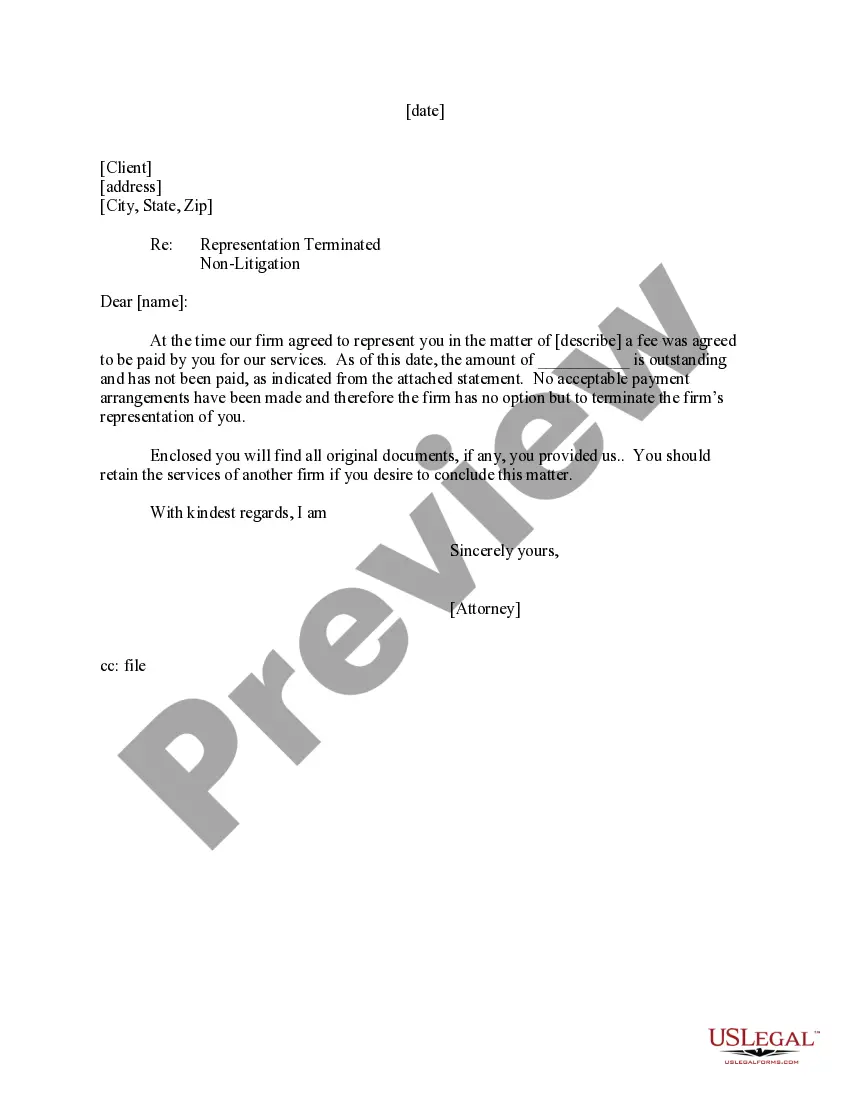
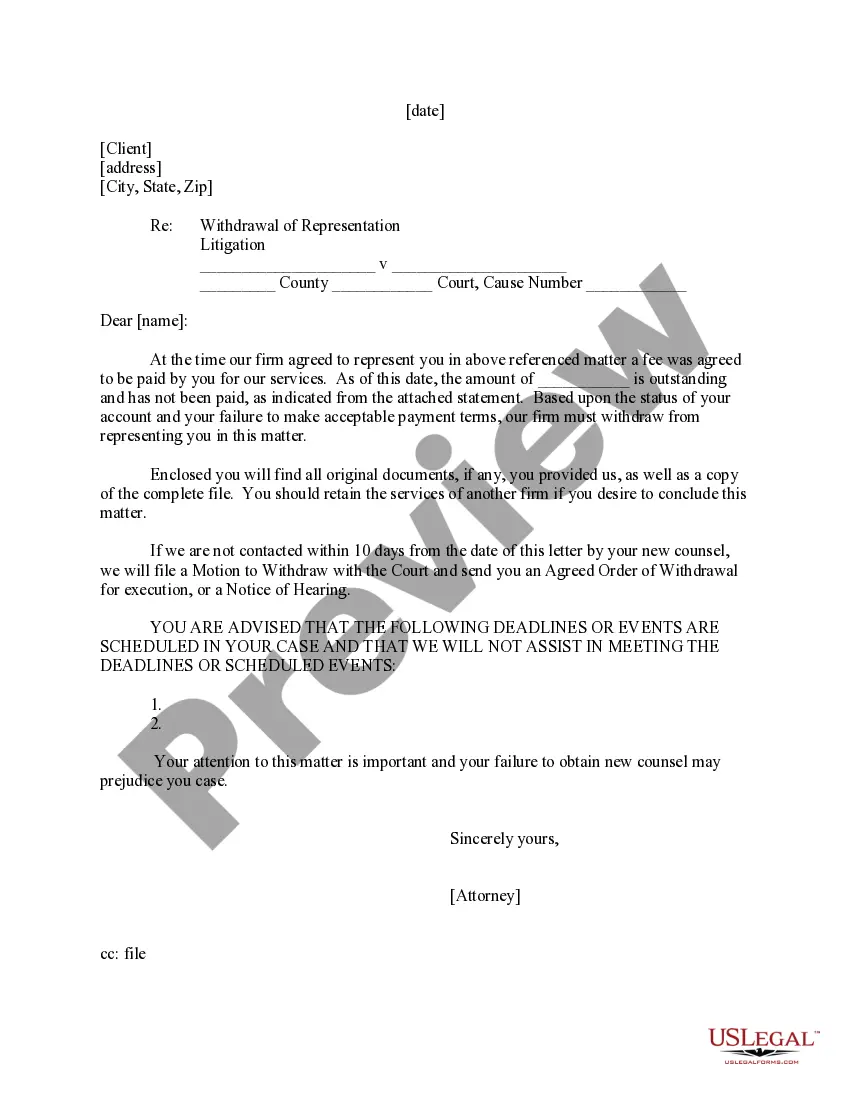
Your disengagement letter should include a succinct list of reasons for why your firm needs to disengage. Your disengagement letter should explain that the client issue(s) requires immediate handling.
Identify the Subject Matter. For your letter to be effective, it needs to be direct to the point. Give Final Reminders. Summarize the Fees. Reaffirm the Termination. Suggest to Save Copies. Describe Any Measures.
Letters of engagement An engagement letter is a contract that defines the legal relationship between a professional firm and its client. It spells out the scope (and limits), as well as the terms and conditions of the engagement. Importantly, it sets out the agreement on billing rates and policies.
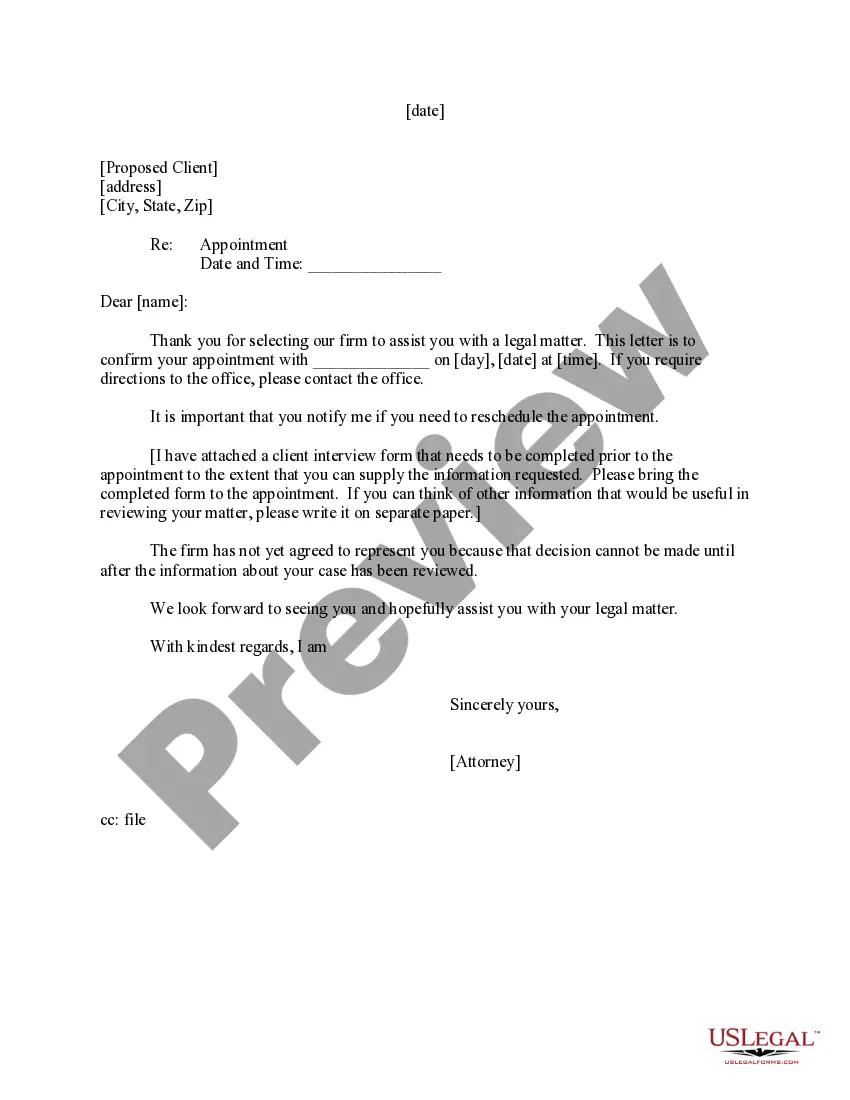
A non-engagement letter informs prospective clients that the attorney will not be representing them.This is done after consulting with a potential clientformally or informallyand deciding that they will not or cannot represent them.