Controlled Understand Substance Formula
Description
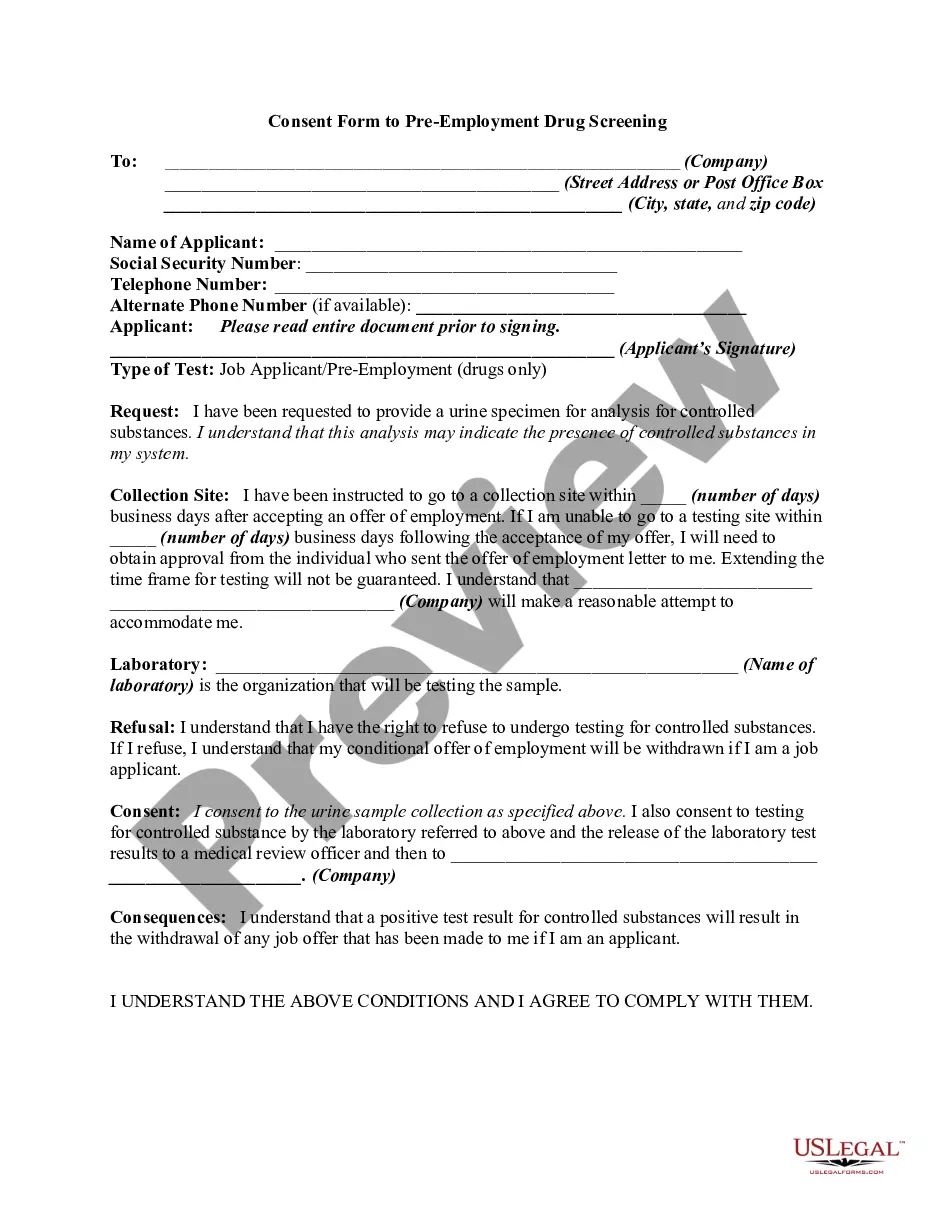

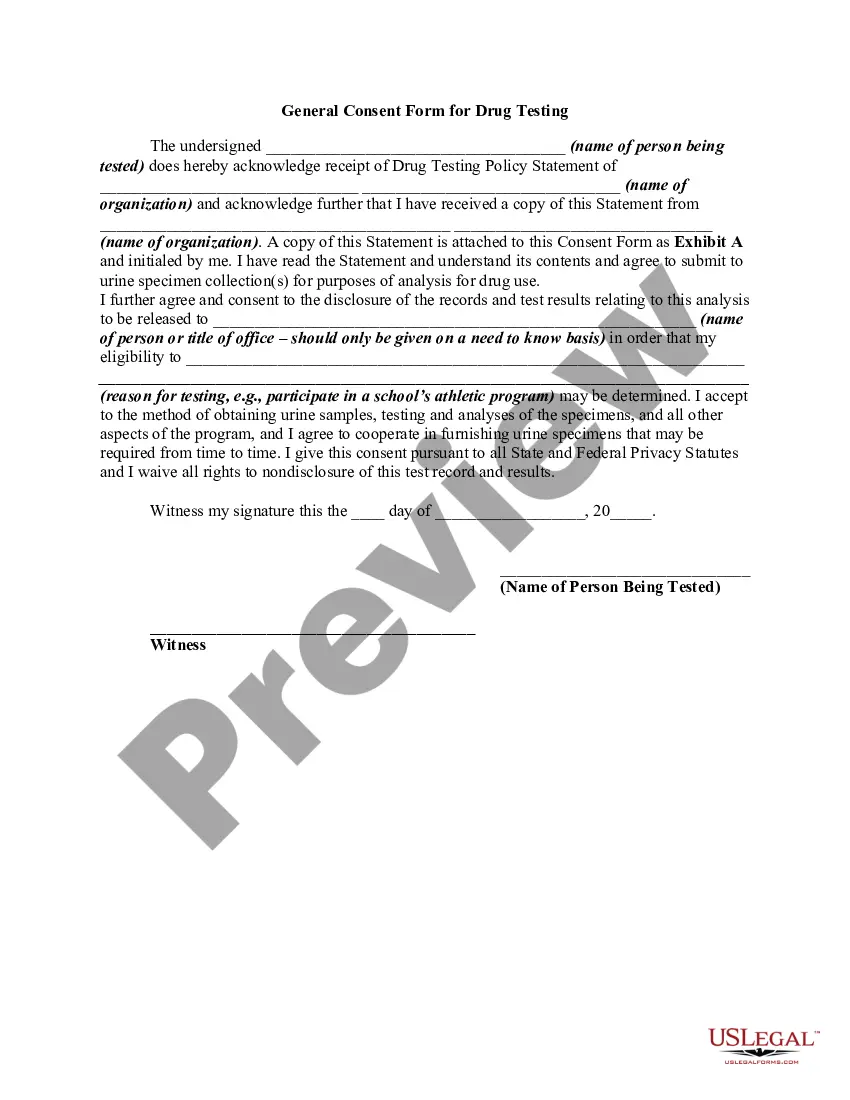
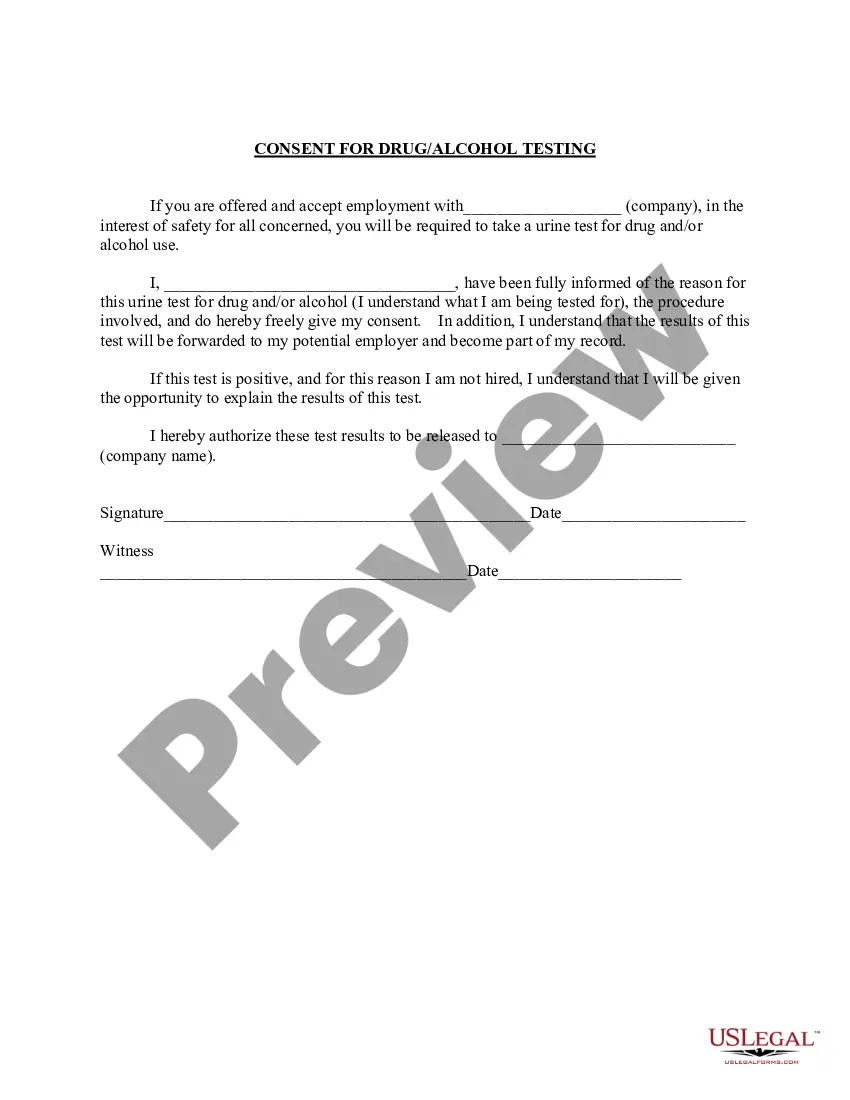
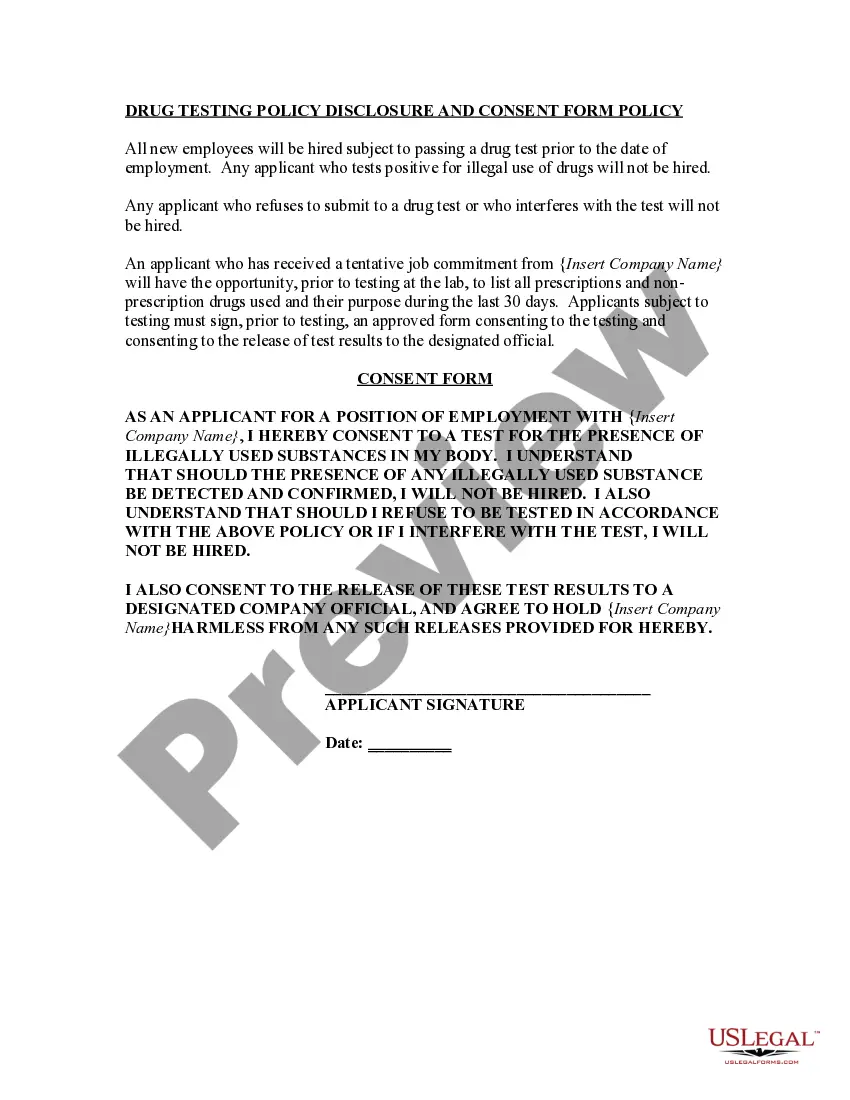
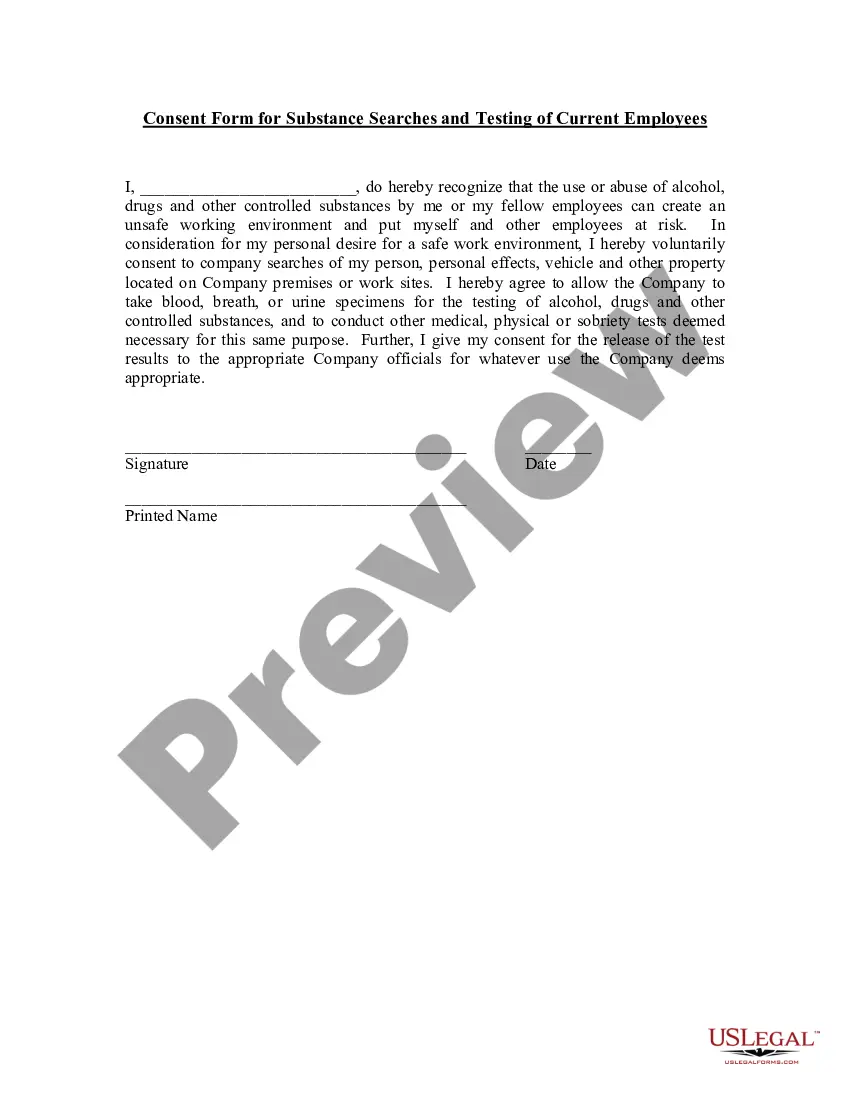

How to fill out Consent Form To Pre-Employment Drug Screening?
It’s clear that overnight you can’t transform into a legal expert, nor can you swiftly comprehend how to efficiently formulate a Controlled Substance Formula without possessing a particular skill set.
Drafting legal documents is an extensive procedure that necessitates specific training and capabilities. So why not delegate the creation of the Controlled Substance Formula to the specialists.
With US Legal Forms, a vast repository of legal documents, you can discover everything from court filings to templates for internal communication.
You can restore access to your documents from the My documents tab anytime. If you're a current customer, just Log In and locate your desired template from the same tab.
Regardless of the objective of your forms—whether they be financial, legal, or personal—our website has you covered. Experience US Legal Forms now!
- Navigate to the search bar located at the top of the page to find the form you require.
- Preview it (if this feature is available) and review the accompanying description to ascertain if the Controlled Substance Formula meets your needs.
- If you require an alternative form, restart your search.
- Create a free account and select a subscription plan to acquire the template.
- Select Buy now. Once the payment is completed, you can download the Controlled Substance Formula, fill it out, print it, and send or mail it to the appropriate recipients or organizations.
Form popularity
FAQ
It is a unit of measurement of mass in the metric system that is equal to a thousandth of a gram. A gram is equal to the mass of 1 milliliter, which is one-thousandth of a liter of water at 39.2° F. For example, 1000 mg = 1 g. 3/4.
Medication concentrations are often written as a number followed by a percent sign (e.g., 2%), which implies a specific weight/volume concentration of g/100 units.
A basic formula, solving for x, guides us in the setting up of an equation: D/H x Q = x, or desired dose (amount) = ordered dose amount/amount on hand x quantity.
Answer Step 1The dosage of the drug is 3mg/kg of bodyweight/day.Step 2The patient weighs 40kg.Step 3Daily dose (mg/day) = weight (kg) x dosage (mg/kg/day) Daily dose (mg/day) = 40kg x 3mg/kg/day = 120mg/day.Step 4The patient must take the drug 2 times per day. Single dose (mg/dose) = = = 60mg/dose.1 more row
How to Write a Prescription in 4 Parts Patient's name and another identifier, usually date of birth. Medication and strength, amount to be taken, route by which it is to be taken, and frequency. Amount to be given at the pharmacy and number of refills. Signature and physician identifiers like NPI or DEA numbers.