Diy At Home Drug Test
Description
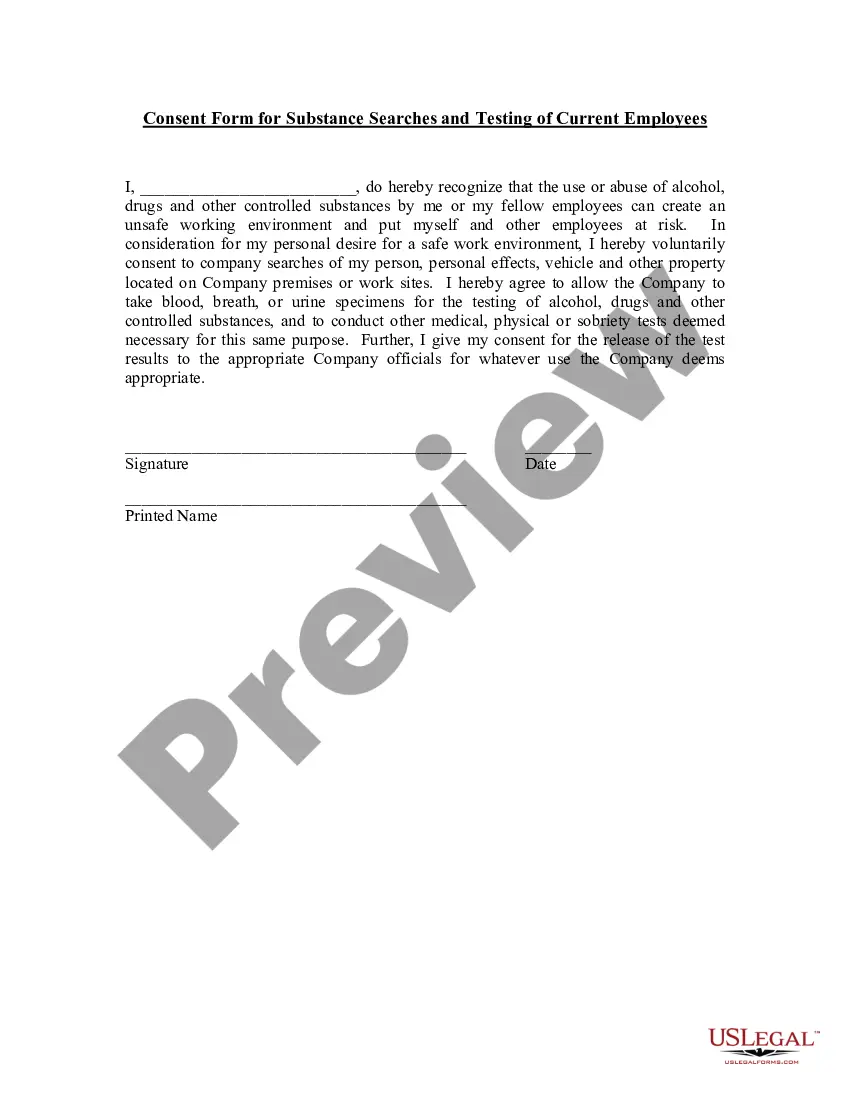
Get your form ready online
Our built-in tools help you complete, sign, share, and store your documents in one place.
Make edits, fill in missing information, and update formatting in US Legal Forms—just like you would in MS Word.
Download a copy, print it, send it by email, or mail it via USPS—whatever works best for your next step.
Sign and collect signatures with our SignNow integration. Send to multiple recipients, set reminders, and more. Go Premium to unlock E-Sign.
If this form requires notarization, complete it online through a secure video call—no need to meet a notary in person or wait for an appointment.
We protect your documents and personal data by following strict security and privacy standards.

Make edits, fill in missing information, and update formatting in US Legal Forms—just like you would in MS Word.

Download a copy, print it, send it by email, or mail it via USPS—whatever works best for your next step.

Sign and collect signatures with our SignNow integration. Send to multiple recipients, set reminders, and more. Go Premium to unlock E-Sign.

If this form requires notarization, complete it online through a secure video call—no need to meet a notary in person or wait for an appointment.

We protect your documents and personal data by following strict security and privacy standards.
Looking for another form?
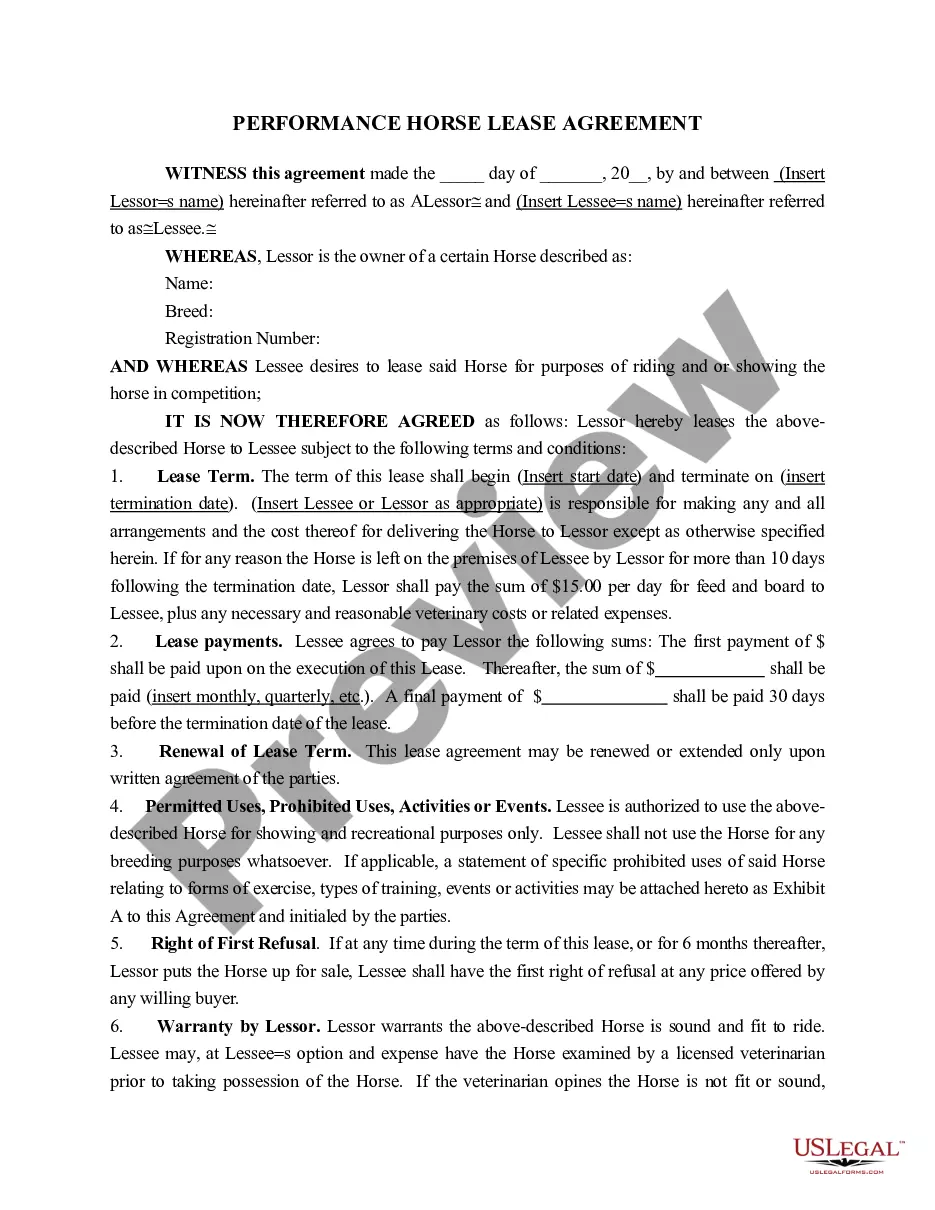

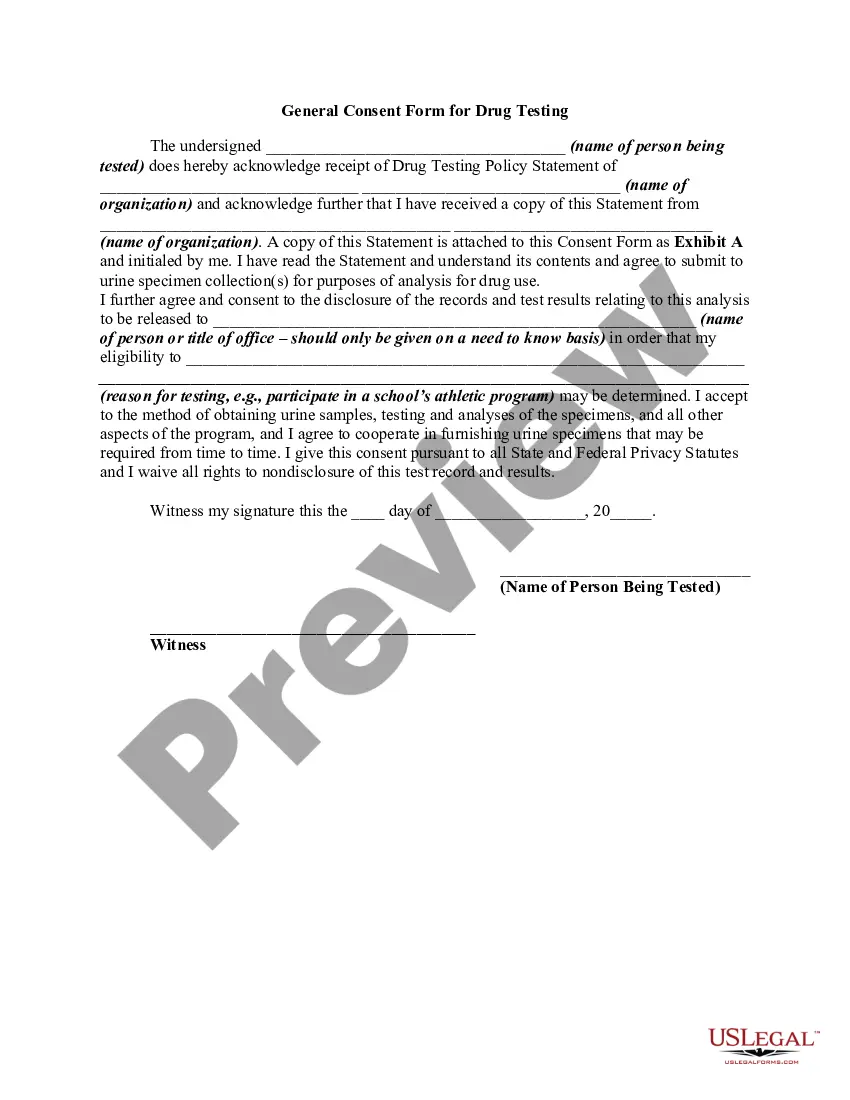
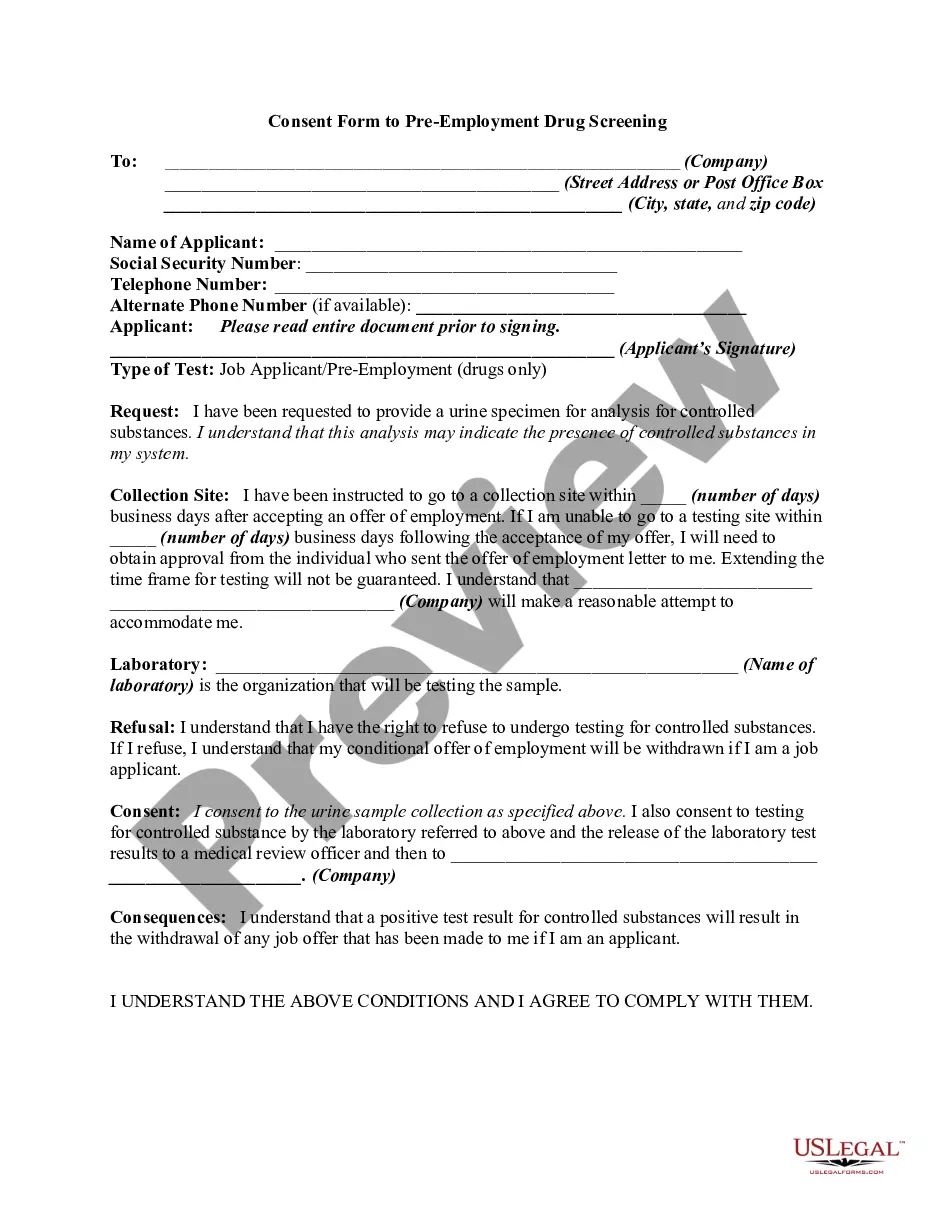
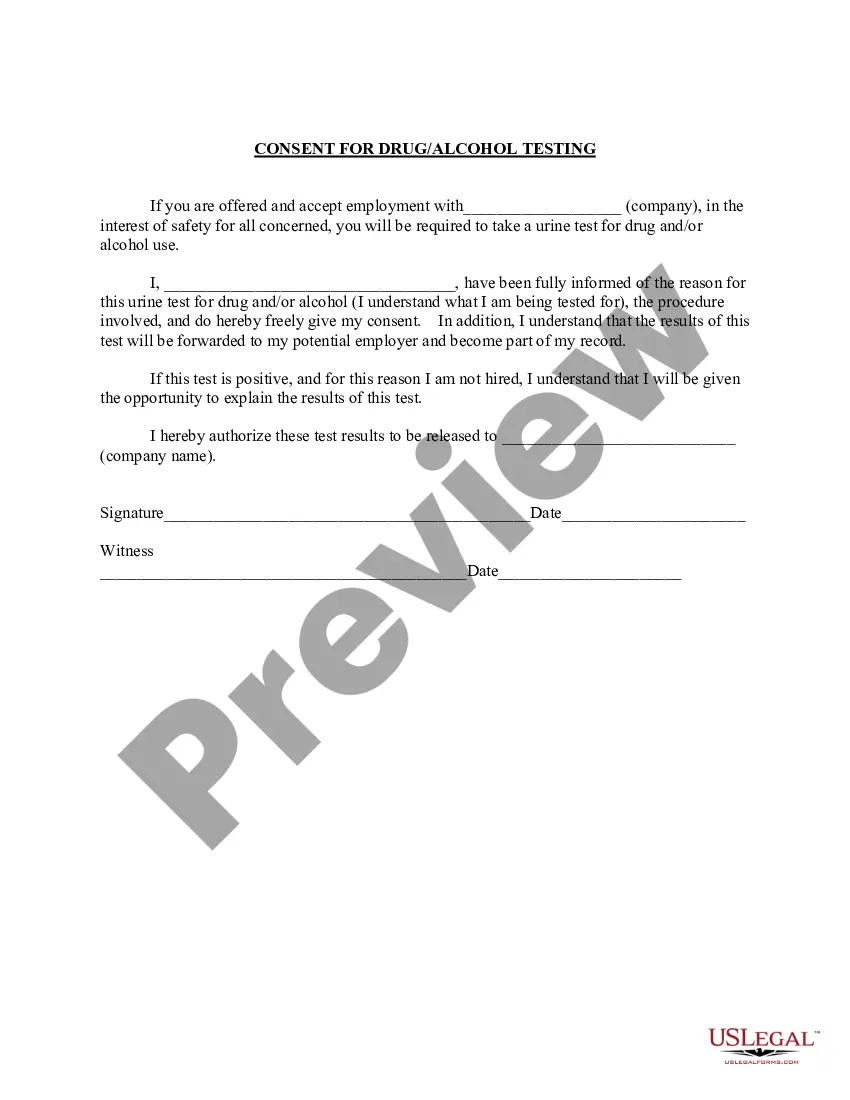
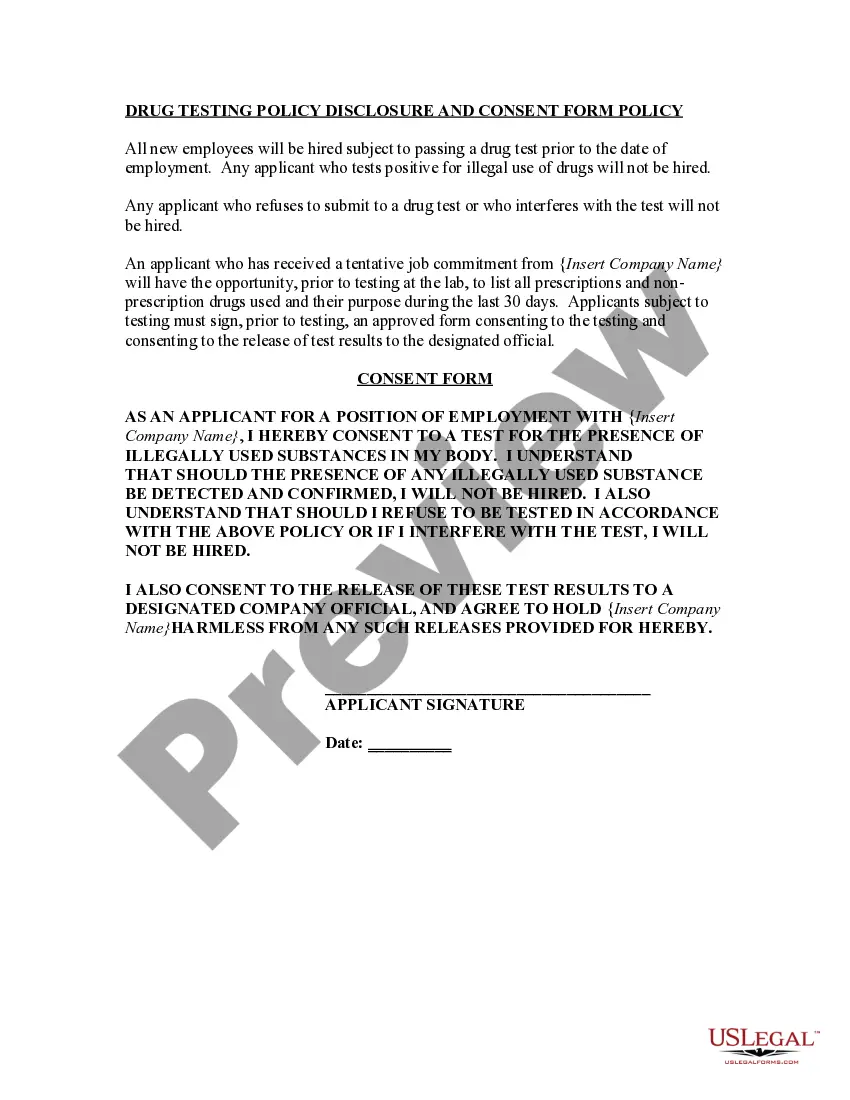
How to fill out General Consent Form For Drug Testing?
- If you've previously used US Legal Forms, log in to your account. Check that your subscription is active, and download the appropriate test template by clicking the Download button.
- For first-time users, start by reviewing the Preview mode and form descriptions to ensure you've selected the right template that aligns with your local jurisdiction's requirements.
- If you encounter any issues or require a different template, utilize the Search tab above to locate the appropriate form.
- Once you've found the correct document, click the Buy Now button to select a suitable subscription plan and create your account for access.
- Complete your purchase by entering your payment information or using PayPal for a seamless transaction.
- Finally, download the form to your device for easy access and completion, and find it later in the My Forms section of your profile.
By harnessing the robust capabilities of US Legal Forms, users can create, manage, and access legal documents with ease and confidence. The site’s extensive library of over 85,000 forms helps ensure that you are utilizing the most accurate templates available.
Empower yourself today by experiencing the convenience of US Legal Forms. Start your journey towards effective legal documentation now!
Form popularity
FAQ
Certain actions and substances can throw off your DIY at home drug test results. This includes excessive hydration, consumption of specific foods or medications, and attempts to tamper with the sample. Even common pain relievers can sometimes lead to unexpected results. To ensure reliability, stick to clear instructions and avoid anything that could alter your test conditions.
There are several factors that could lead to a negative result on a DIY at home drug test. For instance, the absence of the substance in question, timing of ingestion, and personal metabolism play critical roles. Additionally, using detox products or tampering with the test can also result in a negative outcome. However, these methods are not reliable and can carry risks, so it's best to take the test honestly.
If you drink 2 liters of water, your body might process this quickly, but the amount you should 'pass' isn't definitive. It depends on various factors such as your overall health, activity level, and the time frame between drinking water and taking your DIY at home drug test. To maintain effective hydration without risking dilution, drink moderate amounts and allow your body to adjust.
Manipulating a DIY at home drug test to yield a false negative can involve several approaches, but they are not advisable and can be illegal. Common methods include excessive hydration, using detox drinks, or introducing substances that mask drug presence. However, it's crucial to remember that these practices can lead to serious consequences and are not a reliable solution. For peace of mind, consider taking the test honestly to ensure accurate assessment.
Drinking 2 liters of water can potentially lead to a diluted result, especially if consumed too close to the time of the DIY at home drug test. While individual tolerance varies, exceeding the normal daily intake in a short period can certainly affect your sample. For most accurate results, it's best to maintain a balanced hydration level throughout the day.
A diluted result on your DIY at home drug test typically occurs when you consume excessive amounts of water. Generally, drinking more than 3 liters within a few hours can significantly dilute your urine. This can lead to inconclusive results or a 'negative' outcome, which may not reflect your actual status. Balance your hydration to maintain the integrity of your test.
Various substances can interfere with a DIY at home drug test. Over-the-counter medications, alcohol, and even certain foods can yield inaccurate results. Furthermore, using tampering agents or additives to mask drug presence can also lead to unreliable outcomes. For the best results, it's wise to avoid these interferences prior to taking your test.
It's advisable to drink water in moderation leading up to your DIY at home drug test. Drinking excessive water right before the test can dilute your urine, potentially affecting your results. Aim to stay hydrated in the days before the test, but avoid overdoing it in the hours just prior. This ensures your body has enough time to process the fluids without compromising the test.
Several factors can lead to a false negative on a DIY at home drug test. Some medications, certain medical conditions, and the timing of the test can affect the results. Additionally, if the substance being tested was consumed too long before the test, it might not be detected. It's important to follow the testing instructions closely for accurate results.
To do a rapid drug test, start by following the guidelines in the kit that comes with your DIY at home drug test. Typically, you will need to collect a fluid sample and place it into the testing device. After a few minutes, observe the results based on the indicators provided. Make sure to consult specific instructions, as different tests may vary slightly.