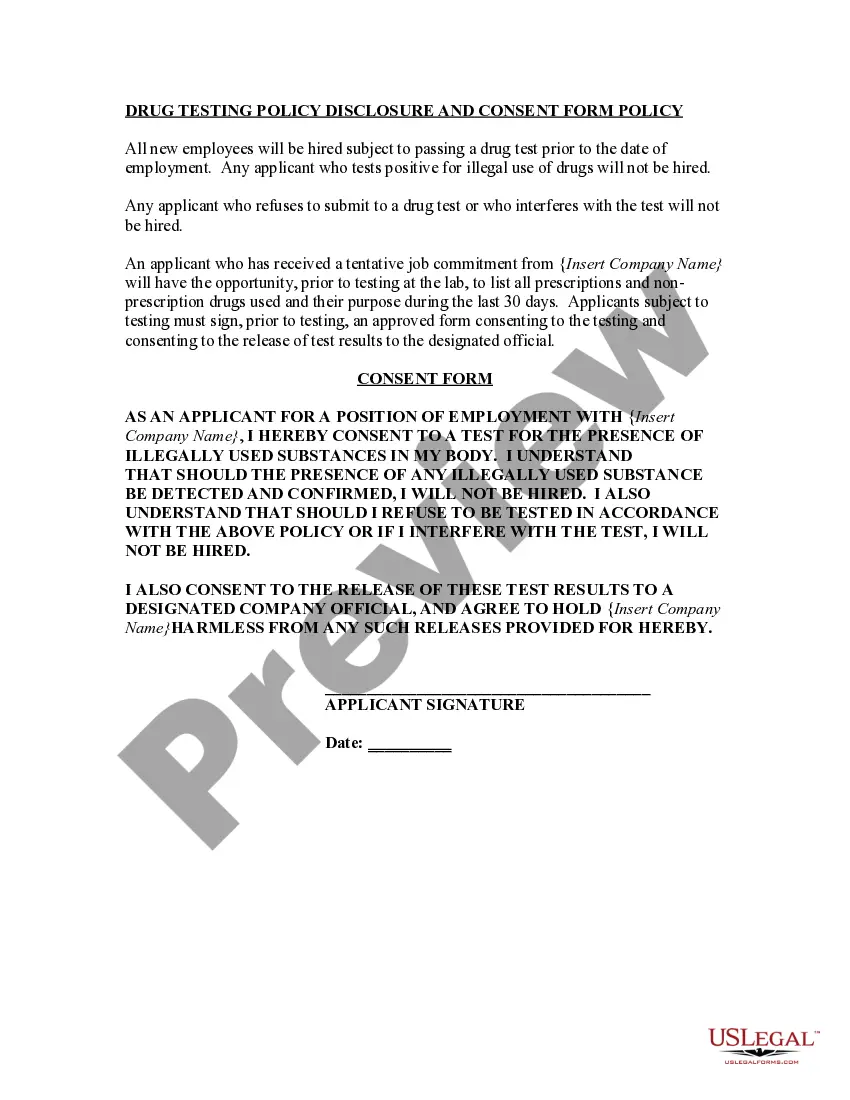
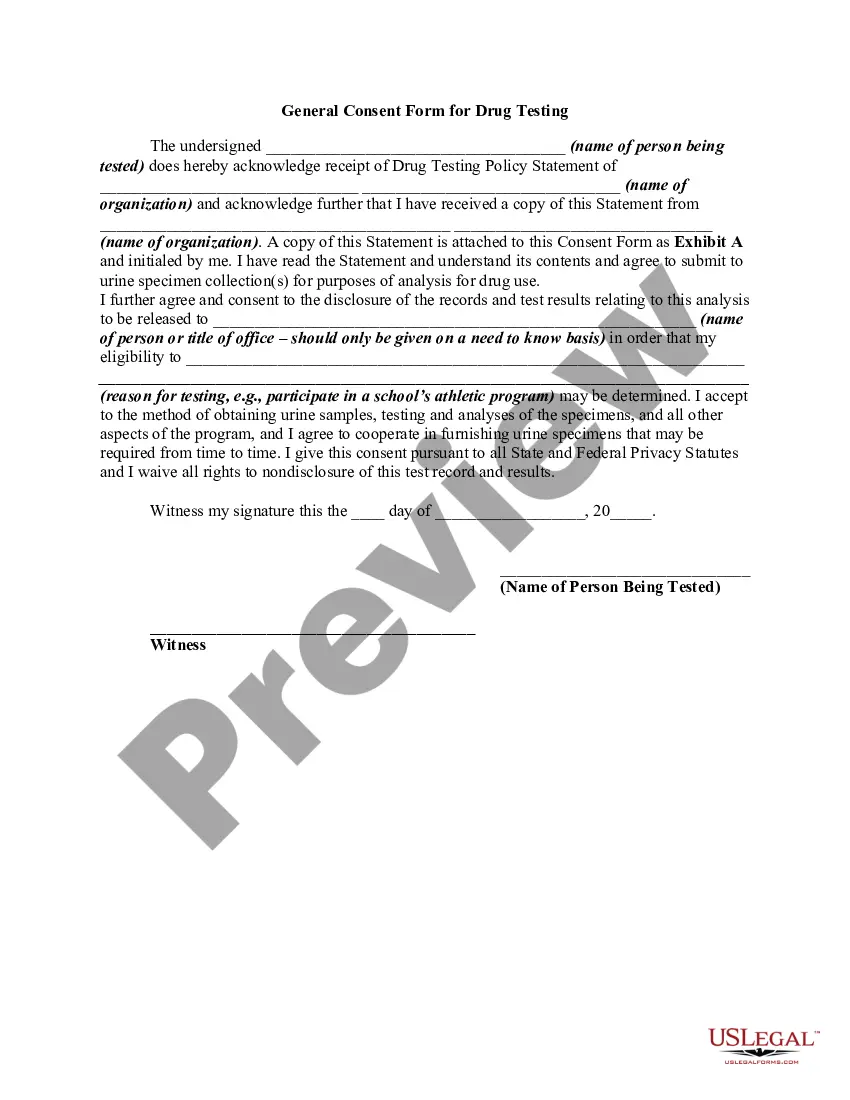
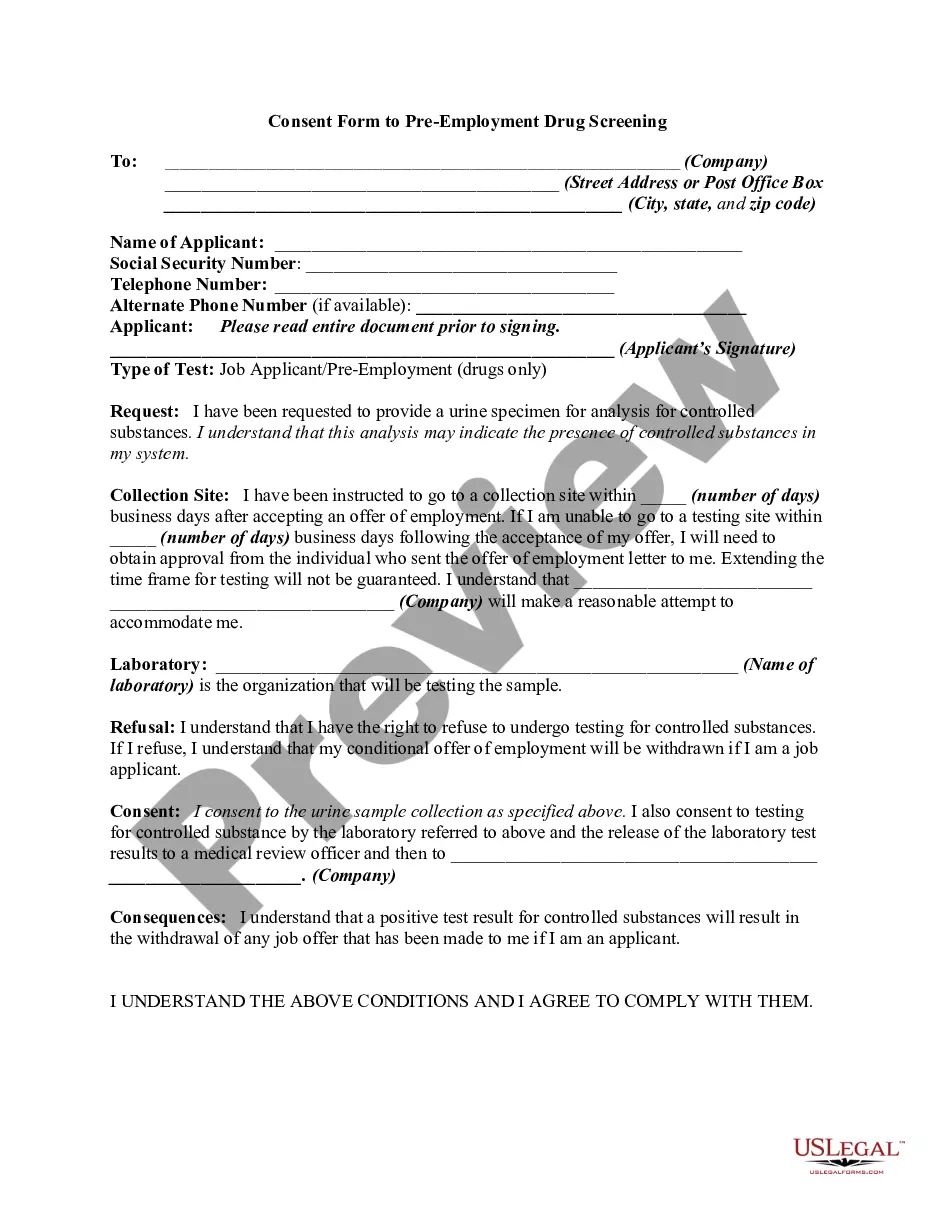
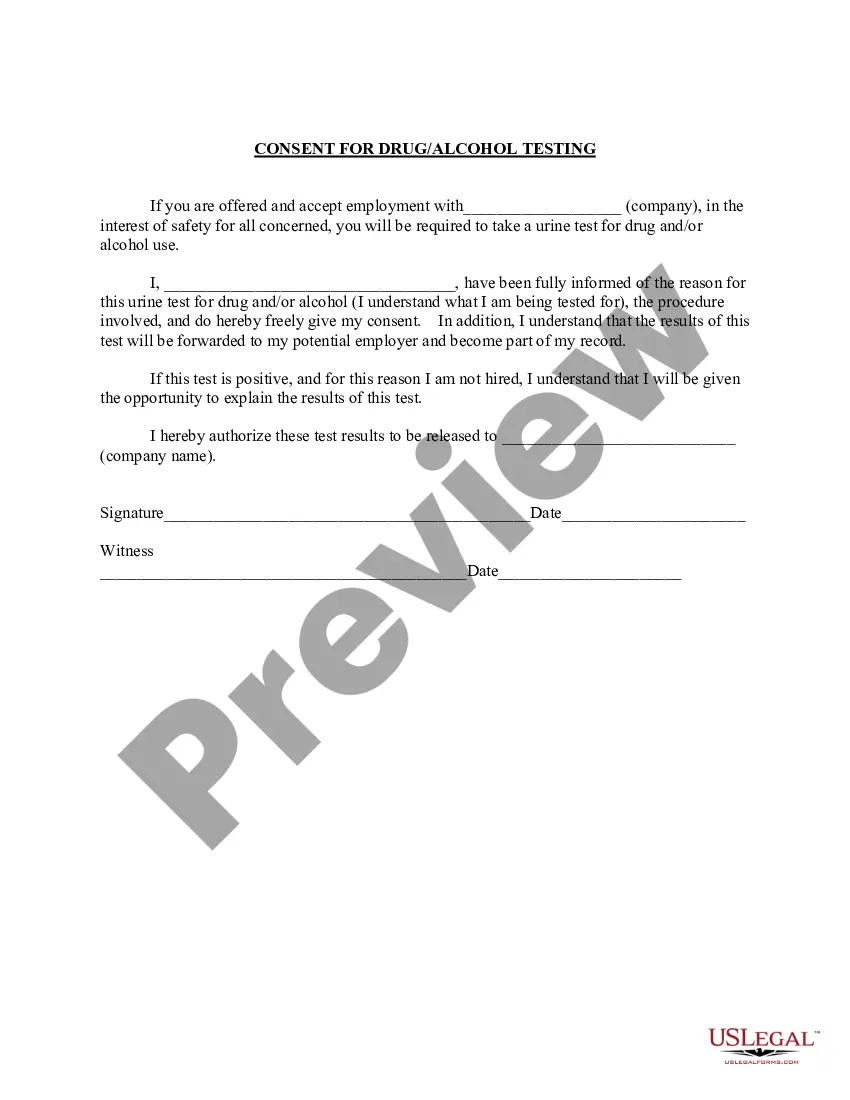
4-panel Drug Test For Employment
Description
Get your form ready online
Our built-in tools help you complete, sign, share, and store your documents in one place.
Make edits, fill in missing information, and update formatting in US Legal Forms—just like you would in MS Word.
Download a copy, print it, send it by email, or mail it via USPS—whatever works best for your next step.
Sign and collect signatures with our SignNow integration. Send to multiple recipients, set reminders, and more. Go Premium to unlock E-Sign.
If this form requires notarization, complete it online through a secure video call—no need to meet a notary in person or wait for an appointment.
We protect your documents and personal data by following strict security and privacy standards.

Make edits, fill in missing information, and update formatting in US Legal Forms—just like you would in MS Word.

Download a copy, print it, send it by email, or mail it via USPS—whatever works best for your next step.

Sign and collect signatures with our SignNow integration. Send to multiple recipients, set reminders, and more. Go Premium to unlock E-Sign.

If this form requires notarization, complete it online through a secure video call—no need to meet a notary in person or wait for an appointment.

We protect your documents and personal data by following strict security and privacy standards.
Looking for another form?
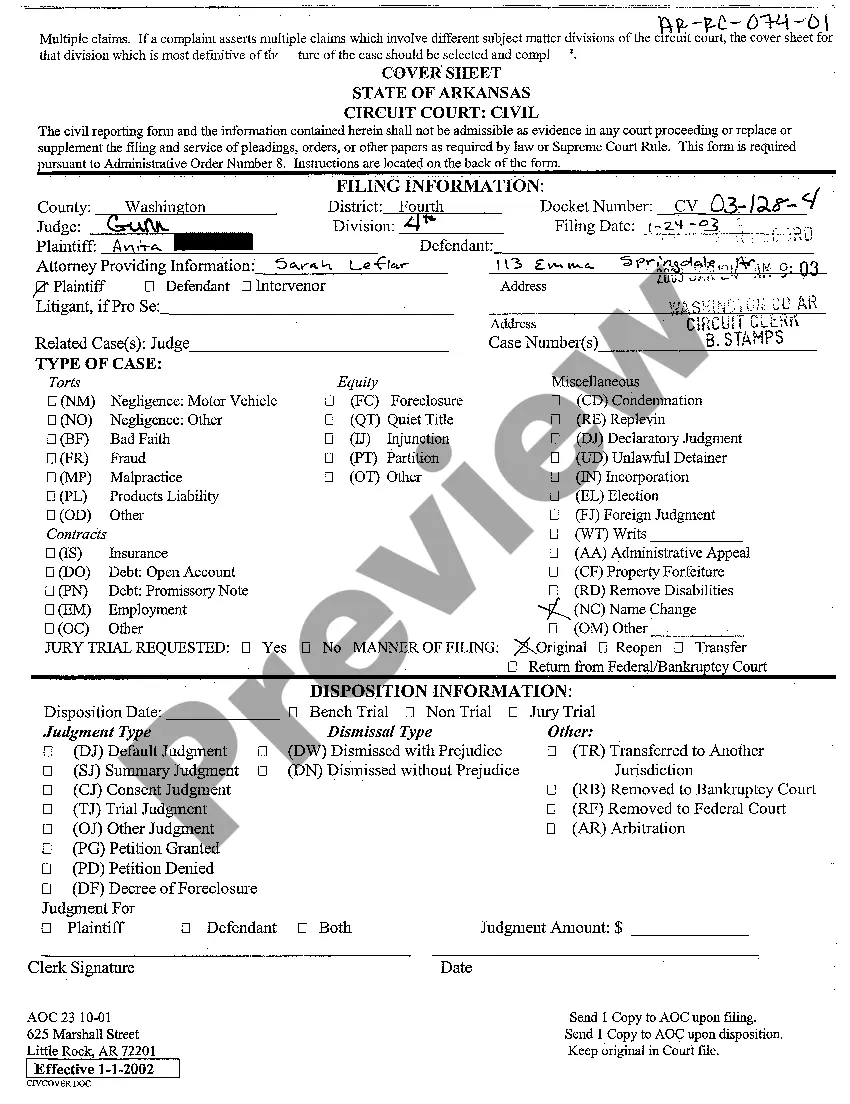






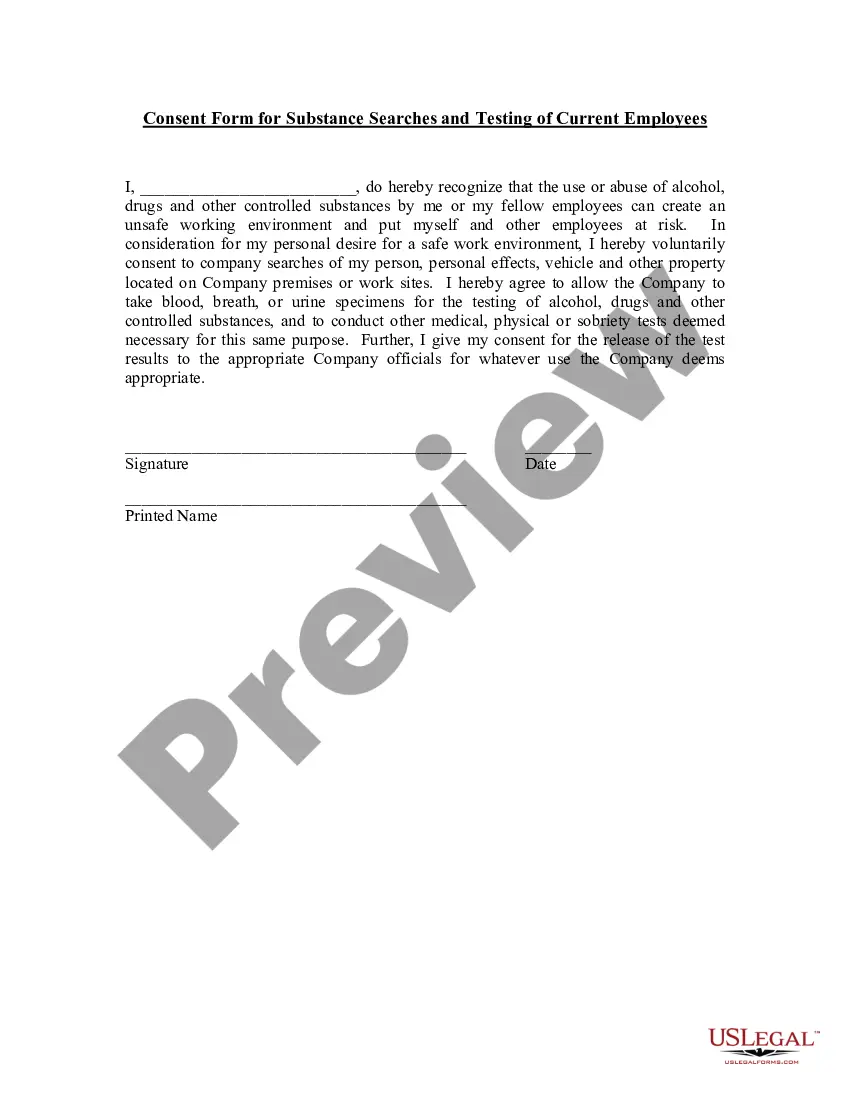
How to fill out Drug Testing Policy Disclosure And Consent Form?
The 4-panel Drug Screening For Employment displayed on this page is a reusable official template created by experienced attorneys in alignment with federal and state regulations.
For over 25 years, US Legal Forms has supplied individuals, enterprises, and lawyers with over 85,000 validated, state-specific documents for any business and personal need. This service offers the quickest, most direct, and most dependable method to acquire the necessary paperwork, as it ensures the highest level of data security and anti-malware safeguards.
Reuse the document as needed. Access the My documents tab in your account to redownload any forms you have previously bought. Register for US Legal Forms to have authenticated legal templates for all of life's situations readily available.
- Search for the document you need and examine it.
- Browse the file you searched and preview it or assess the form description to ensure it meets your requirements. If it doesn’t, utilize the search feature to find the correct one. Click Buy Now once you have found the template you require.
- Choose a pricing plan that fits your needs and create an account. Use PayPal or a credit card to make a swift payment. If you already possess an account, Log In and verify your subscription to proceed.
- Select the format you prefer for your 4-panel Drug Screening For Employment (PDF, Word, RTF) and download the template onto your device.
- Print the template to complete it by hand. Alternatively, employ an online versatile PDF editor to easily and accurately fill out and sign your document with a valid signature.
Form popularity
FAQ
The sensitivity of a 4-panel drug test for employment varies depending on the specific substances being tested. Typically, these tests can detect common drugs at levels that indicate recent use. This level of sensitivity helps ensure that only individuals who have used drugs above a certain threshold will receive a positive result. You can trust that US Legal Forms provides reliable options for implementing these tests in your hiring process.
A drug test looks for signs of one or more illegal or prescription drugs in a sample of your urine (pee), blood, saliva (spit), hair, or sweat. The purpose of a drug test is to look for drug use and misuse, which includes: Using any illegal drugs, such as cocaine or club drugs.
Label a sterile, screw-top container with your name, date of birth and the date. wash your hands (and genitals if possible) start to pee and collect either a "first-catch" or a "mid-stream" sample of urine in the container ? you will be told which type to collect. screw the lid of the container shut.
Four panel drug tests are used to test employees for the use of opiates, marijuana (tetrahydrocannabinol, or THC), cocaine, and methamphetamines. They have become increasingly common in all industries, including the federal government, which must abide by the Drug-Free Workplace Act of 1988.
Urine, blood, breath, saliva, sweat, or hair samples may be used. Urine testing is most common because it is noninvasive, quick, and able to qualitatively detect a wide range of drugs. The window of detection depends on the frequency and amount of drug intake but is about 1 to 4 days for most drugs.
Some of the commonly used colour tests include cobalt thiocyanate (Scott Test for cocaine and related drugs), Marquis (for alkaloids, amphetamines, and opium-related derivatives eg morphine and heroin), Mecke (for alkaloids) and Duquenois-Levine (for marijuana).