Special Needs Trust Provision In Will
Description
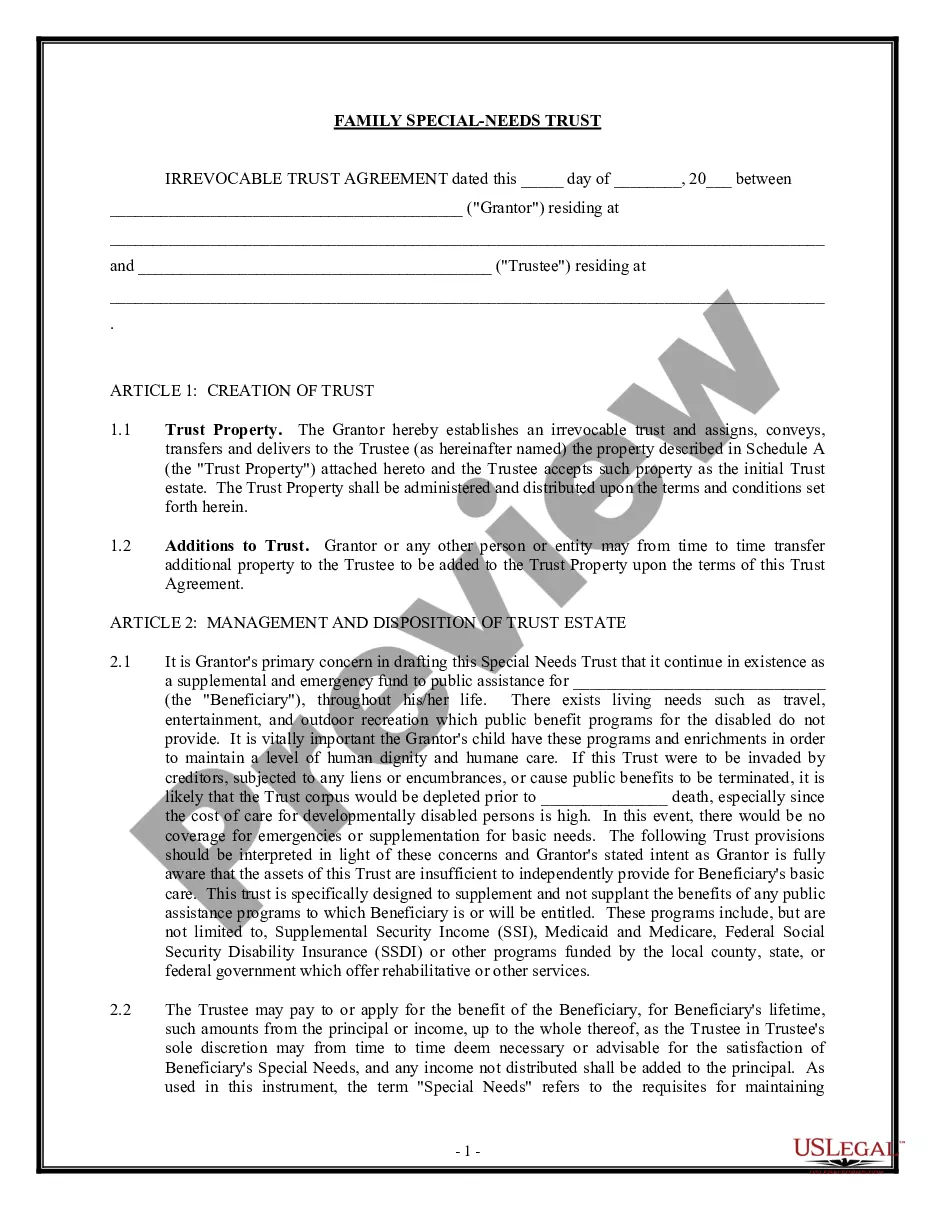
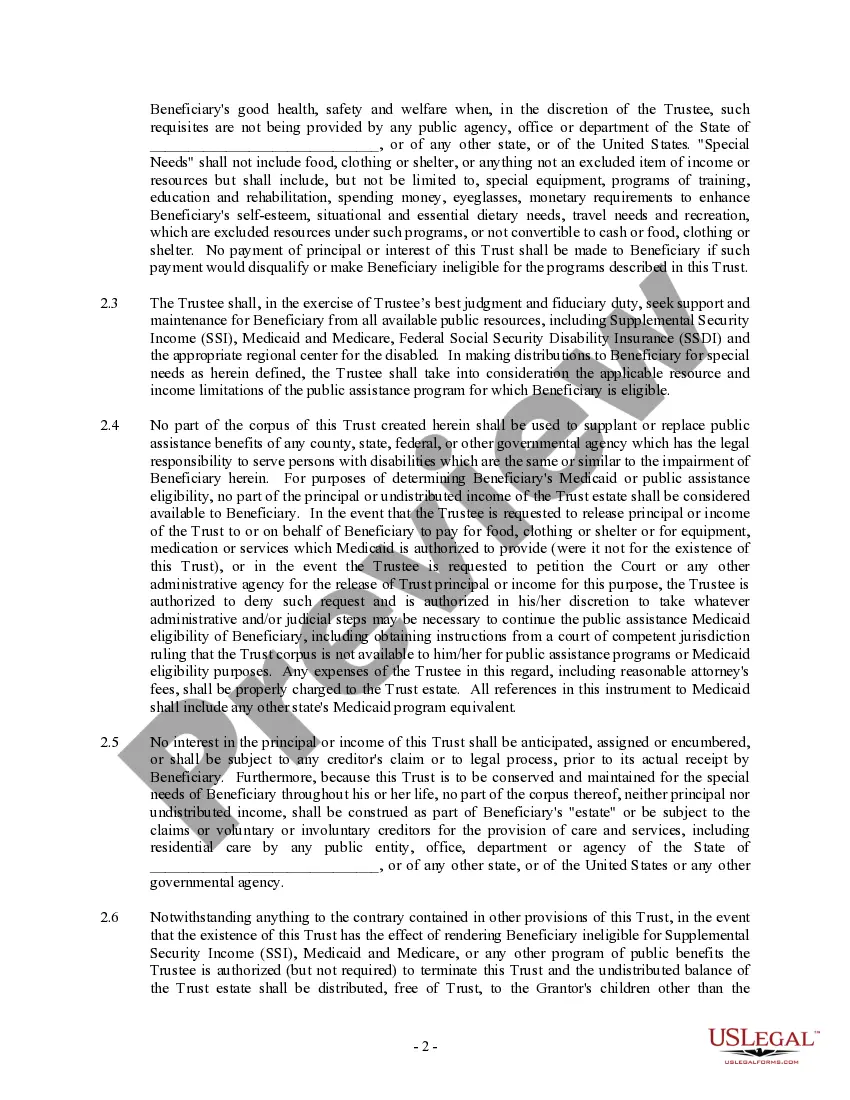
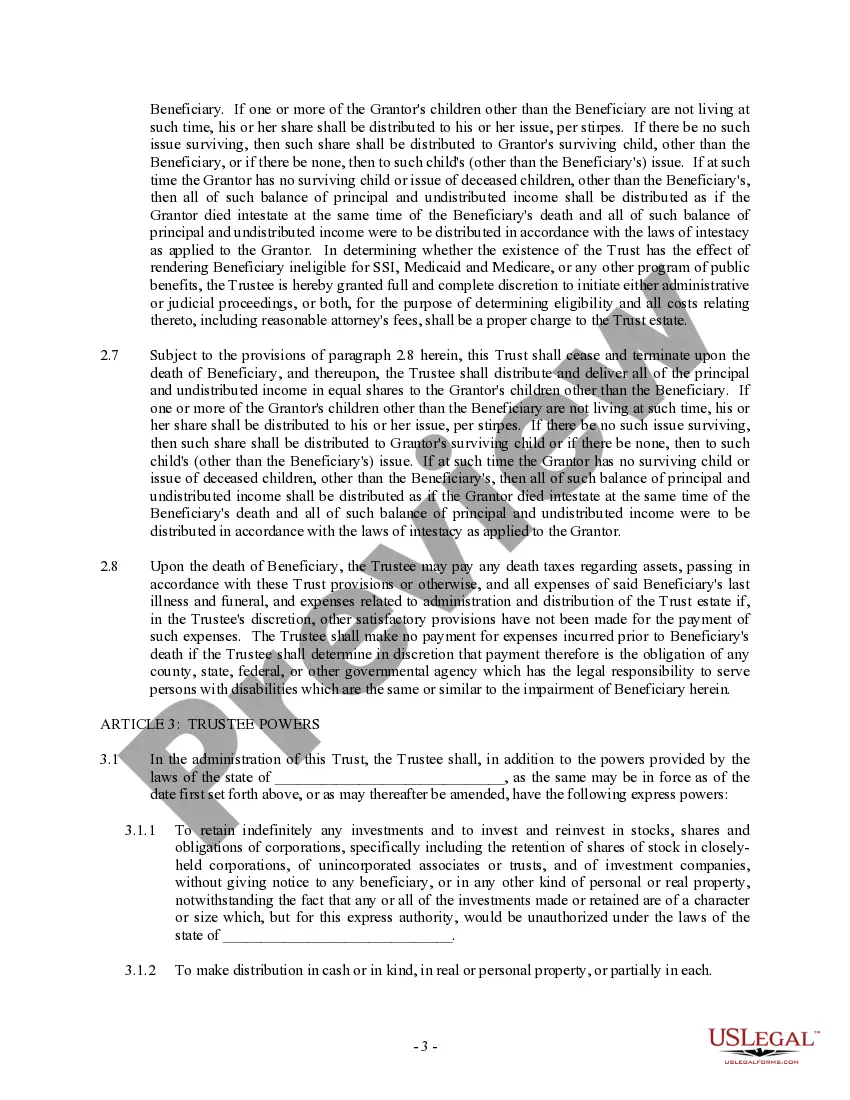
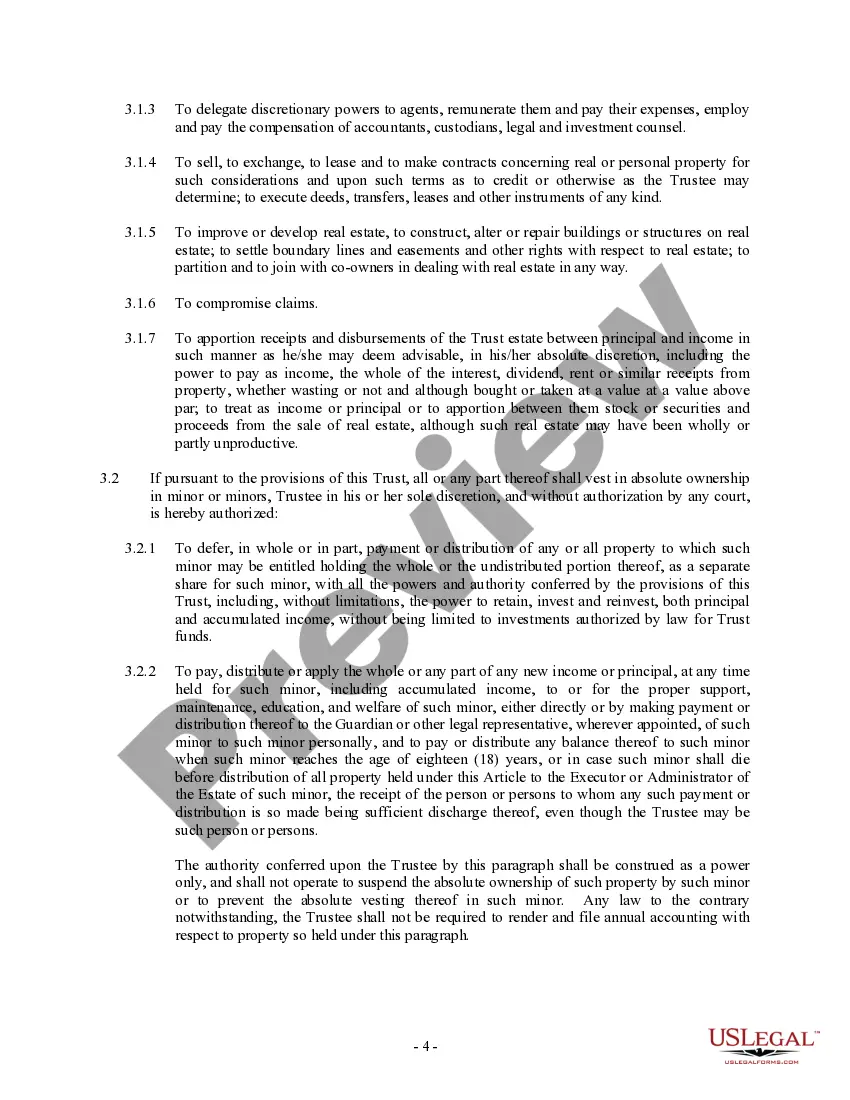
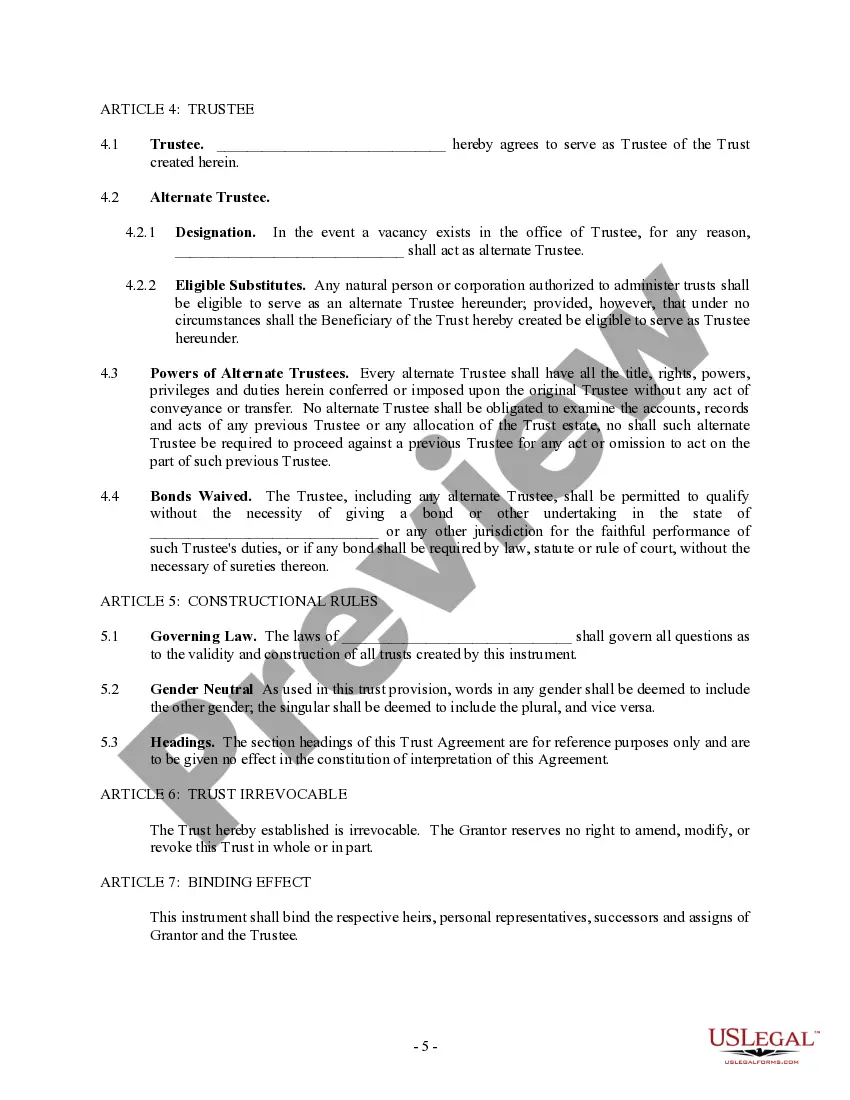

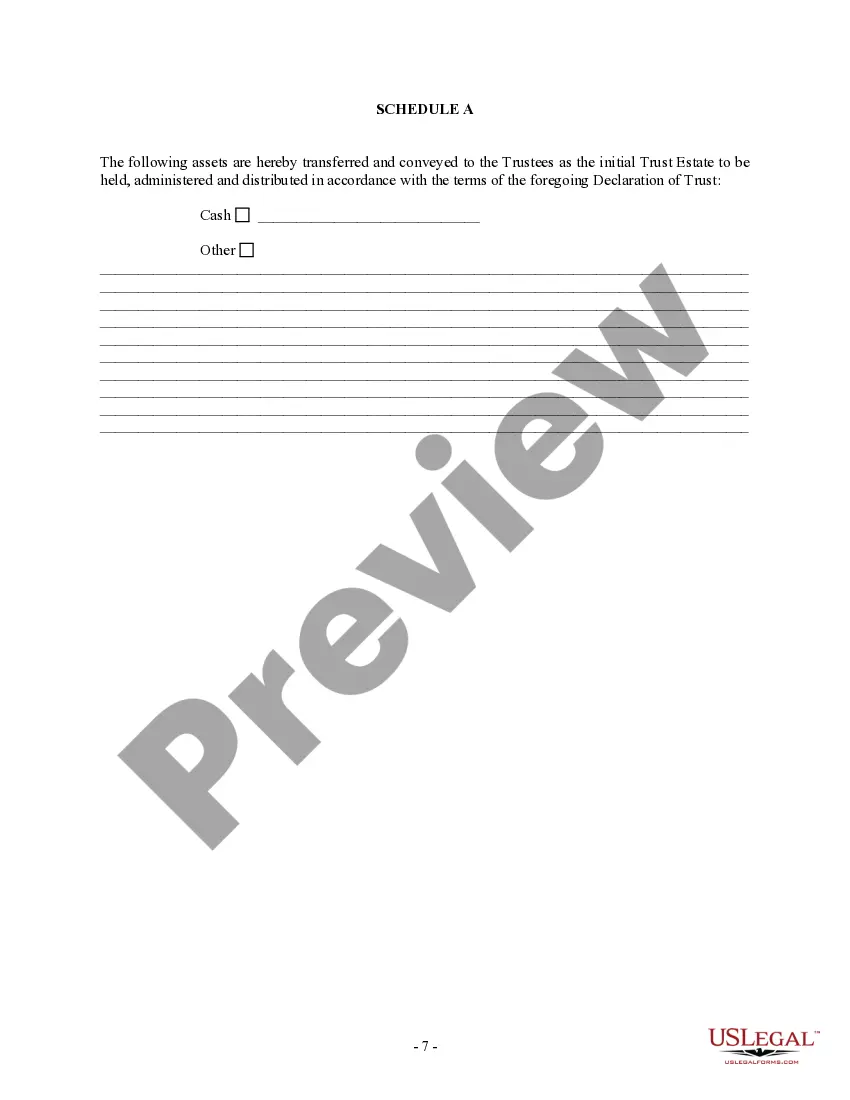
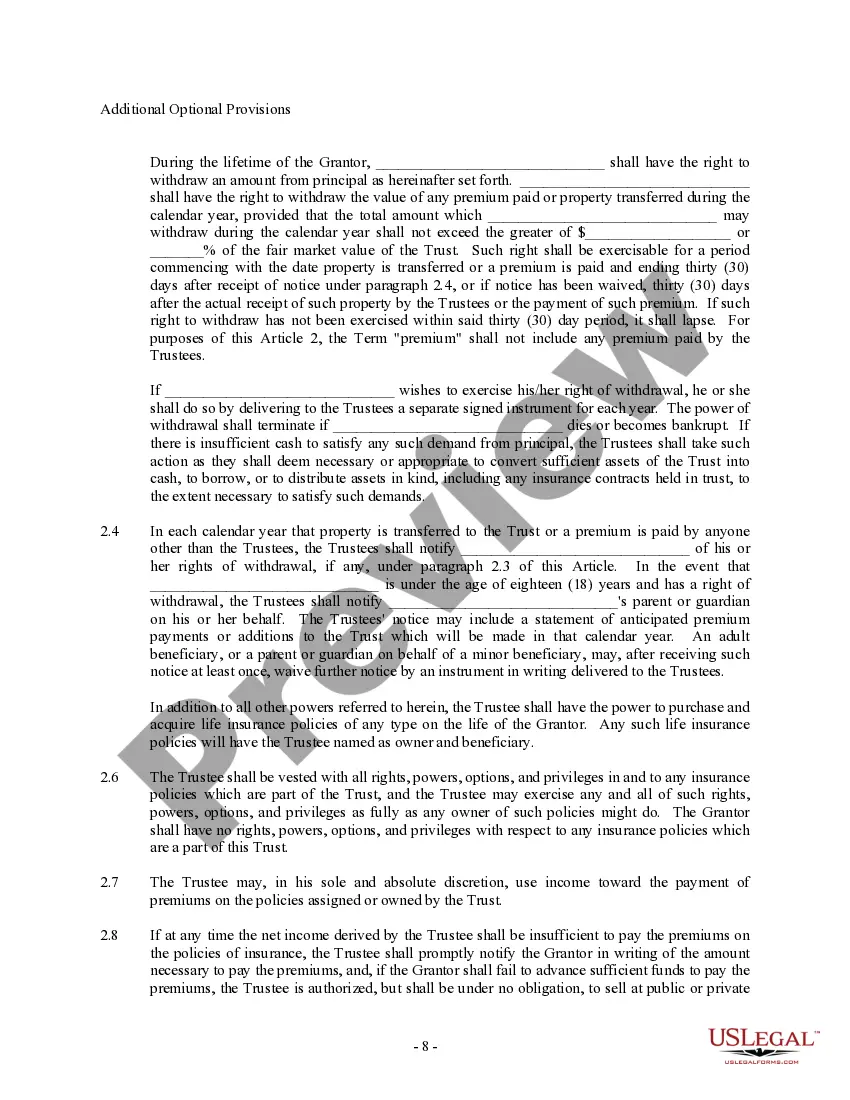
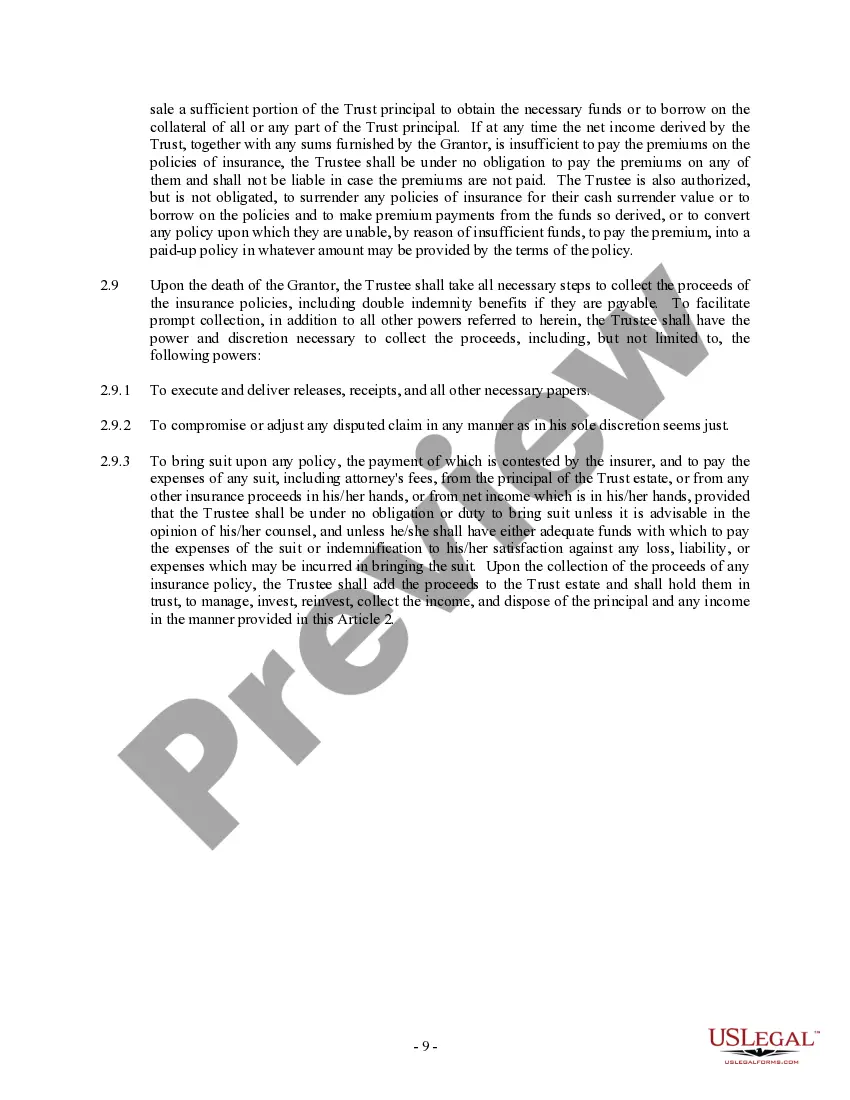


Get your form ready online
Our built-in tools help you complete, sign, share, and store your documents in one place.
Make edits, fill in missing information, and update formatting in US Legal Forms—just like you would in MS Word.
Download a copy, print it, send it by email, or mail it via USPS—whatever works best for your next step.
Sign and collect signatures with our SignNow integration. Send to multiple recipients, set reminders, and more. Go Premium to unlock E-Sign.
If this form requires notarization, complete it online through a secure video call—no need to meet a notary in person or wait for an appointment.
We protect your documents and personal data by following strict security and privacy standards.

Make edits, fill in missing information, and update formatting in US Legal Forms—just like you would in MS Word.

Download a copy, print it, send it by email, or mail it via USPS—whatever works best for your next step.

Sign and collect signatures with our SignNow integration. Send to multiple recipients, set reminders, and more. Go Premium to unlock E-Sign.

If this form requires notarization, complete it online through a secure video call—no need to meet a notary in person or wait for an appointment.

We protect your documents and personal data by following strict security and privacy standards.
Looking for another form?
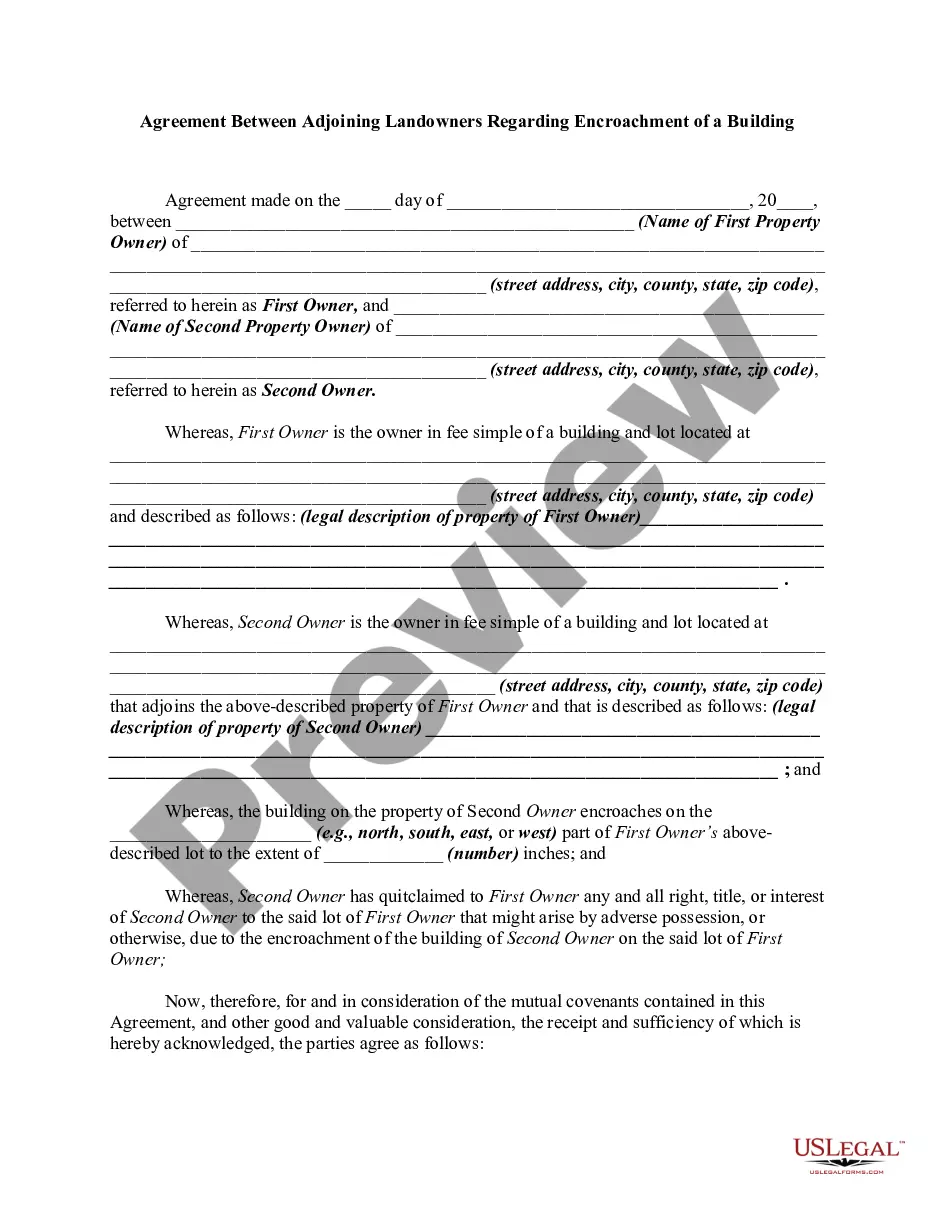



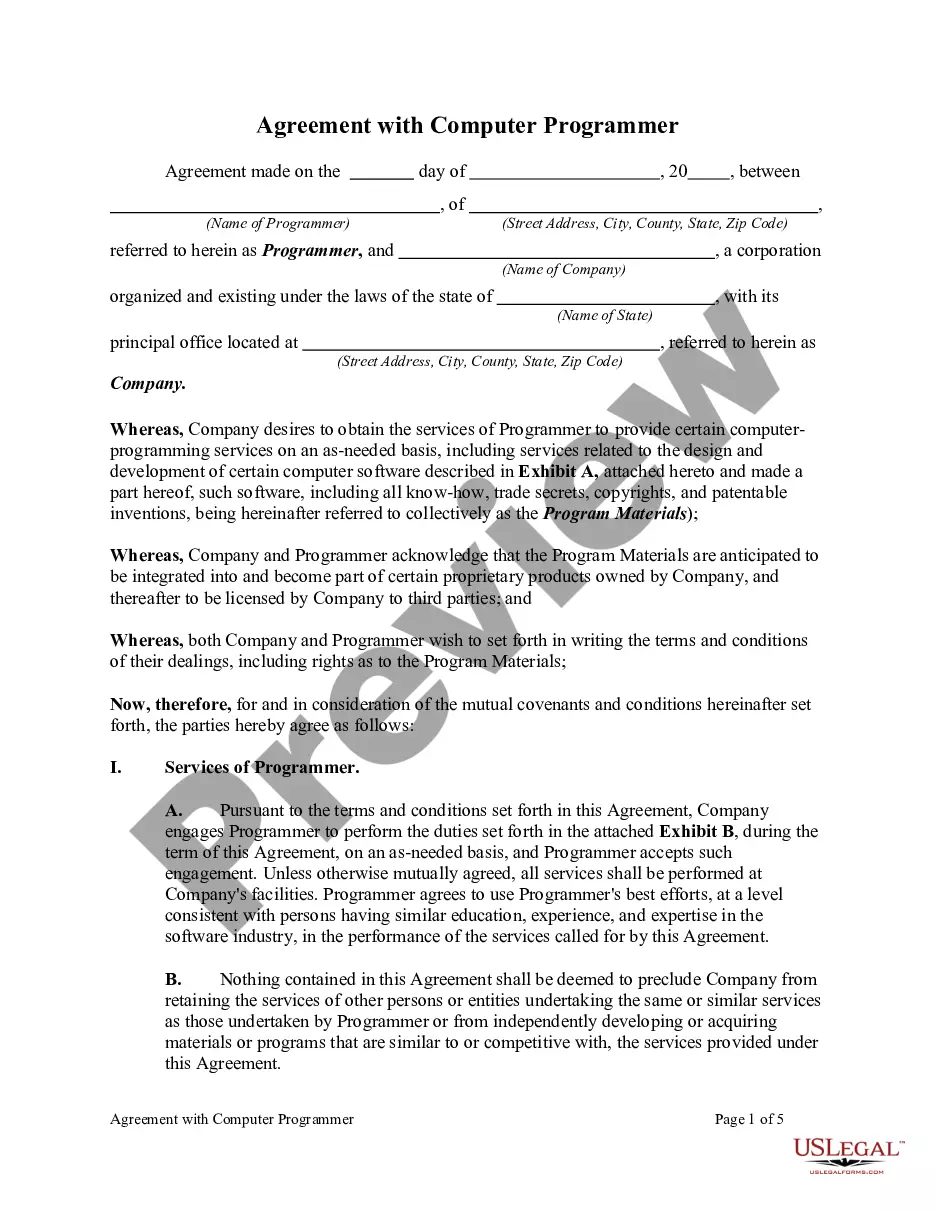

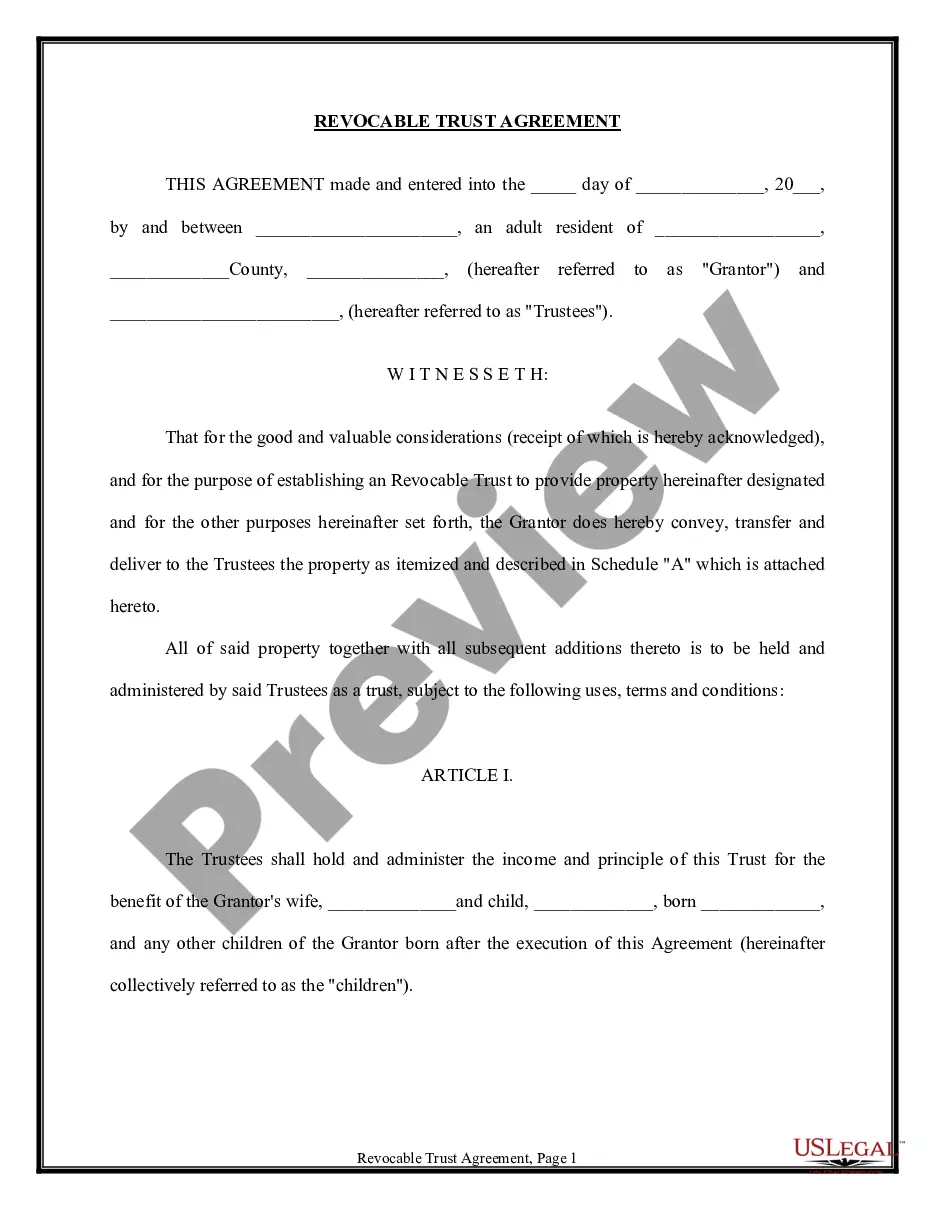
How to fill out Trust Agreement - Family Special Needs?
Identifying a reliable source to obtain the most up-to-date and suitable legal templates is a significant portion of navigating bureaucracy. Securing the correct legal documents requires precision and careful consideration, which is why it is essential to obtain samples of Special Needs Trust Provision In Will exclusively from trustworthy providers, such as US Legal Forms. An incorrect template can squander your time and delay your situation. With US Legal Forms, you have minimal concerns. You can access and review all the specifics regarding the document’s application and relevance for your circumstances and in your jurisdiction.
Follow these steps to finalize your Special Needs Trust Provision In Will.
Eliminate the stress associated with your legal paperwork. Explore the extensive US Legal Forms library where you can discover legal templates, verify their applicability to your situation, and download them right away.
- Utilize the catalog navigation or search function to find your template.
- Examine the form’s description to verify if it aligns with the requirements of your state and area.
- View the form preview, if available, to confirm that it is indeed the template you are looking for.
- Continue your search for the appropriate document if the Special Needs Trust Provision In Will does not fit your requirements.
- If you are certain about the form’s applicability, download it.
- If you are a registered customer, click Log in to verify and access your chosen forms in My documents.
- If you do not possess an account yet, click Buy now to acquire the template.
- Select the pricing option that suits your requirements.
- Proceed to the registration to finalize your purchase.
- Complete your transaction by choosing a payment method (credit card or PayPal).
- Select the document format for downloading Special Needs Trust Provision In Will.
- Once you have the form on your device, you can modify it using the editor or print it out and complete it manually.
Form popularity
FAQ
When a person with a special needs trust provision in a will passes away, the assets in the trust do not automatically go to the beneficiaries. Instead, the trust may need to be reviewed and possibly terminated based on its terms. Any remaining funds typically go to the designated beneficiaries or may be used to settle debts. It is essential to consult with a legal expert to ensure the trust is handled appropriately.
The special needs trust provision in a will can have some disadvantages. One of the primary issues is the complexity involved in setting it up, which may require legal assistance. Additionally, maintaining the trust can incur ongoing administrative costs. Lastly, if not properly managed, funds in the trust might affect eligibility for government benefits.
Yes, Trust & Will offers the option to create a special needs trust provision in your will. This allows you to allocate funds for your loved one with special needs without jeopardizing their eligibility for government benefits. By using Trust & Will, you can ensure that your estate plan accommodates their needs effectively. It’s a straightforward process that provides peace of mind for you and security for your beneficiary.
The 5 year rule refers to the period during which assets placed in a special needs trust may be subject to certain eligibility criteria for government benefits. Specifically, if assets are transferred to the trust within five years of applying for benefits, it may affect the beneficiary's eligibility. Understanding the special needs trust provision in will is crucial for managing these timelines and ensuring compliance with regulations. Legal experts can provide clarity on how to structure the trust while considering the 5 year rule.
Yes, a special needs trust may be required to file Form 1041, which is the U.S. Income Tax Return for Estates and Trusts. This requirement often depends on whether the trust generates any taxable income during the tax year. The special needs trust provision in will can guide the tax obligations, but it’s advisable to consult with a tax professional to ensure compliance and understand the potential tax implications. Proper guidance can help you navigate these requirements efficiently.
Special needs trusts are typically managed by a trustee, who can be a family member, friend, or a professional fiduciary. The trustee is responsible for ensuring that the assets are used for the benefit of the individual with special needs, as outlined in the special needs trust provision in will. This role requires diligence and knowledge of both the trust's terms and applicable laws. For those seeking assistance, platforms like uslegalforms can provide valuable resources to find the right trustee.
A special disability trust is usually set up by a parent, guardian, or family member of the individual with special needs. This process often involves drafting a special needs trust provision in will to ensure that the trust complies with legal requirements and serves its intended purpose. Engaging a qualified attorney can make this process smoother and help tailor the trust to meet the specific needs of the beneficiary. Remember, proper setup is crucial for protecting the beneficiary’s eligibility for government benefits.
When the beneficiary of a special needs trust passes away, the trust typically terminates. The remaining assets in the trust may be distributed according to the terms outlined in the special needs trust provision in will. Often, these assets will go to other designated beneficiaries, or they may revert to the estate to settle any debts or obligations. It’s essential to consult with a legal expert to ensure the trust is managed appropriately after the beneficiary’s passing.