Flowage Easement
What is this form?
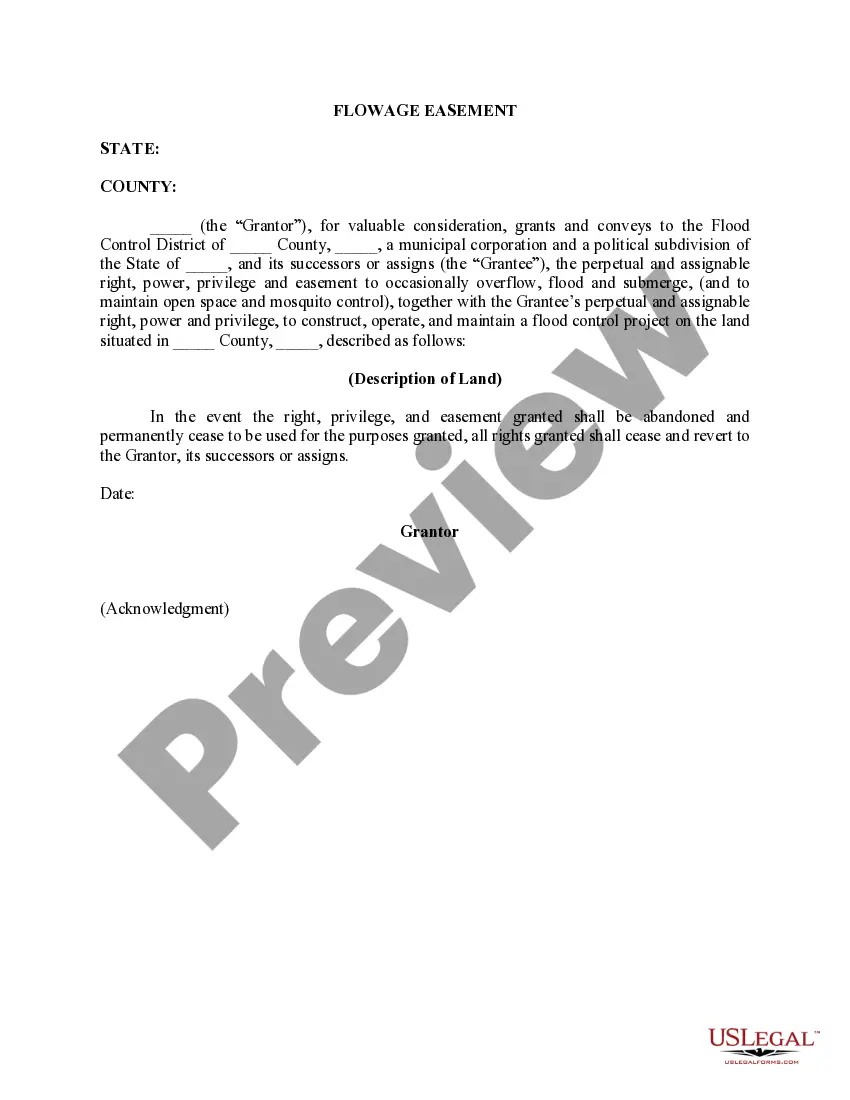
A flowage easement is a legal document allowing a government entity, such as a flood control district, the right to flood or overflow a specific piece of land. Unlike standard property easements, which may allow access or usage, a flowage easement specifically pertains to the rights to manage water flow and mitigate flooding. This easement is crucial for public safety and environmental management.
Key components of this form
- Grantor: The landowner who grants the easement.
- Grantee: The flood control district or municipal corporation receiving the easement.
- Consideration: The compensation given to the grantor, typically stated as Ten Dollars.
- Rights granted: The right to overflow, flood, and maintain flood control projects on the land.
- Reversion clause: Conditions under which the rights granted revert back to the grantor if abandoned.
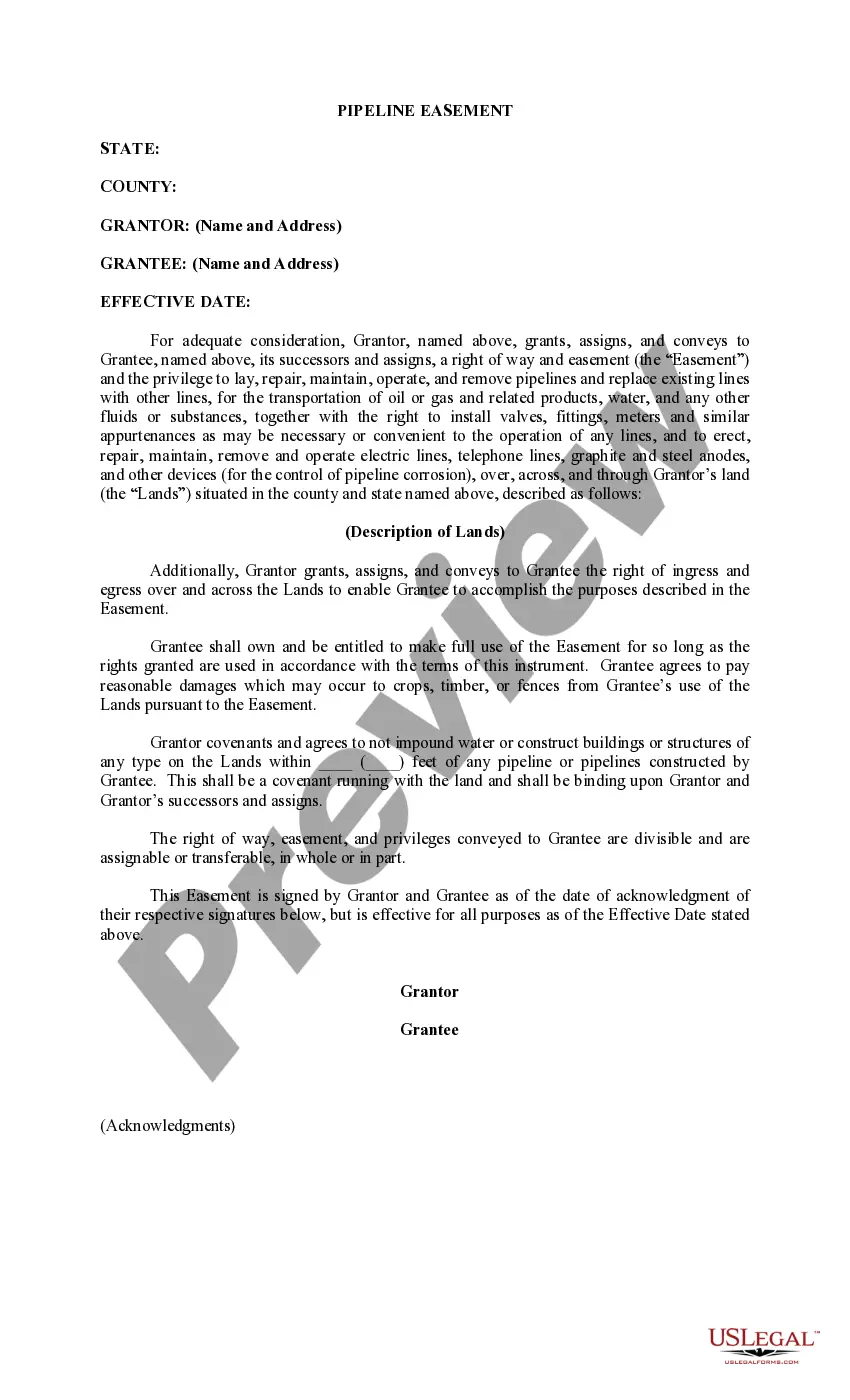
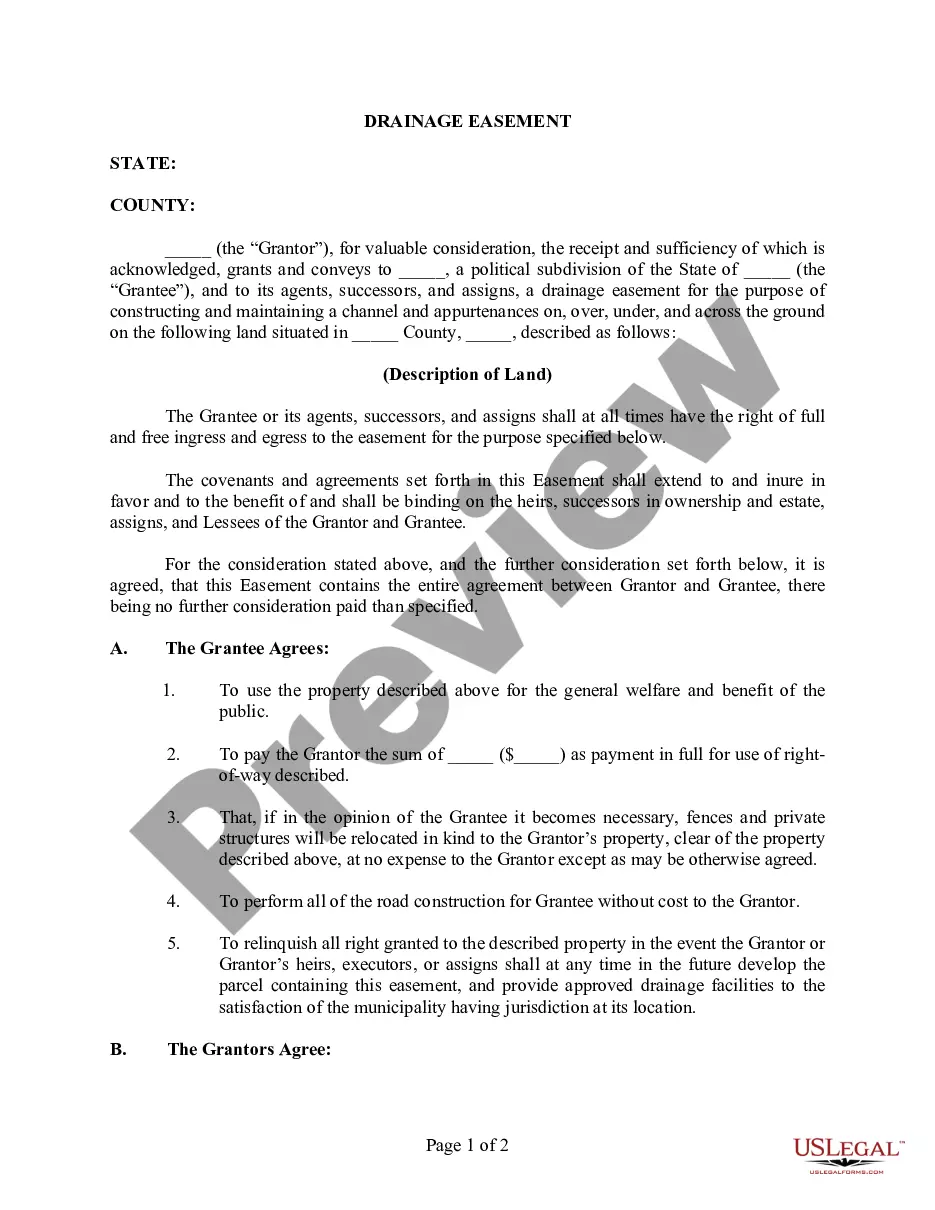
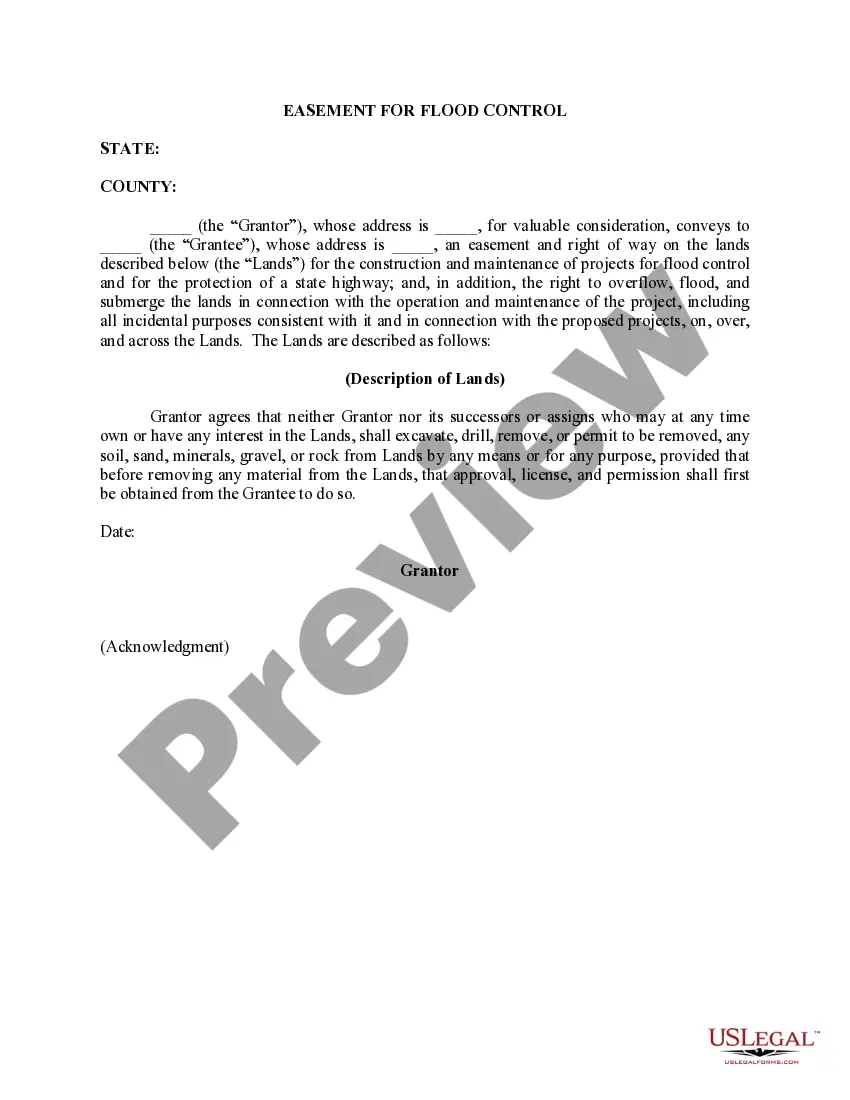
When to use this document
This form should be used when a flood control district or comparable government authority needs legal permission to manage a specific area of land to prevent flooding. It is particularly relevant in situations where public safety is at risk due to potential flooding events. Additionally, it may be necessary when federal or state regulations mandate flood management measures on private land.
Who should use this form
- Landowners who are approached by a flood control district seeking an easement.
- Government officials responsible for flood management and control projects.
- Attorneys representing clients in property easement agreements.
- Municipal corporations that require access to land for flood mitigation measures.
Steps to complete this form
- Identify the grantor: Provide the name and address of the landowner granting the easement.
- Specify the grantee: Include the name of the flood control district or municipality receiving the easement.
- Detail the property: Clearly describe the specific land subject to the easement, referencing any attached exhibits.
- State the consideration: Enter the amount provided to the grantor for the easement rights.
- Enter dates and signatures: Complete the form with the date and signatures of all parties involved, ensuring the grantor acknowledges the document.
Notarization guidance
This document requires notarization to meet legal standards. US Legal Forms provides secure online notarization powered by Notarize, allowing you to complete the process through a verified video call, available 24/7.
Get your form ready online
Our built-in tools help you complete, sign, share, and store your documents in one place.
Make edits, fill in missing information, and update formatting in US Legal Forms—just like you would in MS Word.
Download a copy, print it, send it by email, or mail it via USPS—whatever works best for your next step.
Sign and collect signatures with our SignNow integration. Send to multiple recipients, set reminders, and more. Go Premium to unlock E-Sign.
If this form requires notarization, complete it online through a secure video call—no need to meet a notary in person or wait for an appointment.
We protect your documents and personal data by following strict security and privacy standards.

Make edits, fill in missing information, and update formatting in US Legal Forms—just like you would in MS Word.

Download a copy, print it, send it by email, or mail it via USPS—whatever works best for your next step.

Sign and collect signatures with our SignNow integration. Send to multiple recipients, set reminders, and more. Go Premium to unlock E-Sign.

If this form requires notarization, complete it online through a secure video call—no need to meet a notary in person or wait for an appointment.

We protect your documents and personal data by following strict security and privacy standards.
Common mistakes to avoid
- Not including a detailed description of the property involved.
- Failing to specify the rights granted to the grantee.
- Omitting signatures or dates, which can invalidate the form.
- Not understanding the reversibility clause, leading to disputes later.
Why complete this form online
- Convenience: Access and complete the form from anywhere at any time.
- Editability: Easily modify the form to fit specific requirements and situations.
- Reliability: Forms are drafted by licensed attorneys to ensure legal accuracy and compliance.
Looking for another form?
Form popularity
FAQ
An easement is a "nonpossessory" property interest that allows the holder of the easement to have a right of way or use property that they do not own or possess. An easement doesn't allow the easement holder to occupy the land or to exclude others from the land unless they interfere with the easement holder's use.
The property owners could pay off the mortgage and refinance with a new mortgage after the easement is put in place. This would put the easement holder's interest ahead of the mortgage holder's. This is the simpler solution but not always practical from the owners' financial standpoint.
Although an easement grants a possessory interest in the land for a specific purpose, the landowner retains the title to the property. Easements may be given to anyone, such as neighbors, government agencies, and private parties.
Flowage easement land is non-federal land on which the United States Government has acquired certain perpetual rights, including the right to overflow, flood and submerge the land, the right to prohibit structures for human habitation, and the right to approve all other structures proposed for construction within the
Include the whole length and width. Do this by reference to plans and a ground inspection. Deduct the "after scenario" value from the "before scenario" value to arrive at a value per unit of the easement land. Multiply by the measured area of the easement land to arrive at a total market value.
In most situations, easements will not decrease the value of the property. If the easement has strict rules or requirements the property owner must follow, however, it can affect property value and marketability.
The value of the easement is based on the difference between the value of the whole property before the taking and its value after the taking with the easement in place.