Unitrust Agreement Trust Uslegal Withholding
Description
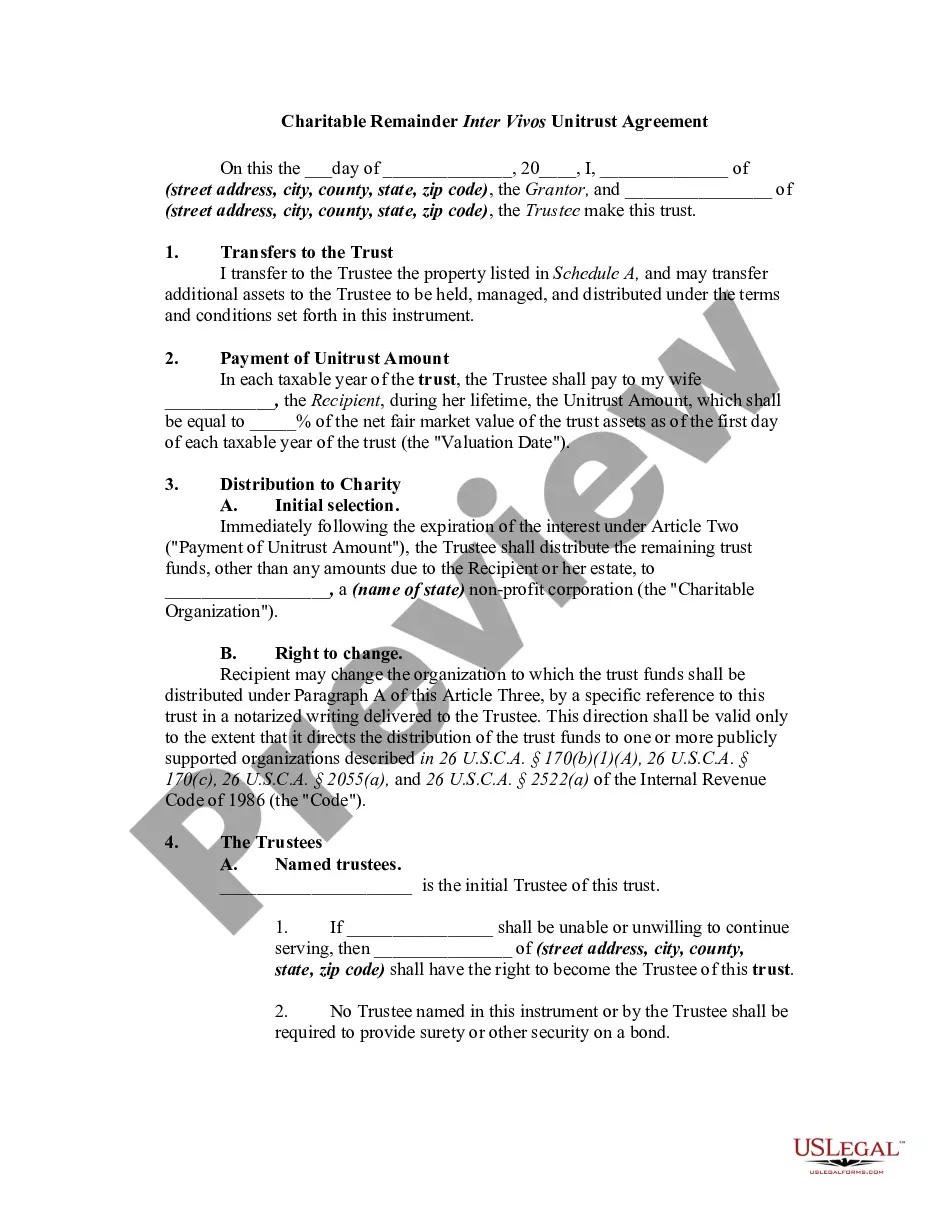
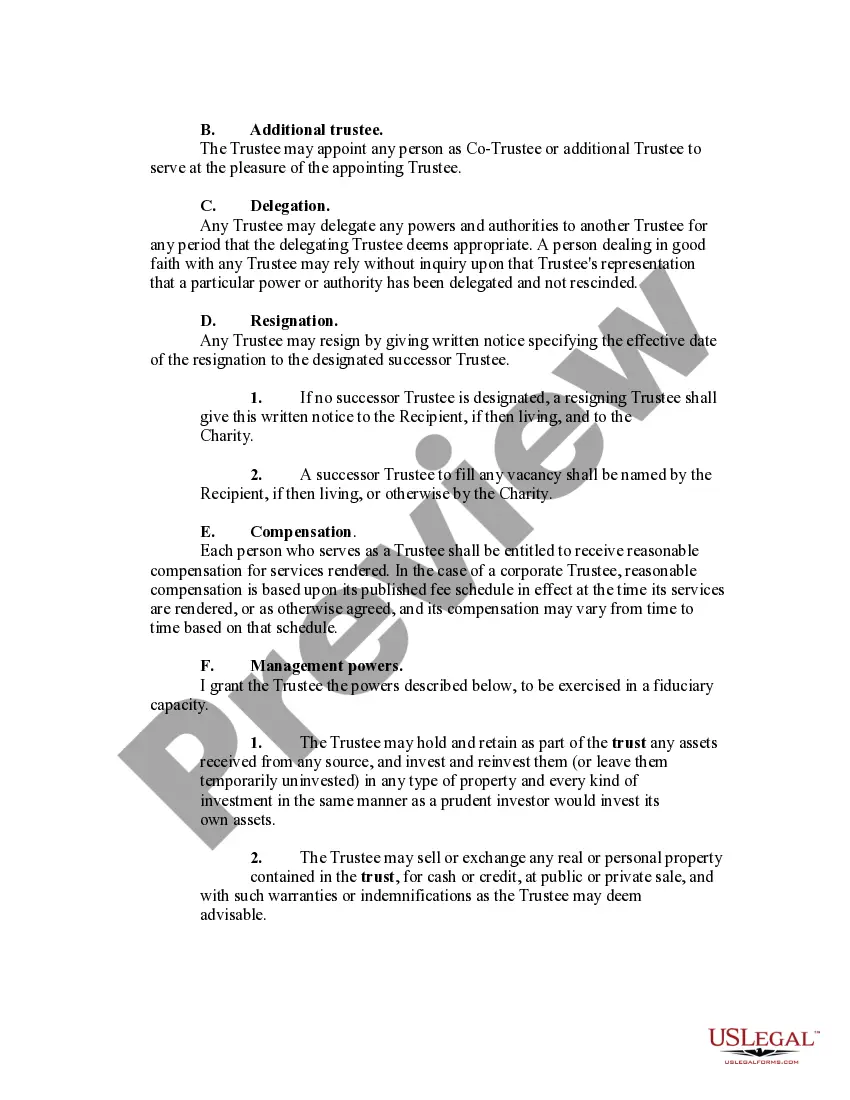
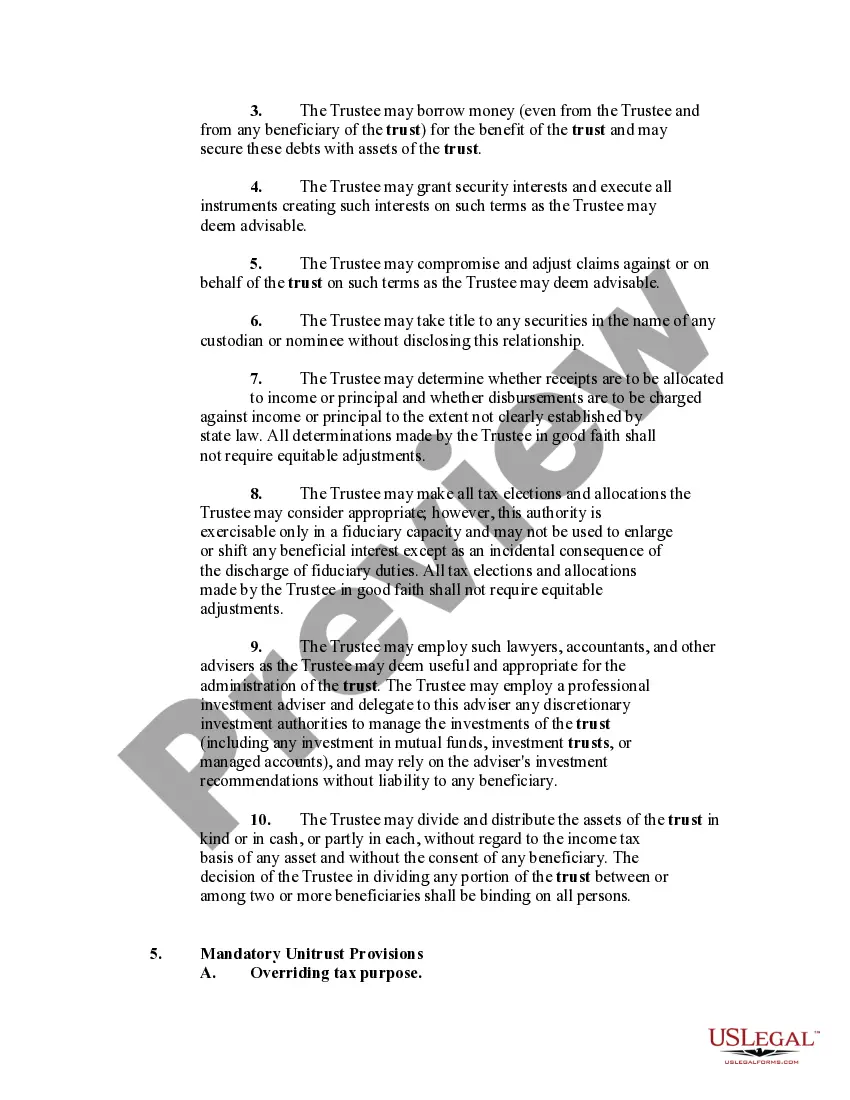
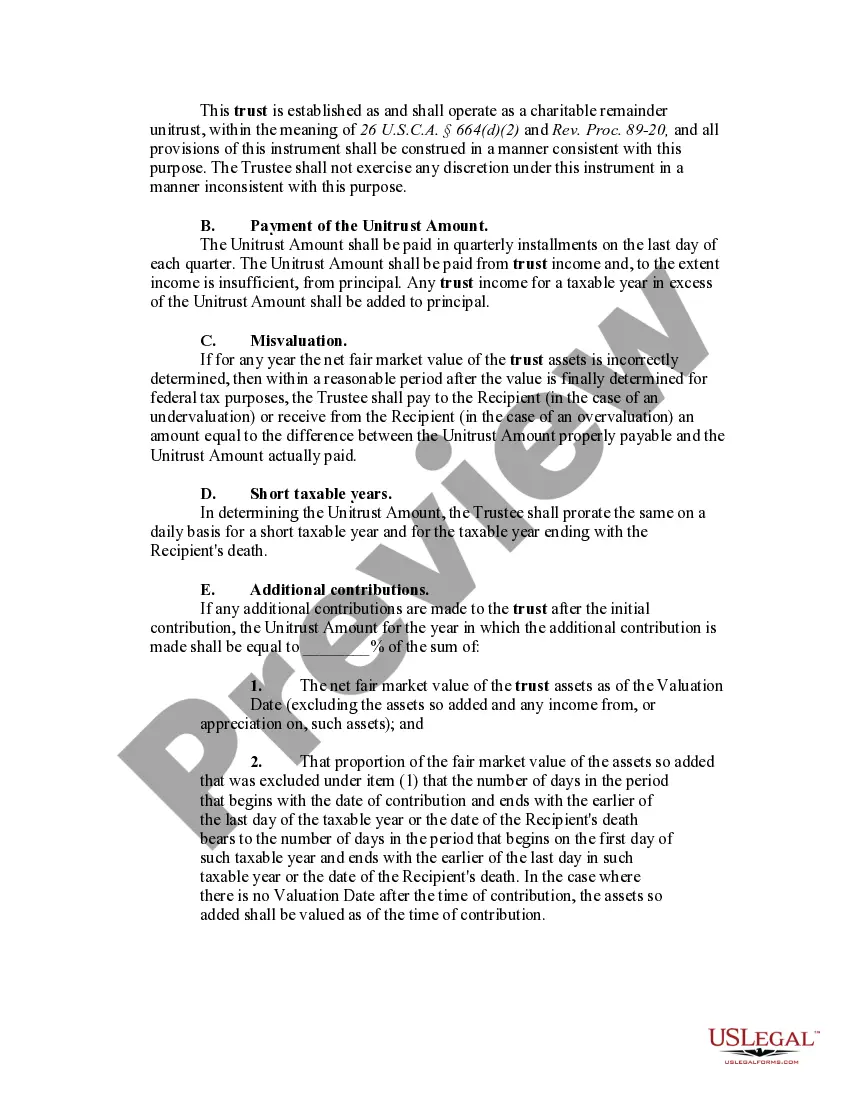
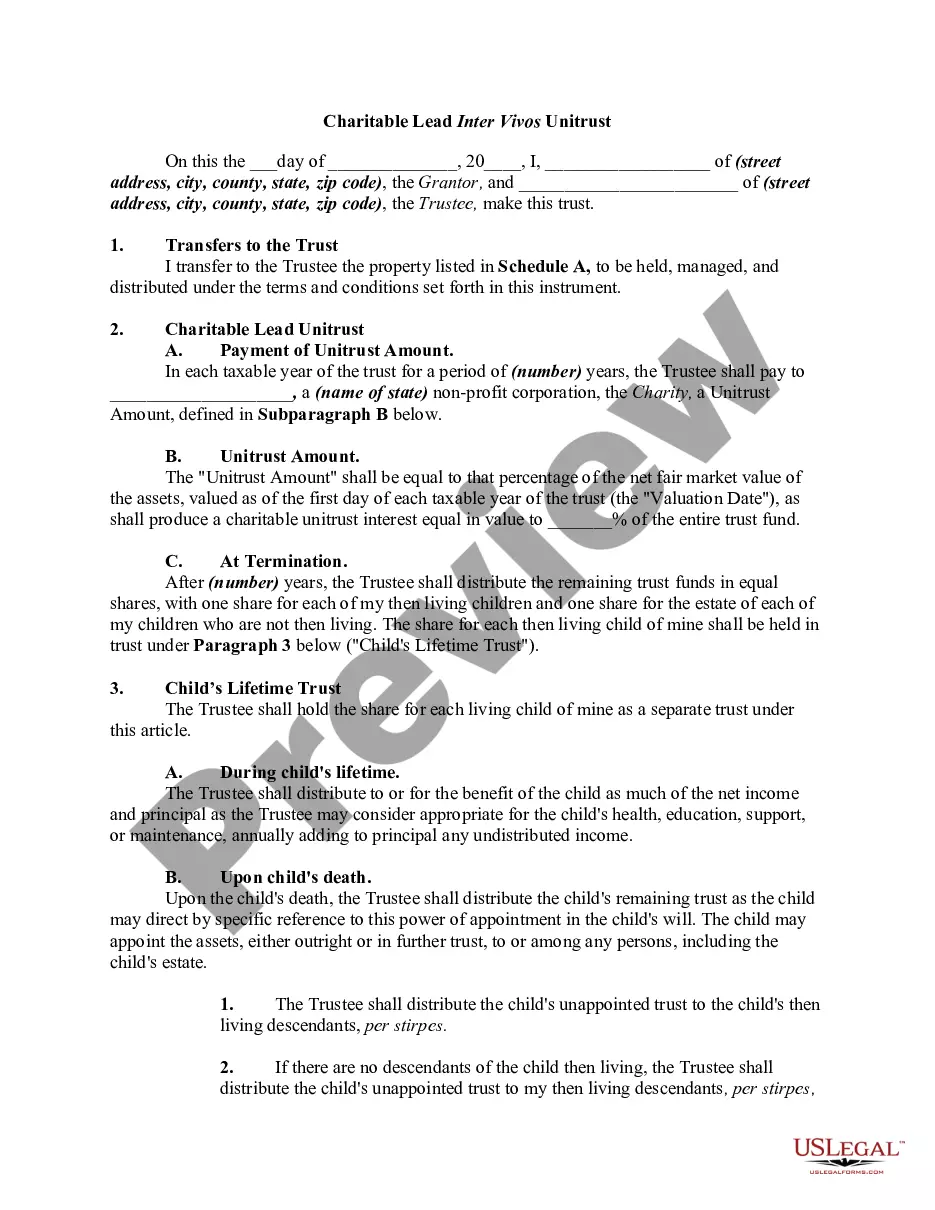
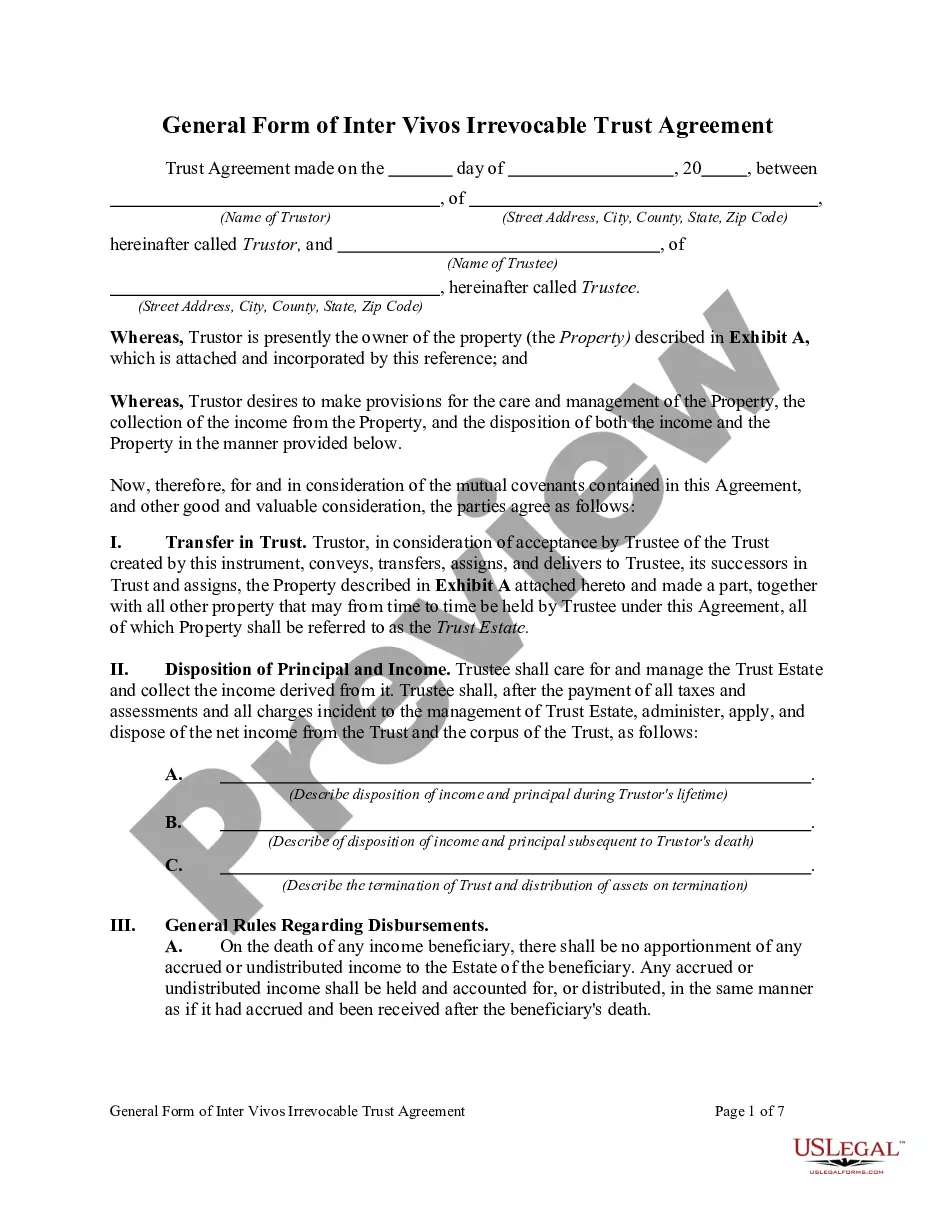
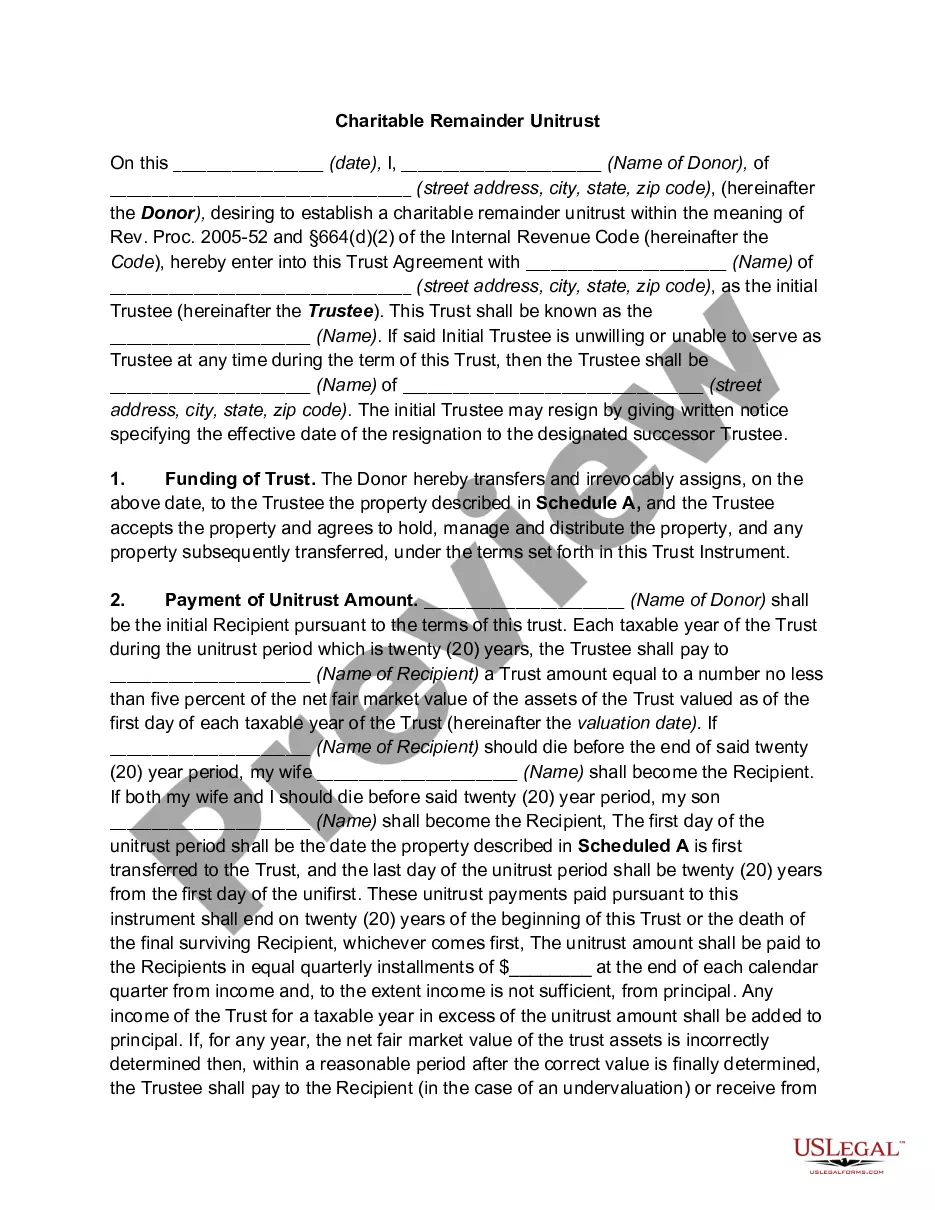
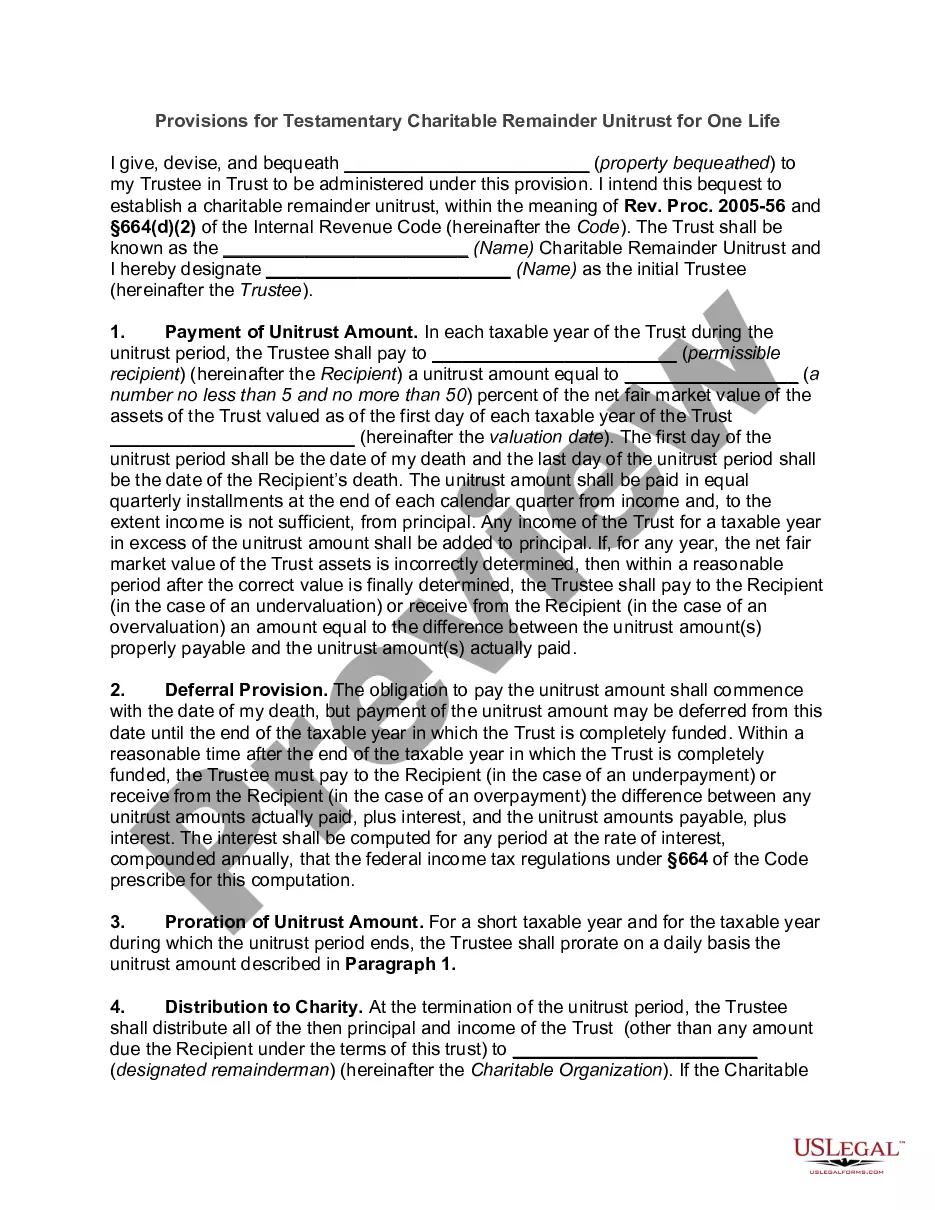
Get your form ready online
Our built-in tools help you complete, sign, share, and store your documents in one place.
Make edits, fill in missing information, and update formatting in US Legal Forms—just like you would in MS Word.
Download a copy, print it, send it by email, or mail it via USPS—whatever works best for your next step.
Sign and collect signatures with our SignNow integration. Send to multiple recipients, set reminders, and more. Go Premium to unlock E-Sign.
If this form requires notarization, complete it online through a secure video call—no need to meet a notary in person or wait for an appointment.
We protect your documents and personal data by following strict security and privacy standards.

Make edits, fill in missing information, and update formatting in US Legal Forms—just like you would in MS Word.

Download a copy, print it, send it by email, or mail it via USPS—whatever works best for your next step.

Sign and collect signatures with our SignNow integration. Send to multiple recipients, set reminders, and more. Go Premium to unlock E-Sign.

If this form requires notarization, complete it online through a secure video call—no need to meet a notary in person or wait for an appointment.

We protect your documents and personal data by following strict security and privacy standards.
Looking for another form?









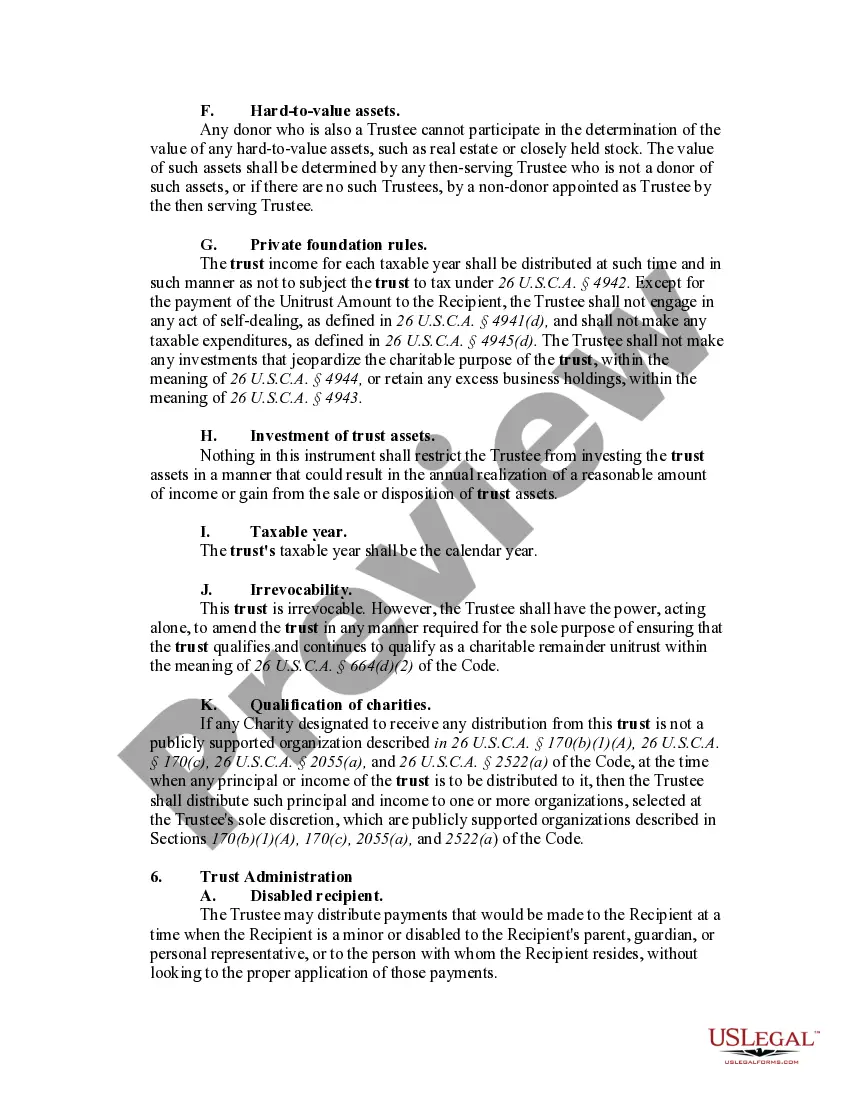
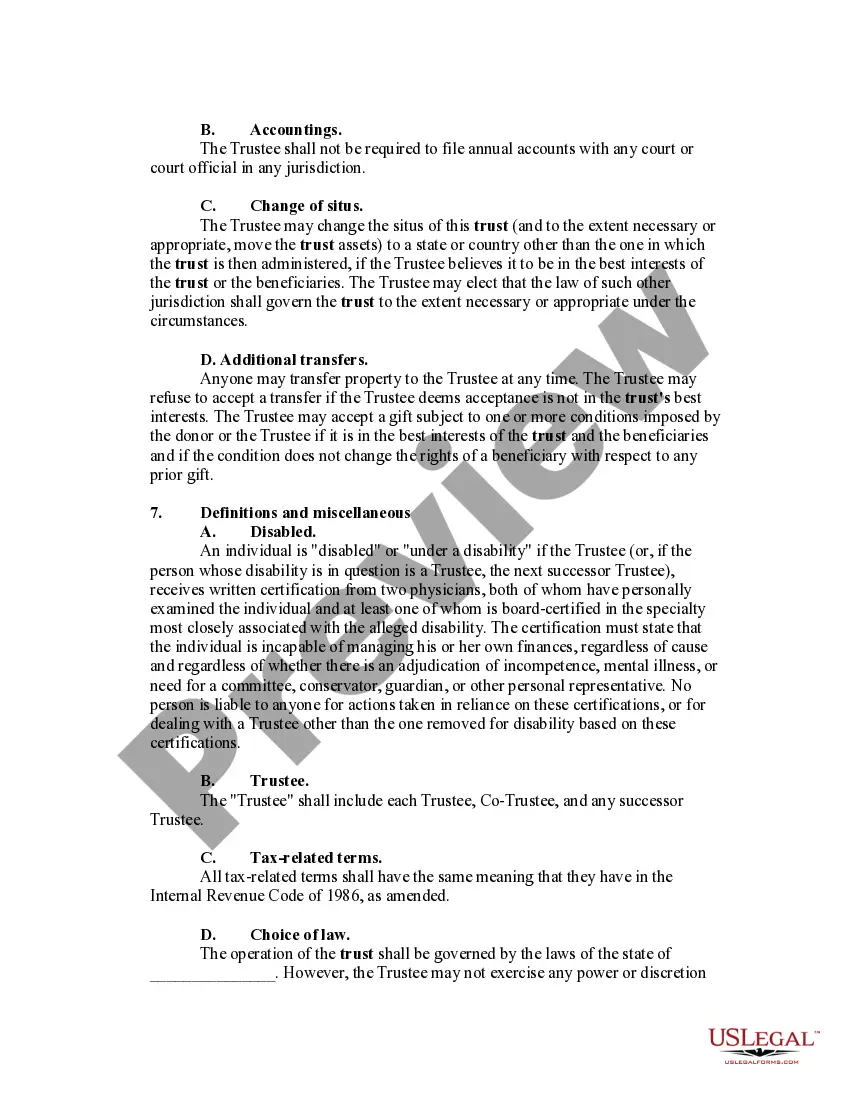
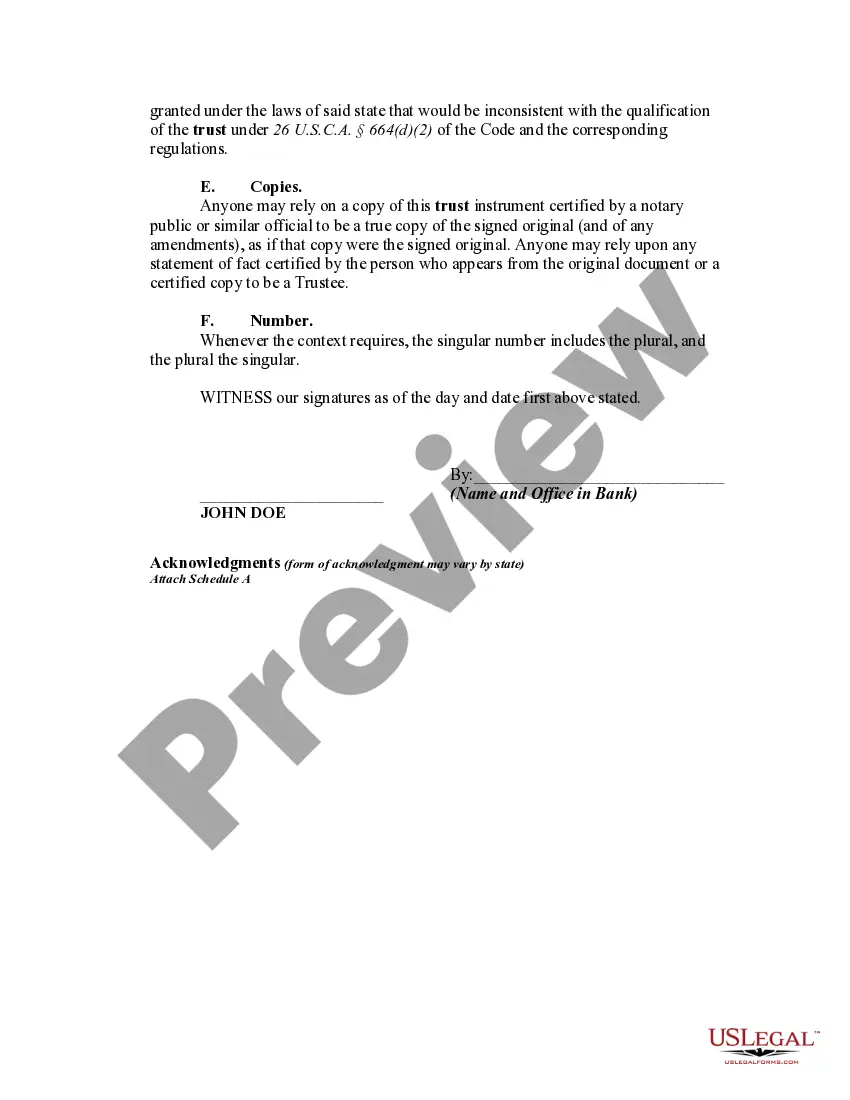
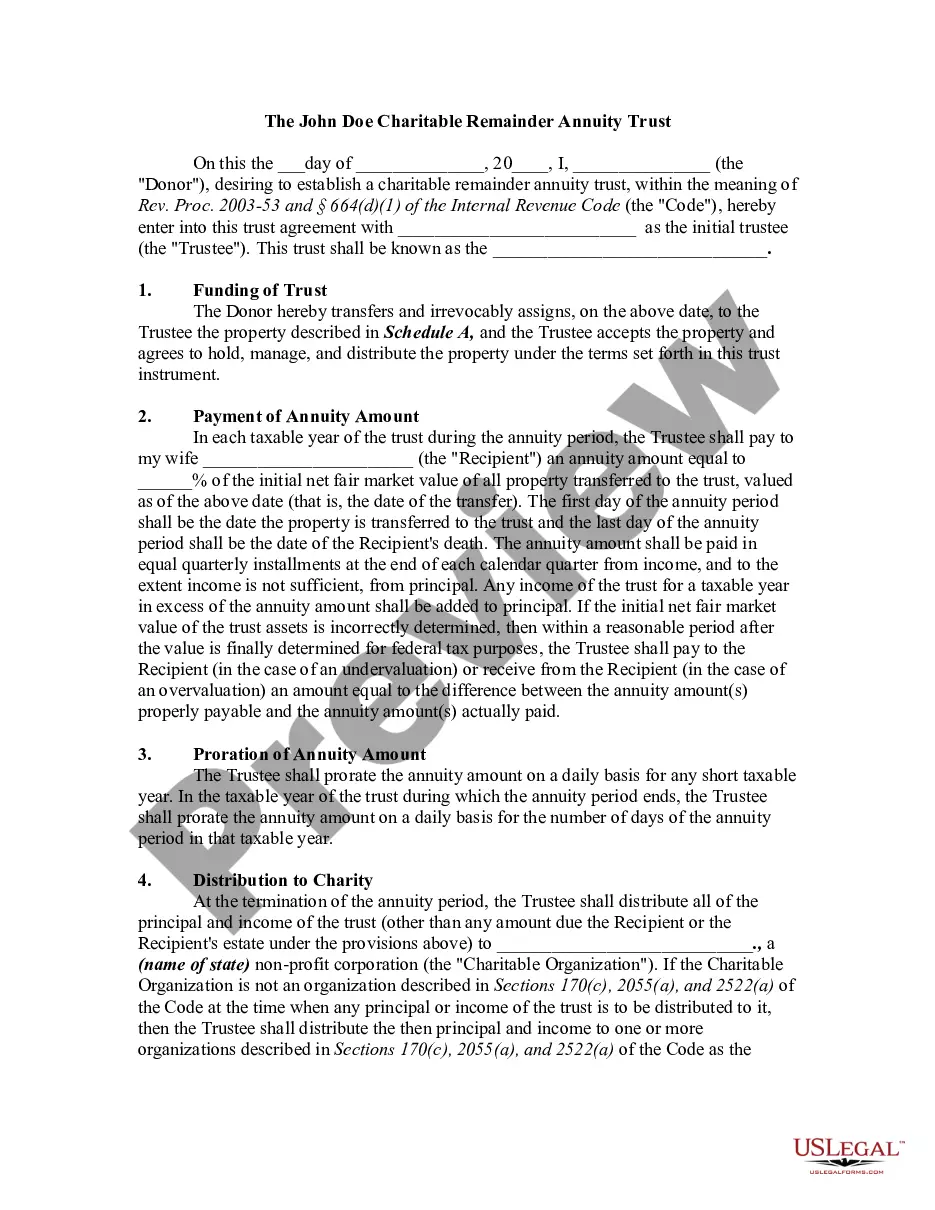
How to fill out Charitable Remainder Inter Vivos Unitrust Agreement?
- If you're a returning user, log into your account and download the desired form by clicking the Download button. Make sure your subscription is active.
- For first-time users, start by reviewing the Preview mode and form description to confirm it's the right document for your needs and local regulations.
- If the initial form doesn't meet your requirements, use the Search tab to locate additional templates until you find one that fits.
- Next, proceed to purchase the document. Click 'Buy Now' and select your preferred subscription plan, ensuring you create an account for access to all resources.
- Complete your purchase by entering your payment details with a credit card or via PayPal.
- Finally, download your form to your device and access it anytime from the My Forms section of your account.
US Legal Forms not only provides a robust collection of more than 85,000 fillable legal forms at a competitive price but also ensures that users can rely on premium expert assistance for completing their documents accurately.
By following these steps, you can easily obtain your Unitrust agreement trust uslegal withholding. Start today and experience the peace of mind that comes with having accurate legal forms ready to go!
Form popularity
FAQ
A 4% unitrust refers to a trust that distributes 4% of its value to beneficiaries each year. This percentage is typically based on the fair market value of the trust assets, providing a steady income stream while adhering to the unitrust agreement trust uslegal withholding. Such a structure can be beneficial for financial planning and maintaining a balance between income and growth.
Trust accounting income is calculated by taking into account all income generated by the trust's assets, such as dividends, interest, and rental income, less any allowable deductions. This calculation is crucial for determining the amount available for distribution under the unitrust agreement trust uslegal withholding. Accurate record-keeping and knowledgeable financial advice can streamline this process.
The net income of a unitrust consists of the income generated from trust assets, minus any allowable expenses. This net income directly affects distributions to beneficiaries, as it informs the amount available under the unitrust agreement trust uslegal withholding. Understanding your unitrust’s net income can help in planning for future distributions and tax obligations.
A unitrust is a type of trust designed to provide income streams to beneficiaries, calculated as a percentage of trust value, which can fluctuate annually. It operates under the framework of a unitrust agreement trust uslegal withholding, providing a blend of security and flexibility. Beneficiaries receive distributions based on the trust’s performance, allowing for potential growth over time.
Yes, you can file form 5227 electronically through platforms like US Legal Forms. This method offers convenience and speeds up the process, ensuring your unitrust agreement trust uslegal withholding is submitted accurately. Electronic filing also allows you to keep track of your submissions easily.
Withholding can indeed be distributed on a trust, particularly when it involves income generated by the trust that is taxable. Beneficiaries may receive distributions that have undergone tax withholding, which can simplify their tax liabilities. Proper documentation and adherence to regulations are required, and a unitrust agreement trust USLegal withholding provides guidance on these processes.
The tax implications of a trust can be quite significant and depend on its structure. Trusts may face tax rates considerably higher than individual rates, especially on retained earnings. Furthermore, proper tax planning can greatly influence the financial success of a trust, thus the importance of guidance on a unitrust agreement trust USLegal withholding cannot be overstated.
Unitrusts have specific rules that govern their structure and operations. Generally, the rules require a minimum annual distribution based on a percentage of the trust's net fair market value. Additionally, unitrusts must adhere to both state and federal guidelines regarding administration and reporting. Leveraging a unitrust agreement trust USLegal withholding can help clarify these rules and ensure compliance.
Trusts can offer several tax advantages, such as income splitting and potential deductions that individuals may not receive. By establishing a unitrust agreement, one can take advantage of specific exclusions and ensure that beneficiaries receive favorable tax treatments. Furthermore, the right trust structure can preserve wealth and provide financial security for heirs. Consulting USLegal can provide insights into maximizing these benefits.
A trust can earn a specific amount before tax liability kicks in, known as the threshold for taxable income. For many trusts, this threshold is determined by the income level set by the IRS, typically around $13,450 for 2023. Anything above this amount usually results in tax obligations. To navigate these thresholds effectively, consider a unitrust agreement trust USLegal withholding for guidance.