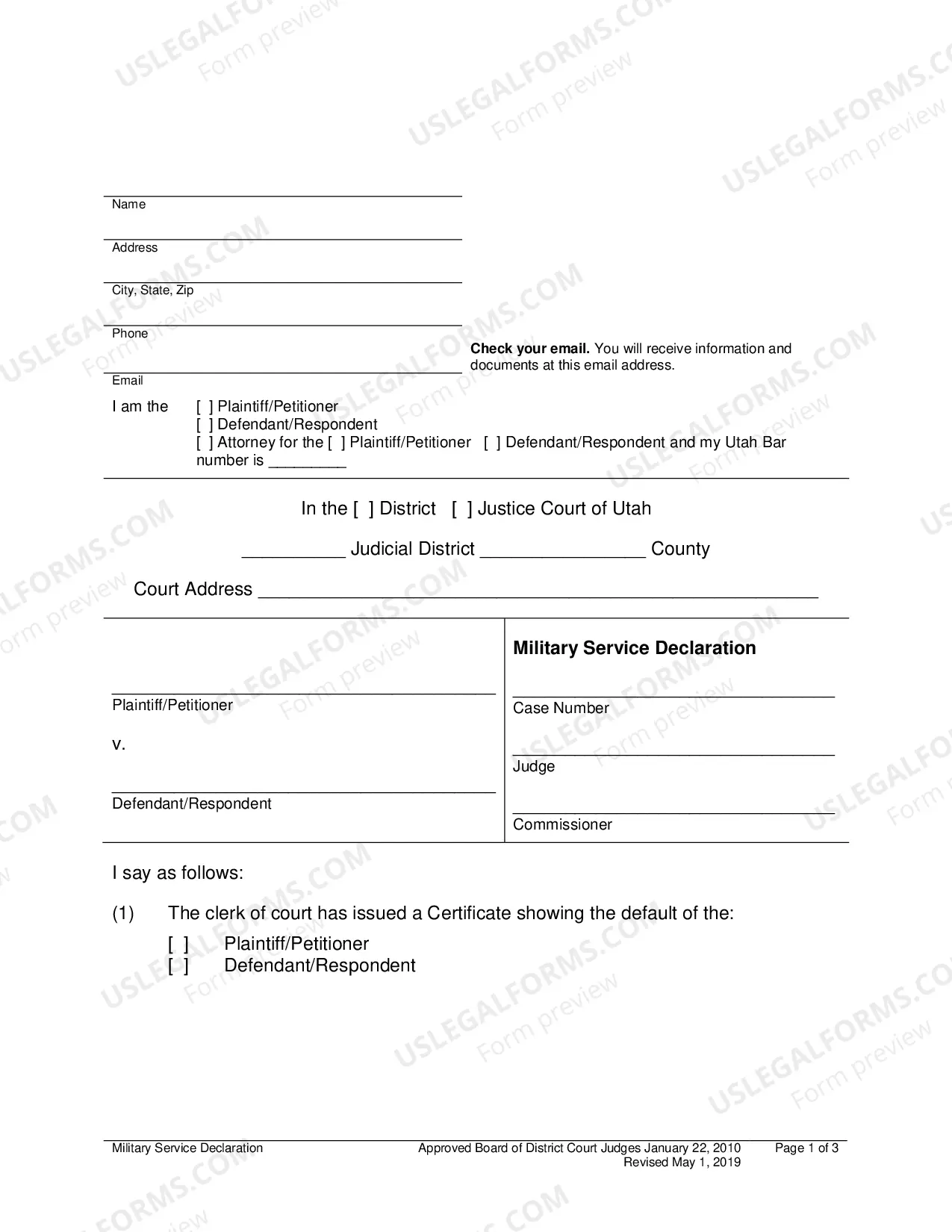
Warehousing and Distribution Agreement between Warehouseman and Depositor
About this form
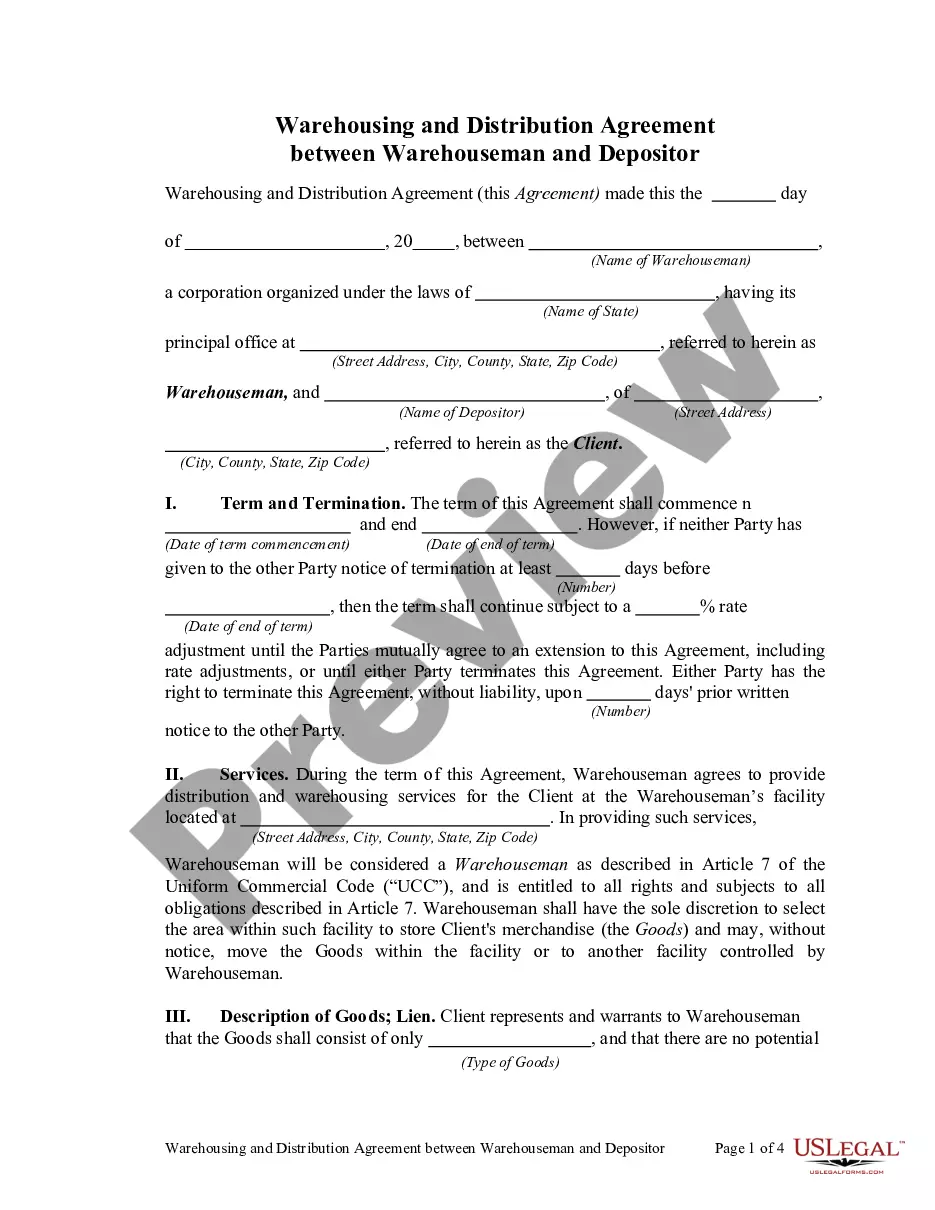
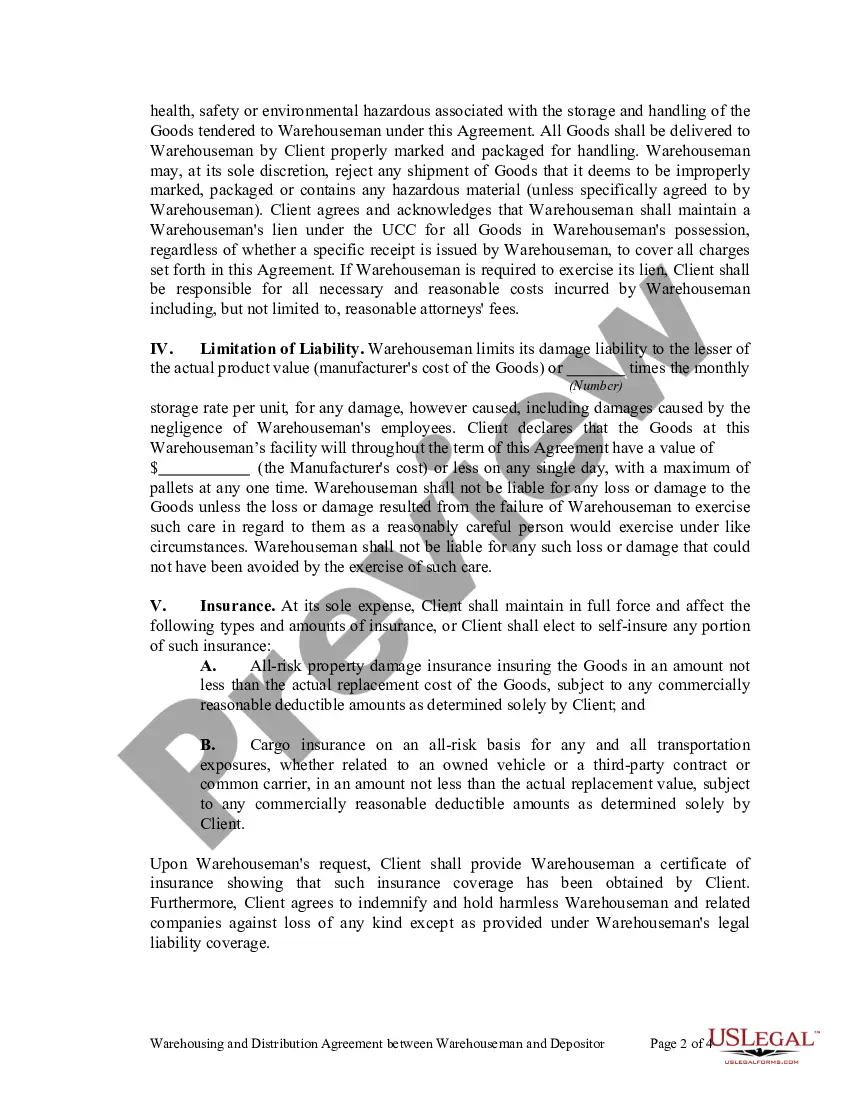
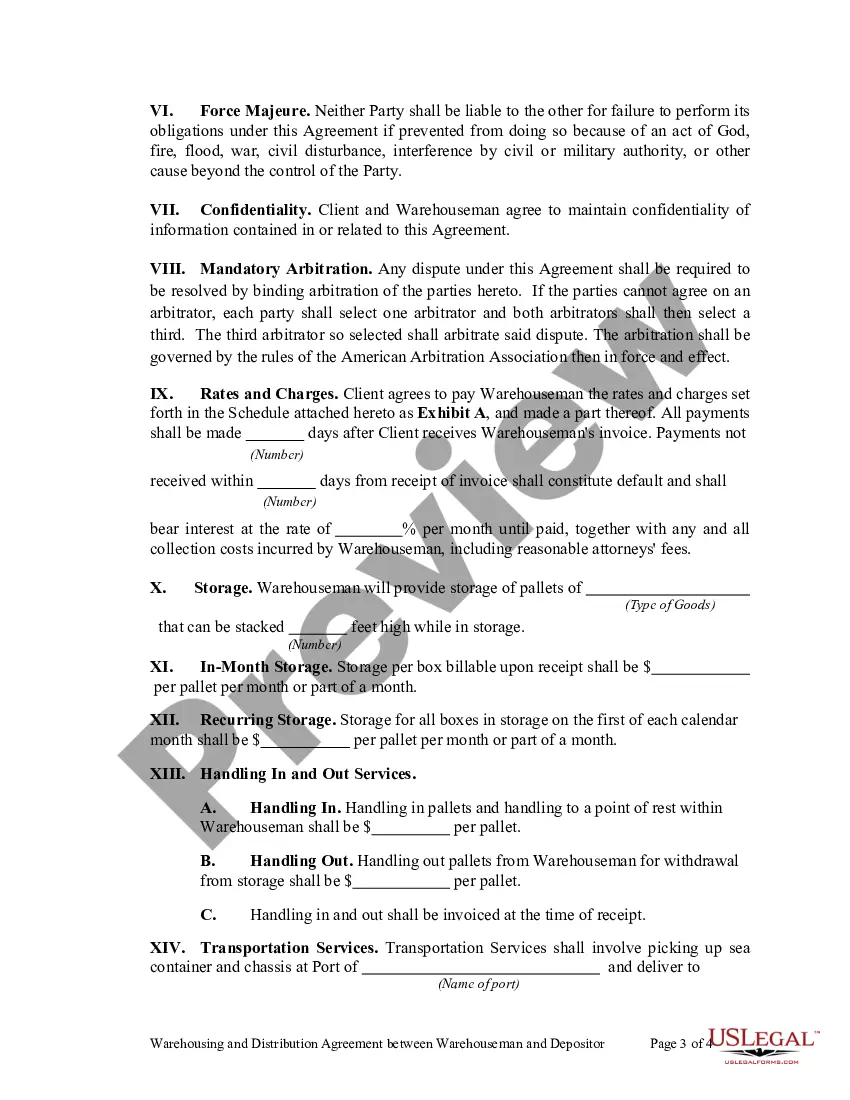
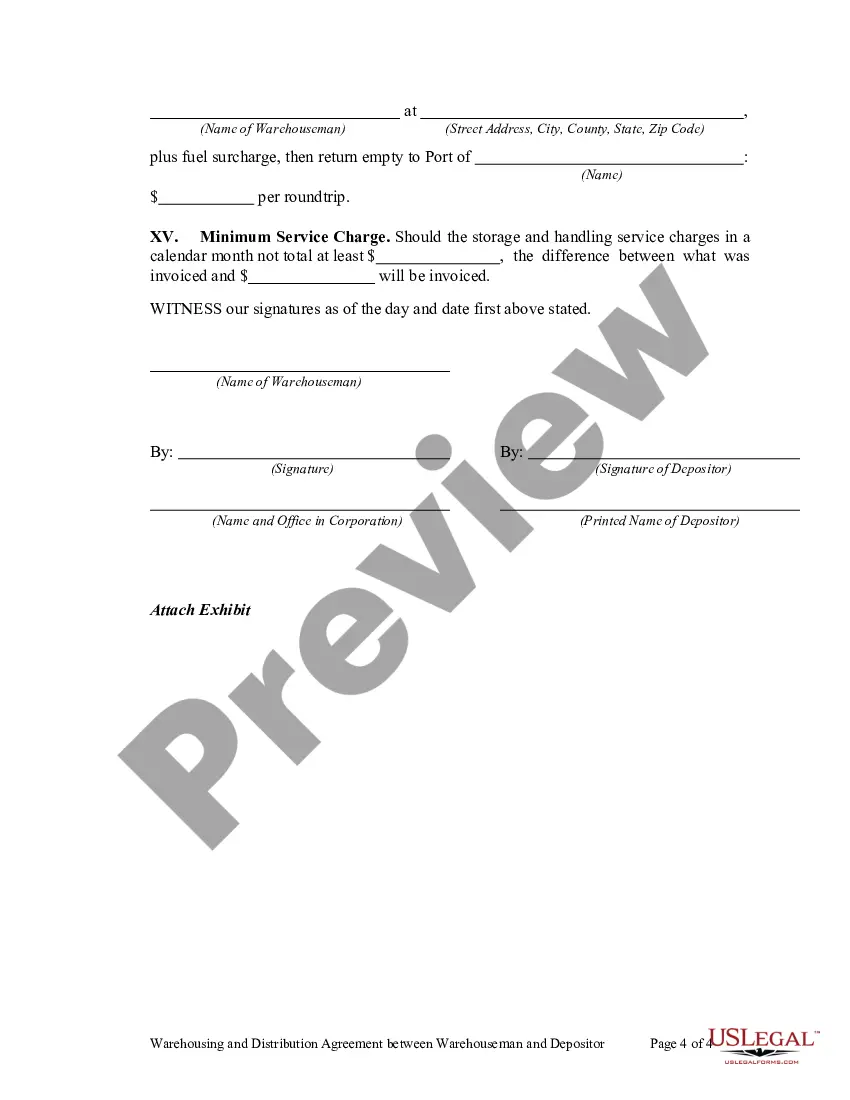
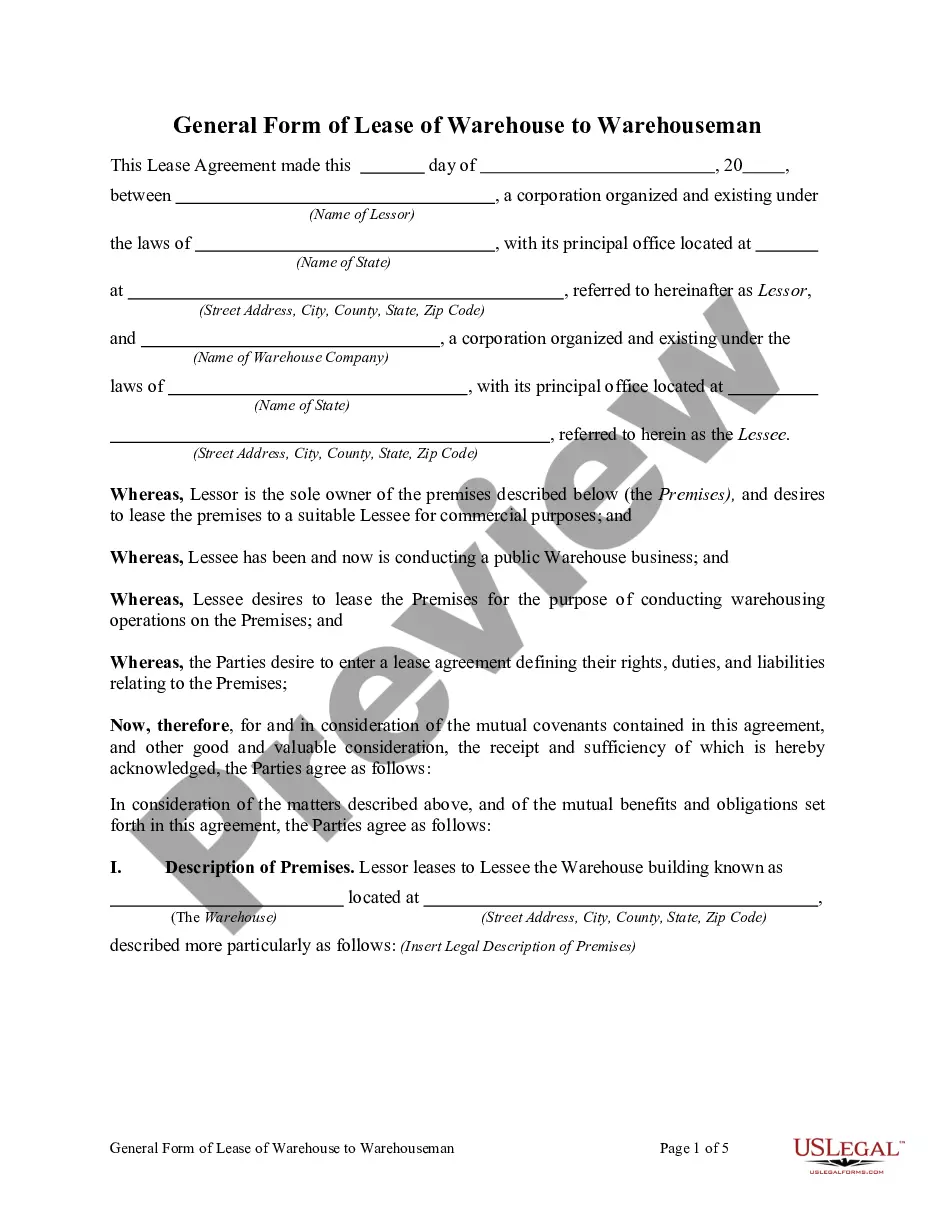
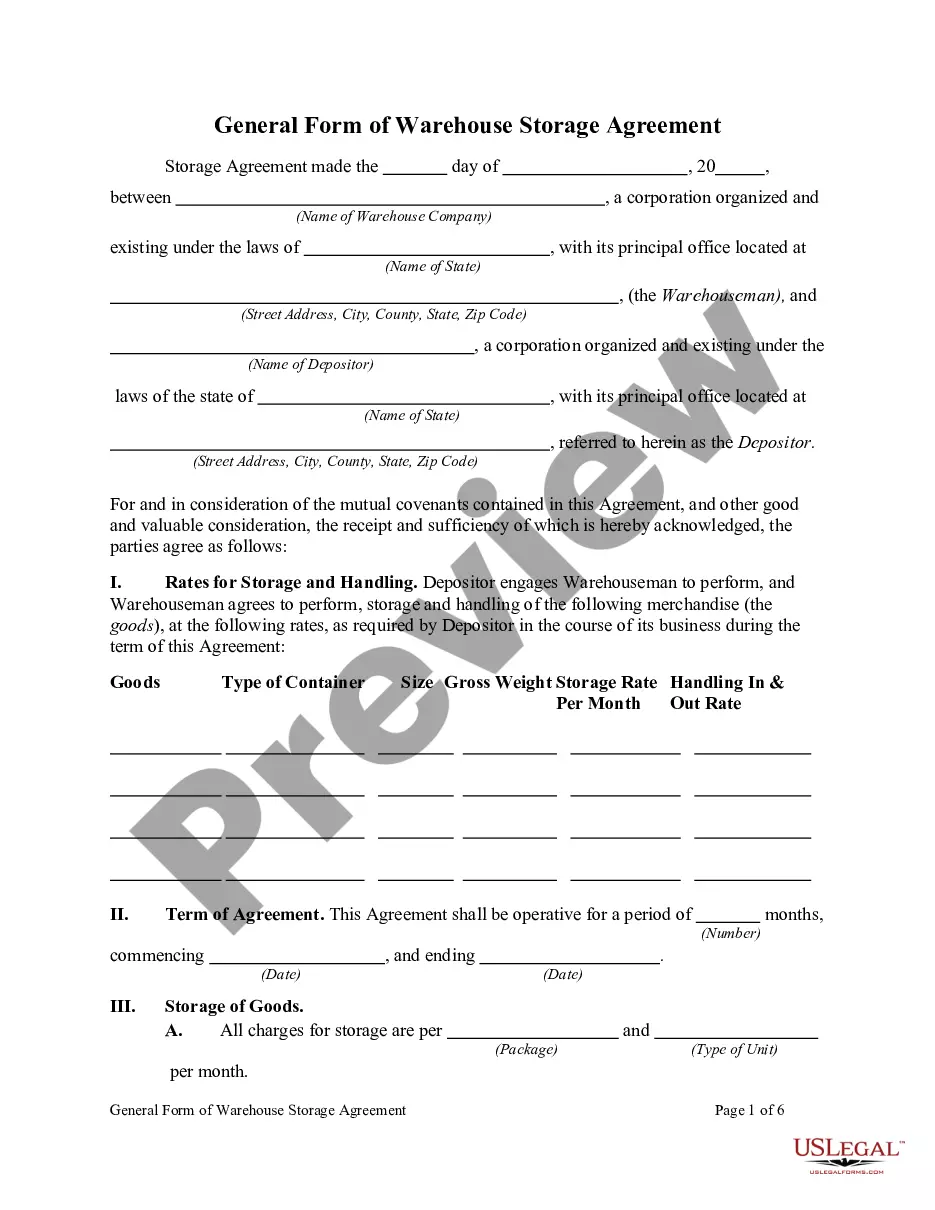
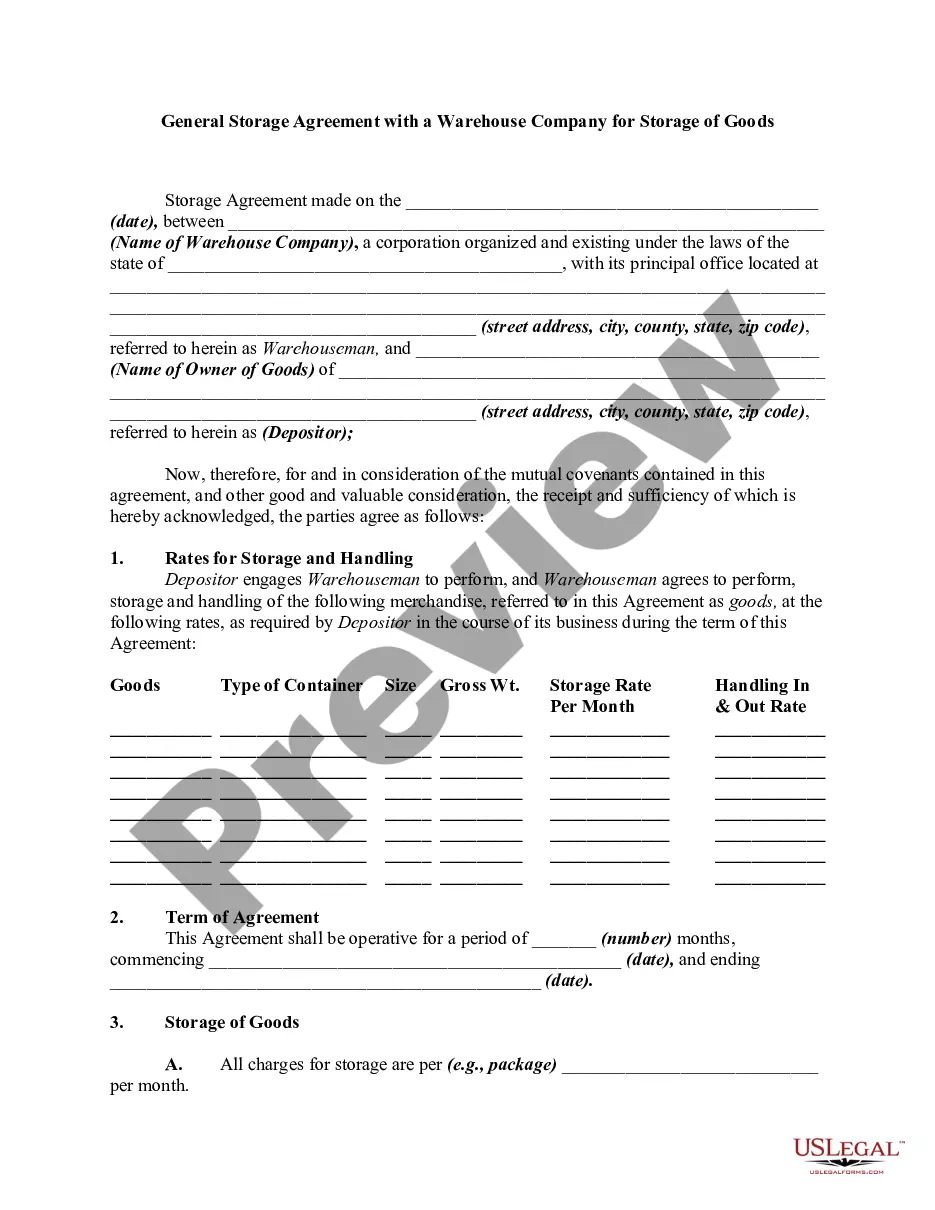
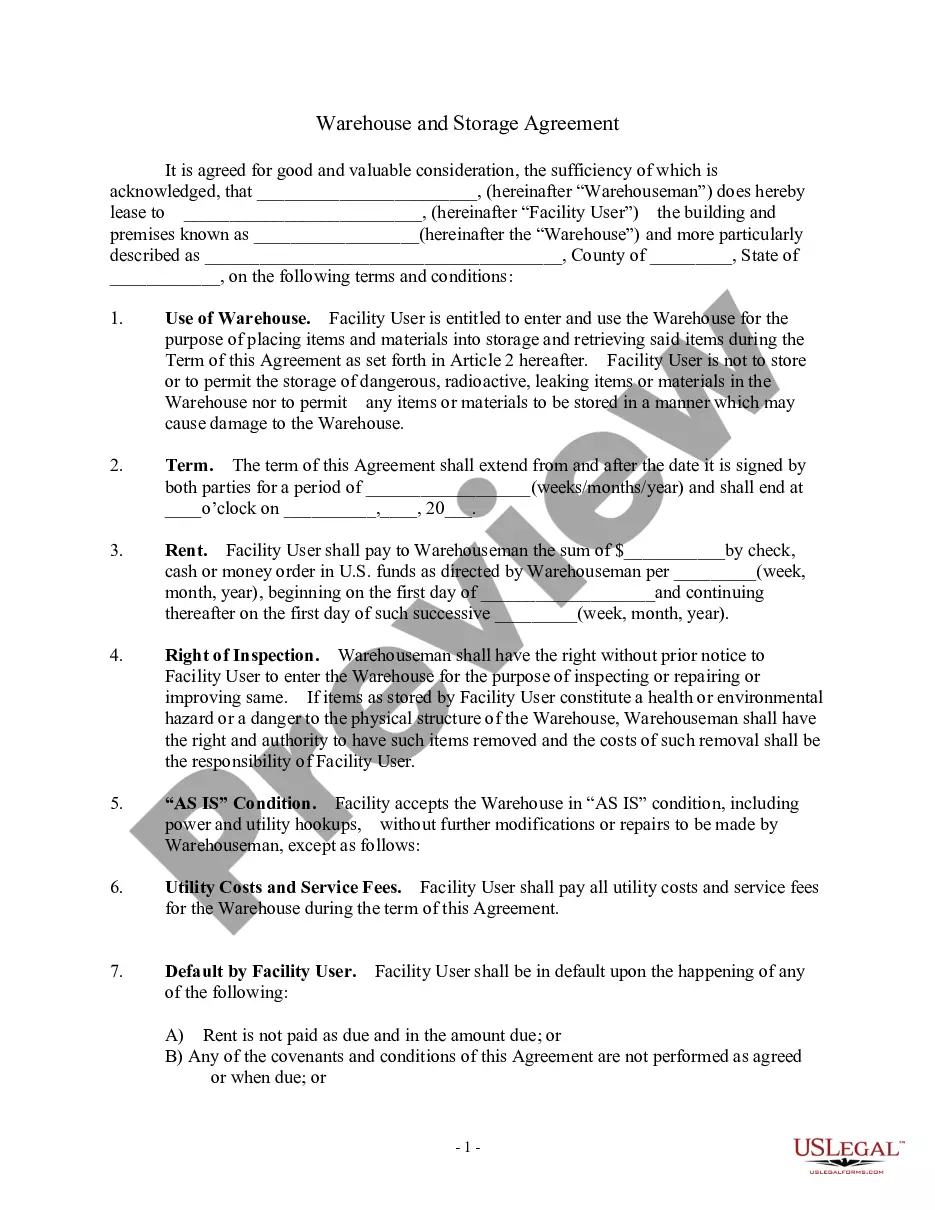
The Warehousing and Distribution Agreement between Warehouseman and Depositor is a legal contract that outlines the terms and conditions under which a warehouseman will manage the storage, shipping, and receiving of goods for a depositor. This agreement is essential for businesses engaging with contract warehouses, as it establishes responsibilities, insurance requirements, confidentiality, and other vital aspects to ensure a clear understanding between both parties. It differs from simple storage contracts by incorporating detailed provisions from the Uniform Commercial Code (UCC) specific to warehouse operations.
Form components explained
- Identification of the parties involved (Warehouseman and Depositor).
- Definition of the scope of services provided by the Warehouseman.
- Terms regarding insurance coverage and liability for the goods stored.
- Clauses for force majeure situations that may affect contract performance.
- Confidentiality obligations to protect sensitive information.
- Mandatory arbitration provisions for dispute resolution.
Situations where this form applies
This form should be used when a business or individual needs to establish a formal agreement with a warehouse operator to store and manage their goods. Scenarios include starting a new product line, engaging in seasonal inventory storage, or when a business lacks the facilities to handle storage and distribution independently. Itâs essential to have this agreement in place to mitigate risks and clarify responsibilities.
Who can use this document
- Businesses looking to use third-party warehousing services.
- Individuals or organizations needing to store large quantities of goods securely.
- Warehouse operators providing services to clients for handling goods.
- Logistics companies responsible for goods storage and distribution.
Completing this form step by step
- Identify and enter the full names and contact information of both parties (Warehouseman and Depositor).
- Specify the duration of the agreement and any notice periods for cancellation or renewal.
- Detail the types of goods to be stored and any specific handling requirements.
- Provide information regarding required insurance coverage and submit proof as needed.
- Sign and date the agreement to finalize the terms between the parties.
Does this form need to be notarized?
This form does not typically require notarization unless specified by local law. However, verifying signatures through notarization can add an extra layer of security and authenticity to the agreement.
Get your form ready online
Our built-in tools help you complete, sign, share, and store your documents in one place.
Make edits, fill in missing information, and update formatting in US Legal Forms—just like you would in MS Word.
Download a copy, print it, send it by email, or mail it via USPS—whatever works best for your next step.
Sign and collect signatures with our SignNow integration. Send to multiple recipients, set reminders, and more. Go Premium to unlock E-Sign.
If this form requires notarization, complete it online through a secure video call—no need to meet a notary in person or wait for an appointment.
We protect your documents and personal data by following strict security and privacy standards.

Make edits, fill in missing information, and update formatting in US Legal Forms—just like you would in MS Word.

Download a copy, print it, send it by email, or mail it via USPS—whatever works best for your next step.

Sign and collect signatures with our SignNow integration. Send to multiple recipients, set reminders, and more. Go Premium to unlock E-Sign.

If this form requires notarization, complete it online through a secure video call—no need to meet a notary in person or wait for an appointment.

We protect your documents and personal data by following strict security and privacy standards.
Avoid these common issues
- Failing to clearly define the scope of services, leading to confusion about responsibilities.
- Not specifying the insurance coverage required, which can leave parties vulnerable.
- Neglecting to include a termination clause or conditions for termination.
- Overlooking confidentiality provisions that protect sensitive business information.
Benefits of completing this form online
- Convenient access to customizable legal templates tailored for various needs.
- Easy to download and fill out without the hassle of physical paperwork.
- Increased reliability as the forms are drafted by licensed attorneys.
- Ability to edit and update the document as requirements change.
Looking for another form?
Form popularity
FAQ
Warehousing is the process of storing physical goods before they are sold or further distributed. Warehouses safely and securely store products in an organized way to track where items are located, when they arrived, how long they have been there, and the quantity on hand.
The various types of warehouses are: Private, Public, Government, and Bonded warehouses. Basic functions of a warehouse are movement of goods, storage of goods, and information management.
Warehousing is the process of storing goods which are to be distributed later. A warehouse is defined as any place which is used in the accumulation of goods.
Storage: This is the basic function of warehousing. Price Stabilization: Warehouses play an important role in the process of price stabilization. Risk bearing: Financing: Grading and Packing: Regular production: Time utility: Store of surplus goods:
Contract warehousing is an arrangement in which a partner warehouse agrees to receive, store and ship goods for a client.Contract warehousing companies help businesses store goods in a central location so that products can get to their destination more efficiently.
Warehousing allows for timely delivery and optimized distribution, leading to increased labor productivity and greater customer satisfaction. It also helps reduce errors and damage in the order fulfillment process. Plus, it prevents your goods from getting lost or stolen during handling.
Contract warehousing is an arrangement in which a partner warehouse agrees to receive, store and ship goods for a client.Contract warehousing agreements can provide for various other services including handling, packaging, shipping and inventory management.
A fulfillment service agreement is a contract between a product distribution business and a manufacturer of products.Your business will be providing fulfillment services to another business or individual. You will be entering into an agreement with a business to receive fulfillment services.