Antitrust Disclosure Compliance Memorandum
What is this form?
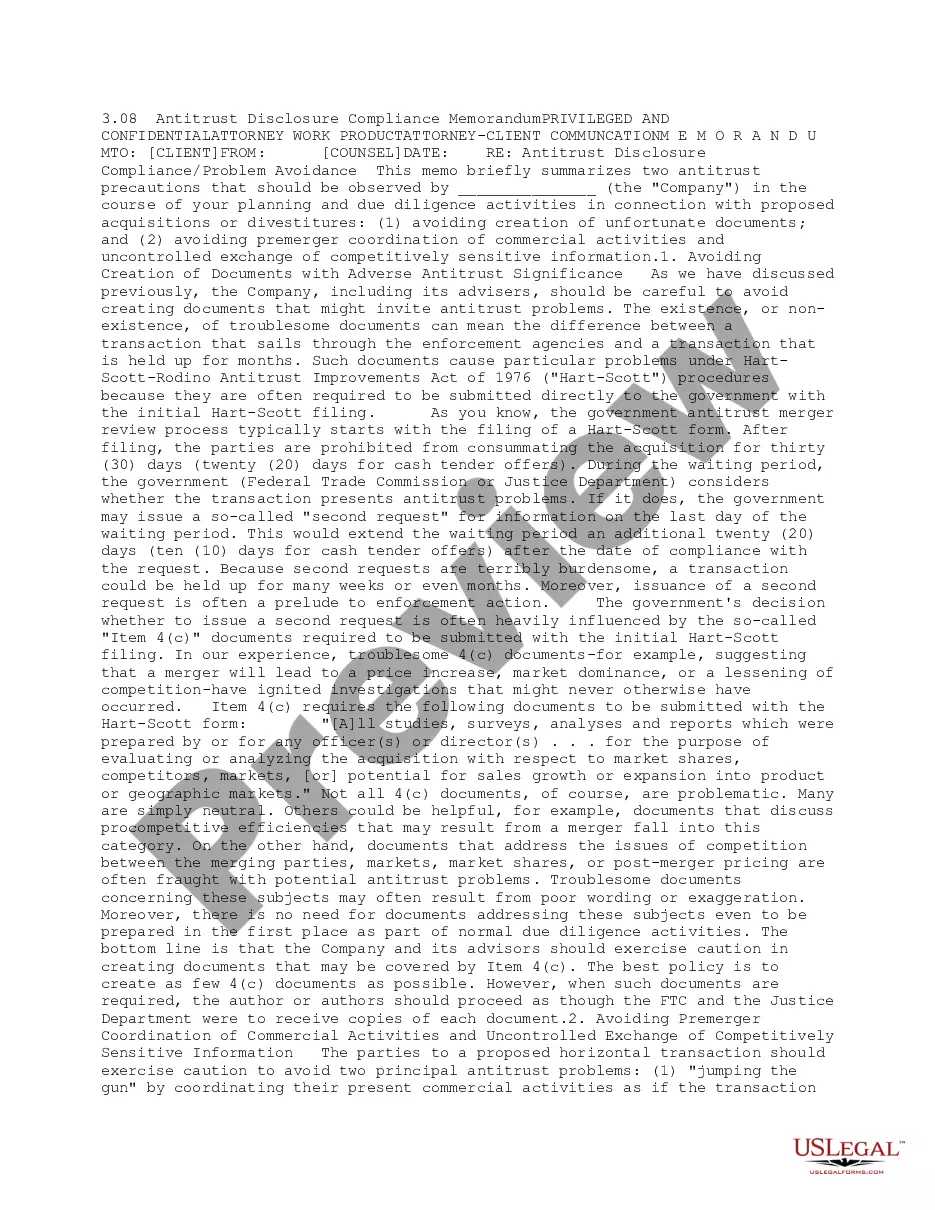
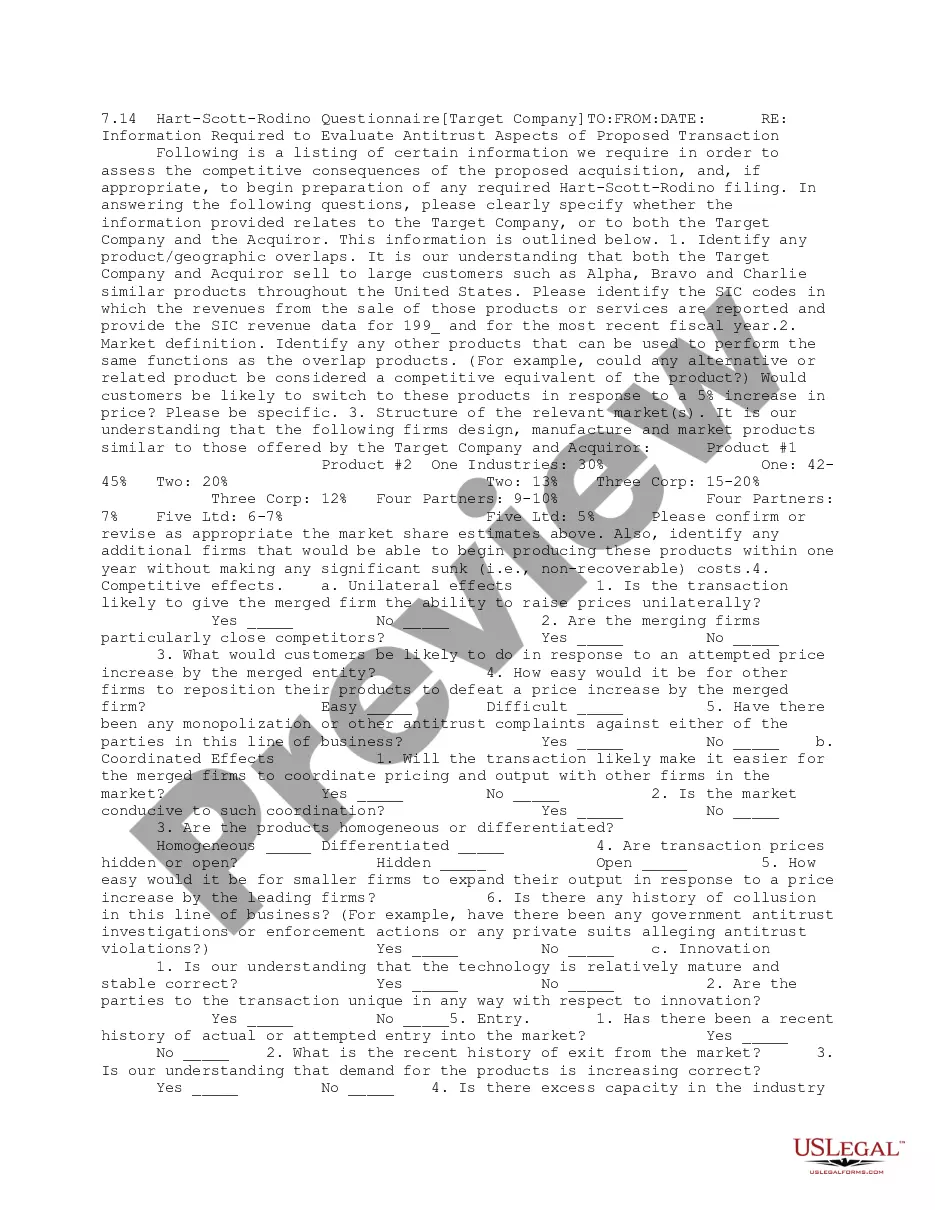
The Antitrust Disclosure Compliance Memorandum is a legal document that assists emerging companies in navigating antitrust concerns during mergers or acquisitions. This memorandum outlines critical precautions related to document creation and the exchange of sensitive information to mitigate risk and avoid potential legal pitfalls. It is specifically tailored to help companies comply with the Hart-Scott-Rodino Antitrust Improvements Act and differs from general compliance memoranda by focusing on premerger activities.
What’s included in this form
- Confidentiality statement to protect sensitive information.
- Guidelines for avoiding the creation of documents that could invite antitrust scrutiny.
- Advice on maintaining the independence of merging parties until the merger is finalized.
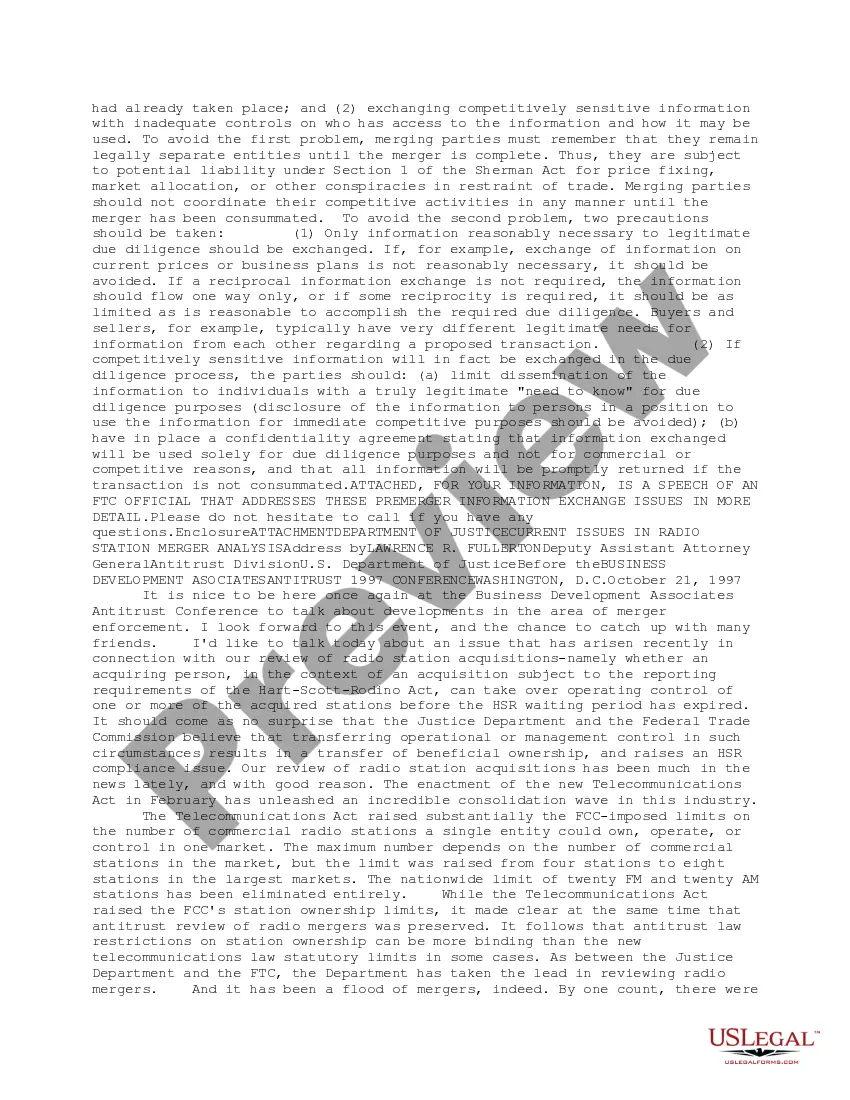
- Recommendations regarding the controlled exchange of competitively sensitive information.
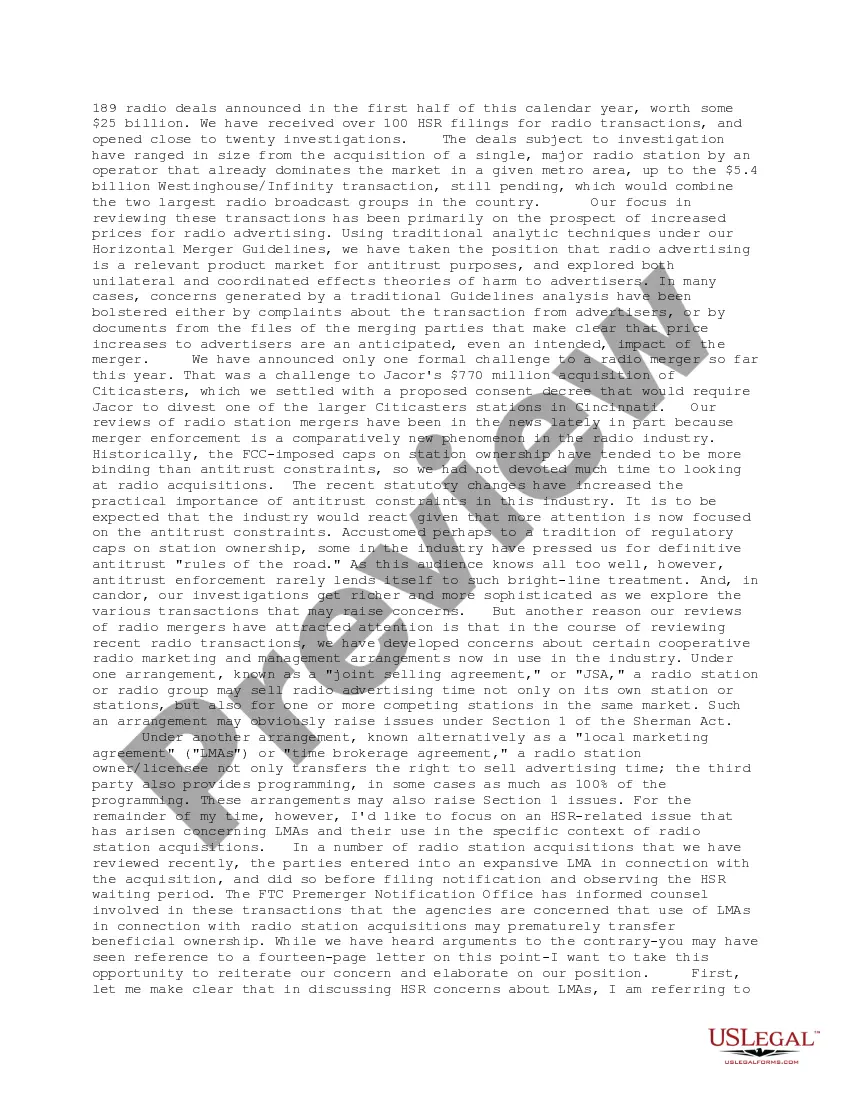
- Clarification of compliance requirements under the Hart-Scott-Rodino Act.
Common use cases
This memorandum should be utilized during the planning and due diligence stages of proposed acquisitions or divestitures. Companies preparing for a merger or acquisition can refer to this document as a guideline to navigate potential antitrust issues, ensuring that they take necessary precautions to prevent legal complications.
Who can use this document
- Emerging companies considering mergers or acquisitions.
- Corporate advisors involved in transaction planning.
- Legal counsel providing compliance guidance to clients.
- Businesses seeking to understand antitrust implications in their transactions.
Instructions for completing this form
- Identify all parties involved in the transaction and clearly state their roles.
- Summarize significant business activities that may be affected by the merger.
- Detail documentation practices to ensure compliance with antitrust guidelines.
- Outline information exchange protocols to limit the risk of competitive sharing.
- Review and have the document signed by all relevant parties for acknowledgment.
Notarization guidance
Notarization is generally not required for this form. However, certain states or situations might demand it. You can complete notarization online through US Legal Forms, powered by Notarize, using a verified video call available anytime.
Get your form ready online
Our built-in tools help you complete, sign, share, and store your documents in one place.
Make edits, fill in missing information, and update formatting in US Legal Forms—just like you would in MS Word.
Download a copy, print it, send it by email, or mail it via USPS—whatever works best for your next step.
Sign and collect signatures with our SignNow integration. Send to multiple recipients, set reminders, and more. Go Premium to unlock E-Sign.
If this form requires notarization, complete it online through a secure video call—no need to meet a notary in person or wait for an appointment.
We protect your documents and personal data by following strict security and privacy standards.

Make edits, fill in missing information, and update formatting in US Legal Forms—just like you would in MS Word.

Download a copy, print it, send it by email, or mail it via USPS—whatever works best for your next step.

Sign and collect signatures with our SignNow integration. Send to multiple recipients, set reminders, and more. Go Premium to unlock E-Sign.

If this form requires notarization, complete it online through a secure video call—no need to meet a notary in person or wait for an appointment.

We protect your documents and personal data by following strict security and privacy standards.
Common mistakes
- Creating sensitive documents without considering antitrust risks.
- Failing to establish clear information exchange protocols.
- Inadvertently coordinating business activities prior to the merger.
- Neglecting to ensure everyone involved understands their confidentiality obligations.
Benefits of completing this form online
- Easy access to a legally vetted document that is tailored for specific compliance needs.
- Editable format allows for customization to specific situations and requirements.
- Reliable guidance based on current legal standards to minimize risk.
Legal use & context
- This memorandum serves as a key compliance tool during merger planning phases.
- Utilizing the form correctly can significantly reduce the risk of antitrust violations.
- Importance of premerger assessment in both federal and state contexts to ensure smooth transaction processes.
Main things to remember
- Before engaging in mergers or acquisitions, businesses must be aware of antitrust regulations to avoid legal pitfalls.
- The memorandum provides crucial guidelines for documenting practices and communication strategies.
- Consulting with legal counsel is essential for ensuring comprehensive compliance.
Looking for another form?
Form popularity
FAQ
The Sherman Act outlawed contracts and conspiracies restraining trade and/or monopolizing industries. For example, the Sherman Act says that competing individuals or businesses can't fix prices, divide markets, or attempt to rig bids. The Sherman Act laid out specific penalties and fines for violating the terms.
The Sherman Act; the Clayton Act; and. the Federal Trade Commission Act (FTCA).
Federal antitrust laws provide for both civil and criminal enforcement of antitrust laws. The Federal Trade Commission, the Antitrust Division of the U.S. Department of Justice, and private parties who are sufficiently affected may all bring civil actions in the courts to enforce the antitrust laws.
An example of behavior that antitrust laws prohibit is lowering the price in a certain geographic area in order to push out the competition.Another example of an antitrust violation is collusion. For example, three companies manufacture and sell widgets. They charge $1.00, $1.05, and $1.10 for their widgets.
The goal of these laws is to provide an equal playing field for similar businesses that operate in a specific industry while preventing them from gaining too much power over their competition. Simply put, they stop businesses from playing dirty in order to make a profit. These are called antitrust laws.
The main statutes are the Sherman Act of 1890, the Clayton Act of 1914 and the Federal Trade Commission Act of 1914.
ANTITRUST LAWS The most common antitrust violations fall into two categories: (i) Agreements to restrain competition, and (ii) efforts to acquire a monopoly. In the case of a merger, a combination that would likely substantially reduce competition in a market would also violate antitrust laws.