Charitable Remainder Trust Document For Farmers
Description
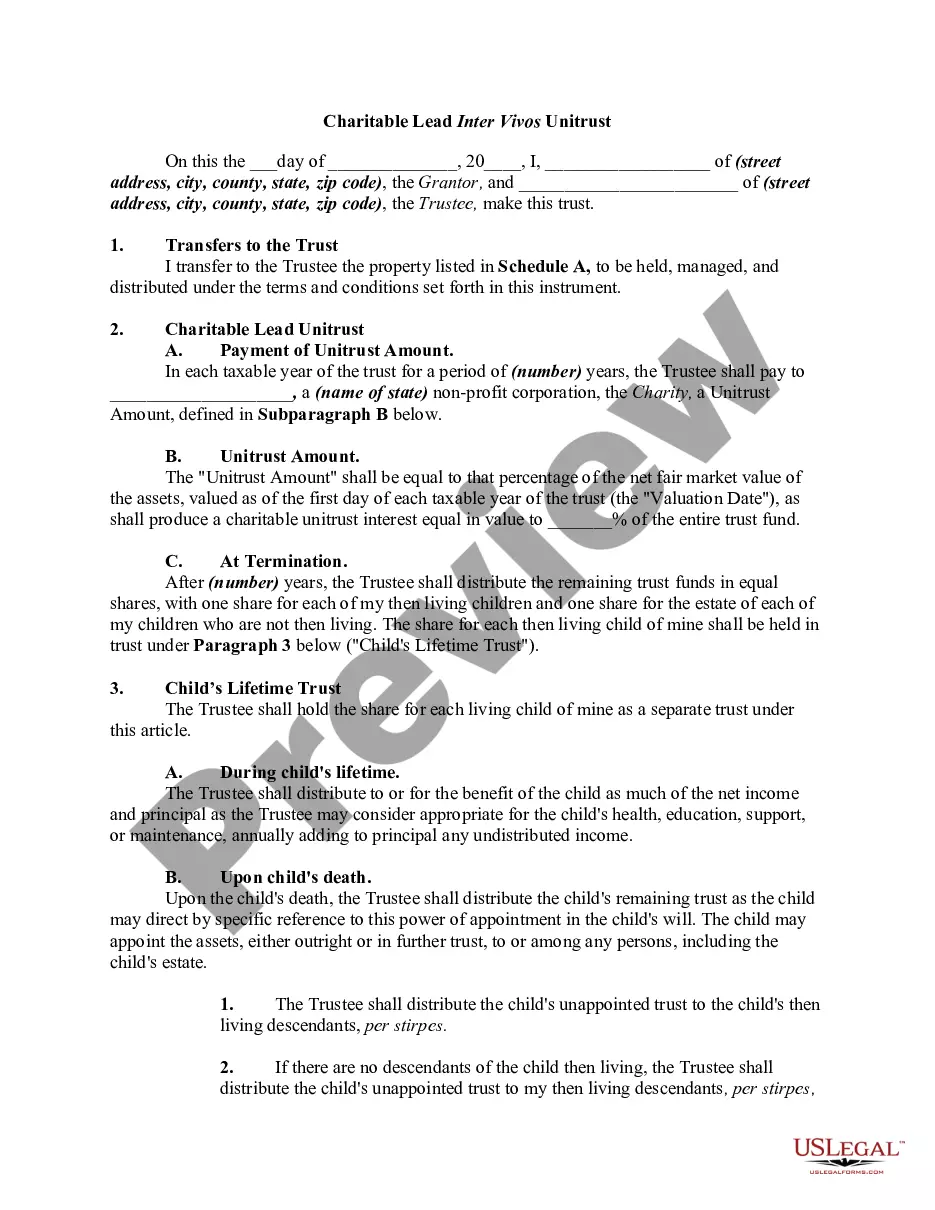
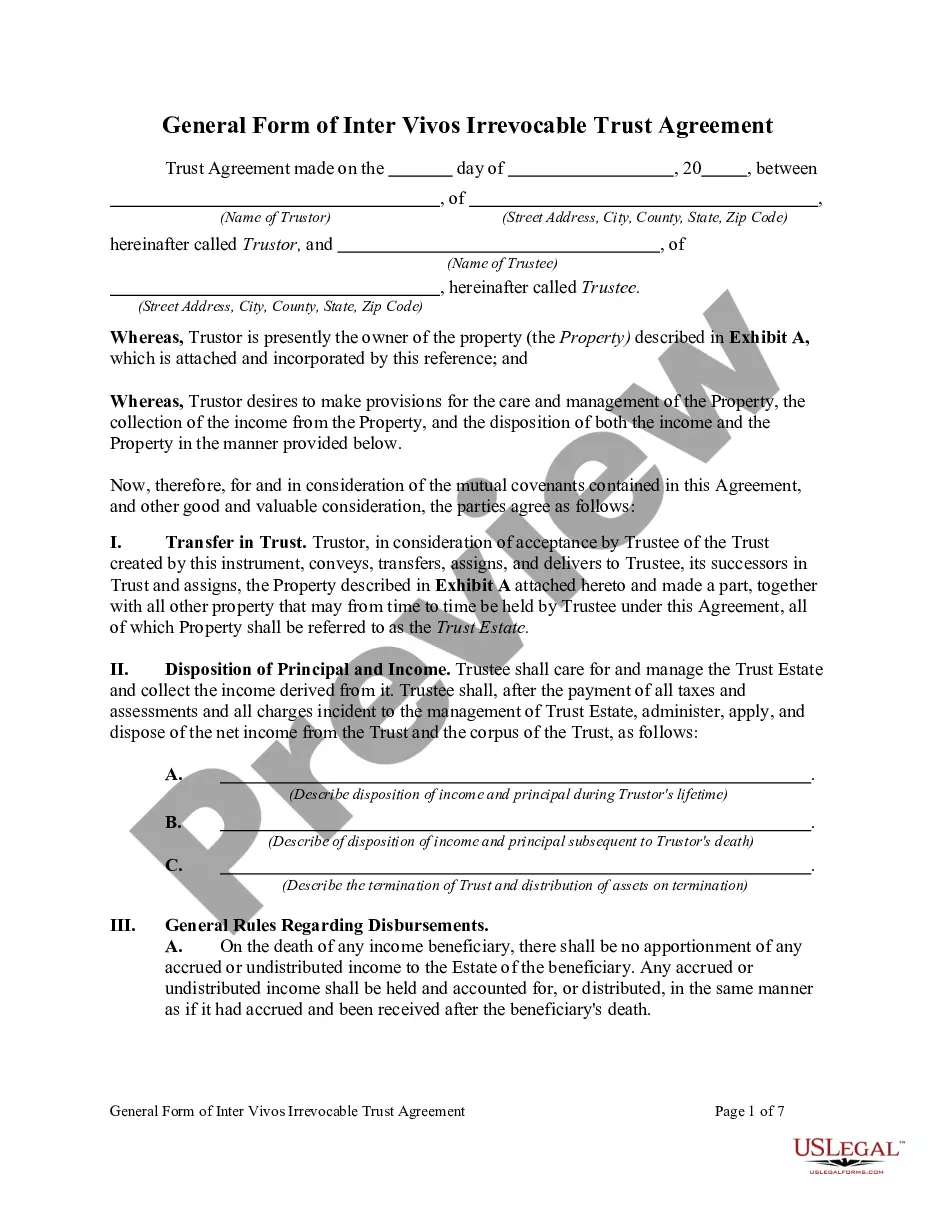
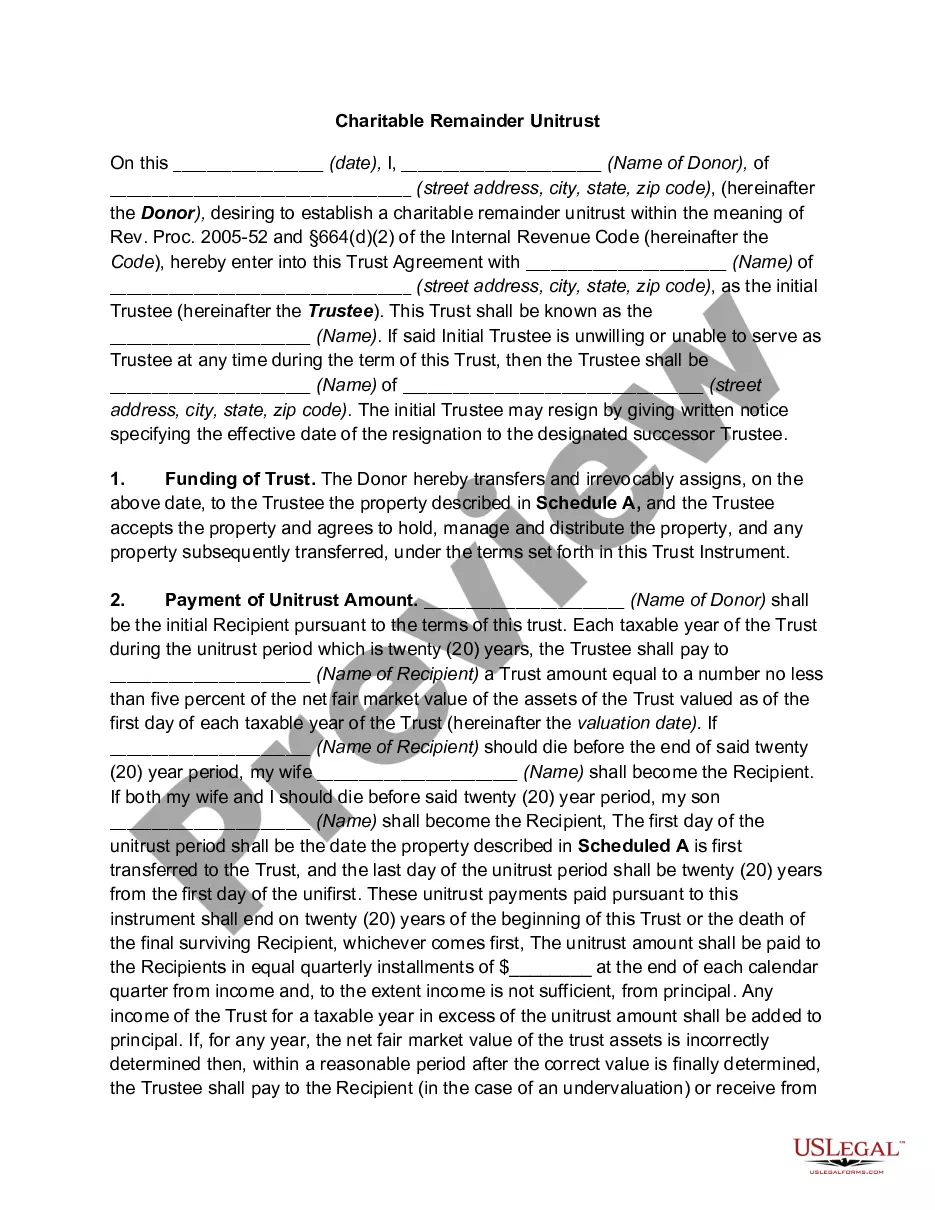
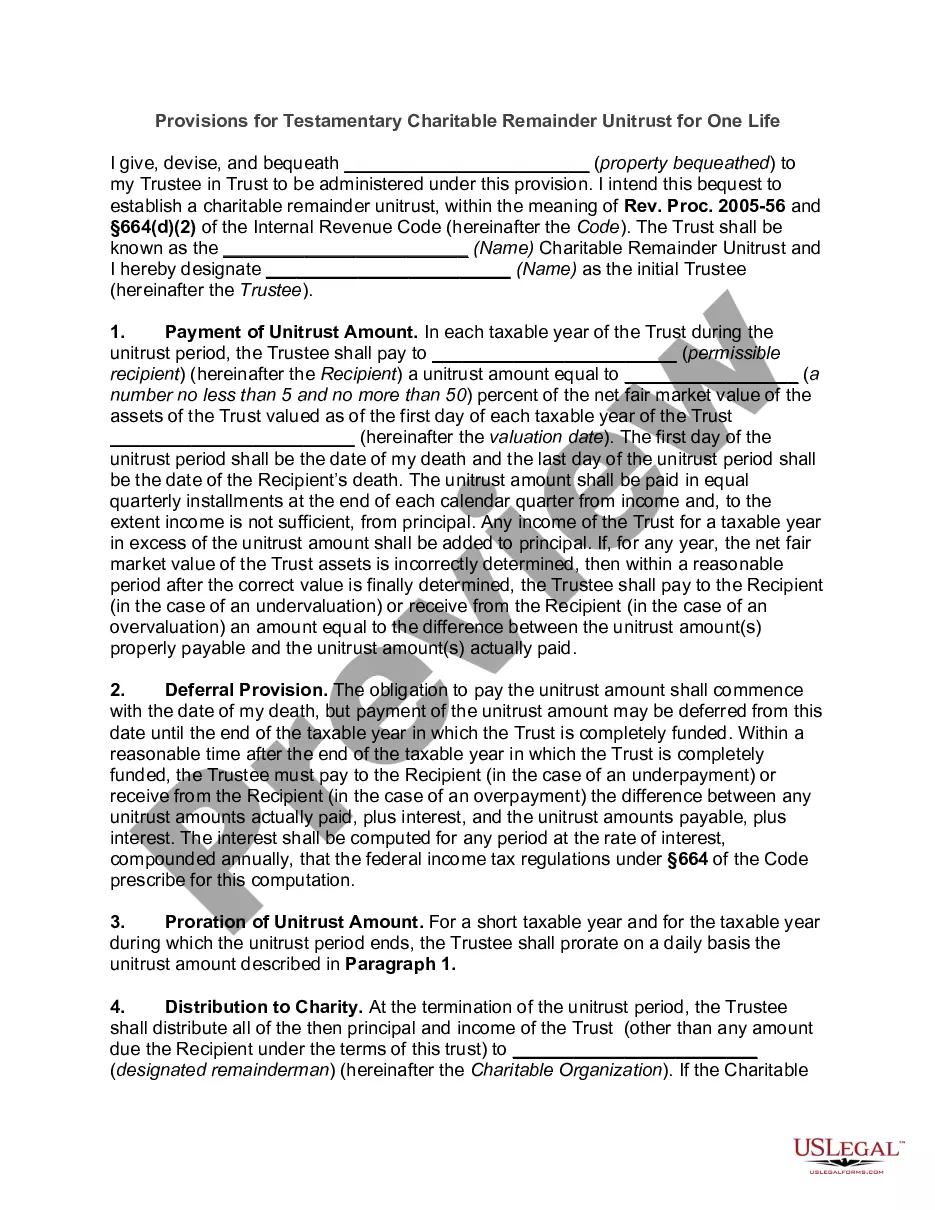
Get your form ready online
Our built-in tools help you complete, sign, share, and store your documents in one place.
Make edits, fill in missing information, and update formatting in US Legal Forms—just like you would in MS Word.
Download a copy, print it, send it by email, or mail it via USPS—whatever works best for your next step.
Sign and collect signatures with our SignNow integration. Send to multiple recipients, set reminders, and more. Go Premium to unlock E-Sign.
If this form requires notarization, complete it online through a secure video call—no need to meet a notary in person or wait for an appointment.
We protect your documents and personal data by following strict security and privacy standards.

Make edits, fill in missing information, and update formatting in US Legal Forms—just like you would in MS Word.

Download a copy, print it, send it by email, or mail it via USPS—whatever works best for your next step.

Sign and collect signatures with our SignNow integration. Send to multiple recipients, set reminders, and more. Go Premium to unlock E-Sign.

If this form requires notarization, complete it online through a secure video call—no need to meet a notary in person or wait for an appointment.

We protect your documents and personal data by following strict security and privacy standards.
Looking for another form?







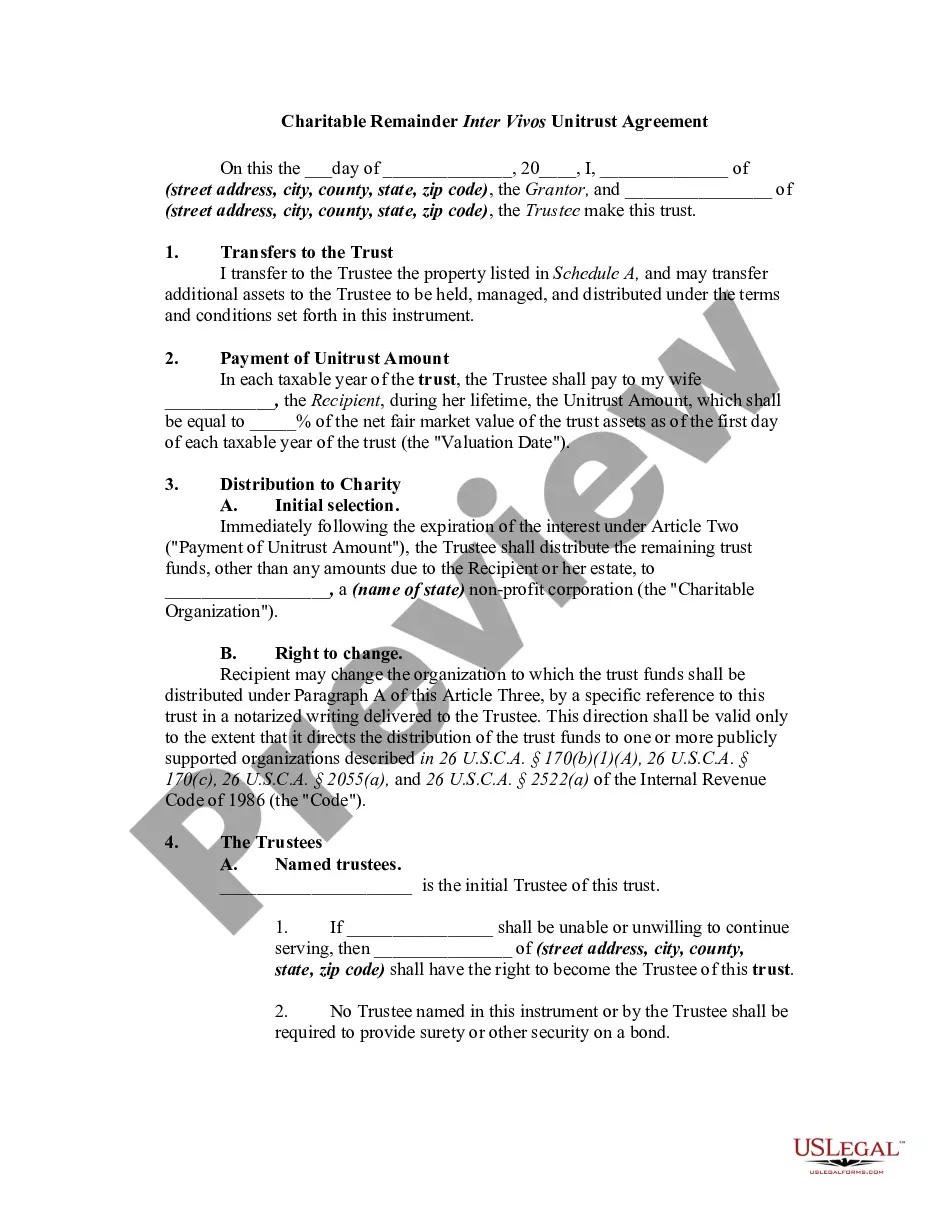
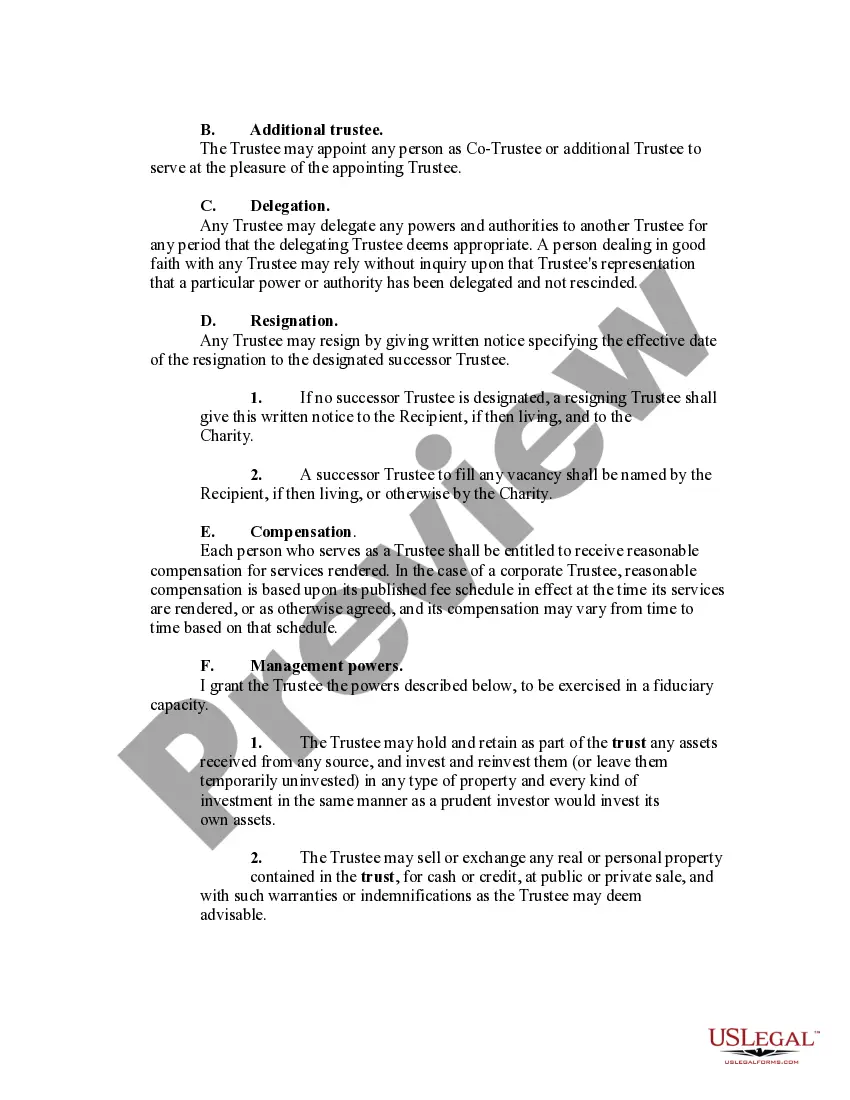
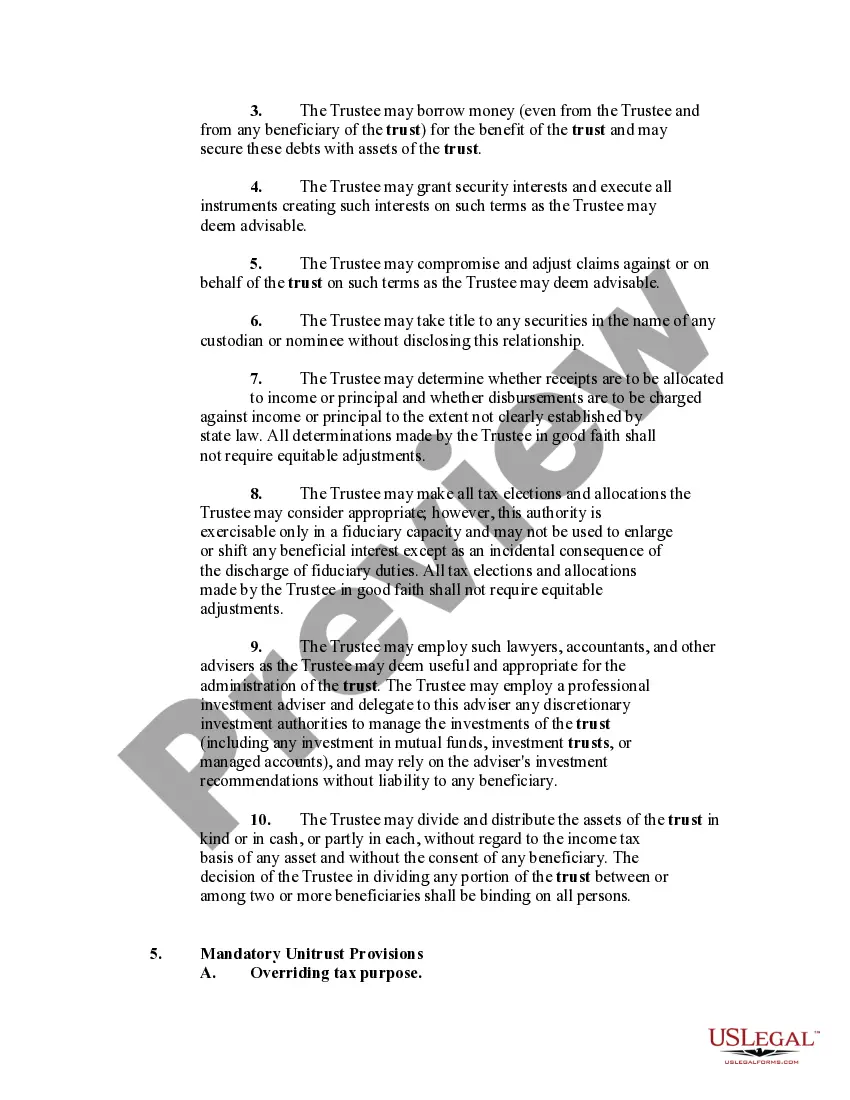
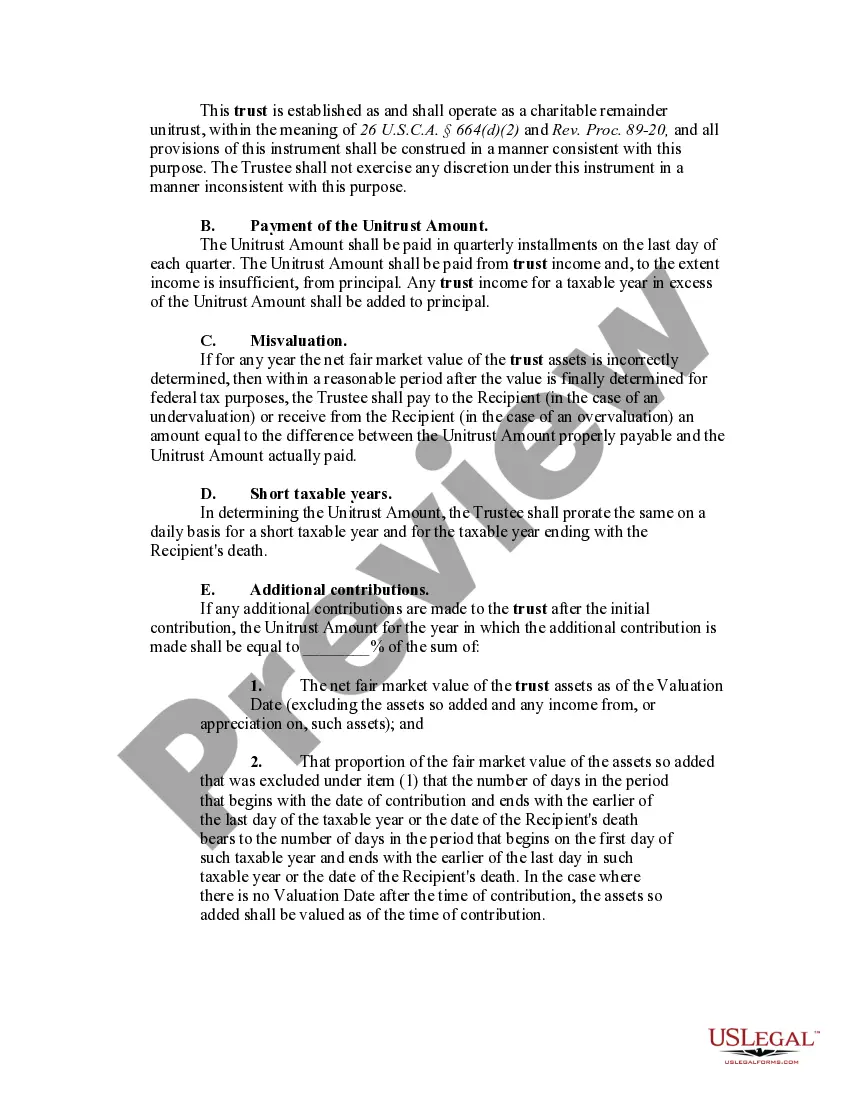
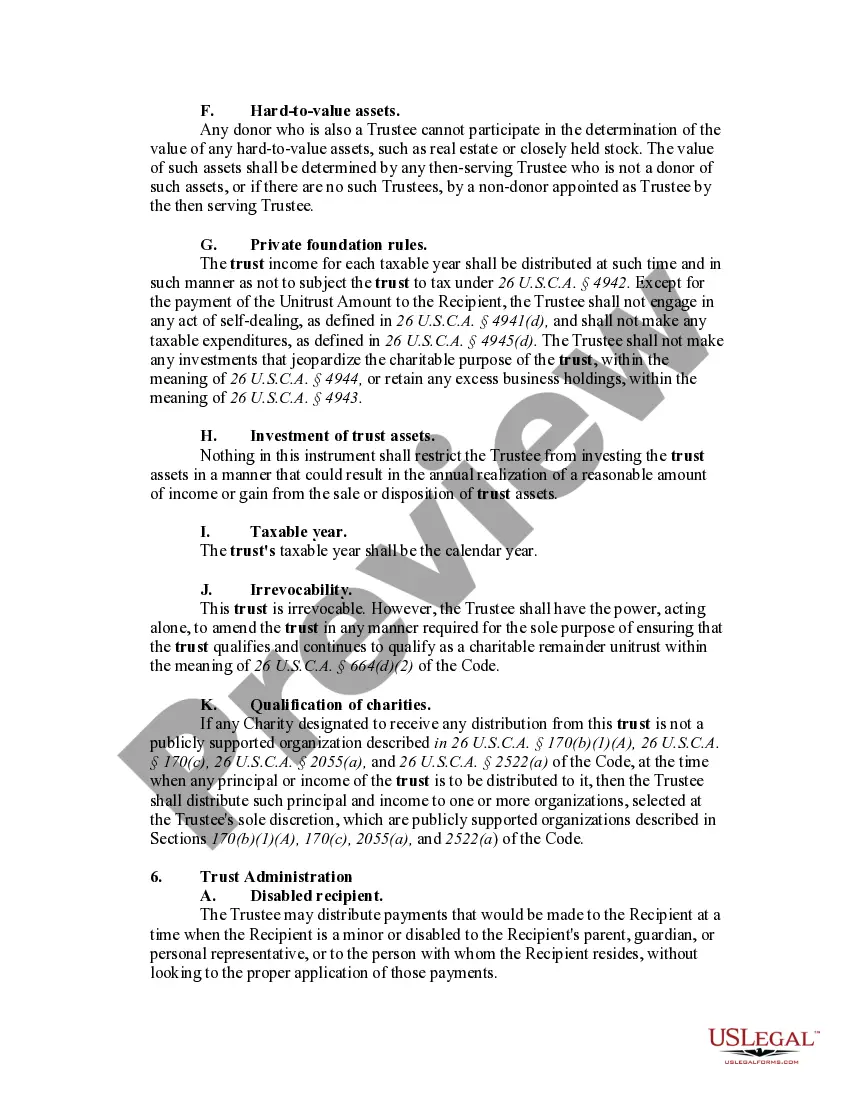
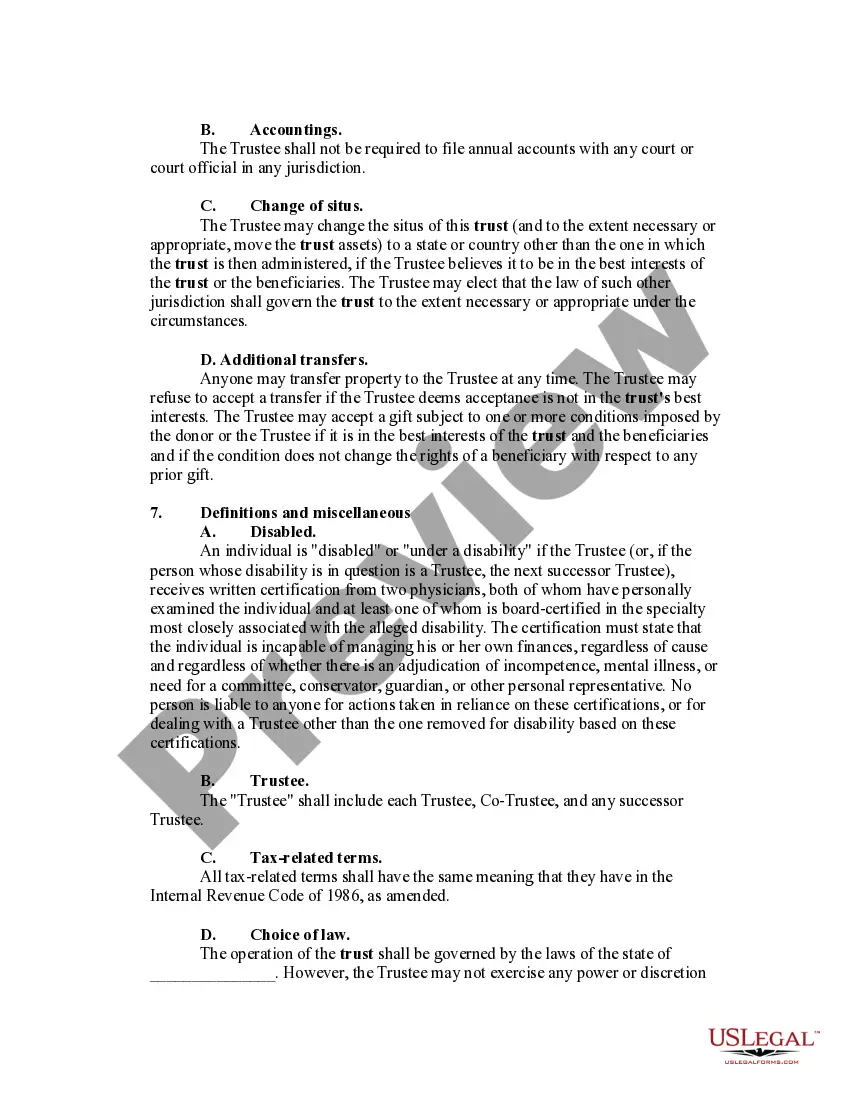
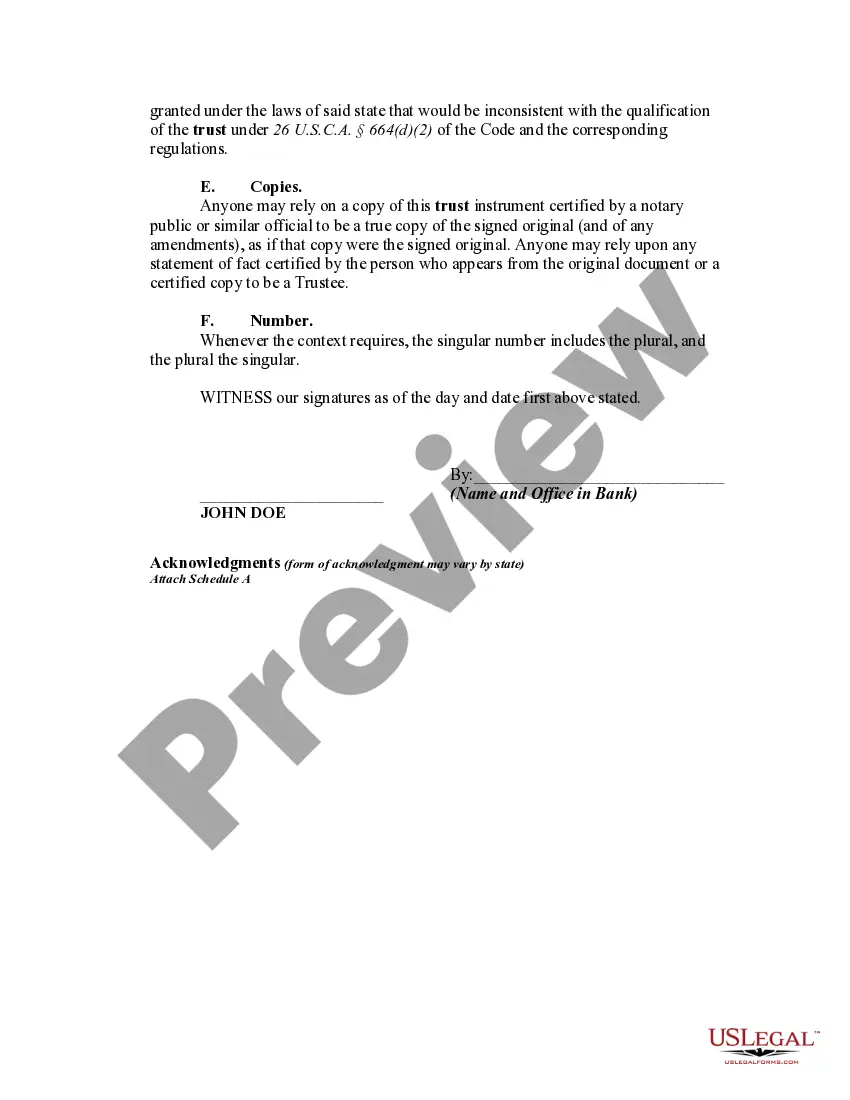
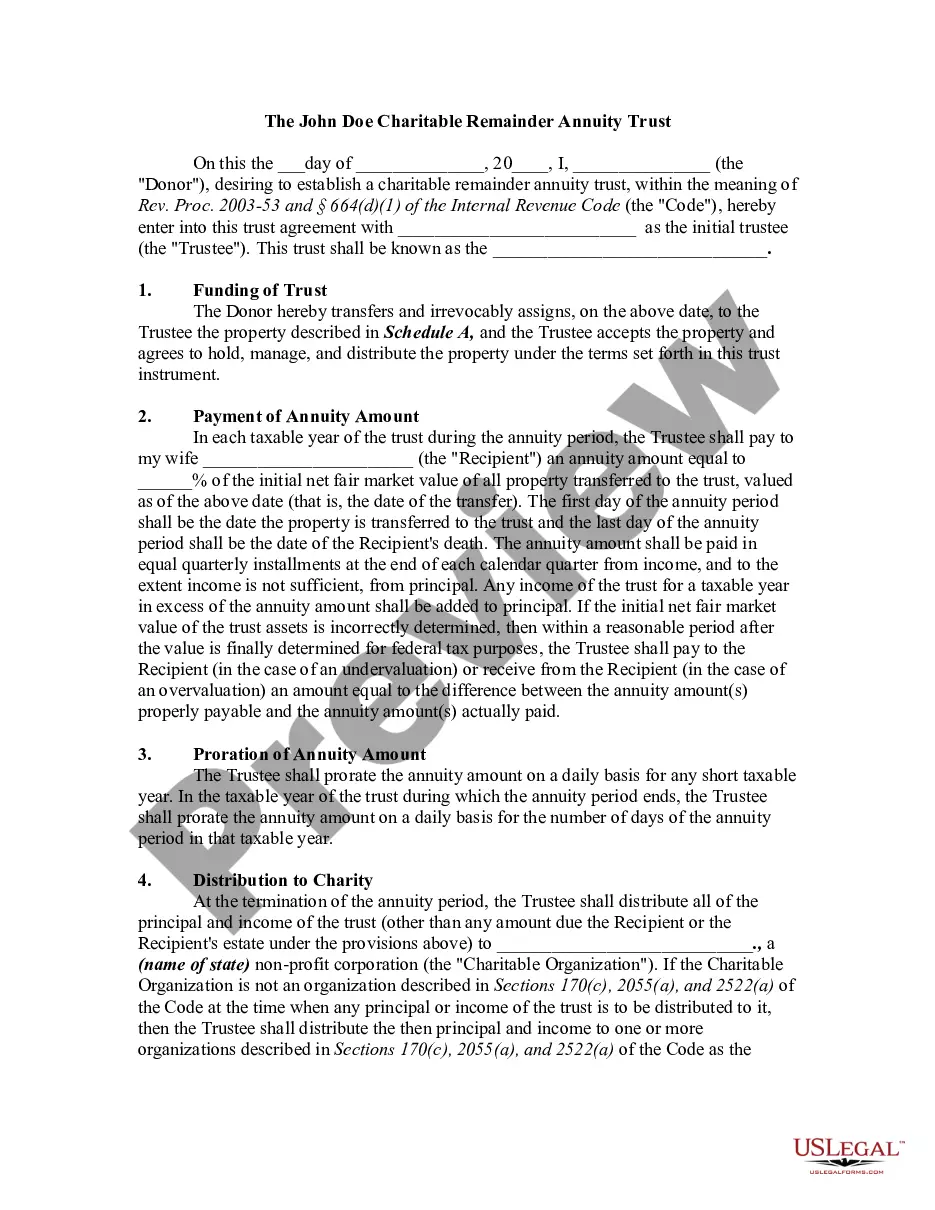
How to fill out Charitable Remainder Inter Vivos Unitrust Agreement?
Dealing with legal paperwork and procedures could be a time-consuming addition to your day. Charitable Remainder Trust Document For Farmers and forms like it typically need you to look for them and navigate the way to complete them appropriately. For that reason, whether you are taking care of economic, legal, or individual matters, using a comprehensive and hassle-free web library of forms on hand will greatly assist.
US Legal Forms is the top web platform of legal templates, offering more than 85,000 state-specific forms and a number of resources that will help you complete your paperwork quickly. Discover the library of pertinent papers accessible to you with just one click.
US Legal Forms gives you state- and county-specific forms available at any time for downloading. Safeguard your papers management operations with a top-notch services that allows you to prepare any form in minutes without having extra or hidden cost. Just log in in your account, find Charitable Remainder Trust Document For Farmers and download it right away from the My Forms tab. You may also access previously saved forms.
Would it be the first time using US Legal Forms? Sign up and set up up your account in a few minutes and you’ll have access to the form library and Charitable Remainder Trust Document For Farmers. Then, stick to the steps below to complete your form:
- Be sure you have the correct form using the Review feature and looking at the form information.
- Choose Buy Now as soon as ready, and choose the subscription plan that is right for you.
- Choose Download then complete, sign, and print the form.
US Legal Forms has twenty five years of experience helping users deal with their legal paperwork. Find the form you require right now and enhance any operation without having to break a sweat.
Form popularity
FAQ
The CRT is a special kind of trust that can sell assets without triggering tax liability while providing annual income for the retiring farmer. The CRT essentially spreads out the income from the sale of the assets over many years to keep the farmer in a lower tax rate bracket.
Cons of CRT There are also a few potential drawbacks to consider, including the following: The trust is irrevocable, which means you cannot change your mind after setting it up. You must transfer property ownership to the trustee, which could be a financial institution that charges fees.
In either type of CRT (unitrust or annuity trust), the Internal Revenue Service (IRS) requires that the payout rate stated in the trust cannot be less than 5 percent or more than 50 percent of the initial fair market value of the trust's assets.
How to Set up a Charitable Remainder Trust Create a Charitable Remainder Trust. Check with the IRS that the charity you want to benefit is approved. Transfer assets into the Trust. Name the charity as Trustee. Create a provision that states who the lead beneficiary is - remember, this can be yourself or someone else.
Irrevocability: CRTs are irrevocable, which means that in many cases, changes cannot be made after one is formed. Ordinary Income Taxes: The income dispersed to your non-charitable beneficiaries may be taxed as ordinary income. Administrative Fees: CRTs can be complicated to manage.