Charitable Form Trust Order For Beneficiary
Description
Get your form ready online
Our built-in tools help you complete, sign, share, and store your documents in one place.
Make edits, fill in missing information, and update formatting in US Legal Forms—just like you would in MS Word.
Download a copy, print it, send it by email, or mail it via USPS—whatever works best for your next step.
Sign and collect signatures with our SignNow integration. Send to multiple recipients, set reminders, and more. Go Premium to unlock E-Sign.
If this form requires notarization, complete it online through a secure video call—no need to meet a notary in person or wait for an appointment.
We protect your documents and personal data by following strict security and privacy standards.

Make edits, fill in missing information, and update formatting in US Legal Forms—just like you would in MS Word.

Download a copy, print it, send it by email, or mail it via USPS—whatever works best for your next step.

Sign and collect signatures with our SignNow integration. Send to multiple recipients, set reminders, and more. Go Premium to unlock E-Sign.

If this form requires notarization, complete it online through a secure video call—no need to meet a notary in person or wait for an appointment.

We protect your documents and personal data by following strict security and privacy standards.
Looking for another form?








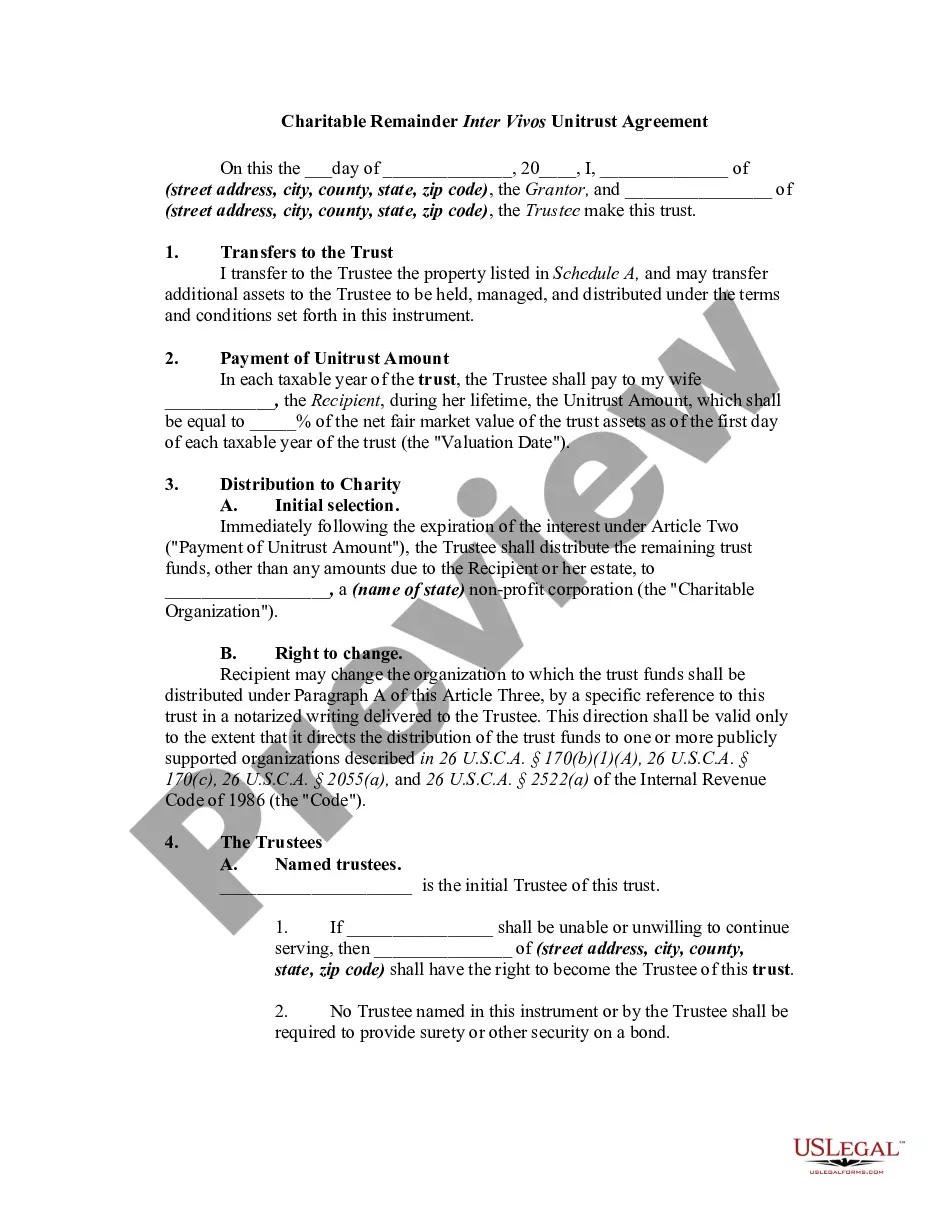
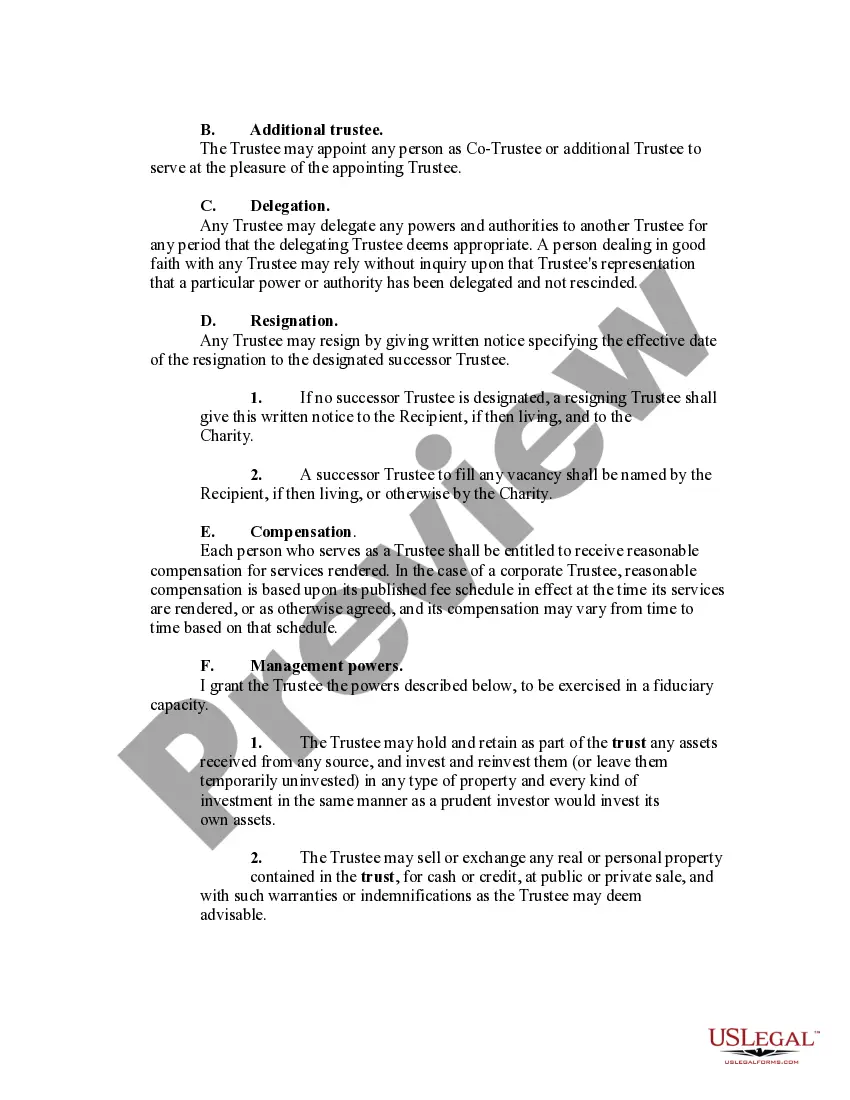
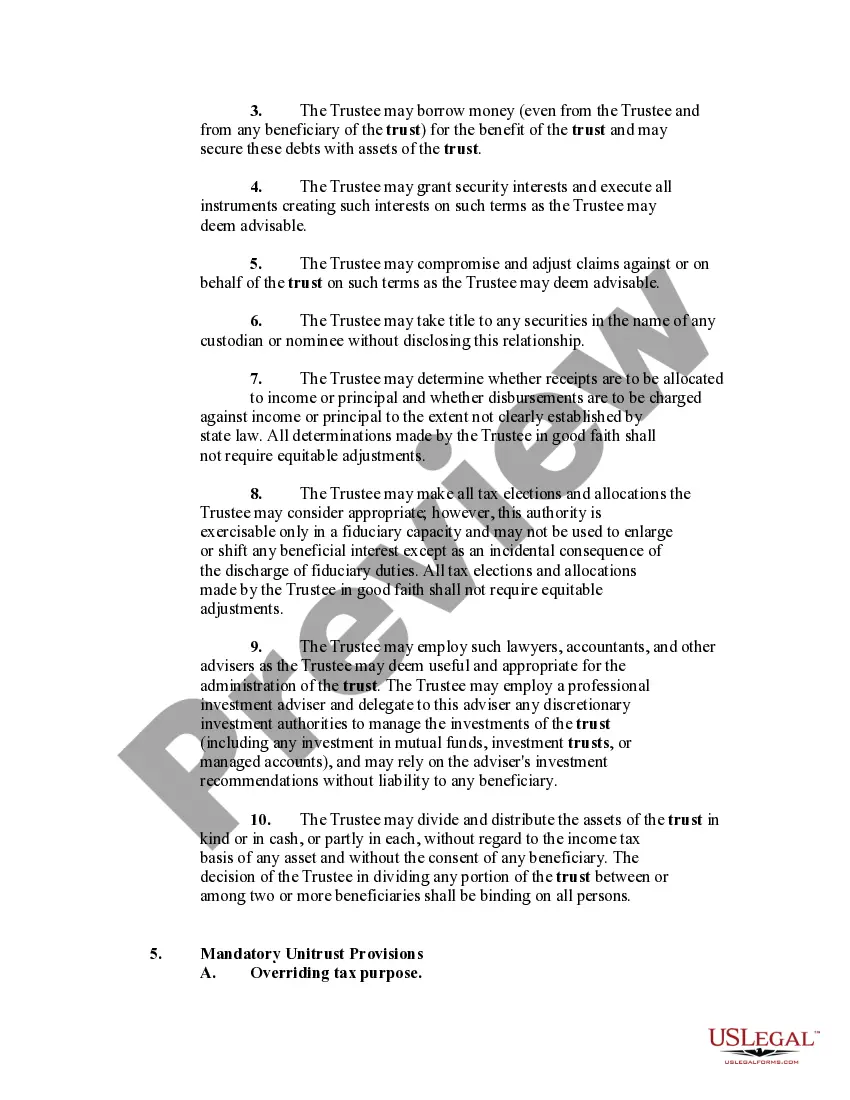
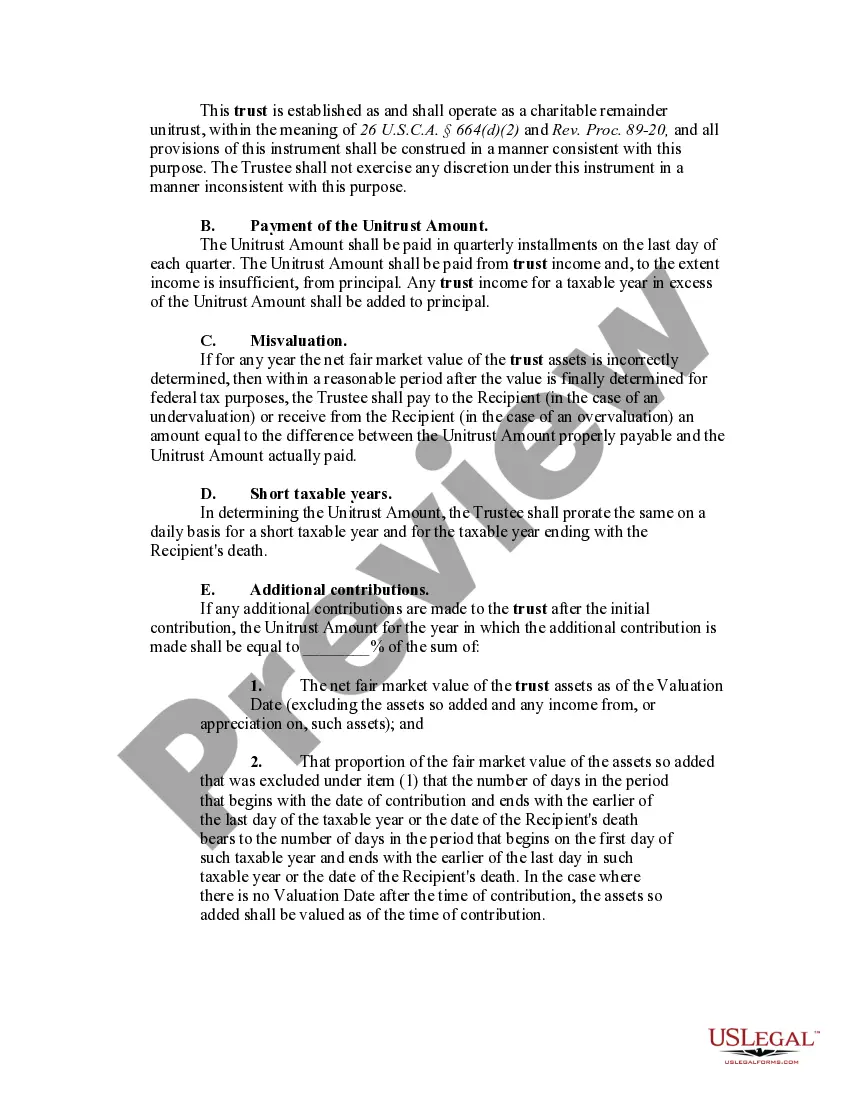
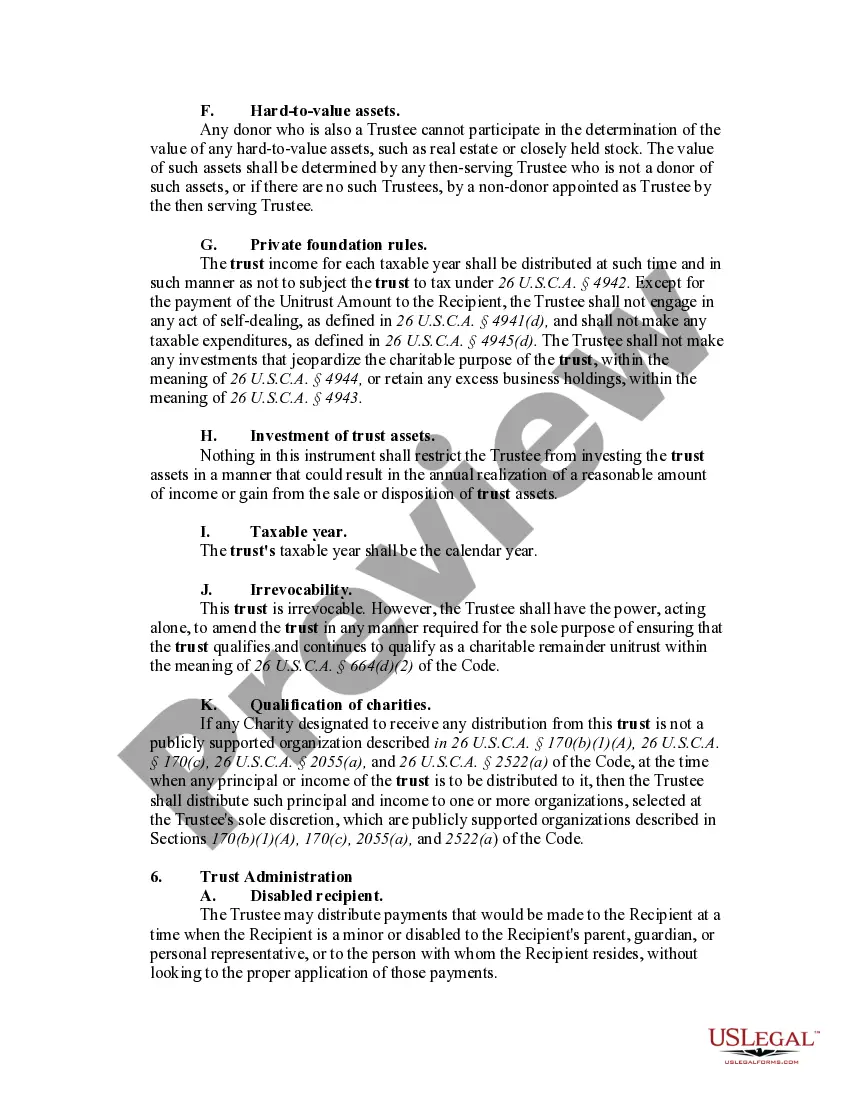
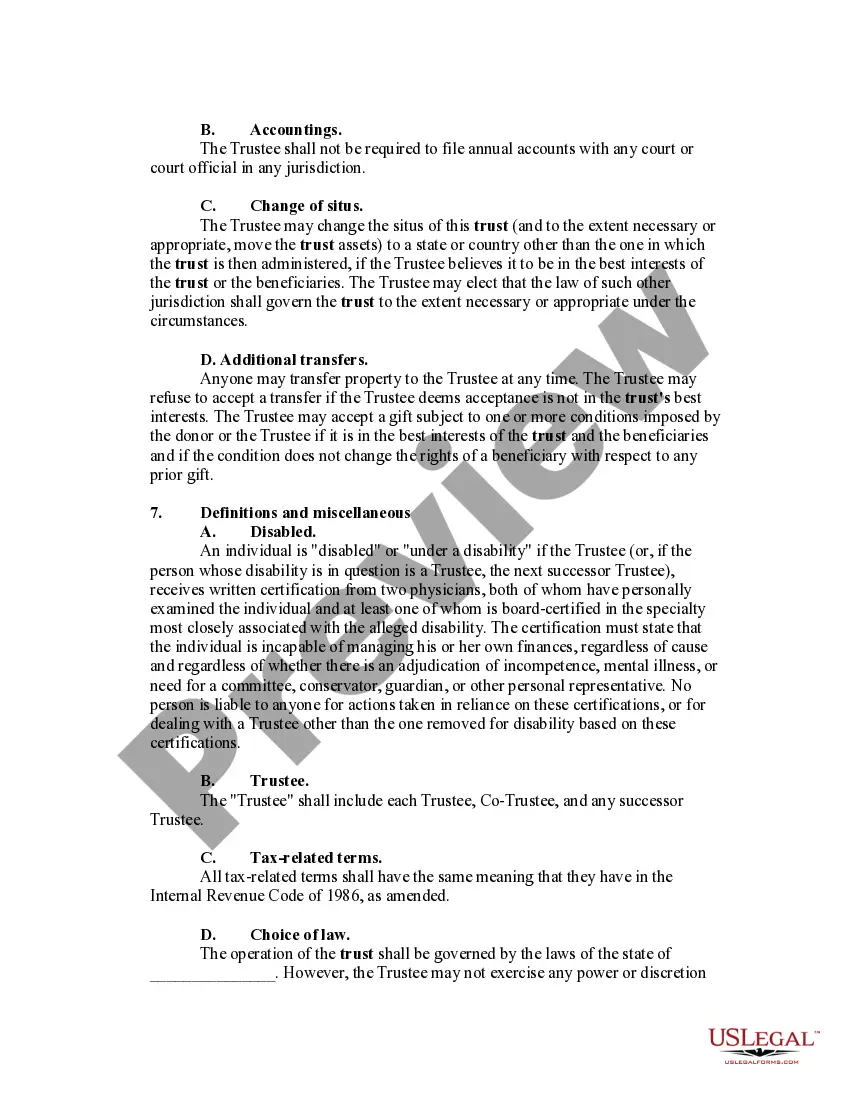
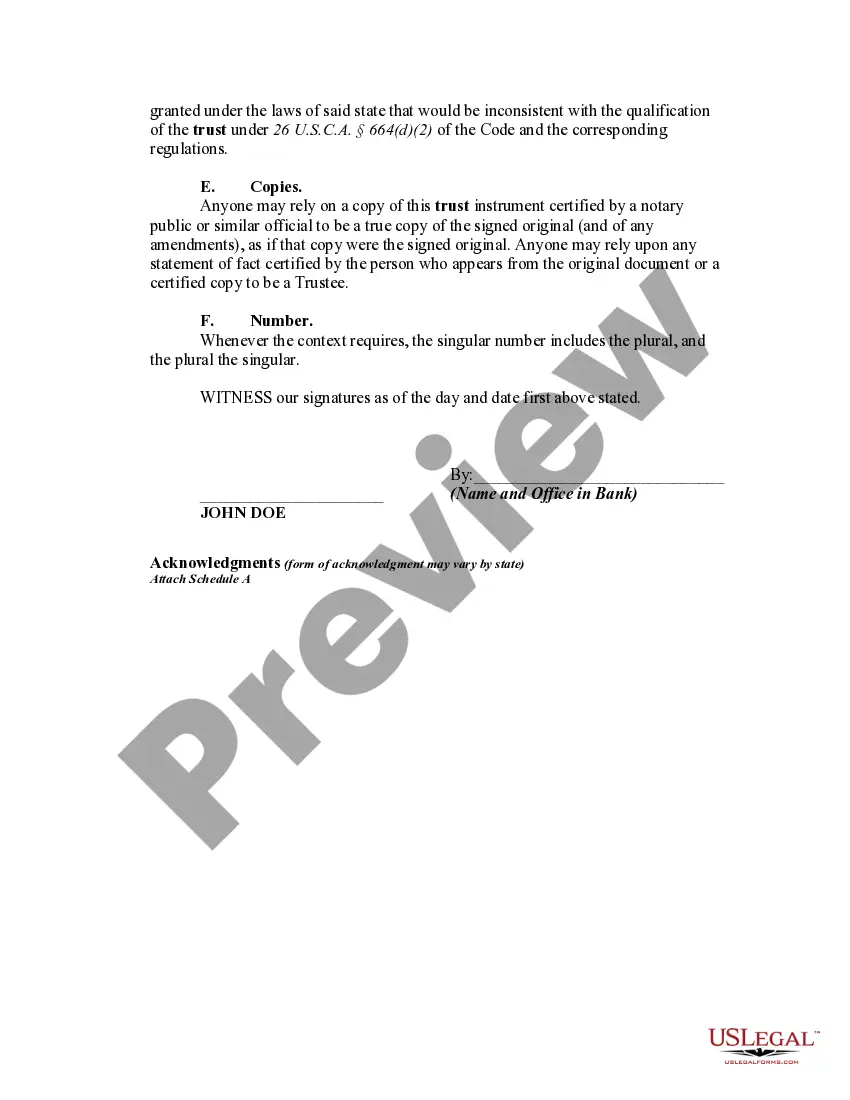
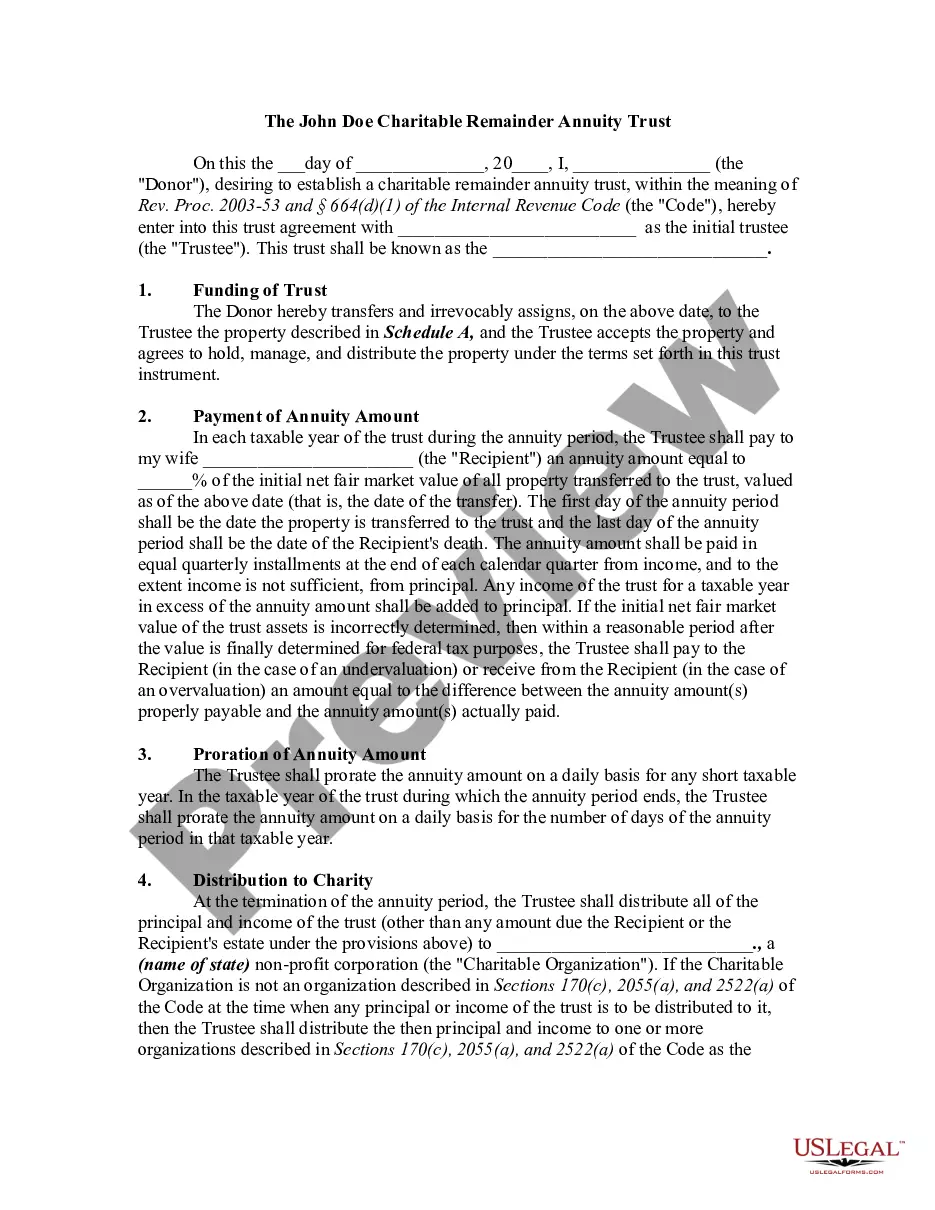
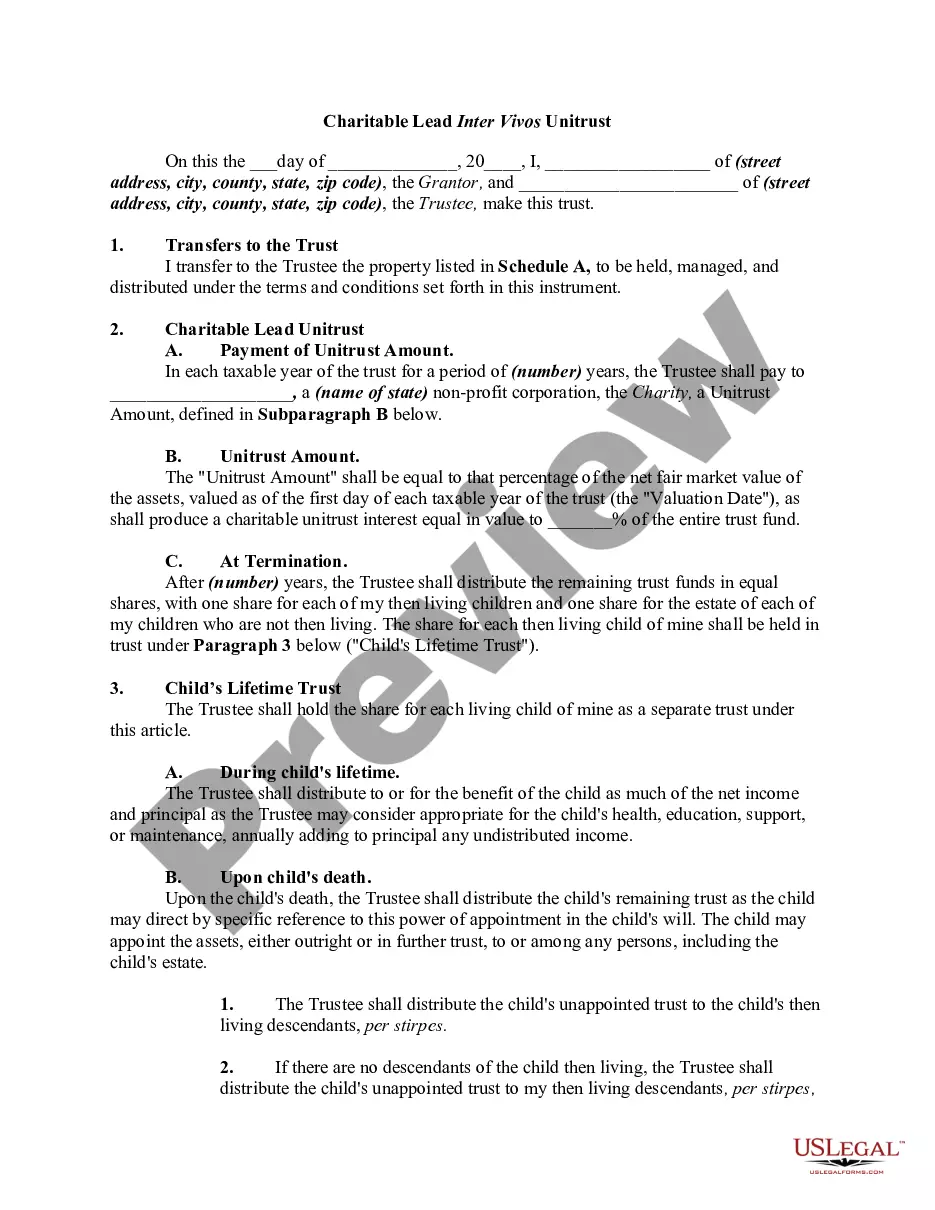
How to fill out Charitable Remainder Inter Vivos Unitrust Agreement?
- Begin by logging into your US Legal Forms account if you're a returning user. Ensure your subscription is active, and then download the required form by clicking the Download button.
- For first-time users, start by reviewing the form preview and description to confirm suitability for your requirements and compliance with local laws.
- If adjustments are necessary, utilize the Search function to find alternative templates that align with your needs before proceeding.
- Click 'Buy Now' and select a subscription plan that best meets your needs. You will need to register for an account to access the complete library.
- Complete your purchase using your credit card or PayPal to finalize the subscription.
- Download the form to your device. You can access it anytime in the My Forms section of your account for easy reference.
By leveraging US Legal Forms, you gain access to an extensive collection of over 85,000 fillable legal documents. This allows you to expedite the process of creating legal forms while ensuring accuracy and compliance.
Get started today with US Legal Forms to simplify your legal documentation needs and make sure your charitable form trust order is correctly prepared!
Form popularity
FAQ
known example of a charitable remainder trust is when an individual, after selling a business, places the proceeds into a trust. The trust pays them a fixed percentage of the value annually for a defined period, and eventually, the remaining funds go to a charity of their choice. This showcases how a charitable form trust order for beneficiary can enhance your financial strategy while also benefiting charitable organizations in a meaningful way.
One downside of a charitable remainder trust is the complexity involved in setting it up, which may require legal assistance. Additionally, if the trust’s value declines, the income to beneficiaries may also decrease, affecting their financial planning. It is essential to consider these factors when establishing a charitable form trust order for beneficiary. Utilizing resources such as uslegalforms can simplify the process, helping you create a robust trust structure without unnecessary hassle.
A charitable trust is an arrangement where assets are held for charitable purposes. A common example is a trust set up to provide scholarships for students in need. This demonstrates how a charitable form trust order for beneficiary operates beyond personal interest, creating a lasting impact on the community. Such trusts allow you to leave a legacy that aligns with your values while supporting those who benefit from charitable services.
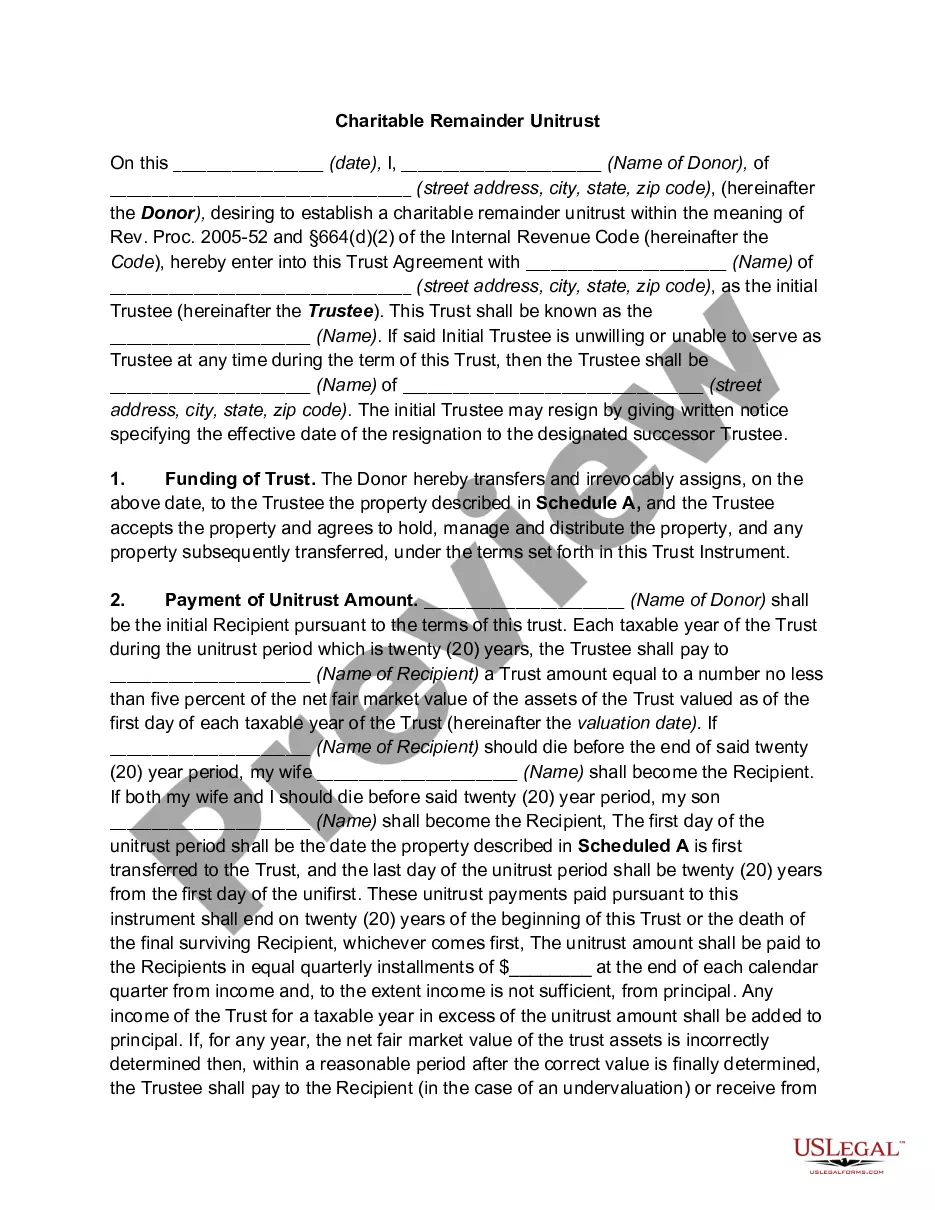
An example of a charitable remainder trust is when an individual donates a highly appreciated asset, such as real estate, to the trust. The trust provides income to the donor for a specified term or for their lifetime, and when the term ends, the remaining assets go to a designated charity. This type of arrangement highlights how a charitable form trust order for beneficiary offers flexibility, allowing you to benefit from current income while ensuring a future donation to a cause you care about.
The 5% rule for a charitable remainder trust ensures that at least 5% of the asset value goes to the charity upon the trust's termination. This rule helps maintain a balance between providing income to the beneficiaries during their lifetimes and fulfilling the charitable intent of the trust. By setting this guideline, a charitable form trust order for beneficiary becomes a well-structured tool that benefits both the donor and the chosen charity. This ensures that the charity receives a meaningful contribution while supporting the beneficiaries.
Establishing a charitable trust requires specific documentation to ensure compliance with legal requirements. The form for a charitable trust typically includes details about the trust's purpose, assets, and the charitable organization that will benefit from it. Utilizing a platform like US Legal Forms can simplify this process by providing the necessary templates and guidance for creating a charitable form trust order for beneficiary, making it easier for you to achieve your charitable goals.
While a charitable trust offers many benefits, there are some disadvantages to consider. Once you establish a charitable form trust order for beneficiary, the assets typically cannot easily revert back to you, limiting your control over those assets. Moreover, administrative costs and the complexity of managing such a trust can be challenging, especially if you are unfamiliar with the legal requirements and tax implications involved.
A charitable remainder trust can indeed be worth it for many individuals. It allows you to donate assets to a charitable organization while still receiving income from those assets during your lifetime. Additionally, setting up a charitable form trust order for beneficiary can offer significant tax benefits, as you may receive a charitable deduction based on the present value of the charity's future benefit. Many find this balance between philanthropy and financial security to be invaluable.
A private foundation can serve as a beneficiary of a charitable remainder trust. This arrangement allows you to benefit from immediate tax advantages while directing funds to support charitable efforts over time. Integrating a private foundation into your arrangements can be a strategic move within your charitable form trust order for beneficiary.
Yes, a church can be named as a beneficiary of a trust. Many individuals choose to support their faith by including their church in their estate plans. By doing so, you ensure that your charitable form trust order for beneficiary supports your community and religious commitments.