Employee Handbook In Uae
Description


Get your form ready online
Our built-in tools help you complete, sign, share, and store your documents in one place.
Make edits, fill in missing information, and update formatting in US Legal Forms—just like you would in MS Word.
Download a copy, print it, send it by email, or mail it via USPS—whatever works best for your next step.
Sign and collect signatures with our SignNow integration. Send to multiple recipients, set reminders, and more. Go Premium to unlock E-Sign.
If this form requires notarization, complete it online through a secure video call—no need to meet a notary in person or wait for an appointment.
We protect your documents and personal data by following strict security and privacy standards.

Make edits, fill in missing information, and update formatting in US Legal Forms—just like you would in MS Word.

Download a copy, print it, send it by email, or mail it via USPS—whatever works best for your next step.

Sign and collect signatures with our SignNow integration. Send to multiple recipients, set reminders, and more. Go Premium to unlock E-Sign.

If this form requires notarization, complete it online through a secure video call—no need to meet a notary in person or wait for an appointment.

We protect your documents and personal data by following strict security and privacy standards.
Looking for another form?










Form popularity
FAQ
Formatting an employee handbook in UAE is crucial for clarity and ease of use. Begin with a clear table of contents, followed by well-defined sections and headings. Use bullet points for key information, ensuring that the text is readable and accessible. A well-structured handbook helps promote understanding and compliance among employees, and platforms like USLegalForms can assist you in this arrangement.
Calculating leave salary in UAE involves assessing your total salary, including allowances. Start by dividing your monthly salary by the number of workdays to get your per day rate. Multiply this by the total number of leave days taken. This straightforward calculation helps employees understand their payments while maximizing benefits based on their entitlements.
The leave encashment rule in UAE allows employees to convert their unused annual leave into salary. This policy ensures that if you do not use your entitled leave, you can still benefit financially. The specific rules about encashment can vary by company, so it is essential to reference your employee handbook in UAE or discuss with HR for exact details. Understanding this rule can help you make informed decisions about your leave.
In the UAE, to calculate your per day salary, divide your monthly salary by the total number of working days in the month. Generally, this means you should use the total workdays, excluding weekends and holidays. This method ensures that you have an accurate reflection of your earnings on a daily basis, which is crucial for payroll management and leave calculations.
To calculate leave salary in UAE, you should first understand your base salary and the duration of your leave. The leave salary is typically calculated based on your last drawn salary for the number of days taken as leave. Make sure to include any allowances or bonuses applicable during this period. This approach helps maintain transparency and ensures you receive what you’re entitled to.
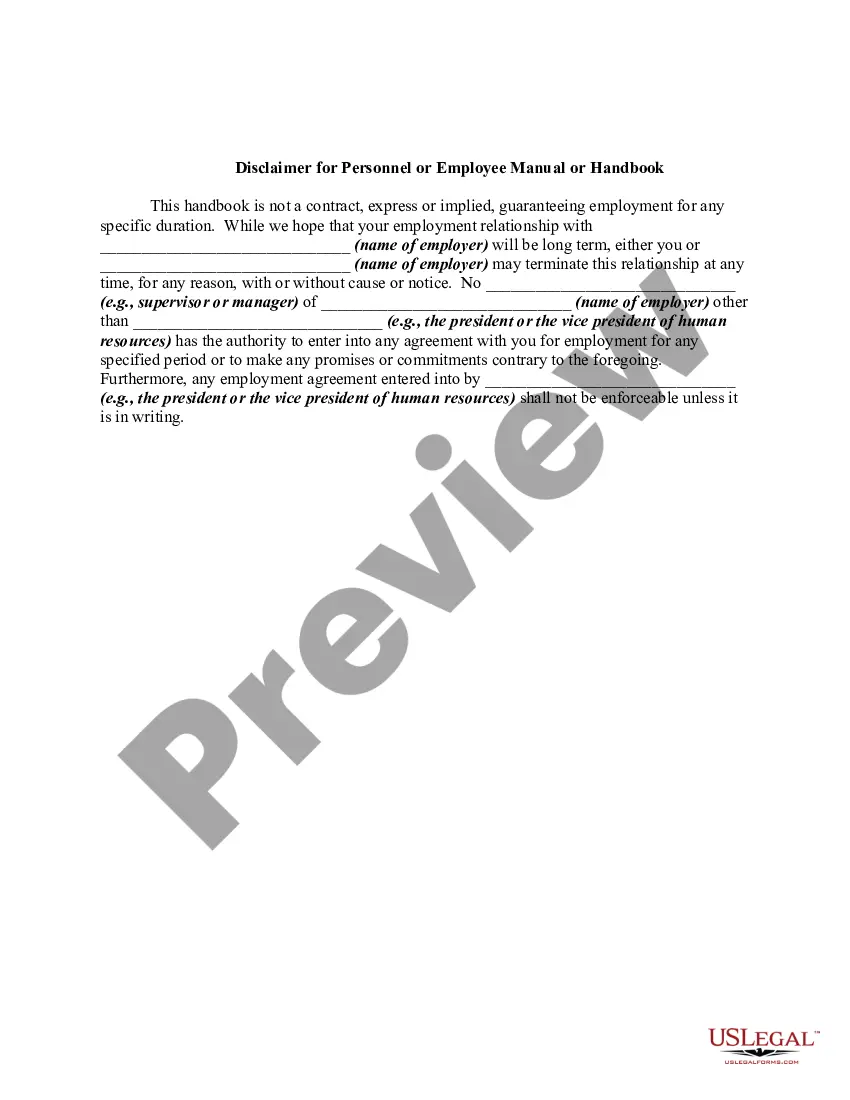
Creating an employee handbook in UAE starts with outlining company policies and procedures. You should include sections on workplace expectations, benefits, and code of conduct. It's important to tailor the content to comply with UAE labor laws, ensuring that all relevant information is accessible to employees. Consider utilizing platforms like USLegalForms to simplify this process.
Yes, you can certainly ask to see the employee handbook in UAE. It is your right to understand the policies and procedures that govern your workplace. A well-prepared handbook should be readily accessible to all employees, as it serves as an important resource for navigating company expectations.
An employee handbook in UAE offers numerous advantages, including clear communication of workplace policies and procedures. It helps set expectations and provides a reference for resolving disputes. However, a disadvantage might arise if the handbook is not regularly updated, leading to potential confusion or legal issues due to outdated information.
If a company does not have an employee handbook in UAE, it may lead to misunderstandings regarding employee rights and responsibilities. Not having a handbook can create inconsistency in policy enforcement and potentially expose the company to legal risks. It’s advisable for companies to develop a handbook to clarify expectations and protect both employees and the organization.
Obtaining a UAE labor contract online can be done through various reputable legal document platforms, such as USLegalForms. These platforms provide user-friendly forms that guide you through the entire process, ensuring compliance with local labor laws. Always double-check that the contract aligns with your specific employment situation.