Agreement Between Partnership Without In Mecklenburg
Description

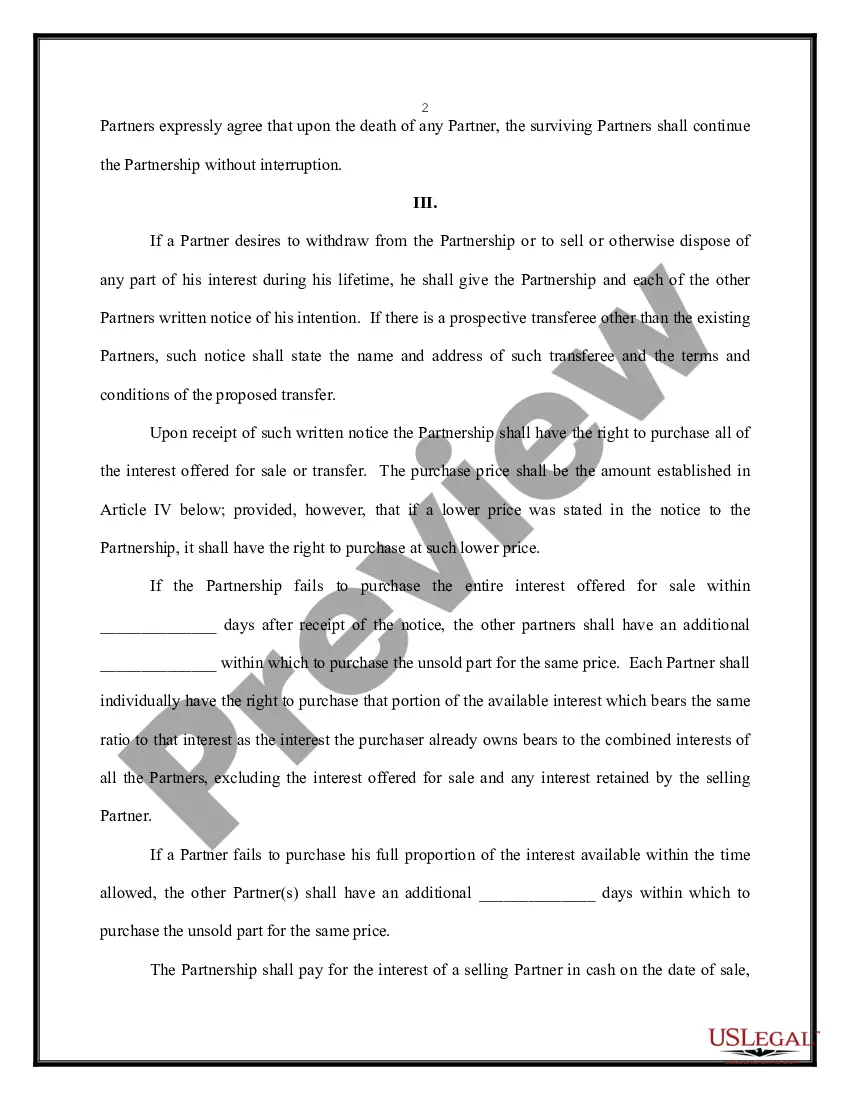
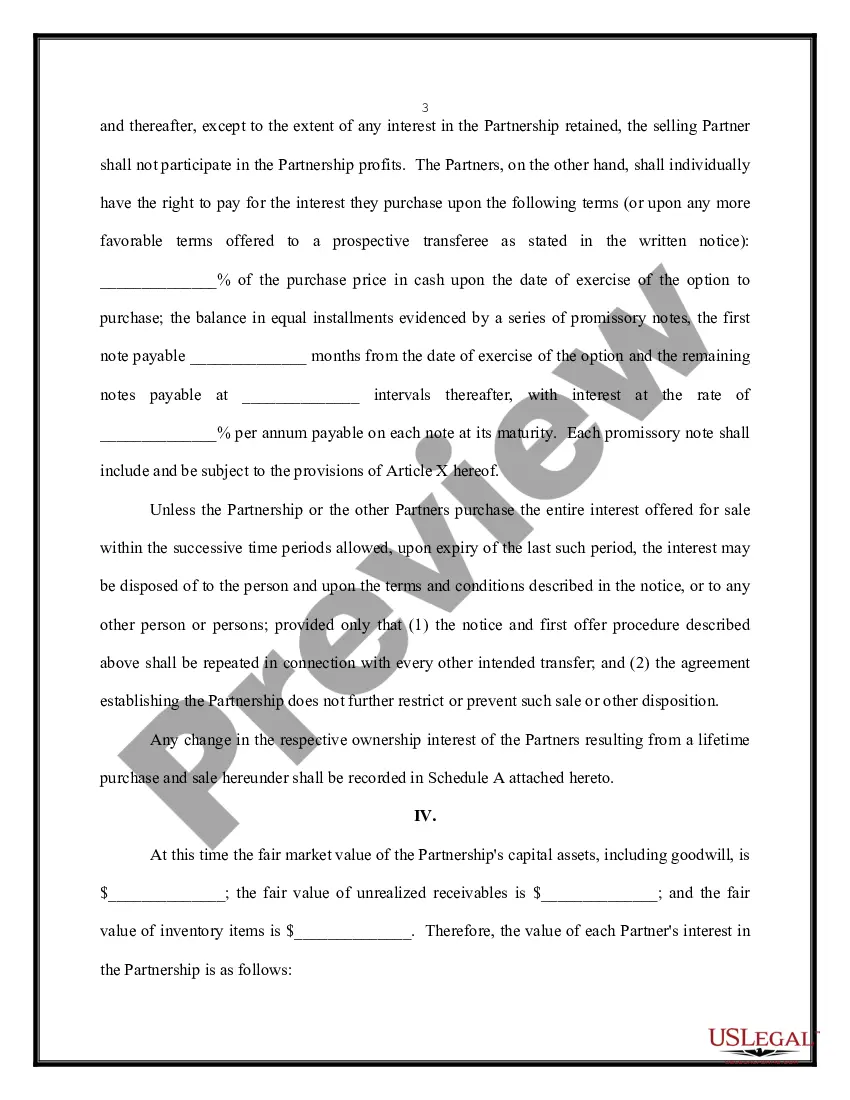
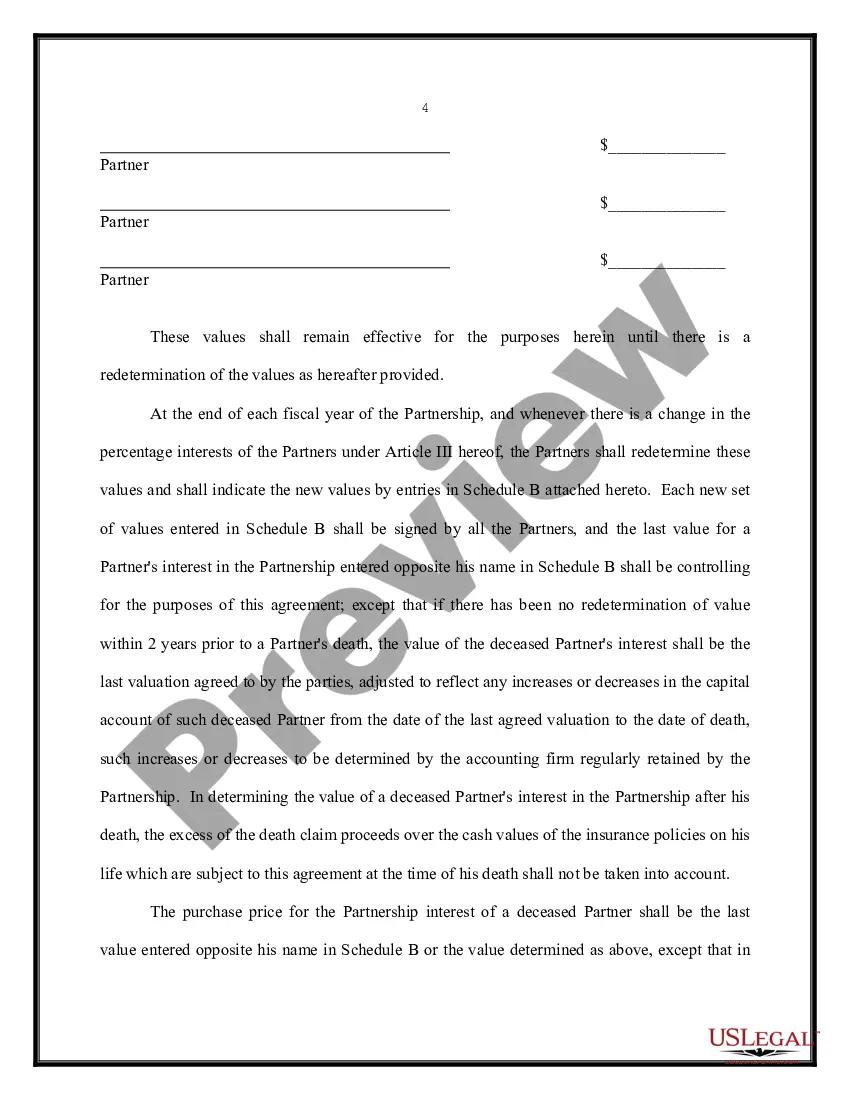
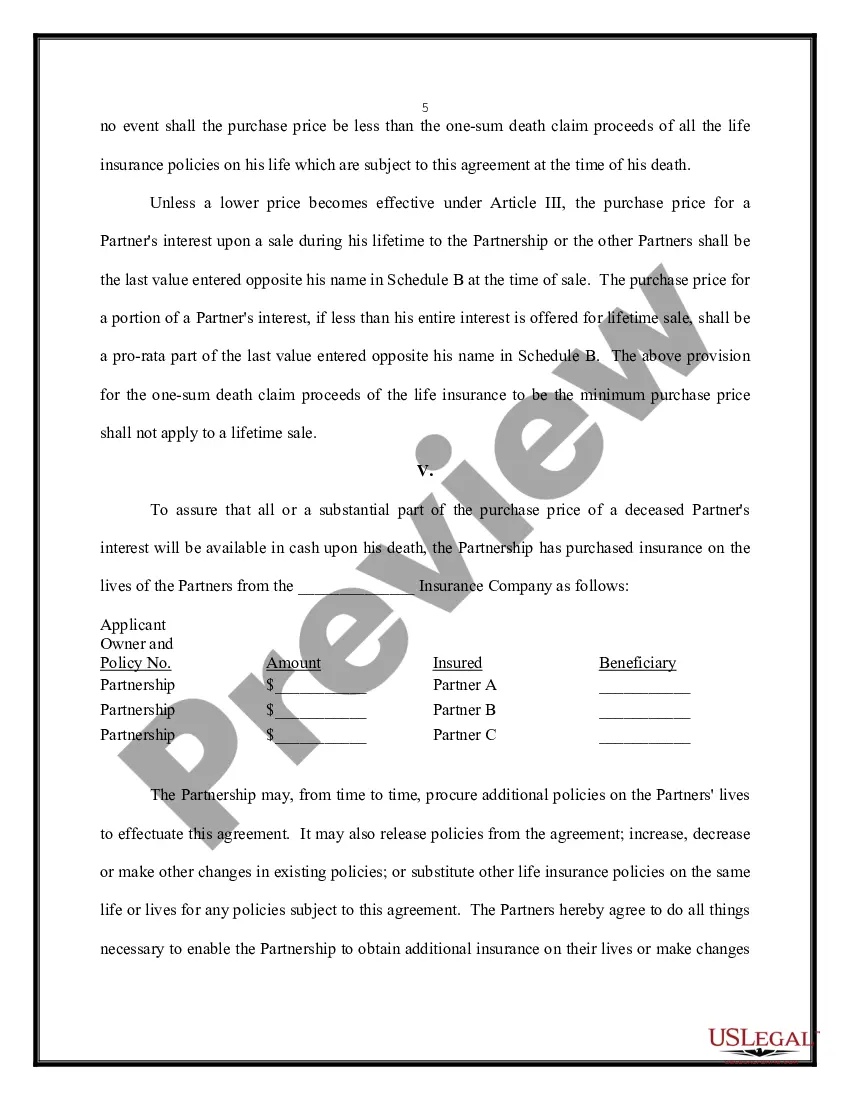


Get your form ready online
Our built-in tools help you complete, sign, share, and store your documents in one place.
Make edits, fill in missing information, and update formatting in US Legal Forms—just like you would in MS Word.
Download a copy, print it, send it by email, or mail it via USPS—whatever works best for your next step.
Sign and collect signatures with our SignNow integration. Send to multiple recipients, set reminders, and more. Go Premium to unlock E-Sign.
If this form requires notarization, complete it online through a secure video call—no need to meet a notary in person or wait for an appointment.
We protect your documents and personal data by following strict security and privacy standards.

Make edits, fill in missing information, and update formatting in US Legal Forms—just like you would in MS Word.

Download a copy, print it, send it by email, or mail it via USPS—whatever works best for your next step.

Sign and collect signatures with our SignNow integration. Send to multiple recipients, set reminders, and more. Go Premium to unlock E-Sign.

If this form requires notarization, complete it online through a secure video call—no need to meet a notary in person or wait for an appointment.

We protect your documents and personal data by following strict security and privacy standards.
Looking for another form?







Form popularity
FAQ
Without a written agreement, the parameters of a partnership aren't clearly defined. This could lead to contentious disagreements and even costly legal battles.
There are often no complications until there is a disagreement. In the absence of specific provisions, Section 24 of the Partnership Act 1890 states that profits and losses are to be divided equally.
Although there's no requirement for a written partnership agreement, often it's a very good idea to have such a document to prevent disagreements and give the partnership solid direction. Having a formal agreement can prevent legal issues in the future.
In case partners do not adopt a partnership deed, the following rules will apply: The partners will share profits and losses equally. Partners will not get a salary. Interest on capital will not be payable.
If no special provisions are written, then the partnership will simply dissolve as per the Partnership Act.
However, if you have no written business agreement in place, you may be unable to carry out the day-to-day tasks of the partnership, like paying yourself a salary. Instead, you and your partner may need to wait until the end of each year and split the partnership's profits and losses equally.
Without a written agreement stating otherwise, the default rule is that each partner in a partnership is entitled to an equal share of the partnership profits. While this may be intended when each partner contributes similar value to a partnership, it can be less than ideal where the contributions are asymmetrical.
Kickstart your new business in minutes There are three relatively common partnership types: general partnership (GP), limited partnership (LP) and limited liability partnership (LLP). A fourth, the limited liability limited partnership (LLLP), is not recognized in all states.
Without a Partnership Agreement, your options are very limited. You accept anything your partner is willing to give you, or you can dissolve the business. That's about it for options. Sure, you can try to sell your stake in the business, but few people will be willing to step into a partnership with a hostile partner.
What does a Partnership Agreement do? It is not required by law to create a formal Partnership Agreement. However, if business owners enter into a partnership without one, their arrangement will be governed by the Partnership Act 1890 (the “1890 Act”).
