Custom Development and Manufacturing Agreement
About this form
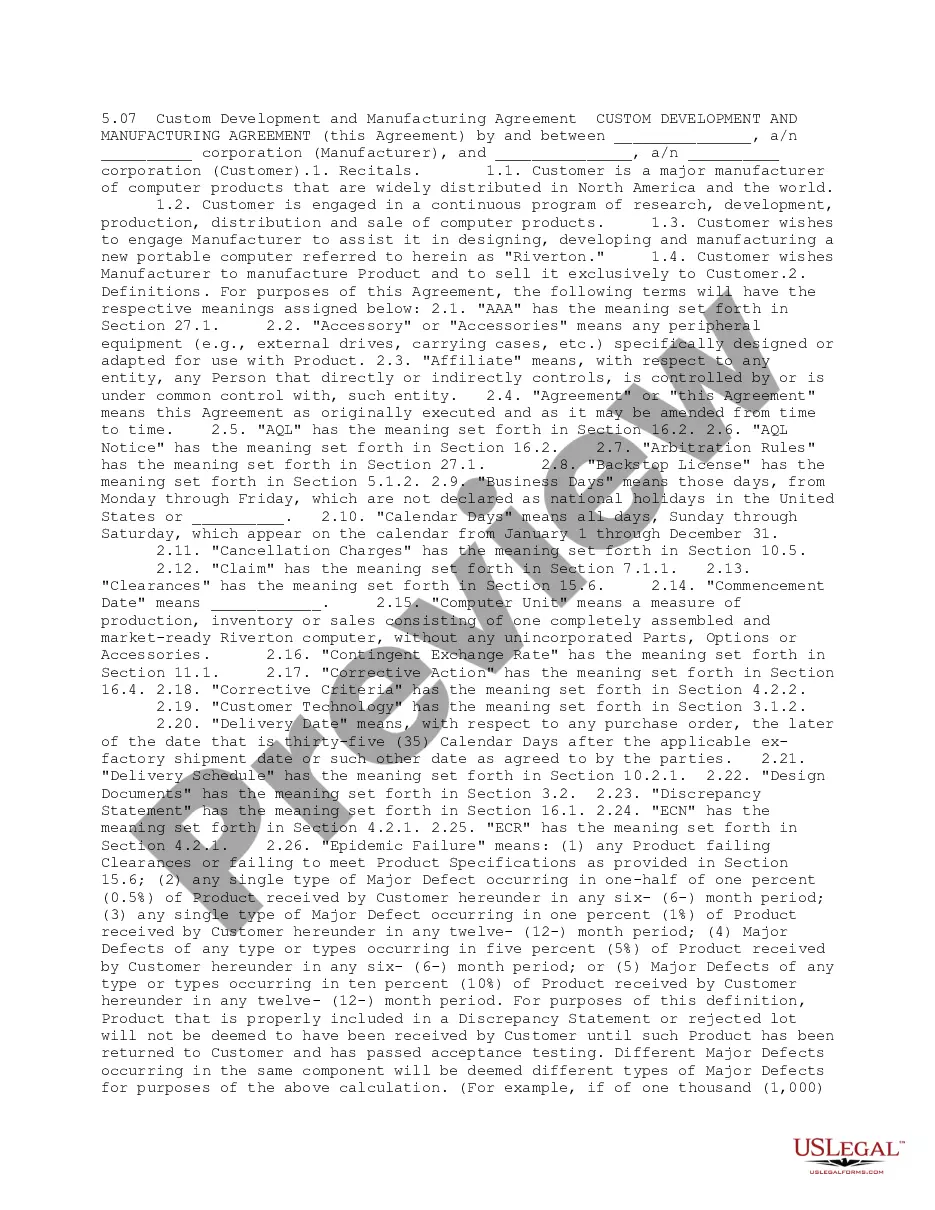
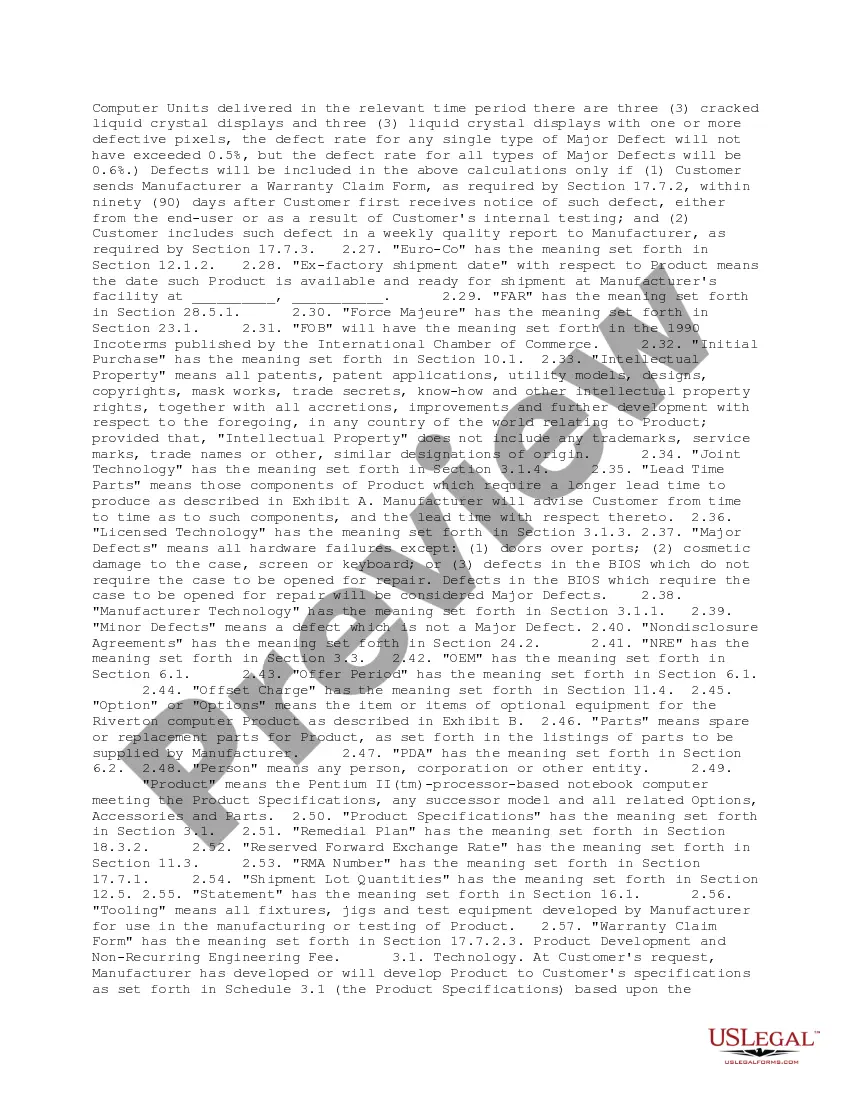
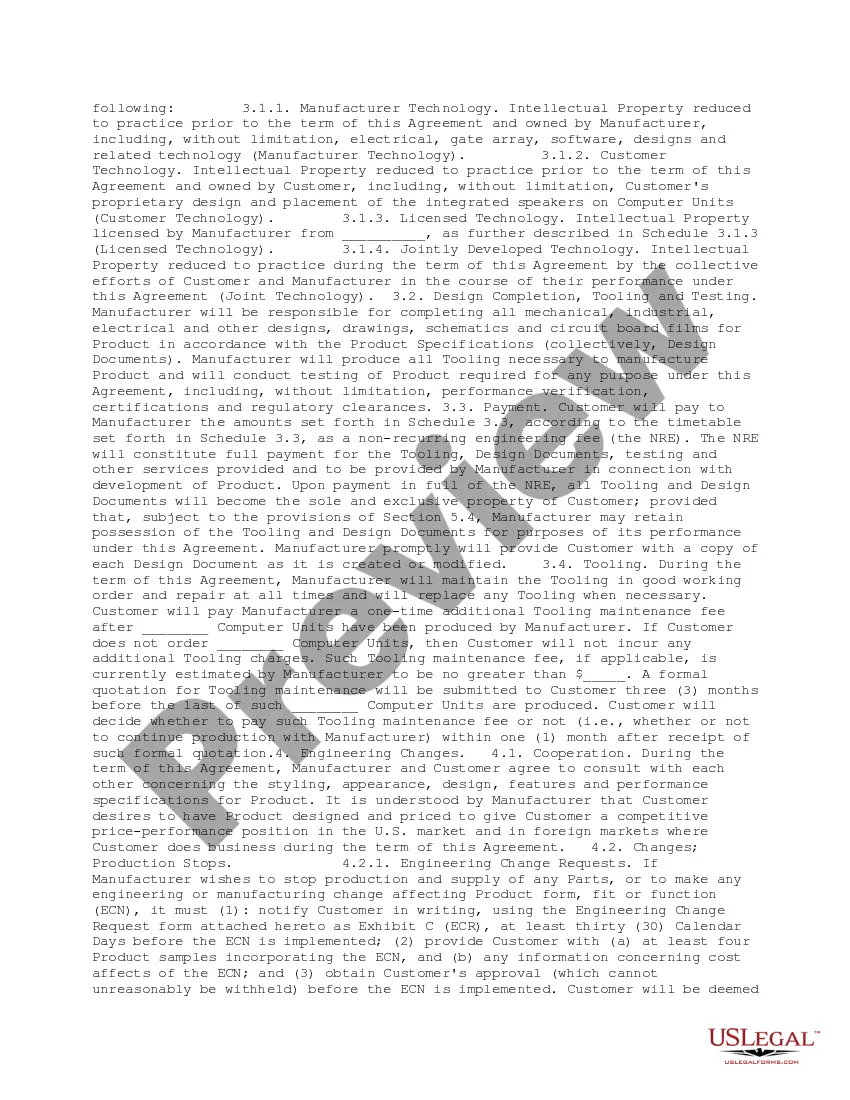
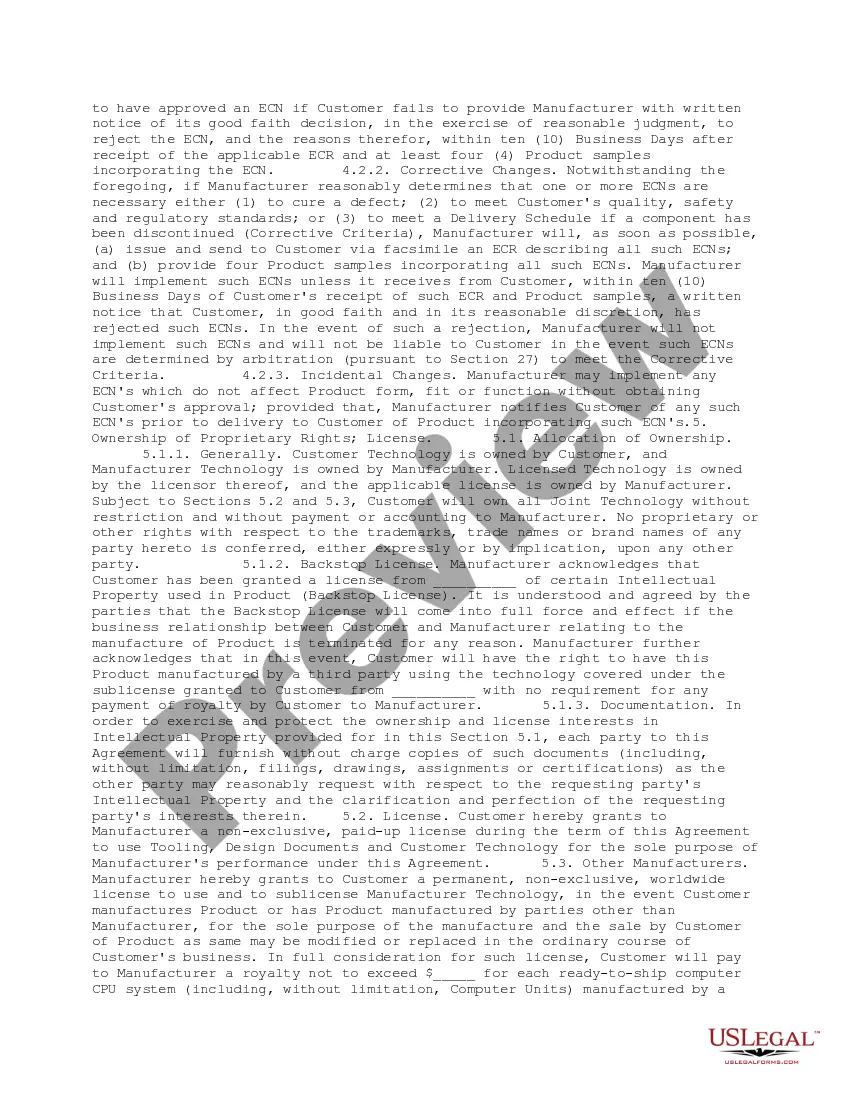
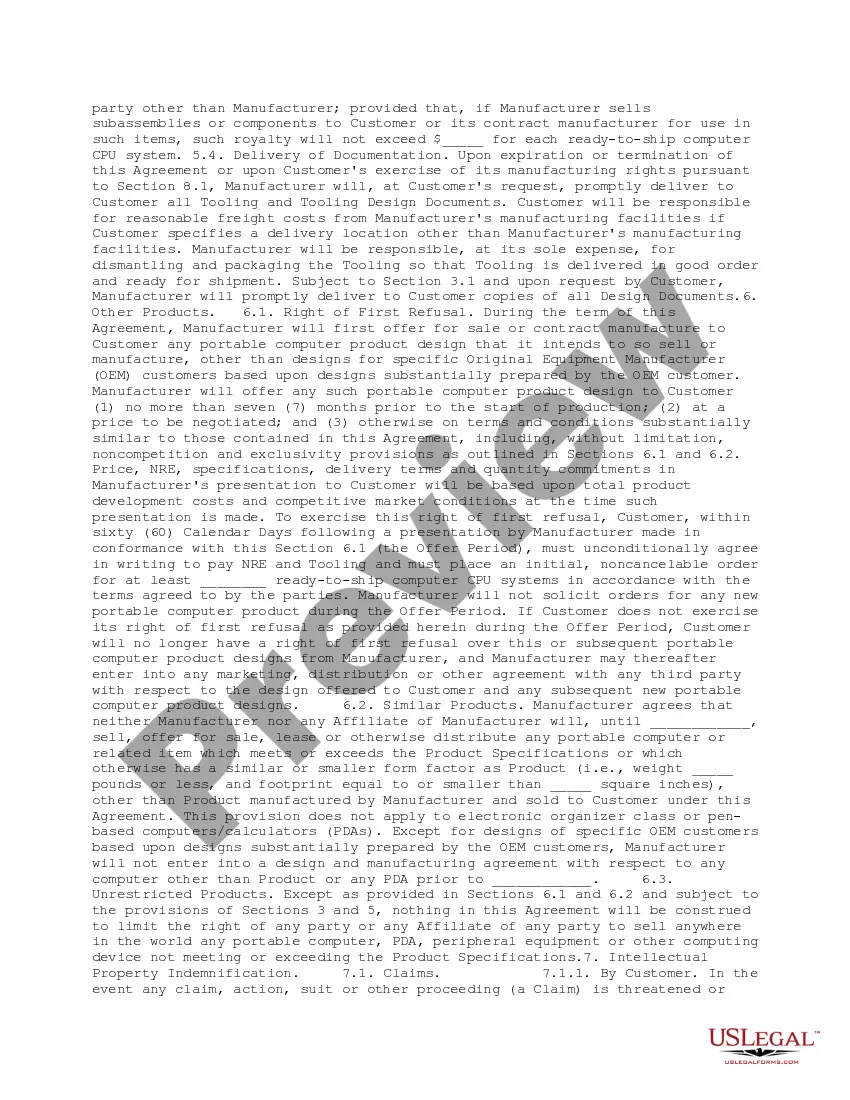
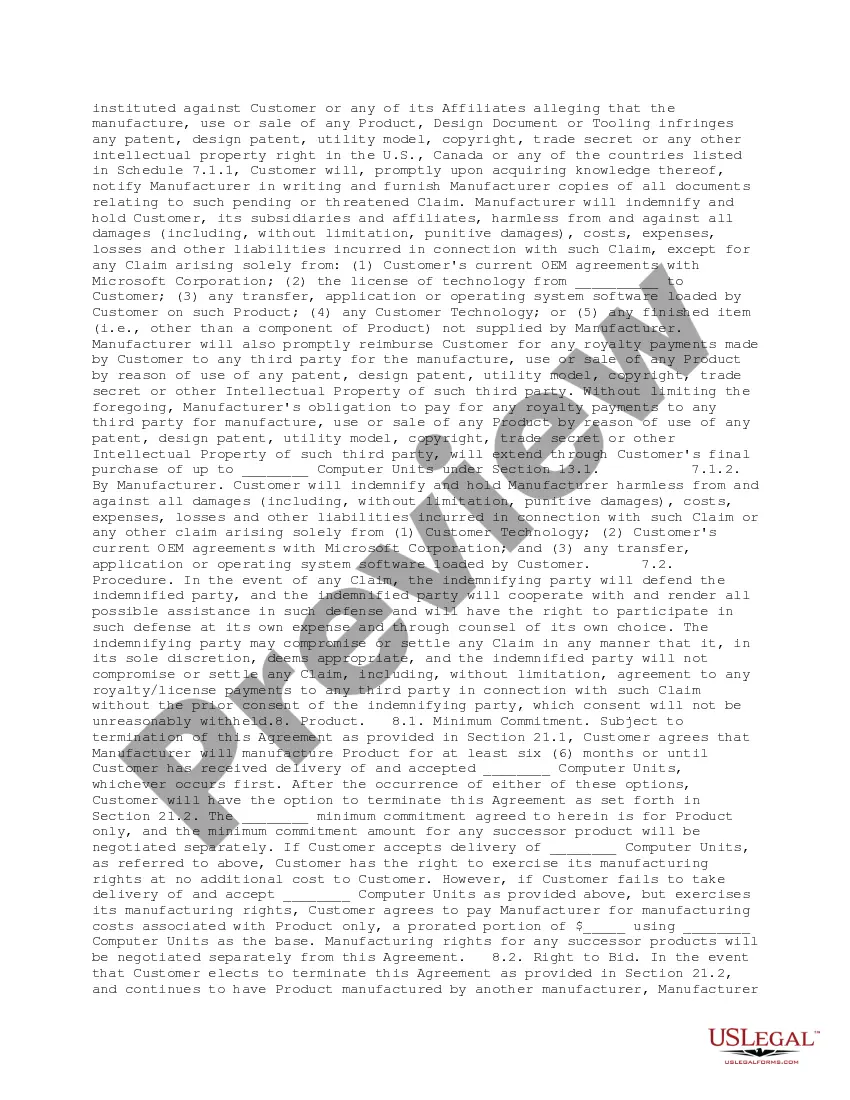
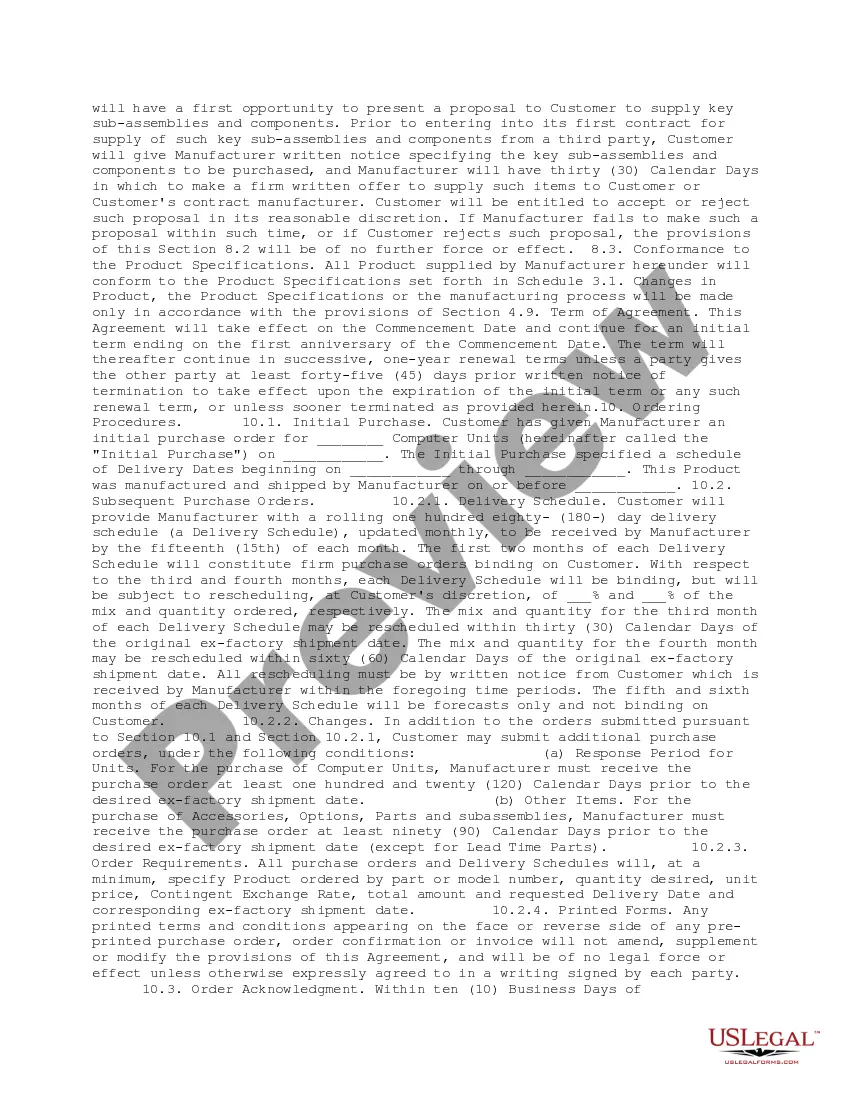
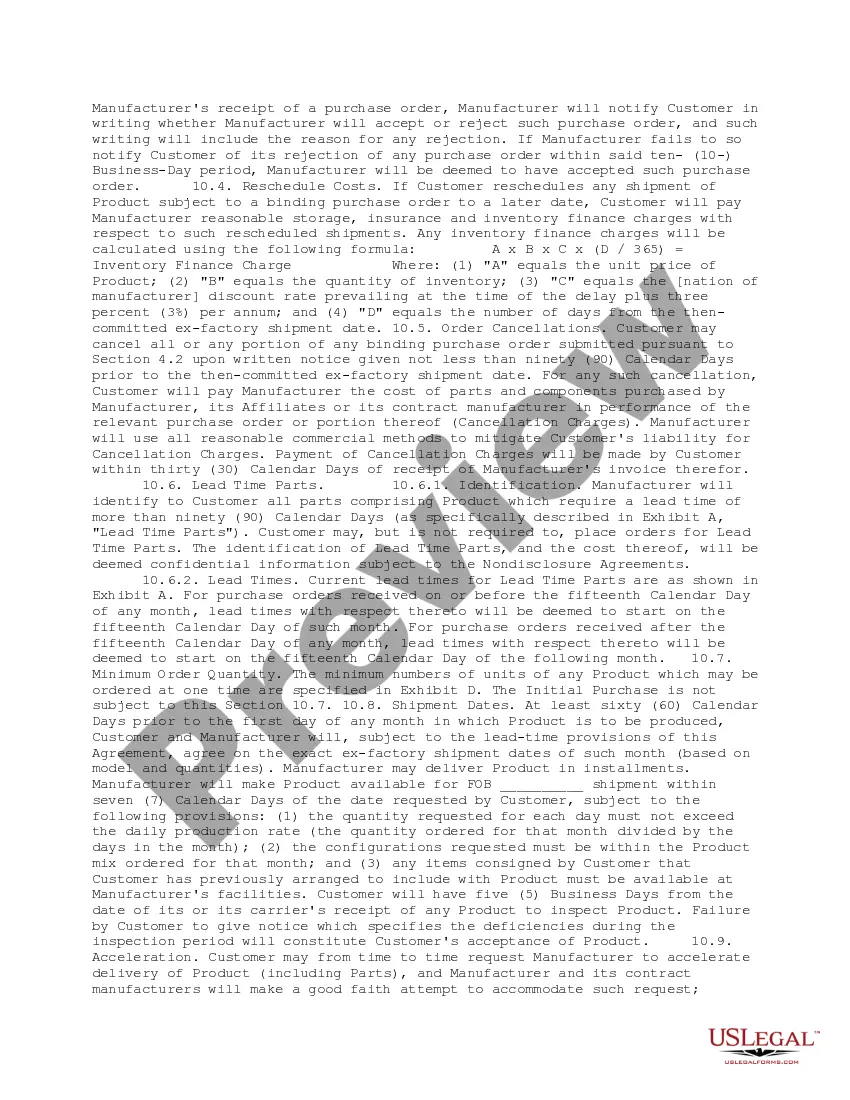
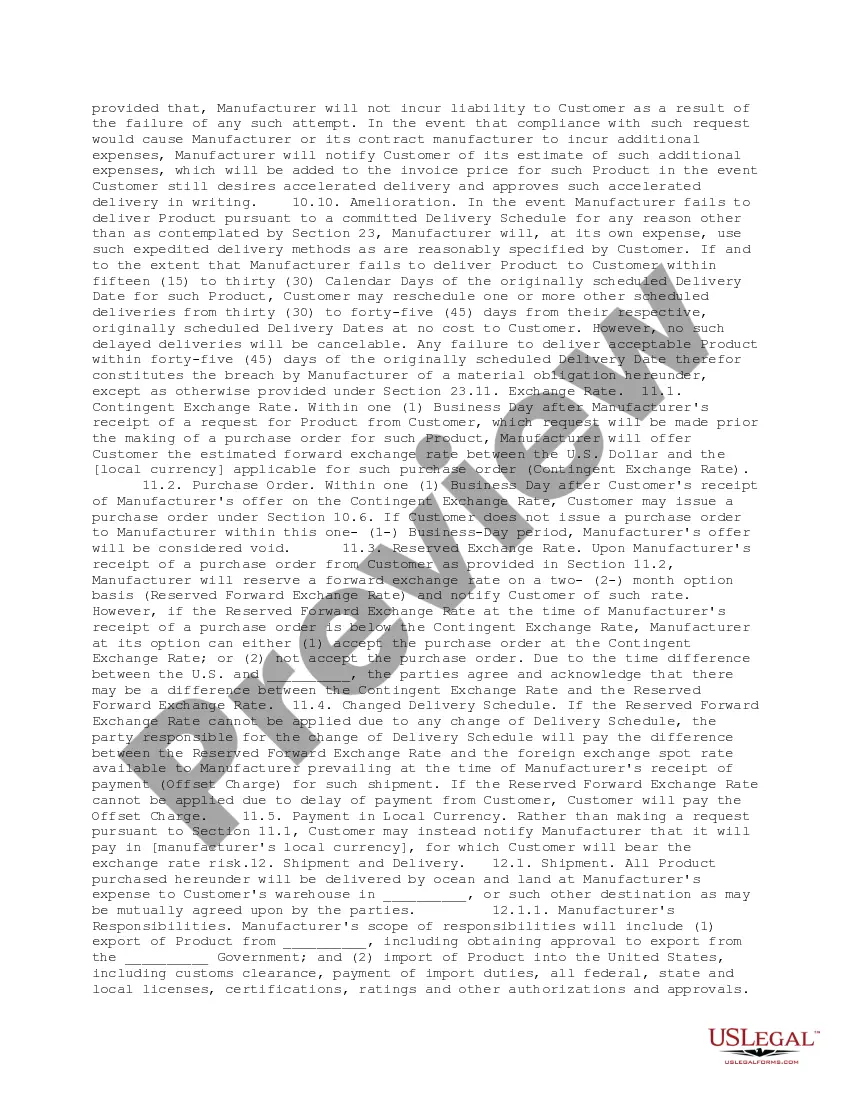
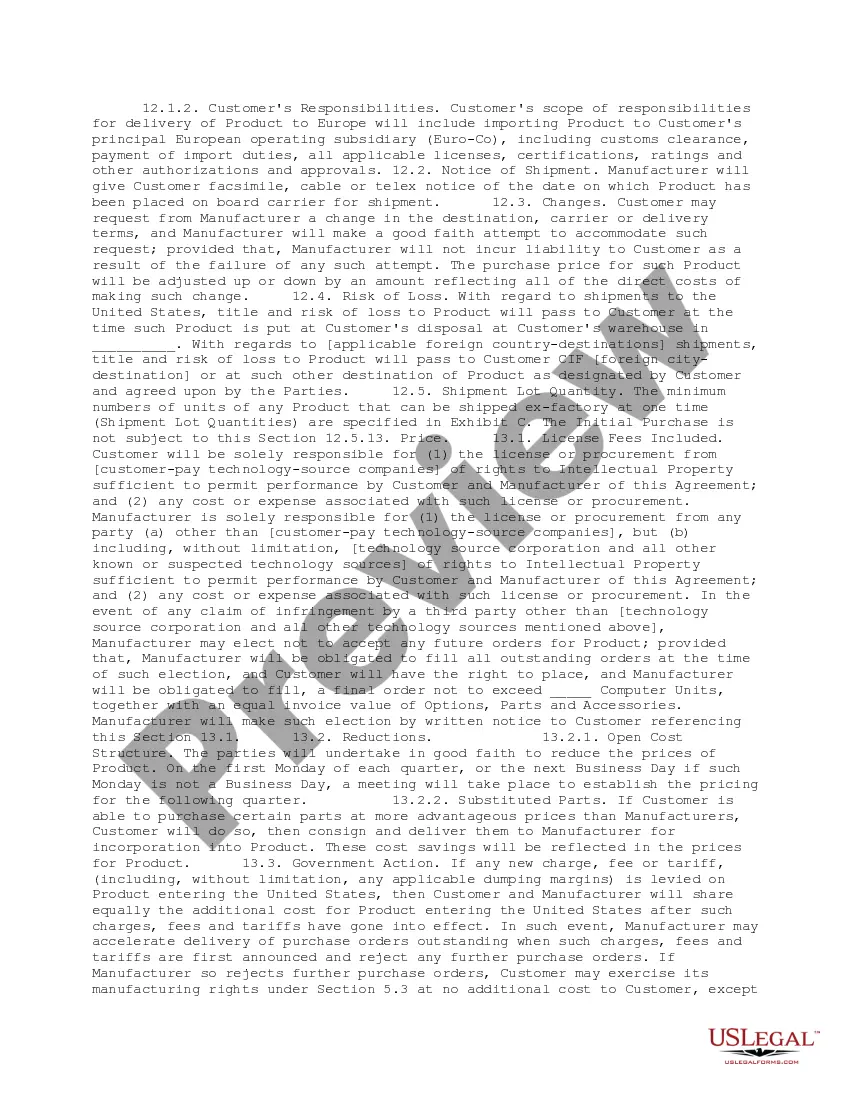
The Custom Development and Manufacturing Agreement is a legal document outlining the terms and conditions between a manufacturer and a customer for the design, development, and manufacturing of a specific product. This agreement is tailored for companies in the computer products industry, ensuring clarity around intellectual property rights, payment structures, and the responsibilities of both parties throughout the manufacturing process. It differs from general manufacturing agreements by incorporating detailed clauses specific to custom development projects.
What’s included in this form
- Recitals: Introduction and background of the parties involved.
- Definitions: Key terms and their meanings used throughout the agreement.
- Technology and Development: Responsibilities related to product design, tooling, and development fees.
- Intellectual Property Rights: Ownership and licensing of technology used in the manufacturing process.
- Order and Delivery Procedures: Guidelines on how orders will be placed, processed, and delivered.
- Warranties and Indemnification: Warranty conditions and responsibilities in case of claims or defects.

Situations where this form applies
This agreement should be used when a customer seeks to engage a manufacturer for the custom development and production of a new computer product. Situations may include launching a new product line, needing specialized features in manufacturing, or entering into a partnership where both parties contribute technology and design expertise.
Intended users of this form
- Companies seeking to develop custom computer products through an external manufacturer.
- Manufacturers of technological goods looking to formalize agreements with their business clients.
- Businesses requiring clear definitions of intellectual property rights and responsibilities in product development.
How to complete this form
- Identify and enter the legal names and corporate structures of both the Manufacturer and the Customer.
- Clearly define the scope and specifications of the product to be developed.
- Specify payment terms including non-recurring engineering fees and any related financial obligations.
- Detail the intellectual property ownership and licensing agreements between both parties.
- Include delivery schedules, order quantities, and acceptance criteria for the product.
Notarization guidance
This form does not typically require notarization unless specified by local law. However, having it notarized can enhance its authenticity and enforceability.
Get your form ready online
Our built-in tools help you complete, sign, share, and store your documents in one place.
Make edits, fill in missing information, and update formatting in US Legal Forms—just like you would in MS Word.
Download a copy, print it, send it by email, or mail it via USPS—whatever works best for your next step.
Sign and collect signatures with our SignNow integration. Send to multiple recipients, set reminders, and more. Go Premium to unlock E-Sign.
If this form requires notarization, complete it online through a secure video call—no need to meet a notary in person or wait for an appointment.
We protect your documents and personal data by following strict security and privacy standards.

Make edits, fill in missing information, and update formatting in US Legal Forms—just like you would in MS Word.

Download a copy, print it, send it by email, or mail it via USPS—whatever works best for your next step.

Sign and collect signatures with our SignNow integration. Send to multiple recipients, set reminders, and more. Go Premium to unlock E-Sign.

If this form requires notarization, complete it online through a secure video call—no need to meet a notary in person or wait for an appointment.

We protect your documents and personal data by following strict security and privacy standards.
Common mistakes to avoid
- Failing to clearly define intellectual property rights can lead to disputes.
- Not specifying delivery schedules which may result in delays and misunderstandings.
- Omitting key definitions or terms, making the agreement open to interpretation.
- Neglecting to outline warranty and indemnification clauses can expose parties to liability.
Advantages of online completion
- Easy accessibility: Download and complete the agreement from anywhere, at any time.
- Editability: Customize the form to fit your specific needs and circumstances.
- Reliability: Utilize templates drafted by licensed attorneys, ensuring legal comprehensiveness.
Main things to remember
- The Custom Development and Manufacturing Agreement is crucial for establishing clear expectations and obligations between parties.
- Proper completion of the agreement can help mitigate future disputes and protect both parties' interests.
- Clarity in terms and conditions is essential for a successful manufacturing partnership.
Looking for another form?

Form popularity
FAQ
A supply agreement states the terms and conditions under which one company will manufacture and supply goods to another. A supply contract may be exclusive or non-exclusive, include standards on product quality, and should state how product orders will be handled.
The purpose of this Agreement is to maintain harmonious and mutually beneficial relationships between the Employer, the employees and the Union, to set forth certain terms and conditions of employment relating to pay, hours of work, employee benefits, and general working conditions affecting employees covered by this
A manufacturing agreement is between a manufacturer and a customer for the manufacture of goods or products.These terms, along with all the other provisions in a manufacturing agreement, make understanding the business deal, the products and the goals of the parties extremely important.
A manufacturing supply agreement between a buyer and a seller, drafted as an exclusive requirements contract, in favor of the seller. This resource includes key obligations of the buyer and seller, each party's intellectual and personal property rights and commonly used warranty and indemnification provisions.
Contract manufacturing involves outsourcing a product's manufacturing process to a trusted manufacturer. Engineers from the company seeking service will provide complete drawings and documentation and the CM will then manufacture the product from start to finish therefore taking the production burden off of companies.
Production of complete goods entirely by one firm for another, under the brand or label of the latter.For example, large companies that manufacture computer hardware use contract manufacturing for the smaller computer parts and components that are, in turn, manufactured by other firms.