Acknowledge Letter For Receipt In Riverside
Description



Get your form ready online
Our built-in tools help you complete, sign, share, and store your documents in one place.
Make edits, fill in missing information, and update formatting in US Legal Forms—just like you would in MS Word.
Download a copy, print it, send it by email, or mail it via USPS—whatever works best for your next step.
Sign and collect signatures with our SignNow integration. Send to multiple recipients, set reminders, and more. Go Premium to unlock E-Sign.
If this form requires notarization, complete it online through a secure video call—no need to meet a notary in person or wait for an appointment.
We protect your documents and personal data by following strict security and privacy standards.

Make edits, fill in missing information, and update formatting in US Legal Forms—just like you would in MS Word.

Download a copy, print it, send it by email, or mail it via USPS—whatever works best for your next step.

Sign and collect signatures with our SignNow integration. Send to multiple recipients, set reminders, and more. Go Premium to unlock E-Sign.

If this form requires notarization, complete it online through a secure video call—no need to meet a notary in person or wait for an appointment.

We protect your documents and personal data by following strict security and privacy standards.
Looking for another form?









Form popularity
FAQ
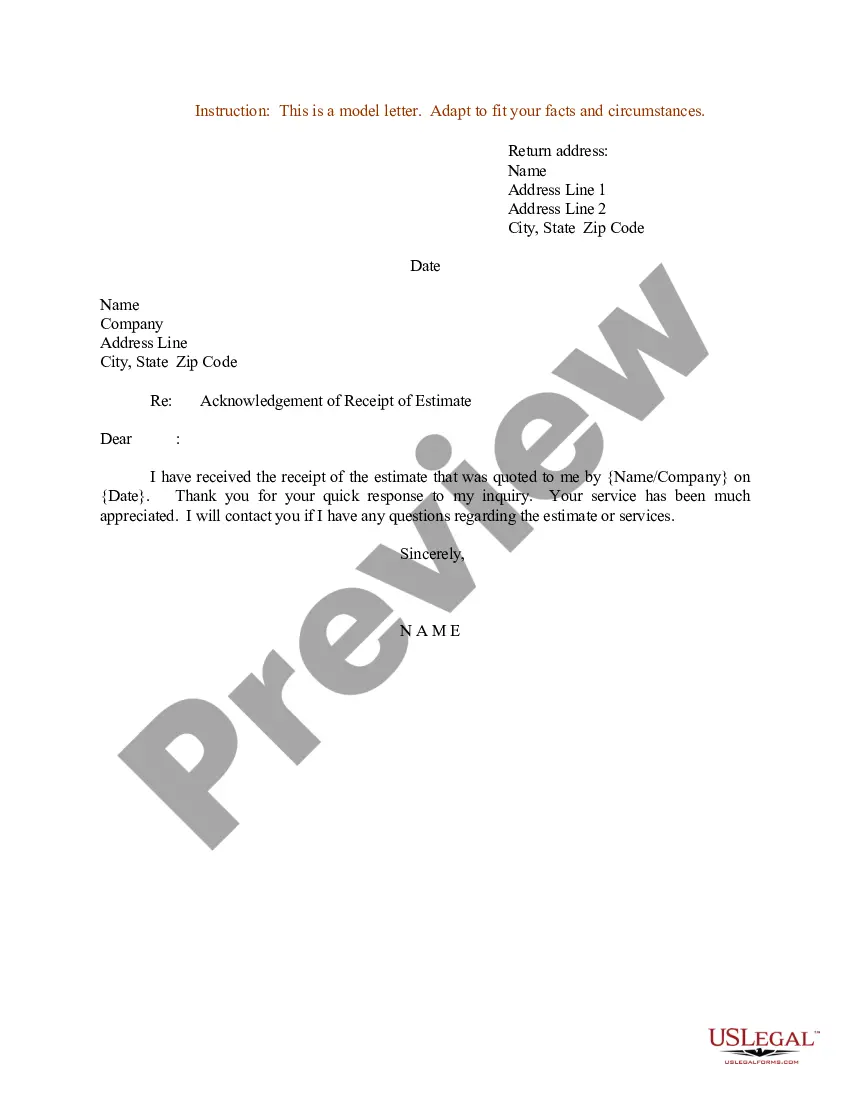
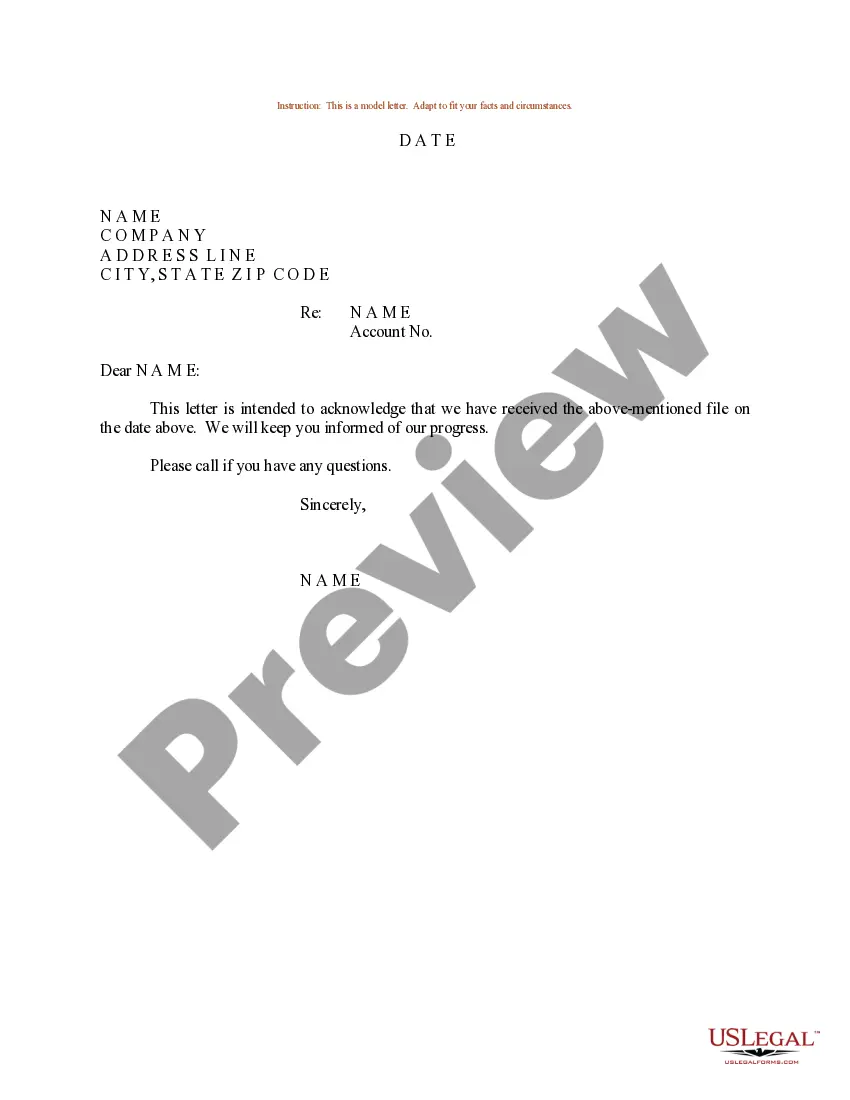
How to create an acknowledgment receipt Use a company letterhead. Use electronic or paper letterhead. Write acknowledgment statement. Referring to the document by name, version number if applicable and state that the recipient has received the document. Sign and date. Explain the next step. Provide contact information.
Use these steps to write an acknowledgment receipt: Use a company letterhead. Use electronic or paper letterhead. Write acknowledgment statement. Sign and date. Explain the next step. Provide contact information.
Acknowledgment of receipt for a document Dear (Recipient's name), I am writing to confirm that I have received the Document Name on Date. Thank you for sending this document. I will review it thoroughly and will get back to you if any further information is required.
How to Write a Confirmation of Receipt: Step-by-Step Guide Step 1: Start with a professional greeting. Step 2: Acknowledge the receipt of the specific item or communication. Step 3: Mention any next steps or actions, if applicable. Step 4: Close with thanks and your signature.
How to serve by mail with Notice of Acknowledgment and Receipt Choose a server. Figure out when to serve. Fill out and copy Notice and Acknowledgement of Receipt. Prepare a return envelope. Have your server mail the papers and envelope. Wait for server to get signed Notice in the mail. Fill out the Proof of Service forms.
The decedent's original Will should be delivered to the Court of the County in which the estate of the decedent may be administered. Most commonly, this will be the County where the decedent resided at the time of death. This Court requires that the original Will be submitted on a stiff backing.
Steps to Write a Will if You Live in California Select the Assets to Include. Identify and list all the assets that you want to distribute through your will. Name Your Beneficiaries. Assign a Guardian for Children. Choose an Executor. Create Your Will. Sign the Will with Witnesses Present. Secure Your Will.
California law requires that a will be filed (“lodged”) with the court. The will's custodian (the person who has the will) is responsible for making sure the will is lodged with the court within 30 days of the willmaker's death. The reason for this is to make sure the will isn't lost.
In California and most states, a will is filed with the court during probate, so it's public. But if probate hasn't been started, the will is private, usually held by the executor or the deceased's attorney.

