Mentee Training Outline
About this form
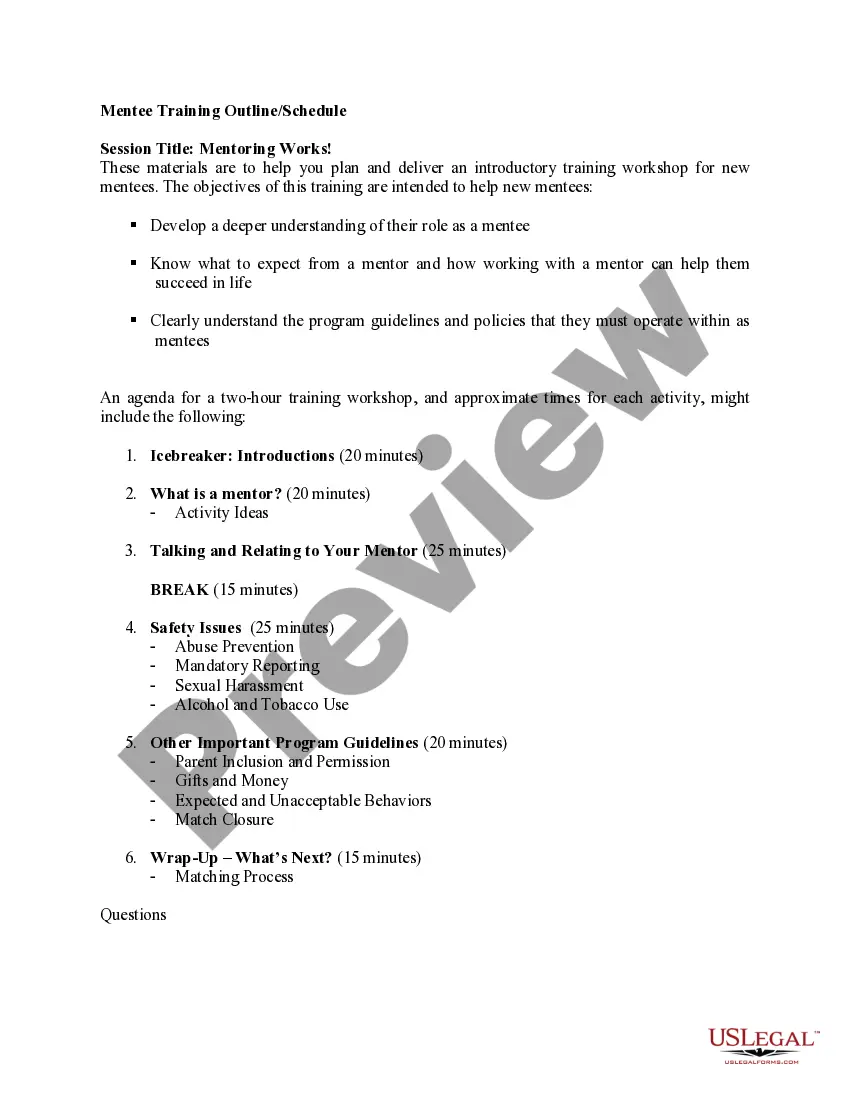
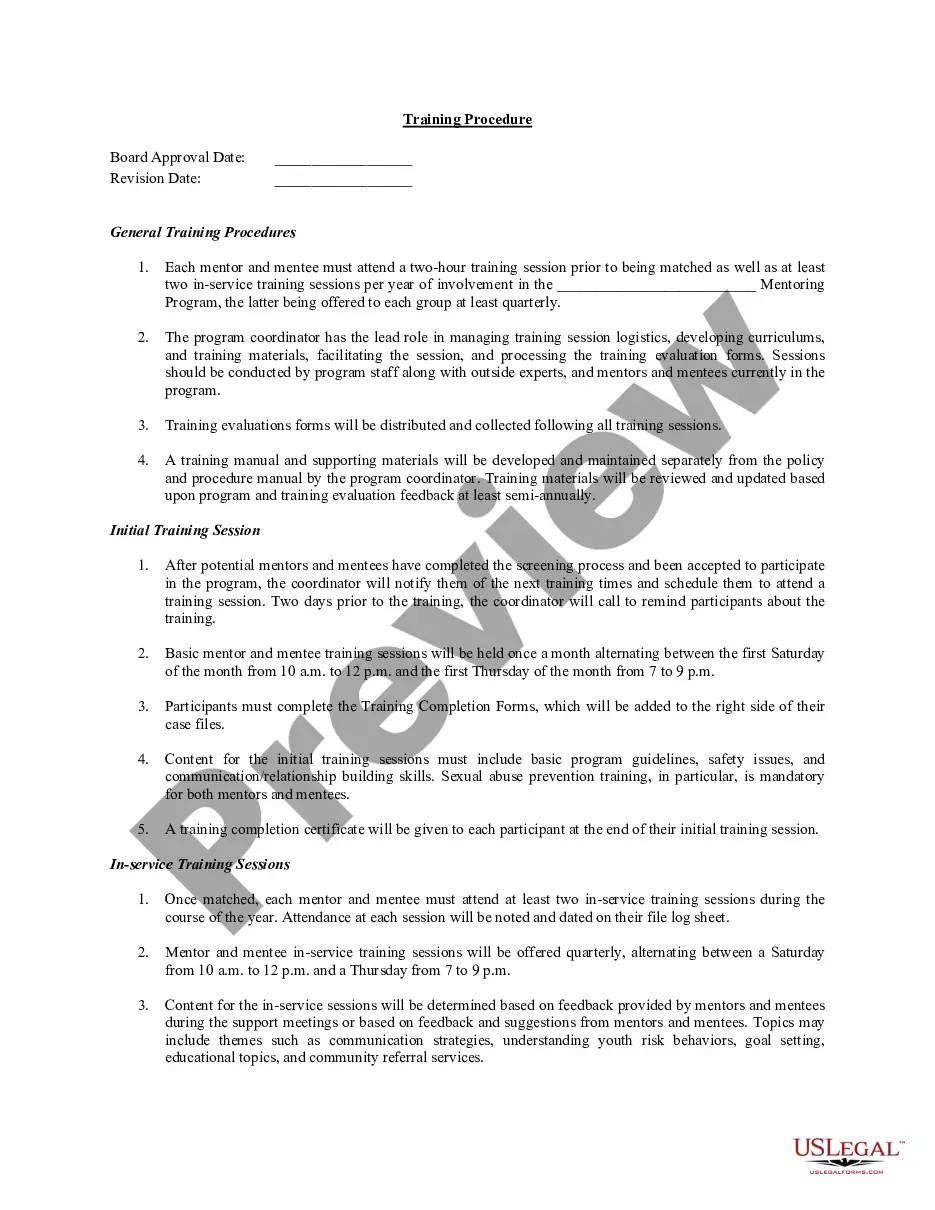
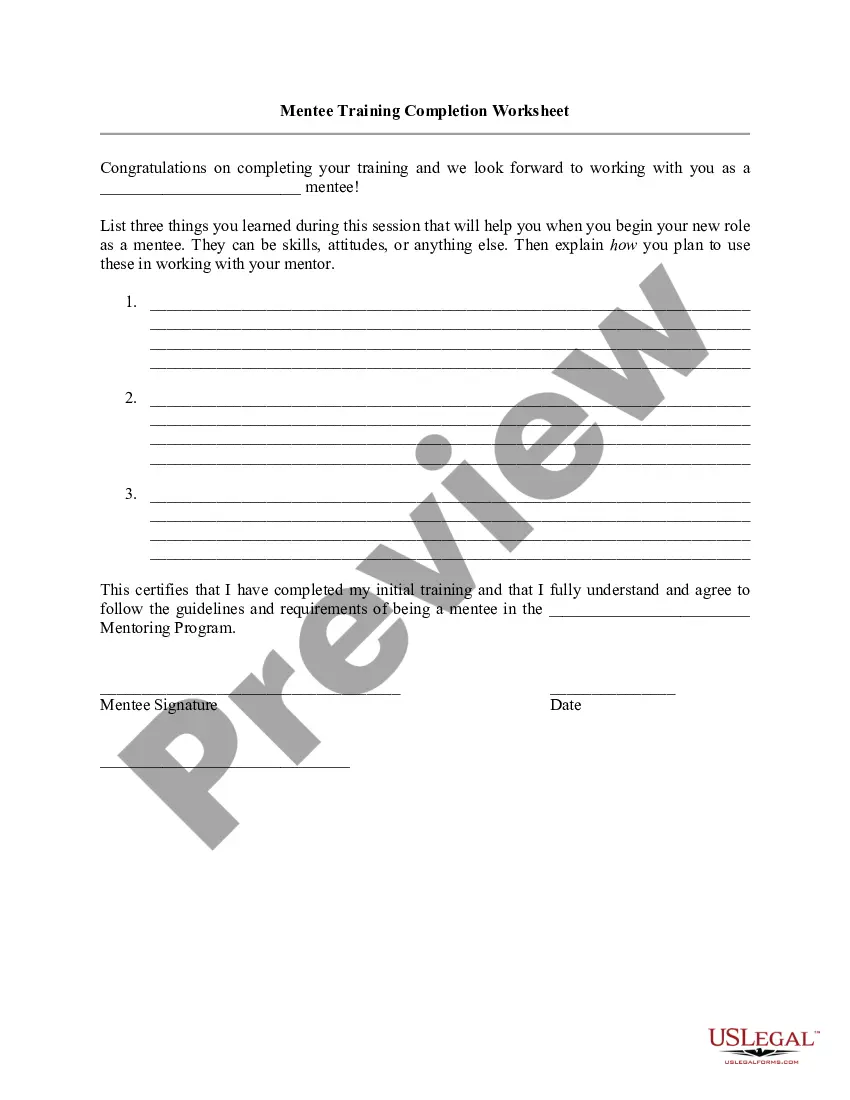
The Mentee Training Outline is a structured guide designed for new mentees participating in a mentorship program. This form outlines the training activities and objectives that will help mentees understand their roles and enhance their mentorship experience. Unlike generic training materials, this outline is specifically tailored for mentees, ensuring they gain the necessary insights to succeed in their mentorship journey.
Form components explained
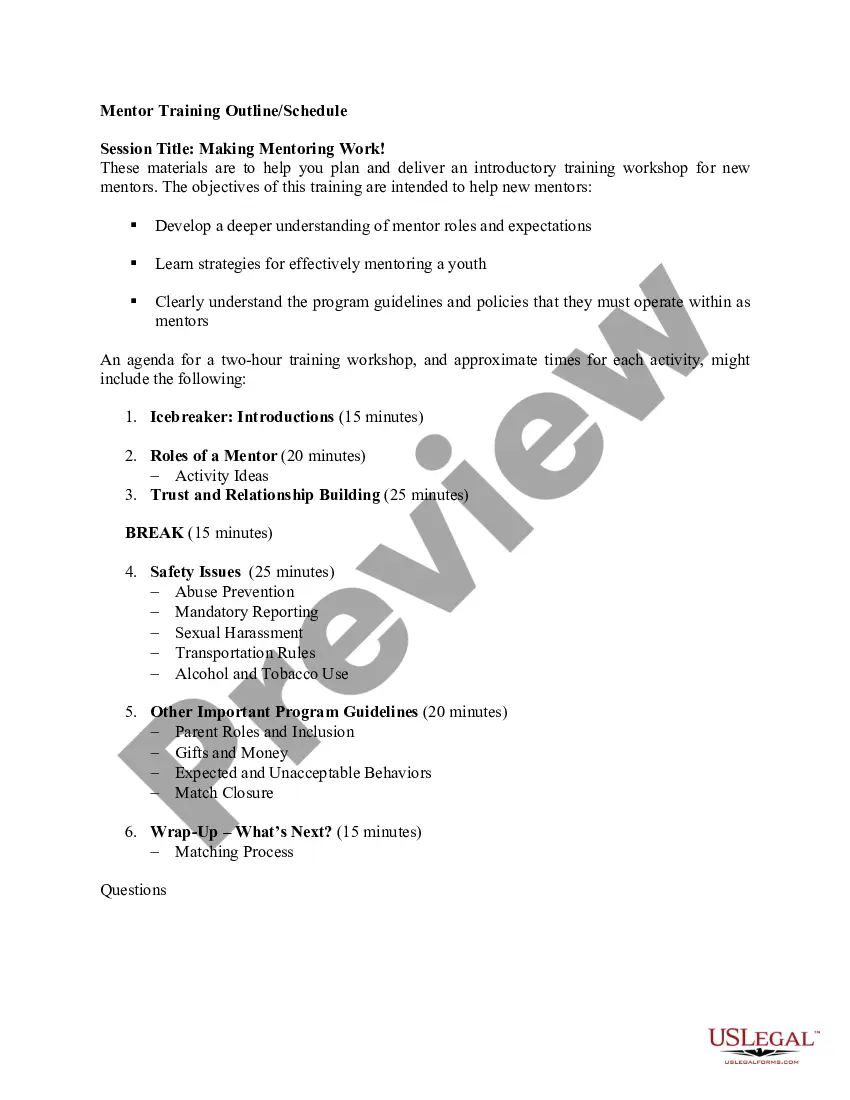
- Session Title: An introduction to the significance of mentoring.
- Icebreaker: Activities to help participants introduce themselves and develop rapport.
- Understanding mentorship: Exploration of what a mentor is and the purpose of mentoring.
- Activity Ideas: Engaging discussions on building relationships with mentors.
- Safety Issues: Important guidelines regarding abuse prevention and mandatory reporting.
- Wrap-Up: A summary of the training and next steps, including the matching process.


When to use this form
This Mentee Training Outline should be used during the initial training sessions for new mentees. It is applicable in scenarios where mentorship programs are being implemented within organizations, schools, or community initiatives. This form ensures that mentees are well-prepared to engage with their mentors and understand the expectations and responsibilities involved in the mentor-mentee relationship.
Who can use this document
- Organizations or schools establishing mentorship programs.
- Program coordinators responsible for training new mentees.
- Mentors seeking structured guidelines for their mentees.
- Individuals interested in understanding their role and responsibilities within a mentorship context.
Steps to complete this form
- Review the session title and objectives to understand the focus of the training.
- Plan the agenda based on the outlined activities and allocate appropriate timing.
- Prepare materials for each activity, ensuring they align with program guidelines.
- Facilitate the icebreaker and discussion activities to foster a comfortable environment.
- Conclude the session by reviewing key points and discussing the next steps in the mentorship process.
Is notarization required?
This form does not typically require notarization unless specified by local law.
Get your form ready online
Our built-in tools help you complete, sign, share, and store your documents in one place.
Make edits, fill in missing information, and update formatting in US Legal Forms—just like you would in MS Word.
Download a copy, print it, send it by email, or mail it via USPS—whatever works best for your next step.
Sign and collect signatures with our SignNow integration. Send to multiple recipients, set reminders, and more. Go Premium to unlock E-Sign.
If this form requires notarization, complete it online through a secure video call—no need to meet a notary in person or wait for an appointment.
We protect your documents and personal data by following strict security and privacy standards.

Make edits, fill in missing information, and update formatting in US Legal Forms—just like you would in MS Word.

Download a copy, print it, send it by email, or mail it via USPS—whatever works best for your next step.

Sign and collect signatures with our SignNow integration. Send to multiple recipients, set reminders, and more. Go Premium to unlock E-Sign.

If this form requires notarization, complete it online through a secure video call—no need to meet a notary in person or wait for an appointment.

We protect your documents and personal data by following strict security and privacy standards.
Common mistakes to avoid
- Neglecting to allocate enough time for each training activity.
- Failing to engage participants in icebreaker activities.
- Omitting important safety guidelines from discussions.
- Not addressing questions and concerns from mentees at the end of the session.
Why use this form online
- Convenience of accessing the form anytime for updates or modifications.
- Easy download and print options to provide physical copies for training sessions.
- Reliable format designed by licensed attorneys, ensuring compliance with legal standards.
What to keep in mind
- The Mentee Training Outline is essential for guiding new mentees in mentorship programs.
- Structured activities enhance engagement and understanding of mentorship roles.
- Clear guidelines on safety and program expectations are crucial for effective mentorship.
Looking for another form?
Form popularity
FAQ
Clarity, Communication, Commitment ? the key to successful mentoring programmes.
Ideally they'll be adept at the 'seven Cs' of mentoring: they should be able to coach the mentee; be a confidante; provide career advice; act as a conduit to others, to increase the mentee's visibility; serve as a counsellor; be a critical friend and provide the mentee with choice.
What are the 3 A's of mentorship? The three A's of mentoring are availability, active listening, and analysis. Availability means that a mentor should offer or avail you of their time, experience, encouragement, feedback, and advice.
When embarking on a mentoring relationship, keep these four elements in mind: Build trust. First and foremost, there must be trust between the mentee and mentor.Establish goals and share lessons learned.Take action.Celebrate successes.
Kram (1985a) theorized that mentors may provide four psychosocial functions: help- ing the protege develop a sense of professional self (accep- tance and confirmation), providing problem-solving and a sounding board (counseling), giving respect and support (friendship), and providing identification and role modeling (
The process of course requires listening, questioning, constructive challenge, guidance and direction. I found that applying the 5Cs, gave a structure and focus to the mentees and this added curiosity and passion. Anjana Nathwani is a Business Mentor to Women Leaders, Business Owners and aspiring Young Professionals.
Leveraging mentoring to nurture the 4Cs?conversation, connection, community, and culture?can create an increased sense of belonging in employees, thus building social capital.
This session builds skills that will help the relationship get off to a good start and grow over time. The focus here is on fostering good communication skills, building trust, and exploring the possibilities (and limits) of the mentoring relationship.