Michigan Assignments of Leases and Rents
Understanding this form
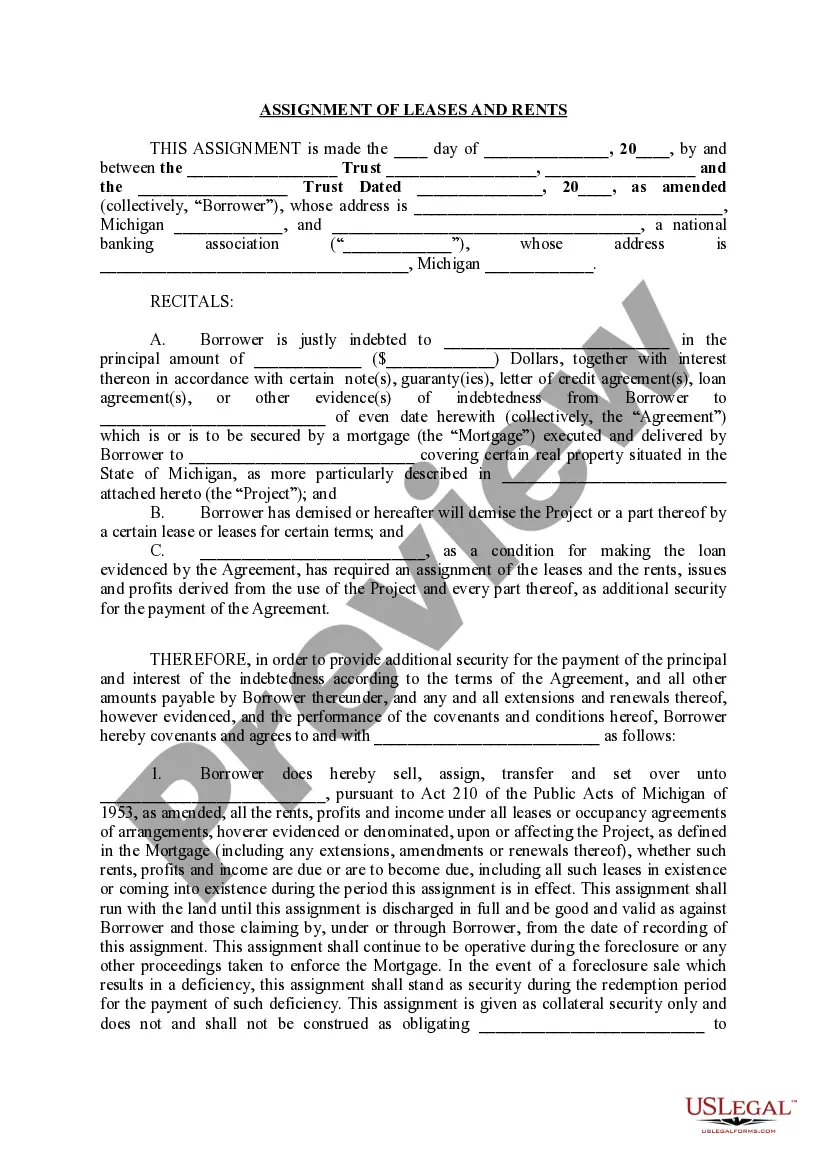
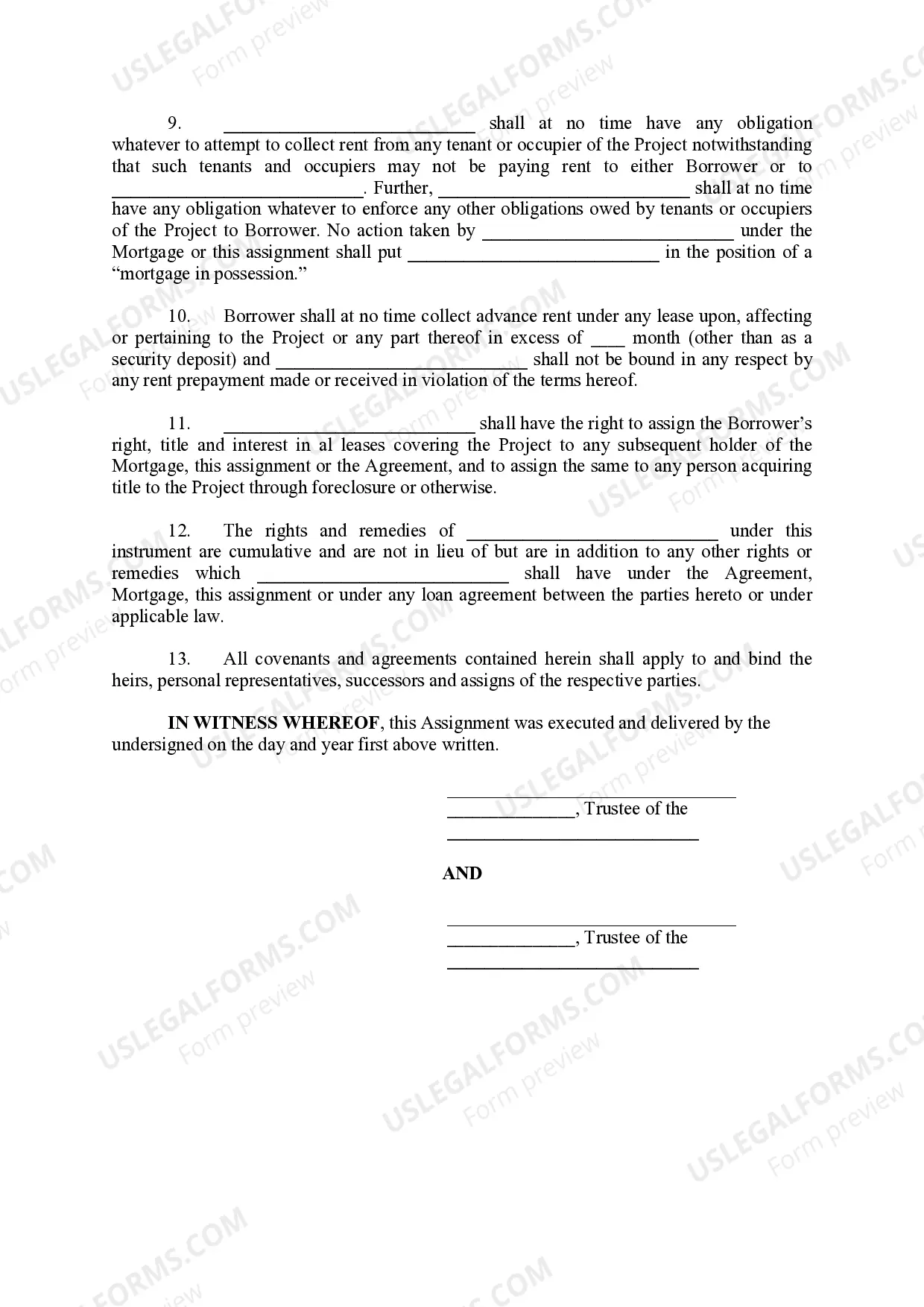
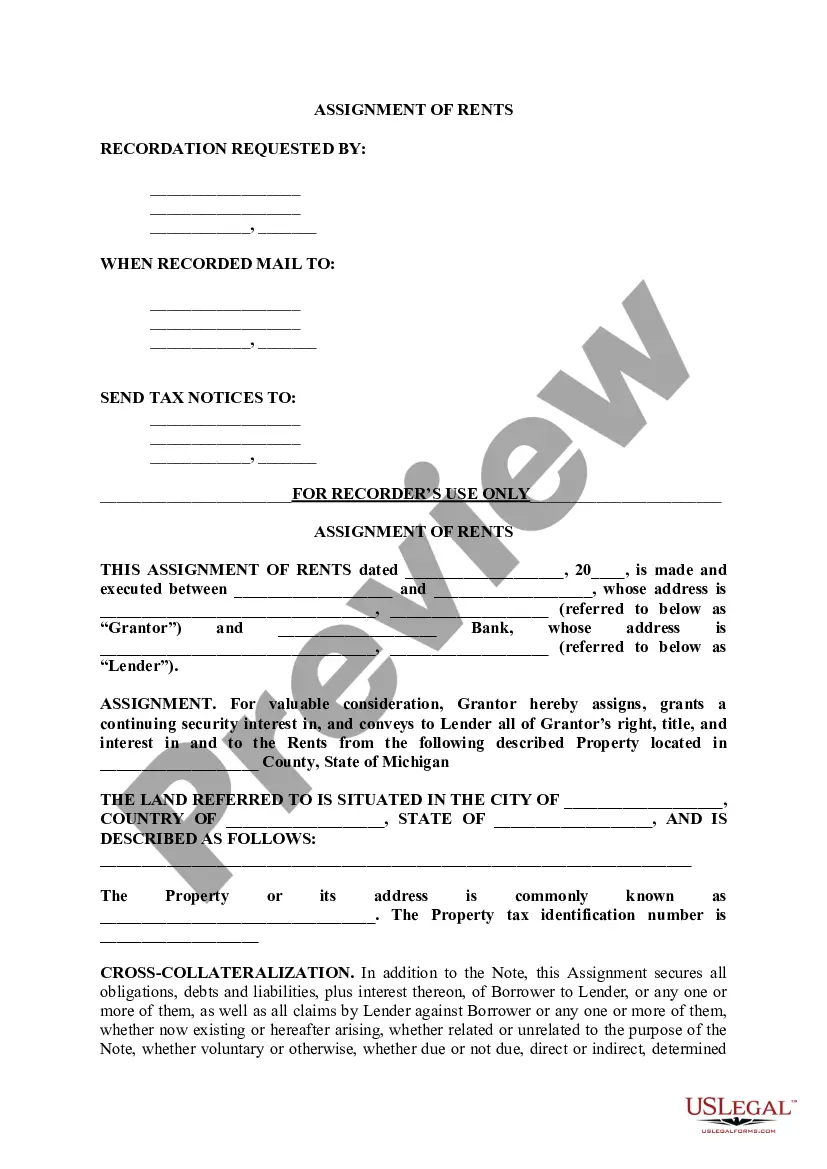
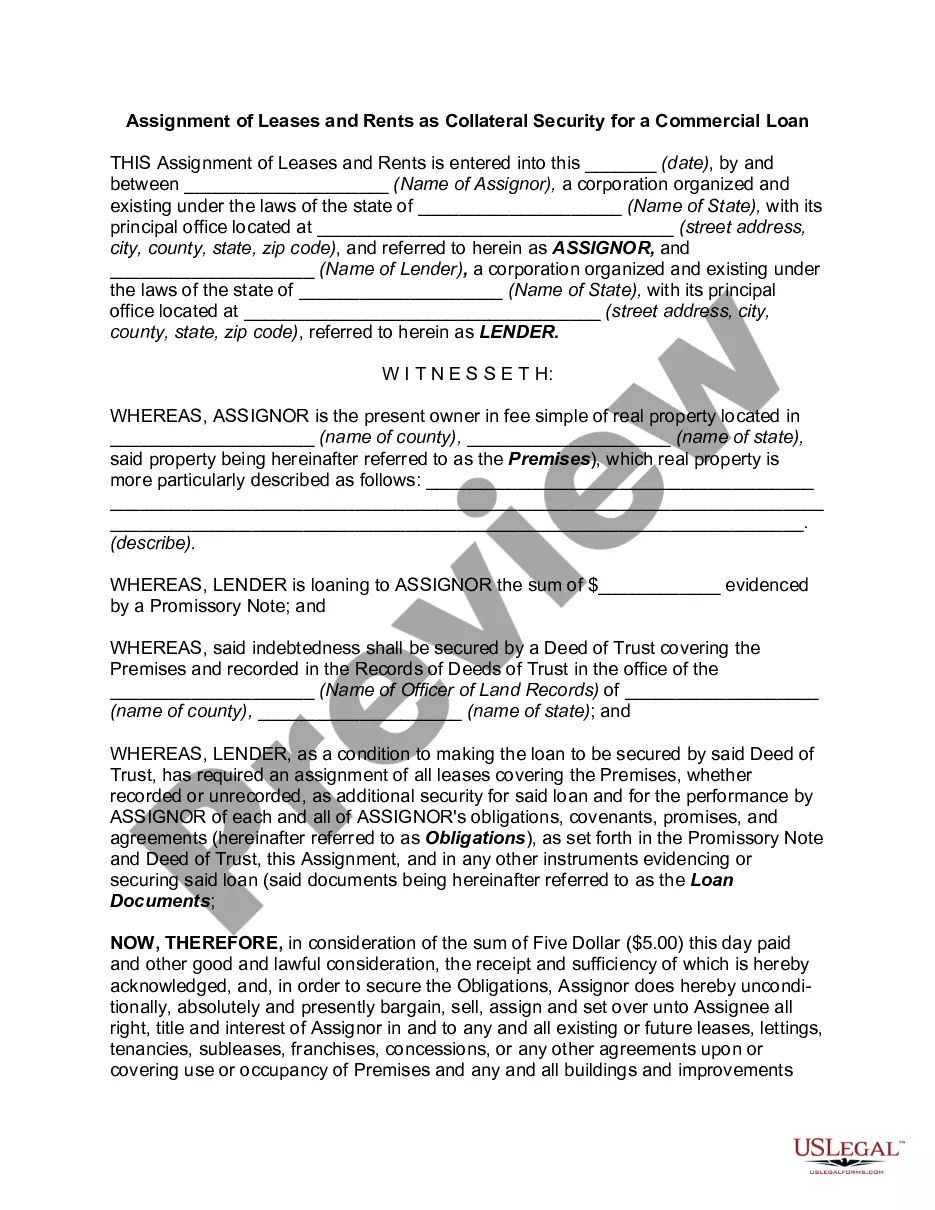
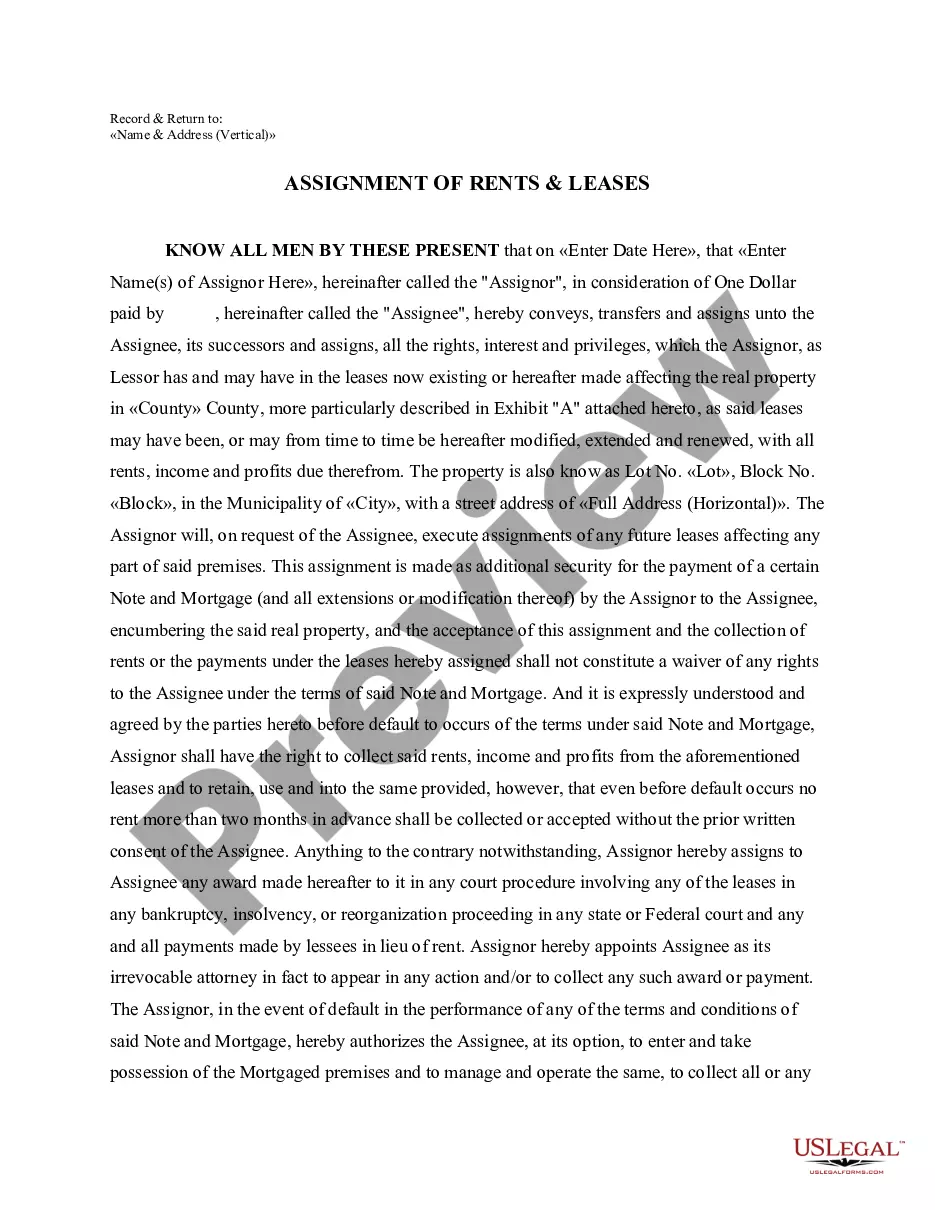
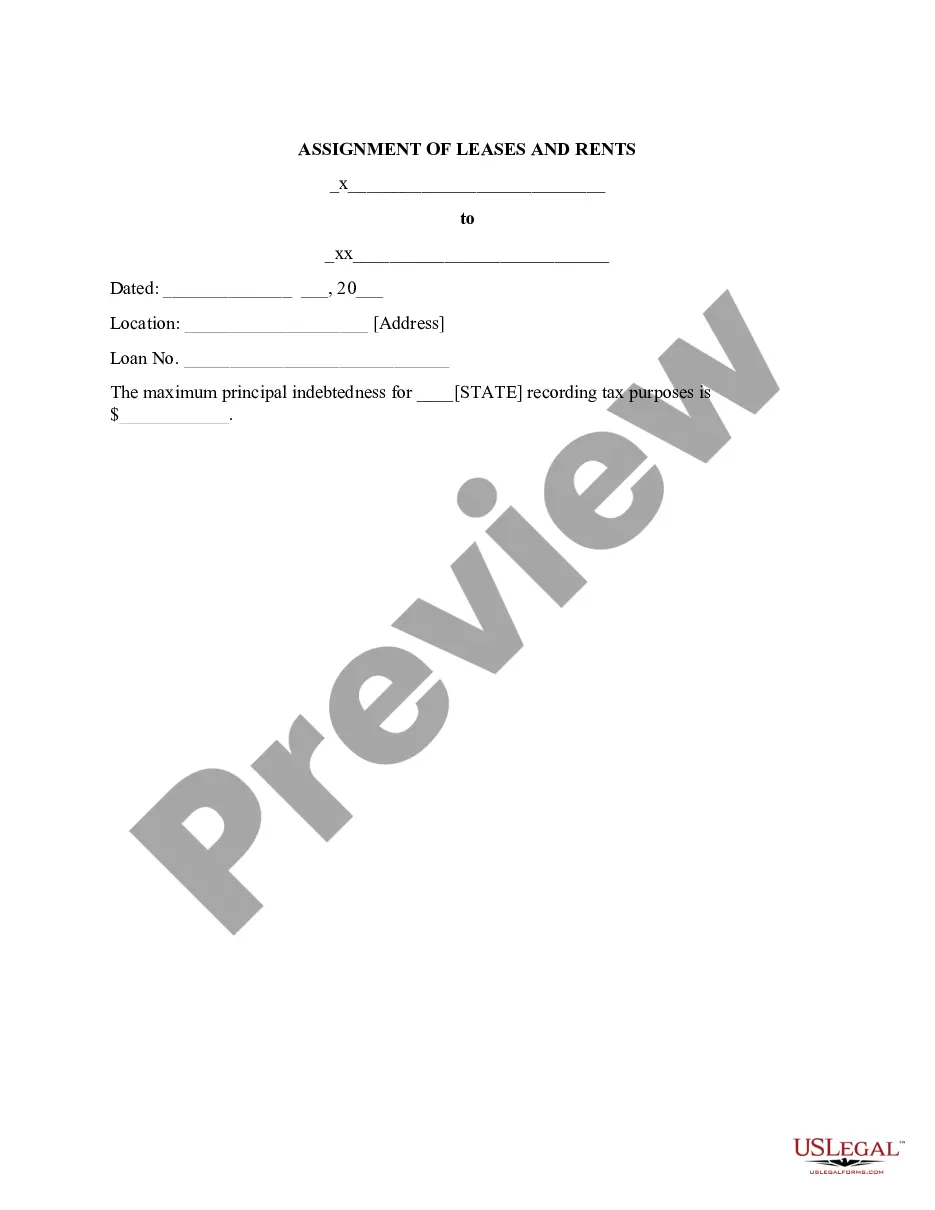
The Assignment of Leases and Rents is a legal document that enables a lender to transfer rights over rental income from a mortgaged property to another lender when the mortgage is in default. This form serves as additional security for the lender, distinguishing it from similar documents by specifically addressing the management and distribution of rents derived from leased properties.
Key components of this form
- Identifies the parties involved: Borrower and Lender.
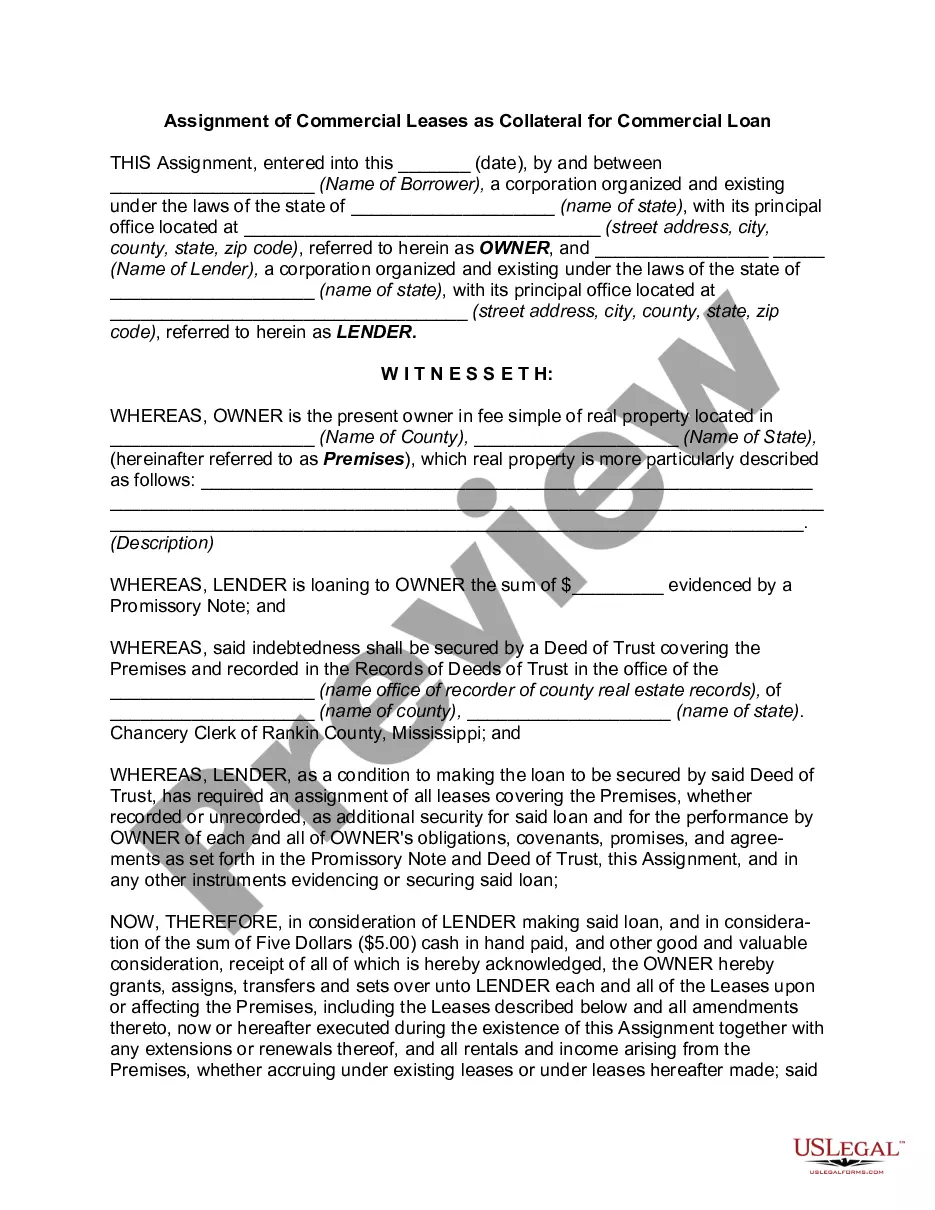
- Recitals section outlining the debt obligations and the related mortgage.
- Assignment clause detailing the transfer of rents and income from the leased property.
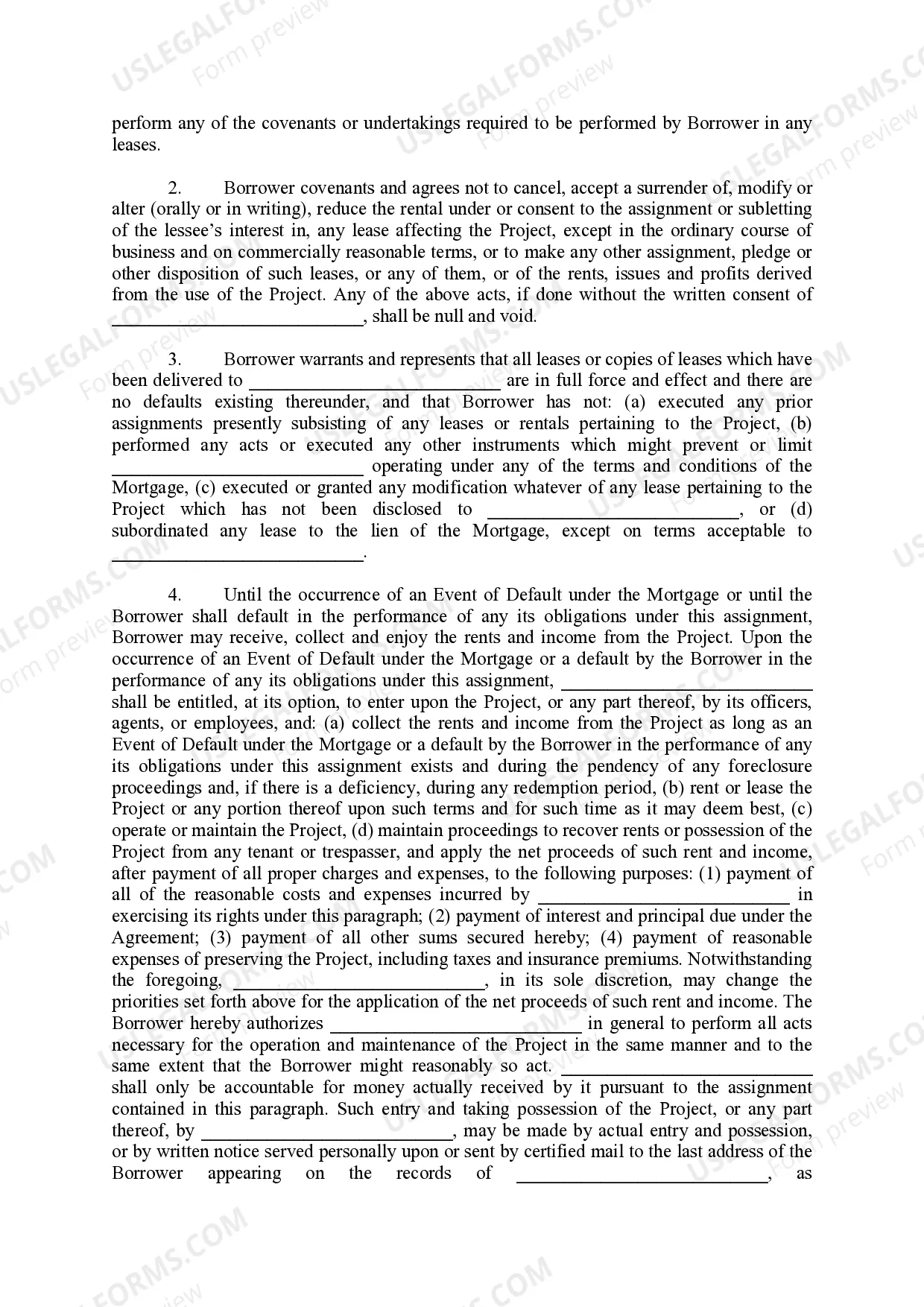
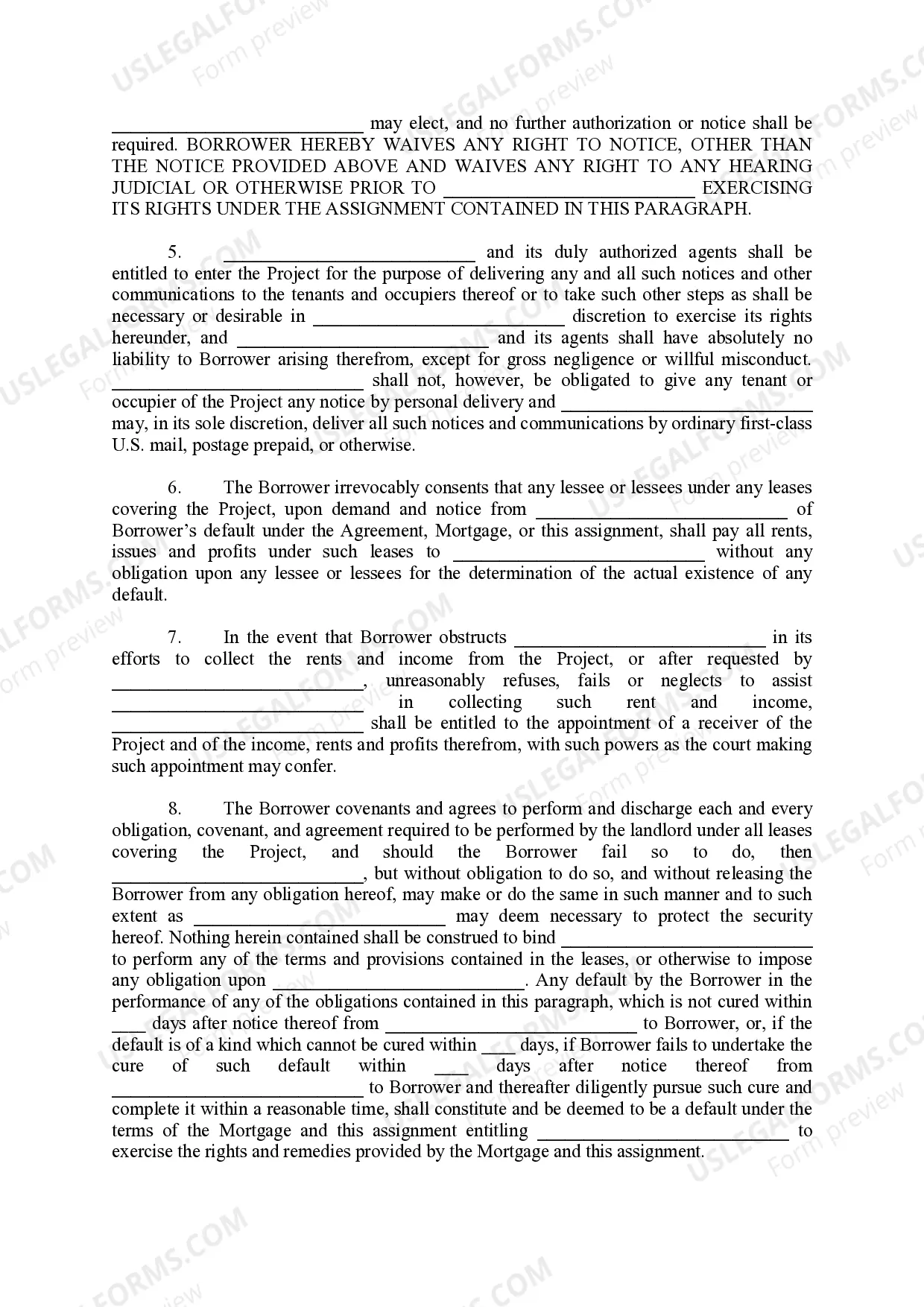
- Covenants outlining Borrower's obligations regarding the leases.
- Default provisions specifying the rights of the Lender upon Borrower default.
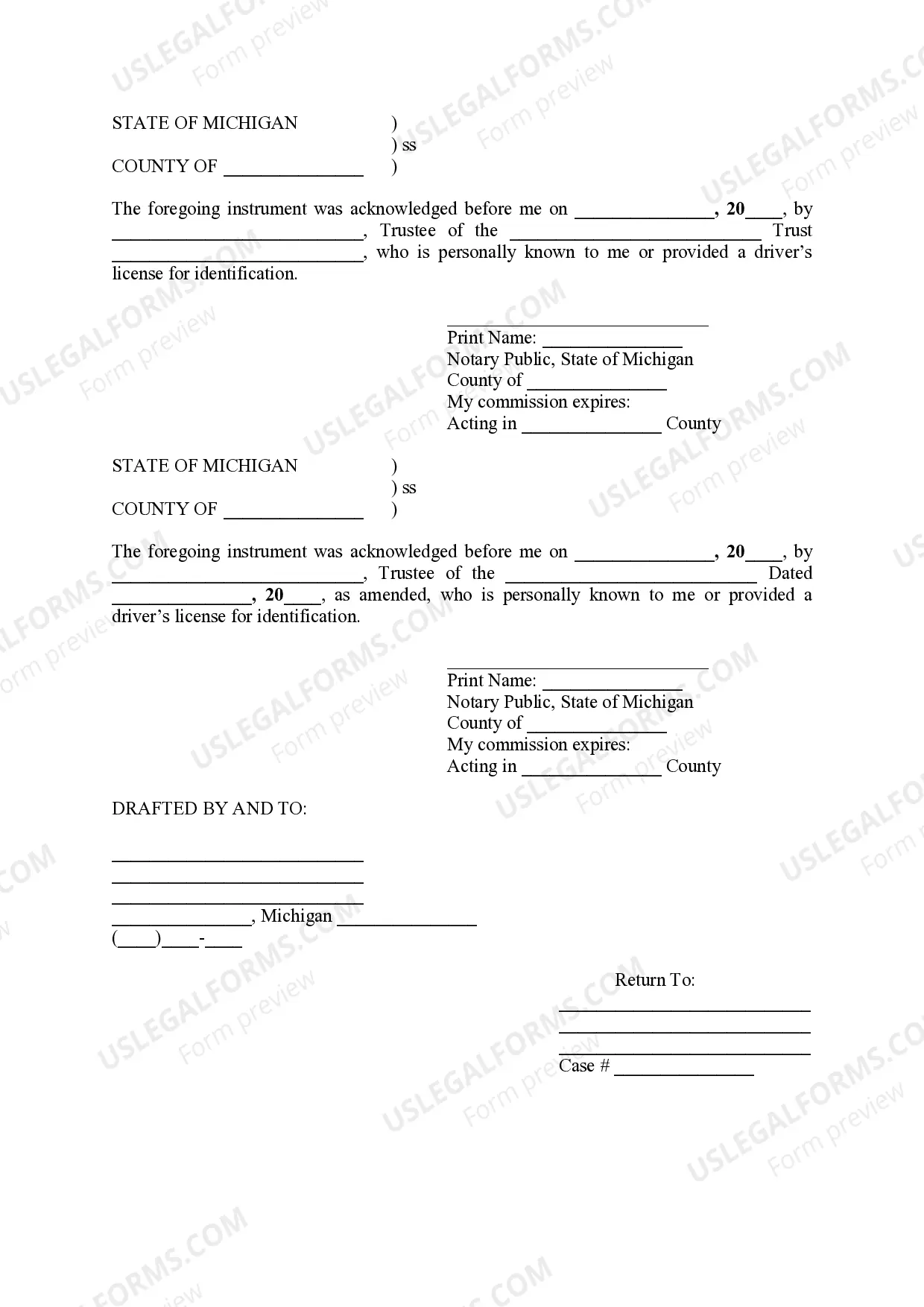
- Notary acknowledgment sections required for legal validation.
When to use this form
This form is used when a borrower has taken out a mortgage on a property and is required by the lender to assign the rights to collect rents from tenants as security in case of default. It is beneficial in situations where the borrower may struggle to meet financial obligations and the lender seeks assurance through future rental income until any defaults are resolved.
Who this form is for
- Property owners (Borrowers) seeking a loan secured by rental income.
- Lenders requiring additional security for a property loan.
- Real estate investors interested in protecting their investment through legal security provisions.
Completing this form step by step
- Identify the parties: Fill out the names and addresses of the Borrower and the Lender.
- Specify the property: Provide detailed information regarding the mortgaged property.
- Enter the financial details: Include the total indebtedness and any relevant loan agreements.
- Detail the rents: Describe the lease agreements under which rental income is generated.
- Include signatures: Ensure both parties sign the document and secure notarization as required.
Does this form need to be notarized?
Yes, this form must be notarized to be legally valid. US Legal Forms offers integrated online notarization services, allowing users to complete the process securely via video call without the need to travel.
Get your form ready online
Our built-in tools help you complete, sign, share, and store your documents in one place.
Make edits, fill in missing information, and update formatting in US Legal Forms—just like you would in MS Word.
Download a copy, print it, send it by email, or mail it via USPS—whatever works best for your next step.
Sign and collect signatures with our SignNow integration. Send to multiple recipients, set reminders, and more. Go Premium to unlock E-Sign.
If this form requires notarization, complete it online through a secure video call—no need to meet a notary in person or wait for an appointment.
We protect your documents and personal data by following strict security and privacy standards.

Make edits, fill in missing information, and update formatting in US Legal Forms—just like you would in MS Word.

Download a copy, print it, send it by email, or mail it via USPS—whatever works best for your next step.

Sign and collect signatures with our SignNow integration. Send to multiple recipients, set reminders, and more. Go Premium to unlock E-Sign.

If this form requires notarization, complete it online through a secure video call—no need to meet a notary in person or wait for an appointment.

We protect your documents and personal data by following strict security and privacy standards.
Common mistakes to avoid
- Failing to properly identify all parties involved in the agreement.
- Not detailing lease information clearly, leading to confusion about tenant obligations.
- Omitting necessary signatures or notarial acknowledgments.
Why use this form online
- Convenient access to legally drafted forms, ensuring compliance with Michigan law.
- Edit and complete the form at your own pace without needing legal consultation for basic applications.
- Downloadable format allows for easy storage and sharing with involved parties.
Looking for another form?



Form popularity
FAQ
The process of assigning a lease typically involves obtaining the landlord's consent, drafting an assignment agreement, and notifying all parties involved. Both the original tenant and the assignee should review the lease terms to ensure compliance and address any potential issues. Using resources from US Legal Forms can help simplify this process, providing templates and guidance tailored to Michigan's legal framework.
Lease assignments work by allowing the original tenant to transfer their rights and obligations under a lease to another party, known as the assignee. The assignee then assumes the original tenant's position and responsibilities, essentially stepping into their shoes. This process is crucial in Michigan Assignments of Leases and Rents, ensuring a seamless transition without disrupting rental income.
You can obtain a copy of a lease agreement from your landlord or property management company, as they typically keep records of all active leases. If you cannot locate your lease, you might consider checking online legal platforms like US Legal Forms, which offer templates and forms, including standard lease agreements tailored for Michigan. This can help you understand the terms better.
Yes, a landlord can refuse an assignment of a lease based on specific conditions outlined in the lease agreement. Reasons for refusal may include concerns about the financial stability or suitability of the proposed assignee. It's essential to understand your rights and obligations under Michigan Assignments of Leases and Rents to ensure compliance with the law and the lease terms.
To request a lease assignment, you should start by reviewing your lease agreement for any specific requirements. Typically, you will need to submit a formal request to your landlord or property manager, outlining your intentions and providing any necessary information about the proposed assignee. Utilizing platforms like US Legal Forms can streamline this process by supplying the required documentation.
The 554.134 law in Michigan deals with the rights associated with the assignment of rents and leases, detailing the specific requirements for executing such agreements. This law ensures clarity in the transference of rights and protects the expectations of all parties involved. Knowing the implications of Michigan Assignments of Leases and Rents under this law can provide valuable insights when navigating real estate agreements.
The Michigan law 554.613 addresses the assignment of leases and rents and outlines the rights and responsibilities of landlords and tenants in such agreements. This statute provides guidelines for the transfer of rental income and ensures that tenants are informed about their obligations. Familiarity with Michigan Assignments of Leases and Rents under this law can protect your interests as either a landlord or a tenant.
The assignment of rents and leases refers to a legal arrangement where a property owner transfers their rights to collect rent payments from tenants to another party. In Michigan, this concept plays a crucial role in real estate transactions, ensuring that landlords can secure their rental income. Understanding Michigan Assignments of Leases and Rents can help both landlords and tenants navigate their obligations and rights effectively.
A motion for assignment of rents is a legal request made to a court to allow the immediate collection of rent payments in the event of a borrower's default. Under Michigan Assignments of Leases and Rents, this type of motion helps expedite the recovery process for lenders. It ensures that rental income continues to flow into the lender’s hands rather than being lost during foreclosure proceedings. This legal step can be crucial for maintaining financial stability in a distressed property situation.
Yes, recording an assignment of lease is essential to protect your rights under Michigan Assignments of Leases and Rents. By recording this document, you establish priority over other claims and provide notice to third parties regarding your interest in the lease. Failing to record can lead to complications in enforcing your rights, especially if disputes arise. Therefore, it is advisable to file your assignment with the appropriate county office.