Michigan Assignment of Rents
What this document covers
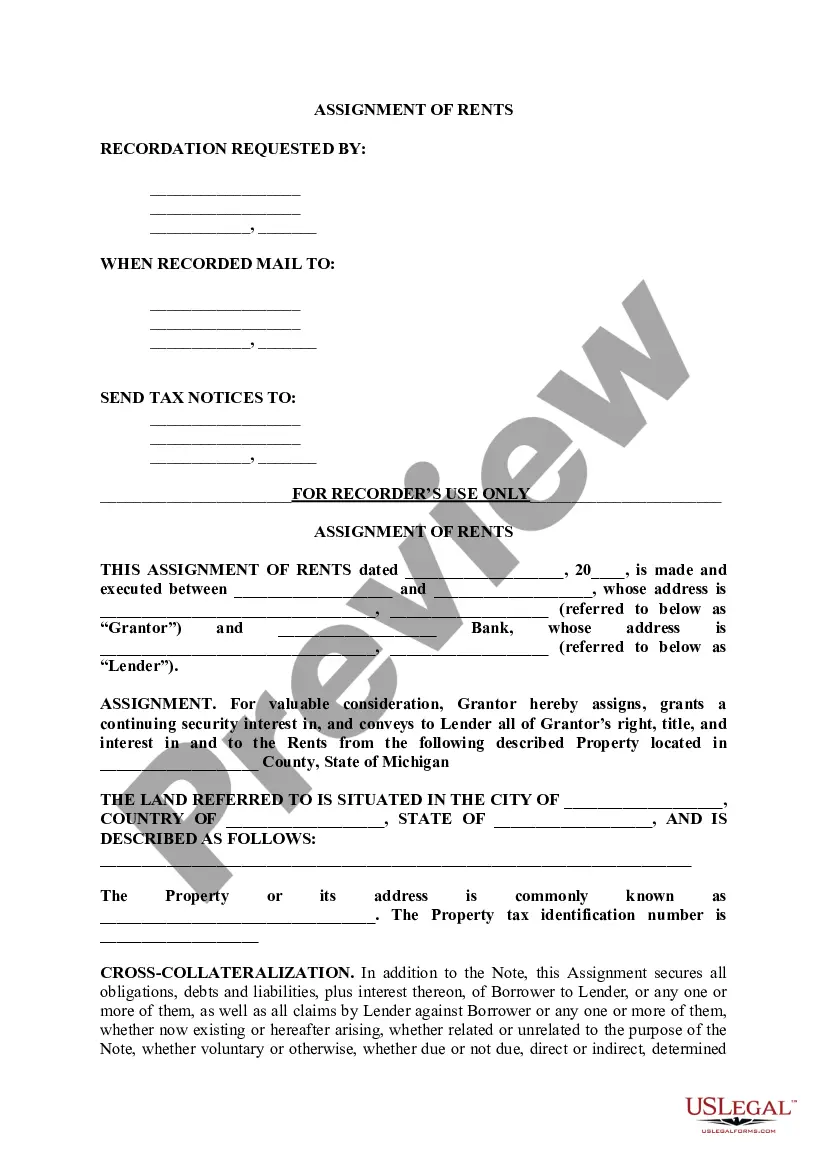
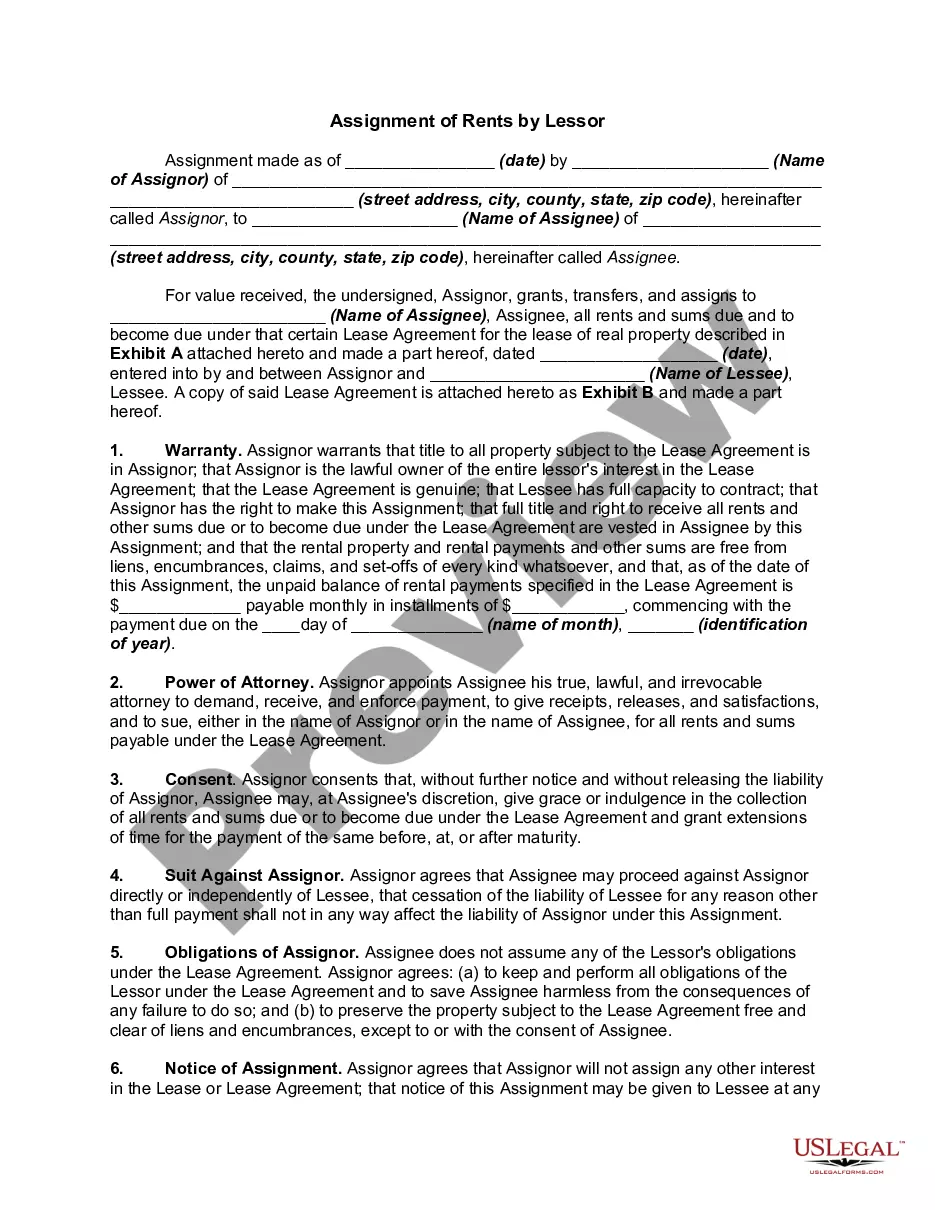
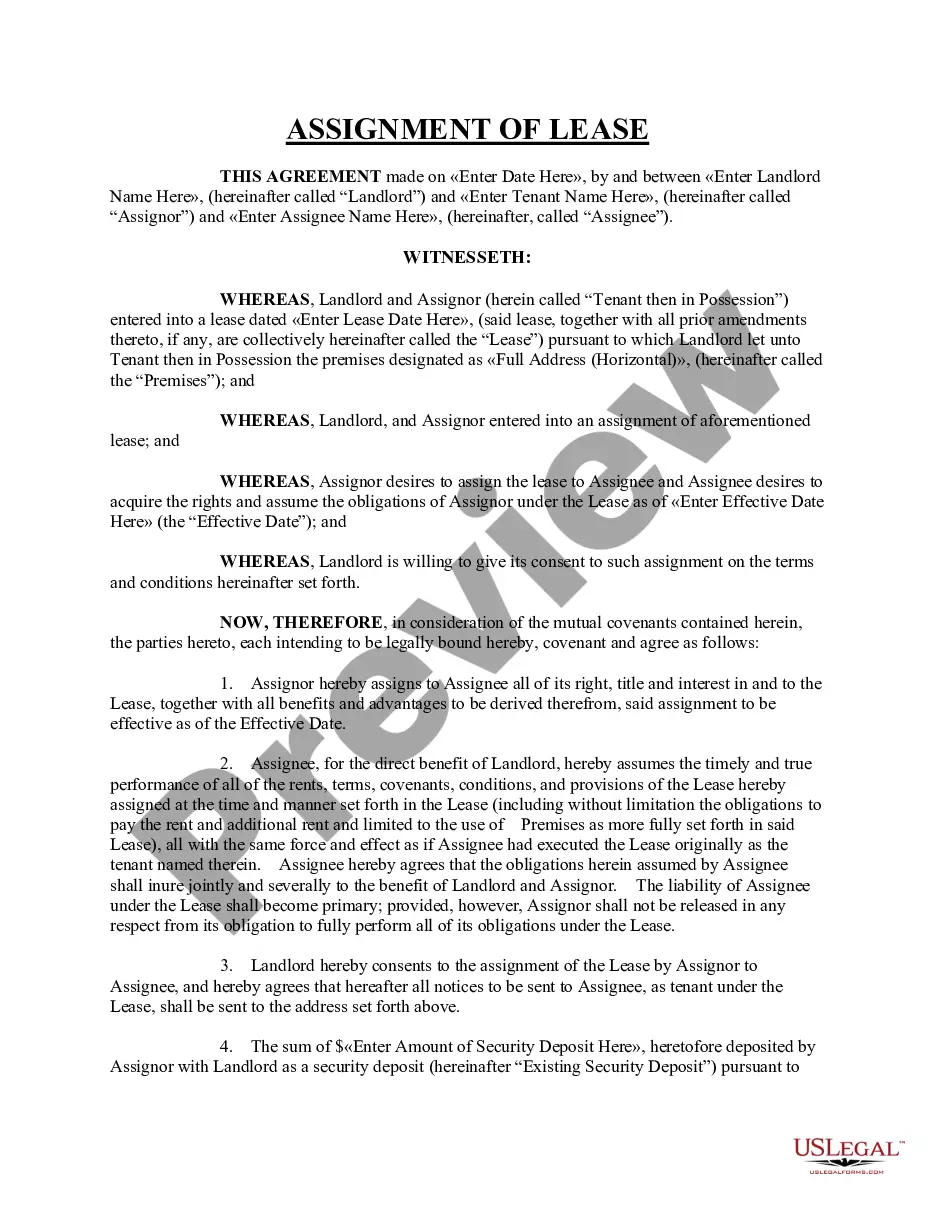
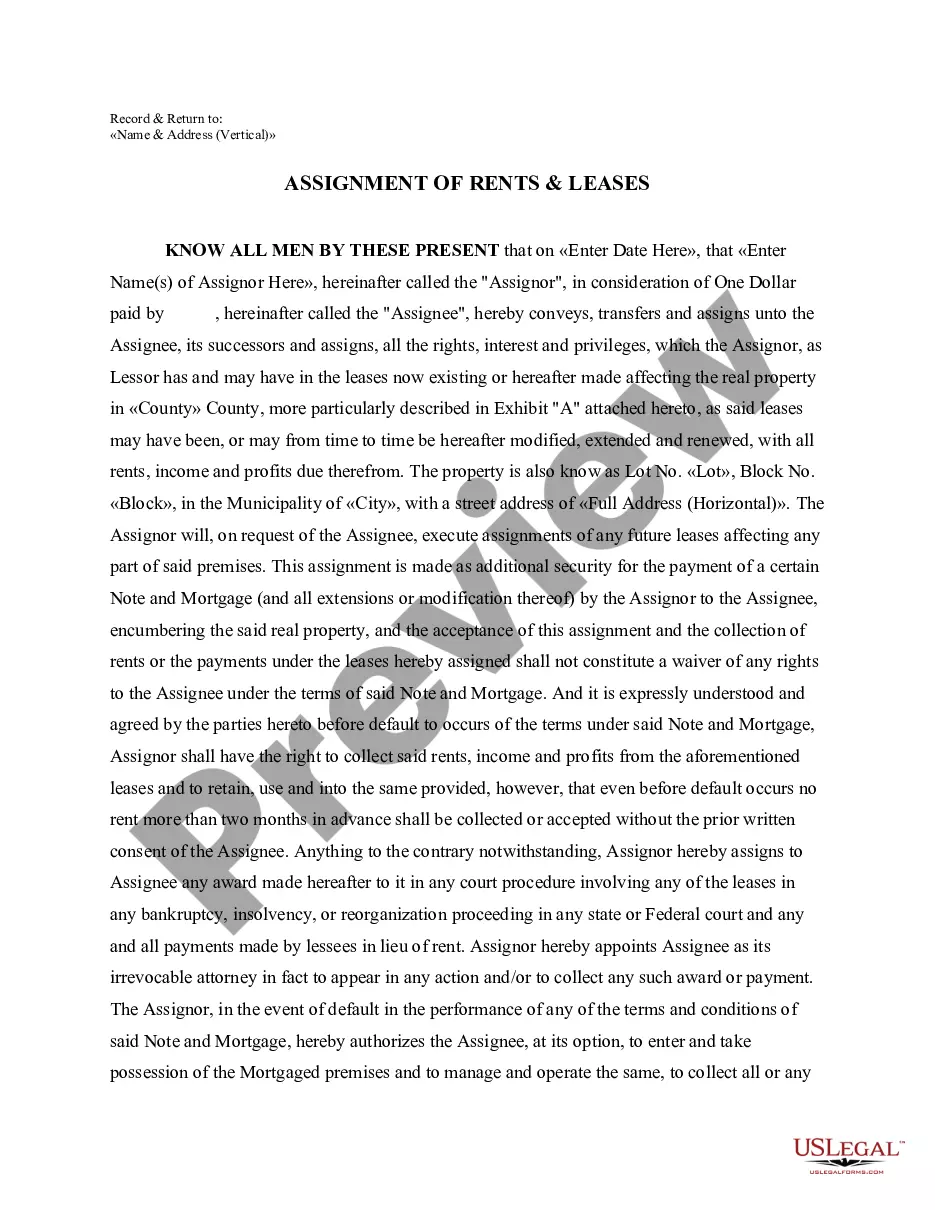
The Assignment of Rents is a legal document that allows a property owner (the Grantor) to assign their rights to rents generated from a property to a lender (the Lender) as security for a loan. This form serves as collateral, ensuring that the Lender can collect rental income if the borrower defaults on their loan. Unlike a standard lease agreement, this form specifically targets the transfer of rental income rights, providing a legal framework for various scenarios involving real property financing and security interests.
What’s included in this form
- Date of Assignment: Date when the Assignment of Rents is executed.
- Parties Involved: Identifies the Grantor (property owner) and the Lender (bank or financial institution).
- Description of Property: Provides the legal description of the property from which rent will be collected.
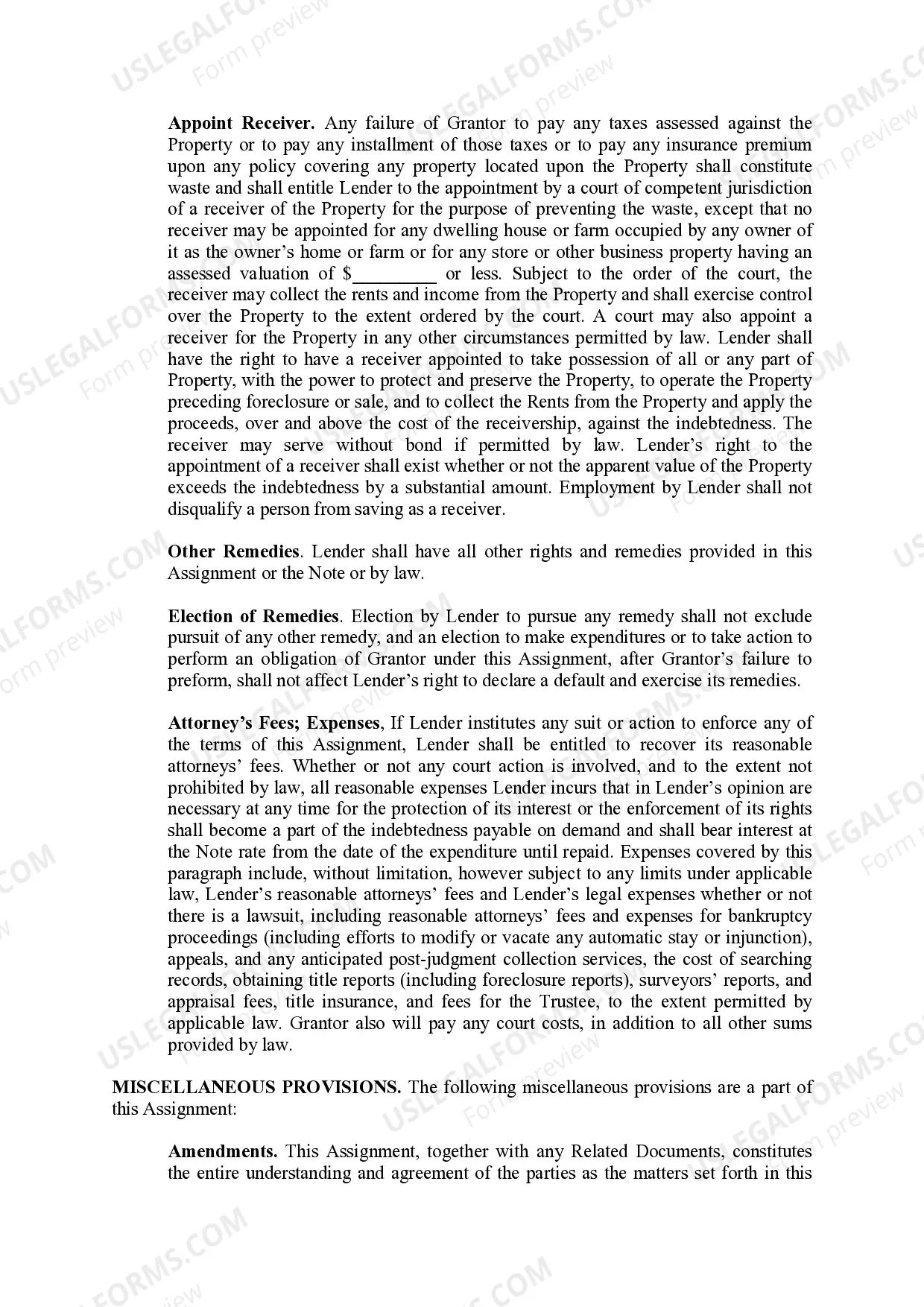
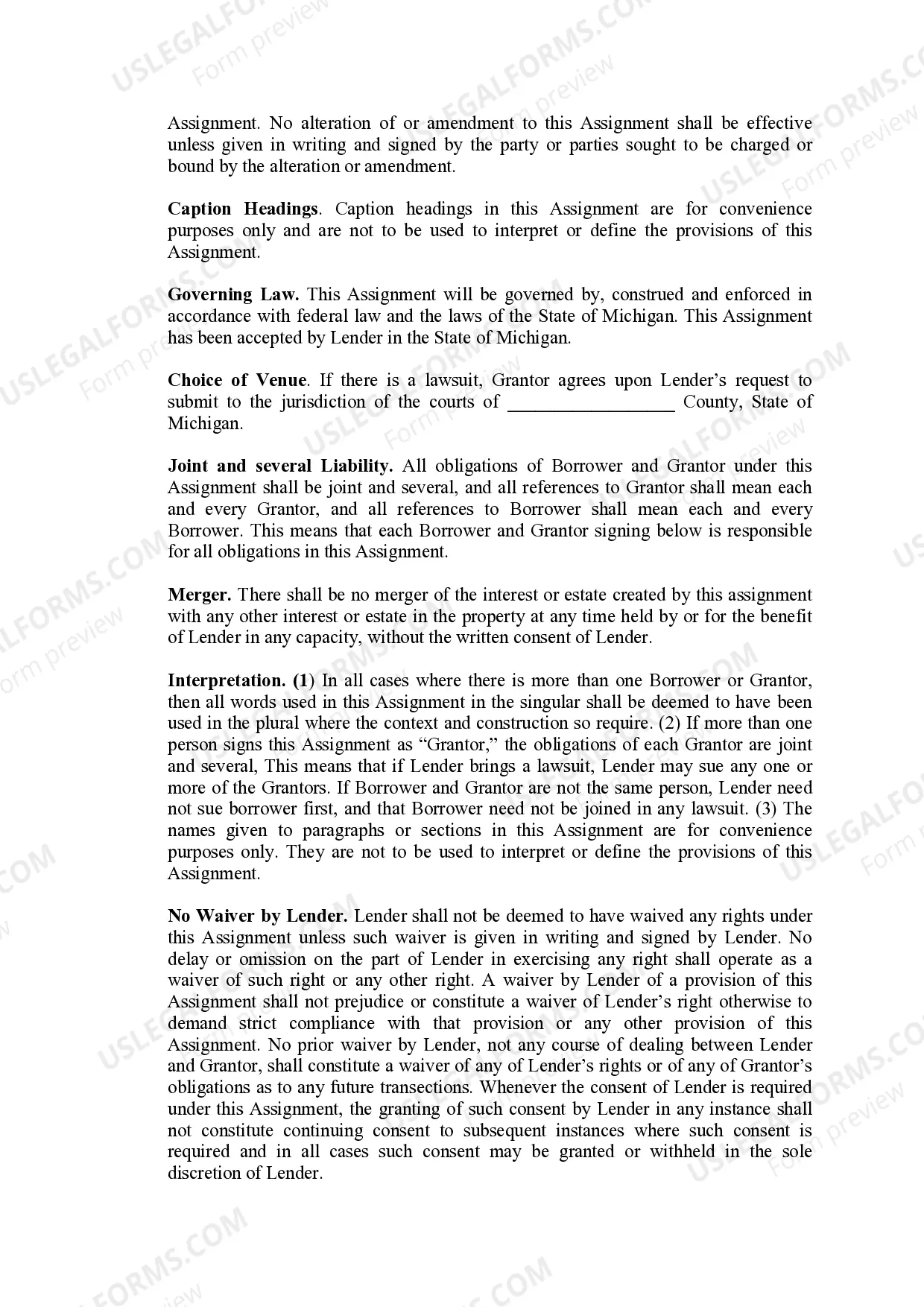
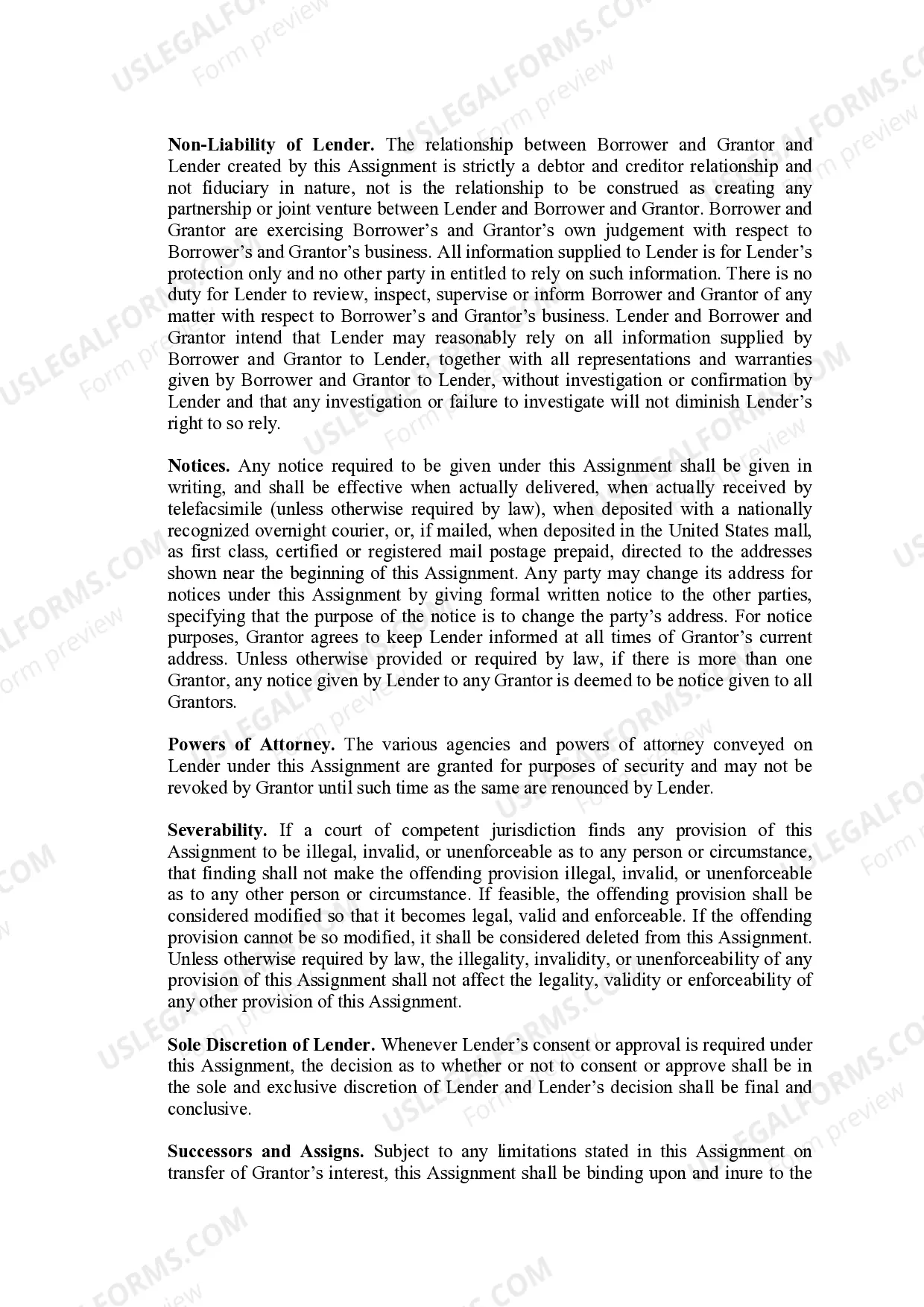
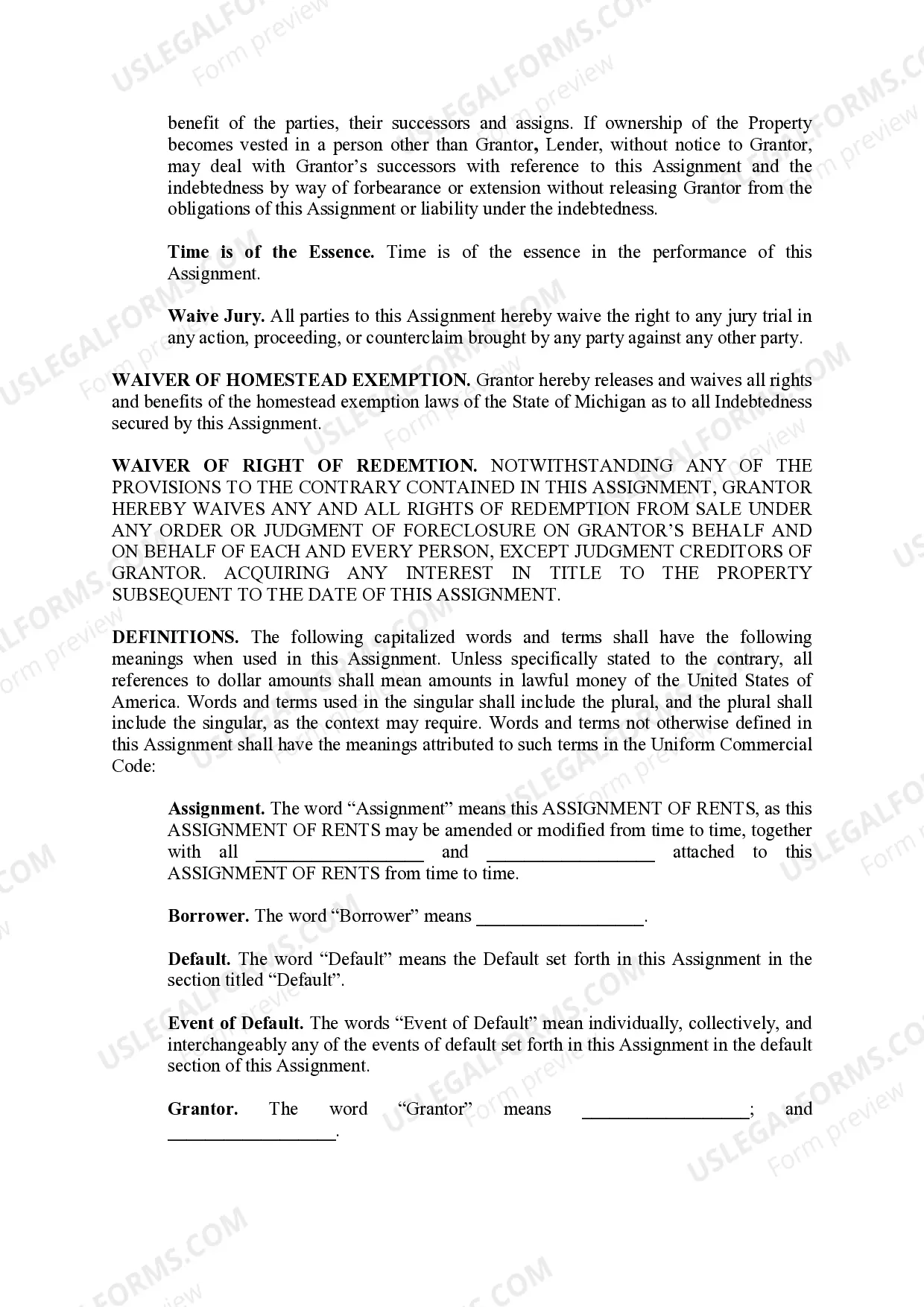
- Assignment Terms: Outlines the terms and conditions under which rents are assigned to the Lender.
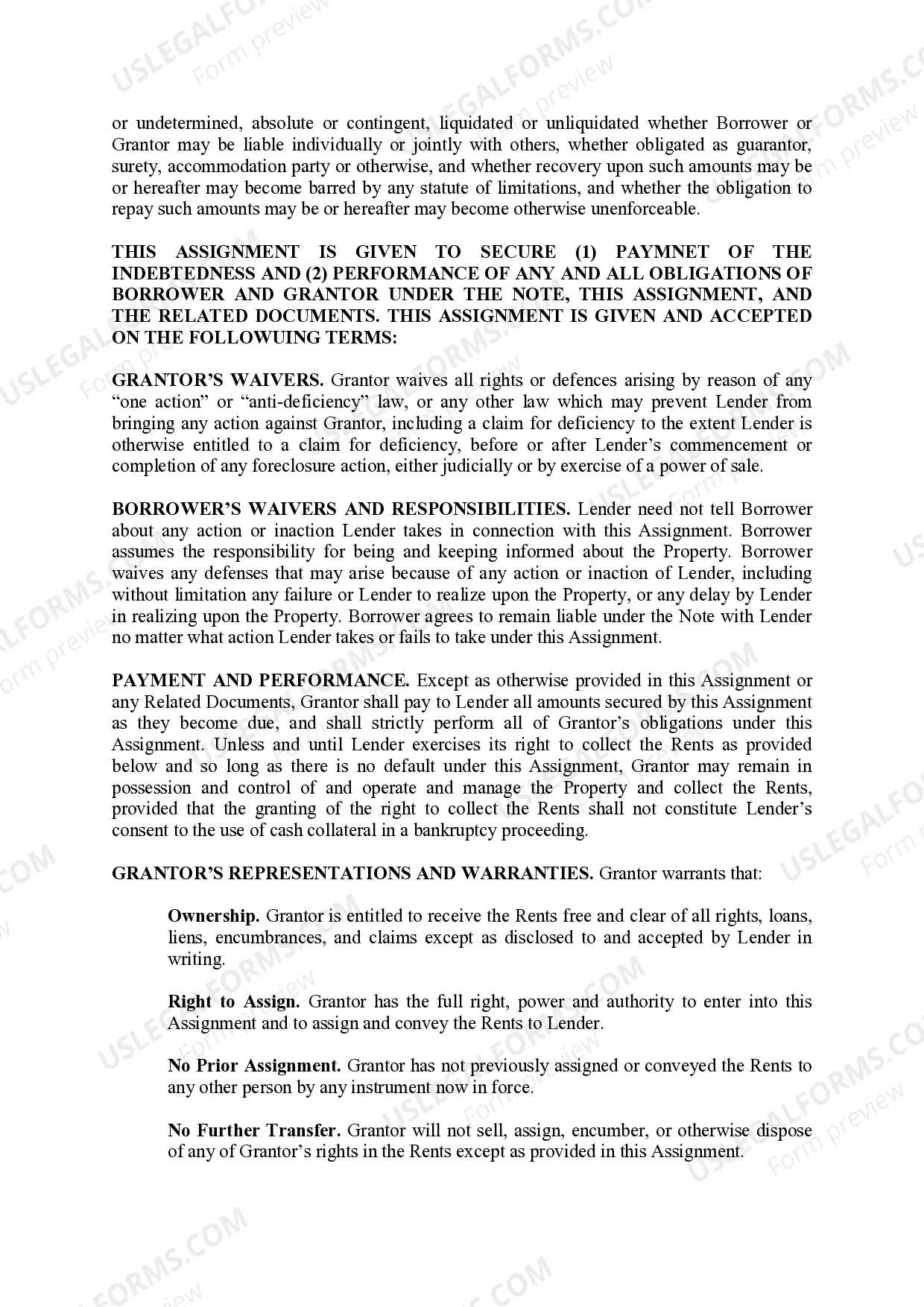
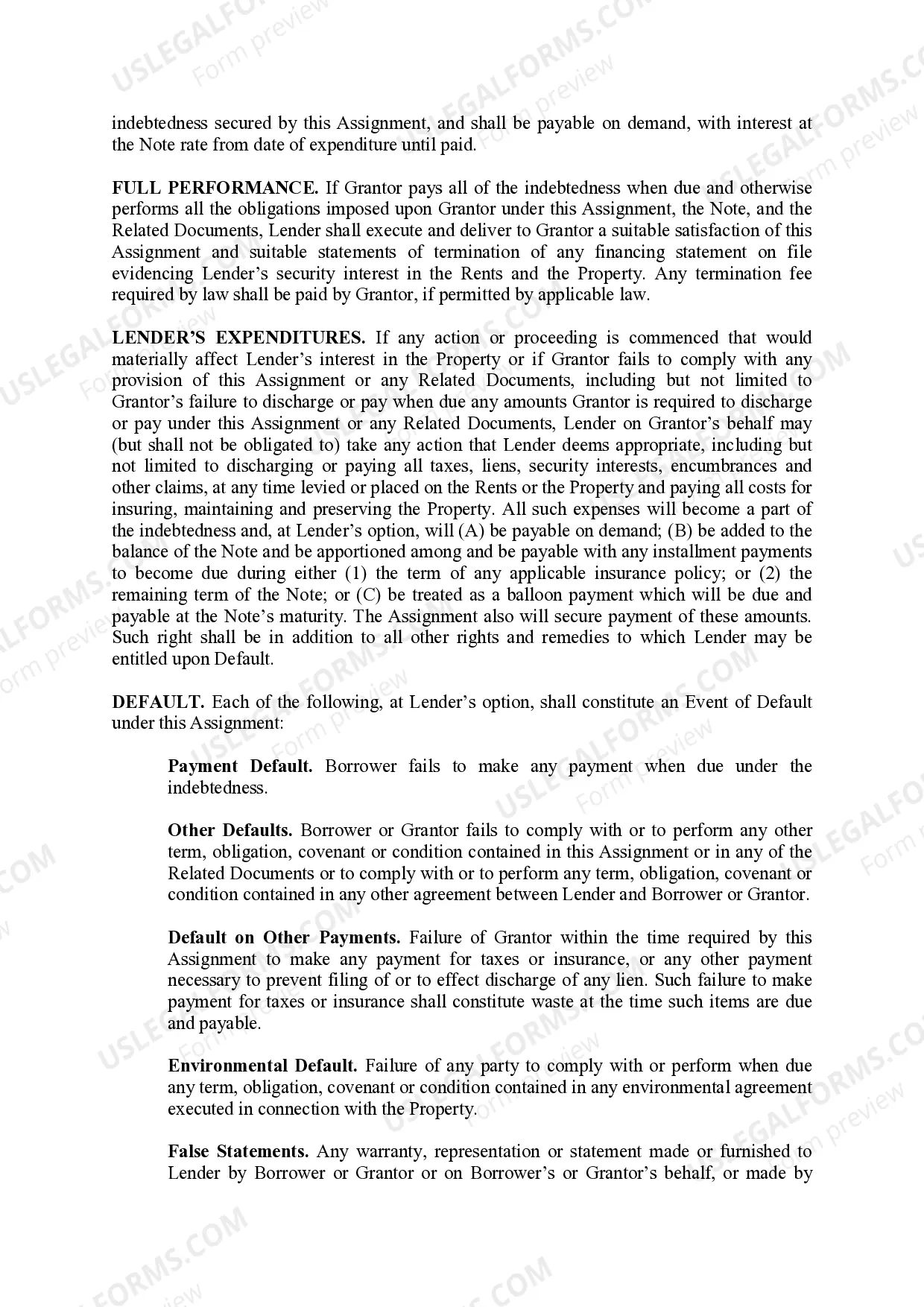
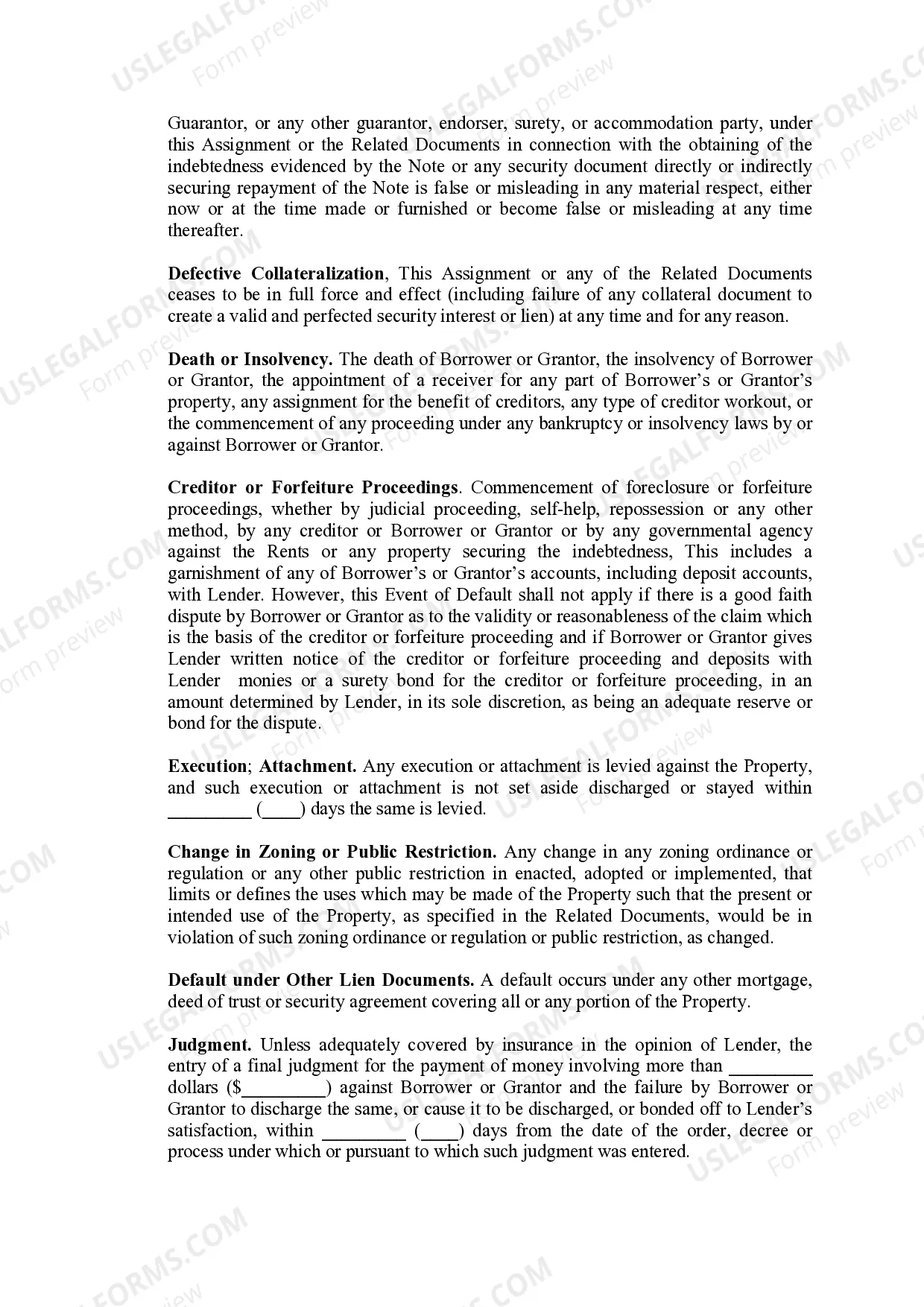
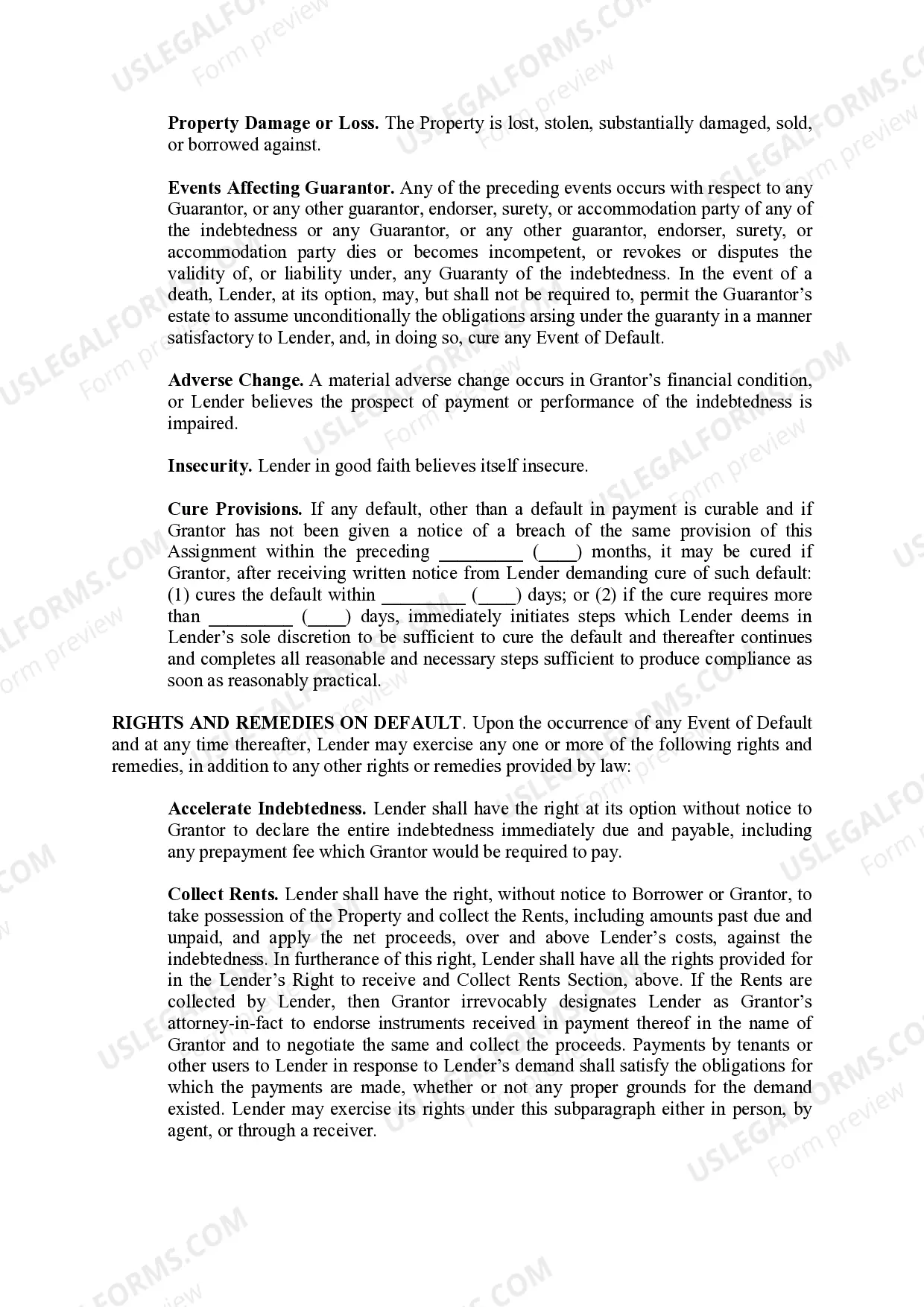
- Default Conditions: Specifies various events that would constitute a default by the Grantor, triggering the Lender's rights.
- Grantor's Representations: Details affirmations by the Grantor regarding their ownership and rights to lease and collect rents.


When this form is needed
This form is necessary when a property owner seeks to secure a loan by assigning rental income to the lender. It is typically used in situations such as securing a mortgage on income-generating properties, refinancing existing loans, or when dealing with significant financial obligations that require collateral in the form of future rental income. If you are a landlord facing potential default or seeking to reassure lenders about the stability of your income stream, this document is essential.
Who can use this document
- Property owners (Grantors) looking to secure a loan against their rental property.
- Landlords who want to clarify their rental income rights in a financial agreement.
- Financial institutions (Lenders) requiring assurance of rental income as part of their lending process.
- Borrowers needing to formalize the terms of income assignment for accountability.
How to complete this form
- Identify the parties by entering the names and addresses of the Grantor and Lender.
- Provide the date on which the Assignment of Rents is executed.
- Describe the property in detail, including its legal description and address.
- Specify terms related to the assignment, such as rights to collect rents and responsibilities of the parties.
- Ensure all parties sign and date the form where indicated.
Does this form need to be notarized?
This form does not typically require notarization unless specified by local law. However, it is advisable to have it notarized to ensure its acceptance in legal proceedings and to verify the identities of the parties involved.
Get your form ready online
Our built-in tools help you complete, sign, share, and store your documents in one place.
Make edits, fill in missing information, and update formatting in US Legal Forms—just like you would in MS Word.
Download a copy, print it, send it by email, or mail it via USPS—whatever works best for your next step.
Sign and collect signatures with our SignNow integration. Send to multiple recipients, set reminders, and more. Go Premium to unlock E-Sign.
If this form requires notarization, complete it online through a secure video call—no need to meet a notary in person or wait for an appointment.
We protect your documents and personal data by following strict security and privacy standards.

Make edits, fill in missing information, and update formatting in US Legal Forms—just like you would in MS Word.

Download a copy, print it, send it by email, or mail it via USPS—whatever works best for your next step.

Sign and collect signatures with our SignNow integration. Send to multiple recipients, set reminders, and more. Go Premium to unlock E-Sign.

If this form requires notarization, complete it online through a secure video call—no need to meet a notary in person or wait for an appointment.

We protect your documents and personal data by following strict security and privacy standards.
Common mistakes to avoid
- Failing to provide a complete legal description of the property.
- Not including all necessary signatures, which may void the agreement.
- Misunderstanding or neglecting the default conditions under the assignment.
- Not clearly stating the terms of rent collection or property maintenance responsibilities.
Why complete this form online
- Convenience of accessing and downloading the form at any time.
- Editability allows you to fill in your specific information before printing.
- Reliability of receiving attorney-drafted legal forms tailored to your needs.
- Instant access to revisions and updates reflecting changes in the law.
Looking for another form?

Form popularity
FAQ
The 3x rent rule in Michigan is crucial for landlords and tenants alike in the context of the Assignment of Rents. It states that a tenant must have a monthly income that is at least three times greater than the monthly rent to qualify for lease agreements. This rule helps landlords assess the financial stability of potential tenants, reducing the likelihood of rental income issues. Utilizing this guideline can enhance the security of agreements under Michigan Assignment of Rents.
The 554.134 law in Michigan also pertains to the Assignment of Rents. This law clarifies the conditions under which a landlord may assign their rental income rights to third parties, such as lenders. It aims to protect both landlords and tenants by establishing clear guidelines on their agreed terms. Knowing this law is essential for property owners using Michigan Assignment of Rents to secure financing or manage their properties effectively.
The 554.613 law in Michigan relates to the Assignment of Rents. This law outlines how landlords can collect overdue rents directly from tenants in cases where the property is subject to a mortgage. It provides legal backing for landlords to obtain rental income, ensuring they have a structured approach to managing overdue payments. Understanding this law can greatly benefit property owners navigating the complexities of Michigan Assignment of Rents.
In Michigan, it is advisable to record an assignment of lease to protect the interests of both parties involved. Recording provides legal notice to third parties regarding the transfer of rights. This step ensures that your rights are recognized, particularly in matters related to the Michigan Assignment of Rents. Use uslegalforms for streamlined documentation and legal assistance.
In Michigan, tenants typically cannot claim rent as a tax deduction. However, landlords may have options for reporting rental income and expenses. It's essential to understand the specifics of your situation. Always consult a tax professional for guidance regarding Michigan Assignment of Rents.