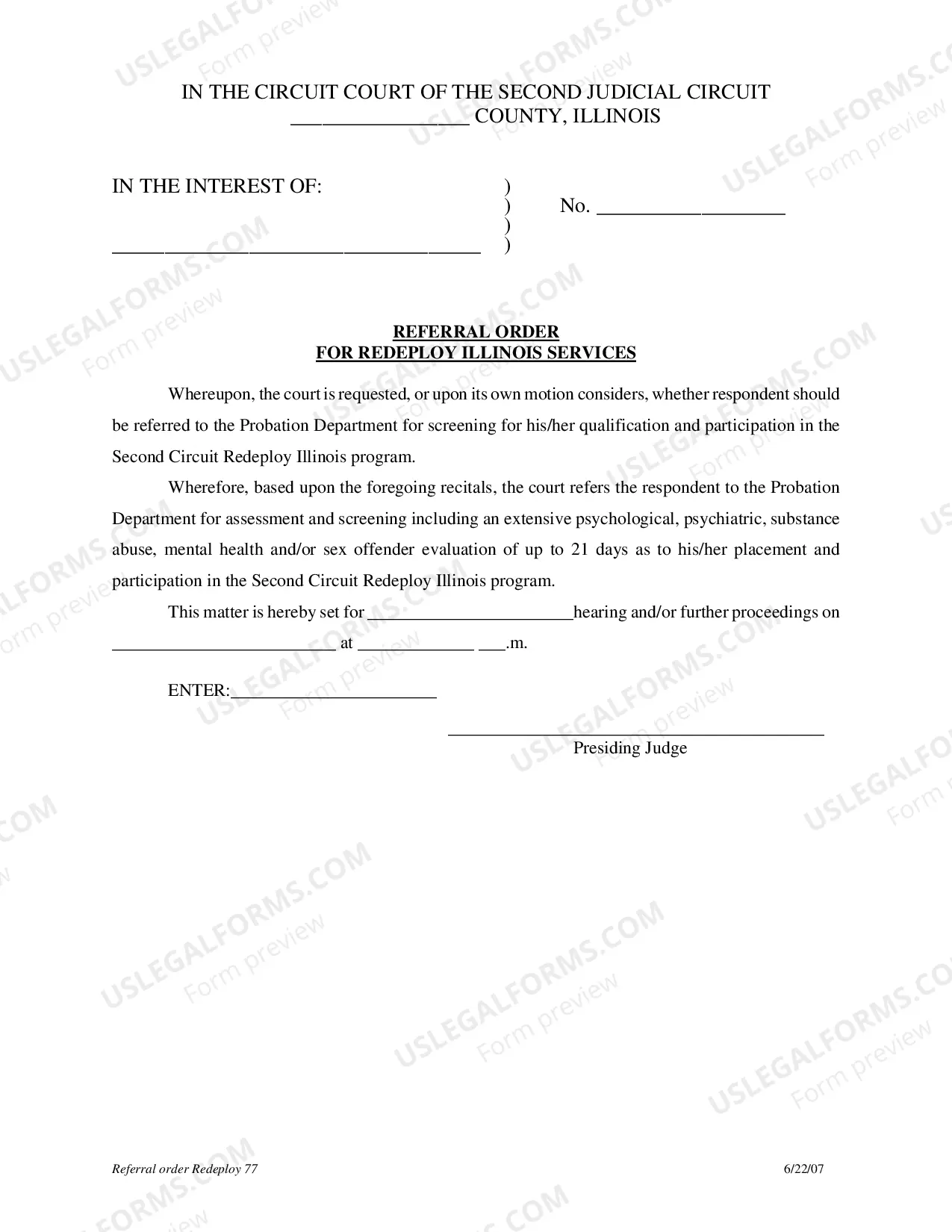
Assignment of Leases and Rents as Collateral Security for a Commercial Loan
Overview of this form
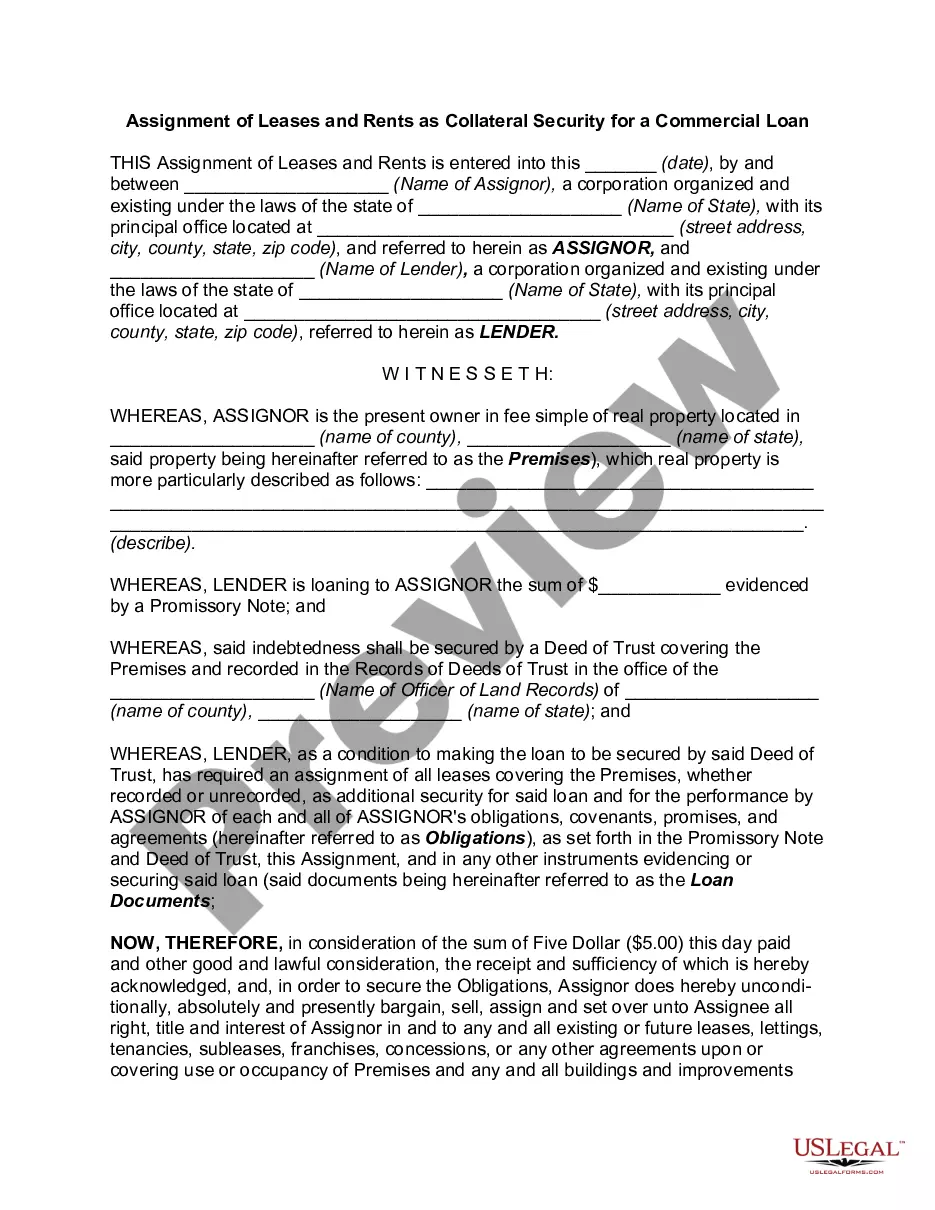
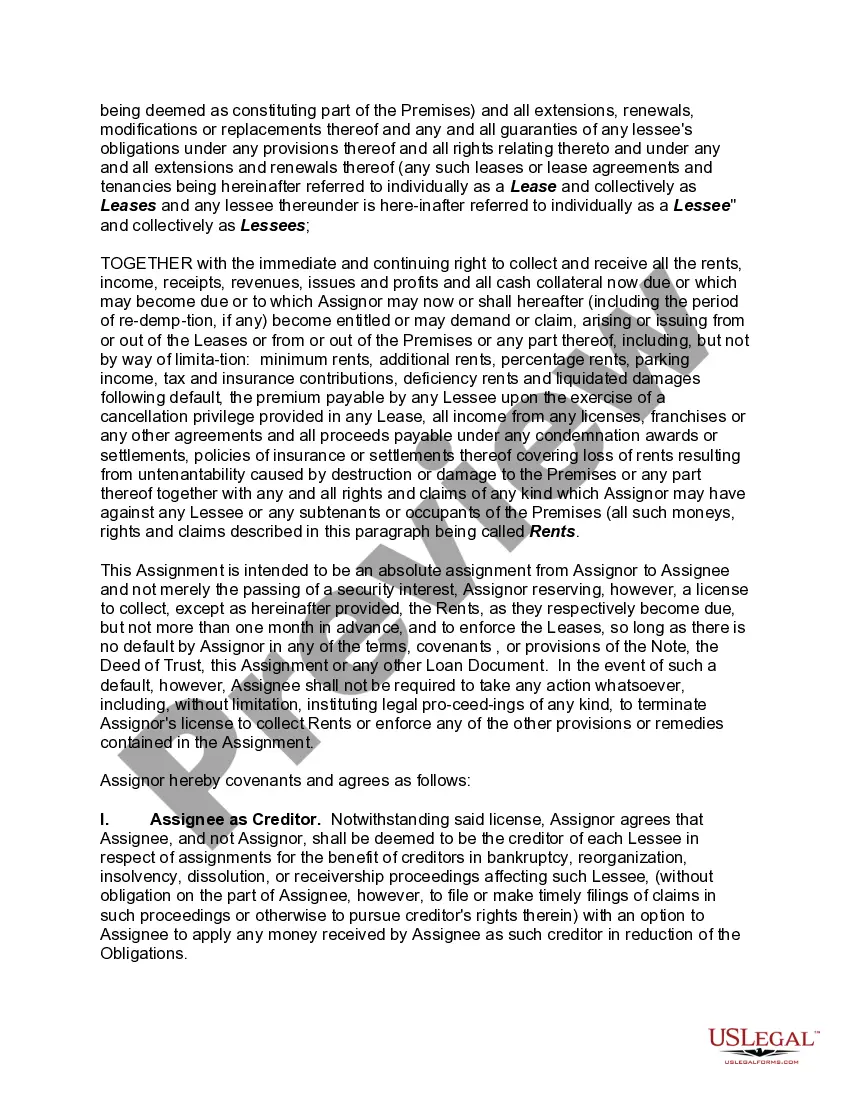
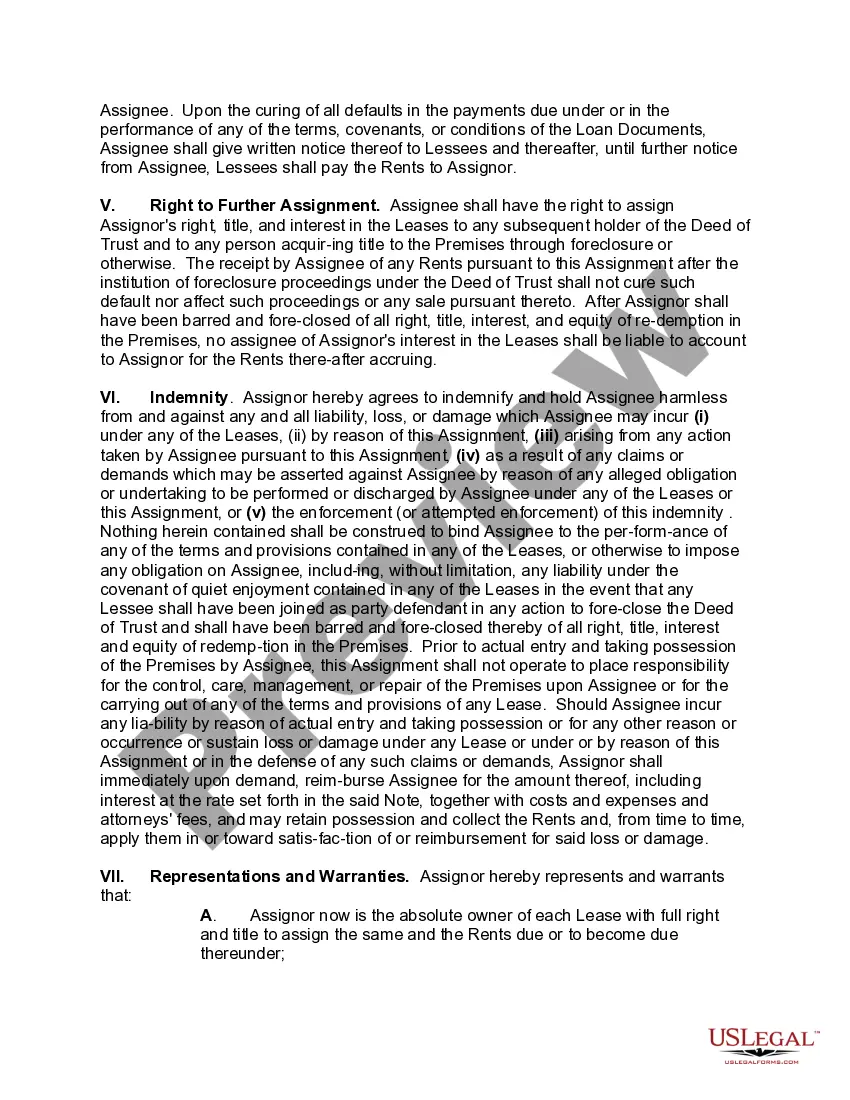
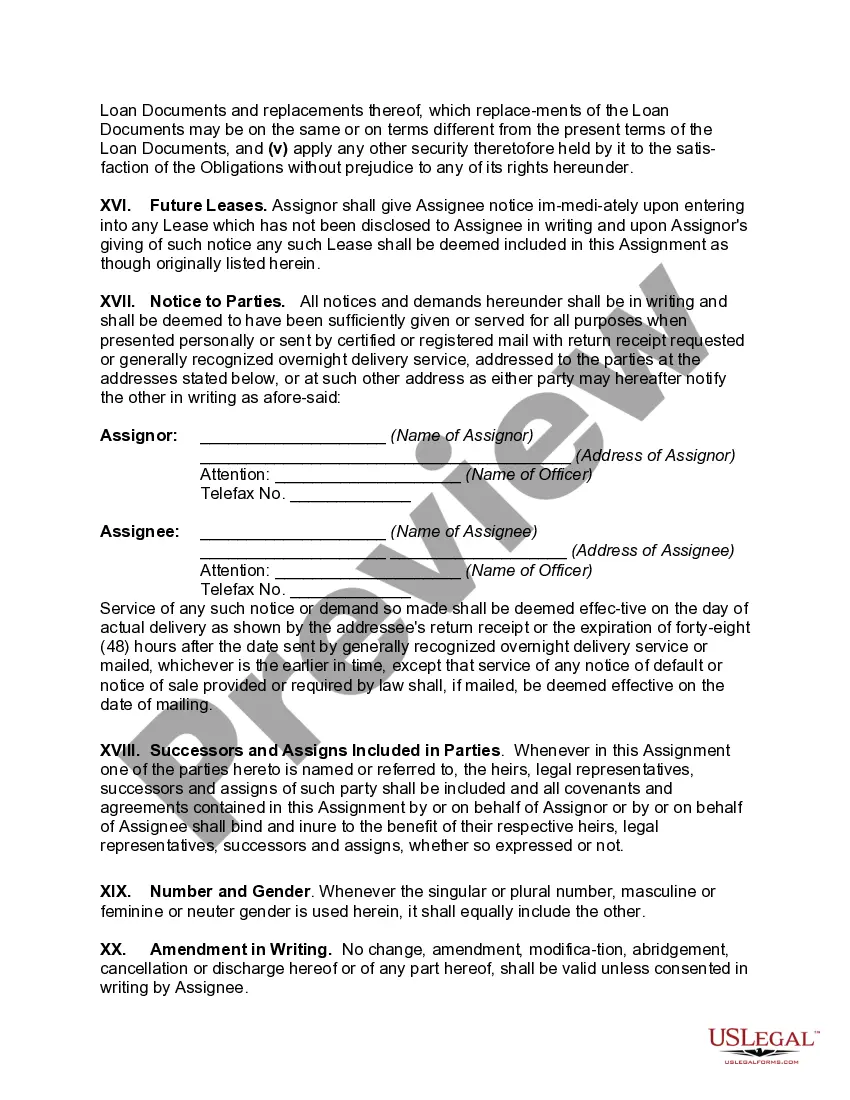
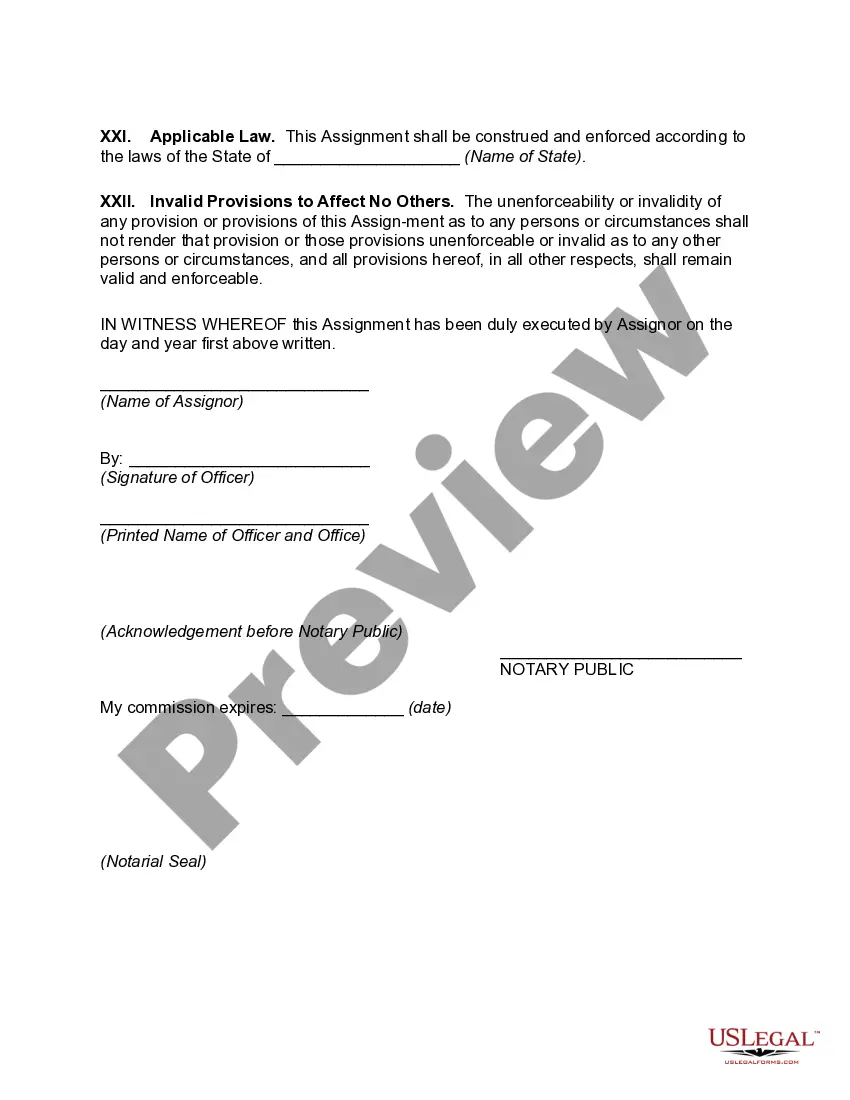
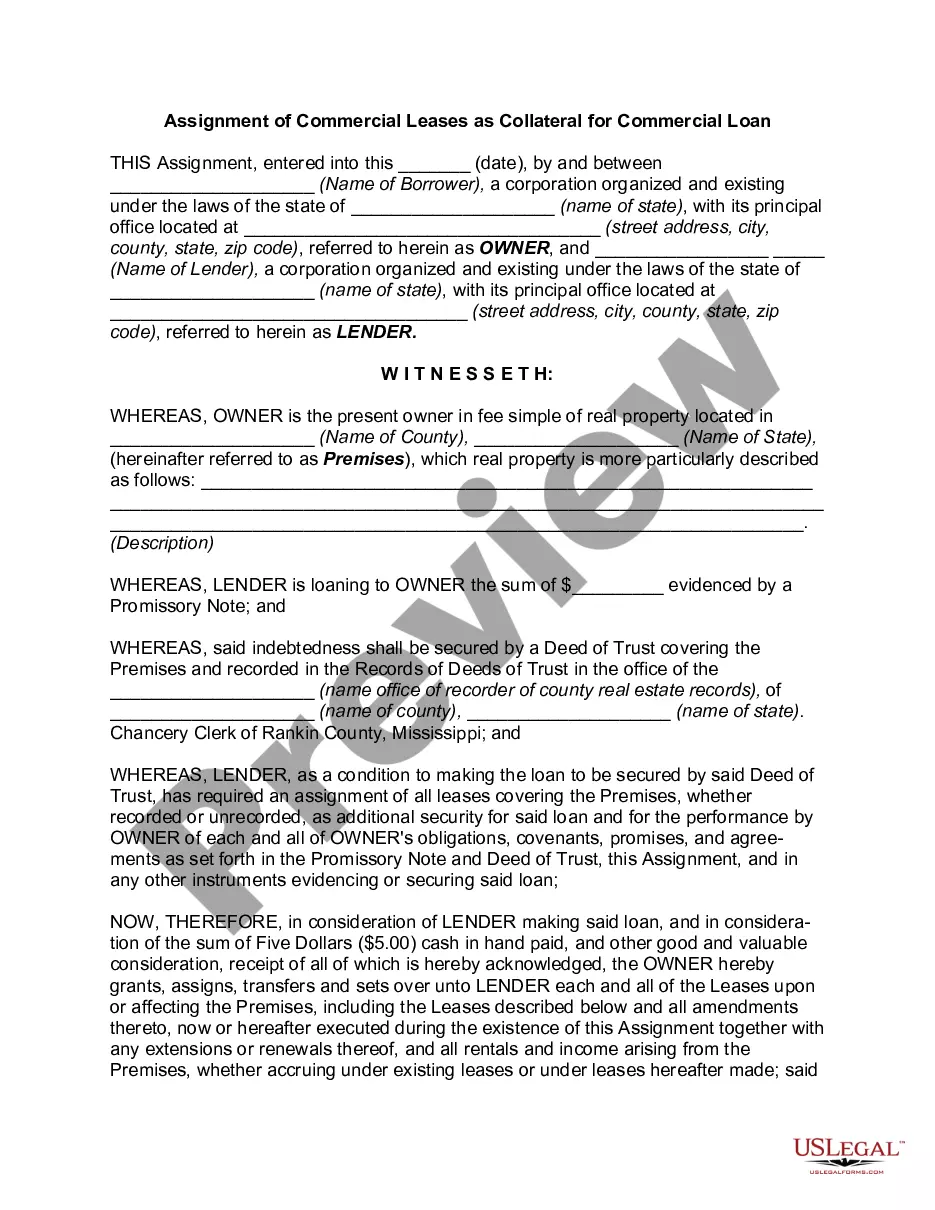
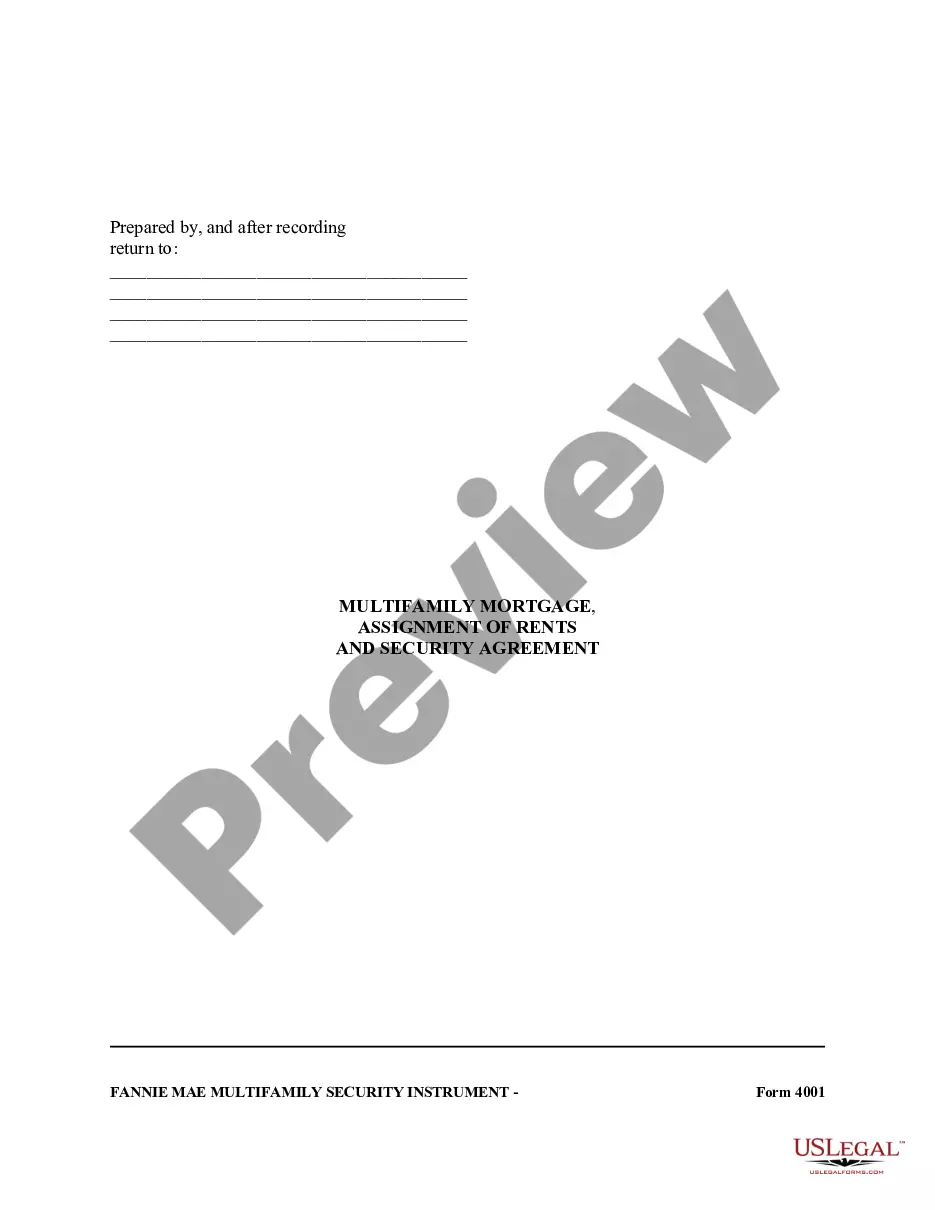
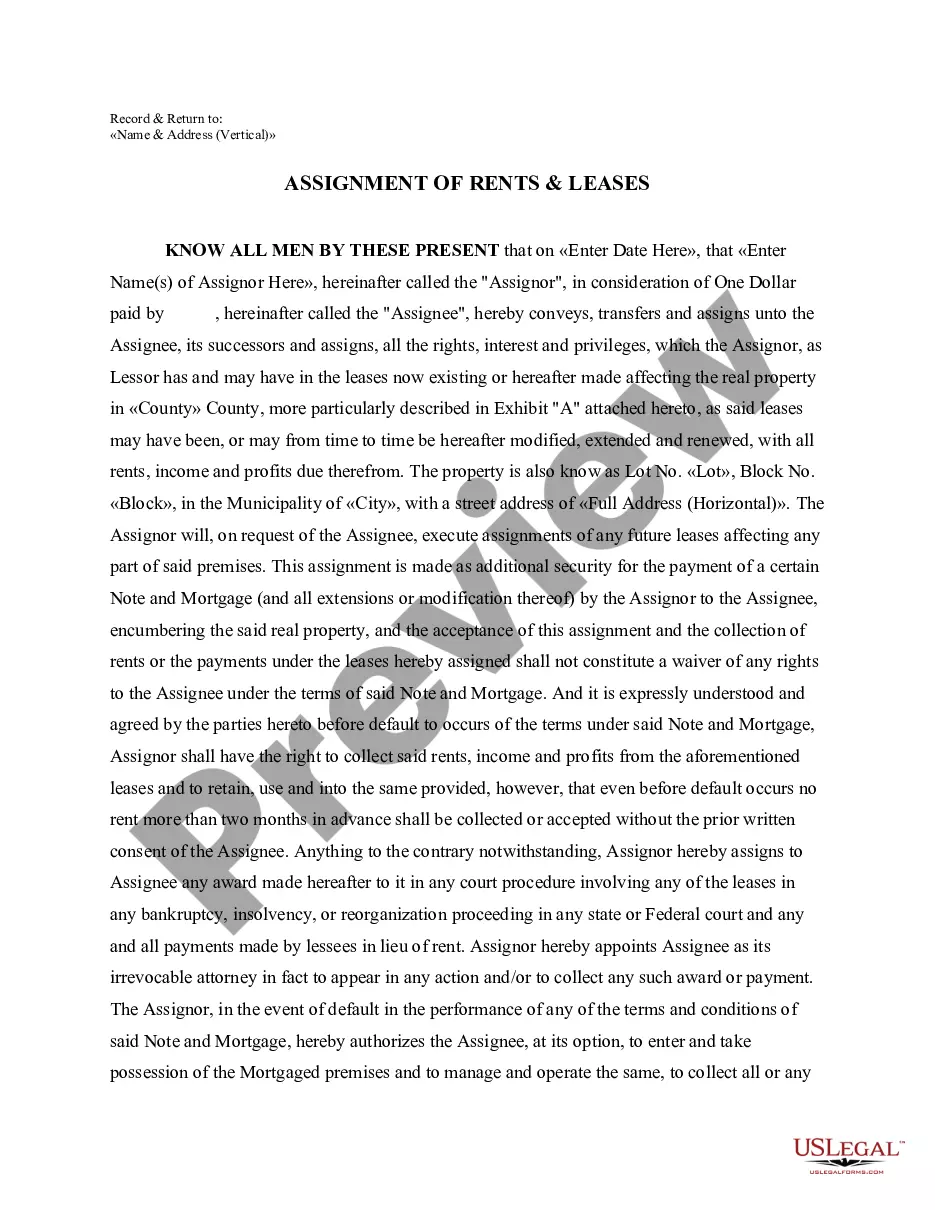
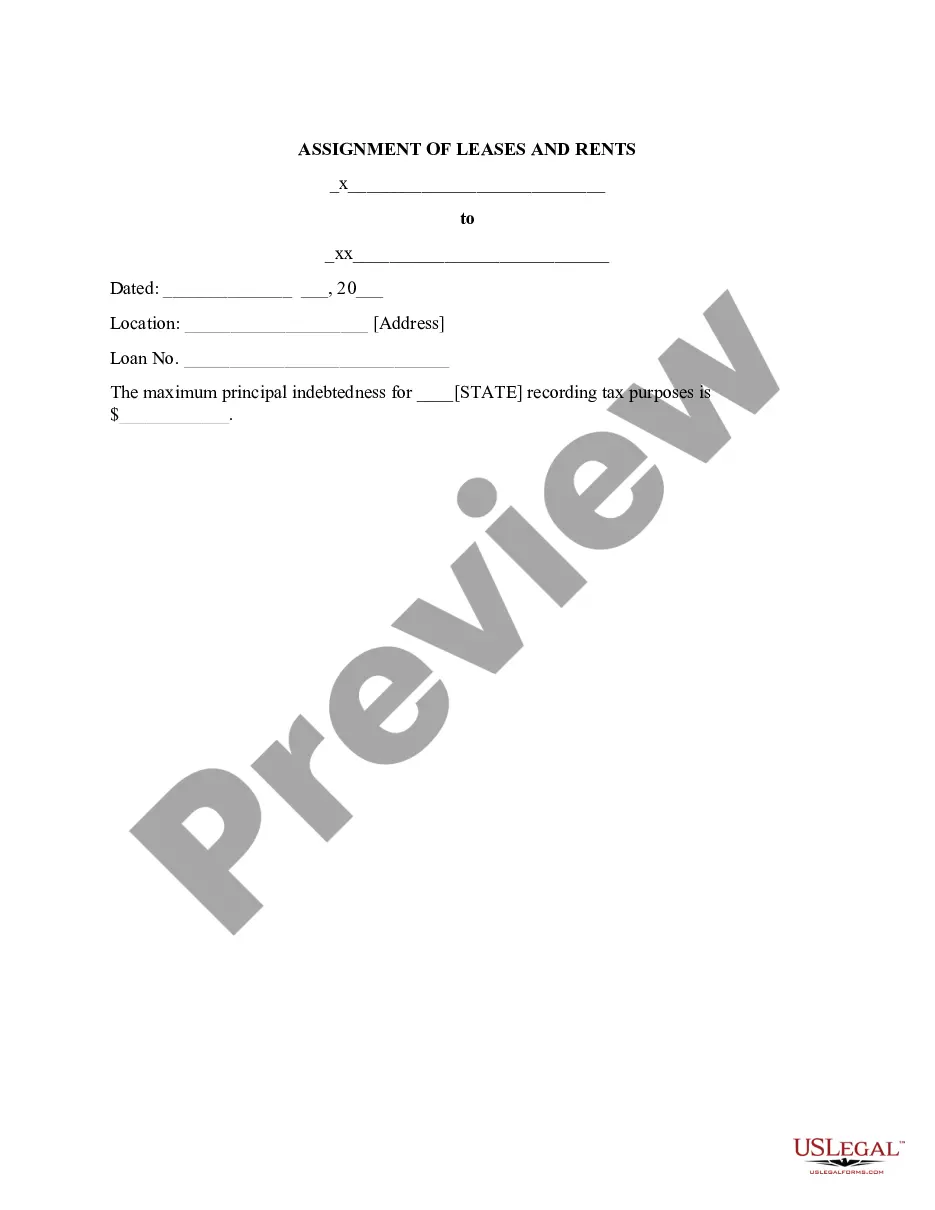
The Assignment of Leases and Rents as Collateral Security for a Commercial Loan is a legal document that allows a borrower (Assignor) to assign all present and future leases and rents associated with their property to a lender (Assignee) as collateral for a loan. This form functions as an absolute assignment rather than a simple security interest, uniquely providing the lender with additional security in case the borrower encounters financial difficulties such as bankruptcy. It is distinct from other security agreements in that it specifically focuses on the rights to collect rents from tenants of the property.
Key components of this form
- The parties to the assignment, including the Assignor and Lender.
- A description of the property being secured.
- Details regarding the loan amount and the associated Promissory Note.
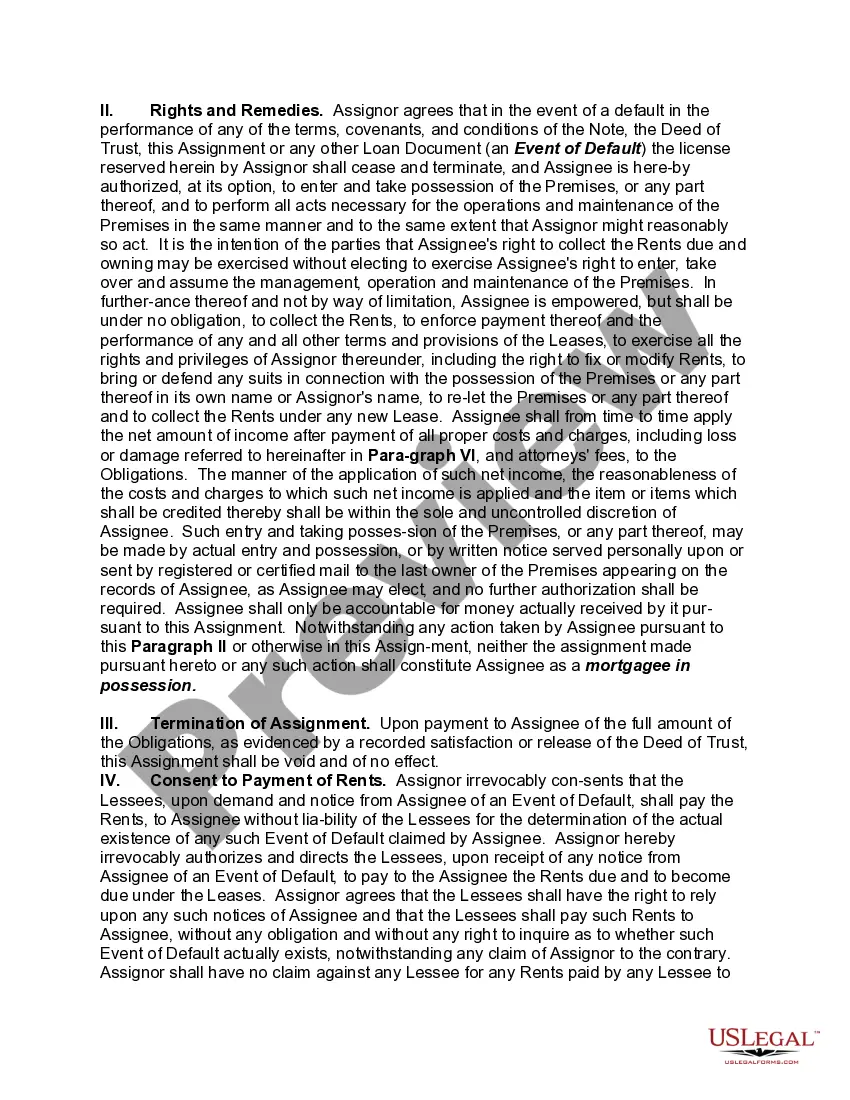
- Rights to collect rents and the circumstances under which these rights can be exercised.
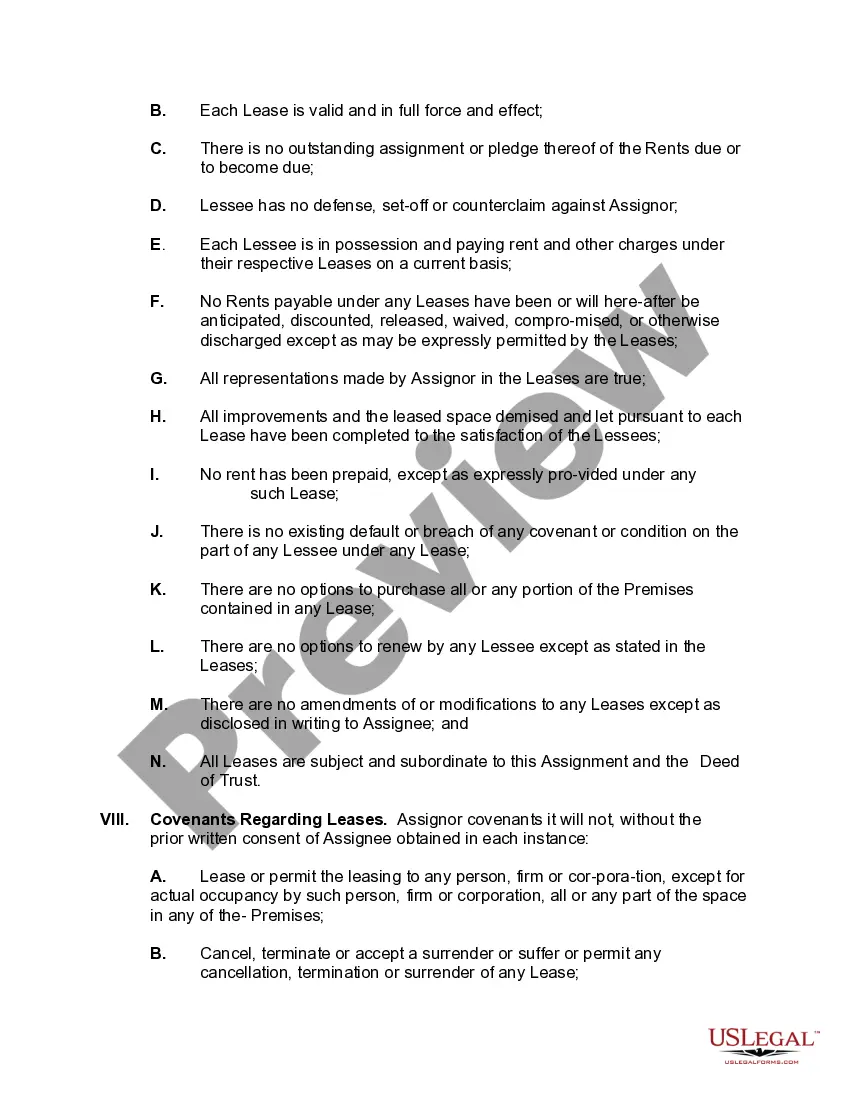
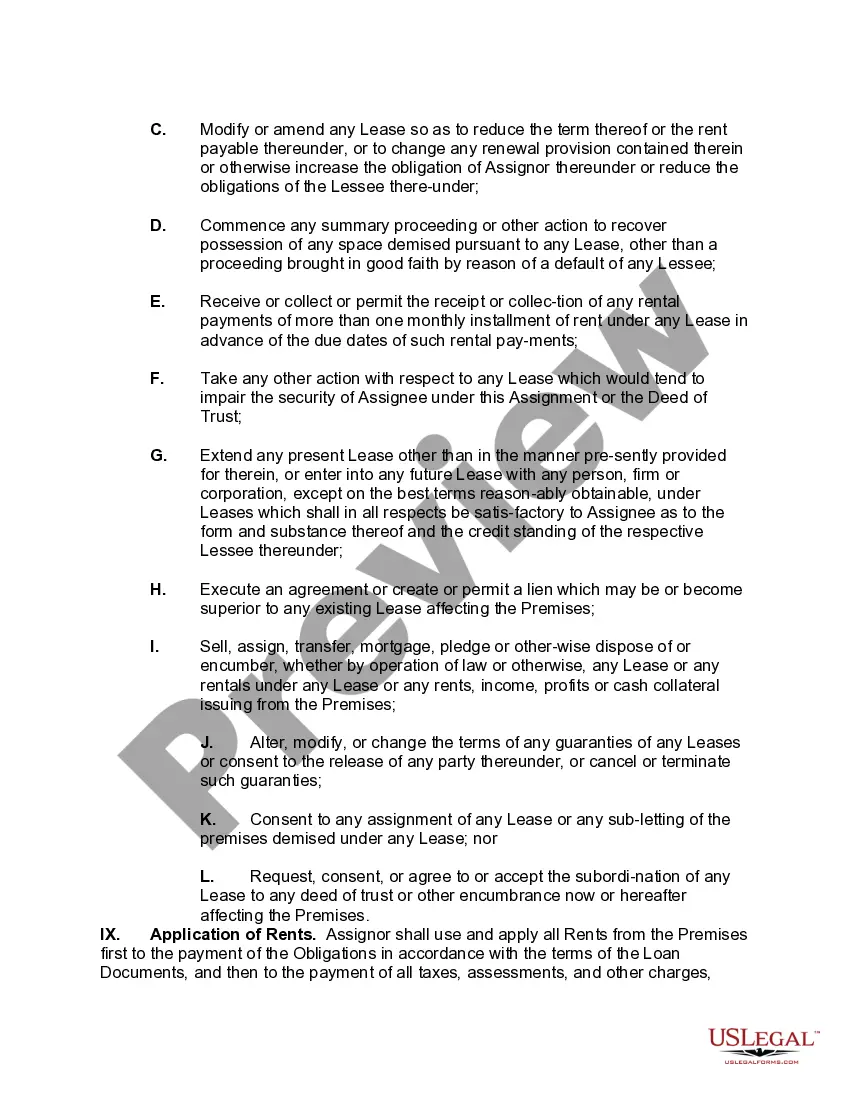
- Covenants and representations made by the Assignor regarding the leases and the leased property.
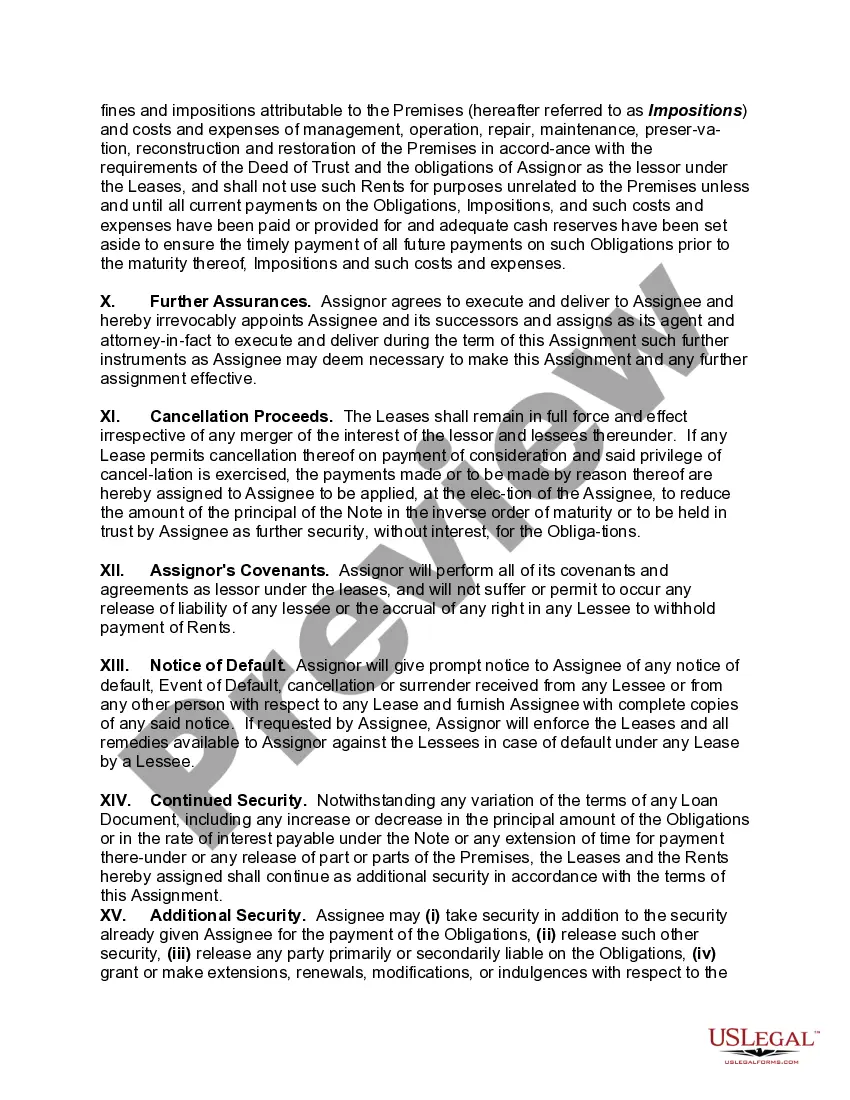
- Instructions on what happens in the event of a default on the loan.
Situations where this form applies
This form is typically used when a borrower is obtaining a commercial loan and the lender requires additional security beyond a traditional deed of trust. It may be needed when the borrower owns rental properties and wants to ensure that rental income can be used to secure the loan. This form can also serve to protect the lender's interests if the borrower defaults or files for bankruptcy, allowing the lender to collect rents directly.
Who can use this document
- Borrowers seeking a commercial loan who own rental properties.
- Lenders who require additional collateral to secure their loans.
- Property owners looking to formalize the assignment of leases and rents as security for financing.
Steps to complete this form
- Identify the parties involved: the Assignor (borrower) and the Assignee (lender).
- Provide the date of the agreement and the property details, including its legal description.
- Enter the loan amount and the reference to the Promissory Note.
- Clearly specify all existing and future leases associated with the property.
- Ensure both parties sign the document and, if required, have it notarized to make it legally binding.
Notarization requirements for this form
This form does not typically require notarization unless specified by local law. It is advisable to check with local legal requirements to ensure compliance. If notarization is needed, US Legal Forms offers integrated online notarization services for convenience.
Get your form ready online
Our built-in tools help you complete, sign, share, and store your documents in one place.
Make edits, fill in missing information, and update formatting in US Legal Forms—just like you would in MS Word.
Download a copy, print it, send it by email, or mail it via USPS—whatever works best for your next step.
Sign and collect signatures with our SignNow integration. Send to multiple recipients, set reminders, and more. Go Premium to unlock E-Sign.
If this form requires notarization, complete it online through a secure video call—no need to meet a notary in person or wait for an appointment.
We protect your documents and personal data by following strict security and privacy standards.

Make edits, fill in missing information, and update formatting in US Legal Forms—just like you would in MS Word.

Download a copy, print it, send it by email, or mail it via USPS—whatever works best for your next step.

Sign and collect signatures with our SignNow integration. Send to multiple recipients, set reminders, and more. Go Premium to unlock E-Sign.

If this form requires notarization, complete it online through a secure video call—no need to meet a notary in person or wait for an appointment.

We protect your documents and personal data by following strict security and privacy standards.
Common mistakes to avoid
- Failing to provide a complete and accurate legal description of the property.
- Not identifying all necessary parties involved in the transaction.
- Omitting key details regarding the obligations of the Assignor.
- Not obtaining the required signatures or notarization, if applicable.
- Overlooking local regulations that may impact the validity of the assignment.
Why complete this form online
- Convenience of downloading and completing the form at any time.
- Ease of editing the document to fit your specific situation.
- Access to templates drafted by licensed attorneys, ensuring legal compliance.
- The ability to securely store and access forms electronically.
- Rapid access to legal documents without the need for in-person consultations.
Looking for another form?
Form popularity
FAQ
When you buy a rental property, you'll sign an equivalent document called a "deed of trust with assignment of rents." This deed puts teeth in the lender's security interest by giving it the right to collect rents directly from the tenant if you default on the mortgage payments.
Definition of "Assignment of Rent" An Assignment of Rent is a document needed when a mortgaged property is being rented. It enables the lender to collect the rent if the mortgage is defaulted upon.
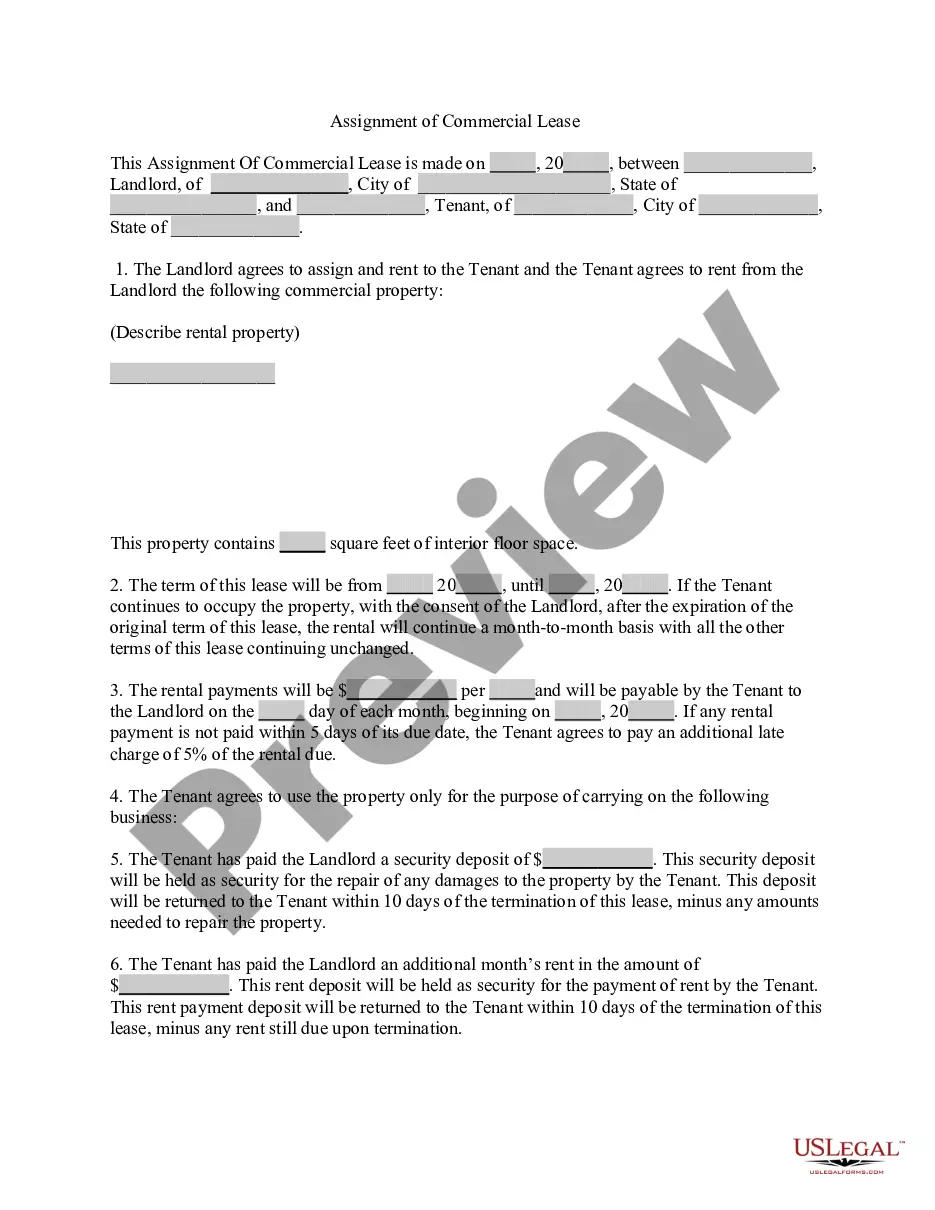
If the lease is silent on the point, an assignment of part will be permitted.
Sometimes called Assignment of Leases, Rents and Profits or simply Assignment of Rents, this is a document attached to a mortgage loan agreement which entitles the lender to any income (from leases, rents, etc.) derived from the property once the owner defaults on the loan.
Sometimes called Assignment of Leases, Rents and Profits or simply Assignment of Rents, this is a document attached to a mortgage loan agreement which entitles the lender to any income (from leases, rents, etc.) derived from the property once the owner defaults on the loan.
The difference between assignment and transfer is that assign means it's legal to transfer property or a legal right from one person to another, while transfer means it's legal to arrange for something to be controlled by or officially belong to another person.
A leasehold mortgage is possible when a lien is placed on the tenant's interest with the lease, and it is used as collateral for the loan the individual obtained.Generally, this occurs so that the leaseholder benefits through financing a construction or to renovate the property.
COLLATERAL ASSIGNMENTS. OF LEASE. Separate from a traditional as- signment of lease is a collateral assignment and assumption of lease whereby a landlord and ten- ant agree that a certain third party has a security interest in the lease pursuant to a separate agreement.