Mentee Training Procedure Information Form for Mentorship Program
What this document covers
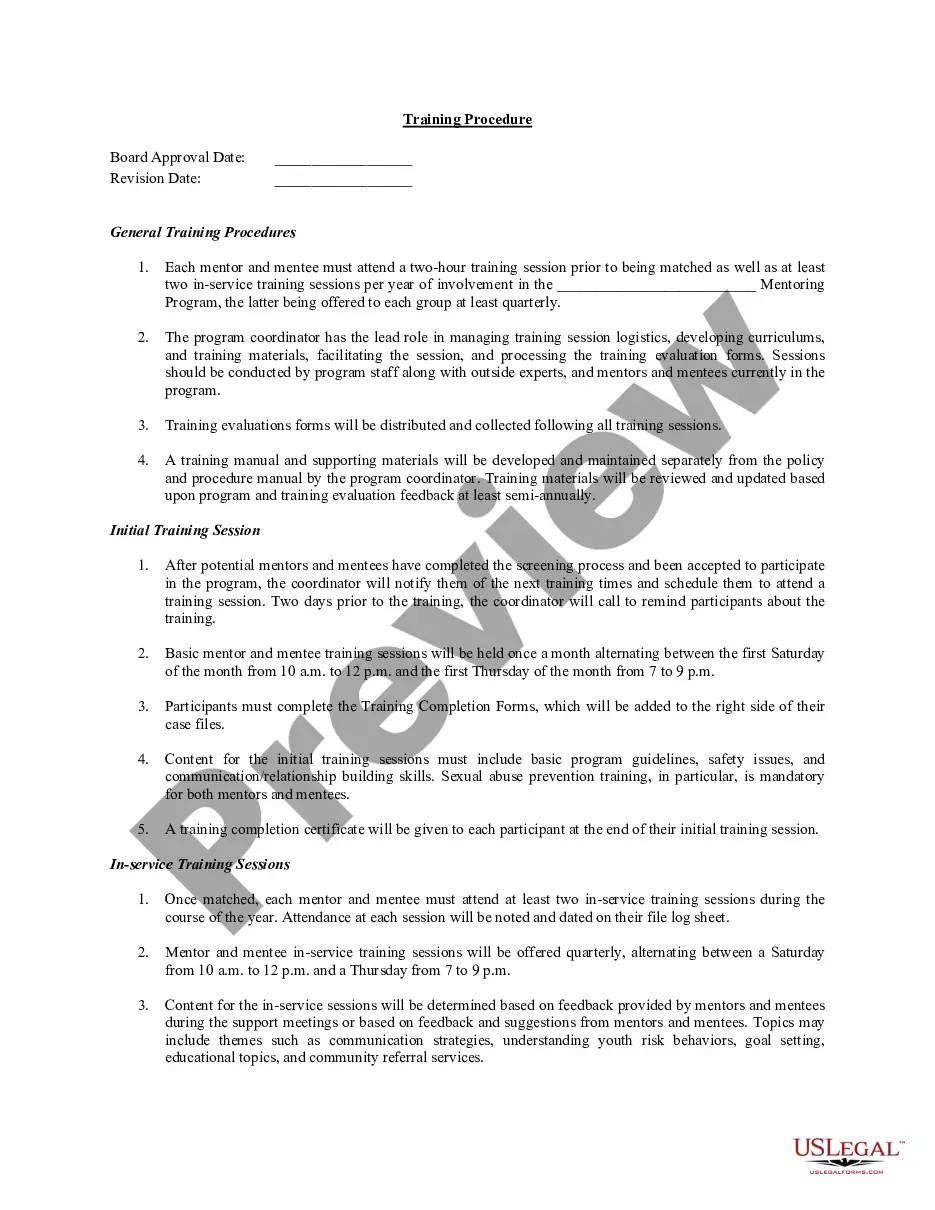
The Mentee Training Procedure Information Form is a template designed for mentorship programs. It outlines essential training procedures and requirements for mentees and mentors. This form differs from other mentorship documents by focusing specifically on the training aspect, ensuring participants understand their roles and responsibilities within the program.
Form components explained
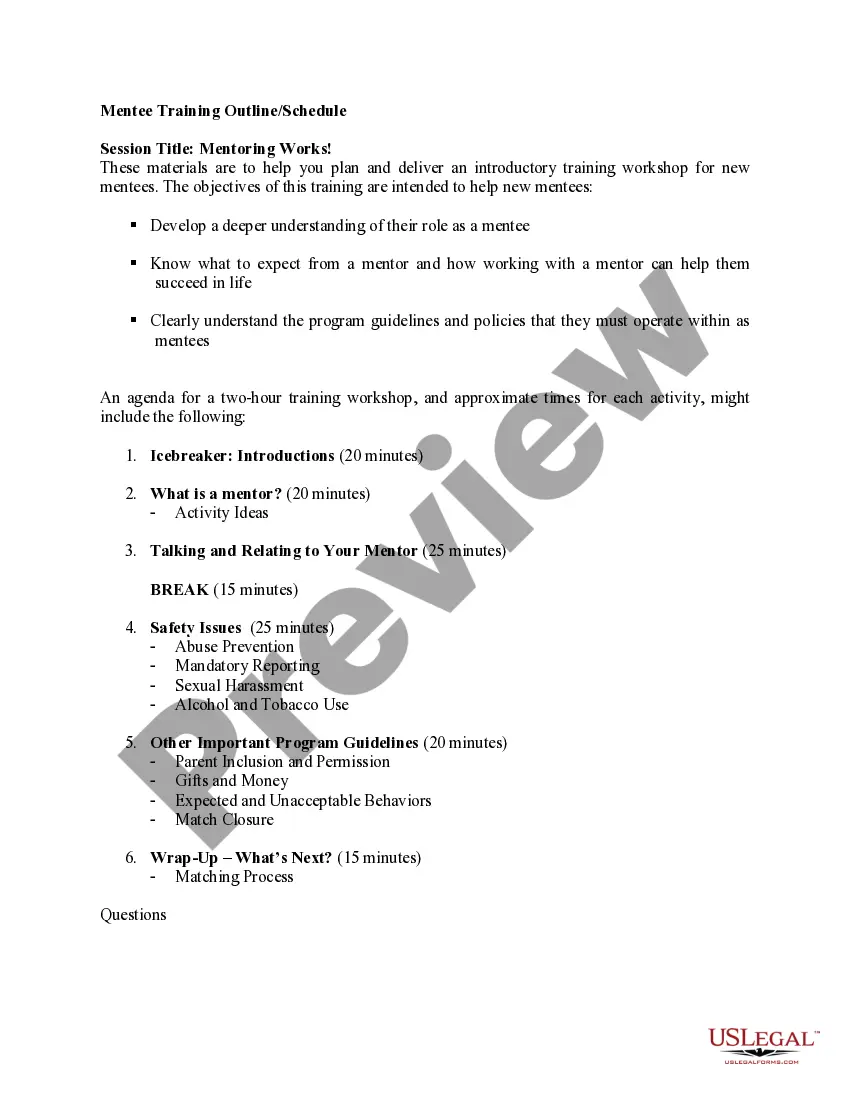
- Training procedure overview, including attendance requirements for initial and in-service sessions.
- Sections for board approval and revision dates.
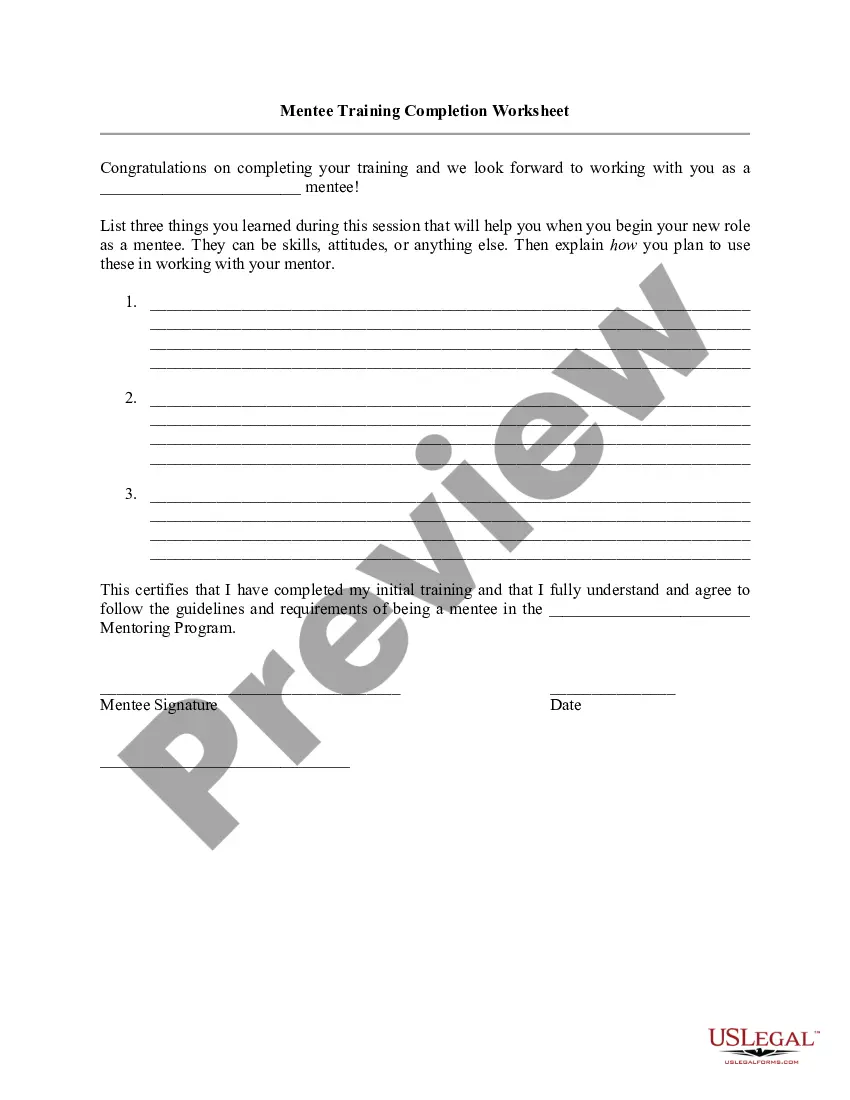
- Evaluation process to gather feedback after training sessions.
- Details on mandatory training topics such as safety and communication skills.
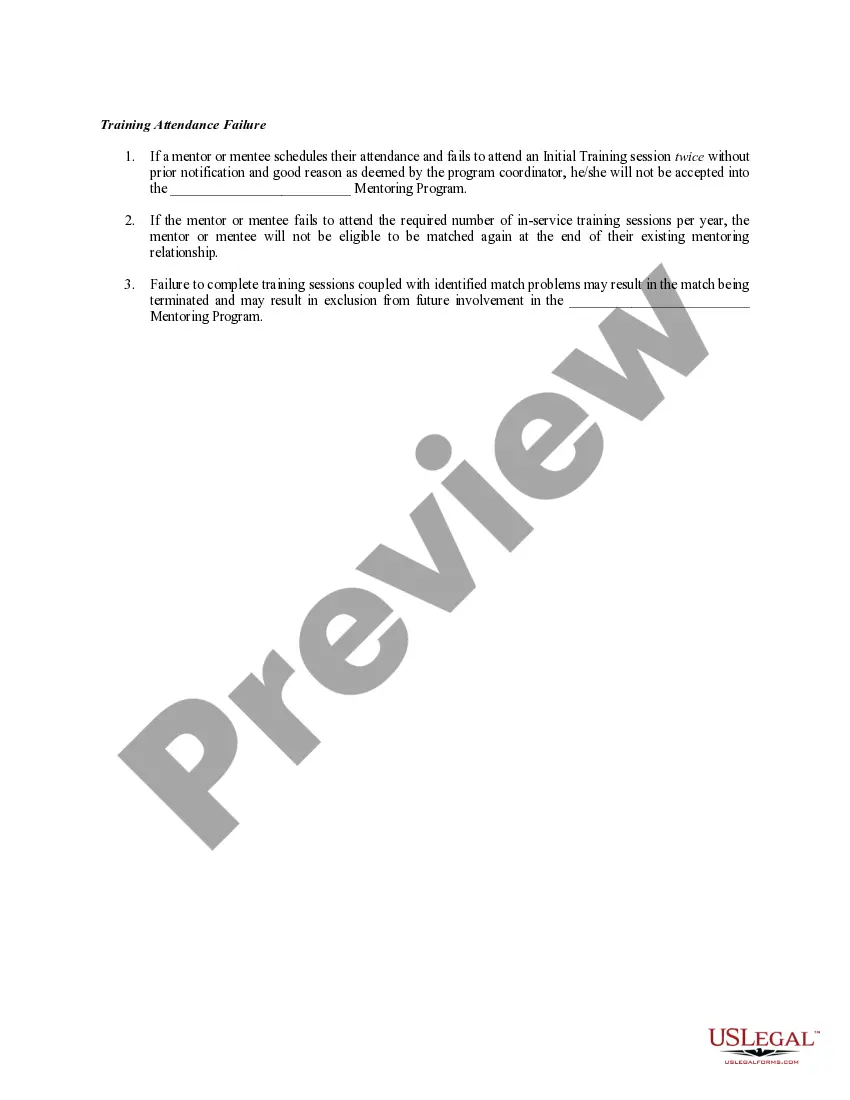
- Consequences for failing to attend scheduled training sessions.
Common use cases
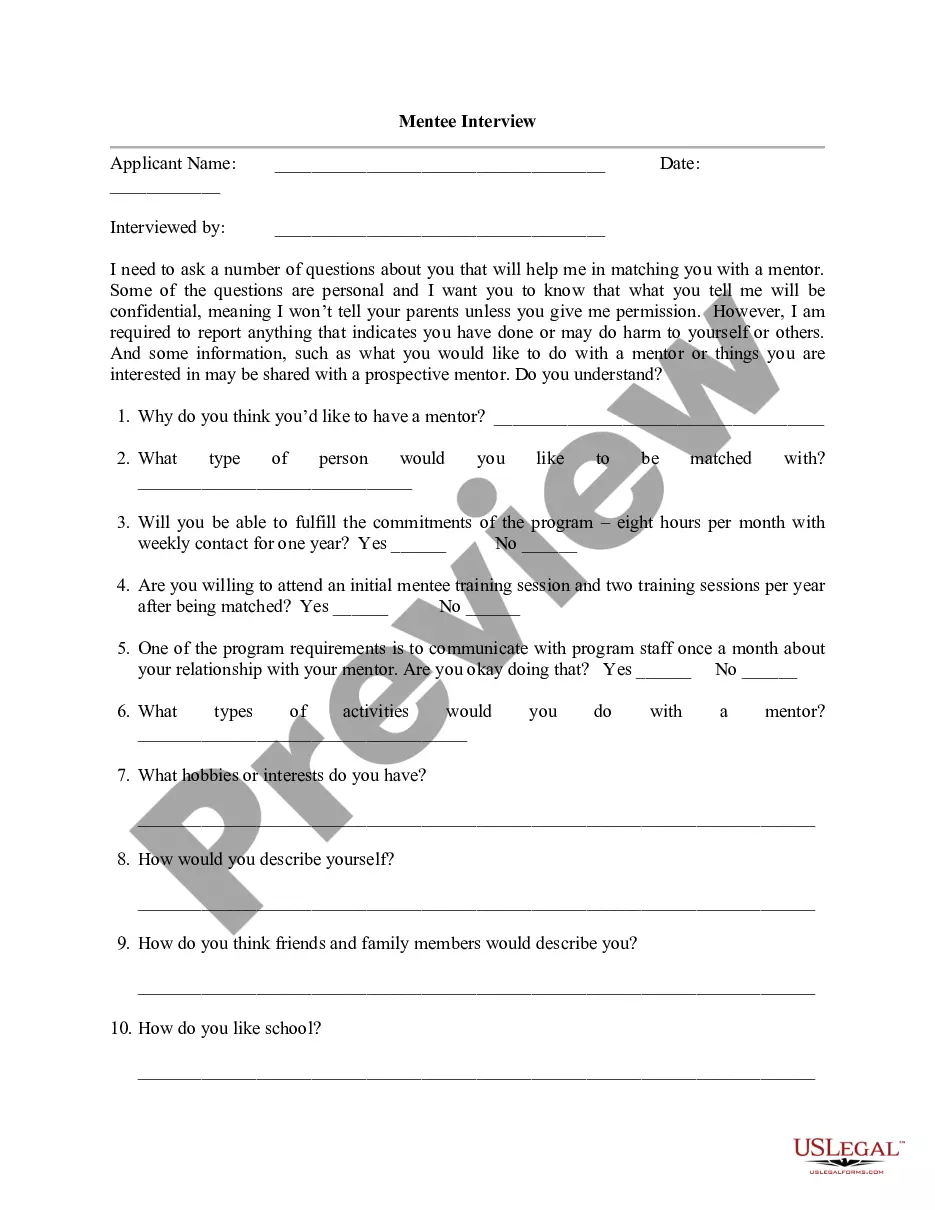
This form is needed when organizing training for participants in a mentorship program. It is used prior to the initial matching of mentors and mentees and throughout their ongoing relationship to ensure that all parties are trained adequately. This guarantees adherence to the program's standards and policies.
Who this form is for
- Program coordinators managing mentorship training.
- Mentors and mentees participating in mentorship programs.
- Organization members involved in developing or overseeing training procedures.
Instructions for completing this form
- Fill in the board approval and revision dates at the top of the form.
- Outline the training procedures, including scheduled sessions and required topics.
- Ensure that mentor and mentee attendance requirements are clearly noted.
- Record the processes for managing training evaluations effectively.
- Include any specific instructions regarding the consequences of missed training sessions.
Is notarization required?
This form does not typically require notarization unless specified by local law.
Get your form ready online
Our built-in tools help you complete, sign, share, and store your documents in one place.
Make edits, fill in missing information, and update formatting in US Legal Forms—just like you would in MS Word.
Download a copy, print it, send it by email, or mail it via USPS—whatever works best for your next step.
Sign and collect signatures with our SignNow integration. Send to multiple recipients, set reminders, and more. Go Premium to unlock E-Sign.
If this form requires notarization, complete it online through a secure video call—no need to meet a notary in person or wait for an appointment.
We protect your documents and personal data by following strict security and privacy standards.

Make edits, fill in missing information, and update formatting in US Legal Forms—just like you would in MS Word.

Download a copy, print it, send it by email, or mail it via USPS—whatever works best for your next step.

Sign and collect signatures with our SignNow integration. Send to multiple recipients, set reminders, and more. Go Premium to unlock E-Sign.

If this form requires notarization, complete it online through a secure video call—no need to meet a notary in person or wait for an appointment.

We protect your documents and personal data by following strict security and privacy standards.
Common mistakes to avoid
- Failing to specify the scheduled training session dates.
- Neglecting to outline the consequences of missed training.
- Not updating the form after annual evaluations or program changes.
Why use this form online
- Convenient access to download and edit the form as needed.
- Ensures compliance with current mentorship standards and policies.
- Provides a reliable way to manage training records and participation efficiently.
Summary of main points
- The form is essential for structured training in mentorship programs.
- Clear guidelines are provided for mandatory training attendance.
- Failure to complete training can impact future participation in the mentorship program.
Looking for another form?




Form popularity
FAQ
When embarking on a mentoring relationship, keep these four elements in mind: Build trust. First and foremost, there must be trust between the mentee and mentor.Establish goals and share lessons learned.Take action.Celebrate successes.
Ideally they'll be adept at the 'seven Cs' of mentoring: they should be able to coach the mentee; be a confidante; provide career advice; act as a conduit to others, to increase the mentee's visibility; serve as a counsellor; be a critical friend and provide the mentee with choice.
Here are five key steps for building a mentorship program in your workplace. Define the program's goal. Outline the mentoring process in the workplace. Select program participants. Match mentors and mentees. Provide mentorship training.
structured mentoring program should provide clear guidelines on how it operates, including the balance of leadership, roles, career choice process and expectations of both mentors and mentees. This will help mentees to set achievable goals and focus on areas where they need to improve.
Kram (1985a) theorized that mentors may provide four psychosocial functions: help- ing the protege develop a sense of professional self (accep- tance and confirmation), providing problem-solving and a sounding board (counseling), giving respect and support (friendship), and providing identification and role modeling (
The process of course requires listening, questioning, constructive challenge, guidance and direction. I found that applying the 5Cs, gave a structure and focus to the mentees and this added curiosity and passion. Anjana Nathwani is a Business Mentor to Women Leaders, Business Owners and aspiring Young Professionals.
Leveraging mentoring to nurture the 4Cs?conversation, connection, community, and culture?can create an increased sense of belonging in employees, thus building social capital.
How to Start a Mentoring Program in 6 Steps Step 1: Defining your purpose and goals.Step 2: Design details.Step 3: Attracting and onboarding participants.Step 4: Pairing mentors and mentees.Step 5: training participants.Step 6: Measuring the success of your program.