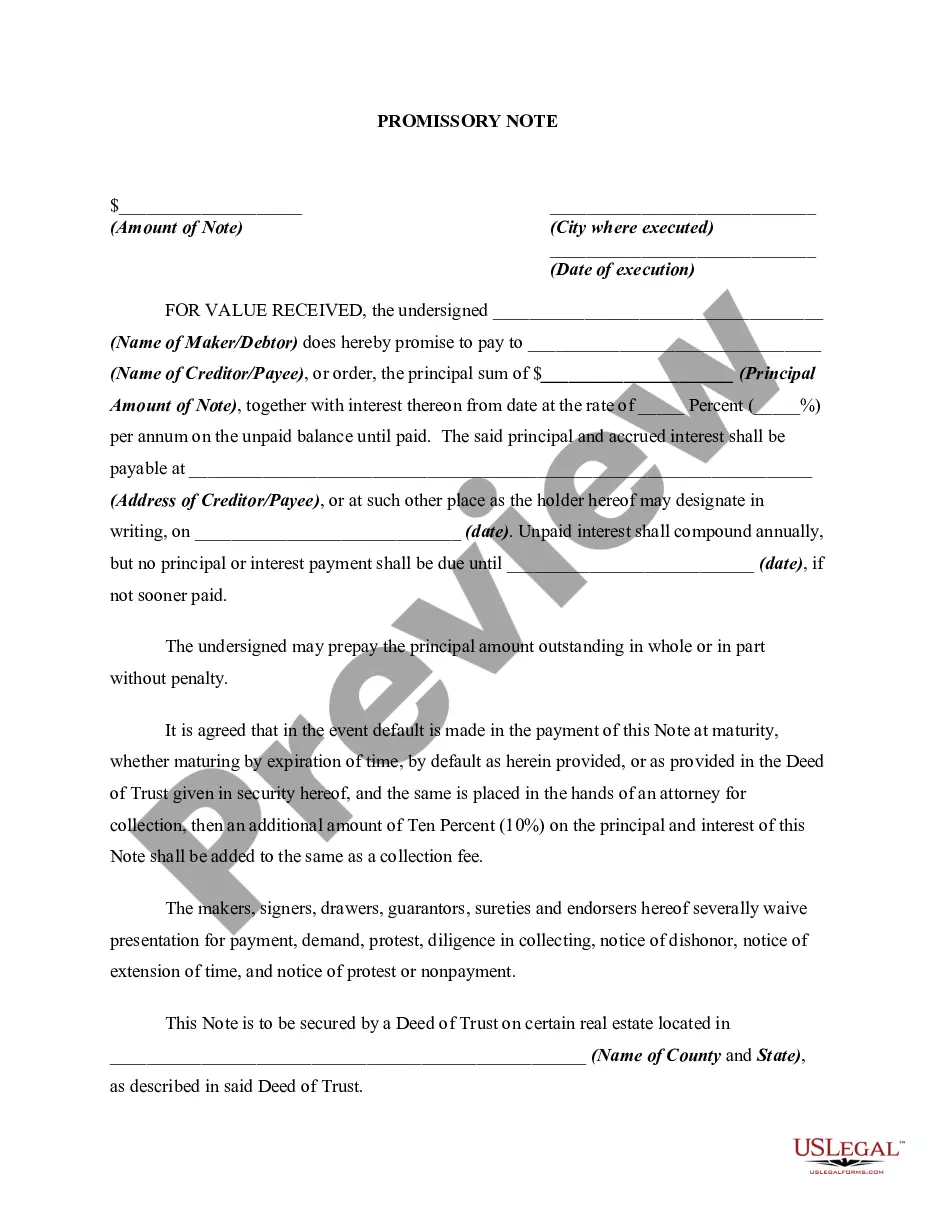
Florida Warranty Deed from Limited Partnership or LLC is the Grantor, or Grantee
What this document covers
The Warranty Deed from Limited Partnership or LLC form is a legal document that transfers property ownership from a limited partnership or limited liability company (LLC) to another party. Unlike a quitclaim deed, a warranty deed offers assurances regarding the title to the property, ensuring that it is free from claims. This type of deed is essential when formalizing ownership changes involving partnerships or LLCs, providing a clear record of the transaction.
Form components explained
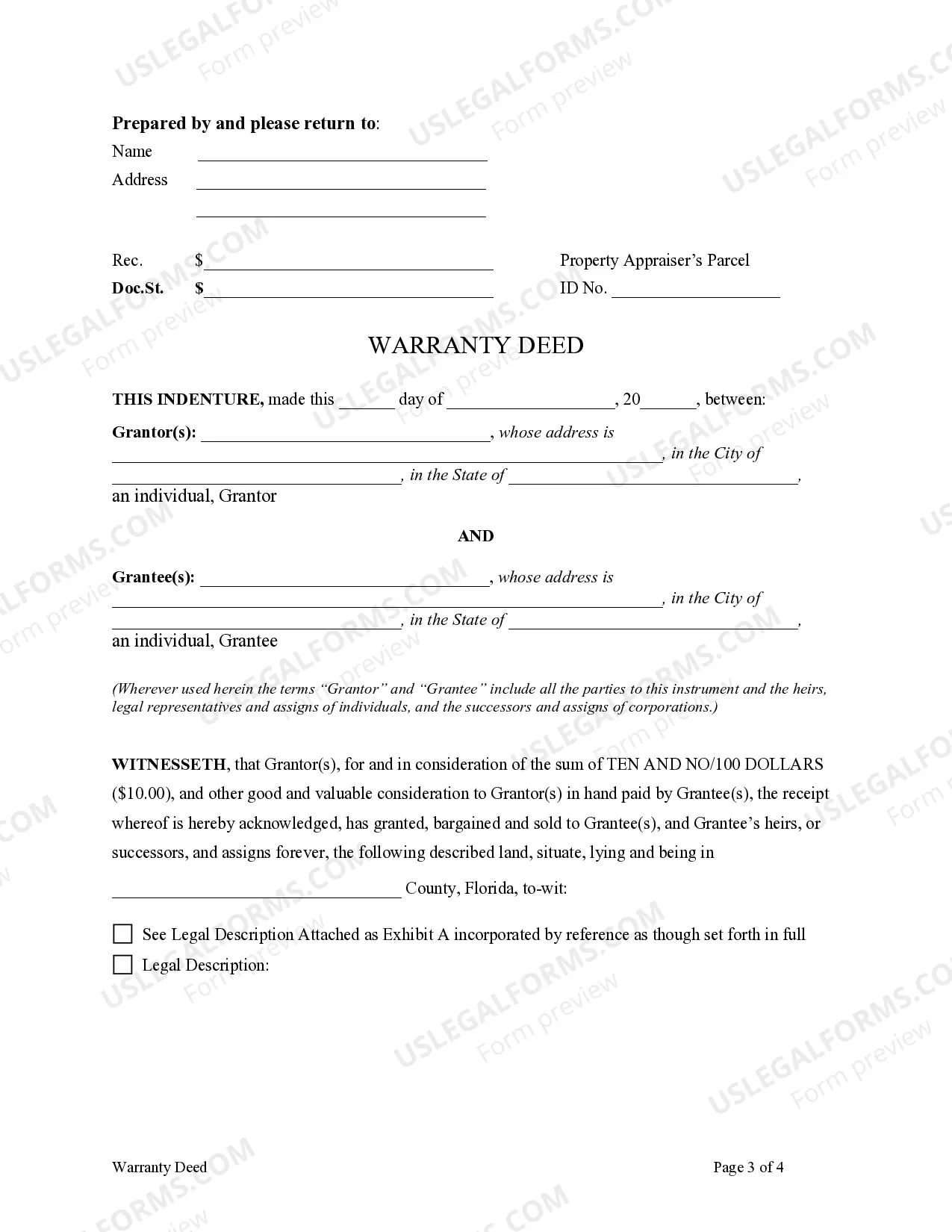
- Parties involved: Names and details of the grantor (transferor) and grantee (transferee).
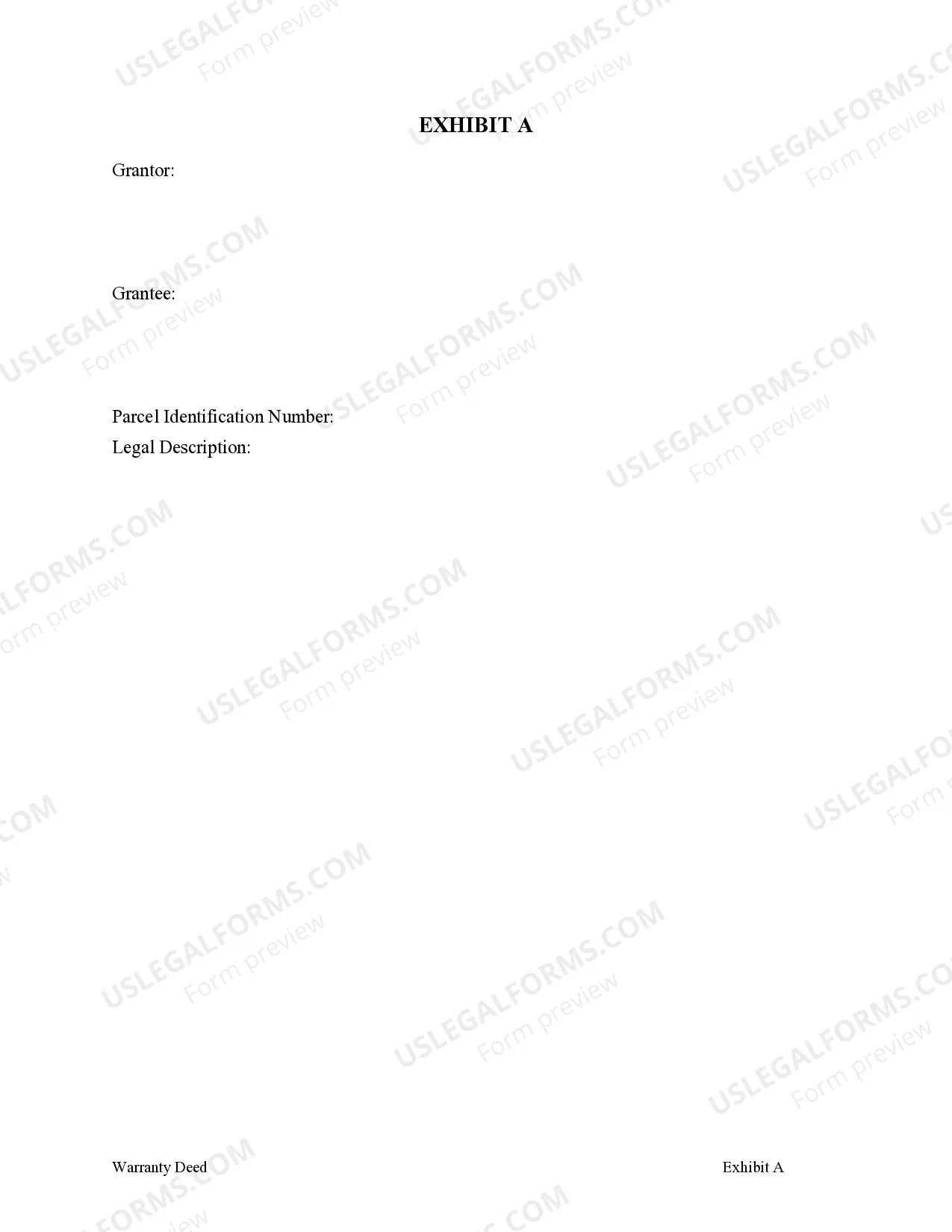
- Property description: Detailed information about the property being transferred.
- Consideration: The amount paid for the property or the value exchanged.
- Warranties: Assurances given by the grantor regarding the title.
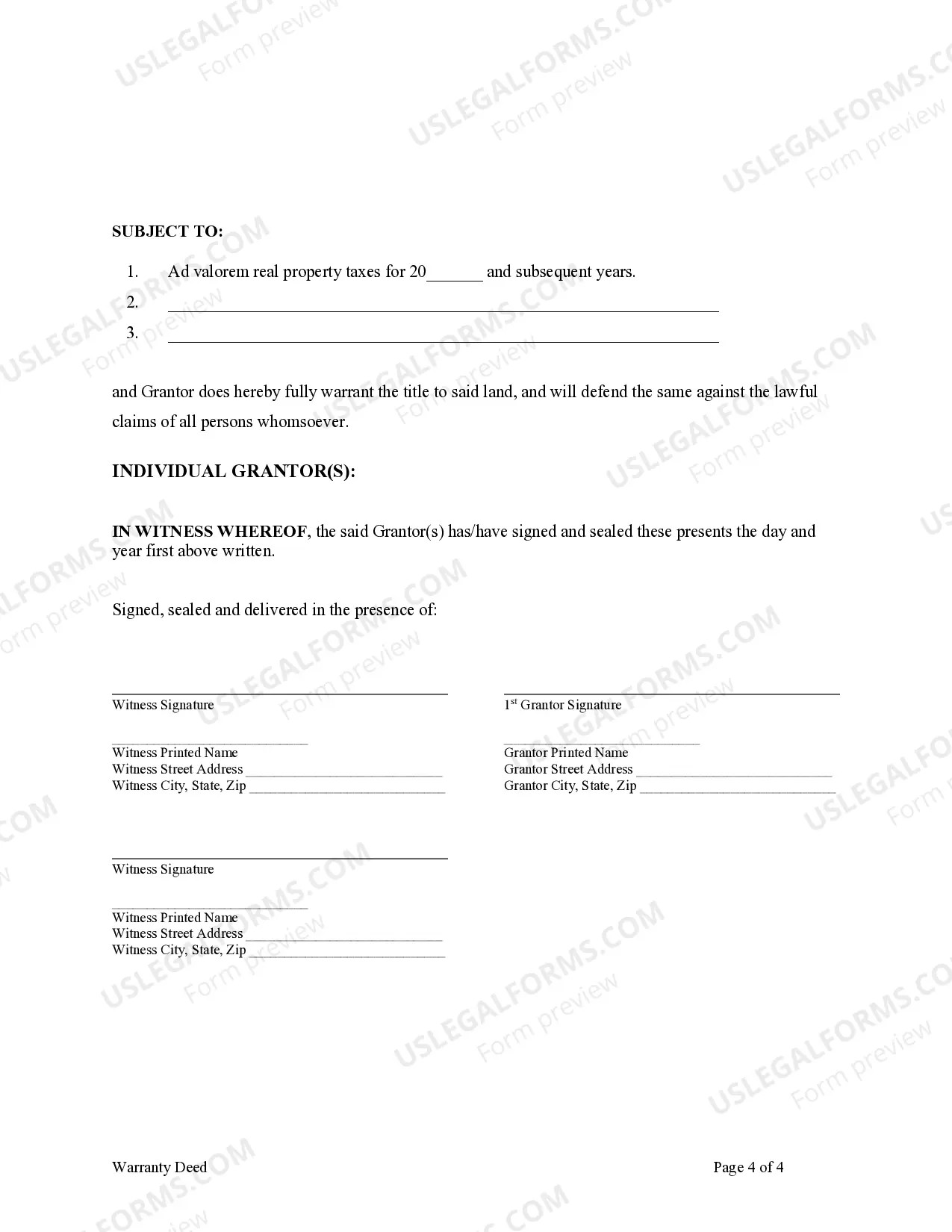
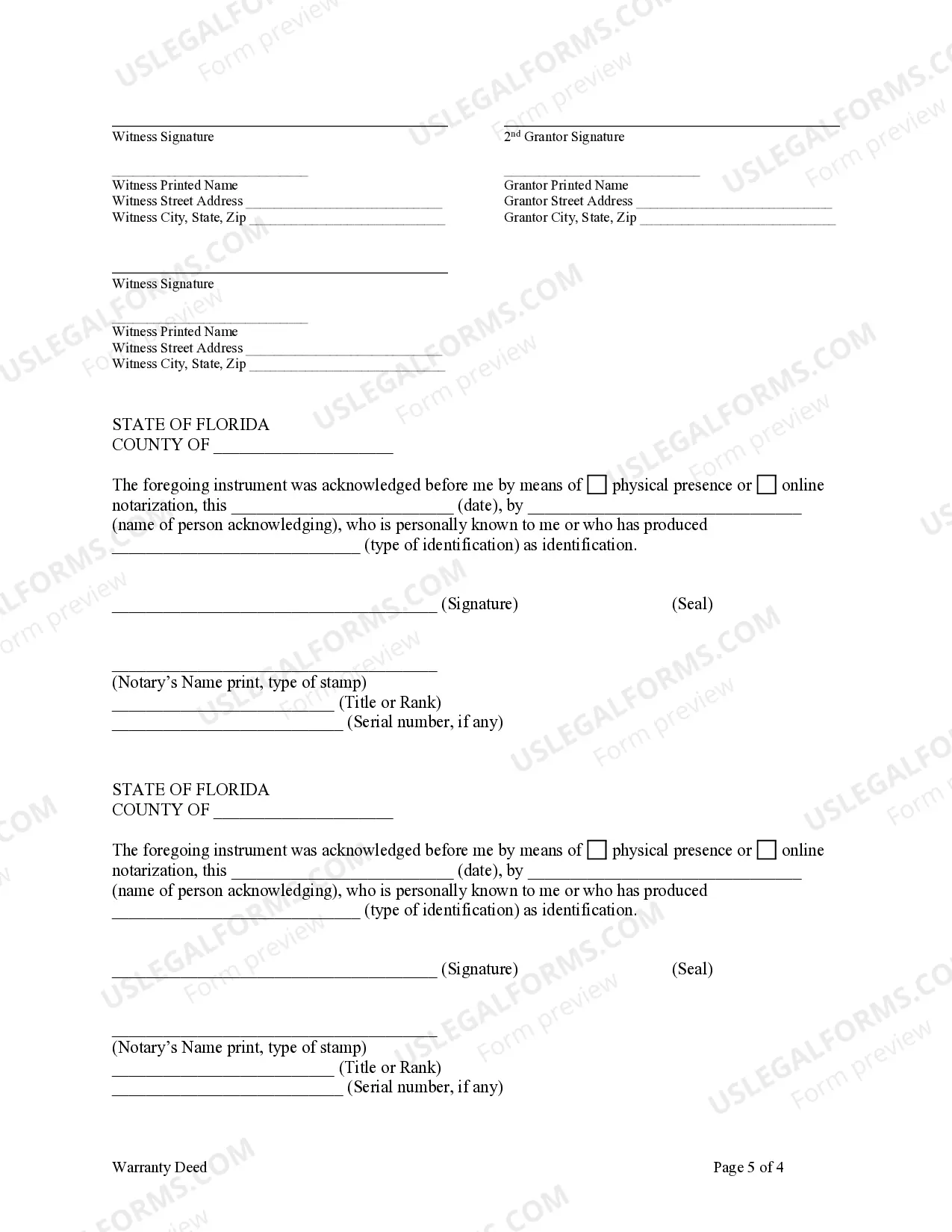
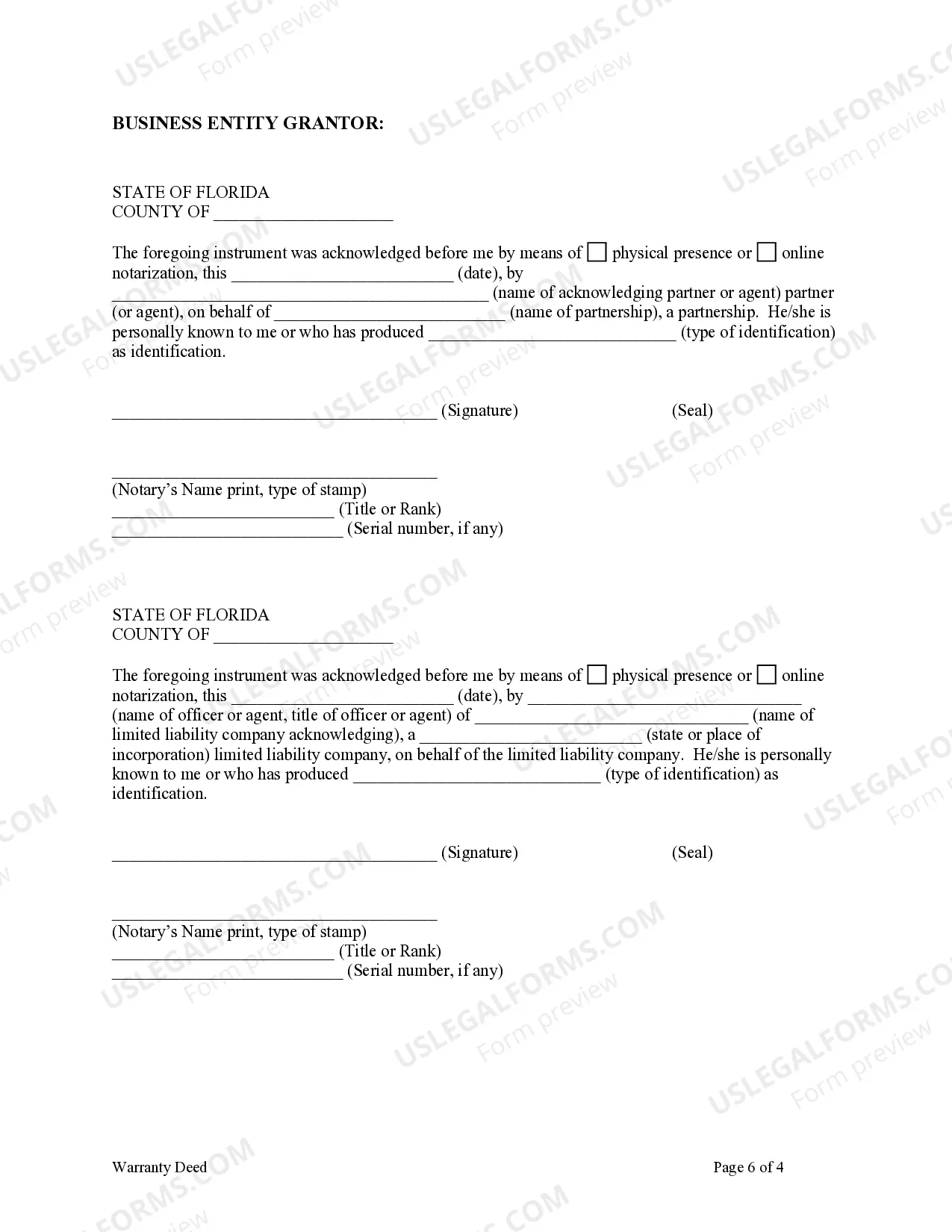
- Signatures: Required signatures of the authorized representatives of the LLC or partnership.




Situations where this form applies
This form should be used when a limited partnership or LLC wishes to transfer ownership of real estate to another individual, partnership, or LLC. Scenarios include selling property, transferring assets during restructuring, or gifting property to another entity. It establishes a legally binding record of the ownership transfer and protects the interests of the parties involved.
Who can use this document
The following parties may benefit from using this form:
- Limited partnerships seeking to transfer property ownership.
- LLCs involved in real estate transactions.
- Individuals acting on behalf of a partnership or LLC.
- Legal professionals representing partnerships or LLCs in property transfers.
Steps to complete this form
- Identify the parties: Fill in the names and roles of the grantor and grantee.
- Specify the property: Provide a clear description of the property being transferred.
- Enter the consideration: State the amount paid or details of the property value exchanged.
- Include warranties: Indicate any warranties being made by the grantor concerning the title.
- Sign the document: Ensure all necessary parties sign the deed as required by law.
Does this form need to be notarized?
Notarization is required for this form to take effect. Our online notarization service, powered by Notarize, lets you verify and sign documents remotely through an encrypted video session, available 24/7.
Get your form ready online
Our built-in tools help you complete, sign, share, and store your documents in one place.
Make edits, fill in missing information, and update formatting in US Legal Forms—just like you would in MS Word.
Download a copy, print it, send it by email, or mail it via USPS—whatever works best for your next step.
Sign and collect signatures with our SignNow integration. Send to multiple recipients, set reminders, and more. Go Premium to unlock E-Sign.
If this form requires notarization, complete it online through a secure video call—no need to meet a notary in person or wait for an appointment.
We protect your documents and personal data by following strict security and privacy standards.

Make edits, fill in missing information, and update formatting in US Legal Forms—just like you would in MS Word.

Download a copy, print it, send it by email, or mail it via USPS—whatever works best for your next step.

Sign and collect signatures with our SignNow integration. Send to multiple recipients, set reminders, and more. Go Premium to unlock E-Sign.

If this form requires notarization, complete it online through a secure video call—no need to meet a notary in person or wait for an appointment.

We protect your documents and personal data by following strict security and privacy standards.
Common mistakes
- Failing to include a complete property description.
- Not signing the form in the presence of a witness or notary, if required.
- Omitting the consideration amount or failing to specify the transaction terms.
- Using incorrect names for the grantor or grantee.
Benefits of completing this form online
- Convenience: Easily downloadable and can be completed on your computer.
- Editability: Input information directly into the form fields for clarity.
- Time-saving: Reduces the need for in-person meetings with legal professionals.
- Reliability: Access to forms prepared by licensed attorneys ensures legal compliance.
Looking for another form?
Form popularity
FAQ
The grantor on a quit claim deed is the individual or entity that relinquishes their interest in the property without making any guarantees about the title. This means that they transfer whatever rights they have, but do not assure the grantee of clear ownership. If you're considering using a quit claim deed, it's essential to understand these nuances, especially in context with the Florida Warranty Deed from Limited Partnership or LLC.
While the grantor is often the owner of the property, they are not necessarily the same in every situation. The grantor is the individual or entity transferring ownership through a warranty deed, whereas the owner may refer to anyone who holds legal title to the property at any given time. Clarifying this difference can help individuals understand their rights during a transaction involving a Florida Warranty Deed from Limited Partnership or LLC.
In most cases, the seller is the grantor on a warranty deed. This means the seller is the one transferring ownership of the property to the buyer, who acts as the grantee. Recognizing this distinction helps streamline the transaction process and ensures that all parties understand their roles within a Florida Warranty Deed from Limited Partnership or LLC.
On a warranty deed, the grantor is the party offering the property, often an individual or an entity such as a limited partnership or LLC. The grantee is the recipient of that property, effectively becoming the new owner once the transfer is complete. Understanding these roles is particularly essential for anyone dealing with a Florida Warranty Deed from Limited Partnership or LLC.
The grantor is the party that transfers property ownership, while the grantee is the individual or entity that receives that ownership. In Florida, this distinction is critical when dealing with documents like the Florida Warranty Deed from Limited Partnership or LLC. Knowing who the grantor and grantee are can impact future legal and financial responsibilities.
The grantee on a warranty deed is the individual or entity that is receiving the ownership of the property. In the context of a Florida Warranty Deed from Limited Partnership or LLC, this is often either a person or an entity like an LLC that stands to benefit from the property. Their correct identification is essential for the deed to be valid.
The owner of the property is identified as the grantee once the warranty deed is executed. The grantor relinquishes ownership rights to the grantee through the warranty deed process. Therefore, when the Florida Warranty Deed from Limited Partnership or LLC is in play, the entity named as the grantee becomes the new legal owner.
To fill out a Florida warranty deed, gather the names of the grantor and grantee, and obtain a detailed description of the property. Ensure that the document is signed by the grantor, and consider having it notarized for added security. This process is crucial when the Florida Warranty Deed from Limited Partnership or LLC is the Grantor or Grantee, as it formalizes the property transfer.
In a property transfer, the grantor is the individual or entity, such as a limited partnership or LLC, that is transferring the ownership. Conversely, the grantee is the individual or entity receiving the ownership. For instance, if a limited partnership sells a property to an individual, the partnership acts as the grantor, while the buyer is the grantee.
Filling out a warranty deed form requires specific details about the property, grantor, and grantee. Start by accurately entering the names and addresses of both the grantor and grantee, along with a legal description of the property. The Florida Warranty Deed from Limited Partnership or LLC must be signed by the grantor to ensure the transfer is valid.