Estate Planning Questionnaire
Overview of this form
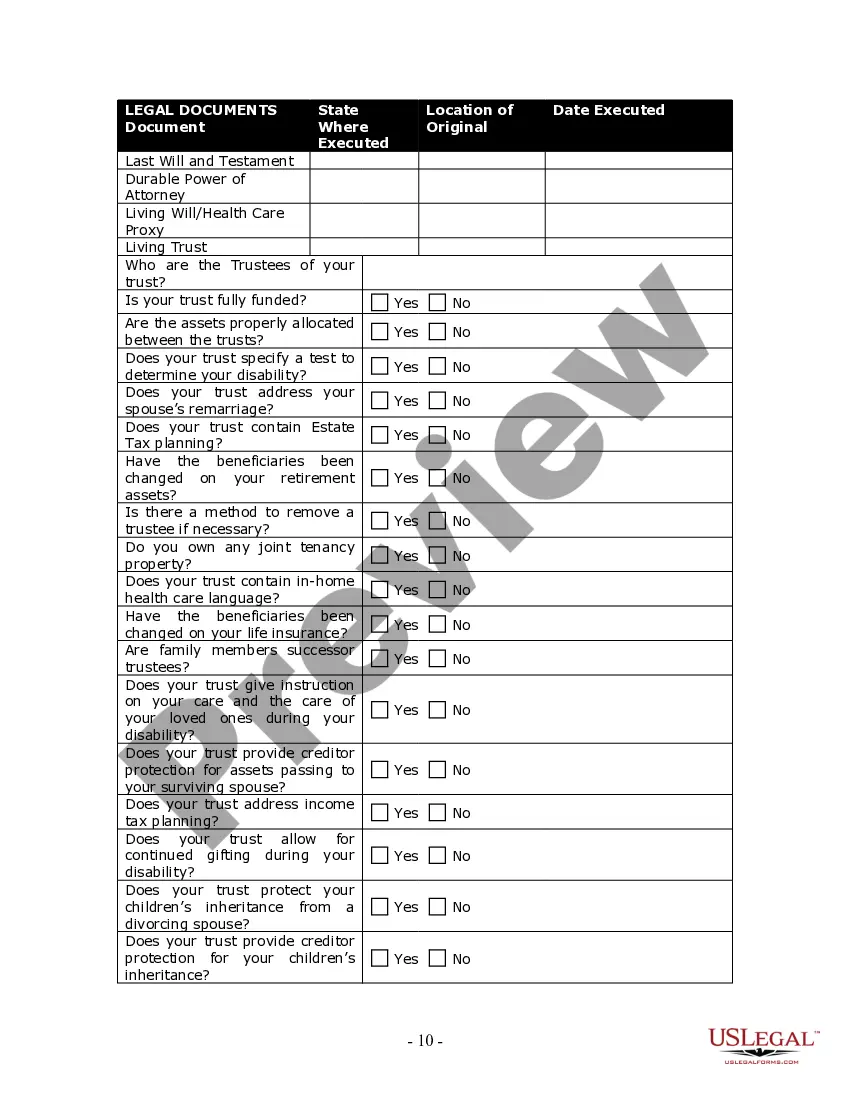
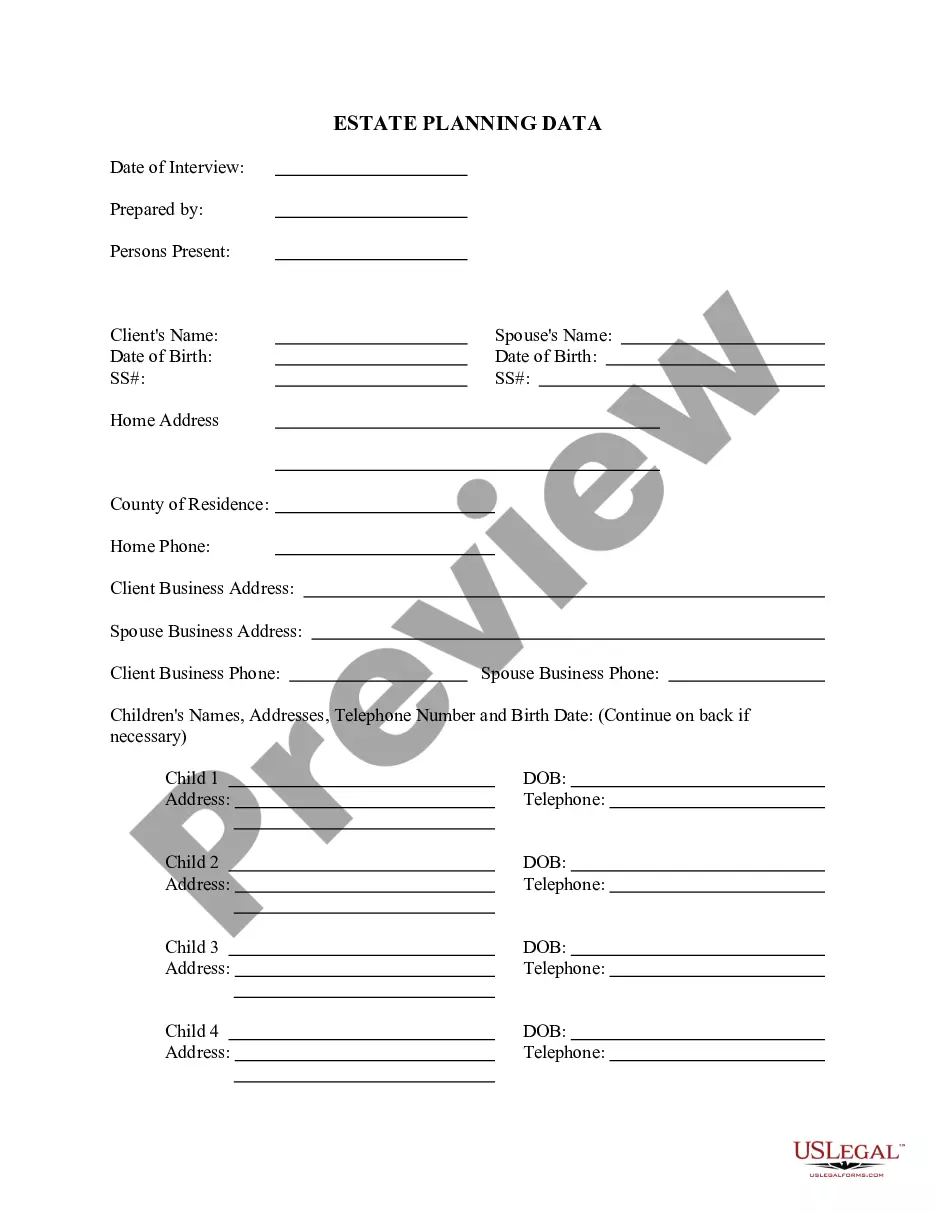
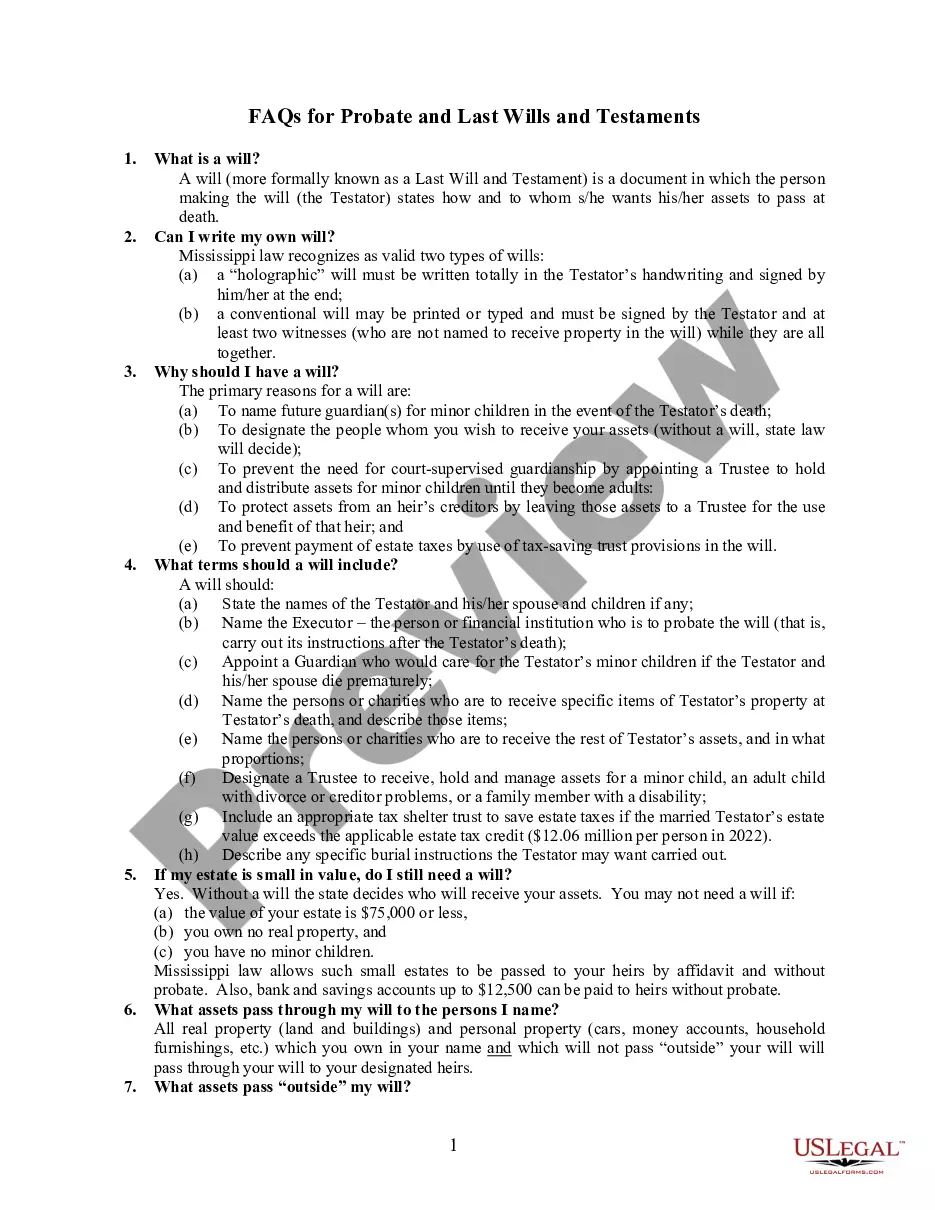
The Estate Planning Questionnaire is a comprehensive tool designed to gather essential information for creating an effective estate plan. It serves a dual purposeâindividuals can use it to understand their estate planning needs, while attorneys can utilize it to streamline the initial client consultation phase. This questionnaire stands out by covering a wide range of topics related to personal assets, family dynamics, and legal considerations, making it invaluable for anyone looking to establish a solid estate plan.
Key parts of this document
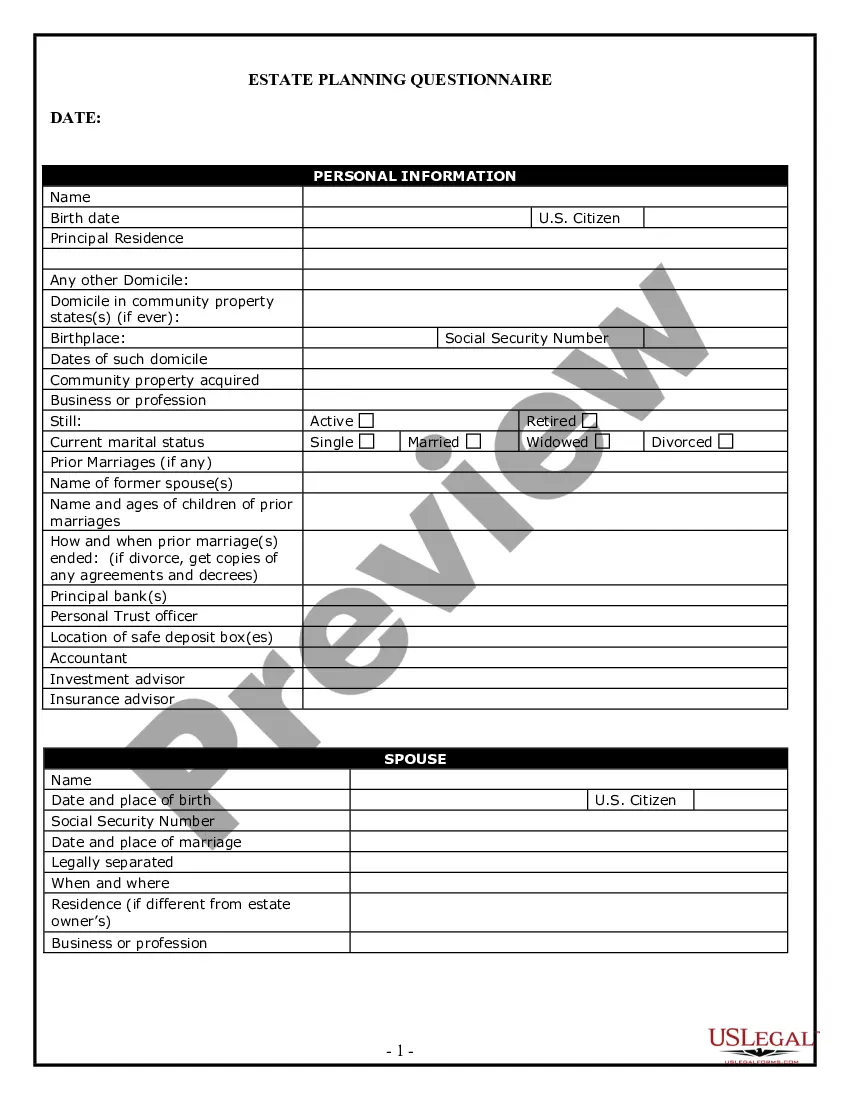
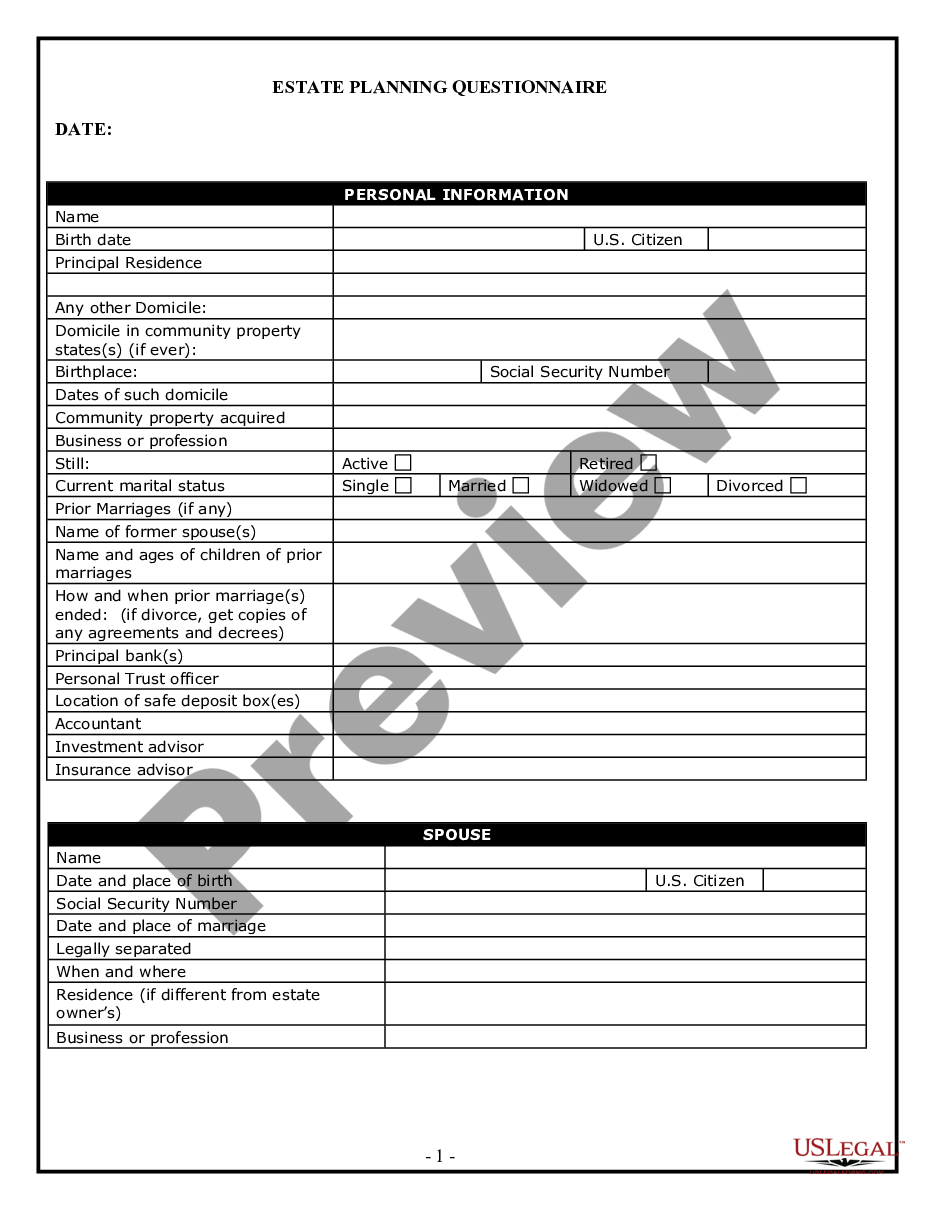
- Personal information section to record key details about the individual and their family
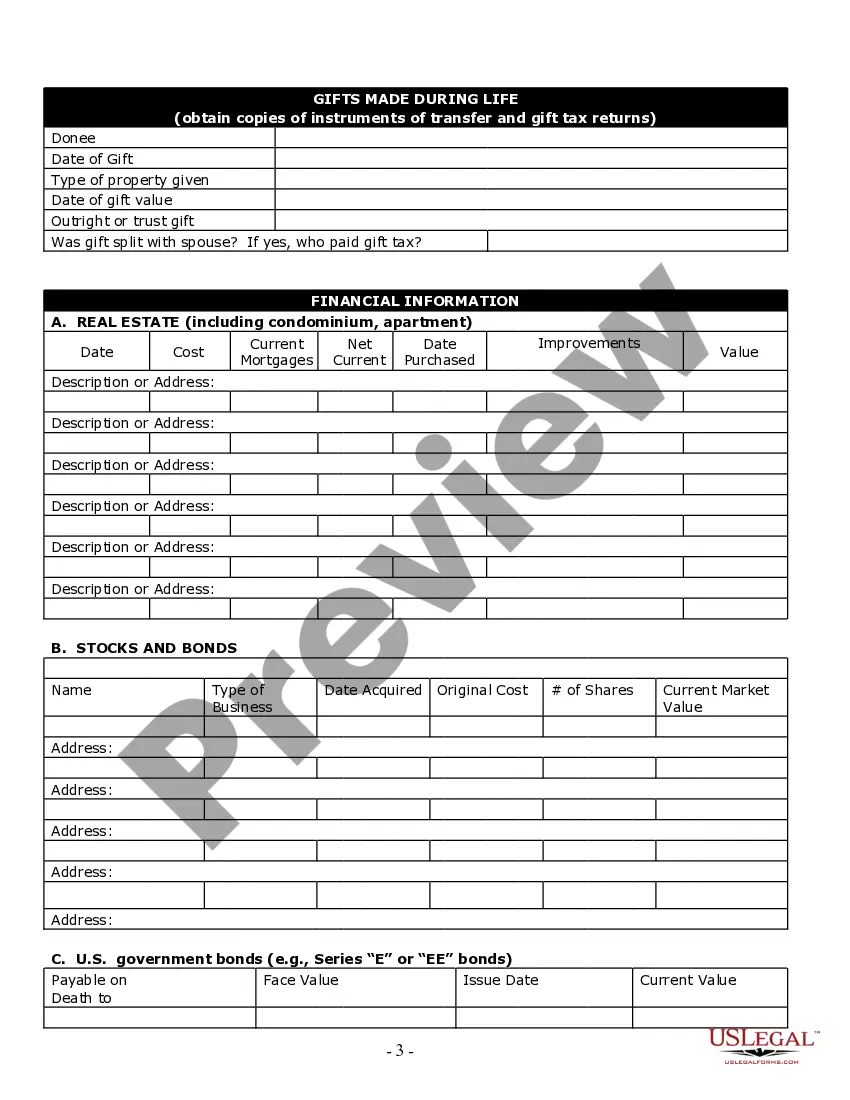
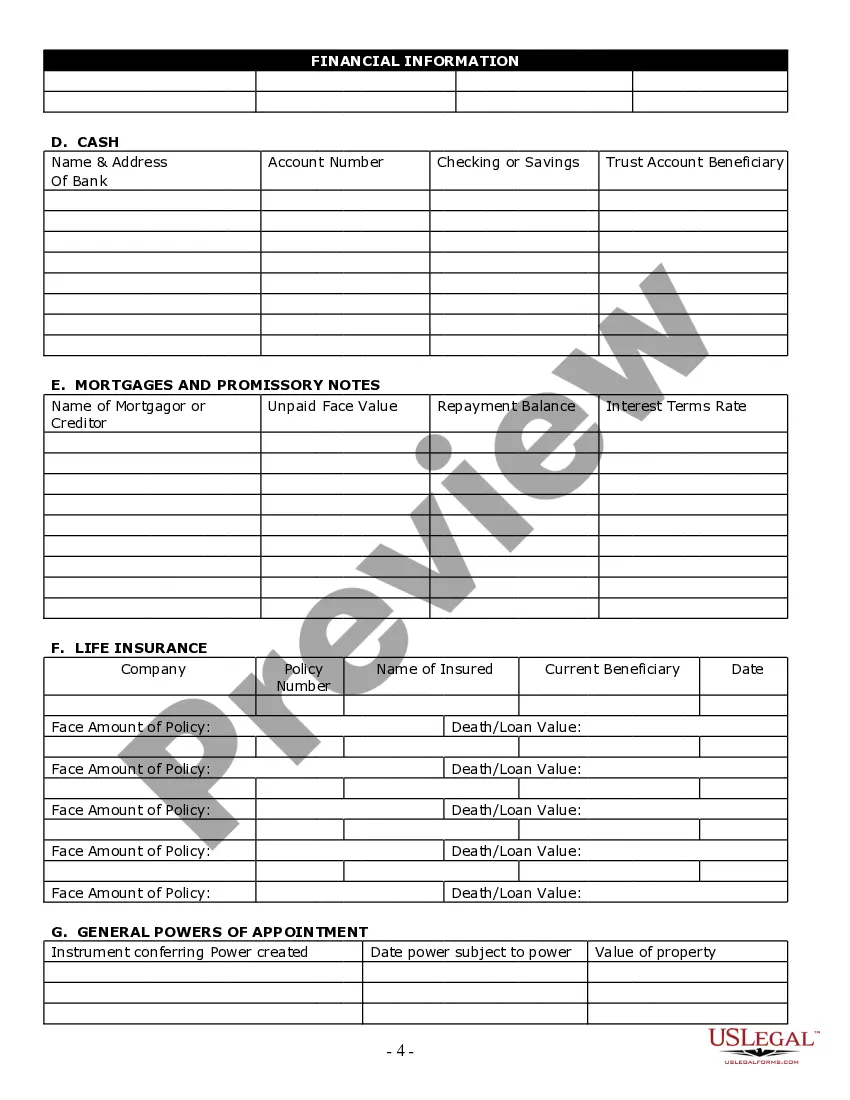
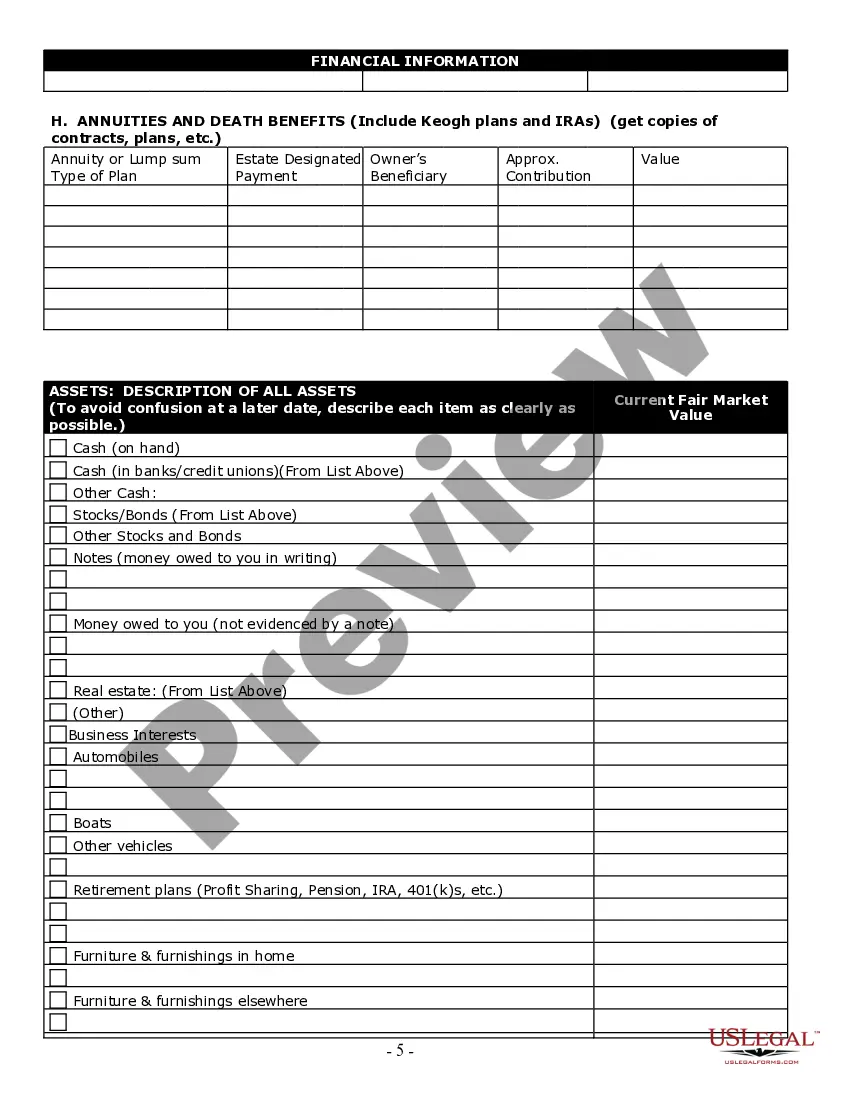
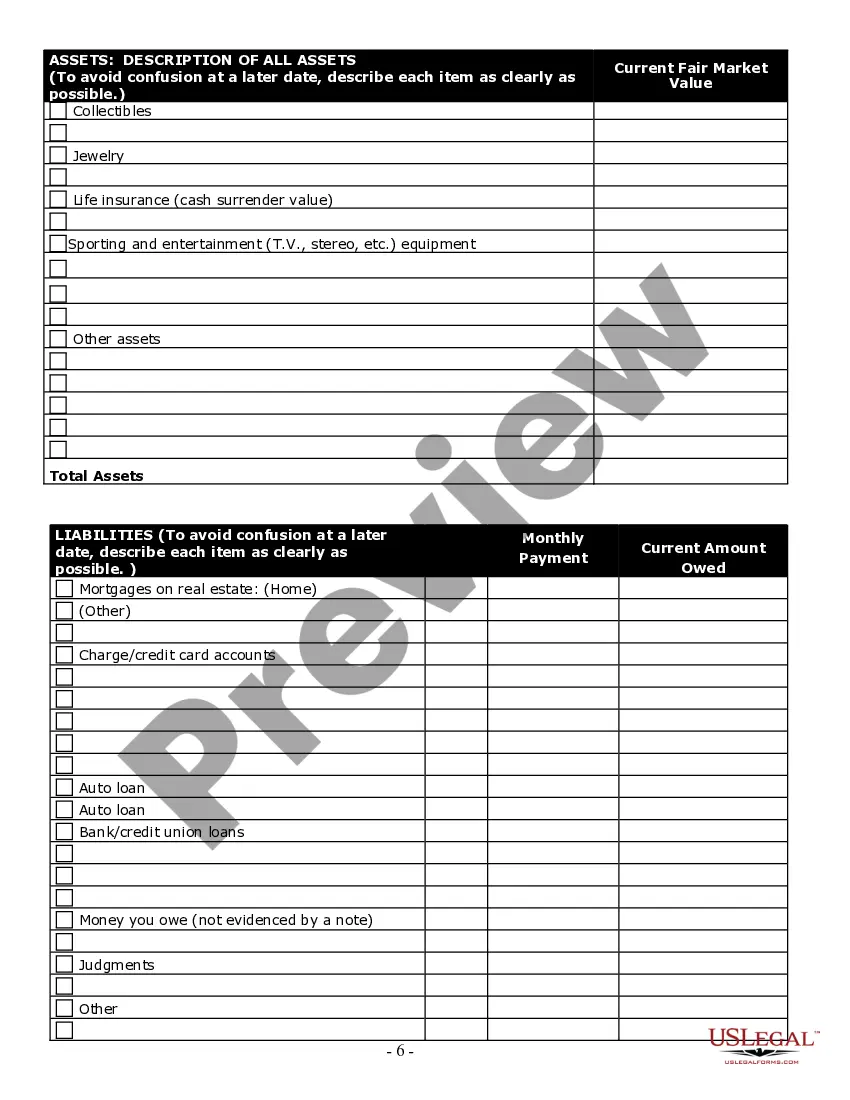
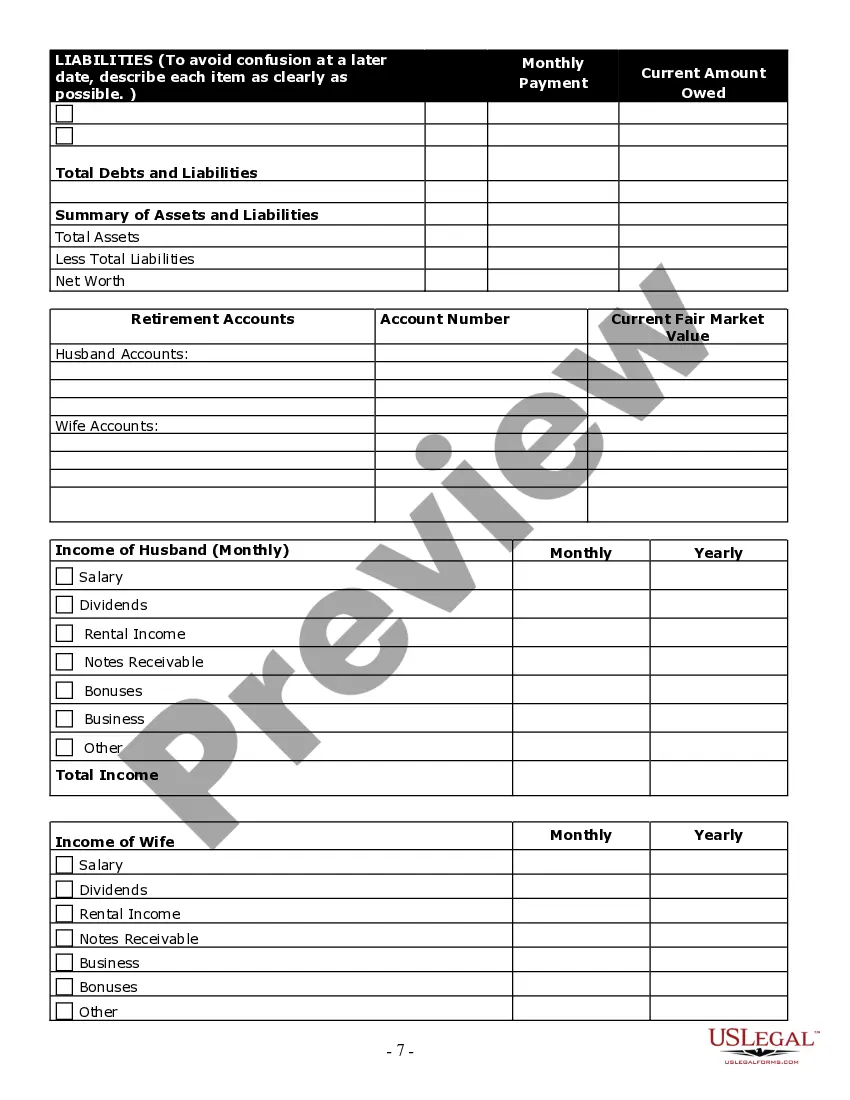
- Details about assets, including real estate, stocks, and bonds
- Information on current debts and liabilities
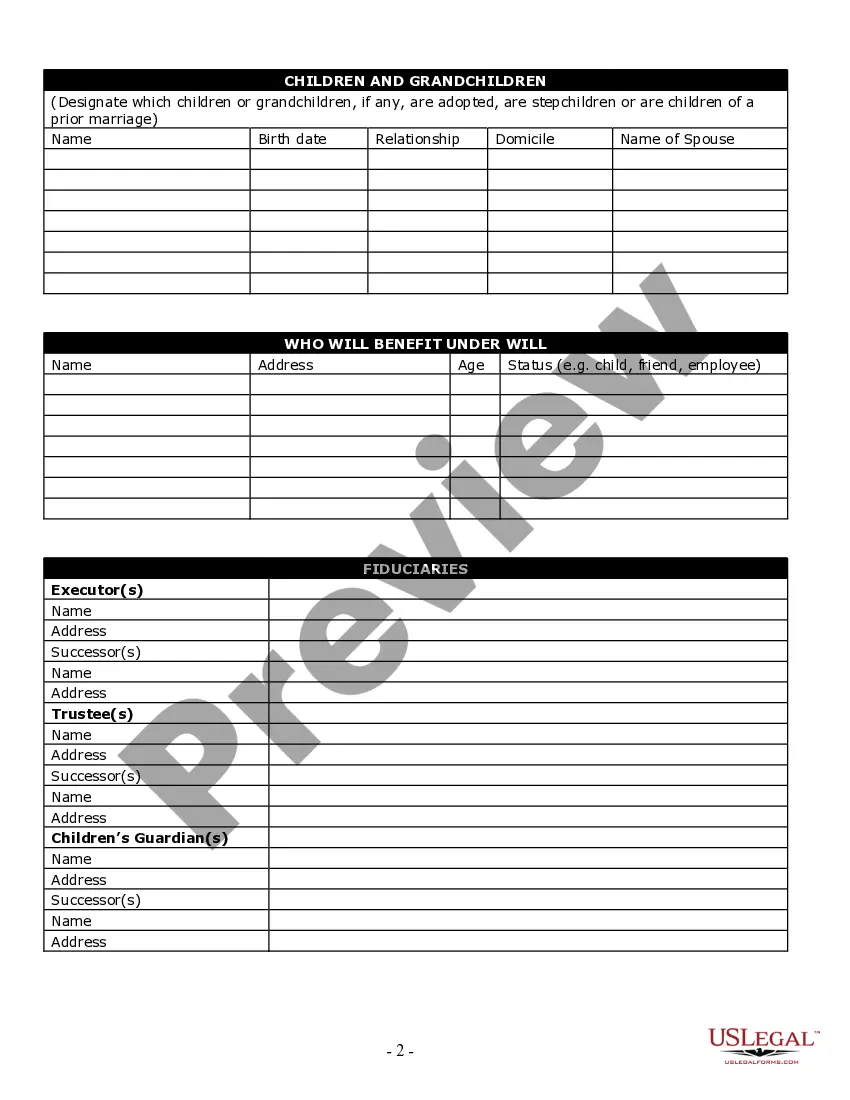
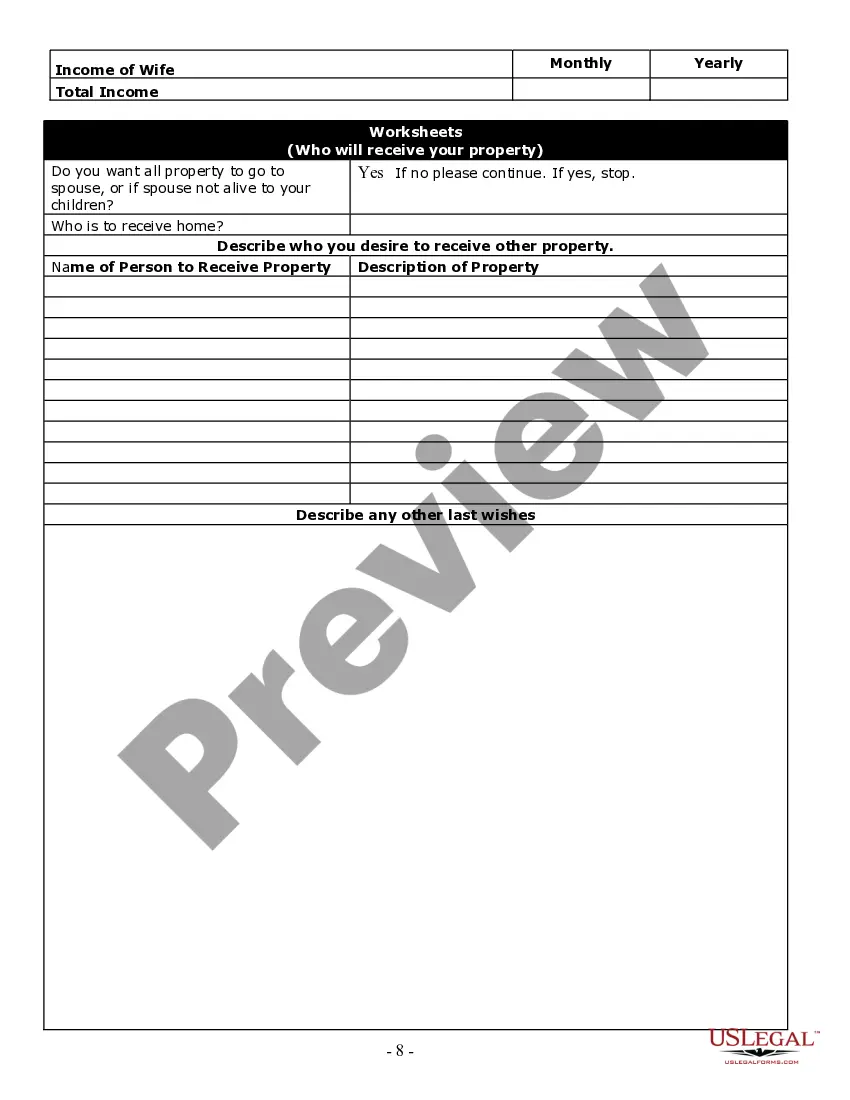
- Designations of beneficiaries who will inherit under a will
- Sections dedicated to fiduciaries, including executors and trustees
- Legal documents and plans related to estate management



Situations where this form applies
This form is useful when an individual is preparing to establish or update their estate plan. It's particularly beneficial during significant life events such as marriage, divorce, the birth of children, or changes in financial status. By completing this questionnaire, users can ensure all pertinent information is ready for discussion with their attorney, which can lead to more efficient and effective planning. Moreover, it can help individuals reflect on their estate distribution goals and powers of attorney arrangements.
Intended users of this form
The following individuals or entities should consider using the Estate Planning Questionnaire:
- Individuals preparing for an estate planning meeting with an attorney
- Married couples looking to establish joint estate plans
- Parents who want to include guardianship provisions for their children
- Anyone with significant assets or complex financial situations
Instructions for completing this form
- Fill out the personal information section, including your name, birth date, and marital status.
- Detail your assets, listing real estate, investments, and other relevant financial information.
- Identify all beneficiaries, including family members and others who may inherit under your will.
- Provide information on fiduciaries such as executors and trustees who will manage your estate.
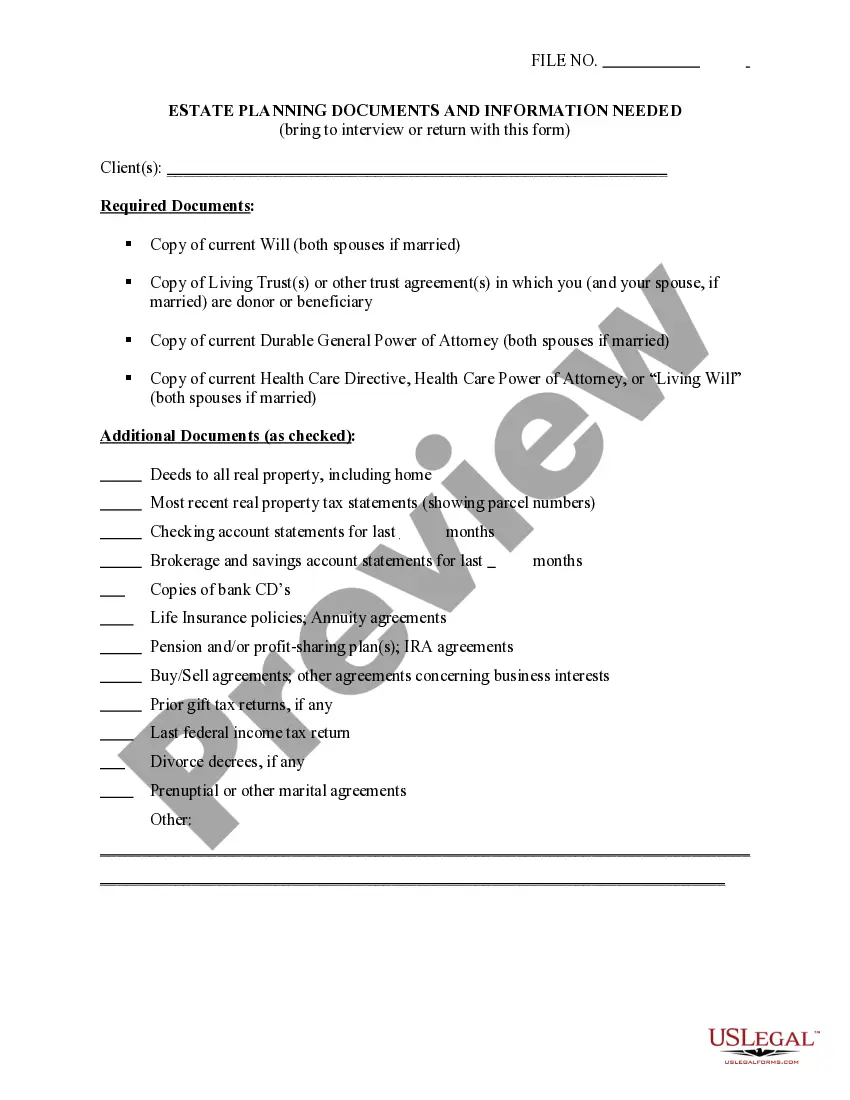
- Review and compile any existing legal documents that relate to your estate, including wills and trusts.
Is notarization required?
This form does not typically require notarization unless specified by local law. However, certain estate planning documents may need to be notarized to ensure their legal validity. Always verify with state laws regarding notarization requirements for estate planning instruments.
Get your form ready online
Our built-in tools help you complete, sign, share, and store your documents in one place.
Make edits, fill in missing information, and update formatting in US Legal Forms—just like you would in MS Word.
Download a copy, print it, send it by email, or mail it via USPS—whatever works best for your next step.
Sign and collect signatures with our SignNow integration. Send to multiple recipients, set reminders, and more. Go Premium to unlock E-Sign.
If this form requires notarization, complete it online through a secure video call—no need to meet a notary in person or wait for an appointment.
We protect your documents and personal data by following strict security and privacy standards.

Make edits, fill in missing information, and update formatting in US Legal Forms—just like you would in MS Word.

Download a copy, print it, send it by email, or mail it via USPS—whatever works best for your next step.

Sign and collect signatures with our SignNow integration. Send to multiple recipients, set reminders, and more. Go Premium to unlock E-Sign.

If this form requires notarization, complete it online through a secure video call—no need to meet a notary in person or wait for an appointment.

We protect your documents and personal data by following strict security and privacy standards.
Mistakes to watch out for
- Failing to update the form after major life changes.
- Not including all potential heirs and beneficiaries.
- Overlooking existing legal documents that may affect the estate plan.
- Providing incomplete or inaccurate financial details.
Why use this form online
- Convenient access from any location at any time.
- Edit and update information easily as circumstances change.
- Reliable, attorney-drafted content ensures comprehensive coverage of important issues.
Looking for another form?







Form popularity
FAQ
Write a Will and Update Account Beneficiaries Simasko believes that a standard estate-planning toolbox should include a will, up-to-date beneficiary designations, a living will and a financial power of attorney, also known as a POA. A will is what people usually think of first for estate planning. The Essentials You Need for an Estate Plan Kiplinger kiplinger.com ? retirement ? the-essentials-y... kiplinger.com ? retirement ? the-essentials-y...
A will or trust should be one of the main components of every estate plan, even if you don't have substantial assets. Wills ensure property is distributed ing to an individual's wishes (if drafted ing to state laws). 6 Estate Planning Must-Haves - Investopedia investopedia.com ? estateplanchecklist investopedia.com ? estateplanchecklist
There are six important components to an estate plan. THE WILL. The first and well-known component of an estate plan is a will.TRUSTS.POWER OF ATTORNEY.HEALTH CARE DIRECTIVE.BENEFICIARY DESIGNATIONS.REGULAR REVIEW AND REVISION.
A: The three main priorities of an estate plan are to ensure that your assets are distributed in the way you prefer, that someone else has the authority to make decisions on your behalf if you are unable to do so, and that your beneficiaries are clearly defined.
Upon your death, the primary objectives are to wrap up your affairs, provide for the support of your spouse and children, avoid unnecessary probate expenses, minimize the costs of estate taxes, and to transfer your property to your heirs and legatees. Objectives of Estate Planning. chicagoestateplanning.com ? articles ? objectives-... chicagoestateplanning.com ? articles ? objectives-...
Estate planning checklist Create an inventory. Account for your family's needs. Establish your directives. Review your beneficiaries. Note your state's estate tax laws. Weigh the value of professional help. Plan to reassess.
A 5 by 5 Power in Trust is a clause that lets the beneficiary make withdrawals from the trust on a yearly basis. The beneficiary can cash out $5,000 or 5% of the trust's fair market value each year, whichever is a higher amount.