Sample Letter for Employment Reference Letter - Unfavorable
About this form
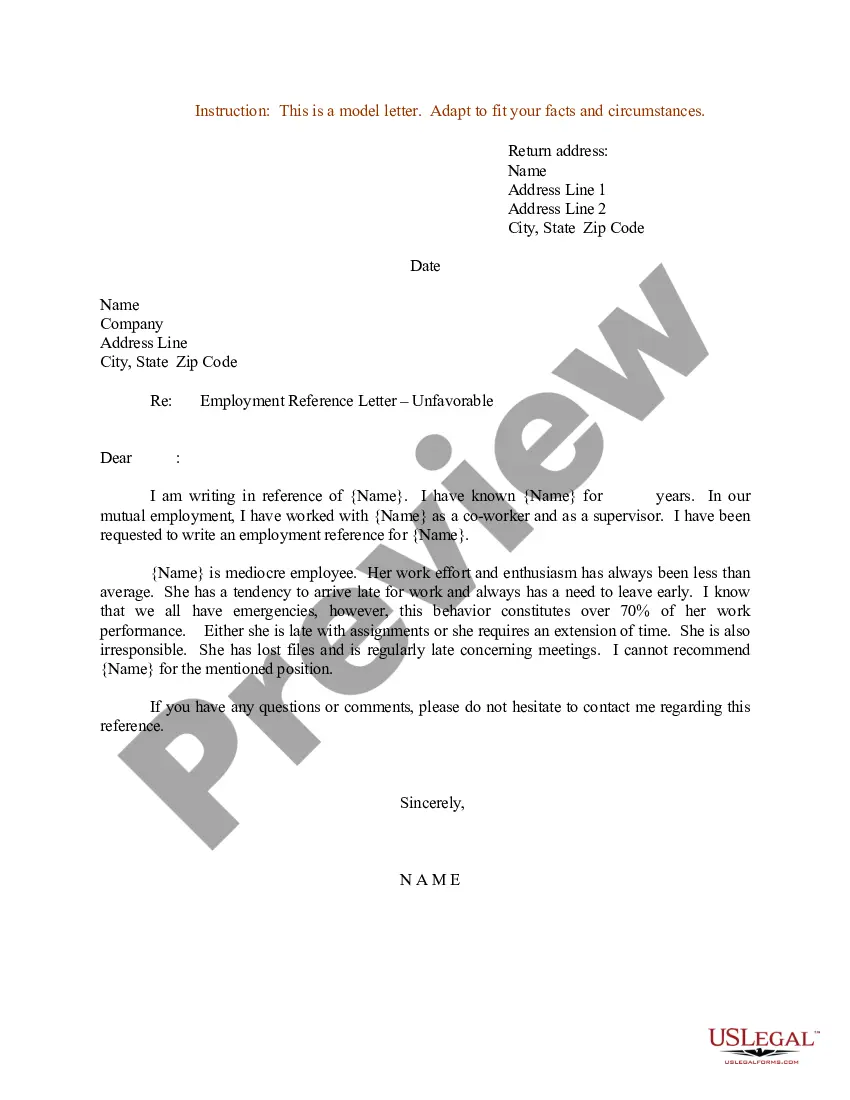
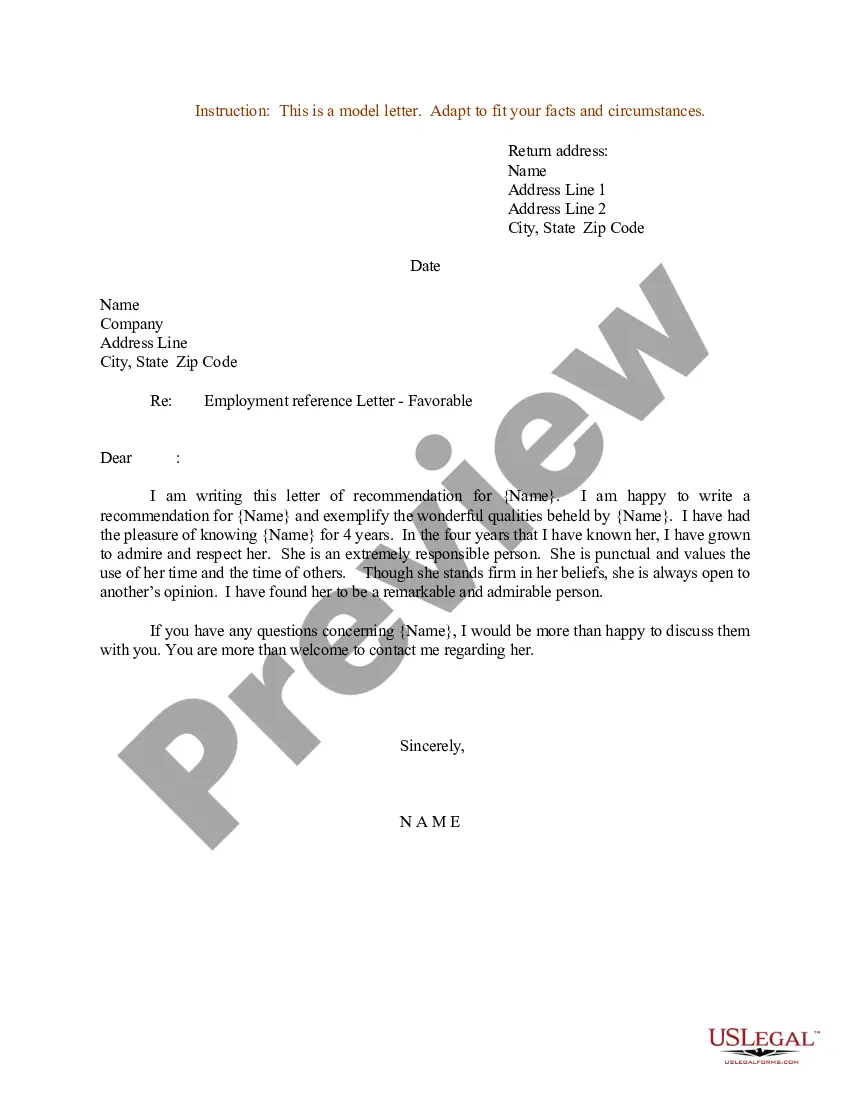
This Sample Letter for Employment Reference Letter - Unfavorable is a document used to provide a written reference for an employee when the feedback is not positive. It allows employers to summarize an employeeâs performance, highlighting specific areas of concern. Unlike a standard employment reference letter, which typically emphasizes positive qualities, this form focuses on shortcomings to help prospective employers make informed hiring decisions.
Form components explained
- Return address: Includes the sender's contact information.
- Date: Indicates when the letter is written.
- Recipient's address: Space to enter the future employer's details.
- Re: Subject line for clarity regarding the purpose of the letter.
- Performance evaluation: Detailed account of the employee's work habits and performance, including lateness and inability to meet deadlines.
- Closing statement: Encourages the recipient to reach out with any further questions.
When this form is needed
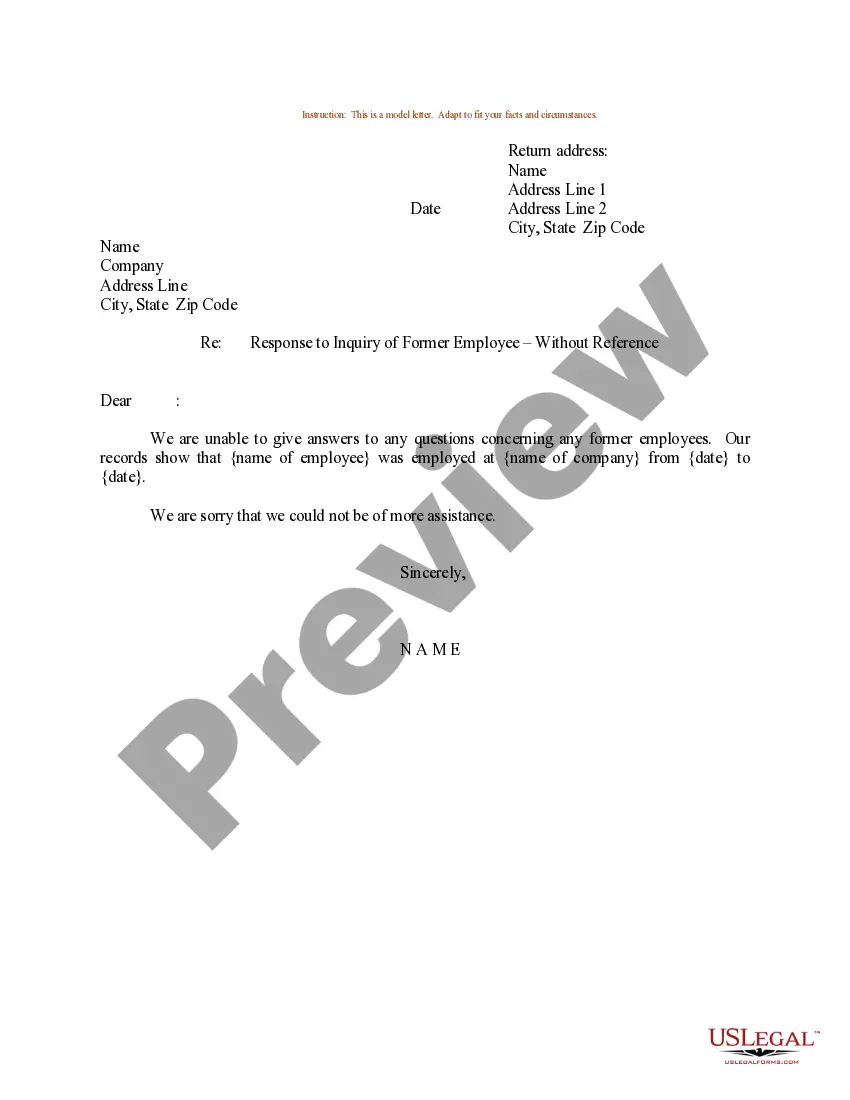
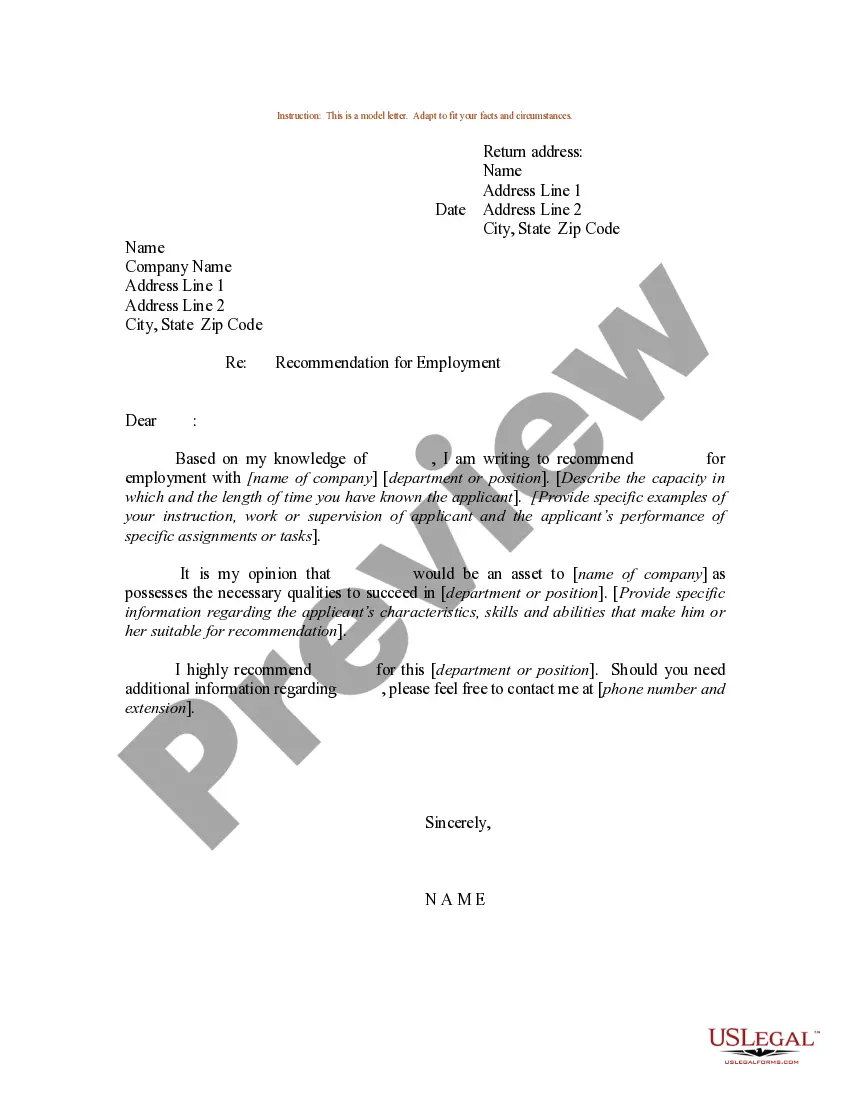
This form can be used when an employer needs to provide a reference but wishes to communicate unfavorable remarks about an employeeâs capabilities. It is particularly relevant when an employee is applying for a new position and the previous employer wants to ensure that future employers are aware of significant performance issues. Situations may include resignations, layoffs, or disciplinary actions where the employer feels it is important to disclose concerns.
Who should use this form
This form is intended for:
- Employers who have employed an individual and need to provide an honest assessment of their performance.
- Human Resource professionals tasked with managing reference requests.
- Business owners who are providing references for former employees.
Completing this form step by step
- Identify the sender: Enter the name, address, and contact information of the person writing the letter.
- Input the date: Include the current date on the letter.
- Provide recipient details: Fill in the name and address of the individual or hiring manager who will receive the letter.
- Draft the performance evaluation: Clearly state the employee's shortcomings, including specific examples to support the assessment.
- Sign the letter: Include the sender's name at the end for authenticity.
Notarization requirements for this form
This form does not typically require notarization unless specified by local law. If you have any questions regarding notarization, consult with a legal professional.
Get your form ready online
Our built-in tools help you complete, sign, share, and store your documents in one place.
Make edits, fill in missing information, and update formatting in US Legal Forms—just like you would in MS Word.
Download a copy, print it, send it by email, or mail it via USPS—whatever works best for your next step.
Sign and collect signatures with our SignNow integration. Send to multiple recipients, set reminders, and more. Go Premium to unlock E-Sign.
If this form requires notarization, complete it online through a secure video call—no need to meet a notary in person or wait for an appointment.
We protect your documents and personal data by following strict security and privacy standards.

Make edits, fill in missing information, and update formatting in US Legal Forms—just like you would in MS Word.

Download a copy, print it, send it by email, or mail it via USPS—whatever works best for your next step.

Sign and collect signatures with our SignNow integration. Send to multiple recipients, set reminders, and more. Go Premium to unlock E-Sign.

If this form requires notarization, complete it online through a secure video call—no need to meet a notary in person or wait for an appointment.

We protect your documents and personal data by following strict security and privacy standards.
Common mistakes
- Failing to be specific about the employee's shortcomings.
- Using vague language, which may lead to misunderstandings.
- Neglecting to include contact information for follow-up questions.
Advantages of online completion
- Convenient access: Download and complete the form at any time.
- Editability: Tailor the content easily to suit individual situations.
- Reliability: Created by licensed attorneys to ensure it meets legal standards.
Key takeaways
- This letter serves as a formal way to provide a negative reference.
- It is crucial to be concise and factual when describing performance issues.
- The form is customizable and can be adapted to specific situations.
- Understanding local laws is essential when providing unfavorable feedback.
Looking for another form?


Form popularity
FAQ
Avoid vague, general statements of the applicant's personal ability. Instead, provide specific examples of performance and the situation in which the performance occurred. Provide specific facts for any negative information.
In your reference letter for a bad employee, it's best to stick to the pertinent details such as their dates of employment and their job title. You don't need to provide any additional details about performance.
Contact your former employer. Ask for feedback from your potential employer. Ask others for help. Check your other references. Make positive changes.
Yes, generally if they really don't like the student, but the student pesters them into writing a letter of recommendation. If they seriously don't like the student, some may even write a poor letter out of spite.
Tell the employee the reference will be negative. Instead, tell the employee you can't write a positive reference. This will give the employee a chance to choose someone else for a reference. You can say, Sorry, Janet, I'm not sure I can write a really strong reference. Are you sure you can't find someone else?
Keep it Short and Simple. If you don't know the person well, or what you do know makes you hesitant to risk your reputation by offering a recommendation, let him or her down easy, but keep it brief. Offer to Help in Other Ways. Be Honest. Tell a White Lie. Focus on the Positive.
Avoid a Lawsuit. You want to give a negative reference in a positive way, so a former or current employee doesn't have legal grounds to sue you or your company. State Something Positive. Start with something positive when you issue a written or a verbal reference for an employee. Stay Professional. Be Honest.
It is commonly assumed that a previous employer must give a reference and is legally prohibited from giving a bad one. This is not the case. Your employer can give you a bad or unfavourable reference, but only if they genuinely believe it to be true and accurate and have reasonable grounds for that belief.