Communication Systems Easement
Understanding this form
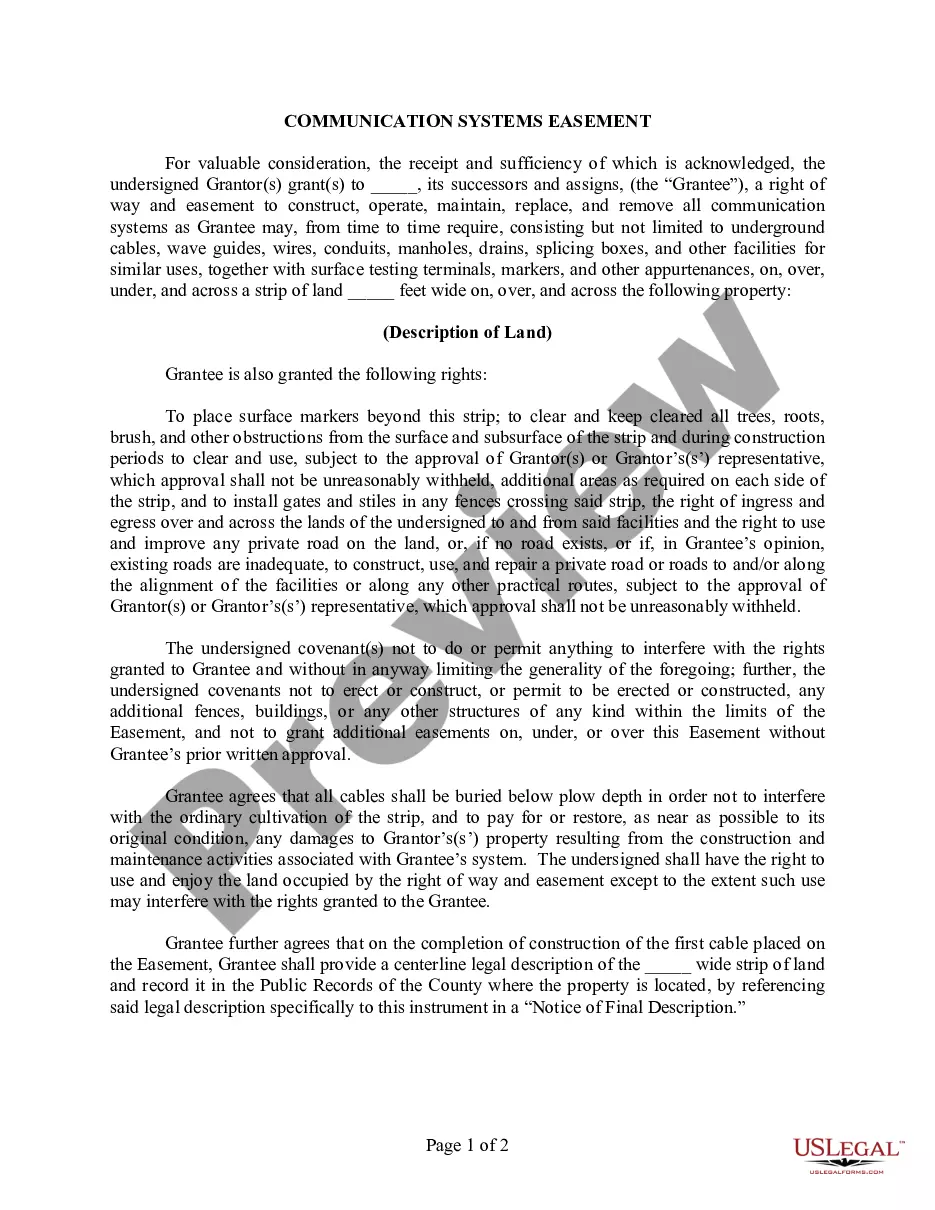
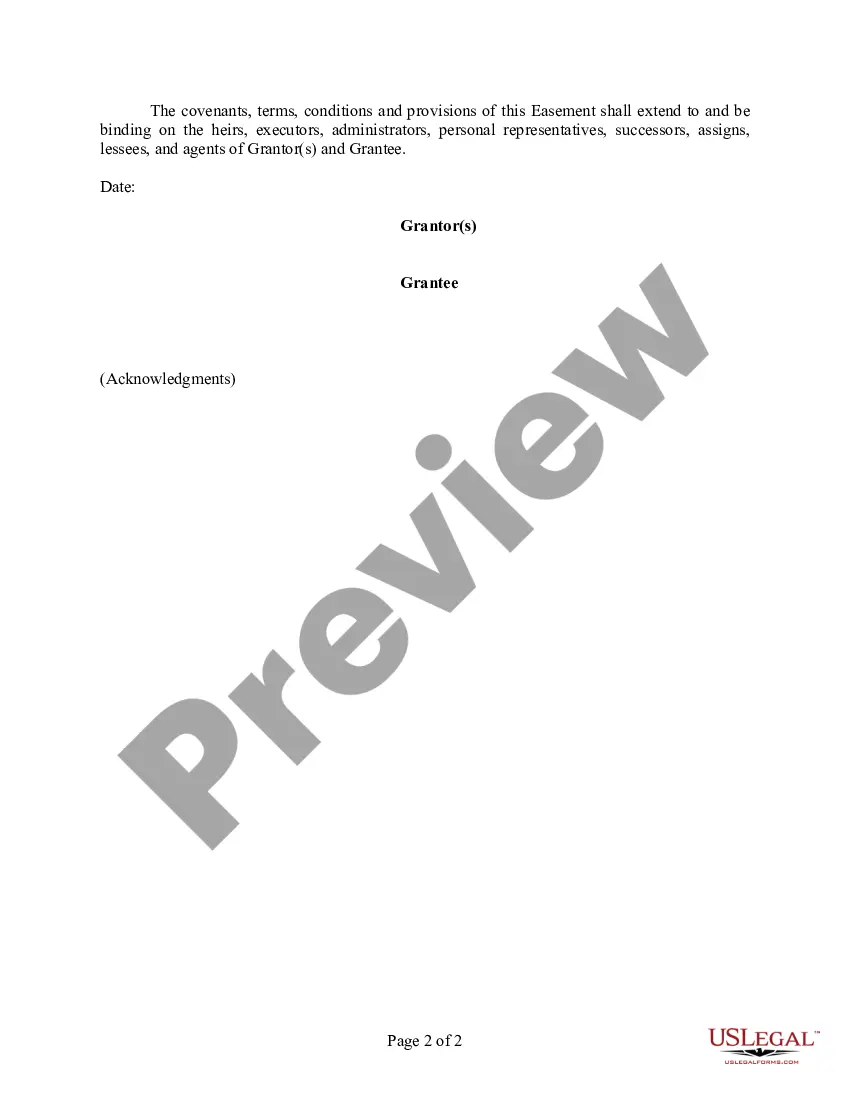
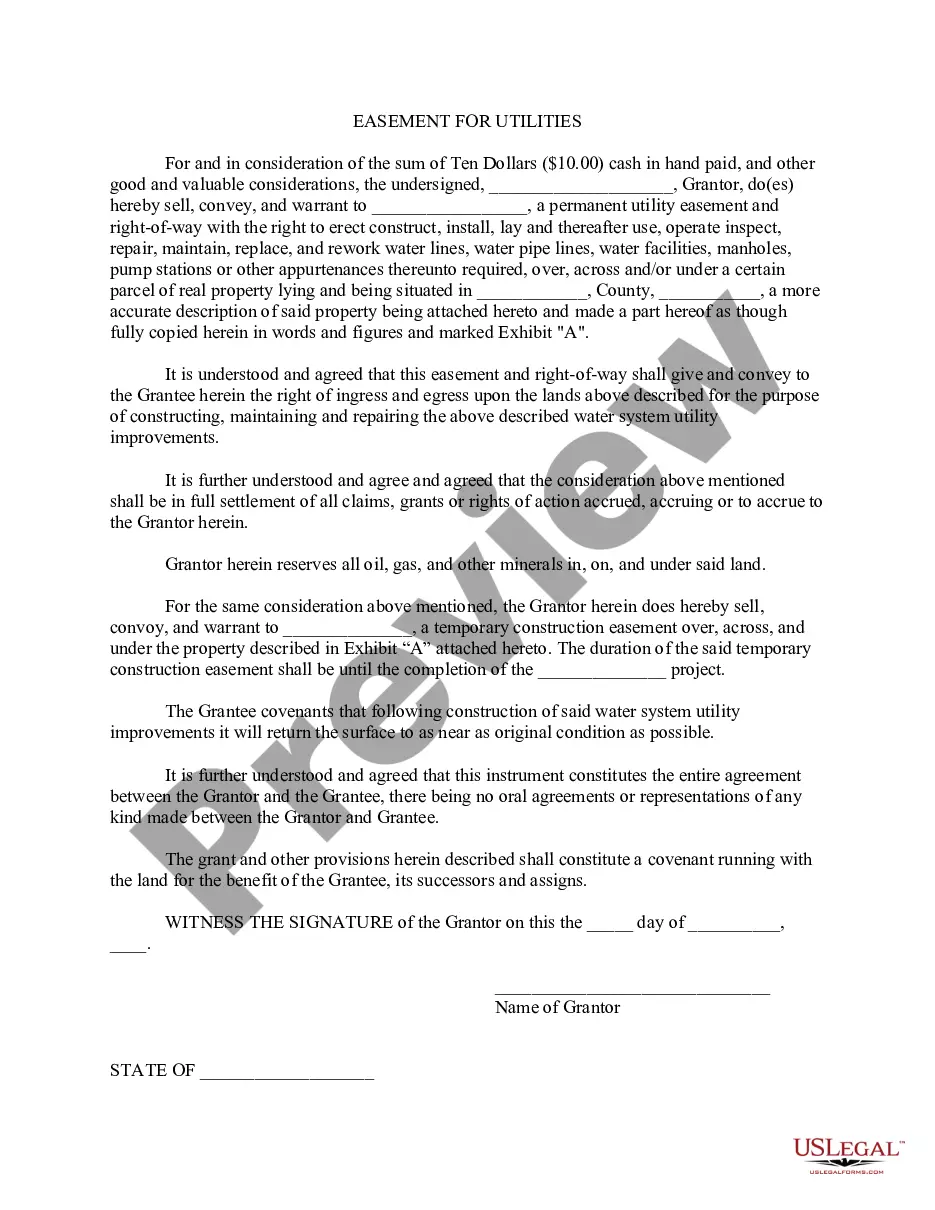
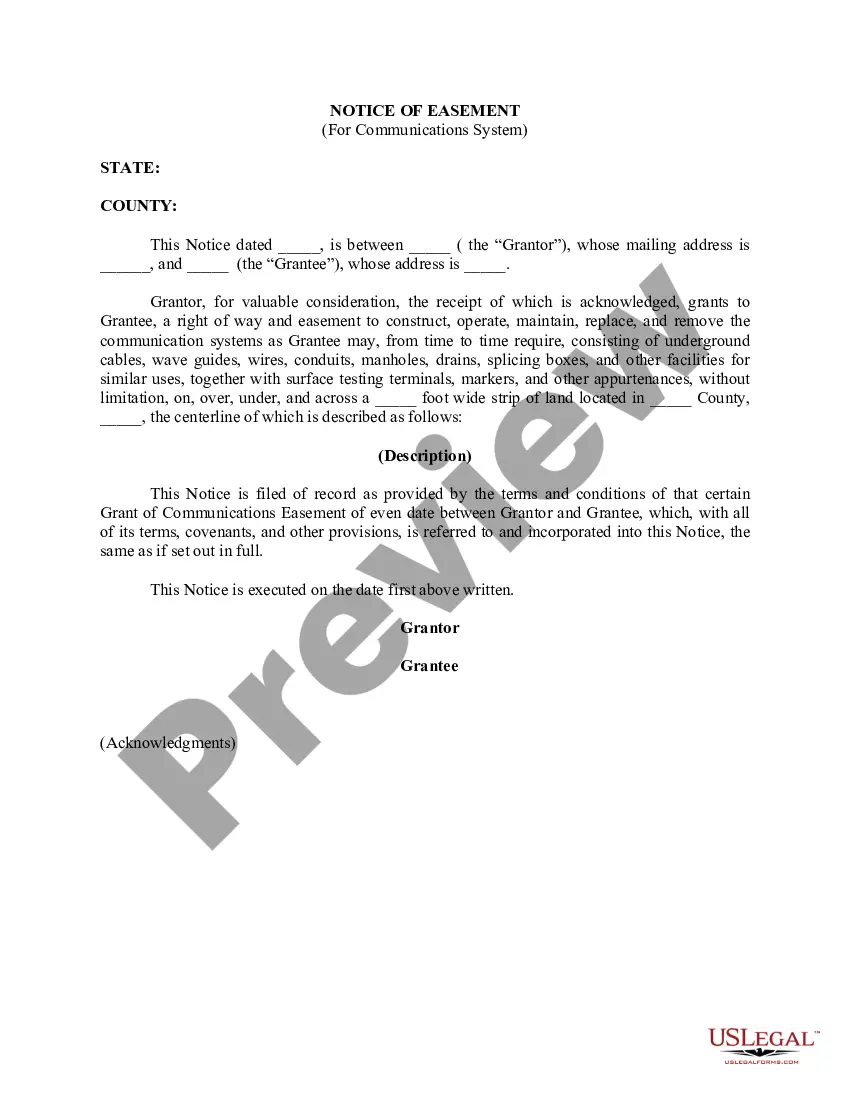
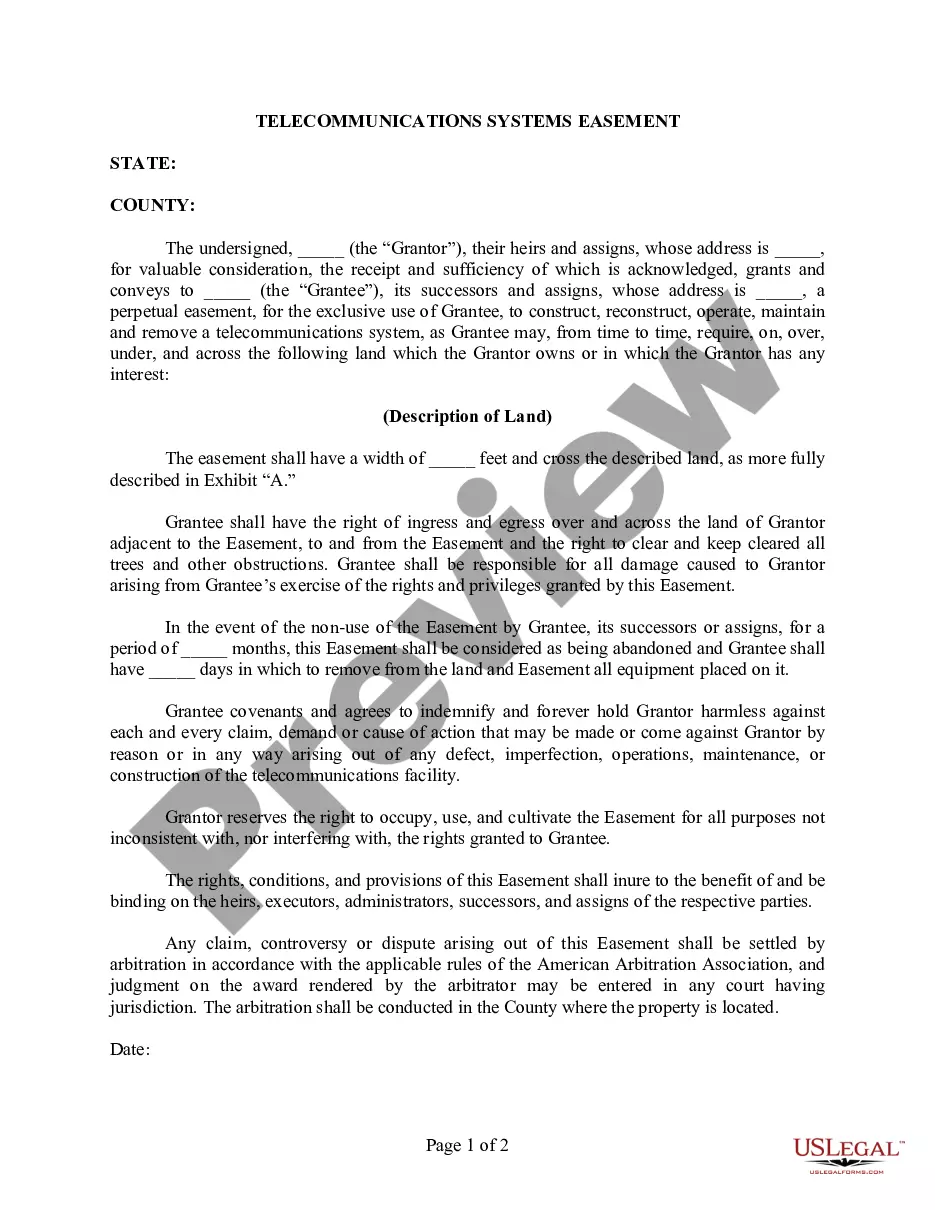
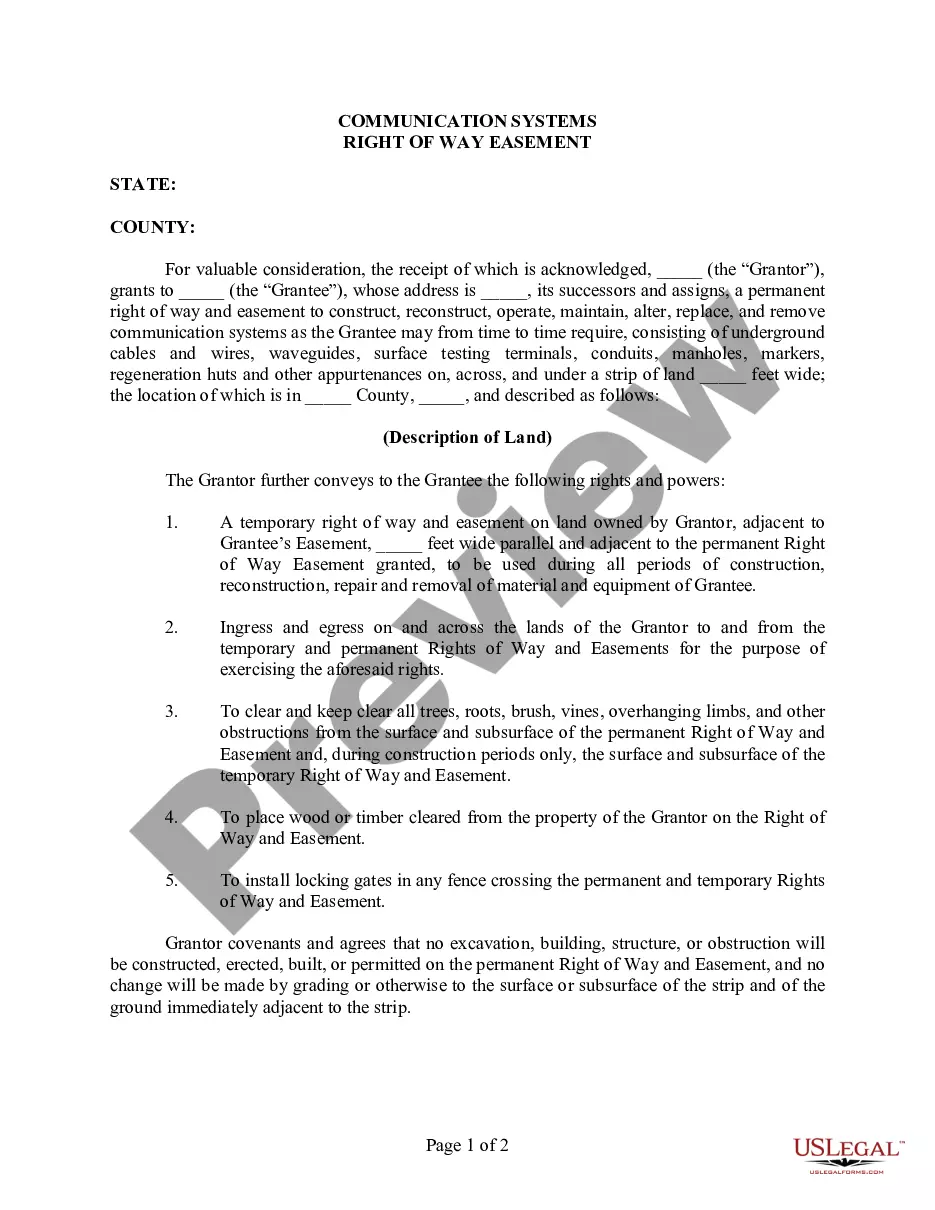
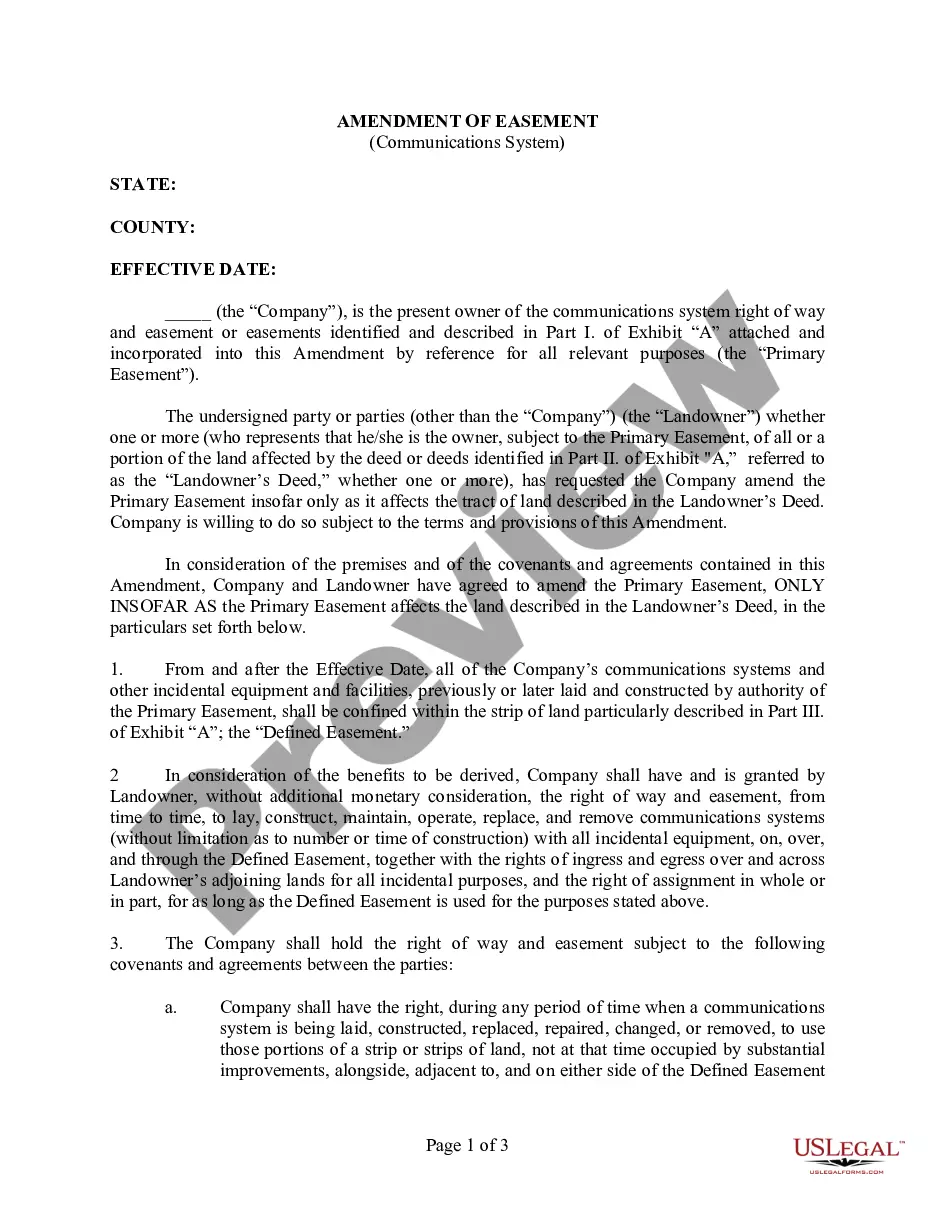
The Communication Systems Easement is a legal document that grants a specific entity, known as the Grantee, the right to create and maintain communication systems on a designated piece of property. This easement permits the Grantee to install underground cables and associated infrastructure while allowing access to the landowner for regular use of the property, provided it does not interfere with the easement rights. Unlike general easements, this form specifically addresses communication systems, distinguishing it from forms intended for different types of utilities or access rights.
Main sections of this form
- Identification of the Grantor(s) and Grantee, including their roles and obligations.
- A detailed description of the land involved and the width of the easement.
- Rights specified for the Grantee, including construction, operation, and maintenance of communication systems.
- Covenants by the Grantor(s) to prevent interference with the Grantee's rights.
- Conditions for restoration of the land after construction or maintenance activities.
Situations where this form applies
This form is necessary when a property owner (Grantor) wants to allow a telecommunications company or another entity (Grantee) to install communication systems on their property. It is commonly used in situations involving the installation of fiber optic cables, telephone lines, or other communication infrastructure where the Grantee needs to enter and use a specific portion of the Grantorâs land for those purposes. Using this form helps clarify each party's rights and responsibilities, preventing future disputes.
Who this form is for
- Property owners (Grantors) looking to grant easement rights for communication systems.
- Telecommunications companies (Grantees) needing permission to install communication infrastructure.
- Land developers or contractors engaged in the installation of communication services.
Steps to complete this form
- Identify all parties involved, clearly stating the names of Grantor(s) and Grantee.
- Specify the property by providing a detailed legal description of the land where the easement will be granted.
- Clearly outline the specific rights being granted to the Grantee, including use of the easement for construction and future maintenance.
- Enter the date of agreement and ensure all parties sign the document.
- Record the easement with the appropriate county office, as required by local laws.
Is notarization required?
This form does not typically require notarization unless specified by local law. However, having the document notarized can enhance its legal validity and help prevent disputes between the parties involved.
Get your form ready online
Our built-in tools help you complete, sign, share, and store your documents in one place.
Make edits, fill in missing information, and update formatting in US Legal Forms—just like you would in MS Word.
Download a copy, print it, send it by email, or mail it via USPS—whatever works best for your next step.
Sign and collect signatures with our SignNow integration. Send to multiple recipients, set reminders, and more. Go Premium to unlock E-Sign.
If this form requires notarization, complete it online through a secure video call—no need to meet a notary in person or wait for an appointment.
We protect your documents and personal data by following strict security and privacy standards.

Make edits, fill in missing information, and update formatting in US Legal Forms—just like you would in MS Word.

Download a copy, print it, send it by email, or mail it via USPS—whatever works best for your next step.

Sign and collect signatures with our SignNow integration. Send to multiple recipients, set reminders, and more. Go Premium to unlock E-Sign.

If this form requires notarization, complete it online through a secure video call—no need to meet a notary in person or wait for an appointment.

We protect your documents and personal data by following strict security and privacy standards.
Typical mistakes to avoid
- Failing to provide a precise description of the easement area, which could lead to disputes.
- Not including all necessary parties in the agreement, potentially invalidating the easement.
- Omitting required signatures and dates, making the document unenforceable.
Advantages of online completion
- Convenient access to the form, allowing for quick download and completion.
- Editability enables users to customize the form without needing in-person meetings.
- Reliability, with templates drafted by licensed attorneys to ensure legal compliance.
Key takeaways
- The Communication Systems Easement grants specific rights to install and maintain communication systems on anotherâs property.
- Key details must be carefully documented to avoid future conflicts between Grantors and Grantees.
- This form is versatile and can be used across states but should be tailored to comply with local laws when necessary.
Looking for another form?







Form popularity
FAQ
A property easement is generally written and recorded with the local assessor's office. The documented easement will show up when a title search is conducted and it stays there indefinitely, unless both parties agree to remove it.
Rights of way (similar to the driveway example, but also including walkways or pathways); Public utilities, such as gas, electricity or water and sewer mains; Parking areas; Access to light and air; and. Shared walls.
In most situations, easements will not decrease the value of the property. If the easement has strict rules or requirements the property owner must follow, however, it can affect property value and marketability.
A Legal Easement is an easement that is Recorded in the same County Office where Deeds to Property are Recorded. This easement is also called a Deeded Easement or a Recorded Easement.No other type of easement gives you the legal right to cross someone's private land to access your land.
An easement is a "nonpossessory" property interest that allows the holder of the easement to have a right of way or use property that they do not own or possess. An easement doesn't allow the easement holder to occupy the land or to exclude others from the land unless they interfere with the easement holder's use.
The value of the easement is based on the difference between the value of the whole property before the taking and its value after the taking with the easement in place.
Express Grant by Instrument. An express grant by written instrument is the most common source of an easement. Implied. The owner of a large tract of land splits up the land with one or more parcels that do not abut a public highway or road. Necessity. Dedication.
Although an easement grants a possessory interest in the land for a specific purpose, the landowner retains the title to the property. Easements may be given to anyone, such as neighbors, government agencies, and private parties.
Include the whole length and width. Do this by reference to plans and a ground inspection. Deduct the "after scenario" value from the "before scenario" value to arrive at a value per unit of the easement land. Multiply by the measured area of the easement land to arrive at a total market value.