New Jersey Discovery Interrogatories for Divorce Proceeding for either Plaintiff or Defendant
Understanding this form
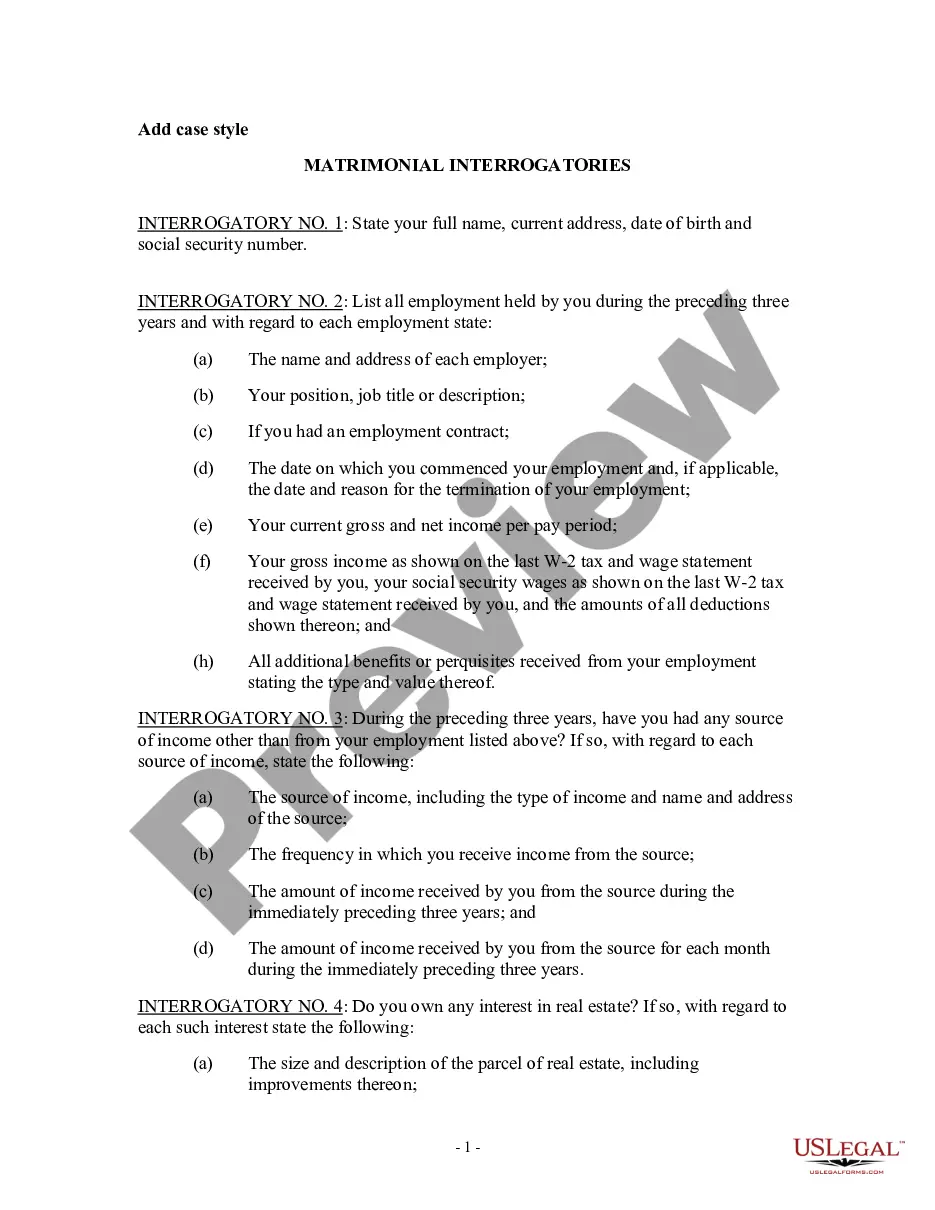
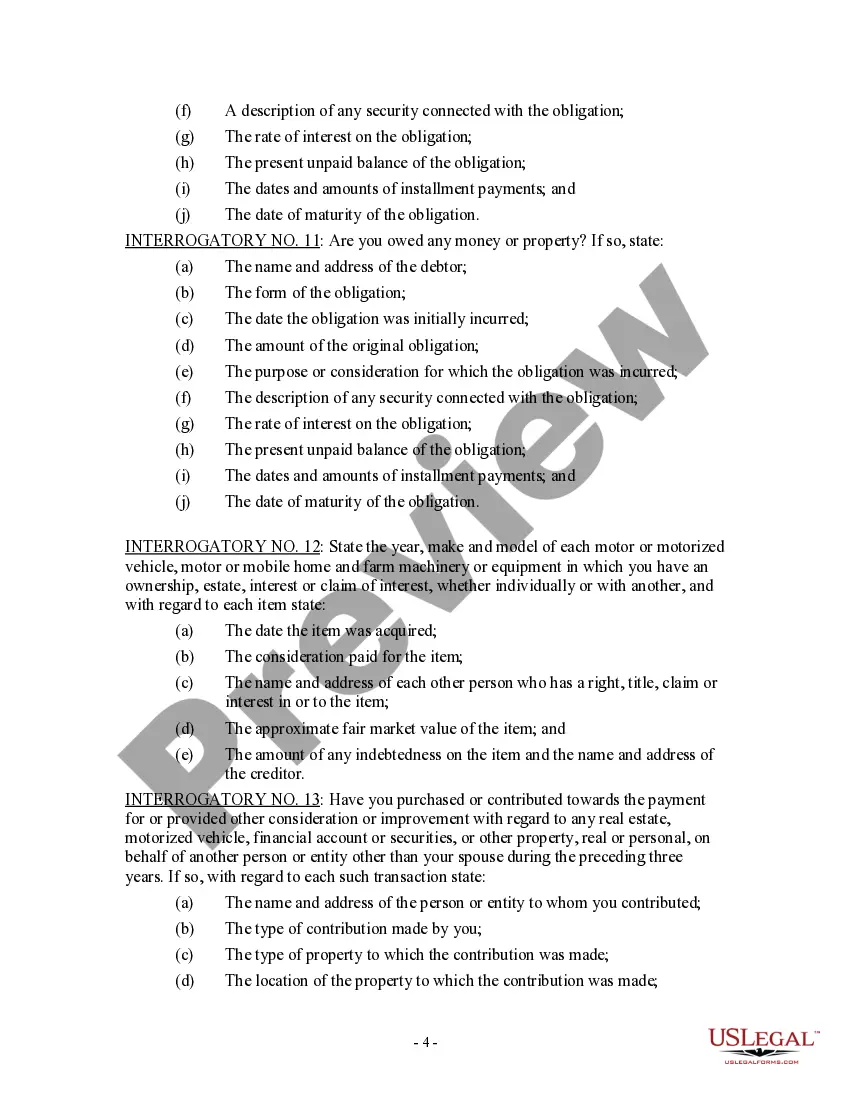
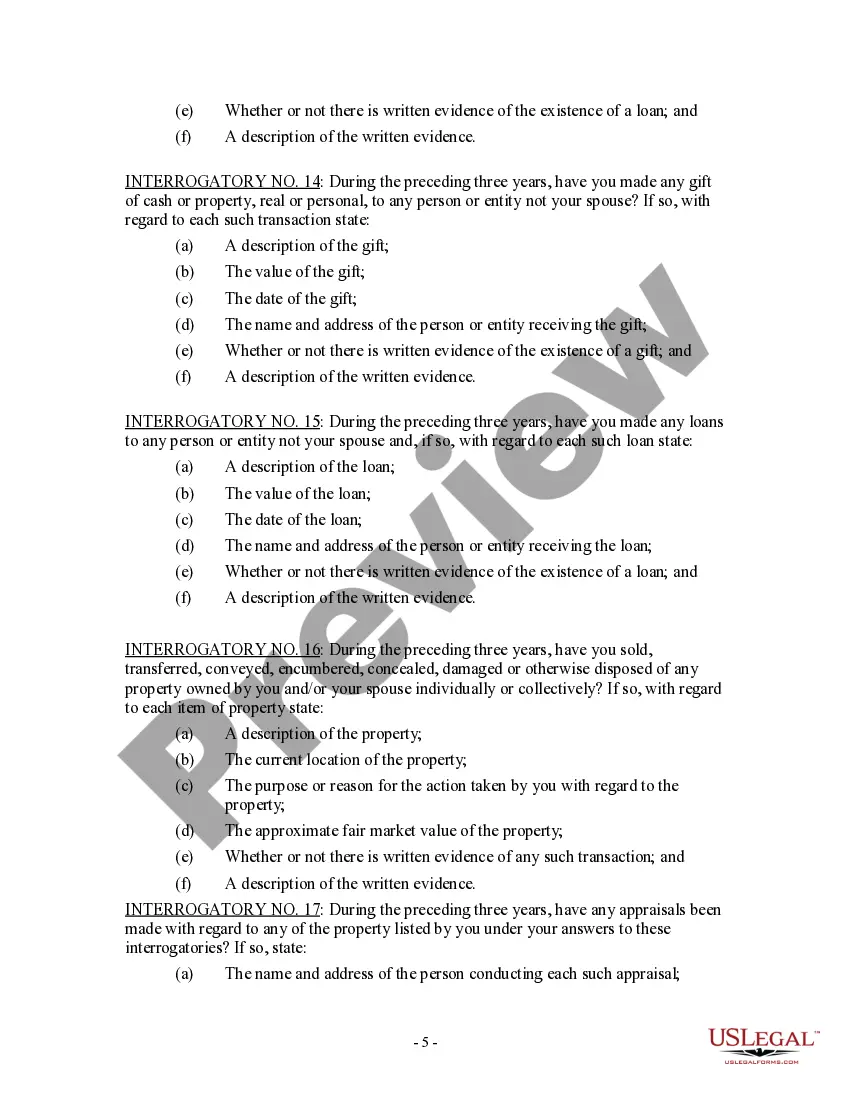
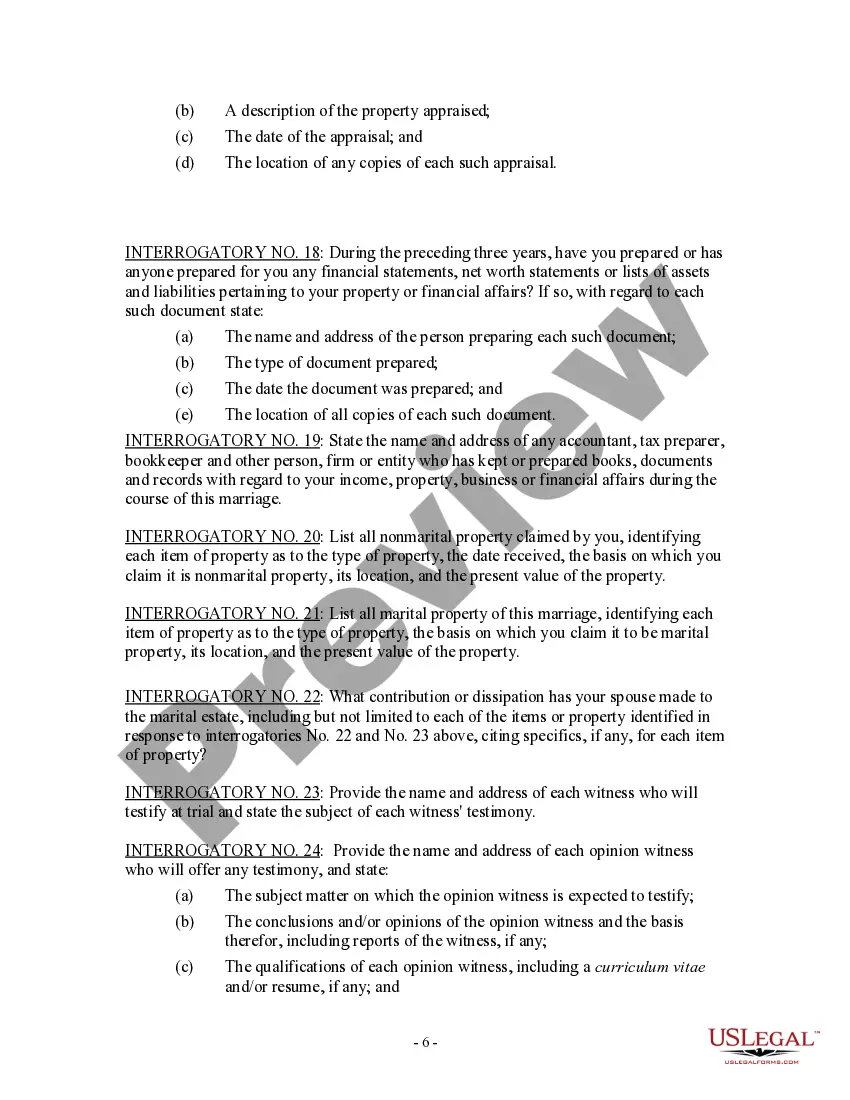
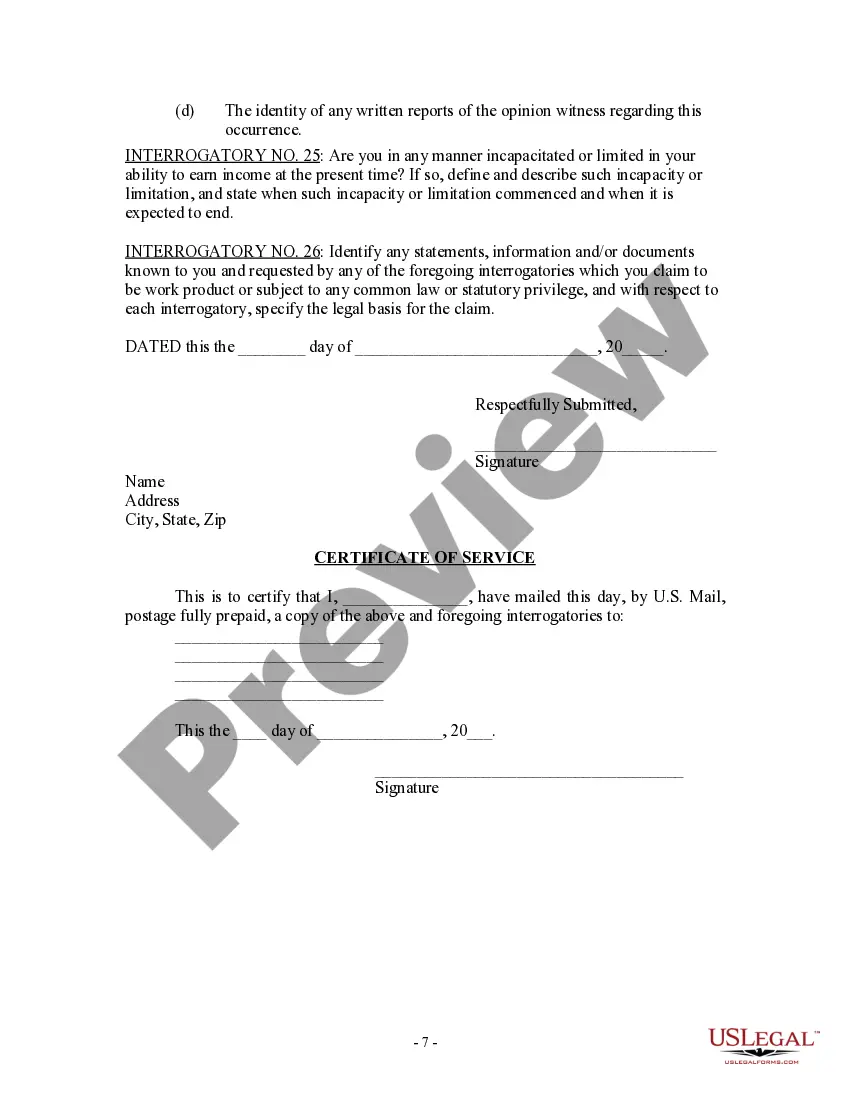
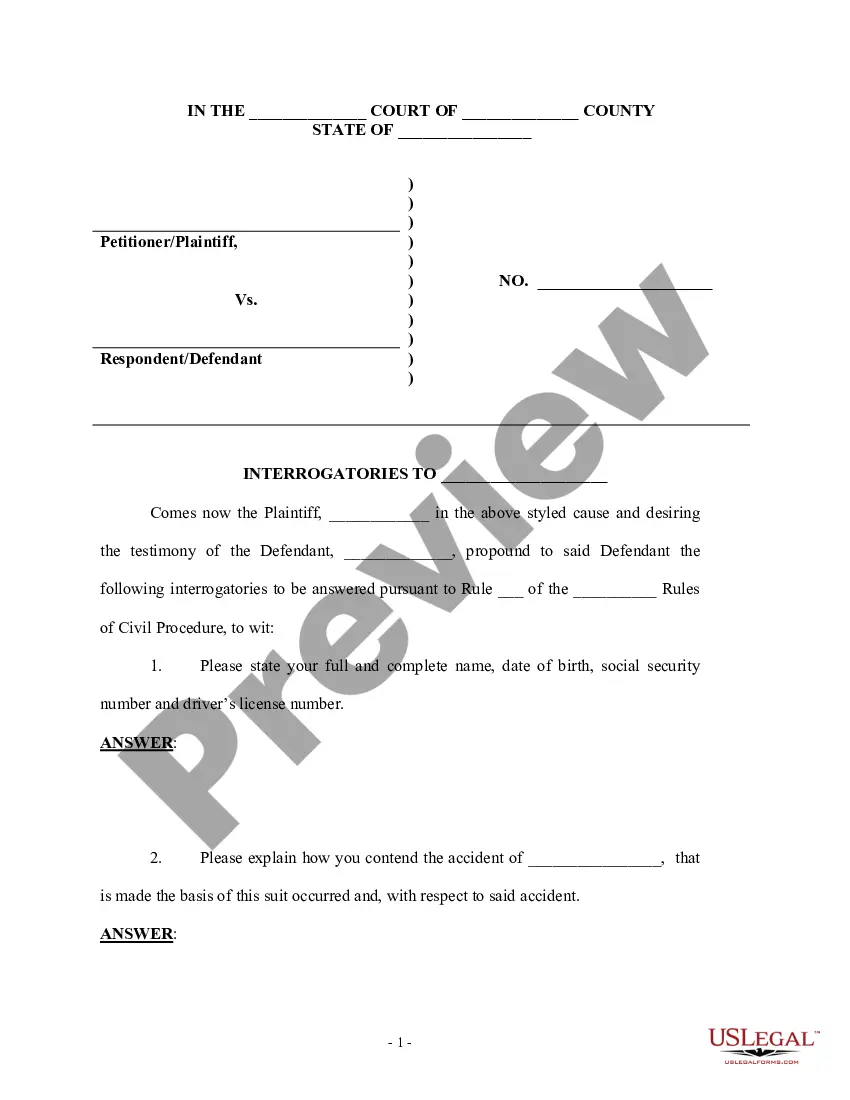
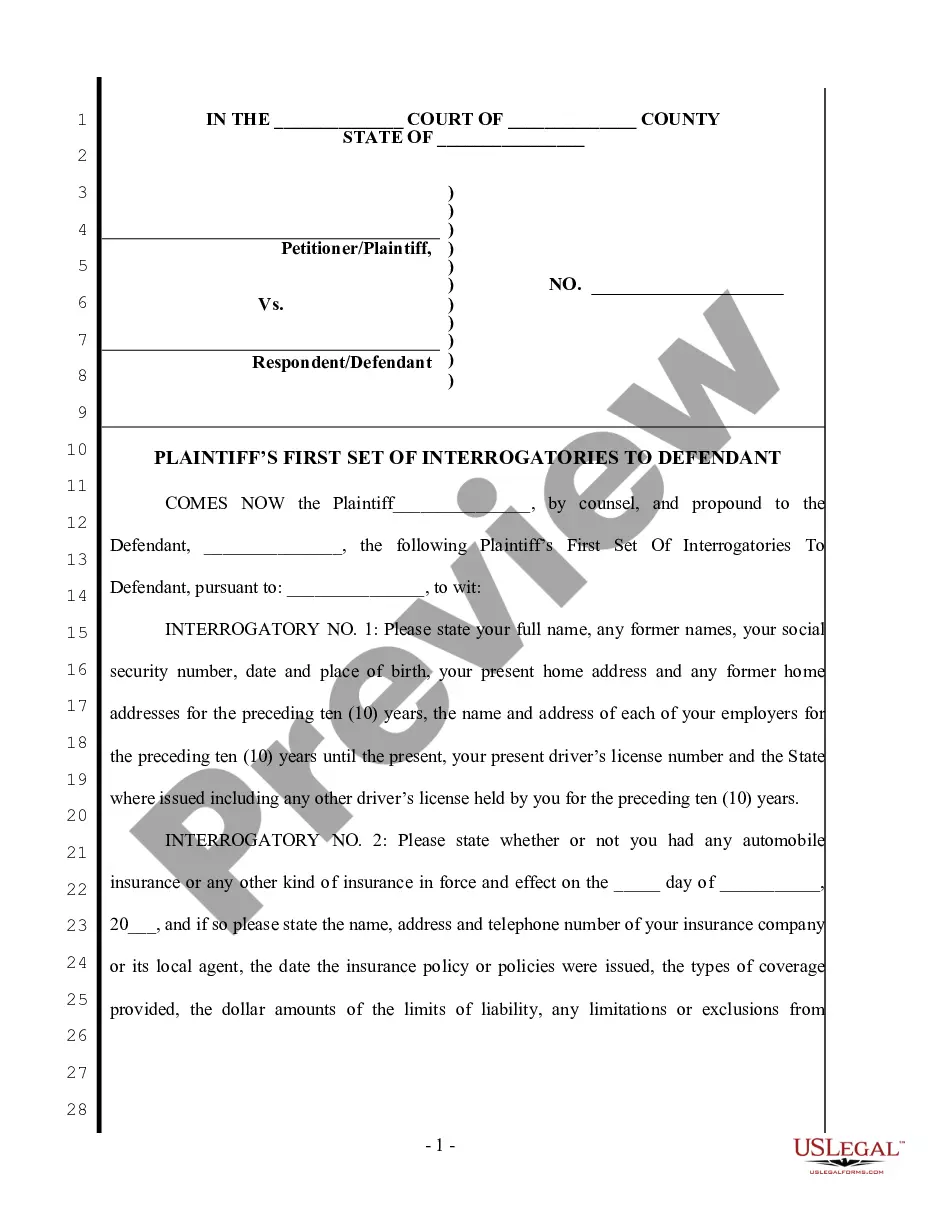
The Discovery Interrogatories for Divorce Proceeding is a legal document that allows the Plaintiff to formally request information from the Defendant during a divorce case. This form includes a series of questions designed to uncover relevant facts about finances, property, and personal circumstances that may influence the divorce proceedings. It serves as a crucial tool for gathering evidence and information, ensuring transparency and fairness for both parties involved in the divorce process.
Form components explained
- Full identifying information of the Defendant, including name, address, and date of birth.
- Detailed employment history for the past three years, including income details.
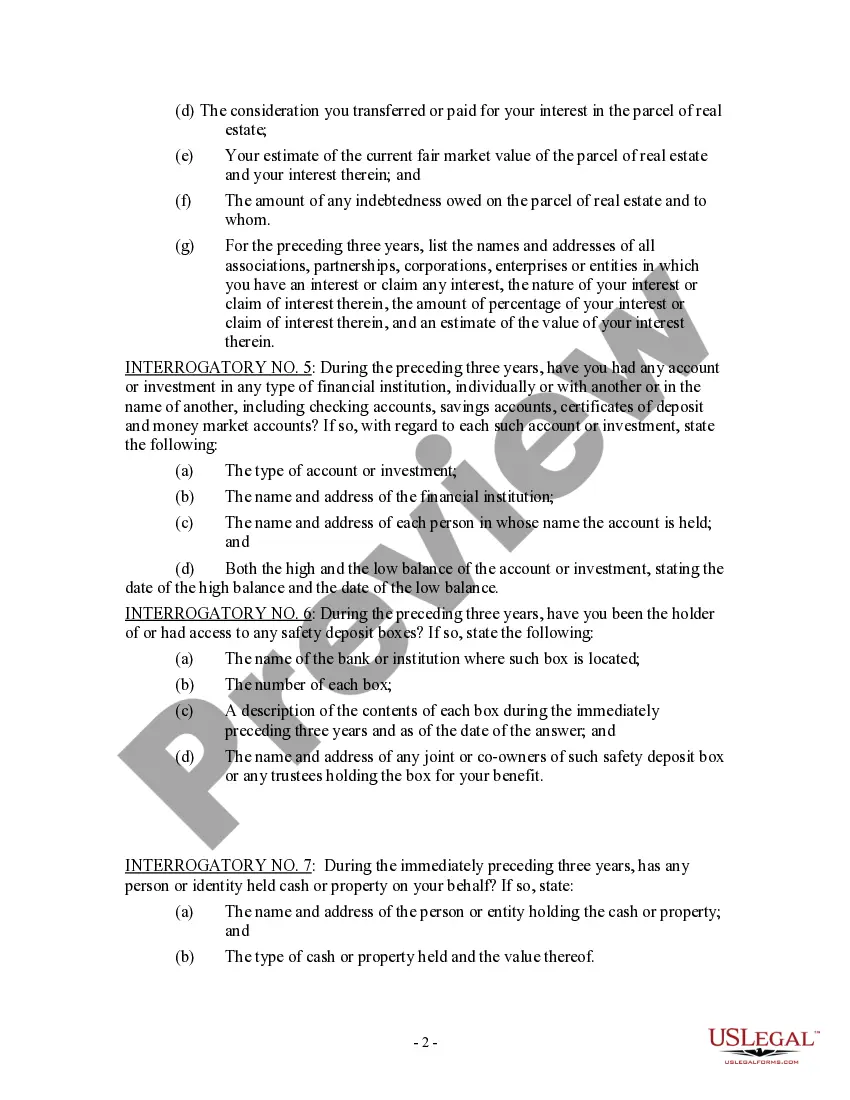
- Information regarding real estate ownership and financial interests.
- Disclosure of all sources of income and any financial accounts.
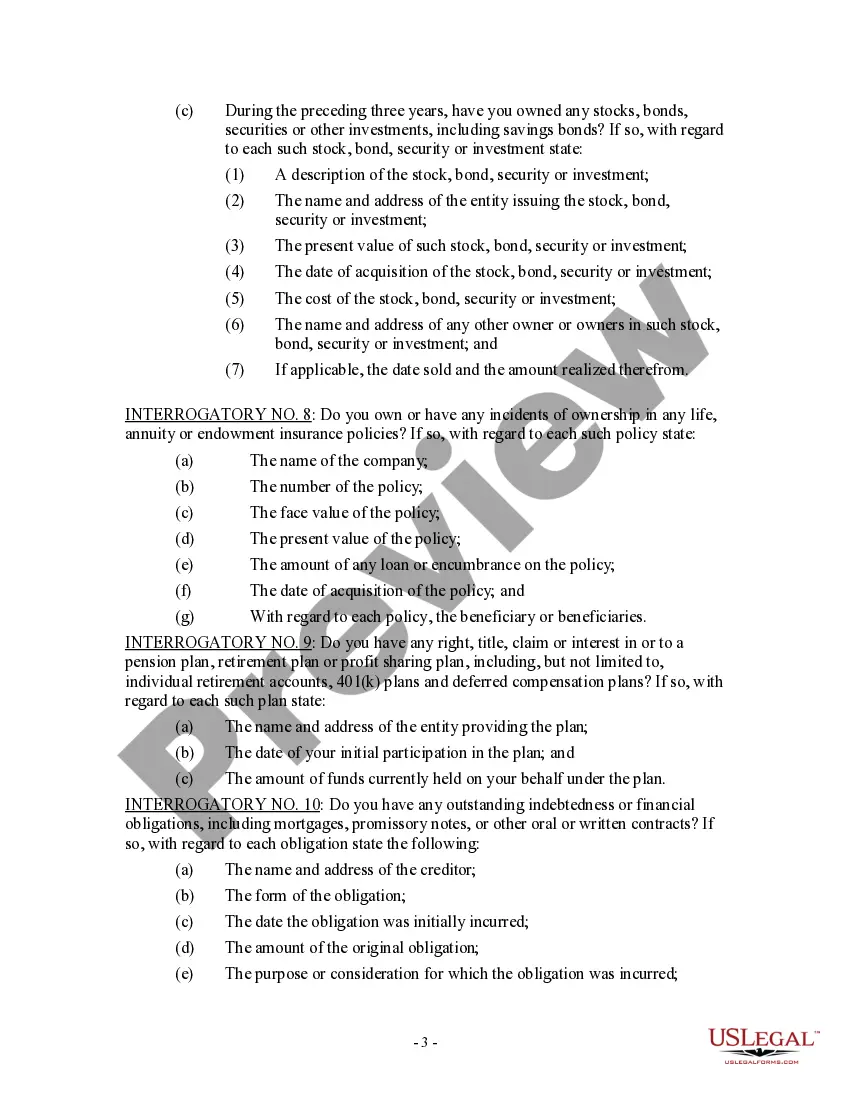
- Information about assets, including stocks, bonds, and insurance policies.
- Details of debts and financial obligations owed by the Defendant.
Situations where this form applies
This form should be used during the discovery phase of a divorce when the Plaintiff needs to gather detailed information from the Defendant. It is particularly useful for understanding the Defendantâs financial situation, which can significantly influence asset division, spousal support, and other critical issues in the divorce settlement.
Who can use this document
- The Plaintiff in a divorce proceeding who needs information from the Defendant.
- Legal representatives of either party involved in a divorce case.
- Anyone looking to ensure clarity and transparency in the divorce negotiation process.
How to complete this form
- Identify the parties involved and fill in their full names and addresses.
- Review each interrogatory question and modify or delete any that are not relevant to your case.
- Gather necessary financial and identification documents to accurately respond to each question.
- Complete all sections, ensuring thorough and truthful answers.
- Sign and date the form to certify that the information provided is accurate.
- Serve the completed form to the Defendant and file the Notice of Service with the court.
Does this form need to be notarized?
This form does not typically require notarization unless specified by local law. Always check with your jurisdiction to ensure compliance with any specific requirements for documentation in divorce proceedings.
Get your form ready online
Our built-in tools help you complete, sign, share, and store your documents in one place.
Make edits, fill in missing information, and update formatting in US Legal Forms—just like you would in MS Word.
Download a copy, print it, send it by email, or mail it via USPS—whatever works best for your next step.
Sign and collect signatures with our SignNow integration. Send to multiple recipients, set reminders, and more. Go Premium to unlock E-Sign.
If this form requires notarization, complete it online through a secure video call—no need to meet a notary in person or wait for an appointment.
We protect your documents and personal data by following strict security and privacy standards.

Make edits, fill in missing information, and update formatting in US Legal Forms—just like you would in MS Word.

Download a copy, print it, send it by email, or mail it via USPS—whatever works best for your next step.

Sign and collect signatures with our SignNow integration. Send to multiple recipients, set reminders, and more. Go Premium to unlock E-Sign.

If this form requires notarization, complete it online through a secure video call—no need to meet a notary in person or wait for an appointment.

We protect your documents and personal data by following strict security and privacy standards.
Common mistakes to avoid
- Neglecting to modify interrogatories, which may lead to irrelevant information.
- Failing to provide complete financial details or documentation.
- Not serving the form properly, which can delay the process.
- Providing inaccurate or incomplete responses, leading to potential legal ramifications.
Benefits of using this form online
- Immediate access to legal form templates crafted by licensed attorneys.
- Ability to edit and customize the form to meet your specific case needs.
- Simple download process for easy printing and submission.
- Guidance on how to properly fill out and serve the form.
Legal use & context
- This form is legally recognized as a tool for collecting information in divorce proceedings.
- Responses to these interrogatories can be used as evidence during court hearings.
- Failure to respond may result in legal penalties or adverse judgments.
Key takeaways
- Discovery Interrogatories are important for establishing financial transparency in divorce cases.
- Complete and accurate responses are crucial to avoid legal complications.
- The form should be customized to fit the specific circumstances of the case.
Looking for another form?
Form popularity
FAQ
Interrogatories are part of the discovery process of divorce. They allow you and your soon-to-be/already ex spouse to ask questions that must be responded to in writing under oath. These answer are then used to determine facts in the case, as well as to question each side if/when the case goes to trial.
Motions to Compel If a party doesn't respond to interrogatories or requests for production, then the party seeking those answers must file a motion to compel with the court. If the court grants the motion to compel, then the party who objected or failed to answer must then do so.
Interrogatories are sent during the discovery phase of your Divorce or Parentage Case. They are written questions from the other spouse or parent. If you have received Interrogatories, you have twenty-eight days to either object or respond and prepare your written answers.
In short, Rule 33 requires that each received interrogatory must be either answered, or objected to, within 30 days of being served with the interrogatory. You might be wondering what sorts of interrogatories are objectionable or what a valid objection would look like.
You must answer each interrogatory separately and fully in writing under oath, unless you object to it. You must explain why you object. You must sign your answers and objections.
There are several kinds of written discovery that you and your spouse can use to get all the information you need. You will likely be required to answer the questions and produce all the documents asked for as long as it is reasonable, and a lot is considered reasonable during a divorce.
So, can you refuse to answer interrogatories? The answer is, no, you may not.That answer must either permit inspection of the requested information or object to the production of the information for a specific reason.
Motions to Compel If a party doesn't respond to interrogatories or requests for production, then the party seeking those answers must file a motion to compel with the court. If the court grants the motion to compel, then the party who objected or failed to answer must then do so.