Pooling
What this document covers
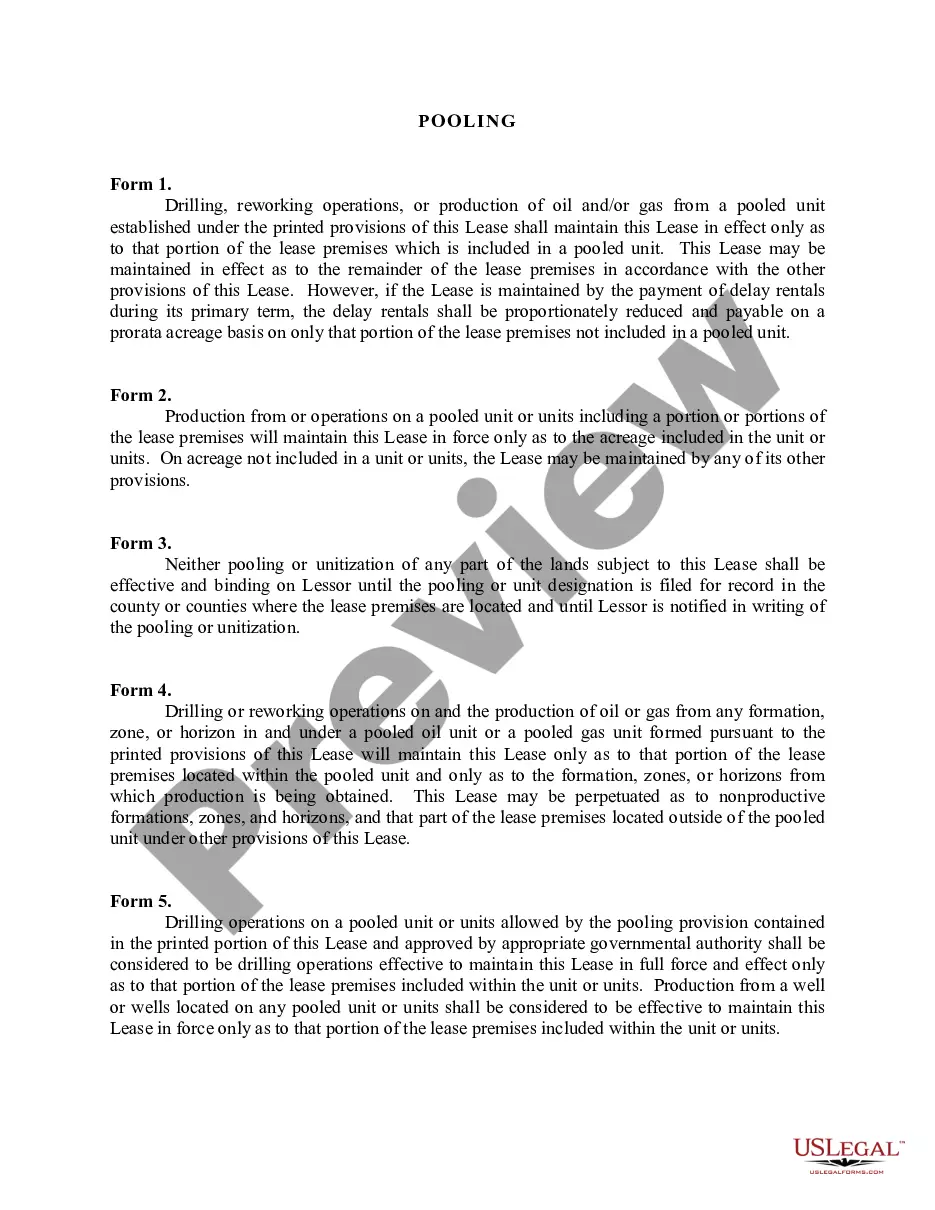
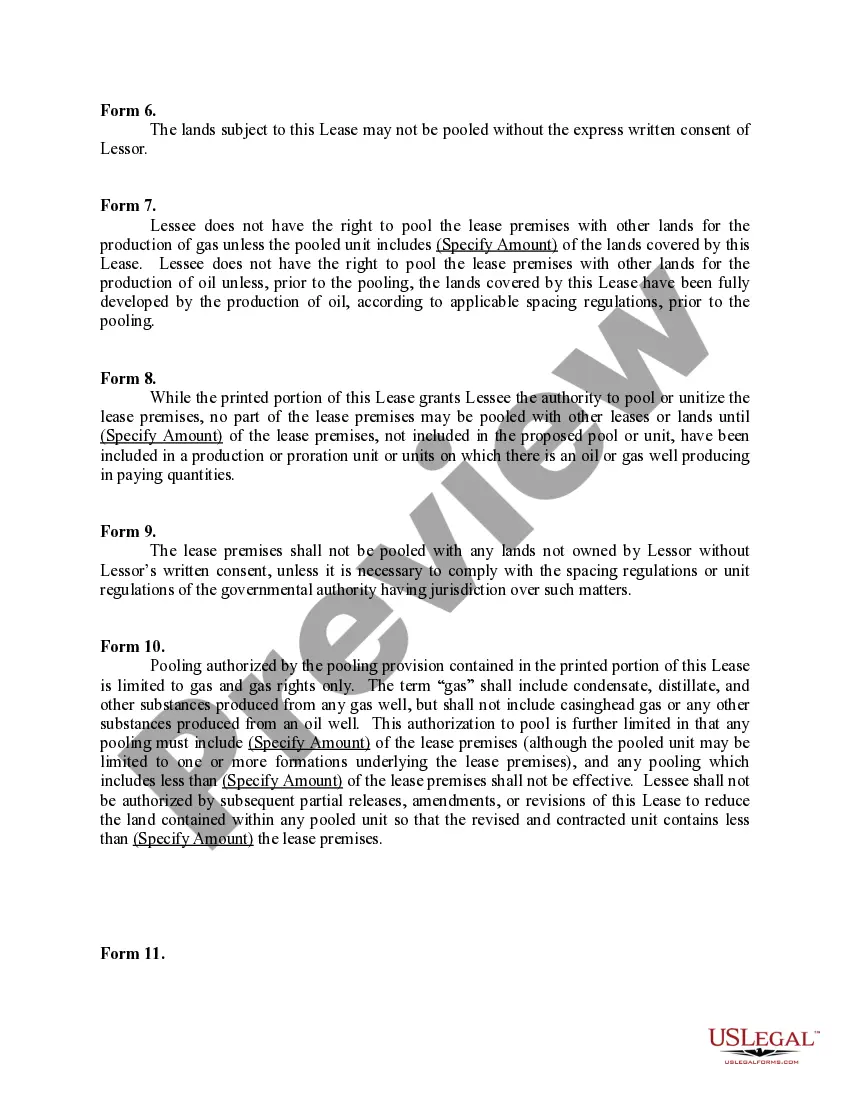
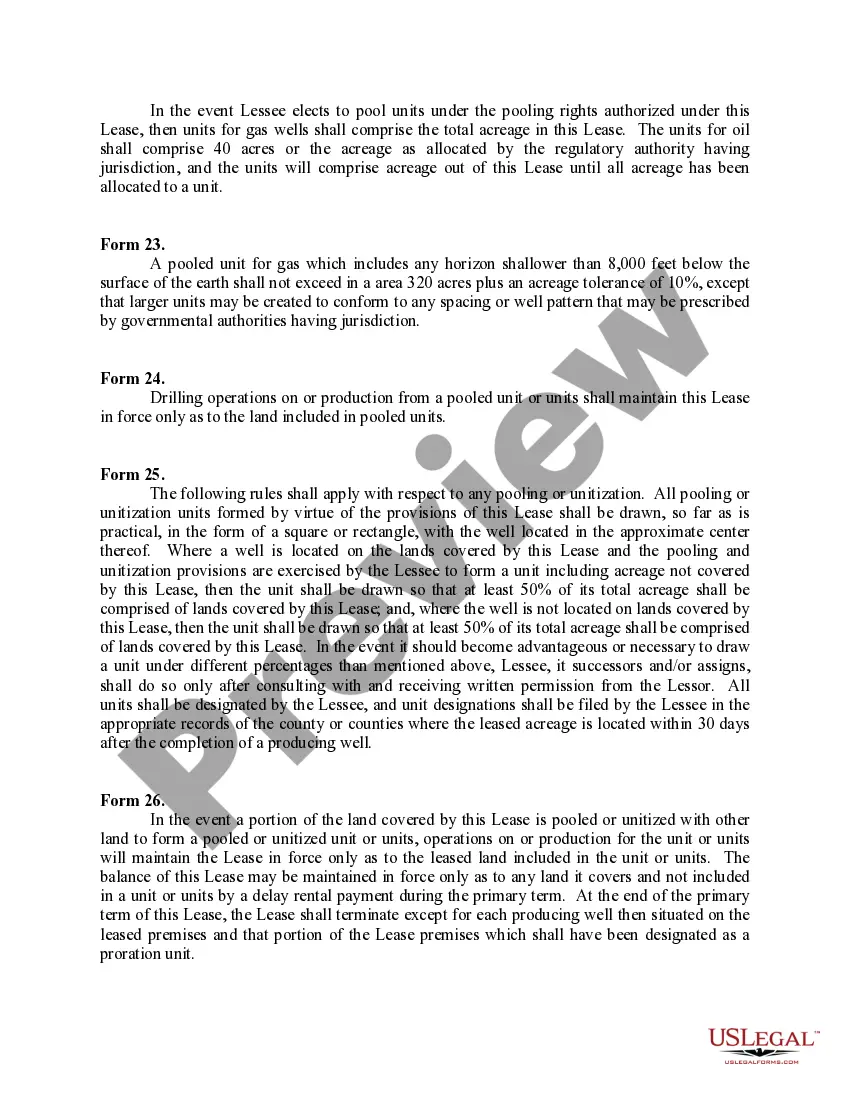
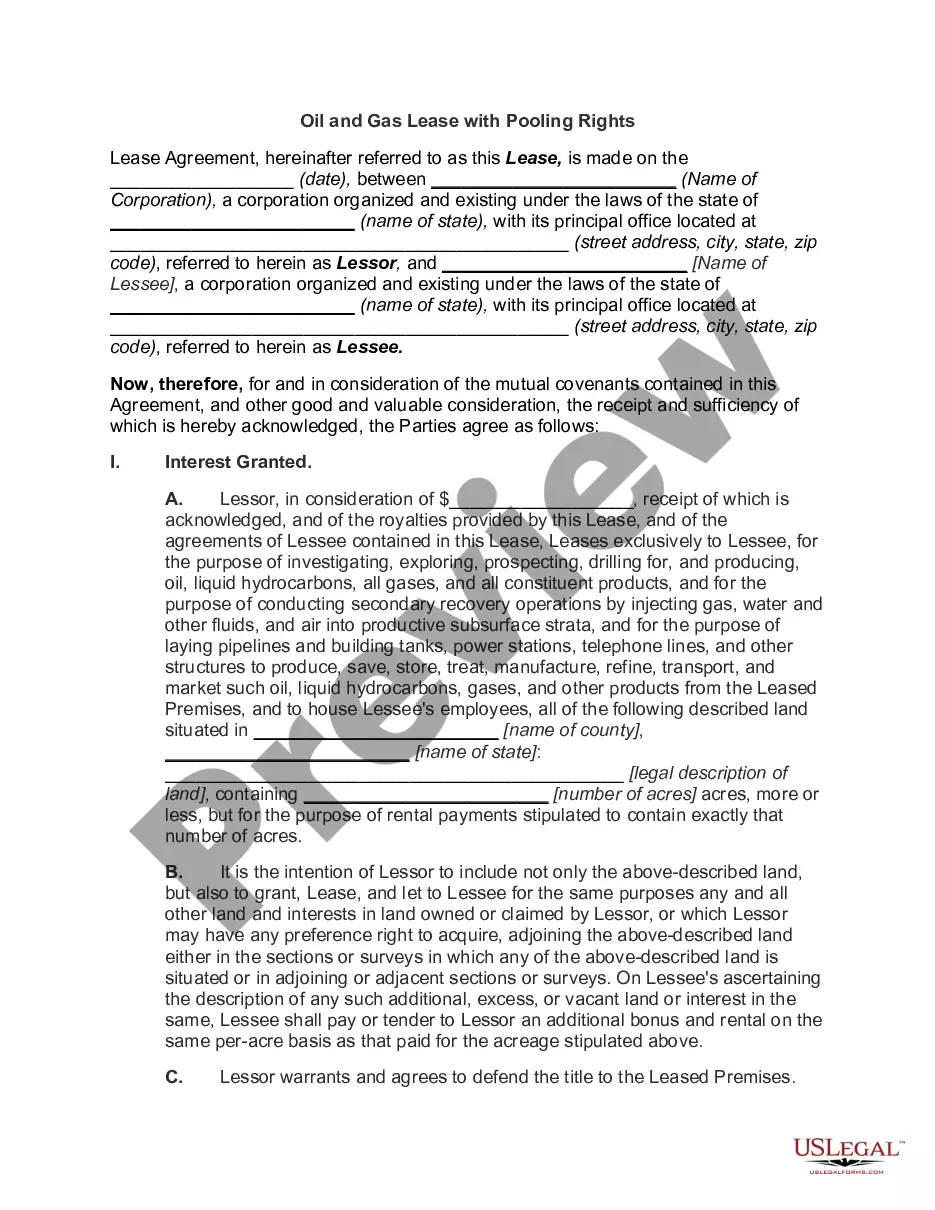
The Pooling form is a lease rider that allows property owners and lessees to establish specific provisions related to the pooling of land and resources for oil and gas production. This form is crucial for outlining the terms under which lands may be combined into units for extraction, ensuring that both parties address their concerns and rights accordingly. Unlike standard lease agreements, this form includes additional clauses that cater to the unique aspects of pooling operations.
Form components explained
- Definitions and terms related to pooling units
- Conditions for maintaining the lease in force during and after pooling operations
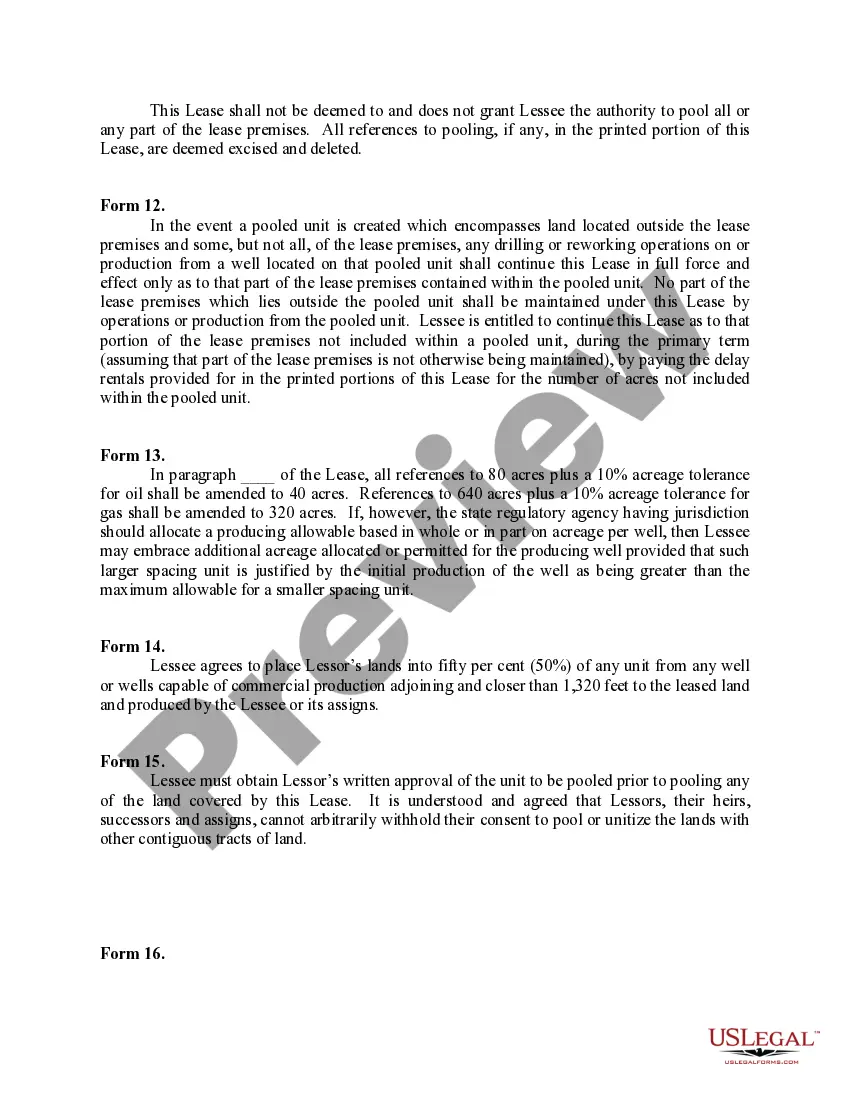
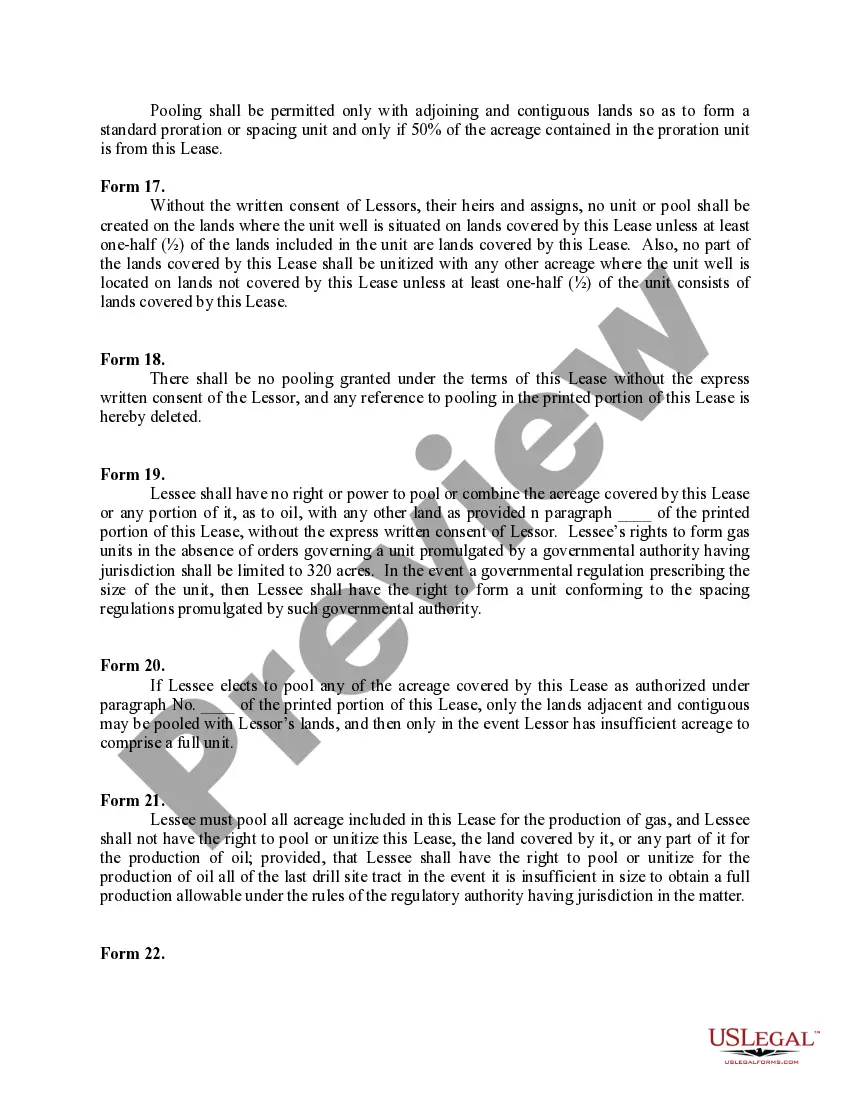
- Provisions for written consent from the lessor
- Rights and limitations regarding the lessee's ability to pool with adjoining lands
- Specifications on the number of acres required in the pooled unit




When this form is needed
This form is essential when entering into a lease that involves oil and gas production, especially in scenarios where pooling of leased land is considered. It is particularly useful when there are concerns about rights and obligations related to the pooling of resources, or when the lessor wants to specify conditions under which their land can be pooled with others.
Who should use this form
- Property owners (Lessors) looking to lease their land for oil and gas production
- Lessee companies who wish to pool land for effective resource extraction
- Anyone involved in negotiating or drafting oil and gas leases
How to complete this form
- Identify the parties involved, including the lessor and the lessee.
- Specify the property that is being leased and to be pooled.
- Outline the terms and conditions regarding the pooling arrangement.
- Provide written consent from the lessor where required.
- Enter dates for the lease agreement and signatures of both parties.
Is notarization required?
This form usually doesn’t need to be notarized. However, local laws or specific transactions may require it. Our online notarization service, powered by Notarize, lets you complete it remotely through a secure video session, available 24/7.
Get your form ready online
Our built-in tools help you complete, sign, share, and store your documents in one place.
Make edits, fill in missing information, and update formatting in US Legal Forms—just like you would in MS Word.
Download a copy, print it, send it by email, or mail it via USPS—whatever works best for your next step.
Sign and collect signatures with our SignNow integration. Send to multiple recipients, set reminders, and more. Go Premium to unlock E-Sign.
If this form requires notarization, complete it online through a secure video call—no need to meet a notary in person or wait for an appointment.
We protect your documents and personal data by following strict security and privacy standards.

Make edits, fill in missing information, and update formatting in US Legal Forms—just like you would in MS Word.

Download a copy, print it, send it by email, or mail it via USPS—whatever works best for your next step.

Sign and collect signatures with our SignNow integration. Send to multiple recipients, set reminders, and more. Go Premium to unlock E-Sign.

If this form requires notarization, complete it online through a secure video call—no need to meet a notary in person or wait for an appointment.

We protect your documents and personal data by following strict security and privacy standards.
Mistakes to watch out for
- Failing to obtain written consent from the lessor before pooling.
- Not clearly defining the acreage involved in the pooling unit.
- Neglecting to follow local regulations related to oil and gas pooling.
Benefits of using this form online
- Convenience of downloading and completing at your own pace.
- Editability allows for customization based on specific needs.
- Reliable templates drafted by licensed attorneys ensure legal compliance.
Looking for another form?





Form popularity
FAQ
Swimming pools are fairly deep, and require large amounts of material to fill.If conditions allow and the trucks are able to get to the pool area, they might be able to dump into it (obviously once it is broken up and the walls are removed).
Your Water. Call the water company and tell them you are going to fill your swimming pool. Run the hose to the pool with enough slack that the end of the hose is on the bottom of the pool. Turn on the hose and allow the water to run until the water level is about 6 inches from the top edge of the pool.
At first you'll add chlorine in what's called shock levels an extra heavy dose to start your pool off.Ensure all equipment like pool cleaners and pool covers are removed during this process. Addressing Alkalinity in Your Pool. Now it's time to keep the water hardness in check, otherwise known as alkalinity.
Step 1: Learn about how to prevent drowning and pool chemical injuries. Step 2: Turn on the filter. Step 3: Vacuum and skim off debris. Step 4: Test the water, and then test it again. Step 5: Enjoy your pool, but safely!
Stain & Scale Preventer. Granular Shock Chlorine. Chlorine Tablets. pH Increaser and/or pH Decreaser. Alkalinity and/or Calcium Increaser. Cyanuric Acid (Stabilizer) Algaecide and Clarifiers if needed. Complete Test Kit or Test Strips.
Ideal Water Height Most pool professionals agree that the water level in both in-ground and above-ground pools should be at the midpoint of the pool skimmer.
The average cost to fill in an inground pool is $4,000 to $16,000 for full demolition or $2,000 to $10,000 to fill in with dirt. An above ground pool removal costs $300 to $800, or $2,500 with a deck. The cost to get rid of a swimming pool depends on the size, depth, material, and accessibility.
Concrete pads are excellent to use as a base for your above ground pool, but you'll want to add another cushion between the two. Concrete is an abrasive material and will wear on the liner if it's in direct contact. Concrete is the best choice for a solid base because it is perfectly flat.
City Water This is usually the best and most convenient water to use to fill your pool. It just involves hooking up your water hose and placing the other end directly into your pool. However, it's not always the cheapest choice.