Division Orders
What is this form?
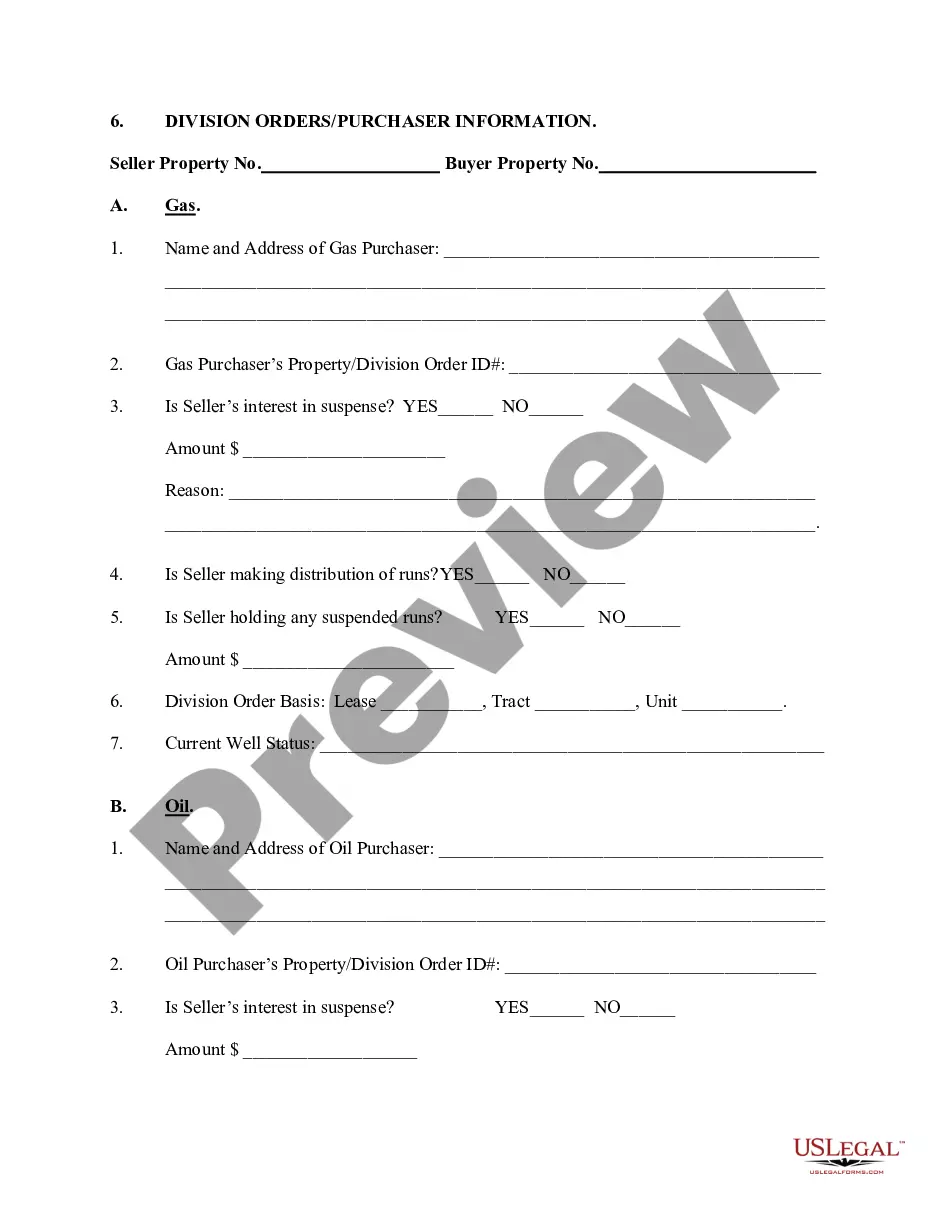
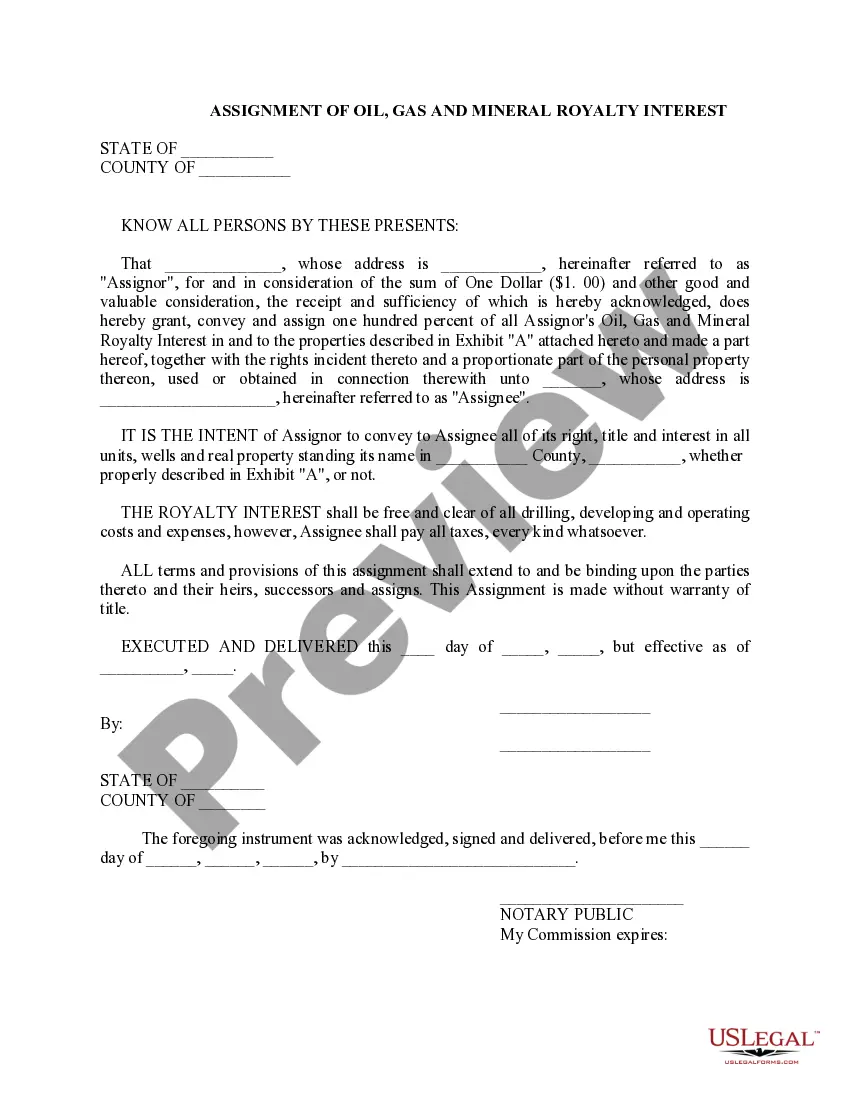
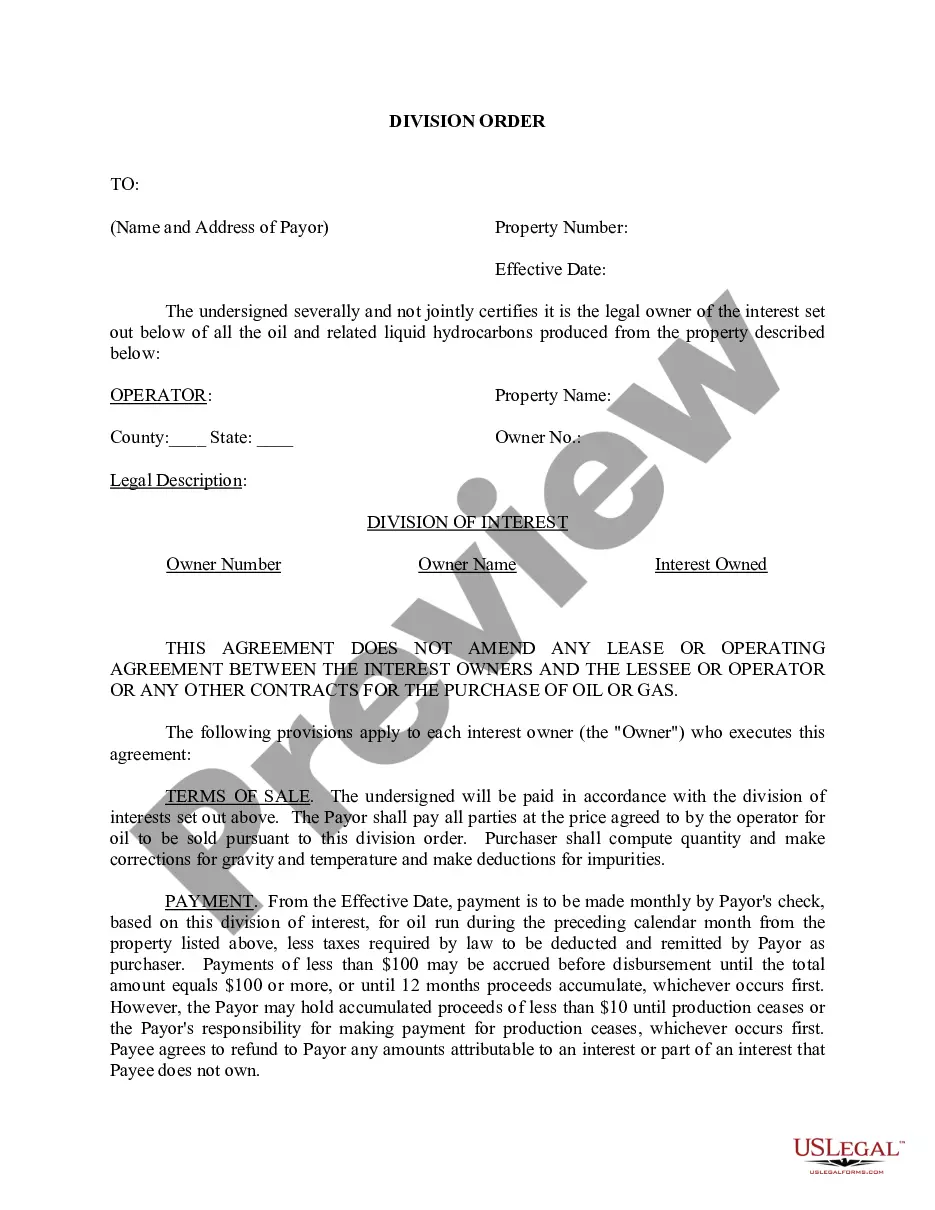
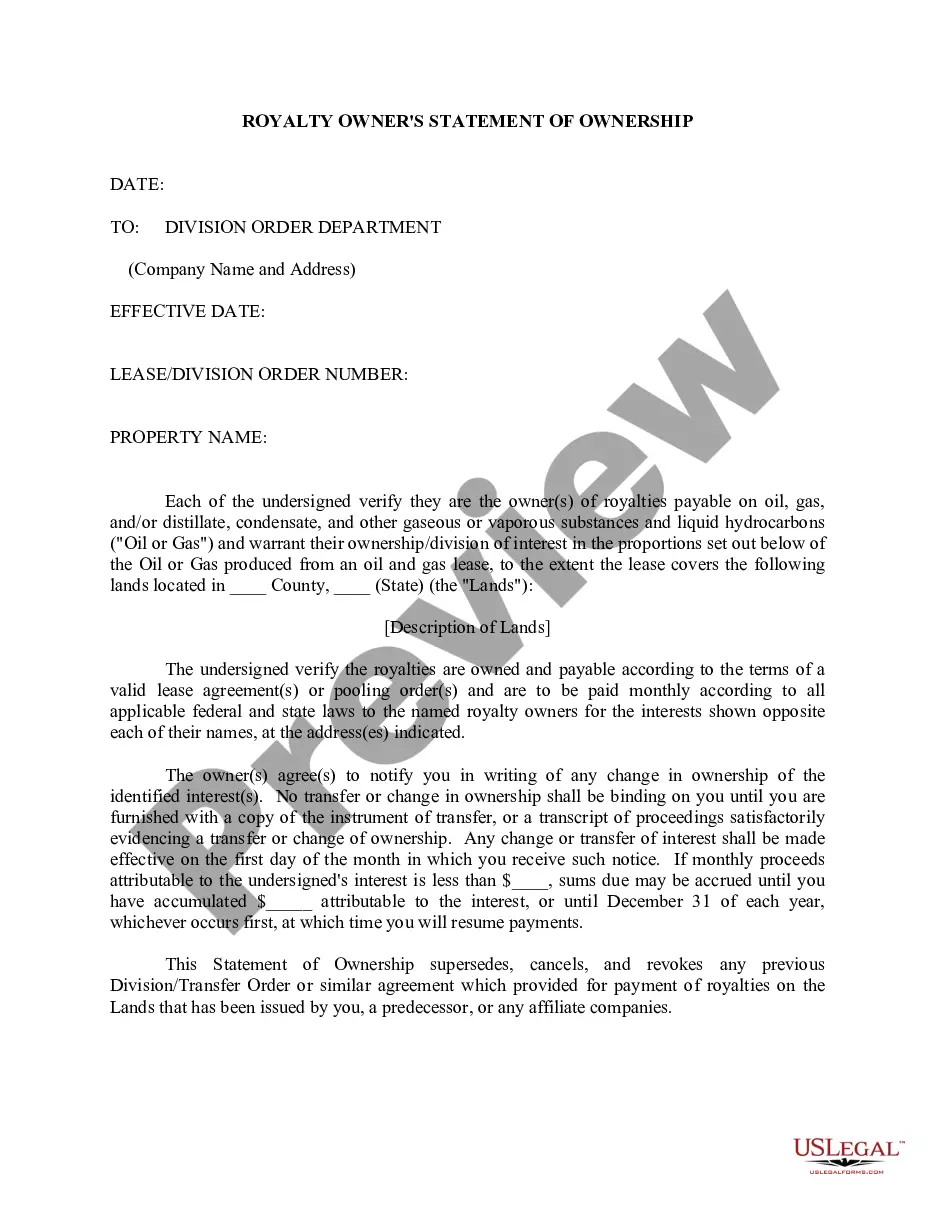
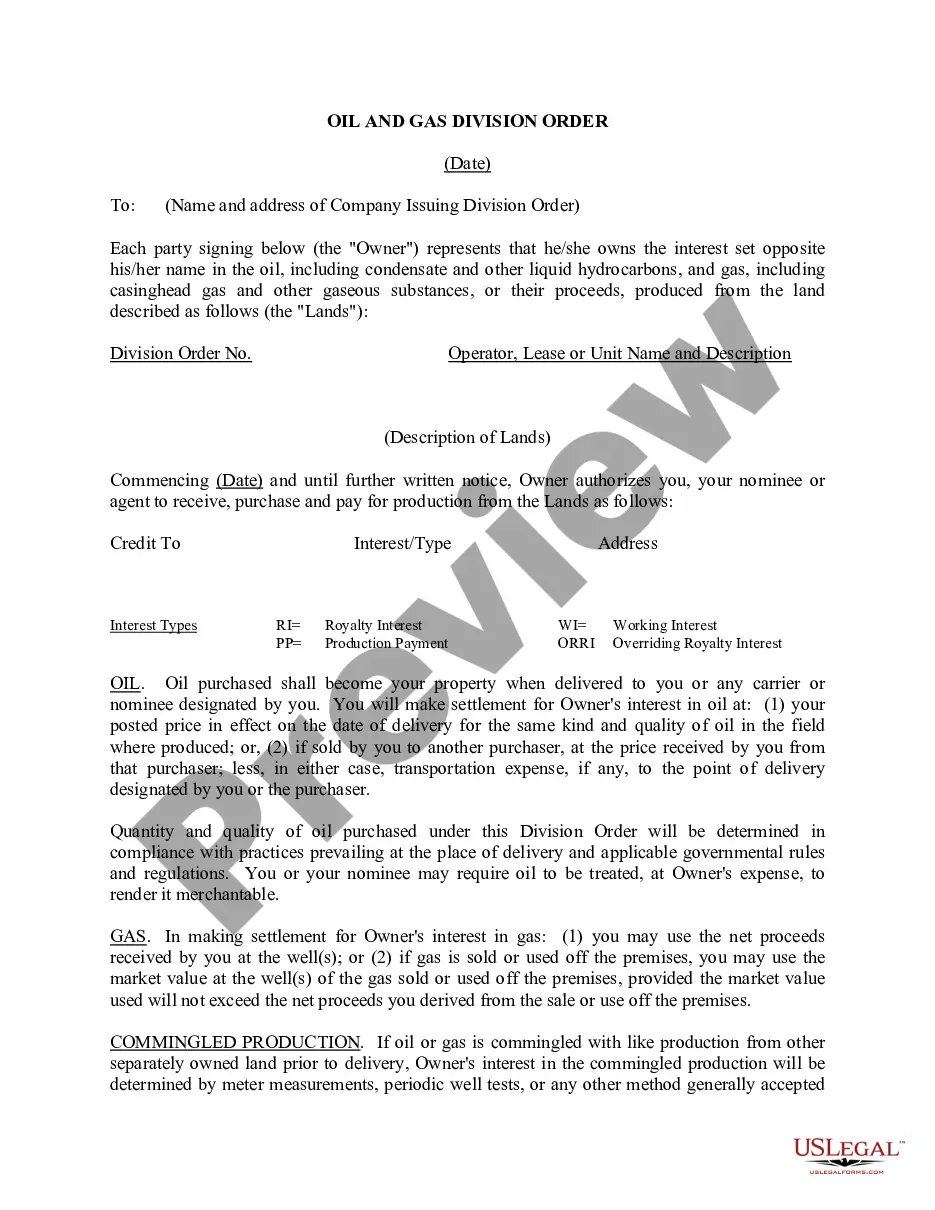
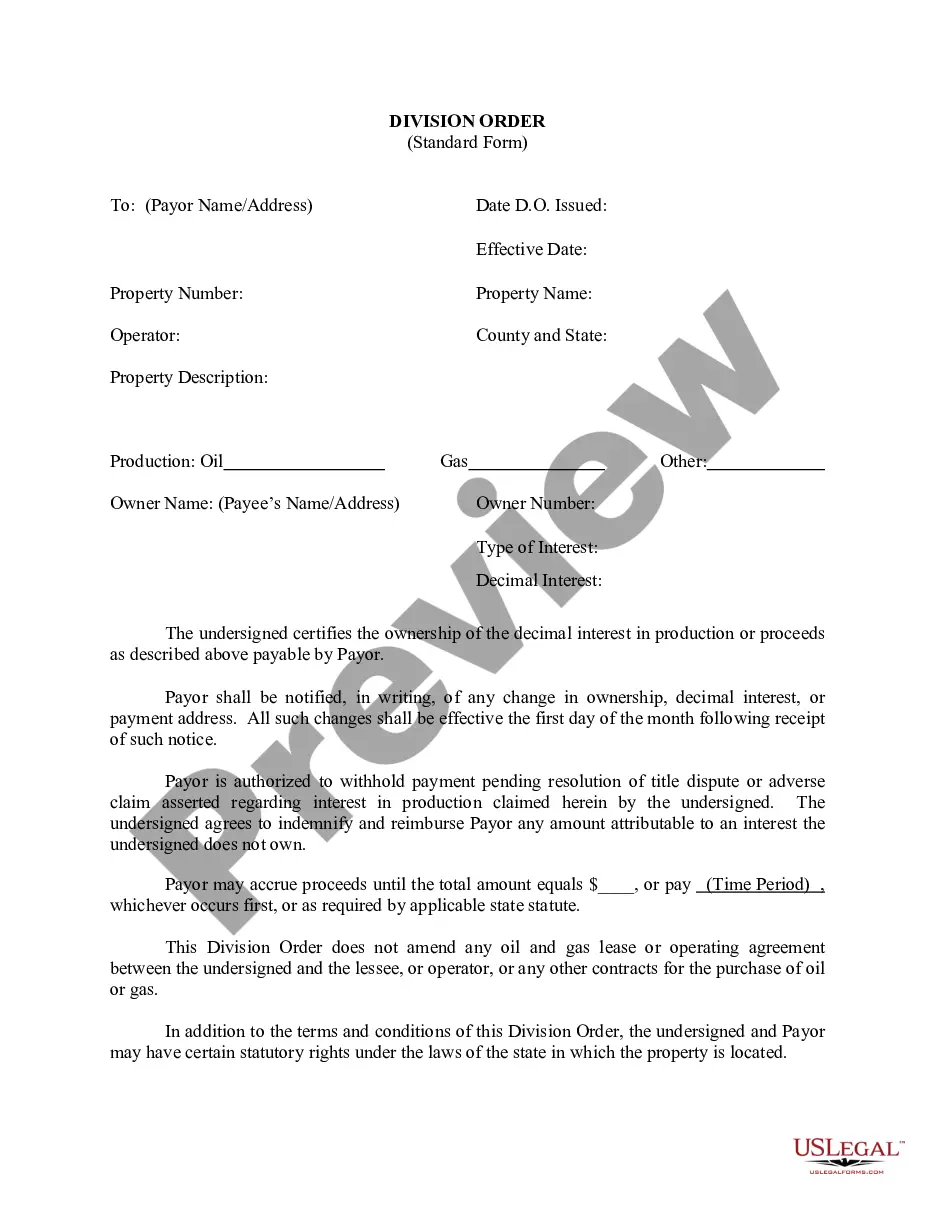
The Division Orders form is a legal document used to authorize the sharing of oil and gas production proceeds between sellers and buyers. This form serves as a means of verifying ownership interests and ensuring that funds are properly allocated based on contractual arrangements. It differs from other forms related to property sales by focusing specifically on the distribution of resources extracted from gas and oil wells.
What’s included in this form
- Seller and buyer property numbers.
- Name and address of the gas purchaser, including a specific identification number.
- Status of the seller's interest, including suspense details and distribution confirmations.
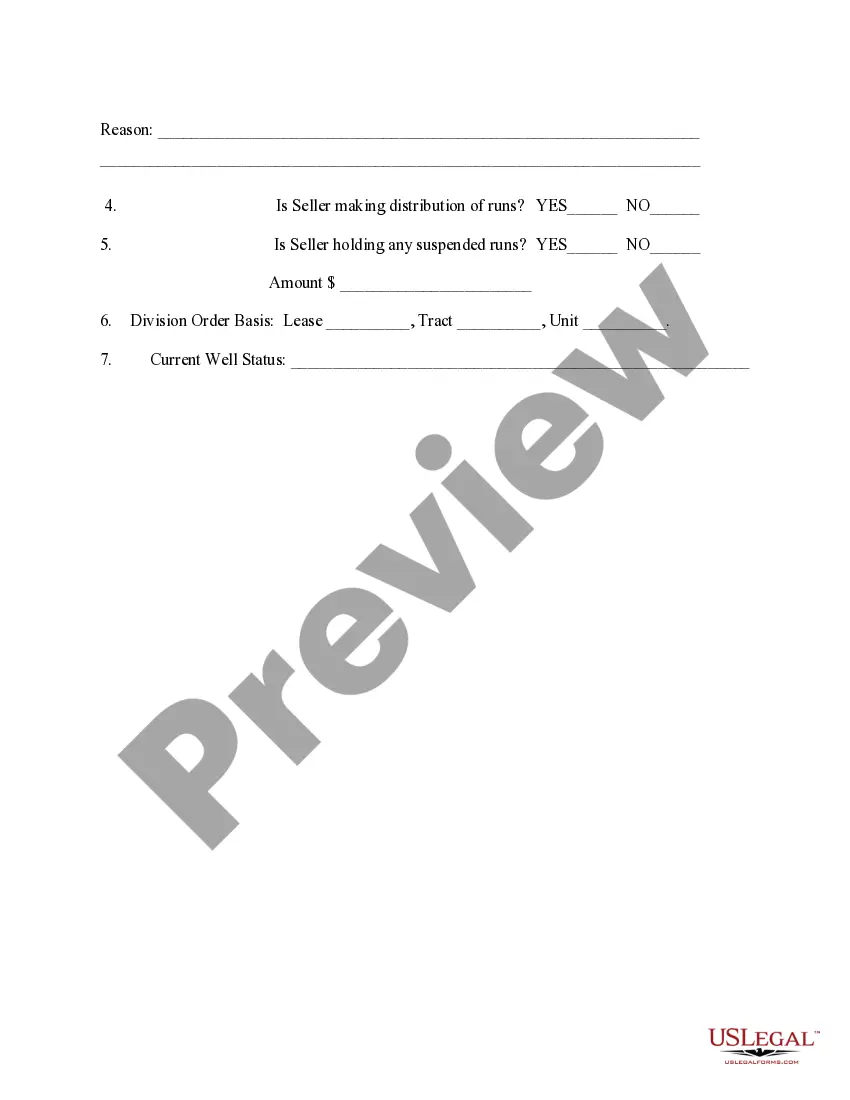
- Current well status for both gas and oil sections.
- Division order basis, detailing lease, tract, and unit information.
When to use this document
This form is essential when entering into agreements involving the sale of oil and gas resources. It should be used whenever a seller needs to formally document who will receive funds from production and ensure that all parties are aware of any interests that may be in suspense or held for distribution.
Who should use this form
- Natural gas and oil producers.
- Landowners who have leased their land for oil and gas extraction.
- Buyers of oil and gas who are entering into a contractual agreement with sellers.
- Legal representatives aiding in oil and gas transactions.
How to complete this form
- Identify and fill in the seller and buyer property numbers.
- Provide the name and address of the gas purchaser along with their property/division order ID.
- Indicate whether the seller's interest is in suspense and provide relevant details.
- Specify the current well status and the division order basis by detailing the lease, tract, and unit.
- Complete the oil purchaser information in the same manner as the gas purchaser section.
Notarization guidance
This form does not typically require notarization unless specified by local law. Users should verify the notarization requirements based on the jurisdiction where the form will be utilized.
Get your form ready online
Our built-in tools help you complete, sign, share, and store your documents in one place.
Make edits, fill in missing information, and update formatting in US Legal Forms—just like you would in MS Word.
Download a copy, print it, send it by email, or mail it via USPS—whatever works best for your next step.
Sign and collect signatures with our SignNow integration. Send to multiple recipients, set reminders, and more. Go Premium to unlock E-Sign.
If this form requires notarization, complete it online through a secure video call—no need to meet a notary in person or wait for an appointment.
We protect your documents and personal data by following strict security and privacy standards.

Make edits, fill in missing information, and update formatting in US Legal Forms—just like you would in MS Word.

Download a copy, print it, send it by email, or mail it via USPS—whatever works best for your next step.

Sign and collect signatures with our SignNow integration. Send to multiple recipients, set reminders, and more. Go Premium to unlock E-Sign.

If this form requires notarization, complete it online through a secure video call—no need to meet a notary in person or wait for an appointment.

We protect your documents and personal data by following strict security and privacy standards.
Typical mistakes to avoid
- Failing to provide accurate property or division order IDs.
- Omitting details regarding the sellerâs interest in suspense.
- Not specifying the current well status adequately.
- Forgetting to complete both the gas and oil sections of the form.
Benefits of using this form online
- Convenient and accessible; you can fill it out anytime.
- Easy to edit, allowing for adjustments to be made before final submission.
- Reliable templates drafted by licensed attorneys, ensuring legal compliance.
Summary of main points
- The Division Orders form is crucial for documenting the distribution of oil and gas revenues.
- Complete both gas and oil sections thoroughly to avoid errors.
- Ensure compliance with state-specific requirements for validity.
Looking for another form?

Form popularity
FAQ
A division order is a record of your interest in a specific well. It contains your decimal interest, interest type, well number and well name. Division orders are issued to all that own an interest in a specific well after that well has achieved first sales of either oil or gas.
A Division Order (DO's), also known as a Division of Interest (DOI), is the instrument which details the proportional ownership of produced minerals, including oil, liquids, natural gas, etc., in a well or unitized area of production.
For all three division symbols, we say divided by. The division in a is read from left to right: twelve divided by six. The division in b is read from top to bottom: twelve divided by six. The division in c is written with a division box. We read the number inside the box first: twelve divided by six.
Net revenue is the amount that is shared among the property owners. To determine net revenue interest, multiply the royalty interest by the owner's shared interest. For example, if you have a 5/16 royalty, your net royalty interest would be 25% multiplied by 5/16, which equals 7.8125% calculated to four decimal places.
A Division Order (DO's), also known as a Division of Interest (DOI), is the instrument which details the proportional ownership of produced minerals, including oil, liquids, natural gas, etc., in a well or unitized area of production.
Division is breaking a number up into an equal number of parts. Example: 20 divided by 4 = ? If you take 20 things and put them into four equal sized groups, there will be 5 things in each group.
We always follow division with multiplication, multiplying the divisor by the number we put at the top of our division problem. In this case, it would be 7 x 1, which is 7, so we would write 7 underneath the 11.
Your job as a Division Order Analyst is to determine each owner's share, and distribute checks accordingly. You may work for only one company, keeping detailed records about the people who own the company's equipment and resources.