Royalty Owner's Statement of Ownership
About this form
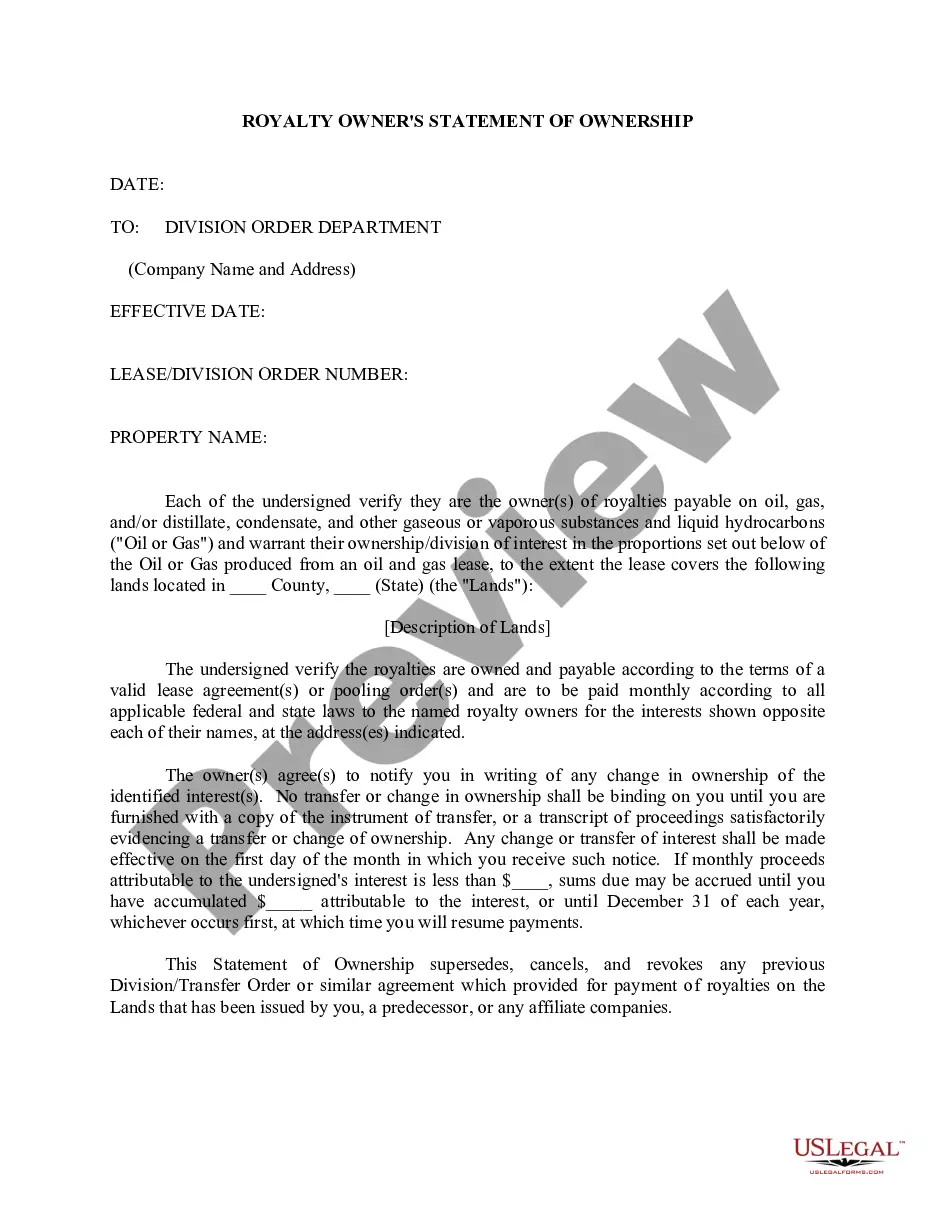
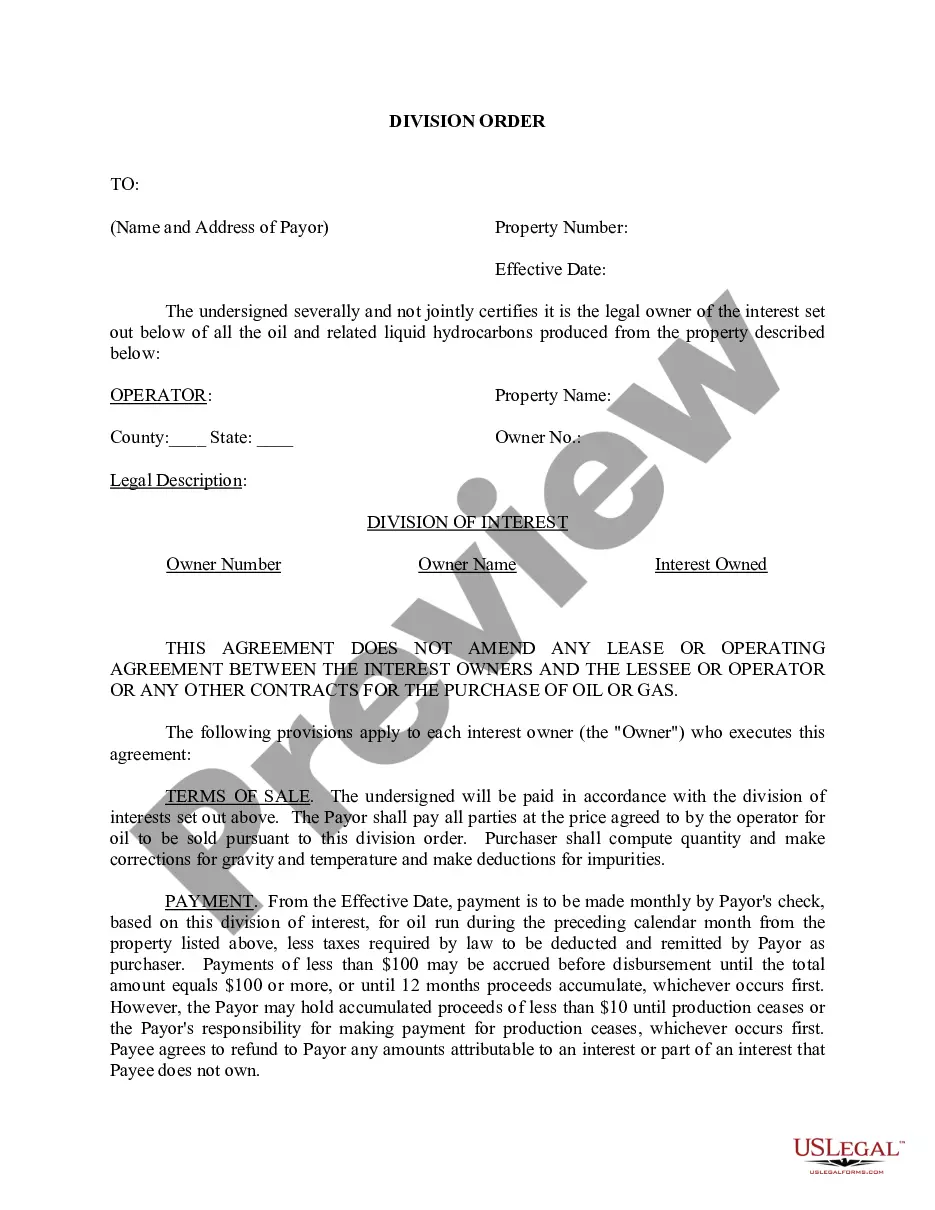
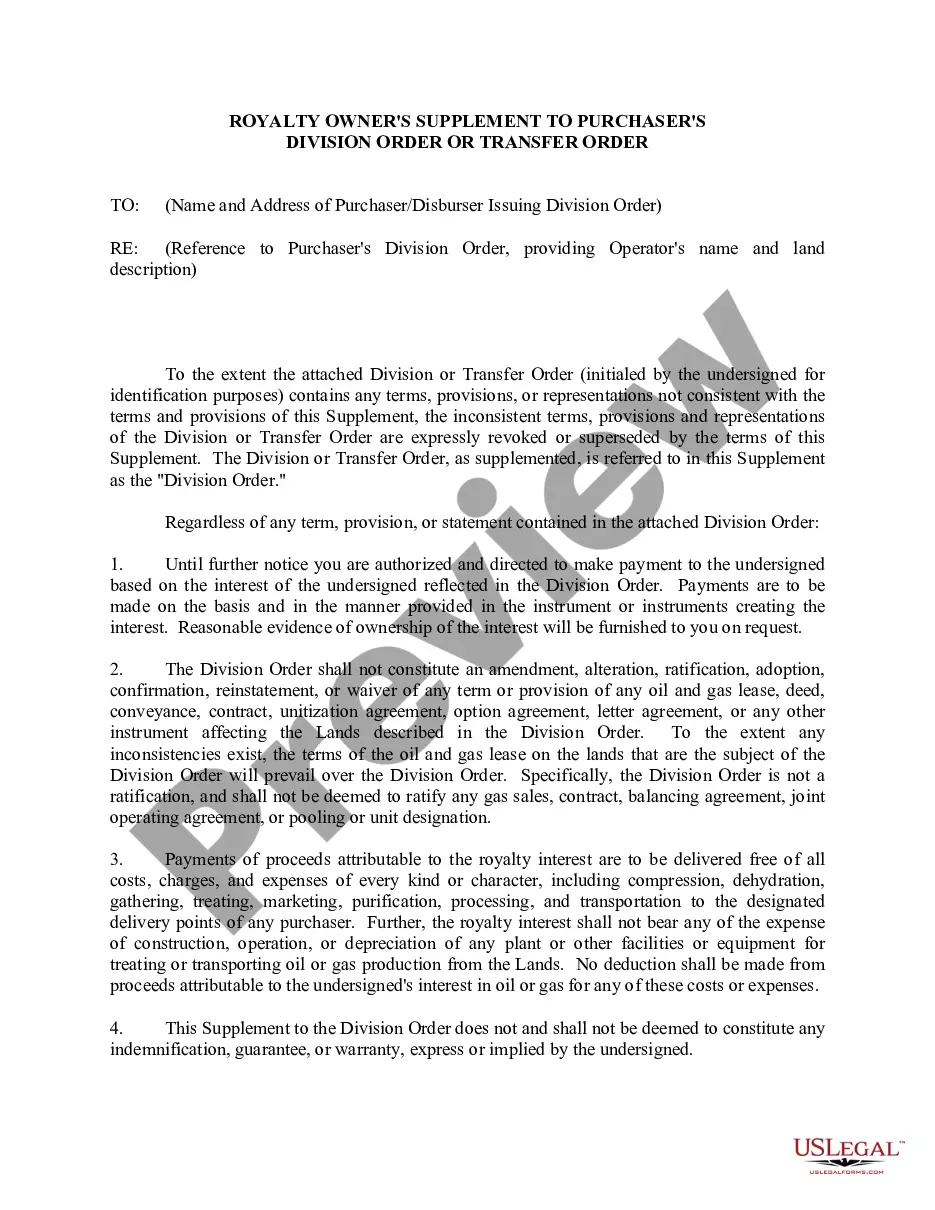
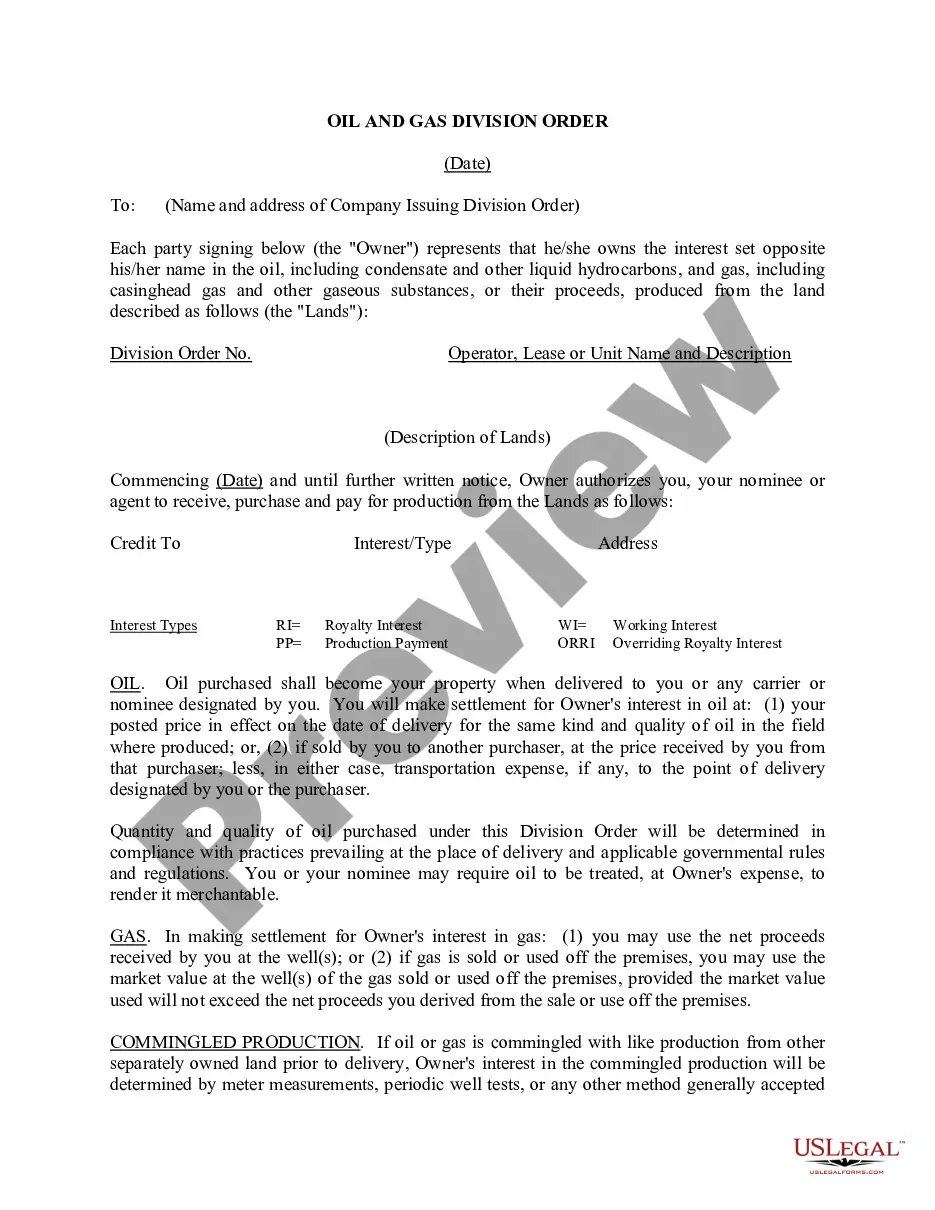
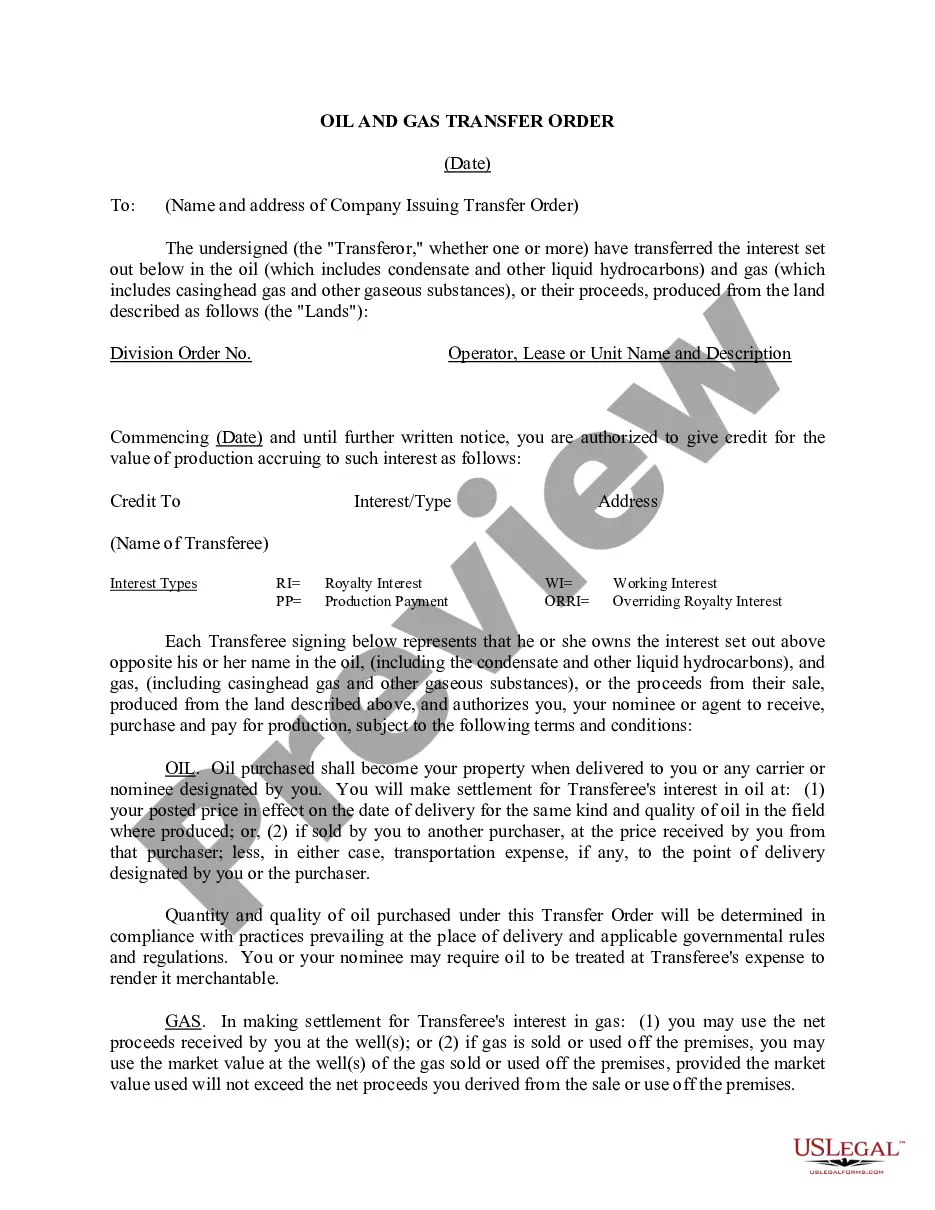
The Royalty Owner's Statement of Ownership is a document that confirms ownership of royalties payable on oil, gas, and related substances. This form serves as a stipulation by the owners for the benefit of a payor and can be used in place of a division order, if the payor accepts it. It is essential for formally documenting and verifying the distribution of royalties between parties involved in oil and gas leases, distinguishing itself from similar forms by offering both a declaration of ownership and a warranty of interest.
Form components explained
- Date and effective date of the agreement.
- Company name and address of the division order department.
- Lease or division order number associated with the property.
- Detailed description of the lands covered by the lease.
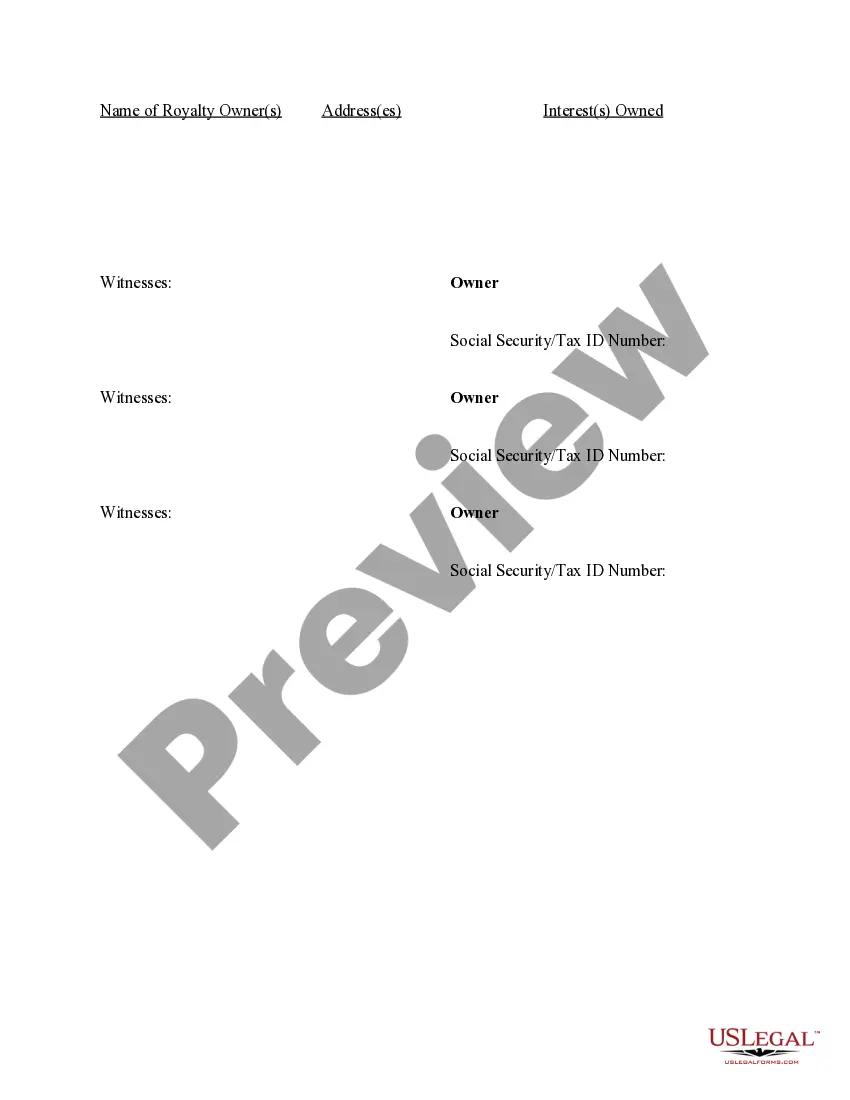
- Names and addresses of the royalty owners with their respective interests.
- A declaration about notifying the payor of any ownership changes.
Situations where this form applies
This form should be used when royalty owners need to confirm their ownership interests in oil and gas leases. It is particularly important when initiating or updating royalty payments, as it provides clarity to payors about who is entitled to receive royalties. It can be beneficial in situations where a division order is not provided but the payor accepts a statement of ownership instead.
Intended users of this form
- Royalty owners who receive payments for oil and gas production.
- Individuals or entities involved in the sale or lease of mineral rights.
- Landowners engaged in agreements related to oil and gas extraction.
- Investors in property with an interest in mineral rights.
Completing this form step by step
- Enter the current date and the effective date at the top of the form.
- Provide the name and address of the division order department.
- Fill in the lease or division order number along with the description of the lands.
- List the names, addresses, and ownership interests of all royalty owners.
- Sign and date the form to acknowledge ownership and agreement to the terms.
Notarization requirements for this form
In most cases, this form does not require notarization. However, some jurisdictions or signing circumstances might. US Legal Forms offers online notarization powered by Notarize, accessible 24/7 for a quick, remote process.
Get your form ready online
Our built-in tools help you complete, sign, share, and store your documents in one place.
Make edits, fill in missing information, and update formatting in US Legal Forms—just like you would in MS Word.
Download a copy, print it, send it by email, or mail it via USPS—whatever works best for your next step.
Sign and collect signatures with our SignNow integration. Send to multiple recipients, set reminders, and more. Go Premium to unlock E-Sign.
If this form requires notarization, complete it online through a secure video call—no need to meet a notary in person or wait for an appointment.
We protect your documents and personal data by following strict security and privacy standards.

Make edits, fill in missing information, and update formatting in US Legal Forms—just like you would in MS Word.

Download a copy, print it, send it by email, or mail it via USPS—whatever works best for your next step.

Sign and collect signatures with our SignNow integration. Send to multiple recipients, set reminders, and more. Go Premium to unlock E-Sign.

If this form requires notarization, complete it online through a secure video call—no need to meet a notary in person or wait for an appointment.

We protect your documents and personal data by following strict security and privacy standards.
Typical mistakes to avoid
- Omitting the effective date or lease number.
- Failing to verify the accuracy of ownership interests before signing.
- Neglecting to notify the payor of any changes in ownership.
Why use this form online
- Easy access to customizable templates without legal jargon.
- Immediate download for quick completion and submission.
- Secure format ensures that sensitive information is protected.
Looking for another form?

Form popularity
FAQ
Mineral interests and royalty interests both involve ownership of the minerals under the ground. The main difference between the two is that the owner of a mineral interest has the right to execute leases and collect bonus payments and the owner of royalty interests does not execute leases or collect bonus payments.
For many years, almost all oil and gas leases reserved a 1/8th royalty. Today, the royalty fraction is negotiable, and is usually between 1/8th and 1/4th. Bonus. The bonus is the amount paid to the Lessor as consideration for his/her execution of the lease.
To calculate your oil and gas royalties, you would first divide 50 by 1,000, and then multiply this number by . 20, then by $5,004,000 for a gross royalty of $50,040. Once you calculate your gross royalty amount, compare it to the number you see on your royalty check stubs.
Royalty income is reported on Form 1099-MISC, Box 2, Royalties. The oil and gas company will generally also report related expenses, including production tax. The person will continue to receive these royalty payments while the well is still producing.
The definition of an Oil or Gas Royalty interest, as stated by MineralWise.com is, Royalty interest is an oil and natural gas lease that gives the owner of the interest the right to receive a portion of the production from the leased acreage (or of the proceeds of the sale thereof), but generally does not require the
Royalty Exchange is an online marketplace and auction platform where you can buy and sell intellectual property. SongVest bills itself as The Stock Market of Music. Cypress Growth Capital specializes in royalties related to venture capital and business startups.
Traditionally 12.5%, but more recently around 18% 25%. The percentage varies upon how well the landowner negotiated and how expensive the oil company expects the extraction of oil and gas to be.
A royalty owner means any owner of oil or gas who is entitled to oil and gas rights. A royalty owner also means any owner of an interest in an oil or gas lease which entitles him to a share in the production of the oil or gas under such lease.
In the event oil and gas were found and the wells produce, then the royalties kick in. So if the oil well produce 100 barrels a day, and the price of oil is $80 per barrel that month, then the cash flow is 100x$80 = $8,000/day The royalty owner, who agreed to 15% royalty, would receive $8,000 x 0.15 = $1,200/day.