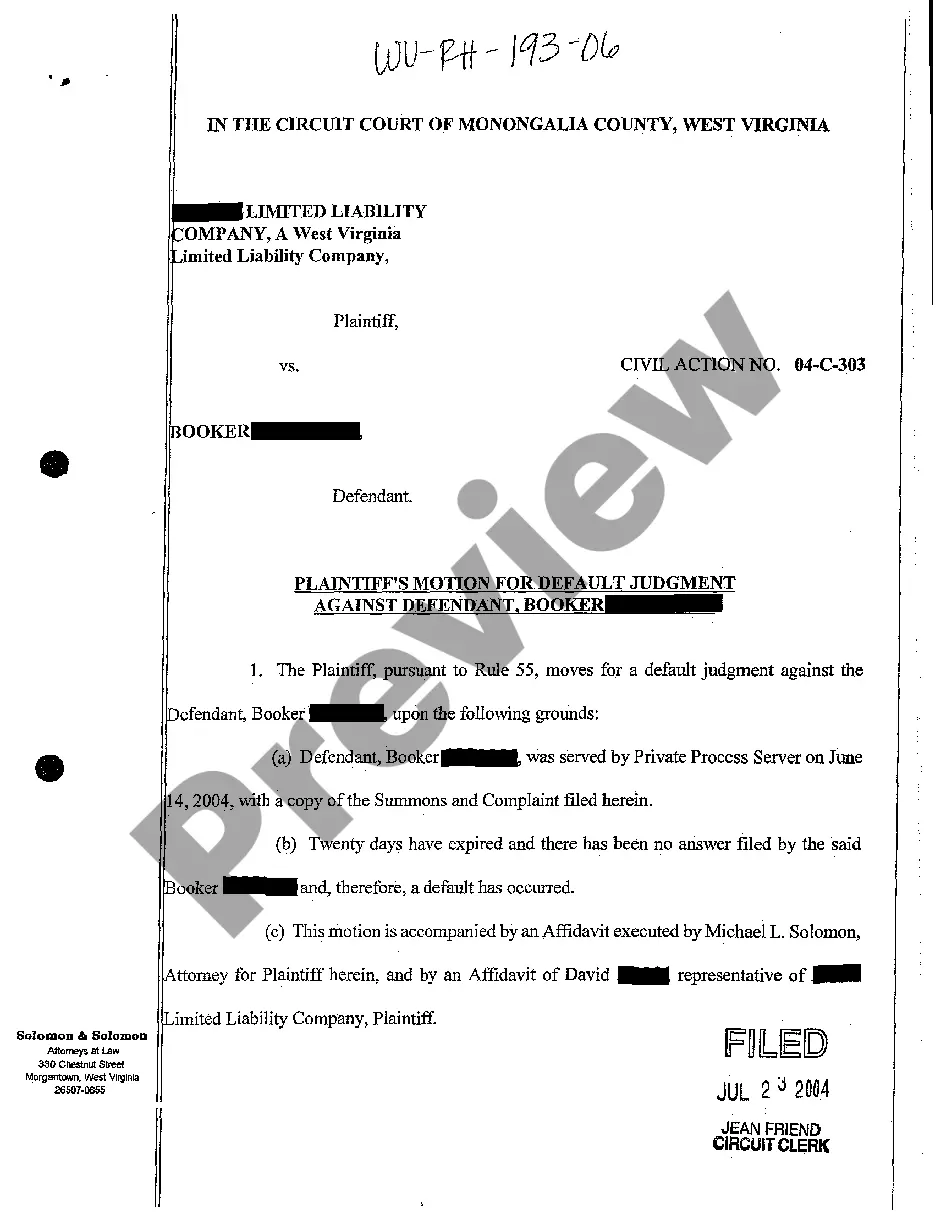
Memorandum of Understanding between a Town, County, District and Corporation
Understanding this form
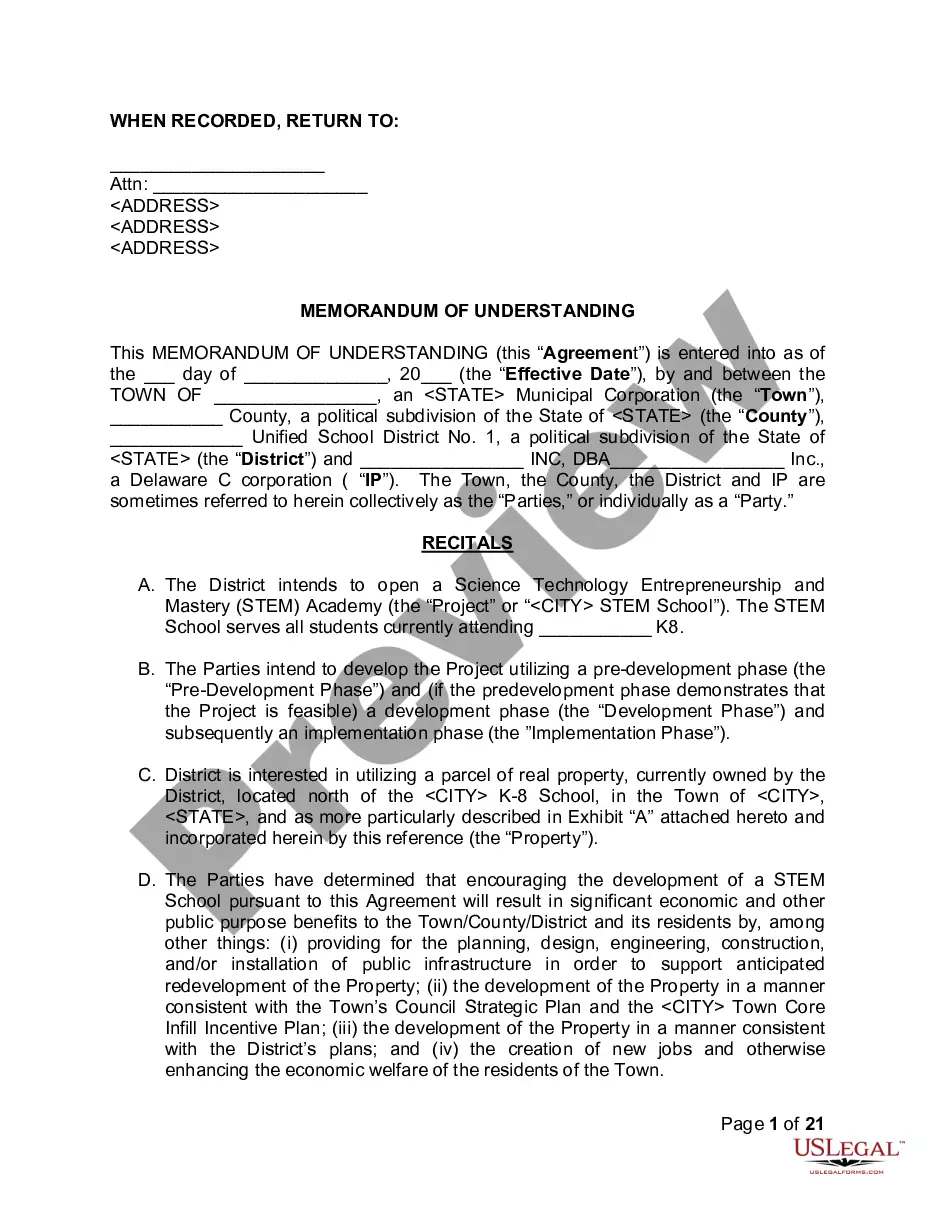
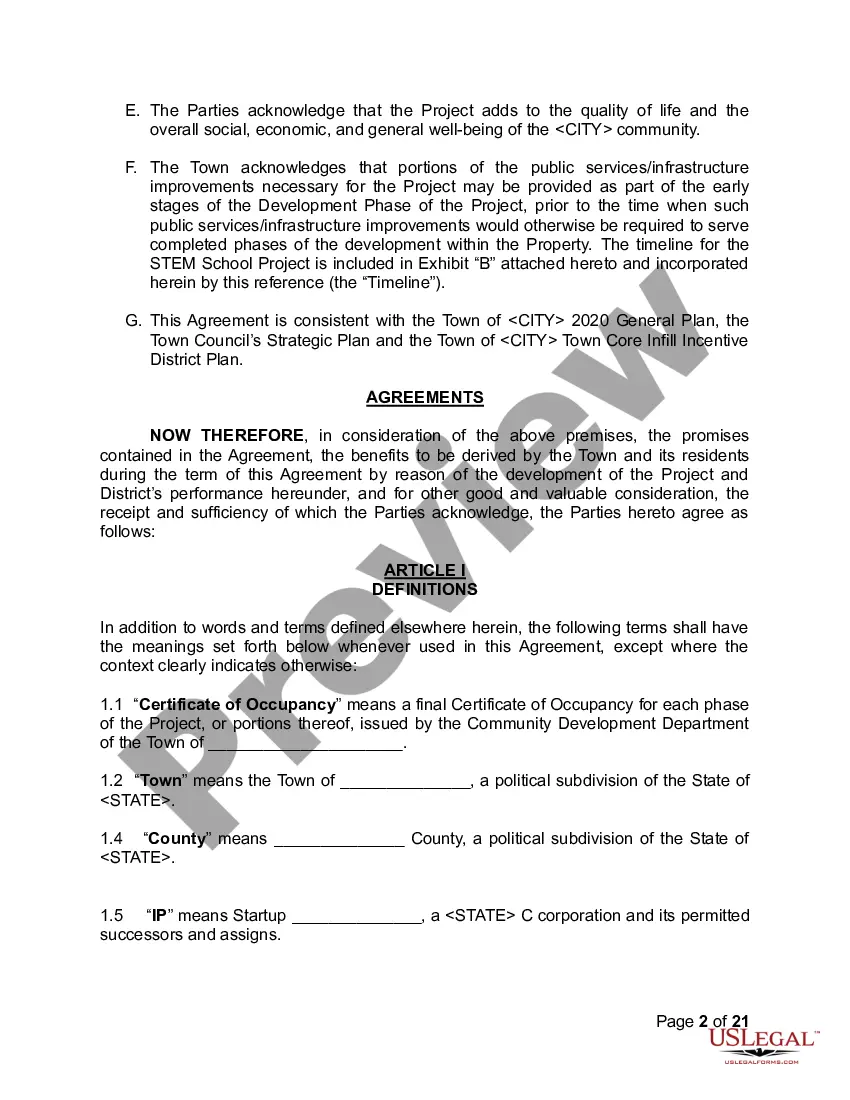
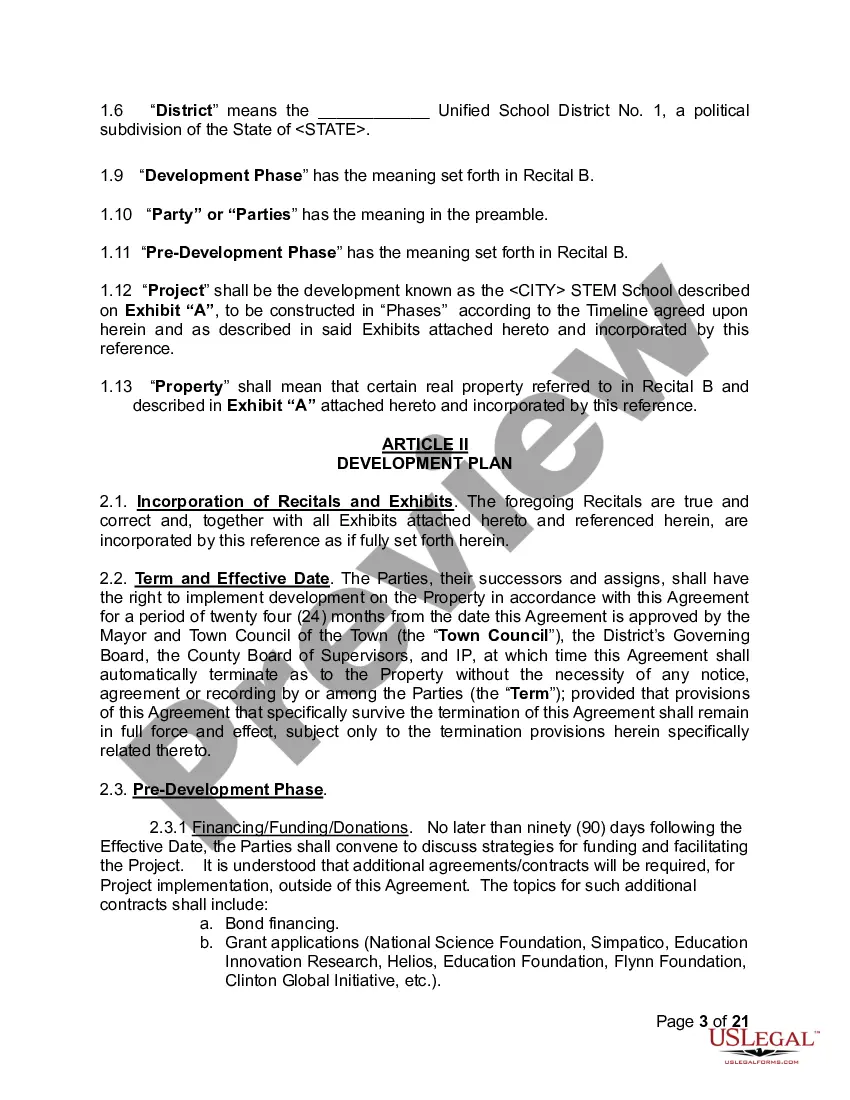
The Memorandum of Understanding (MOU) between a Town, County, District, and Corporation is a legally binding document that outlines the agreement and collaboration among these entities to develop a Science Technology Entrepreneurship and Mastery (STEM) Academy. This form helps clarify the roles, responsibilities, and expectations of each party involved in the development project, distinguishing it from other forms of contracts by its collaborative focus on public sector development.
Key components of this form
- Recitals: Provides background on the purpose of the agreement and the anticipated benefits of the project.
- Definitions: Clarifies key terms used throughout the MOU for consistency and understanding.
- Development Plan: Outlines the phases of development, including pre-development, development, and implementation.
- Obligations of Parties: Details the responsibilities of each party during the different phases of the project.
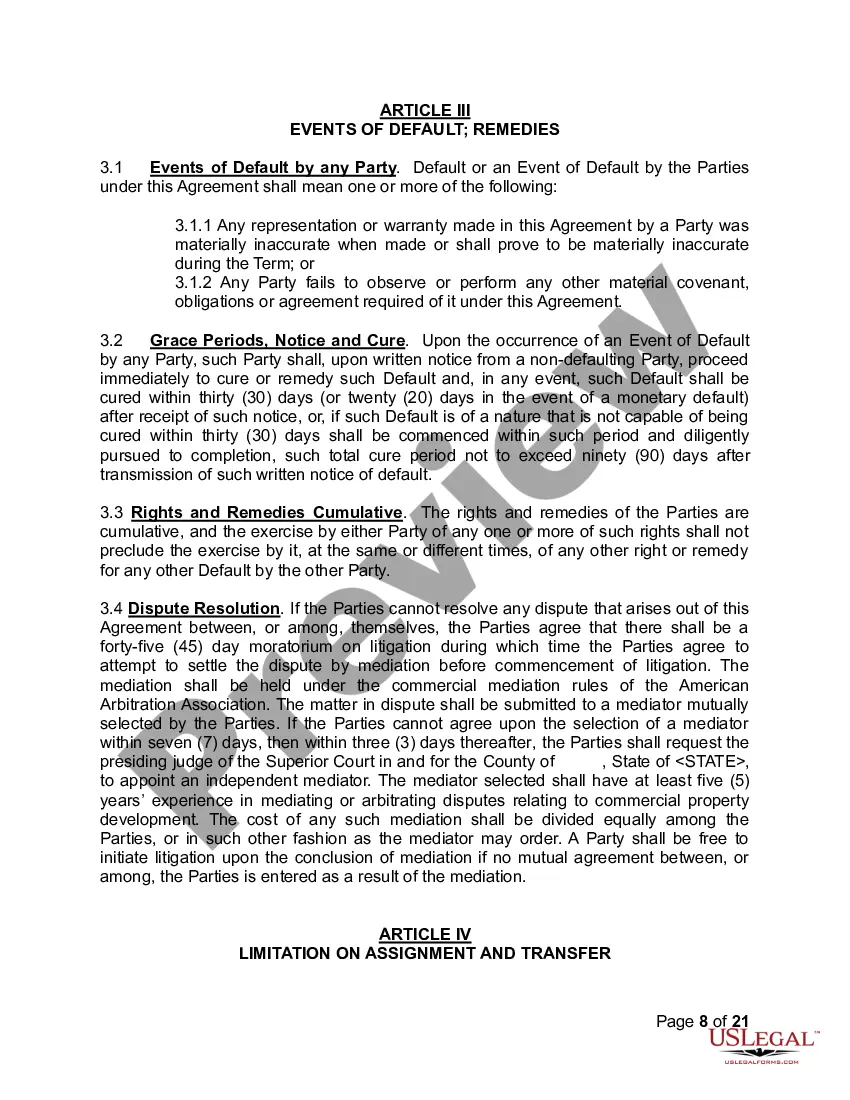
- Events of Default: Describes the conditions that would constitute a default of the agreement.

When to use this document
This form is used when a town, county, district, and corporation seek to formalize their agreement to collaborate on a public development project, such as the establishment of a STEM Academy. It is particularly relevant during the planning and early implementation phases of such projects when mutual understanding and agreement on responsibilities are necessary.
Who needs this form
- Government officials from the town, county, or district responsible for educational development.
- Representatives from a corporation or private entity involved in educational or community development initiatives.
- Administrators or board members from educational institutions proposing new programs or facilities.
- Legal advisors assisting public entities in drafting collaborative agreements.
Steps to complete this form
- Identify all parties involved in the agreement, including their official names and addresses.
- Specify the purpose of the MOU clearly in the recitals section.
- Outline each partyâs obligations and responsibilities during the pre-development, development, and implementation phases.
- Include definitions for any specific terms used throughout the document to avoid ambiguity.
- Ensure that all parties sign and date the agreement to indicate their consent and commitment.
Notarization requirements for this form
This form does not typically require notarization unless specified by local law. However, it is advisable to verify local requirements to ensure the agreement's enforceability.
Get your form ready online
Our built-in tools help you complete, sign, share, and store your documents in one place.
Make edits, fill in missing information, and update formatting in US Legal Forms—just like you would in MS Word.
Download a copy, print it, send it by email, or mail it via USPS—whatever works best for your next step.
Sign and collect signatures with our SignNow integration. Send to multiple recipients, set reminders, and more. Go Premium to unlock E-Sign.
If this form requires notarization, complete it online through a secure video call—no need to meet a notary in person or wait for an appointment.
We protect your documents and personal data by following strict security and privacy standards.

Make edits, fill in missing information, and update formatting in US Legal Forms—just like you would in MS Word.

Download a copy, print it, send it by email, or mail it via USPS—whatever works best for your next step.

Sign and collect signatures with our SignNow integration. Send to multiple recipients, set reminders, and more. Go Premium to unlock E-Sign.

If this form requires notarization, complete it online through a secure video call—no need to meet a notary in person or wait for an appointment.

We protect your documents and personal data by following strict security and privacy standards.
Common mistakes
- Not fully defining terms, leading to confusion about responsibilities.
- Failing to specify the timeline, which can create disputes later on.
- Omitting signatures or dates, rendering the agreement potentially unenforceable.
Why use this form online
- Immediate access to a professionally drafted MOU template, saving time.
- Editability allows for customization to fit specific project needs.
- Easily downloadable for printing and formal signing.
Looking for another form?
Form popularity
FAQ
There are two types of Memorandum of Understanding: bilateral, and multilateral. A bilateral memorandum of understanding is an agreement between two parties, while a multilateral memorandum of understanding is an agreement between more than two parties.
A memorandum of agreement (MOA) or cooperative agreement is a document written between parties to cooperatively work together on an agreed upon project or meet an agreed upon objective.
A memorandum of agreement (MOA) or cooperative agreement is a document written between parties to cooperatively work together on an agreed upon project or meet an agreed upon objective.
An Agreement is of binding nature, whereas a MoU is binding upon the parties if the memorandum is signed in exchange for monetary consideration. The parties to the agreement have collateral rights, but the parties to MoU do not have collateral rights. An Agreement can be implied, but a MoU can never be implied.
Similar to a contract, a memorandum of understanding is an agreement between two or more parties. Unlike a contract, however, an MOU need not contain legally enforceable promises. While the parties to a contract must intend to create a legally binding agreement, the parties to an MOU may intend otherwise.
? The MOU is an ongoing agreement, subject to review and evaluation every four years, in line with Council Plan. ? The MOU does not preclude the rights of either party to engage in other partnerships and alliances.
MOUs tend to be used for simple common-cause agreements which are not legally binding. MOAs, on the other hand, establish common legal terms that establish a ?conditional agreement? where the transfer of funds for services are anticipated.
A memorandum of understanding is an agreement between two or more parties outlined in a formal document. It is not necessarily legally binding, which depends on the signatories' intent and the language in the agreement, but signals the willingness of the parties to move forward with a contract.