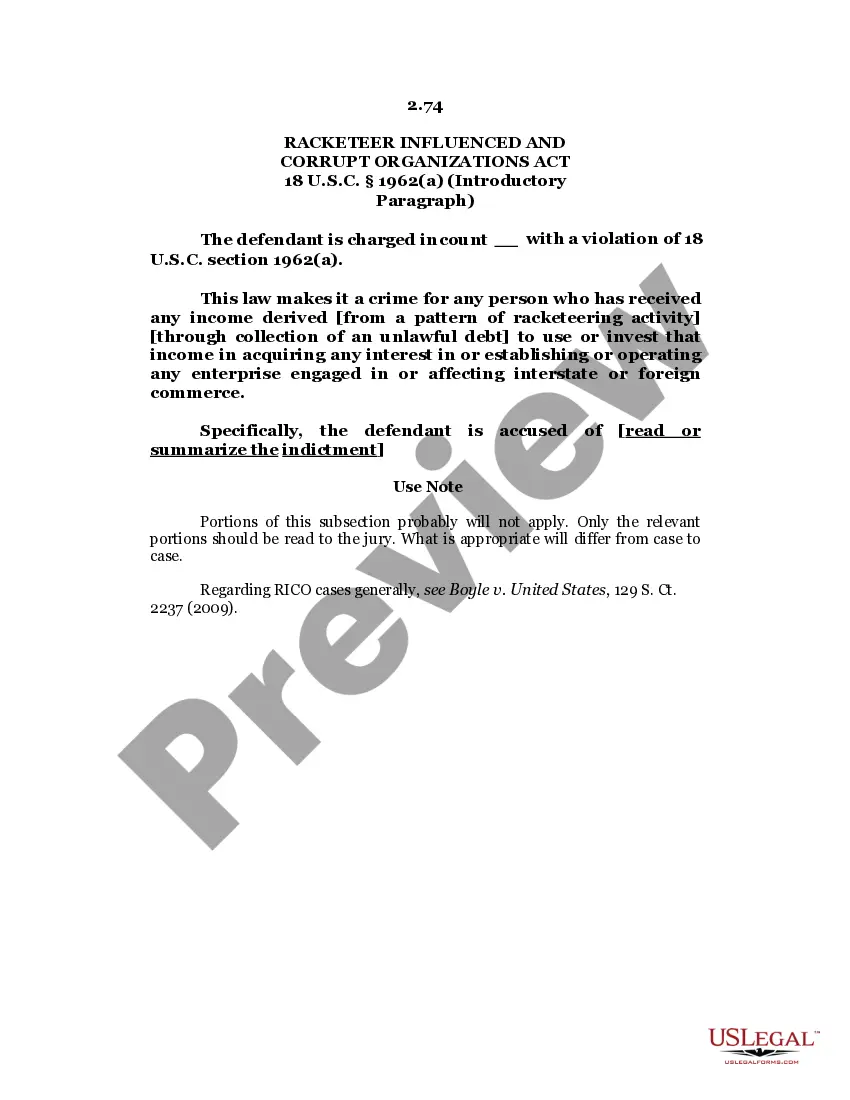
2.74 RACKETEER INFLUENCED AND CORRUPT ORGANIZATIONS ACT / 18 U.S.C. Sec. 1962(a) (Introductory Paragraph)
About this form
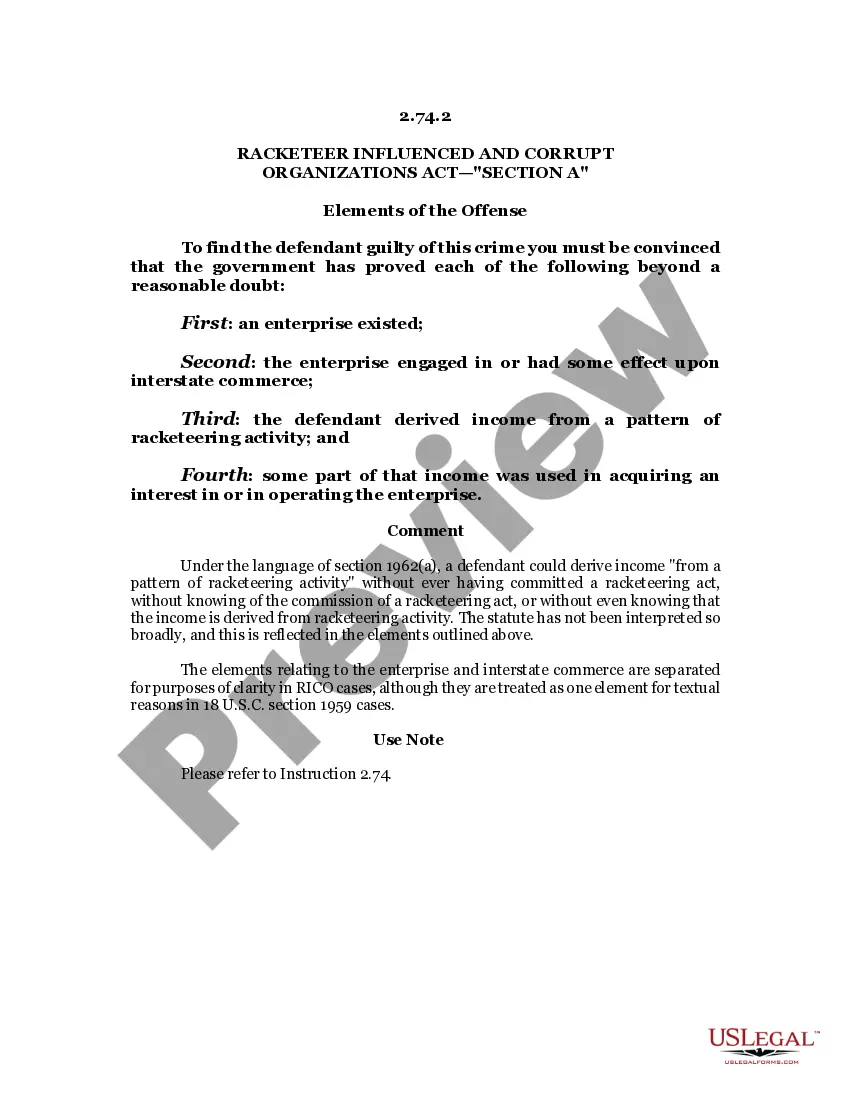
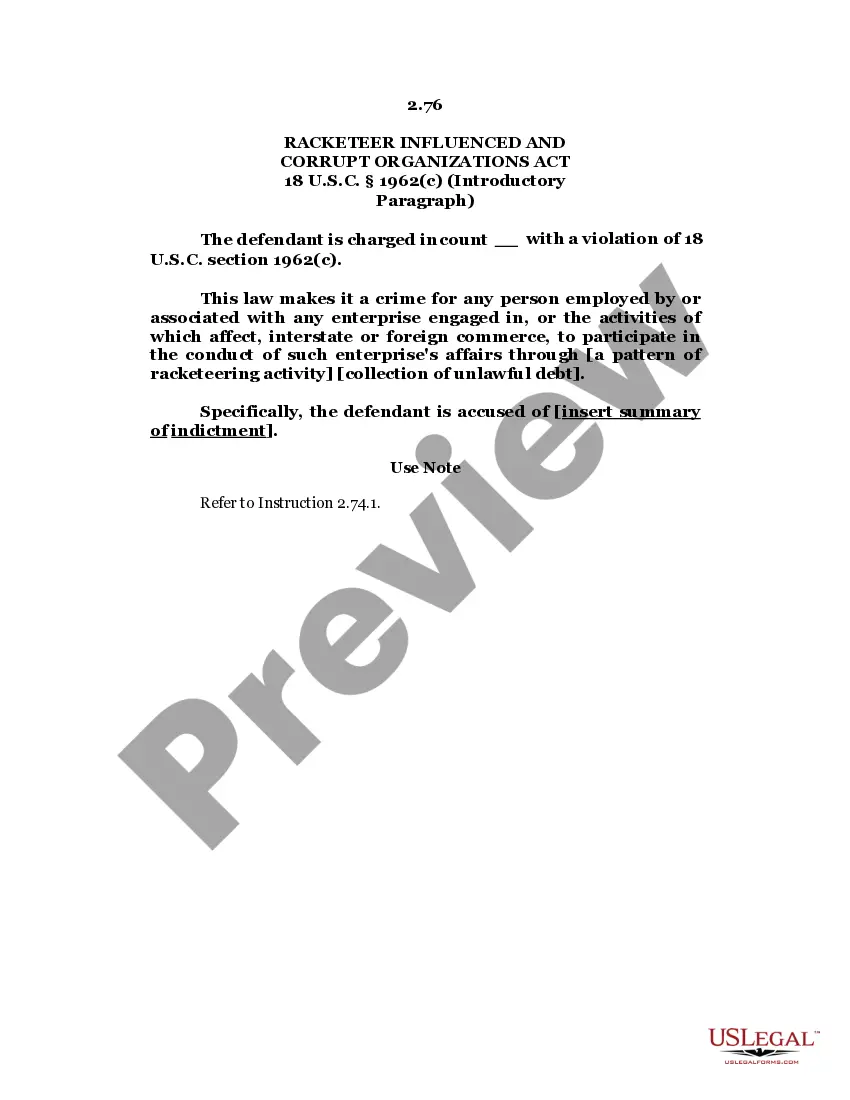
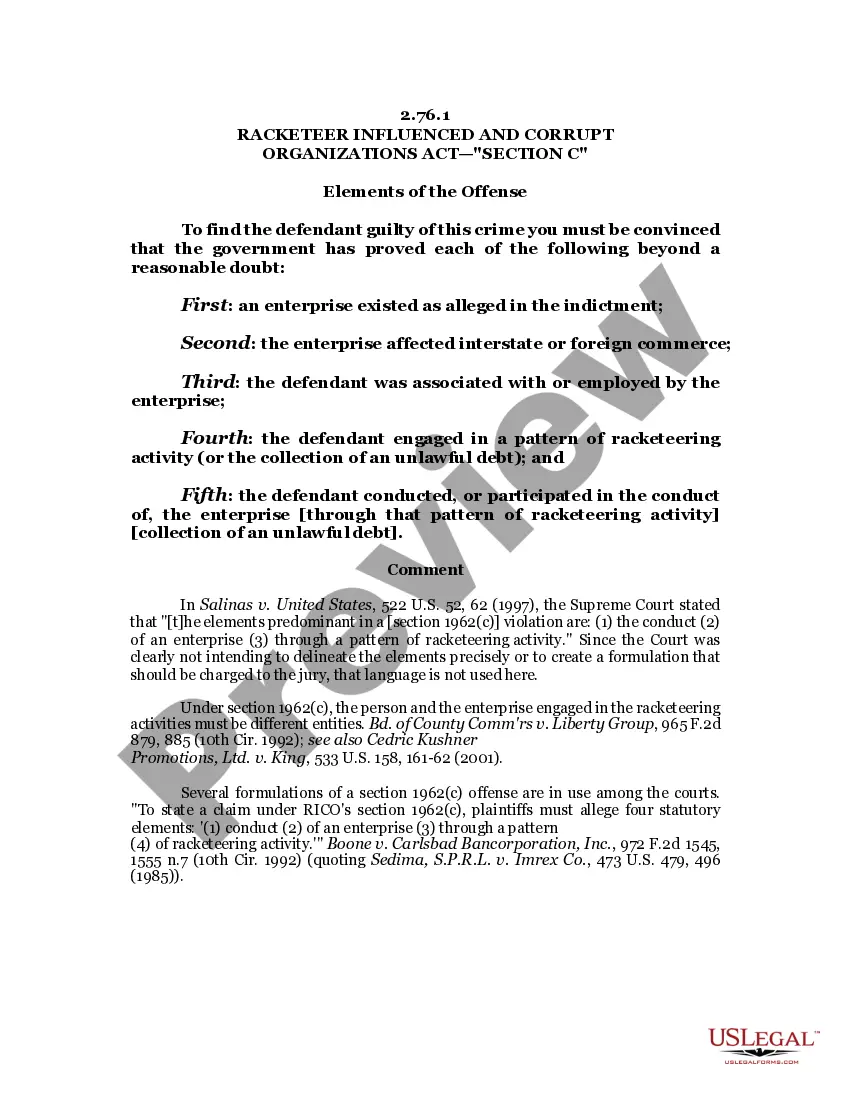
The RICO Act Introductory Paragraph form pertains to violations under 18 U.S.C. § 1962(a). This legal document is used in cases where an individual is charged with engaging in racketeering activities and using income derived from such activities to operate or invest in enterprises that affect interstate or foreign commerce. Unlike general criminal charges, this form specifically addresses racketeering offenses which involve a pattern of illegal conduct.
What’s included in this form
- Identification of the defendant and the specific count of the violation.
- Citation of the applicable sections of the law being violated.
- Specification of income derived from racketeering activities or unlawful debts.
- Details on how the accused allegedly used this income in enterprises.
- Potential notes regarding the applicability of certain sections to the jury.
Common use cases
This form should be used when an individual is charged with violating the RICO Act, particularly for cases involving income derived from criminal activities. It is necessary in legal proceedings where the use of unlawful income in furthering commercial enterprises is being addressed. This can happen in scenarios involving organized crime, drug trafficking, or other similar offenses.
Intended users of this form
This form is intended for:
- Prosecutors bringing charges under the RICO Act.
- Defendants facing allegations of racketeering.
- Attorneys representing clients in RICO-related cases.
Completing this form step by step
- Identify and enter the name of the defendant.
- Specify the count number corresponding to the alleged violation.
- Clearly cite 18 U.S.C. § 1962(a) and provide any necessary details about the indictment.
- Summarize the income derived from the alleged racketeering activity.
- Review and edit portions of the form to ensure relevance for the jury.
Is notarization required?
This form does not typically require notarization unless specified by local law. Ensure compliance with local regulations regarding the use of this form in court proceedings.
Get your form ready online
Our built-in tools help you complete, sign, share, and store your documents in one place.
Make edits, fill in missing information, and update formatting in US Legal Forms—just like you would in MS Word.
Download a copy, print it, send it by email, or mail it via USPS—whatever works best for your next step.
Sign and collect signatures with our SignNow integration. Send to multiple recipients, set reminders, and more. Go Premium to unlock E-Sign.
If this form requires notarization, complete it online through a secure video call—no need to meet a notary in person or wait for an appointment.
We protect your documents and personal data by following strict security and privacy standards.

Make edits, fill in missing information, and update formatting in US Legal Forms—just like you would in MS Word.

Download a copy, print it, send it by email, or mail it via USPS—whatever works best for your next step.

Sign and collect signatures with our SignNow integration. Send to multiple recipients, set reminders, and more. Go Premium to unlock E-Sign.

If this form requires notarization, complete it online through a secure video call—no need to meet a notary in person or wait for an appointment.

We protect your documents and personal data by following strict security and privacy standards.
Typical mistakes to avoid
- Neglecting to summarize the indictment accurately.
- Omitting relevant details about the income described in the charge.
- Failing to specify the count number correctly in multi-count cases.
Why use this form online
- Convenient downloading ensures instant access to necessary legal documents.
- Editability allows for customization based on specific case details.
- Reliability in terms of using forms drafted by licensed attorneys.
Legal use & context
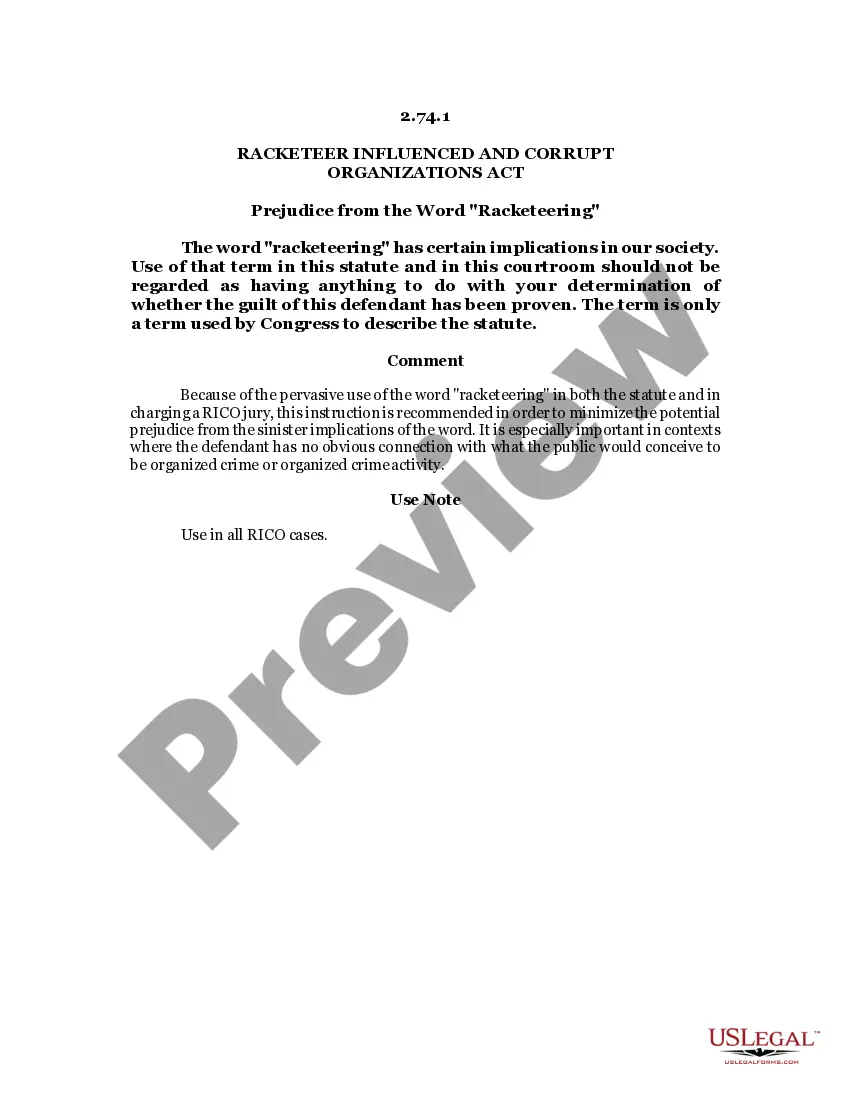
- The RICO Act was enacted to combat organized crime and protect legal businesses from illicit competition.
- Cases involving RICO charges can be complex and often require substantial evidence of a pattern of illegal activities.
- This form aids in clearly articulating the violations and establishing grounds for prosecution.
Looking for another form?



Form popularity
FAQ
Modern racketeering crimes include credit card frauds, data theft, and cybercrimes. They belong to the category of white-collar crimes.
Congress passed the Racketeer Influenced and Corrupt Organizations Act (RICO) of 1970 in an attempt to combat organized crime. The application and use of the law has raised important First Amendment issues implicating the right to freedom of association.
Set of illegal activities aimed at commercial profit that may be disguised as legitimate business deals. Common examples include fraud, extortion, bribery, and actual or threatened violence. criminal law.
The law defines 35 offenses as constituting racketeering, including gambling, murder, kidnapping, arson, drug dealing, bribery. Significantly, mail and wire fraud are included on the list. These crimes are known as "predicate" offenses.
? (1) ''racketeering activity'' means (A) any act or threat. involving murder, kidnapping, gambling, arson, robbery, bribery, extortion, dealing in obscene matter, or dealing in a controlled. substance or listed chemical (as defined in section 102 of the. Controlled Substances Act), which is chargeable under State law.
The Racketeer Influenced and Corrupt Organizations Act (RICO) of 1970 seeks to strengthen the legal tools in evidence gathering by establishing new penal prohibitions and providing enhanced sanctions and new remedies for dealing with the unlawful activities of those engaged in organized crime.
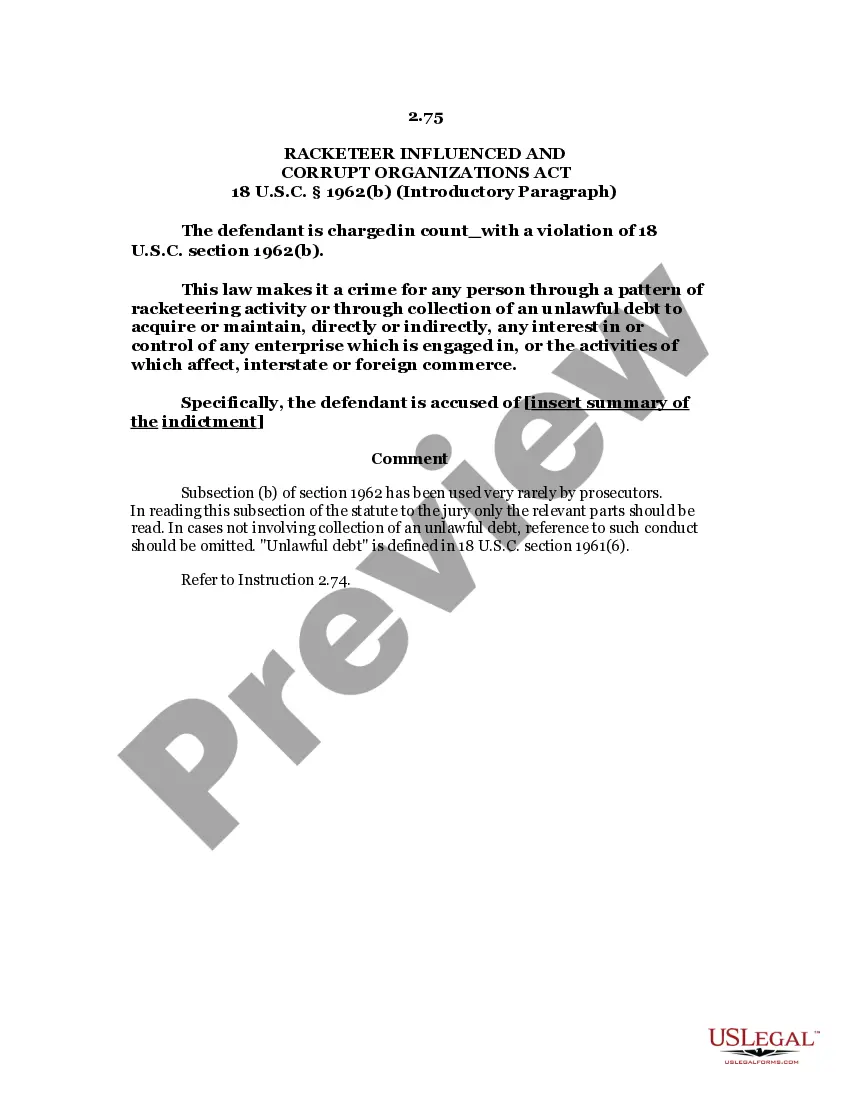
It shall be unlawful for any person through a pattern of racketeering activity or through collection of an unlawful debt to acquire or maintain, directly or indirectly, any interest in or control of any enterprise which is engaged in, or the activities of which affect, interstate or foreign commerce.
At the state level, racketeering includes crimes such as murder, kidnapping, gambling, arson, robbery, bribery, extortion, dealing in obscene matters, and drug crimes.