Memorandum of Understanding for Partnership
Understanding this form
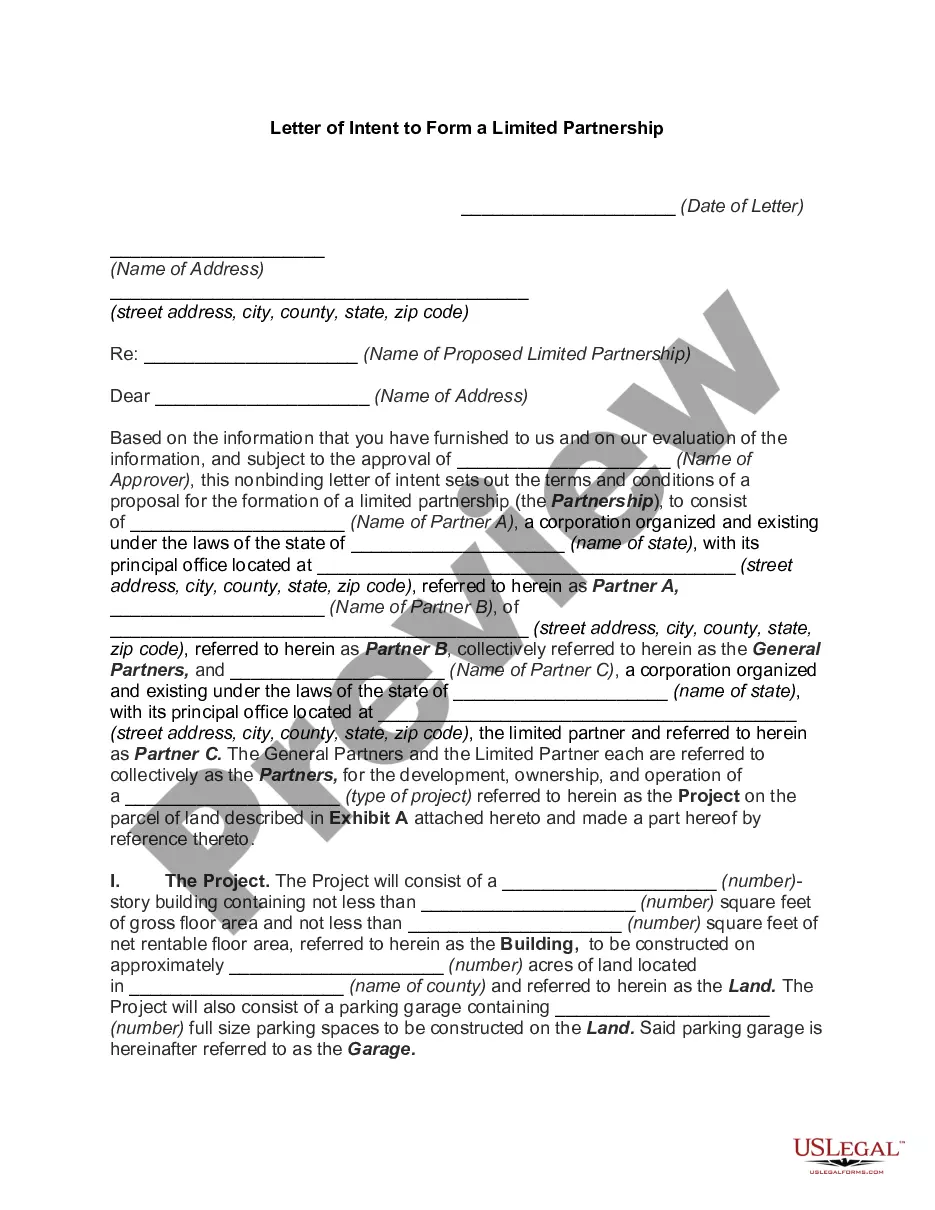
The Memorandum of Understanding for Partnership, often referred to as a letter of intent, is a preliminary agreement that outlines the key terms and conditions between parties considering forming a limited partnership. Unlike a binding contract, this document serves as a framework for the partnership without enforcing legal obligations, providing a basic structure for negotiations and further agreements.
What’s included in this form
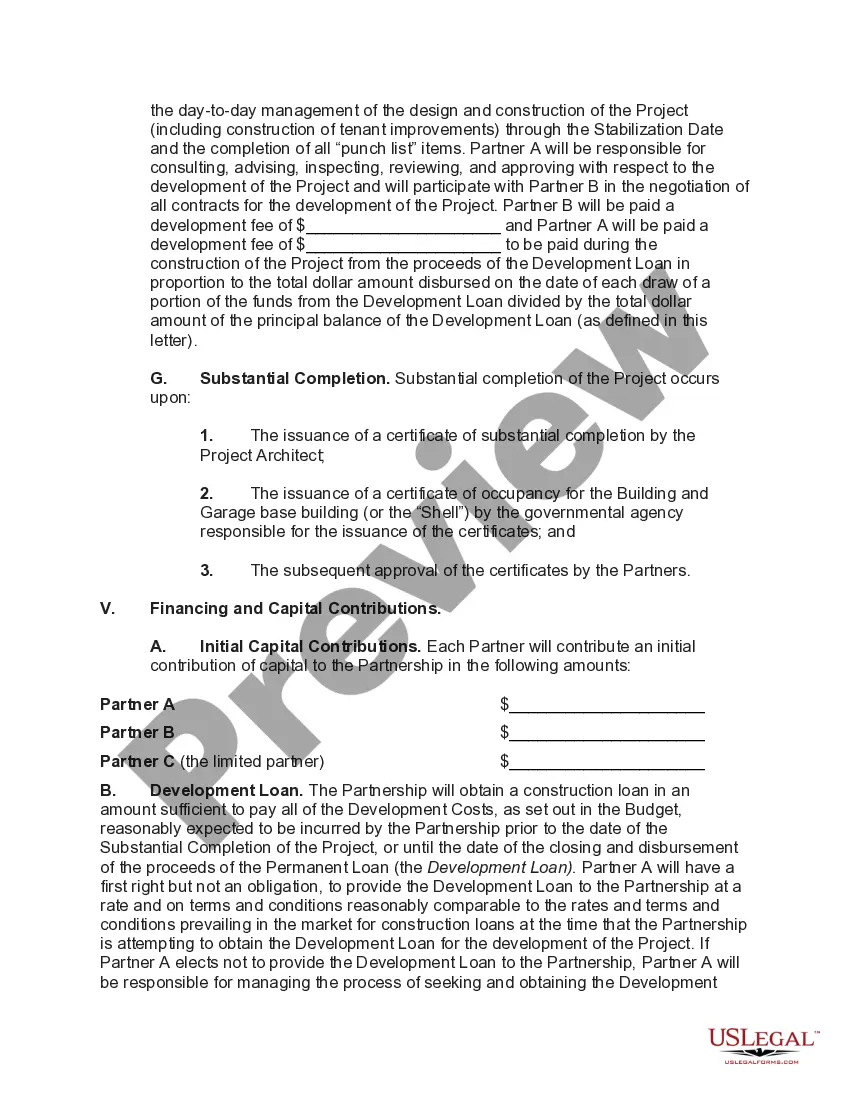
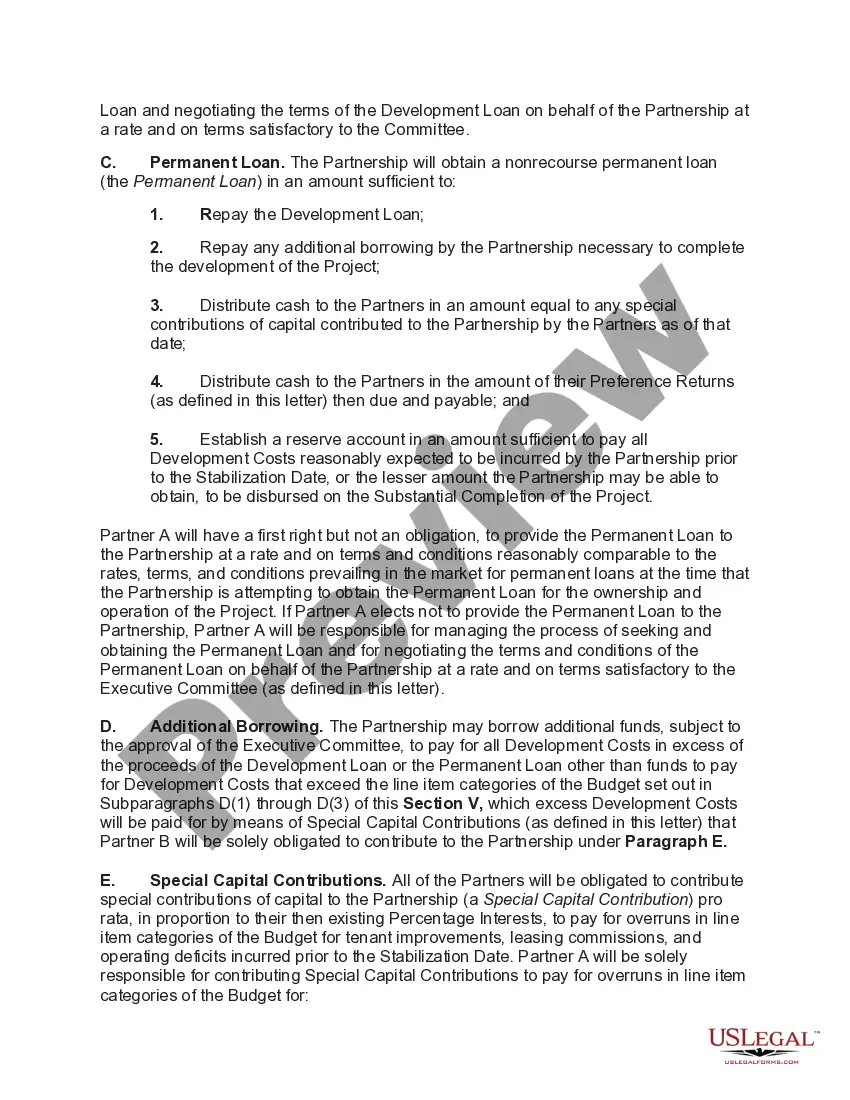
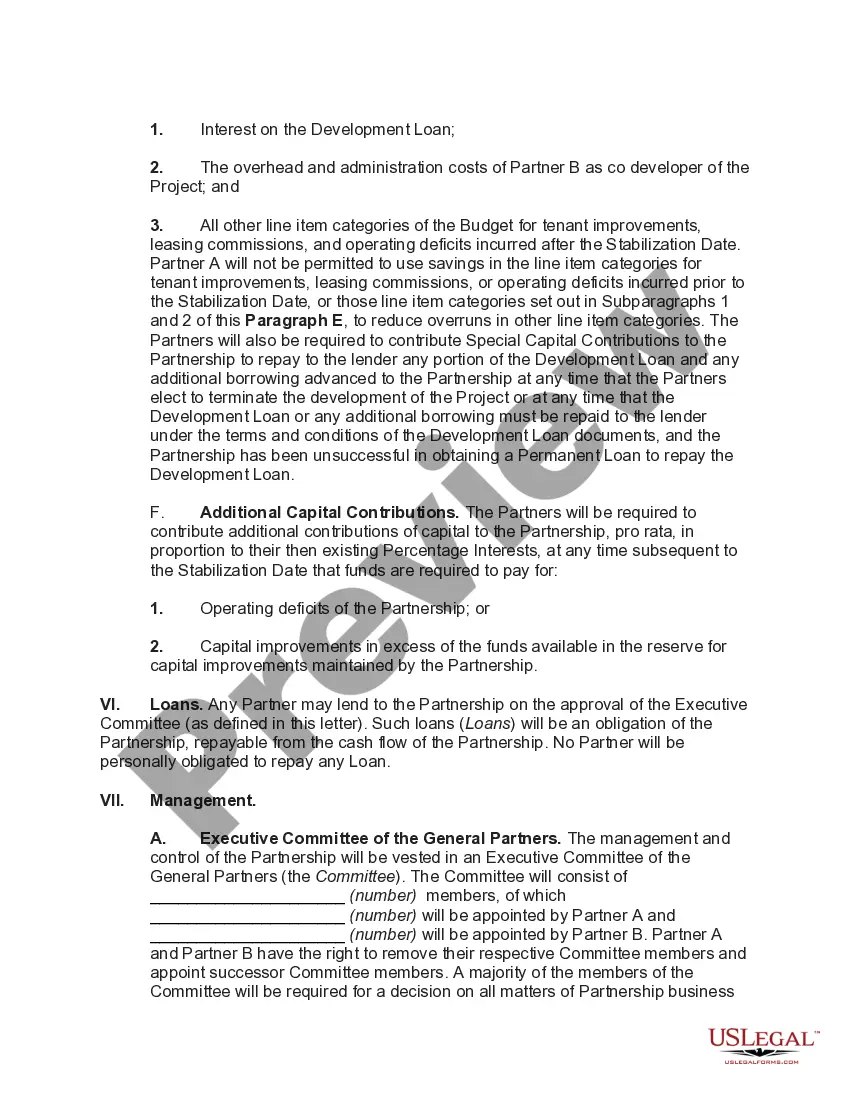
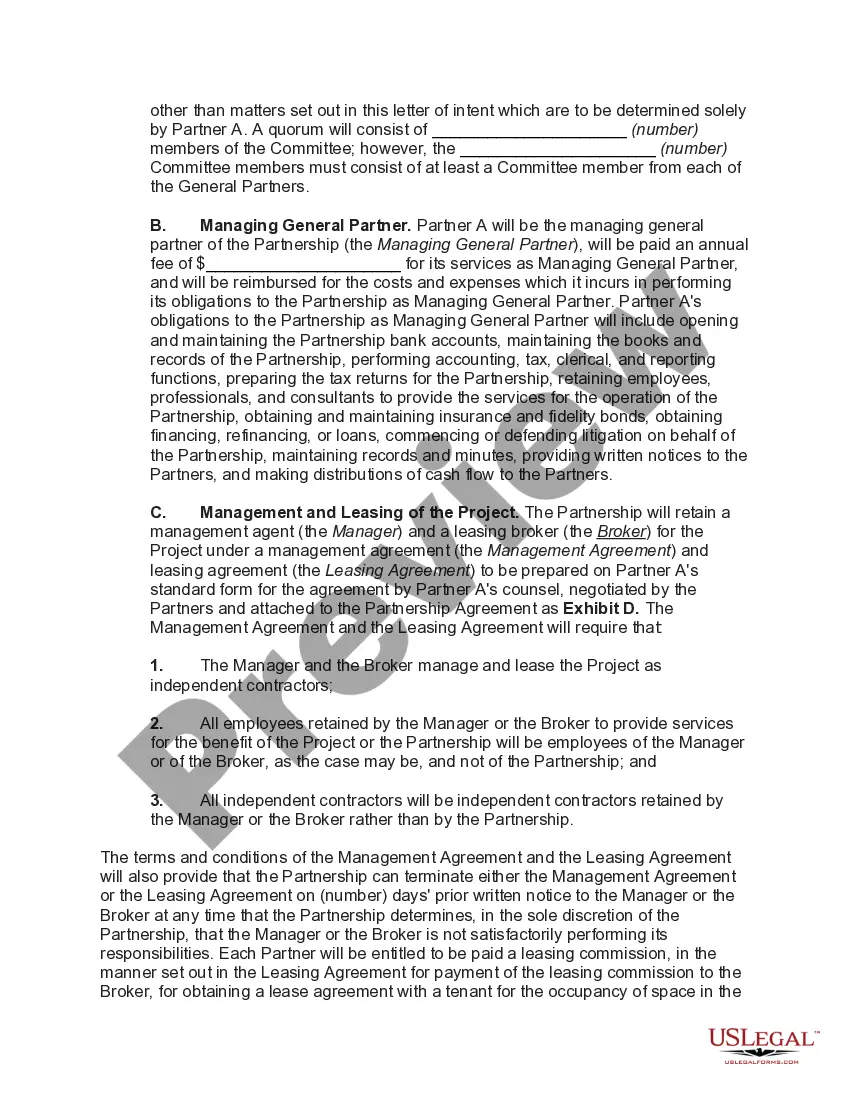
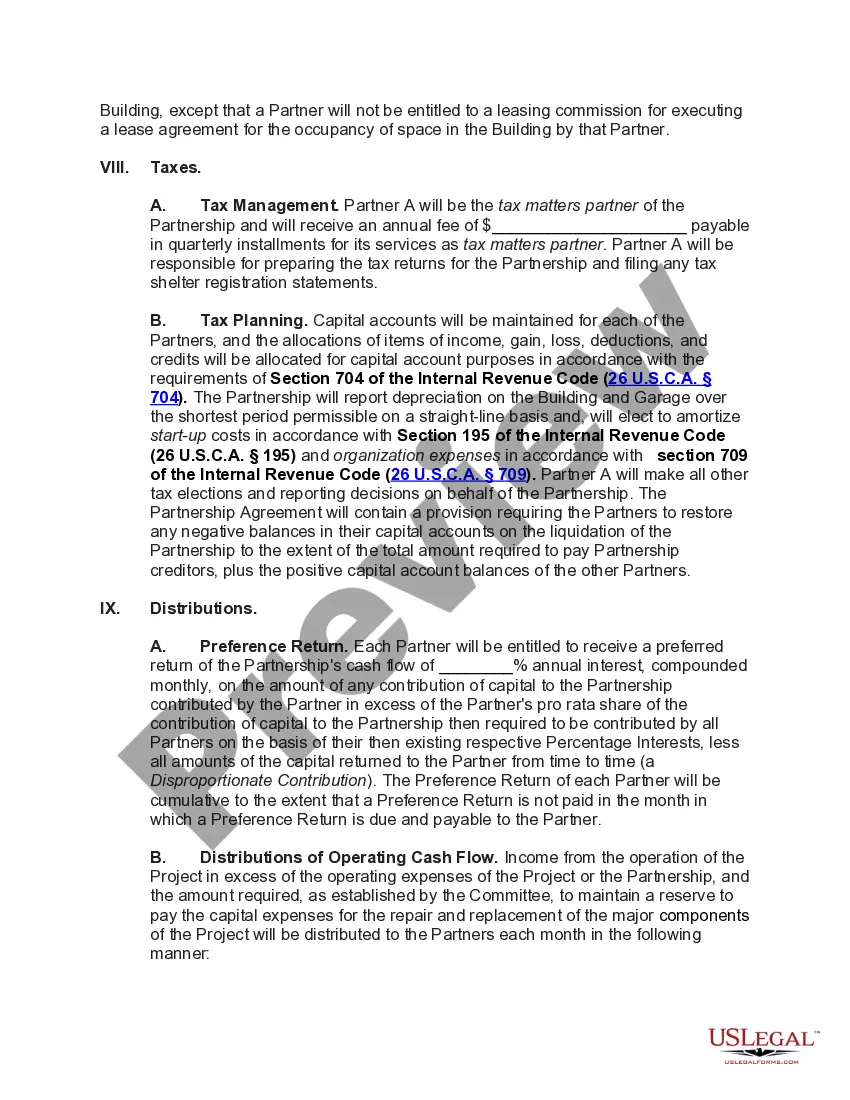
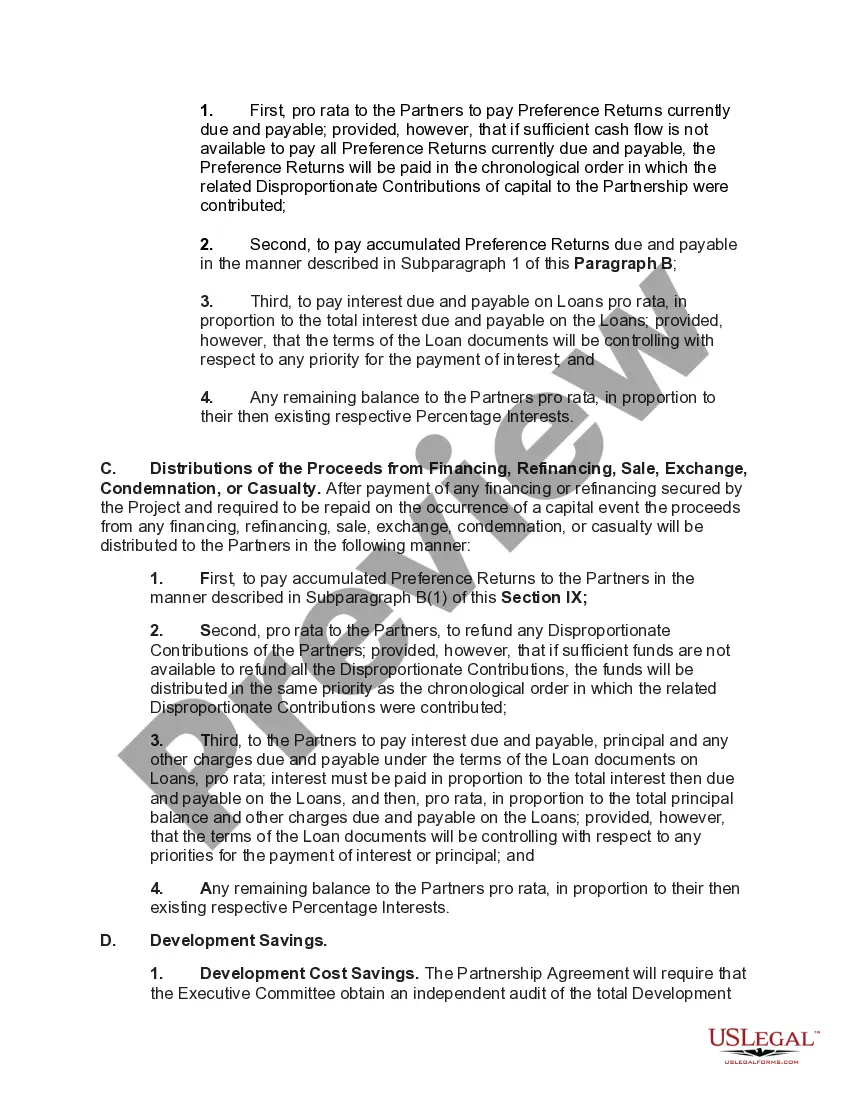
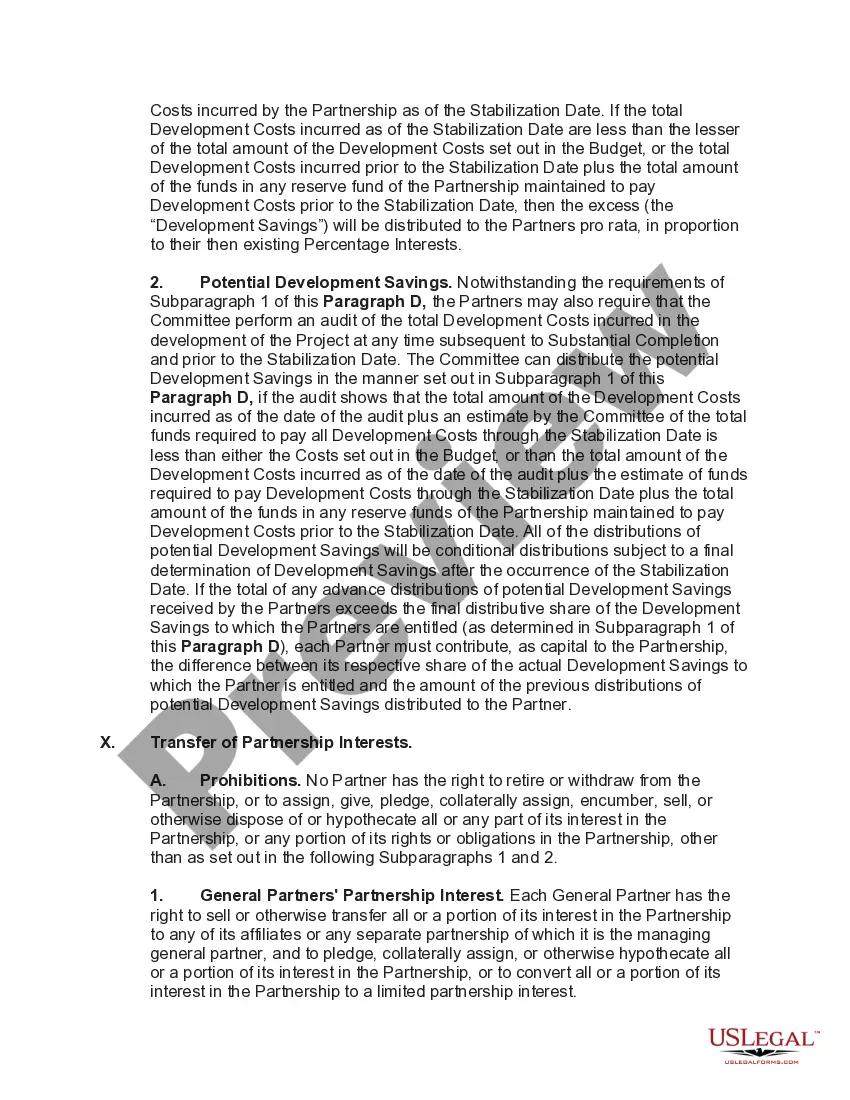
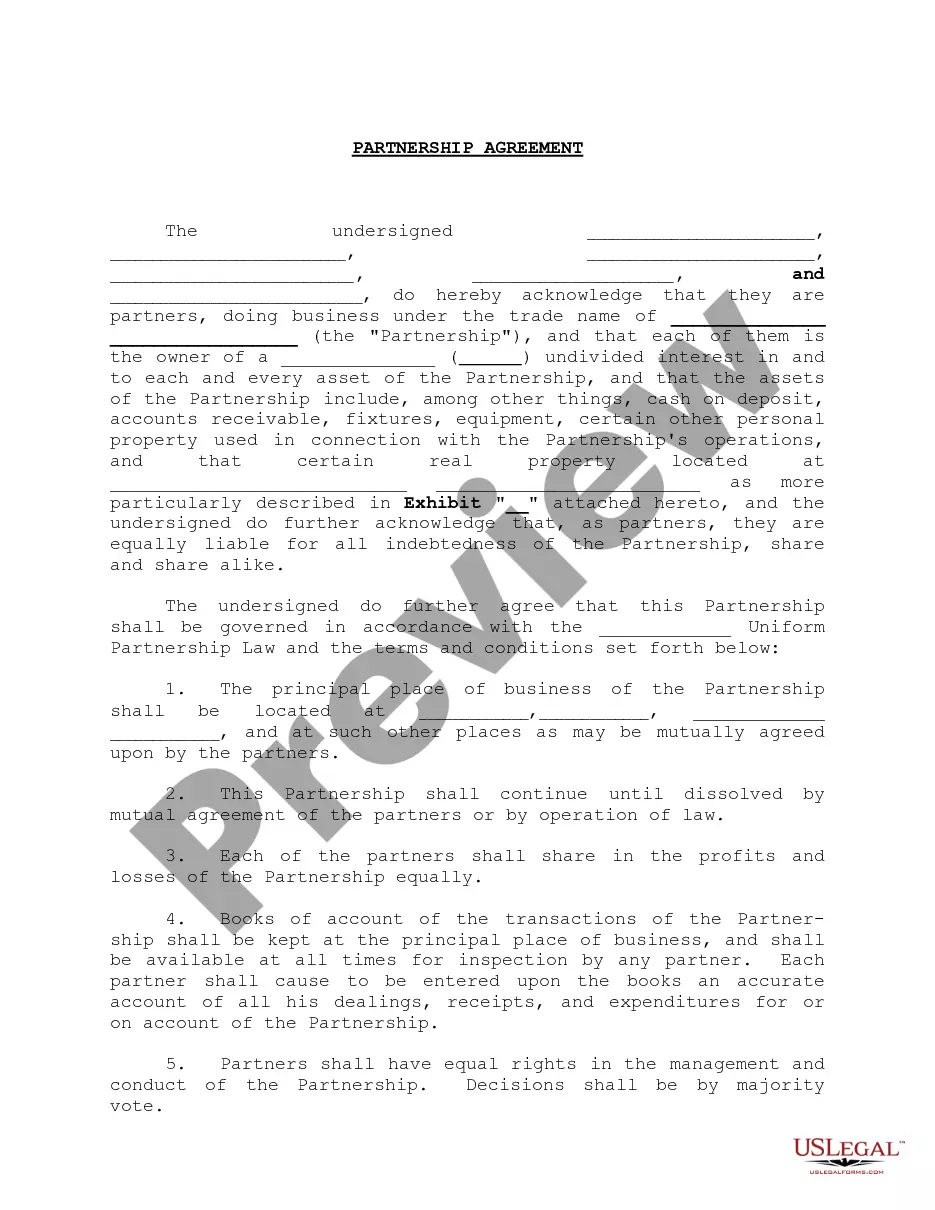
- Date and parties involved in the partnership.
- Description of the proposed project and its purpose.
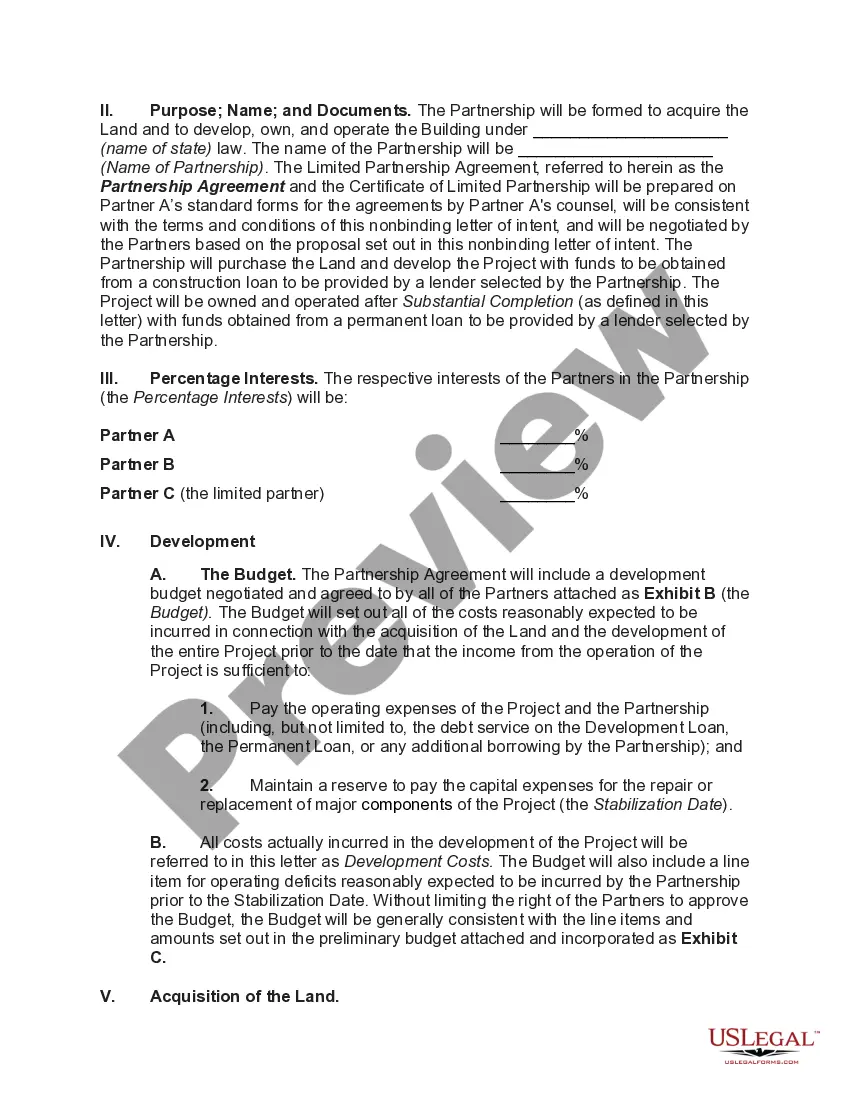
- Percentage interests of each partner in the partnership.
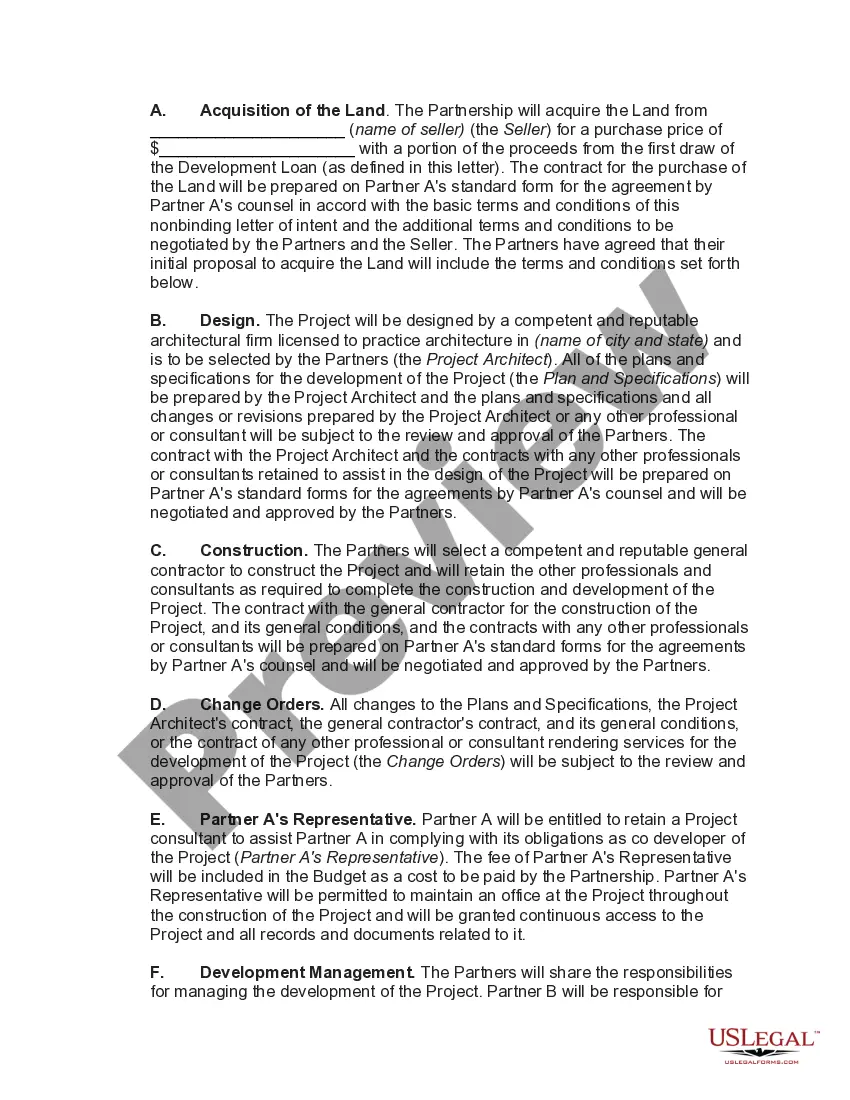
- Development budget and projected costs associated with the partnership.
- Acquisition details of the land for the project.
- Management structure and decision-making processes for the partnership.

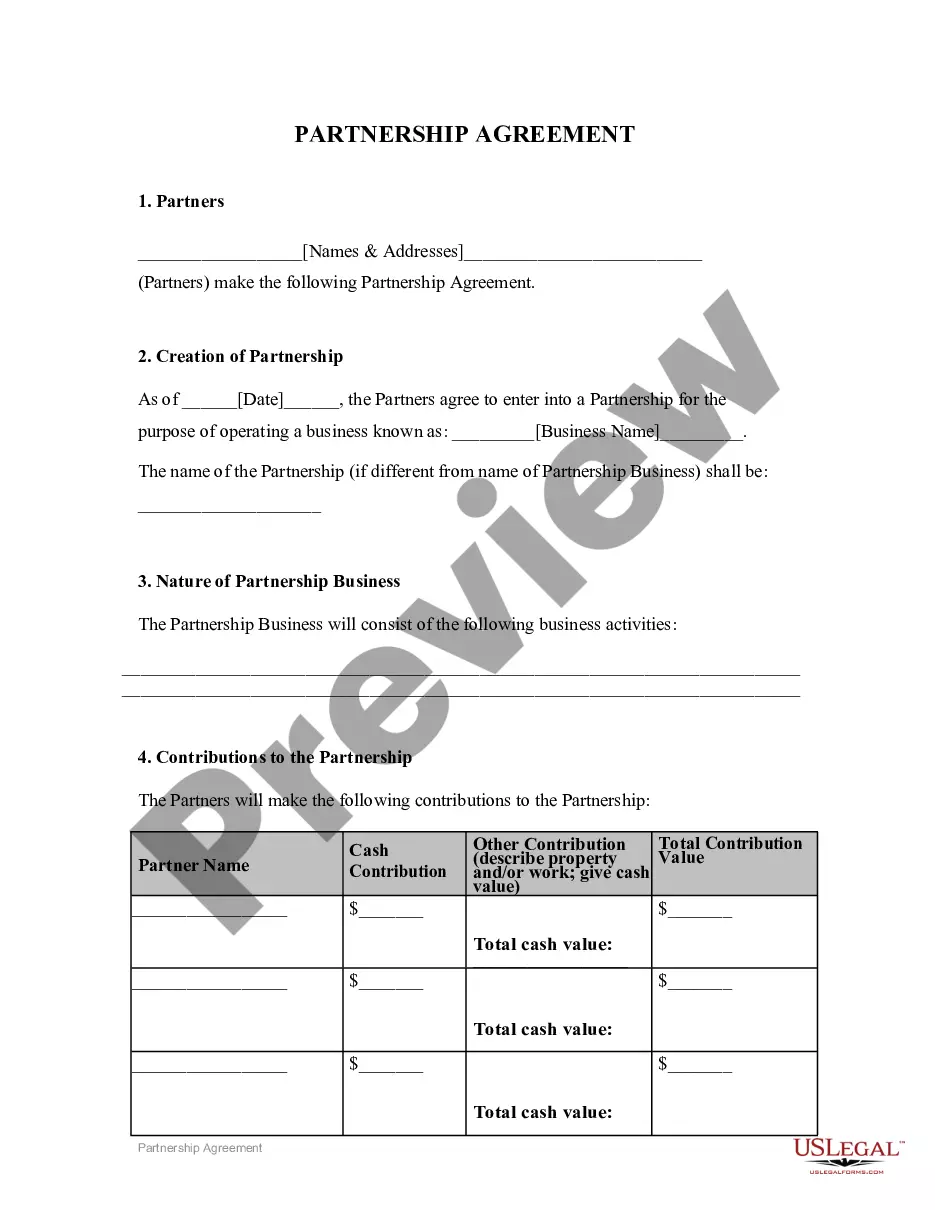
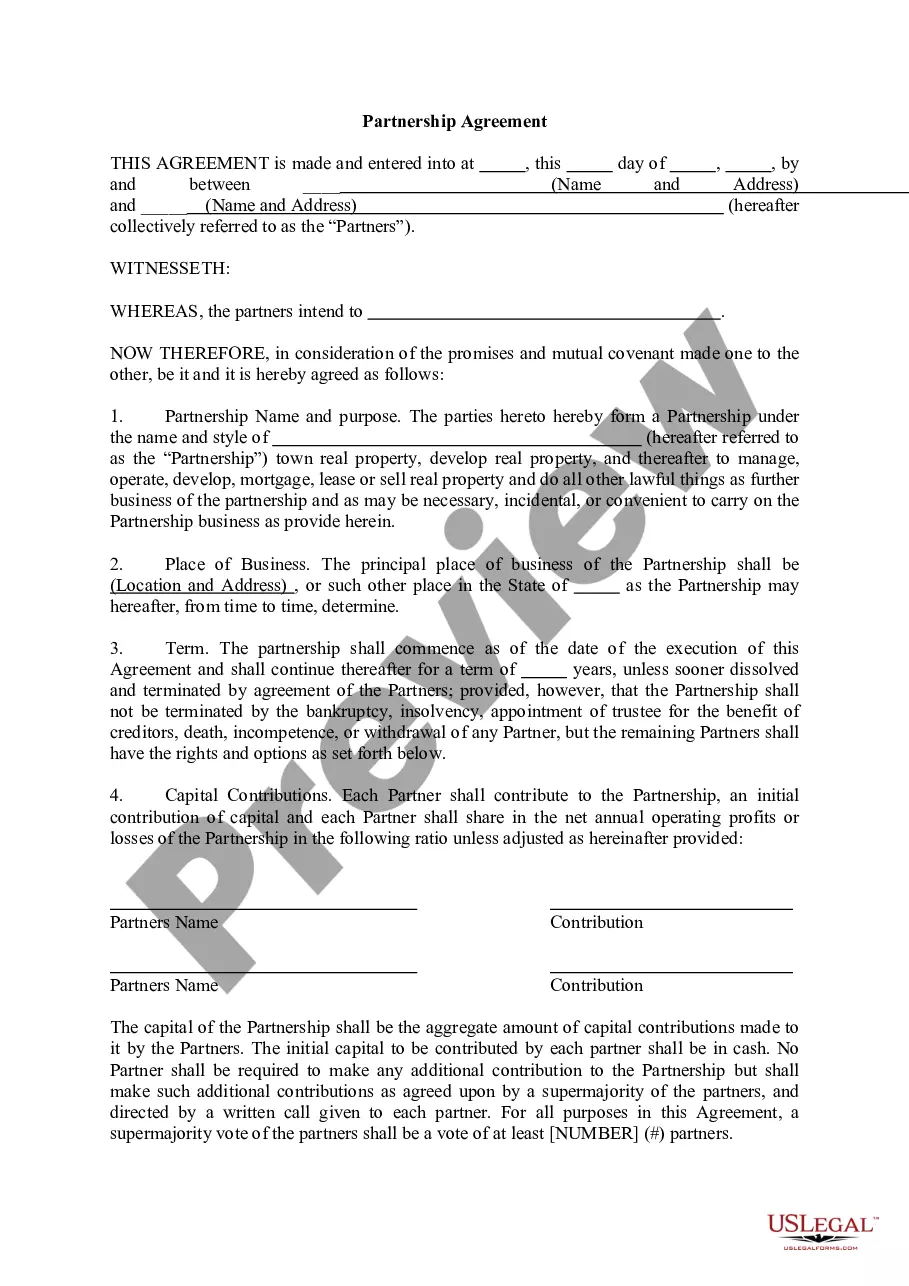
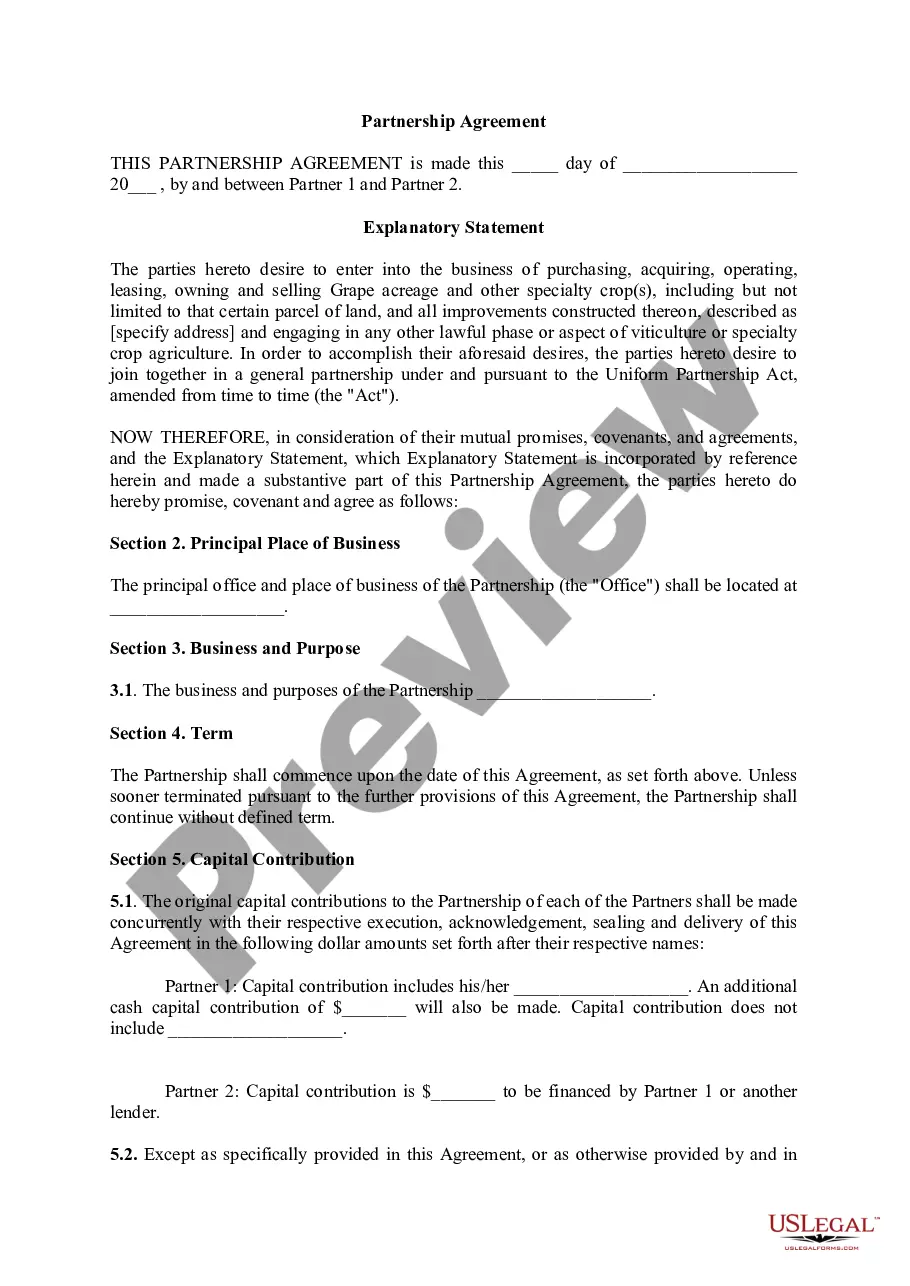
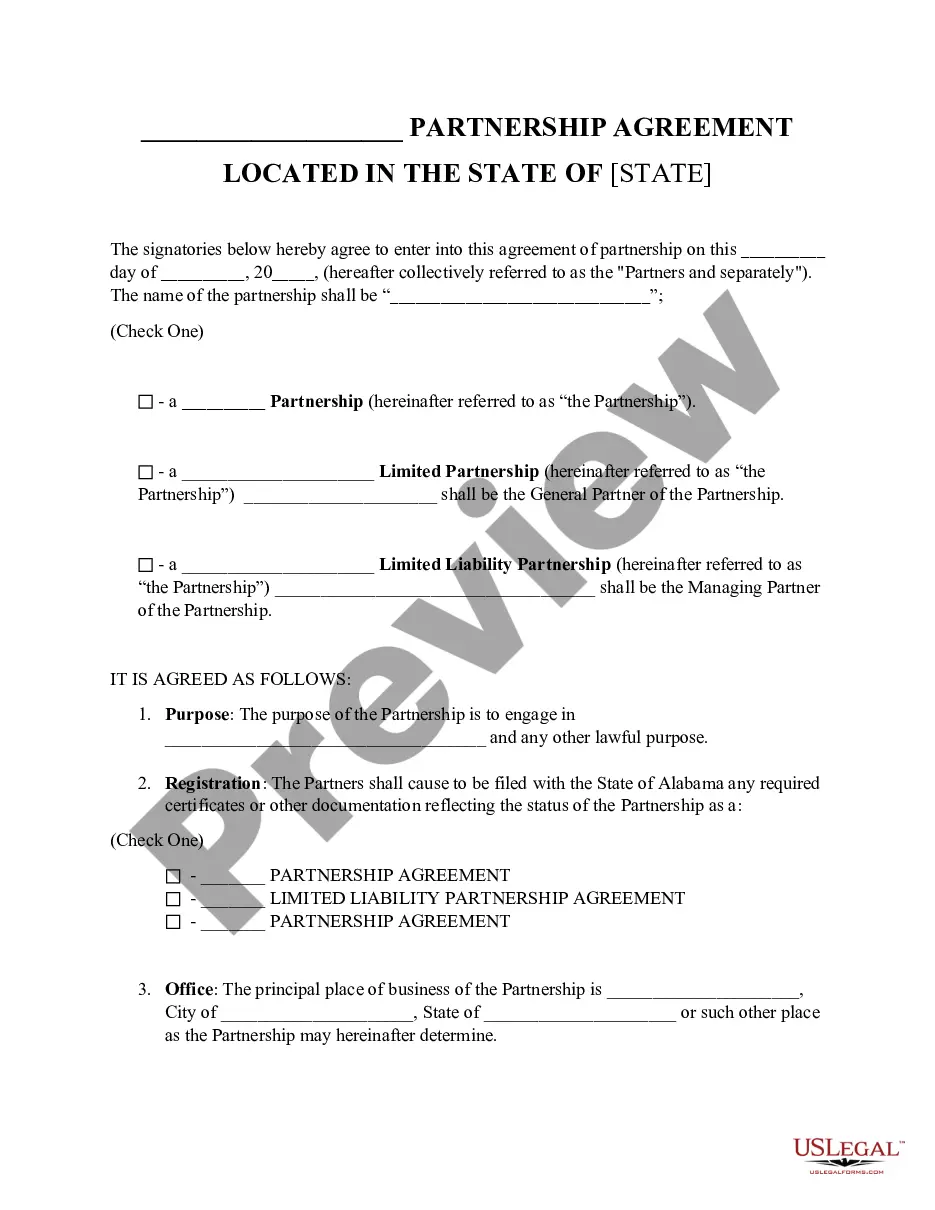
Situations where this form applies
This form is useful when parties are in the initial stages of forming a limited partnership and wish to outline preliminary agreements. It is beneficial in situations where the partners want to ensure mutual understanding of the general terms of collaboration before drafting a formal partnership agreement.
Who can use this document
- Individuals or entities interested in forming a partnership.
- Legal professionals assisting in the preliminary stages of partnership formation.
- Partners looking to establish a framework for negotiations regarding a joint venture or project.
Completing this form step by step
- Identify and list the date and the names of all parties involved in the partnership.
- Provide details about the proposed project, including its description and location.
- Outline the respective percentage interests for each partner.
- Detail the estimated budget and associated costs for the project's development.
- Specify any other key conditions or requirements for the partnership.
Notarization guidance
This form does not typically require notarization unless specified by local law. Always check local regulations to confirm any notarization requirements.
Get your form ready online
Our built-in tools help you complete, sign, share, and store your documents in one place.
Make edits, fill in missing information, and update formatting in US Legal Forms—just like you would in MS Word.
Download a copy, print it, send it by email, or mail it via USPS—whatever works best for your next step.
Sign and collect signatures with our SignNow integration. Send to multiple recipients, set reminders, and more. Go Premium to unlock E-Sign.
If this form requires notarization, complete it online through a secure video call—no need to meet a notary in person or wait for an appointment.
We protect your documents and personal data by following strict security and privacy standards.

Make edits, fill in missing information, and update formatting in US Legal Forms—just like you would in MS Word.

Download a copy, print it, send it by email, or mail it via USPS—whatever works best for your next step.

Sign and collect signatures with our SignNow integration. Send to multiple recipients, set reminders, and more. Go Premium to unlock E-Sign.

If this form requires notarization, complete it online through a secure video call—no need to meet a notary in person or wait for an appointment.

We protect your documents and personal data by following strict security and privacy standards.
Mistakes to watch out for
- Failing to accurately specify the percentage interests of each partner.
- Omitting details about the project scope and budget.
- Not ensuring that all parties review the document before signing.
Why use this form online
- Convenience of drafting and editing the document from anywhere.
- Access to templates prepared by licensed attorneys, ensuring legal compliance.
- Prompt download and easy sharing with partners for collaboration.
Legal use & context
- This memorandum serves as a non-binding agreement, indicating the intention to enter into a partnership.
- It provides a clear outline for further discussions and the drafting of a more detailed partnership agreement.
- While it is not enforceable, it helps establish trust and clarity among potential partners.
Summary of main points
- A Memorandum of Understanding for Partnership is a preliminary agreement outlining partnership terms.
- It is essential for establishing clear communication among partners during the negotiation phase.
- While generally not binding, it sets the stage for formal agreements to follow.
Looking for another form?
Form popularity
FAQ
Identify the parties: It should specify the name of the parties between whom memorandum of understanding is being signed. Purpose: It should clearly specify the purpose and the goals for which the memorandum is being signed.
An MOU should clearly state the following: what parties are involved, the context of the agreement, the proposed date of when the agreement will become effective, the contact details of all relevant parties, the broad purpose of the agreement, what each party is hoping to achieve, as well as a space for all necessary
Overall intent. This is a very important part of an MOU. Parties involved in the agreement. The template should include the names of all the parties involved. Time period. Responsibilities. Disclaimers. Financial arrangements. Risk sharing. Signatures.
# A MOU would be legally binding if the parties thereto agree to insert any such clause, the literal meaning upon reading of which would mean that such a MOU intends to create a legal relationship between the parties to the contract and that the breach of such provisions would mean the same as a breach of a contract
The significant difference between An Agreement and a MoU is that an Agreement can be made enforceable in the court of law, but a MoU cannot be made enforceable, but however parties are bind by estoppel.
MOU's are legally binding if you show that the parties intend to be legally accountable to the agreed terms. A great way to avoid uncertainty whether your MOU intended to be legally binding is by inserting an express clause that states whether or not the parties intend to be legally bound by the terms agreed upon.
Overall intent. This is a very important part of an MOU. Parties involved in the agreement. The template should include the names of all the parties involved. Time period. Responsibilities. Disclaimers. Financial arrangements. Risk sharing. Signatures.
Dates. When the MOU will start and when it will end. Contact information. Contact information for all parties involved. Name of project. Contributions. Other contributions.