Motion for Summary Judgment - Heirship - Wrongful Death Case for Failure of Valid Cause of Action
What is this form?
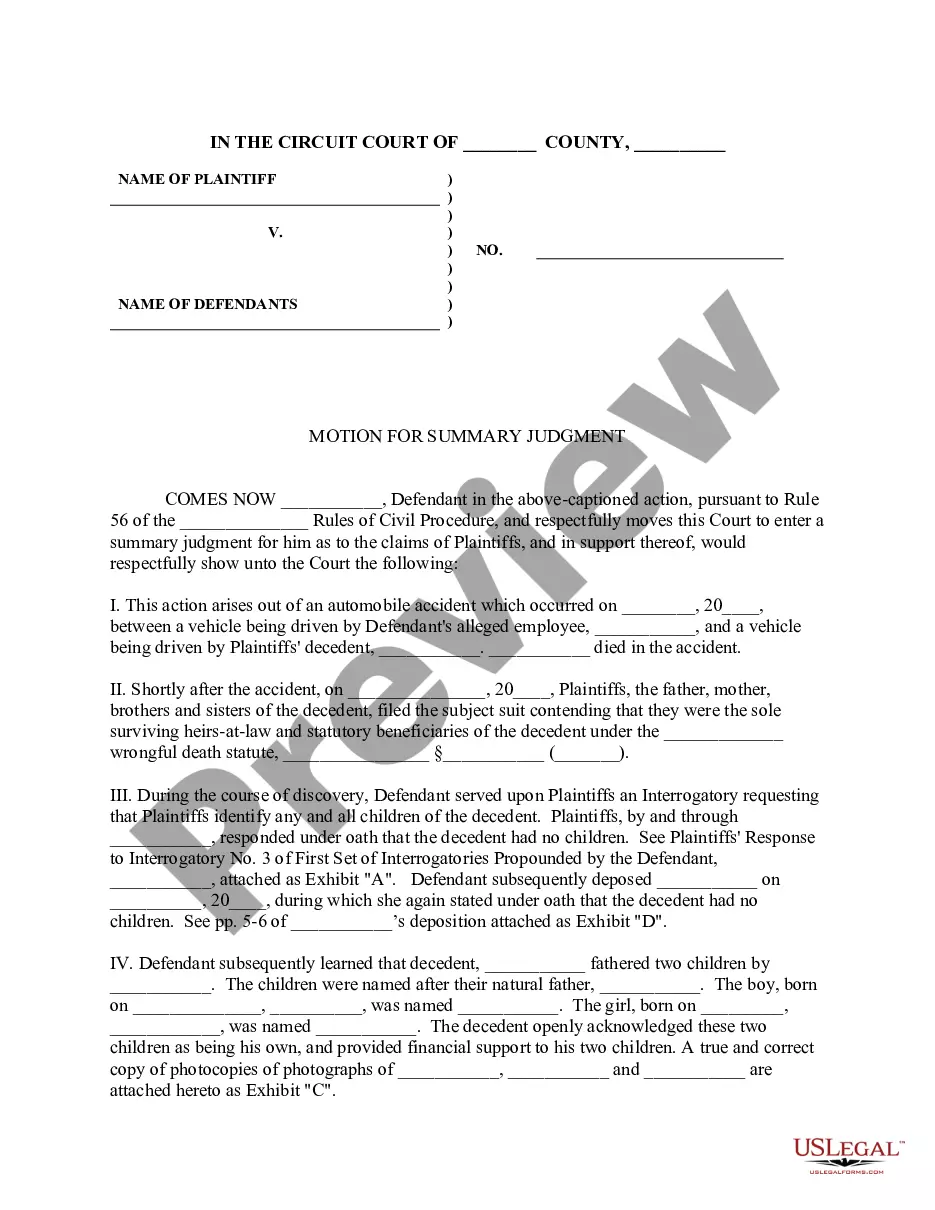
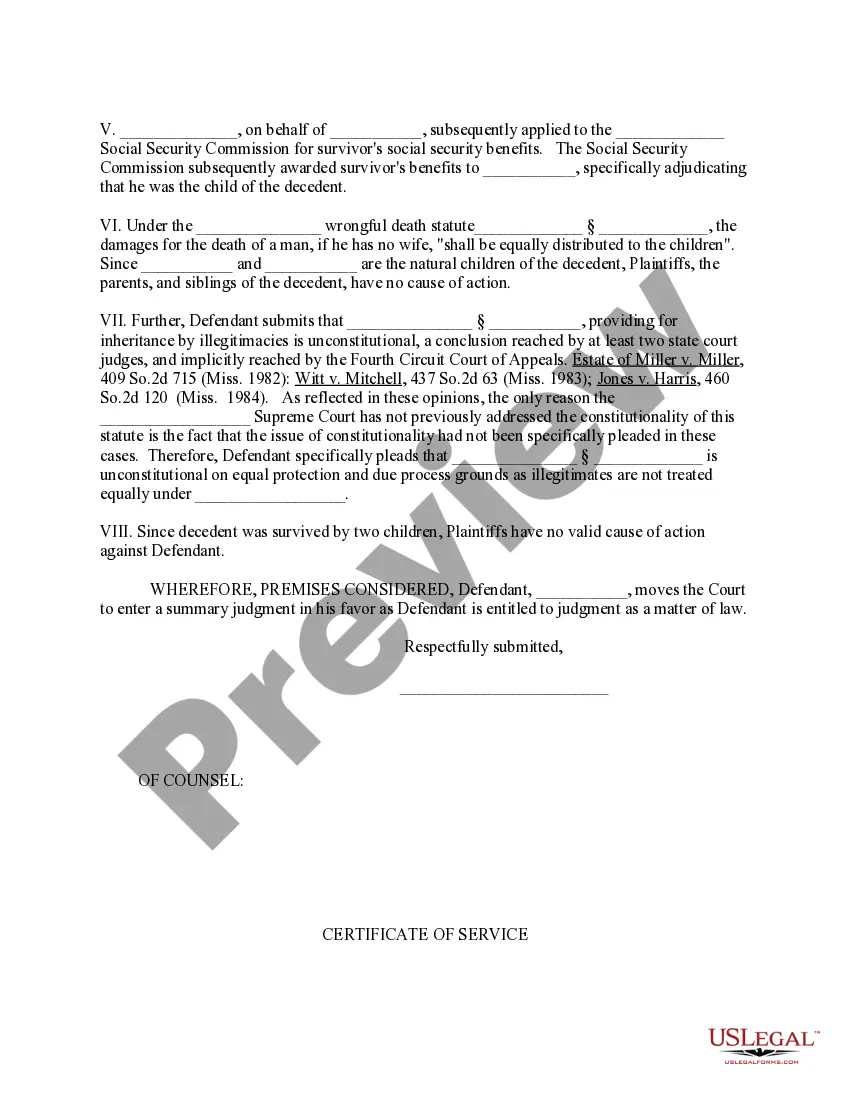
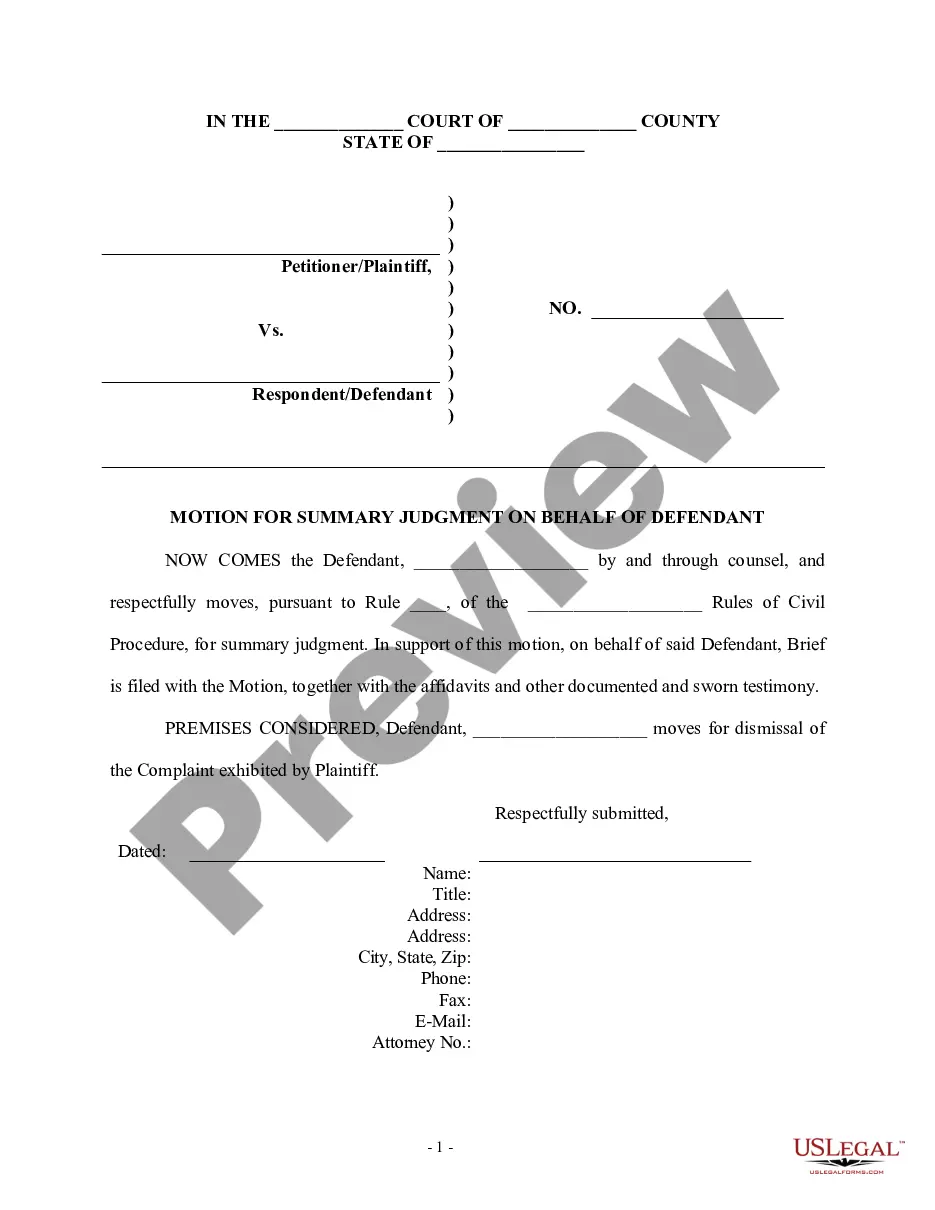
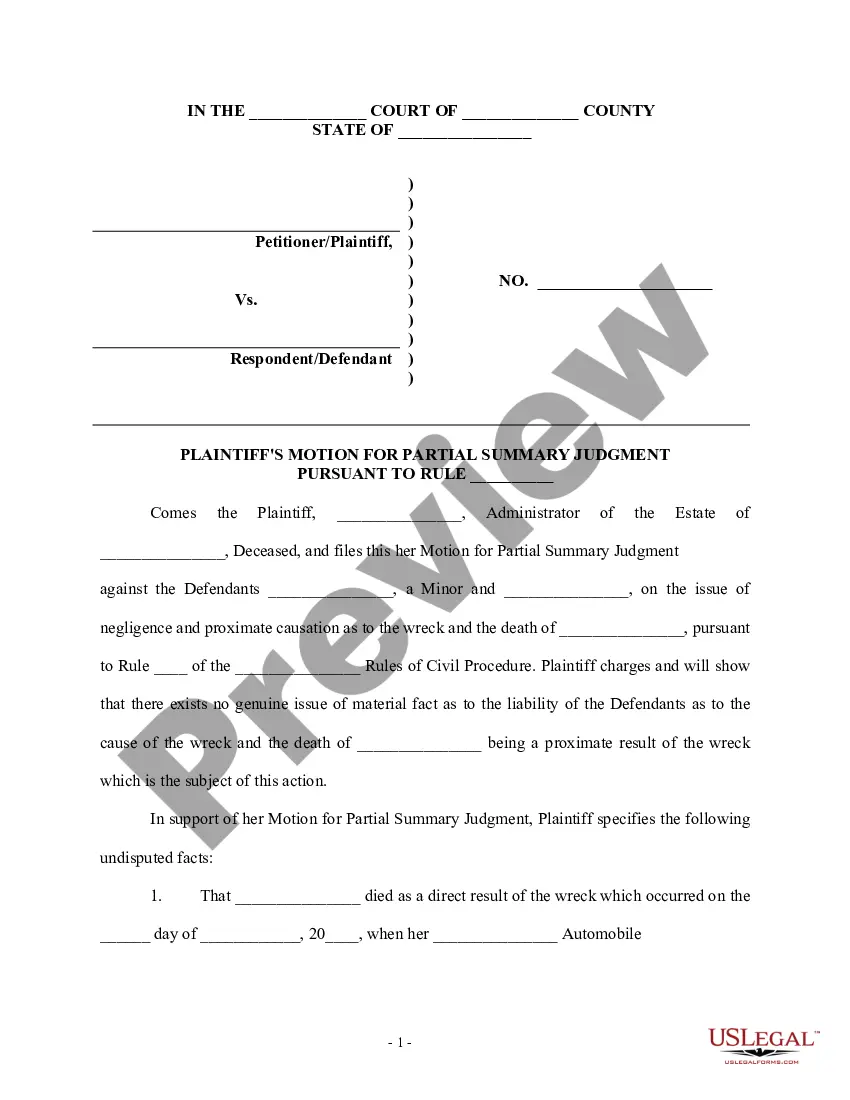
The Motion for Summary Judgment - Heirship - Wrongful Death Case for Failure of Valid Cause of Action is a legal document used in wrongful death lawsuits. This form helps defendants request the court to issue a summary judgment when the plaintiffs lack a valid claim due to the existence of legitimate heirs. It specifically addresses situations where the decedent has children, impacting the rights of parents and siblings to claim wrongful death benefits.
Main sections of this form
- Details about the automobile accident, including dates and parties involved.
- Identification of the plaintiffs as the decedent's parents or siblings.
- Information regarding the decedent's children and their relationship to the decedent.
- Evidence of the children being recognized financially by the decedent.
- Legal argument concerning the wrongful death statute and the lack of a valid cause of action for the plaintiffs.
- Request for a court summary judgment in favor of the defendant.

Situations where this form applies
This form should be used in wrongful death cases where there are disputes over who qualifies as heirs to the decedent's estate. If the plaintiffs are claiming wrongful death compensation but there are legitimate children of the decedent who may have a stronger claim, this motion can be filed to seek a summary judgment that dismisses the case against the defendant.
Who should use this form
The following individuals or parties should consider using this form:
- Defendants in a wrongful death lawsuit seeking dismissal based on heirship.
- Legal counsel representing defendants in wrongful death cases.
- Parties involved in disputes about rightful heirs and beneficiaries under wrongful death statutes.
How to complete this form
- Identify the parties involved, including the defendant, decedent, and plaintiffs.
- Provide details of the accident, including the date and location.
- List the names and relevant details about the decedent's children.
- Attach evidence supporting the claim of heirship for the decedentâs children.
- Clearly outline the legal basis for the summary judgment request.
- Sign and date the motion before filing in court.
Is notarization required?
This form does not typically require notarization unless specified by local law. Ensure to check your jurisdictionâs specific requirements for signature validation.
Get your form ready online
Our built-in tools help you complete, sign, share, and store your documents in one place.
Make edits, fill in missing information, and update formatting in US Legal Forms—just like you would in MS Word.
Download a copy, print it, send it by email, or mail it via USPS—whatever works best for your next step.
Sign and collect signatures with our SignNow integration. Send to multiple recipients, set reminders, and more. Go Premium to unlock E-Sign.
If this form requires notarization, complete it online through a secure video call—no need to meet a notary in person or wait for an appointment.
We protect your documents and personal data by following strict security and privacy standards.

Make edits, fill in missing information, and update formatting in US Legal Forms—just like you would in MS Word.

Download a copy, print it, send it by email, or mail it via USPS—whatever works best for your next step.

Sign and collect signatures with our SignNow integration. Send to multiple recipients, set reminders, and more. Go Premium to unlock E-Sign.

If this form requires notarization, complete it online through a secure video call—no need to meet a notary in person or wait for an appointment.

We protect your documents and personal data by following strict security and privacy standards.
Mistakes to watch out for
- Failing to include all necessary evidence or documentation to support the claims made in the motion.
- Omitting relevant dates and specifics about the accident or the decedent's relationships.
- Not adhering to the specific formatting or procedural requirements of the jurisdiction.
Benefits of completing this form online
- Convenience of filling out the form at your own pace from anywhere.
- Editability allowing you to customize the form based on your specific case.
- Access to professionally drafted legal forms reviewed by licensed attorneys for accuracy and compliance.
Legal use & context
- This form is a legal instrument used in cases where wrongful death claims are being contested based on heirship.
- Utilizing this form correctly may expedite legal proceedings by clarifying the parties entitled to damages.
Quick recap
- The Motion for Summary Judgment clarifies claims of heirship in wrongful death cases.
- This form ensures that all involved parties understand their rights and responsibilities under wrongful death laws.
- Completing this form accurately is crucial for a successful motion and may lead to the dismissal of unwarranted claims.
Looking for another form?
Form popularity
FAQ
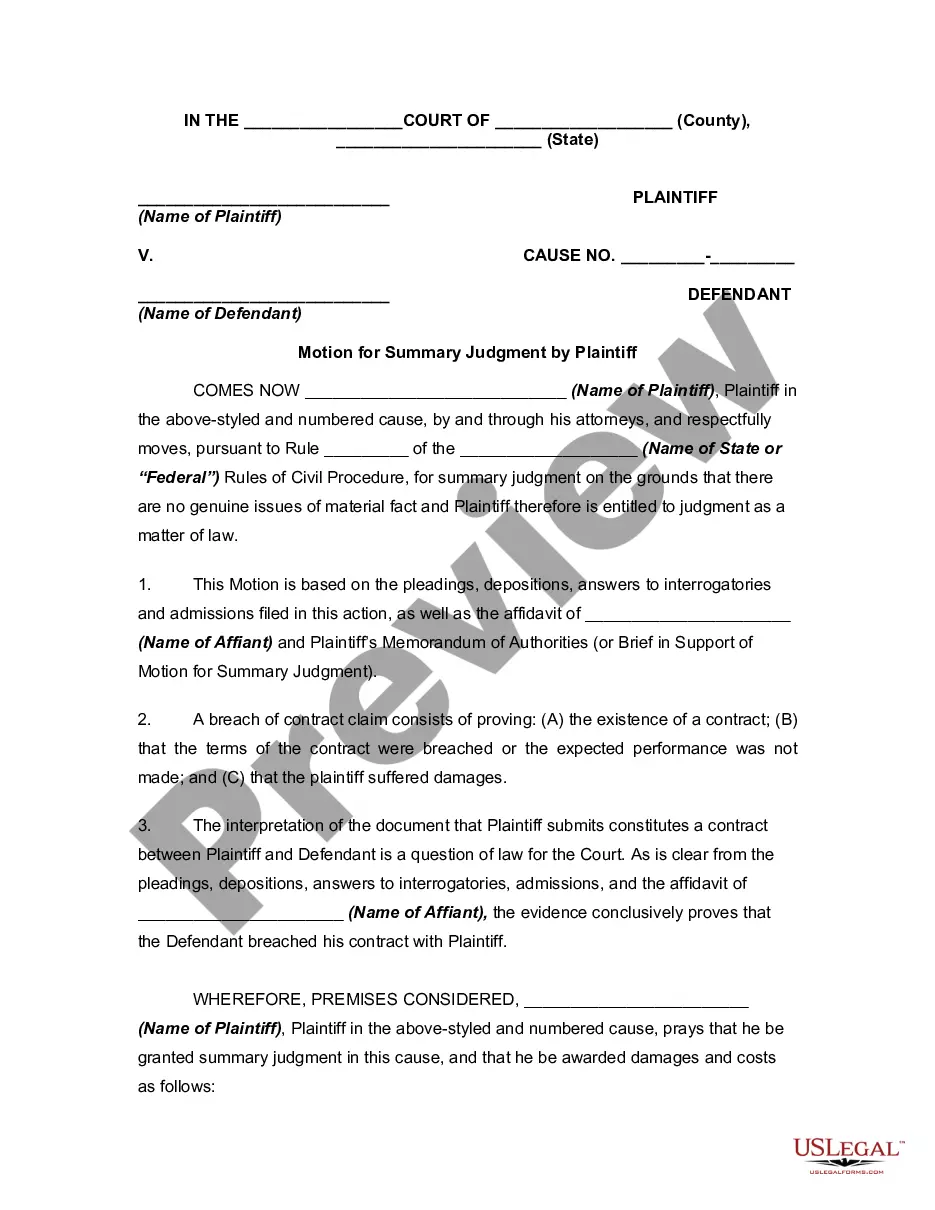
A motion for summary judgment is a request made by a party asking the court to decide all or part of a lawsuit without going to trial because there's no dispute about the key facts of the case. The party making the motion (called the movant) can be the plaintiff or the defendant.
A summary judgement occurs when, in a civil case, one party wants to move to a court decision without a trial.When a motion for summary judgement is granted, it indicates there is sufficient evidence to declare one party the clear winner.
Instead the party who believes that the undisputed facts compel a ruling in his or her favor will file a motion for summary judgment. The motion asks the court to consider the undisputed facts and apply the law to them, and argues that the law requires a judgment for the party bringing the motion.
Unless a different time is set by local rule or the court orders otherwise, a party may file a motion for summary judgment at any time until 30 days after the close of all discovery.
When a motion for summary judgement is granted, it indicates there is sufficient evidence to declare one party the clear winner.The judge will then rule on the case based on the facts and evidence. A summary judgement can often be beneficial as it potentially skips a lengthy (and costly) court trial.