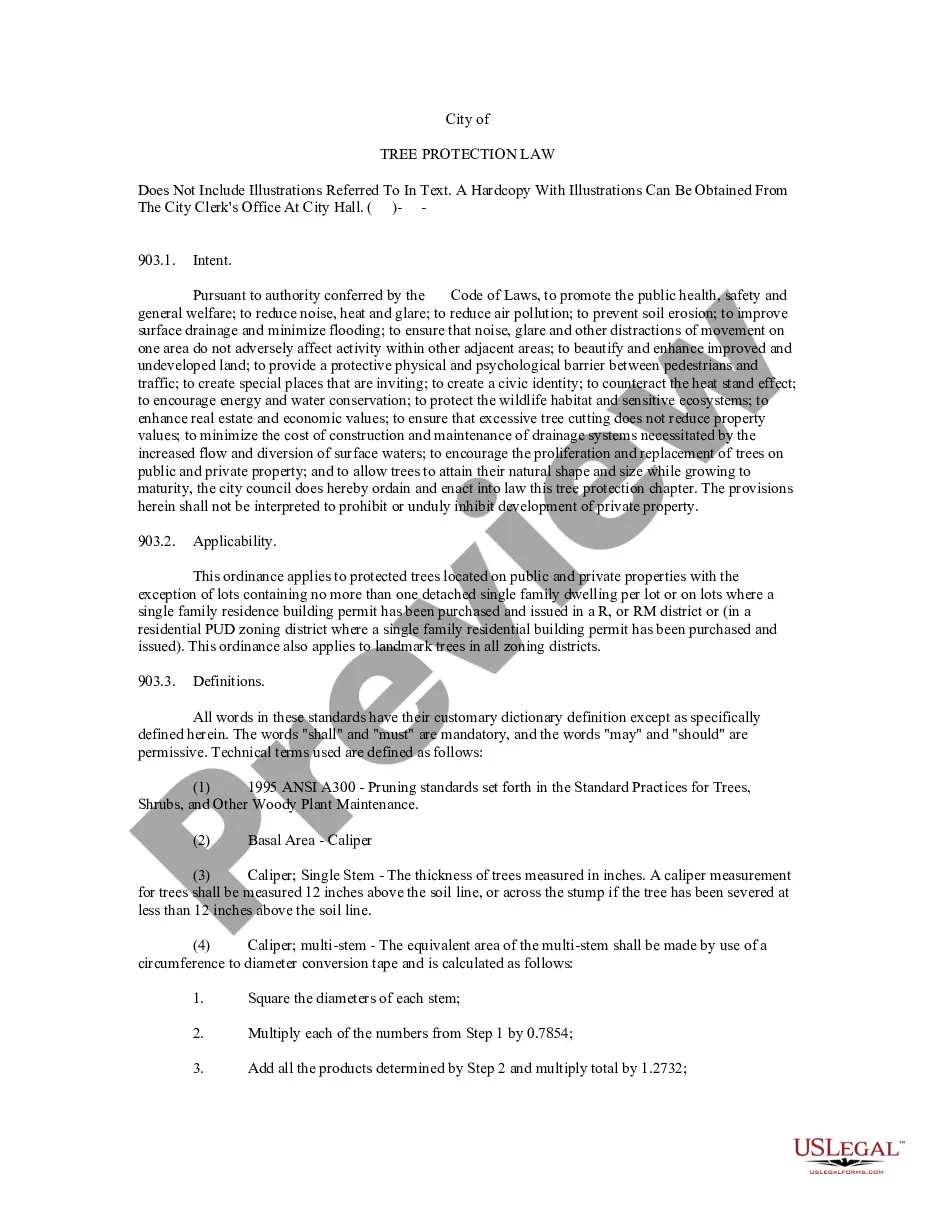
Tree Protection Law
Overview of this form
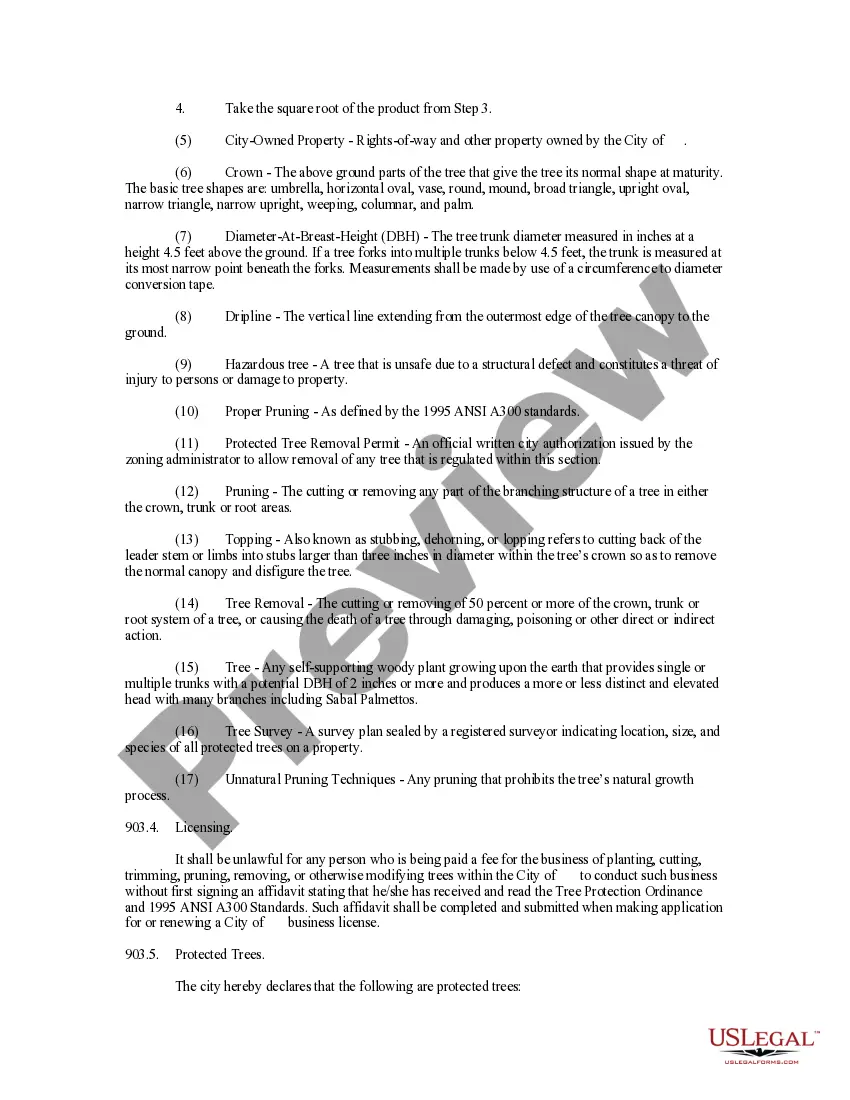
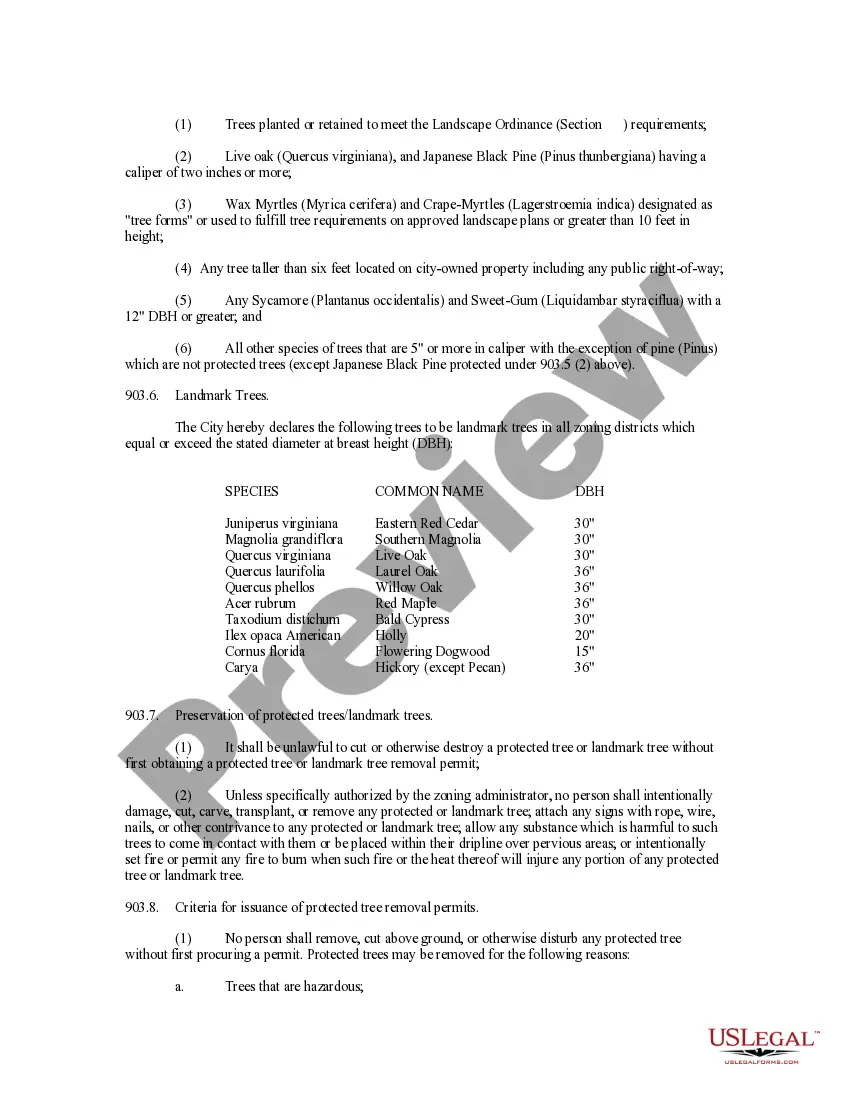
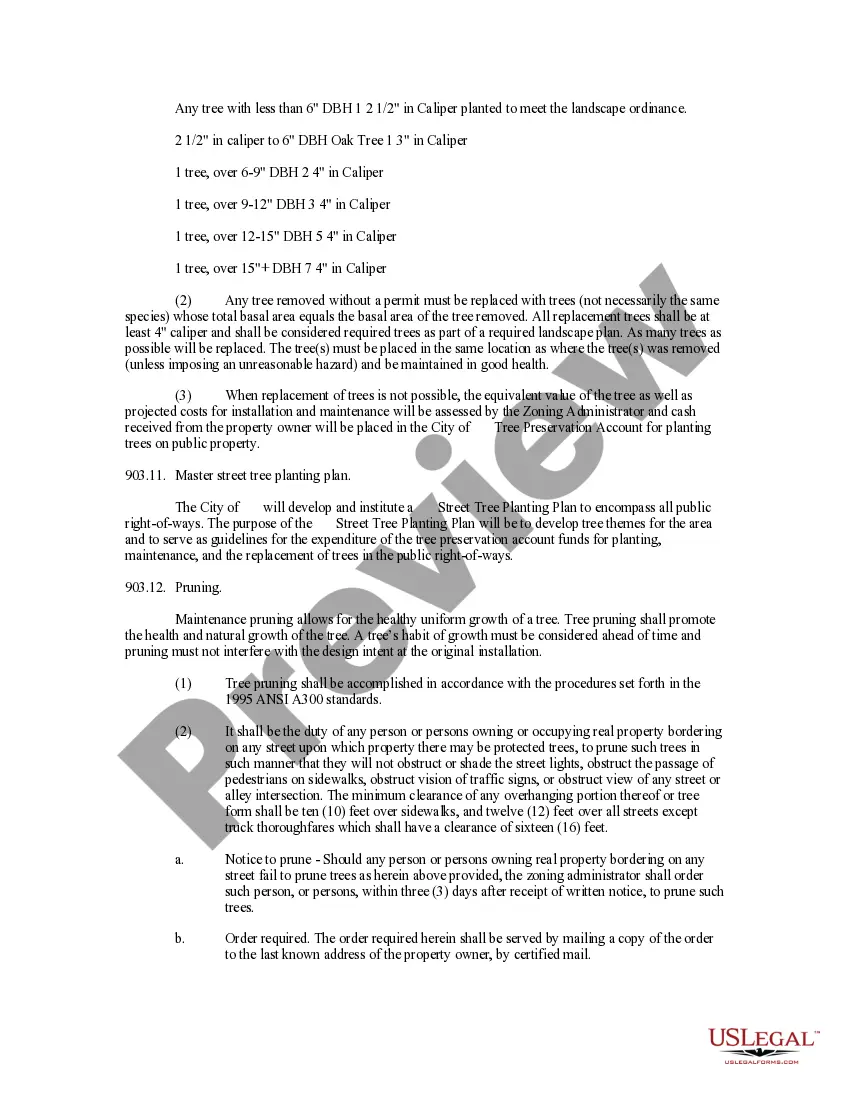
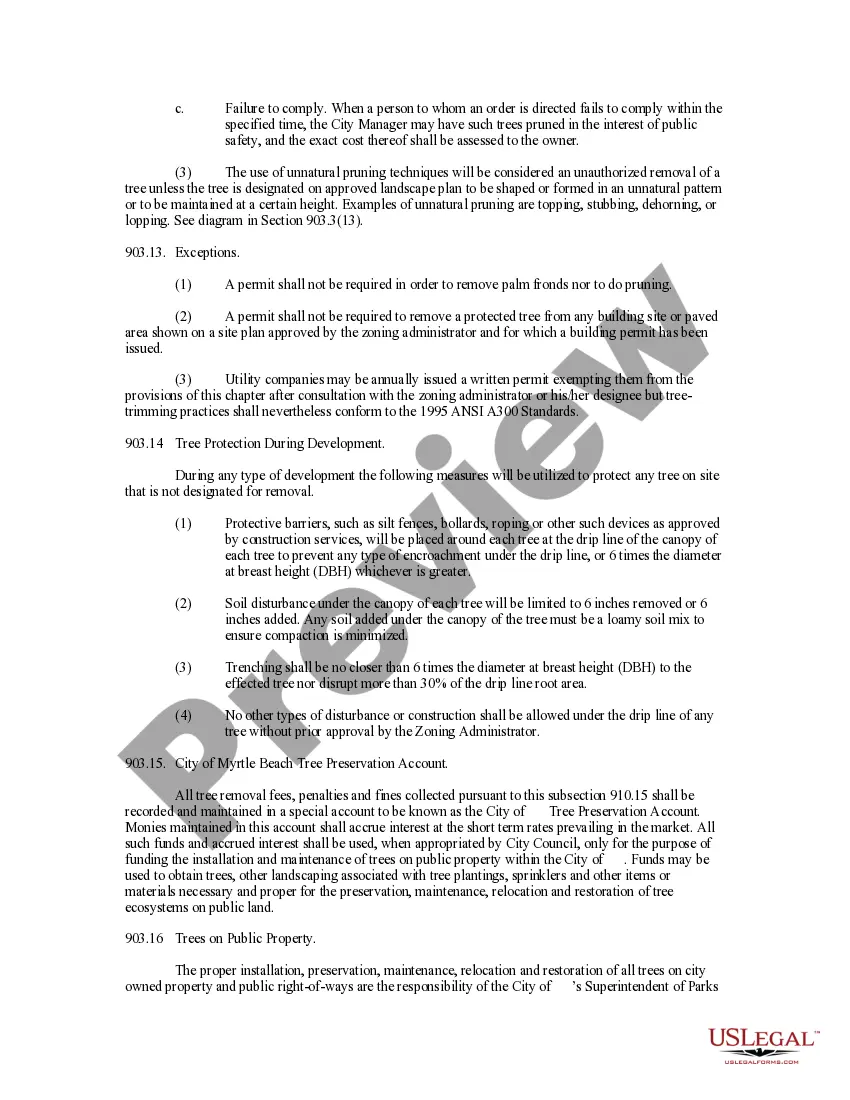
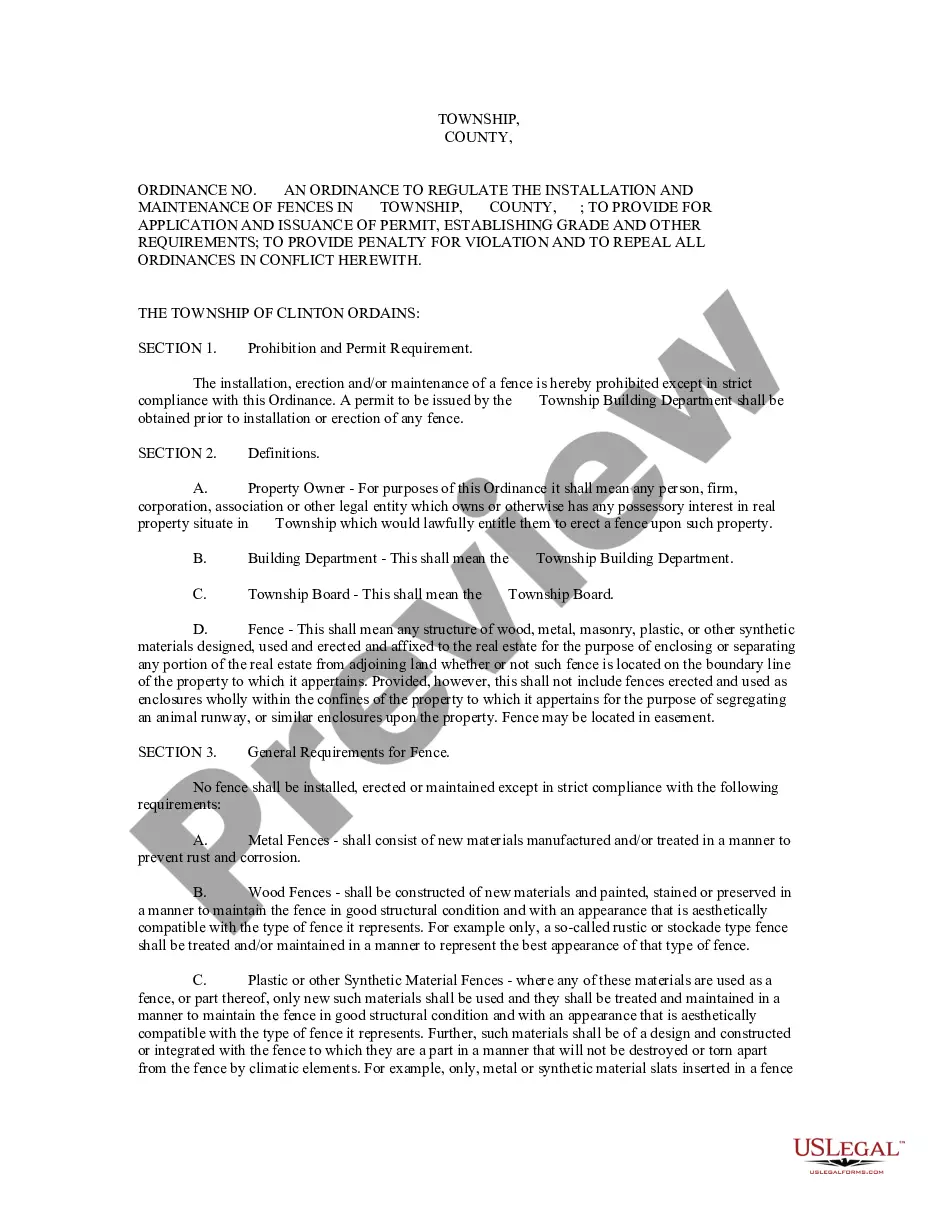
The Tree Protection Law is an ordinance designed to safeguard trees on public and private properties through regulations that require permits for tree removal and ensure preservation of protected species. This form provides a comprehensive set of guidelines pertaining to tree maintenance, removal permits, and preservation standards, making it essential for local governments and property owners alike to understand their rights and responsibilities when dealing with tree-related issues.
Main sections of this form
- Definitions of protected trees and landmark trees.
- Applicability clauses outlining which properties and trees are affected.
- Licensing requirements for tree care professionals.
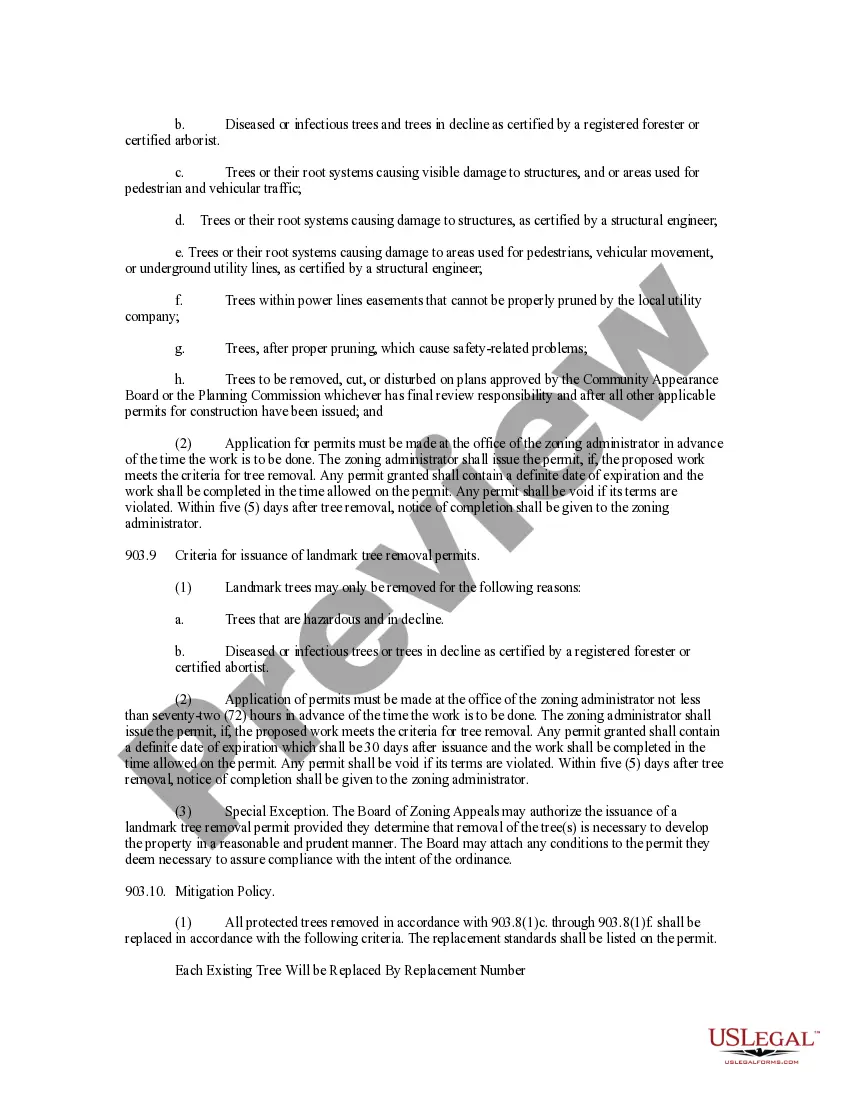
- Permits needed for tree removal and criteria for issuance.
- Protection measures during development to minimize impact on trees.
- Mitigation policies for tree replacement after removal.

Situations where this form applies
This form should be used when individuals or entities plan to remove, prune, or modify trees on properties subject to local tree protection ordinances. It's applicable in scenarios such as construction projects, landscaping changes, or when addressing hazardous tree conditions. Obtaining the appropriate permits is crucial to ensure compliance with municipal regulations.
Intended users of this form
- Property owners seeking to remove or modify trees on their land.
- Landscape architects and contractors involved in tree management.
- Local government officials managing urban tree ordinances.
- Real estate developers planning new construction projects.
How to prepare this document
- Review the definitions and applicability to identify if your trees are protected or require permits.
- Complete the application for a tree removal permit, including details about the tree species, condition, and reason for removal.
- Submit the application to the relevant zoning administrator's office and pay any associated fees.
- Await approval, ensuring you meet any conditions or requirements outlined in the permit.
- Notify the zoning administrator within five days of tree removal, if applicable.
Does this form need to be notarized?
This form does not typically require notarization to be legally valid. However, some jurisdictions or document types may still require it. US Legal Forms provides secure online notarization powered by Notarize, available 24/7 for added convenience.
Get your form ready online
Our built-in tools help you complete, sign, share, and store your documents in one place.
Make edits, fill in missing information, and update formatting in US Legal Forms—just like you would in MS Word.
Download a copy, print it, send it by email, or mail it via USPS—whatever works best for your next step.
Sign and collect signatures with our SignNow integration. Send to multiple recipients, set reminders, and more. Go Premium to unlock E-Sign.
If this form requires notarization, complete it online through a secure video call—no need to meet a notary in person or wait for an appointment.
We protect your documents and personal data by following strict security and privacy standards.

Make edits, fill in missing information, and update formatting in US Legal Forms—just like you would in MS Word.

Download a copy, print it, send it by email, or mail it via USPS—whatever works best for your next step.

Sign and collect signatures with our SignNow integration. Send to multiple recipients, set reminders, and more. Go Premium to unlock E-Sign.

If this form requires notarization, complete it online through a secure video call—no need to meet a notary in person or wait for an appointment.

We protect your documents and personal data by following strict security and privacy standards.
Avoid these common issues
- Assuming no permit is needed for tree removal or pruning, leading to violations.
- Failing to properly identify protected trees as defined by local law.
- Neglecting to notify the zoning administrator post-removal, which can result in penalties.
Benefits of using this form online
- Convenient access to standardized documents tailored to your needs.
- Editable formats that allow for easy customization before submission.
- Reliable resources prepared by legal professionals to ensure compliance.
Legal use & context
- The Tree Protection Law is enforceable under local municipal codes, protecting both public safety and environmental sustainability.
- Violations can result in fines and penalties intended to deter unlawful tree removal and ensure accountability.
- Permits serve not just to regulate removal but also to encourage responsible tree stewardship.
Key takeaways
- Understanding local ordinances on tree protection is crucial for compliance.
- Permits are mandatory for many tree-related actions, particularly removals.
- Utilizing this form can facilitate proper management of tree resources and support local ecosystem health.
Legal terms and meanings
- Protected Tree: Any tree that is subject to preservation regulations, typically defined by size or species.
- Landmark Tree: Trees that have been designated due to their age, size, or historical significance.
- Pruning: The practice of trimming trees to improve their health and appearance.
- DBH (Diameter at Breast Height): A standard measurement of tree diameter that is taken at 4.5 feet above ground.
Looking for another form?

Form popularity
FAQ
When a tree falls over onto a neighbor's property, that neighbor should submit a claim to his or her insurance company immediately. The insurance company is usually responsible for taking care of the damages. This is true if the tree fell over due to an act of nature.
California. The city government of Sacramento only requires a permit for tree removal on private property if the tree is designated as a heritage tree or is an oak, a type protected across the entire state of California. Otherwise the tree can be removed without any permit or requirements ahead of time by city law.
California Civil Code section 3346 considers the encroachment of branches and roots onto your property to be a nuisance. You are allowed to trim the tree on your land in a way that the tree is not damaged.That means determining the value of the tree which can easily be more than $10,000.
Without permission, it's an offence to cut down, uproot or wilfully destroy any trees: subject to a Tree Preservation Order (TPO) in a Conservation Area.
By law, you have the right to trim branches and limbs that extend past the property line. However, the law only allows tree trimming and tree cutting up to the property line. You may not go onto the neighbor's property or destroy the tree.Most trees have a replacement value of between $500 and $2500.
Many trees are protected by tree preservation orders which means that, in general, you need the council's consent to prune or fell them.If you are unsure about the status of trees which you intend to prune or fell (or you simply require further information) you should contact your council.
Overhanging Branches on Your Property Even if the tree trunk is on your neighbor's property, you have the responsibility for cutting any branches that extend onto your property line. You are responsible for the cost of cutting any branches you choose to trim. You can cut back anything up to your property line.
Without permission, it's an offence to cut down, uproot or wilfully destroy any trees: subject to a Tree Preservation Order (TPO)
One wrong cut won't immediately kill your tree, but pruning incorrectly or too often can. If a tree repeatedly loses too much of its canopy at one time, it can become weak or even die from the stress. That's why you shouldn't trim more than 25% of a tree's canopy at one time.