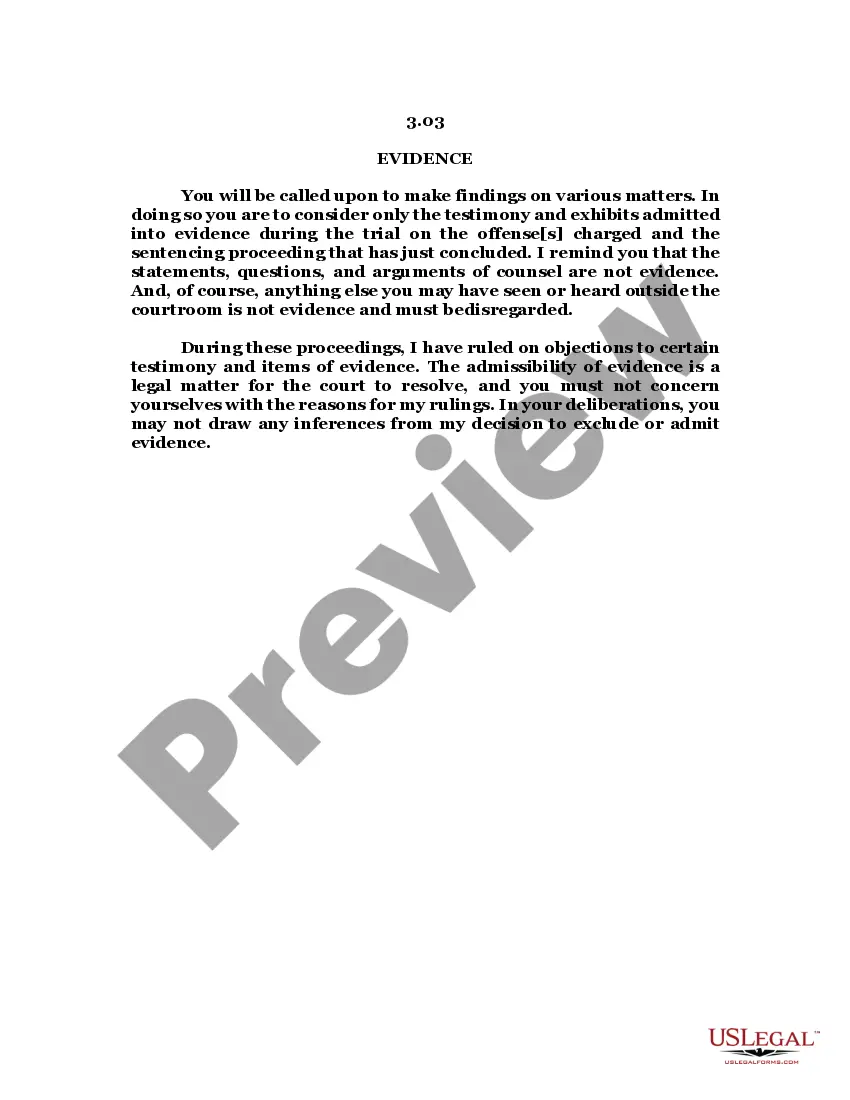
EVIDENCE
About this form
The Evidence form is a crucial legal document used in court proceedings to guide jurors in their deliberations. Its primary purpose is to ensure jurors understand what constitutes valid evidence in a trial. Unlike similar forms, this document specifically outlines how jurors should rely solely on the evidence presented during the trial, excluding any extraneous information or arguments from attorneys. This form plays a vital role in protecting the integrity of the judicial process.
Form components explained
- Juror guidance: Instructions on only considering the testimony and exhibits admitted as evidence during the trial.
- Exclusion of outside information: Clear reminders that statements or materials from outside the courtroom are not to be considered as evidence.
- Understanding legal rulings: Clarification that jurors should not focus on the reasons behind the court's decisions regarding evidence admissibility.
- Non-evidence definitions: Information stressing that questions and arguments from attorneys do not qualify as evidence.
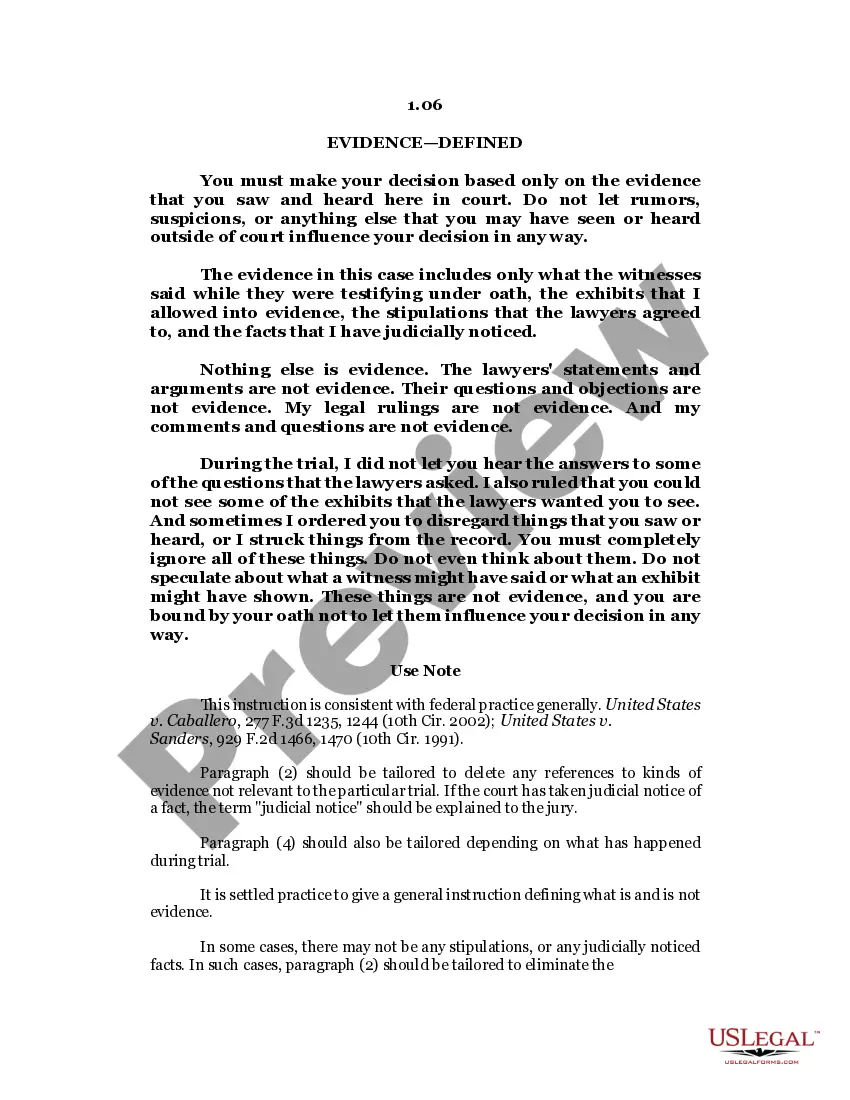
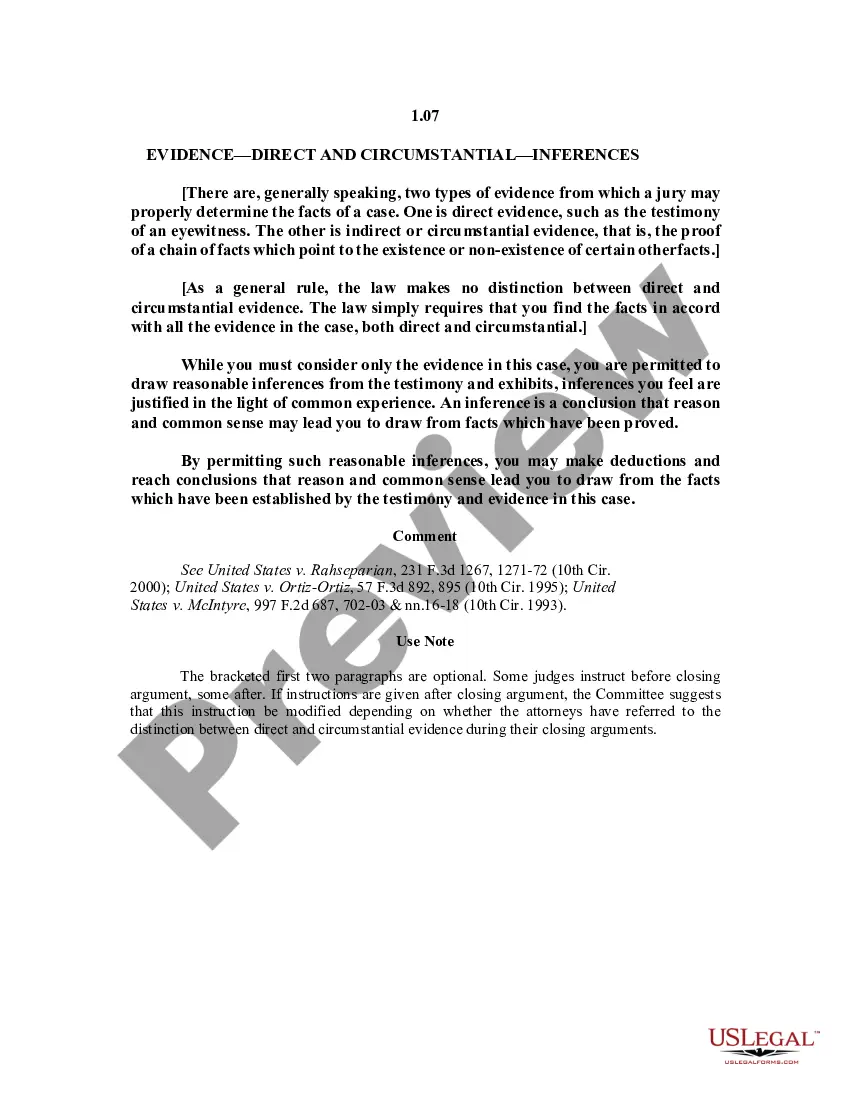
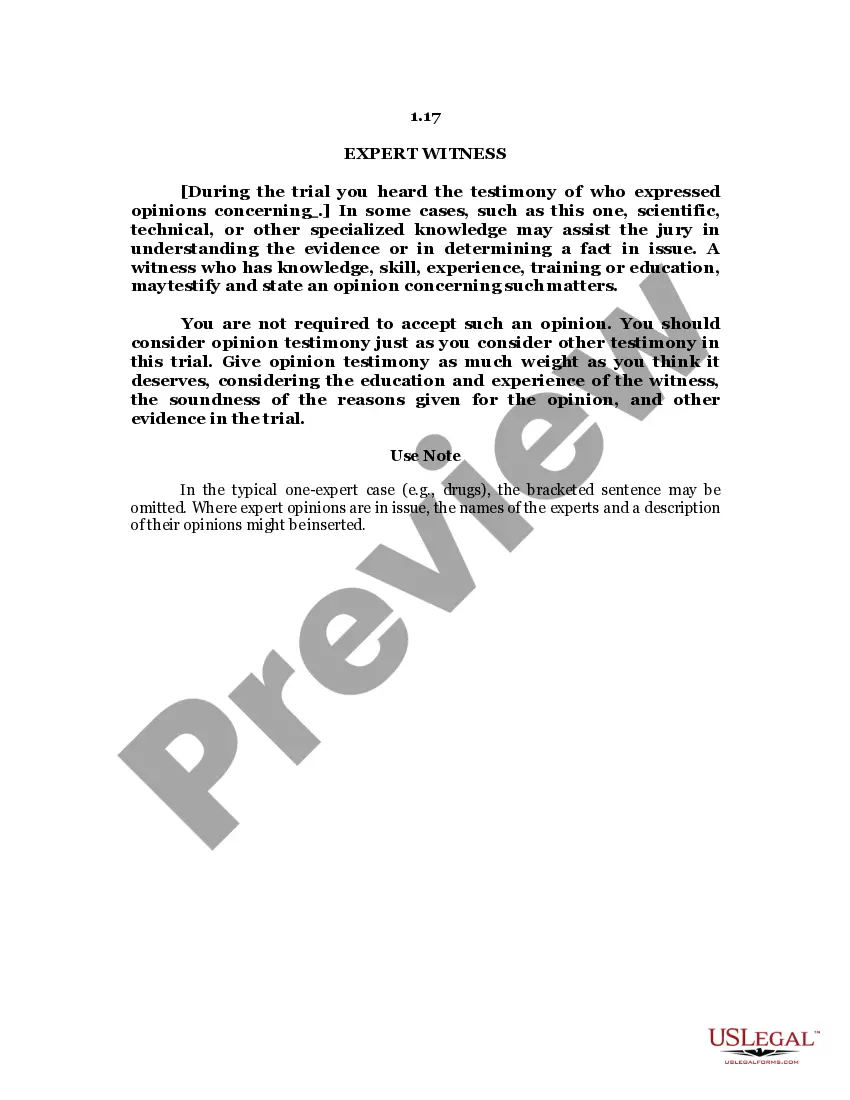
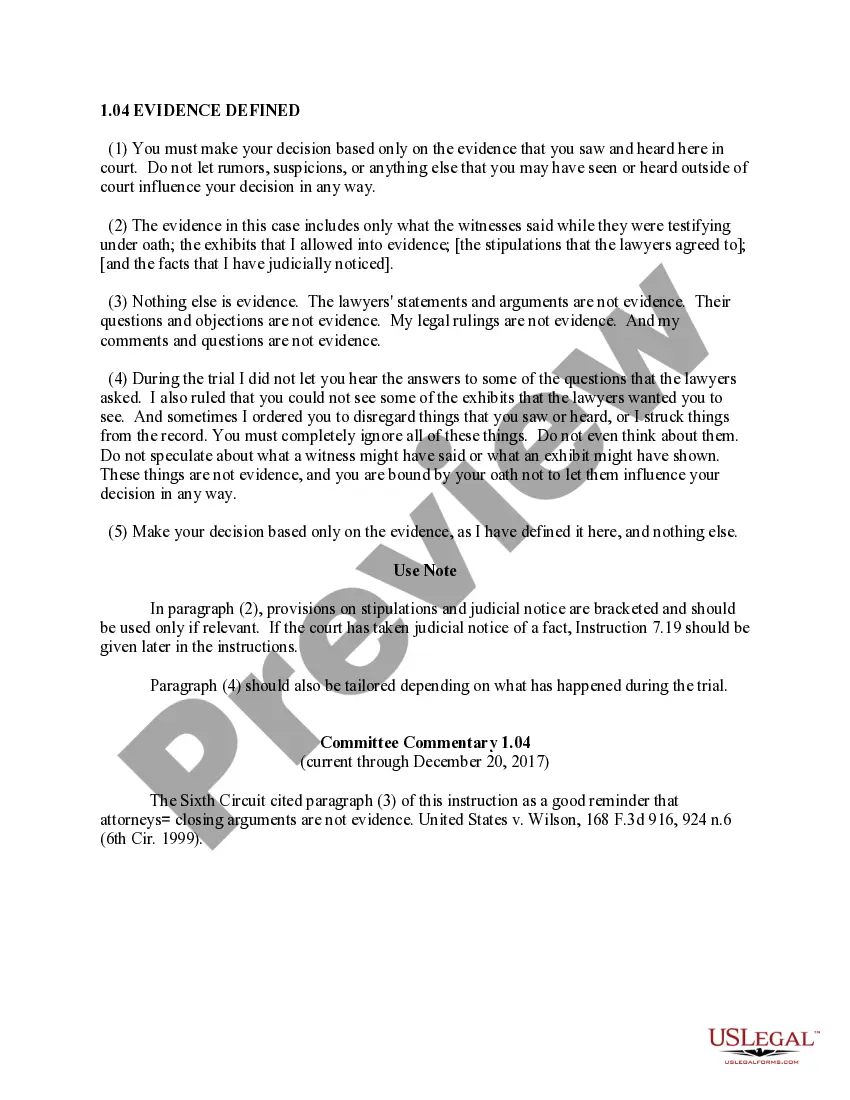
When to use this document
This form should be used during any trial or legal proceeding where evidence will be presented and considered by a jury. It is particularly relevant in cases involving criminal charges, civil lawsuits, and other matters requiring jury deliberation. The Evidence form helps jurors navigate their obligations to rely strictly on the evidence provided, ensuring a fair trial process.
Who should use this form
- Judges presiding over trials to ensure jurors are informed about evidence rules.
- Legal professionals including attorneys, to assist in educating jurors about the legal standards for evidence.
- Juries tasked with evaluating the evidence presented in court.
Completing this form step by step
- Review the trial evidence presented during the proceedings.
- Consider only the testimony and exhibits that have been admitted as evidence.
- Disregard any remarks, questions, or arguments made by attorneys that are not part of the admitted evidence.
- Follow the court's rulings on evidence admissibility without concern for the reasons behind those rulings.
- Engage in discussions with fellow jurors based solely on the admissible evidence.
Is notarization required?
Notarization is not commonly needed for this form. However, certain documents or local rules may make it necessary. Our notarization service, powered by Notarize, allows you to finalize it securely online anytime, day or night.
Get your form ready online
Our built-in tools help you complete, sign, share, and store your documents in one place.
Make edits, fill in missing information, and update formatting in US Legal Forms—just like you would in MS Word.
Download a copy, print it, send it by email, or mail it via USPS—whatever works best for your next step.
Sign and collect signatures with our SignNow integration. Send to multiple recipients, set reminders, and more. Go Premium to unlock E-Sign.
If this form requires notarization, complete it online through a secure video call—no need to meet a notary in person or wait for an appointment.
We protect your documents and personal data by following strict security and privacy standards.

Make edits, fill in missing information, and update formatting in US Legal Forms—just like you would in MS Word.

Download a copy, print it, send it by email, or mail it via USPS—whatever works best for your next step.

Sign and collect signatures with our SignNow integration. Send to multiple recipients, set reminders, and more. Go Premium to unlock E-Sign.

If this form requires notarization, complete it online through a secure video call—no need to meet a notary in person or wait for an appointment.

We protect your documents and personal data by following strict security and privacy standards.
Common mistakes
- Using information obtained from outside the courtroom to influence deliberations.
- Dismissing or questioning the judge's rulings on evidence admissibility.
- Misunderstanding the role of attorneys' comments as evidence.
Benefits of using this form online
- Easy access to essential legal information for jurors during trials.
- Flexibility to review and refer to evidence instructions at any time.
- Reliability by being created by licensed attorneys familiar with legal standards.
Looking for another form?
Form popularity
FAQ
: something that furnishes proof : testimony. specifically : something legally submitted to a tribunal to ascertain the truth of a matter. : one who bears witness. especially : one who voluntarily confesses a crime and testifies for the prosecution against one's accomplices. evidence.
: something that furnishes proof : testimony. specifically : something legally submitted to a tribunal to ascertain the truth of a matter. : one who bears witness.
A simple example is if a person's fingerprints are on a glass. The fingerprints are evidence. The conclusion that that the person touched the glass, is proof.
An example would be a witness pointing to someone in the courtroom and saying, ?That's the guy I saw robbing the grocery store.? This is also called direct evidence or prima facie evidence. Physical evidence can be any object or material relevant in a crime. It can be any tangible thing, large or small.
Evidence is anything that can be used to prove something ? like the evidence presented in a trial, or the trail of bread crumbs that is evidence of the path Hansel took through the woods.