Orientation and Certification For for New Hires - Florida
Understanding this form
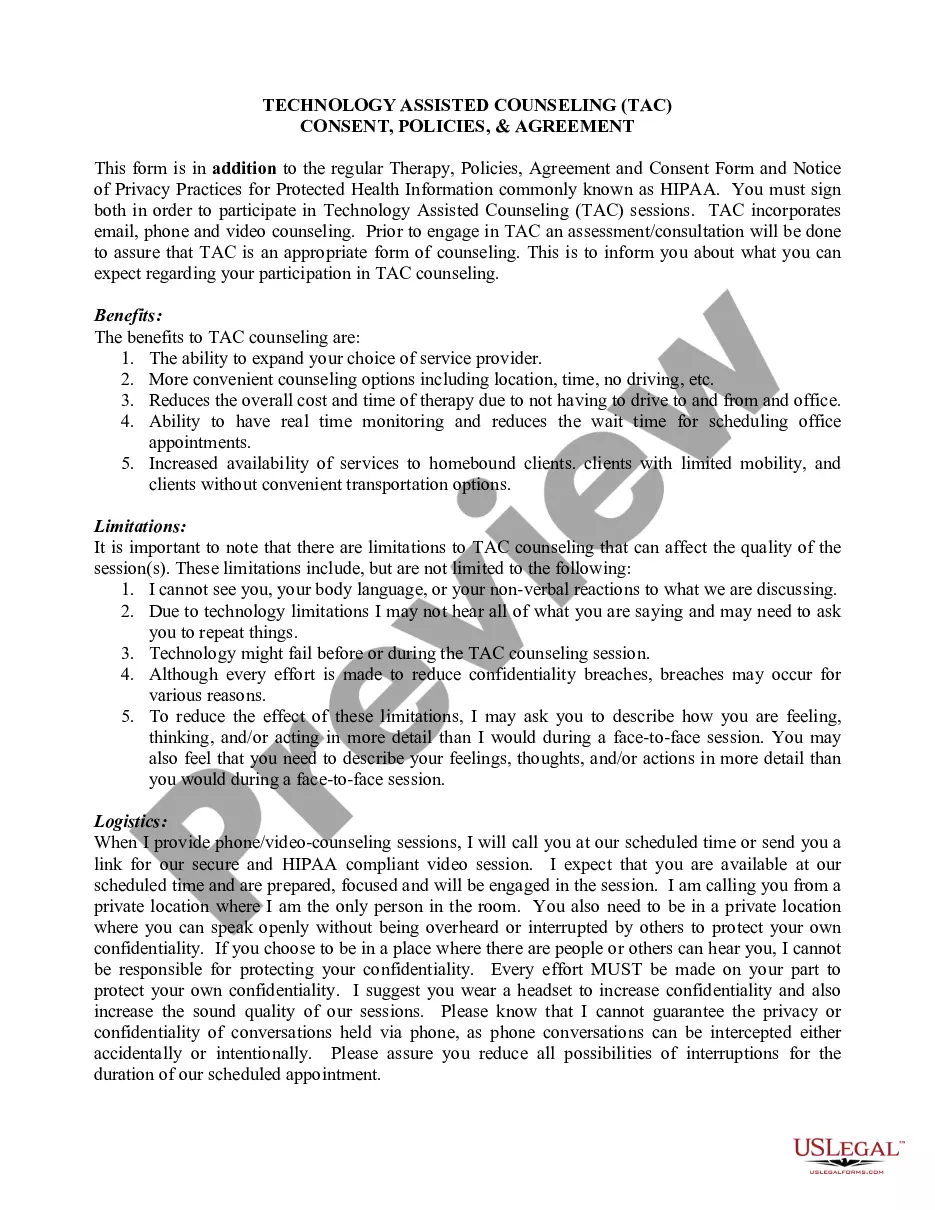
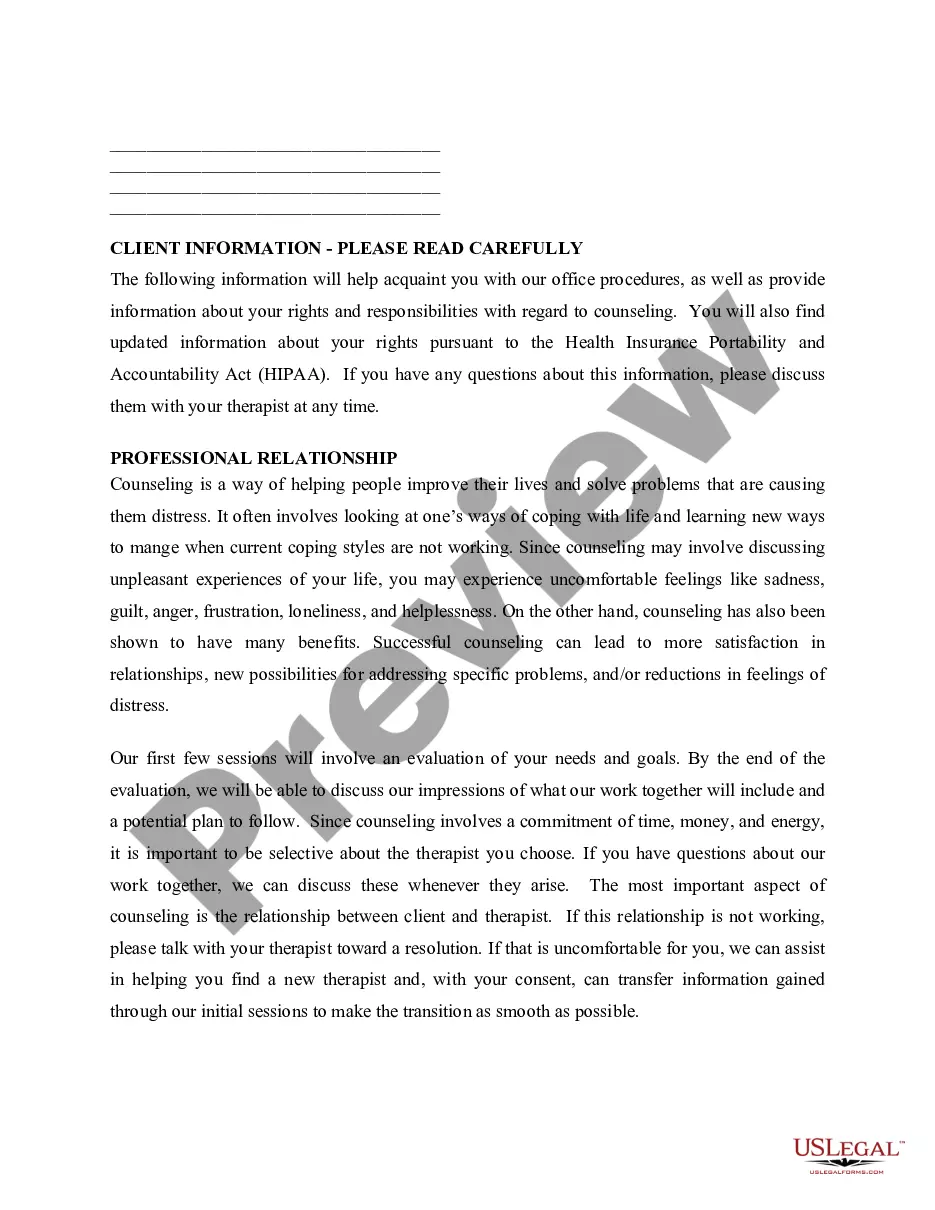
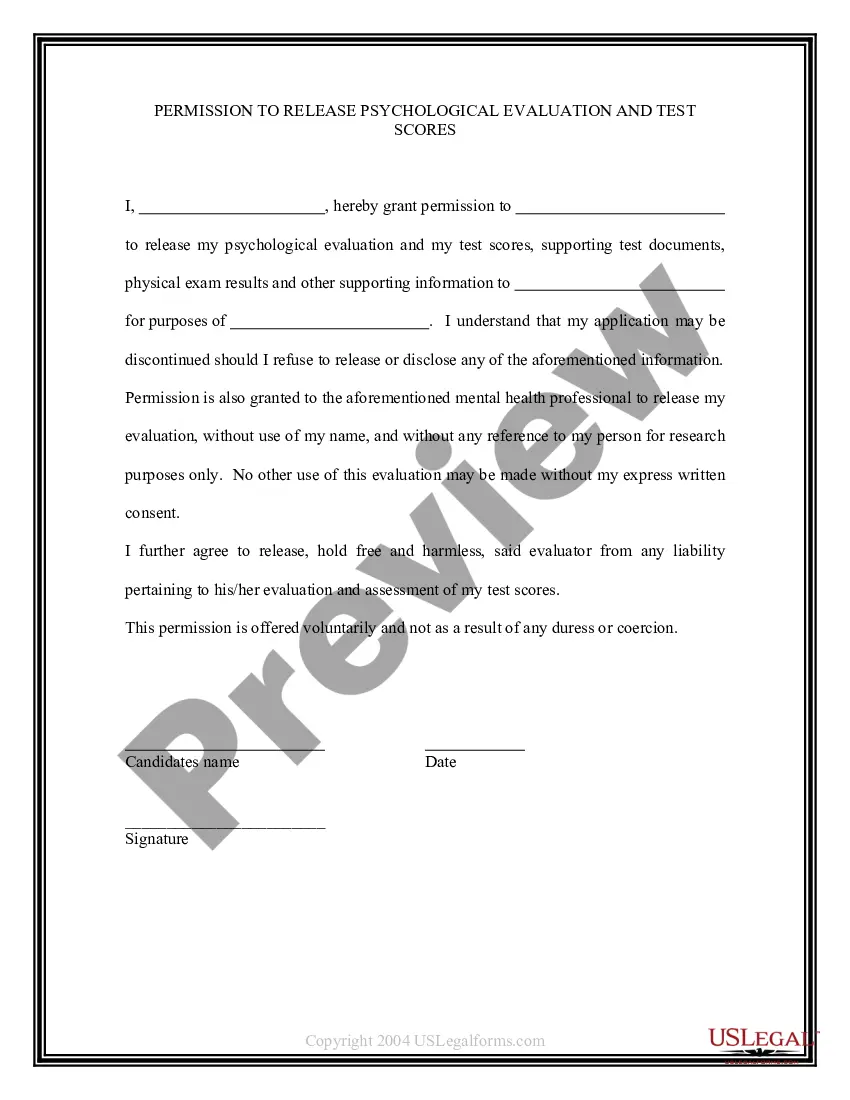
The Orientation and Certification Form for New Hires - Florida is a crucial document for new employees or those transferring within the State of Florida. It ensures that new hires understand the policies and agreements surrounding Technology Assisted Counseling (TAC). This form differs from general hiring paperwork by specifically addressing aspects of online therapy, outlining important consent and confidentiality agreements necessary for participation in TAC sessions.
Key parts of this document
- Consent and agreement to participate in Technology Assisted Counseling.
- Benefits and limitations of participating in TAC sessions.
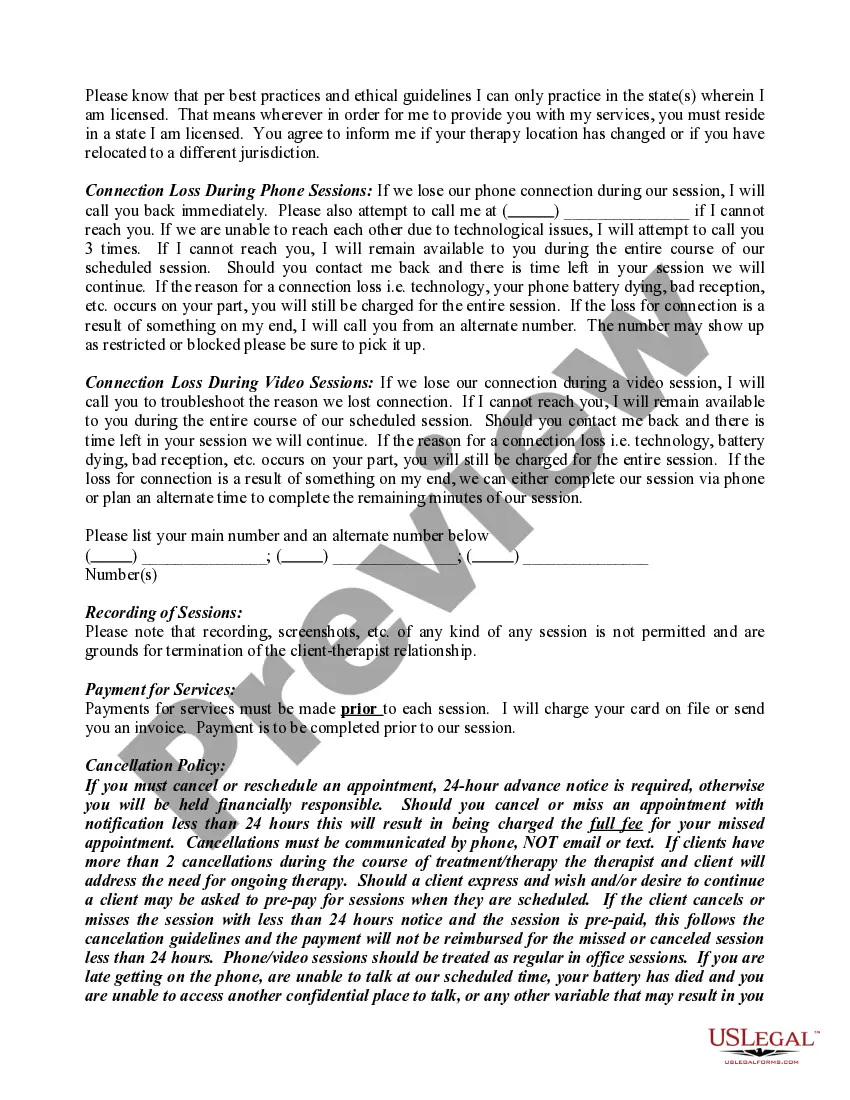
- Logistics for scheduling and maintaining confidentiality during sessions.
- Payment policies and cancellation guidelines.
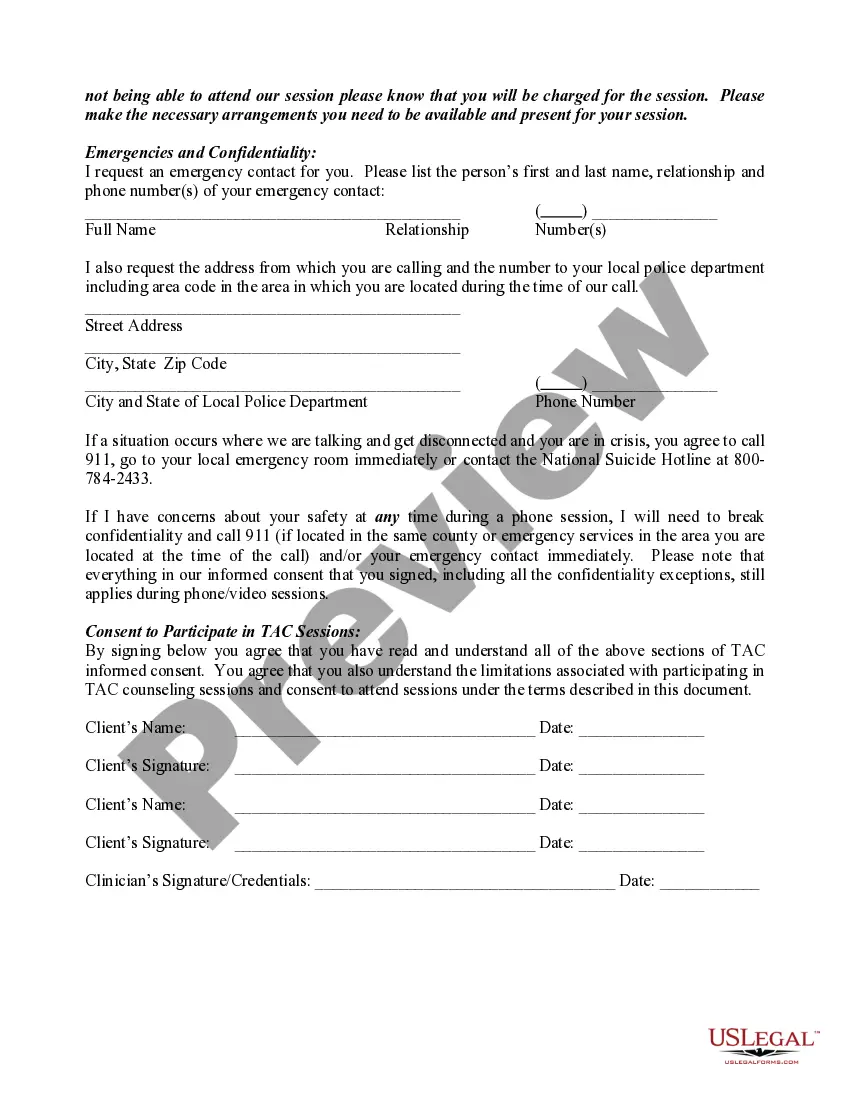
- Emergency contact information and safety protocol during sessions.
When to use this document
This form should be used when a new hire begins their employment in Florida and will be engaging in Technology Assisted Counseling. It is particularly relevant for employees who may require teletherapy services due to geographical, physical, or logistical constraints that make attending traditional in-person therapy sessions difficult.
Who needs this form
This form is intended for:
- New employees starting their first job involving TAC in Florida.
- Existing employees transferring to a position that includes TAC services.
- Hiring managers and human resources personnel responsible for onboarding new hires.
How to prepare this document
- Read the entire form carefully, paying particular attention to the consent and policies sections.
- Complete all required fields including your name, contact numbers, and emergency contact information.
- Sign and date the consent section to confirm your understanding and agreement.
- Ensure the clinician also signs and dates the form to validate the agreement.
- Keep a copy of the signed form for your records and future reference.
Notarization guidance
This form does not typically require notarization unless specified by local law. It is recommended to retain a copy for your personal records and ensure all signatures are completed properly.
Get your form ready online
Our built-in tools help you complete, sign, share, and store your documents in one place.
Make edits, fill in missing information, and update formatting in US Legal Forms—just like you would in MS Word.
Download a copy, print it, send it by email, or mail it via USPS—whatever works best for your next step.
Sign and collect signatures with our SignNow integration. Send to multiple recipients, set reminders, and more. Go Premium to unlock E-Sign.
If this form requires notarization, complete it online through a secure video call—no need to meet a notary in person or wait for an appointment.
We protect your documents and personal data by following strict security and privacy standards.

Make edits, fill in missing information, and update formatting in US Legal Forms—just like you would in MS Word.

Download a copy, print it, send it by email, or mail it via USPS—whatever works best for your next step.

Sign and collect signatures with our SignNow integration. Send to multiple recipients, set reminders, and more. Go Premium to unlock E-Sign.

If this form requires notarization, complete it online through a secure video call—no need to meet a notary in person or wait for an appointment.

We protect your documents and personal data by following strict security and privacy standards.
Common mistakes
- Not reading the consent and agreement sections thoroughly before signing.
- Failing to provide accurate contact information for emergencies.
- Not scheduling a session at the appointed time or being unprepared for the counseling session.
Why use this form online
- Convenience of completing the form from any location without needing to visit an office.
- Immediate access to the necessary documentation for TAC services.
- Ability to easily update and edit information as required before final submission.
Looking for another form?

Form popularity
FAQ
How long should orientation take? Many human resource experts believe that an orientation program should be anywhere from three hours to a full workday. If you keep it short, sweet and to the point, you'll be less likely to overwhelm your new hires before they even start their jobs.
What should employee orientation include? New employee orientation should: provide realistic information about the job and what you expect from the new hire, include the company culture, reassure newcomers, make room for fun with colleagues, and teach about relevant software and tools.
In general, onboarding describes a series of events that enable new employees to learn what they need to do to meet the responsibilities of their new positions. Orientation, on the other hand, refers to the initial welcome a company provides to the new hire (usually over the course of a single day).
Job orientation training involves the hiring manager or the human resources department introducing you to coworkers, your duties, and the workplace. This training allows you to get comfortable within a new team, understand your role, and recognize the company's policies regarding employees.
How to design an effective orientation program Welcome the employee. From the time the new employee walks in the door, the focus should be on easing their anxiety.Provide the employee handbook.Go over policies.Thoroughly explain the details of the job.Set goals and action steps.Clearly define overarching expectations.
What should employee orientation include? New employee orientation should: provide realistic information about the job and what you expect from the new hire, include the company culture, reassure newcomers, make room for fun with colleagues, and teach about relevant software and tools.
Make sure you and new hires complete employment forms required by law. W-4 form (or W-9 for contractors) I-9 Employment Eligibility Verification form. State Tax Withholding form. Direct Deposit form. E-Verify system: This is not a form, but a way to verify employee eligibility in the U.S.