Maine Trust Agreement
What this document covers
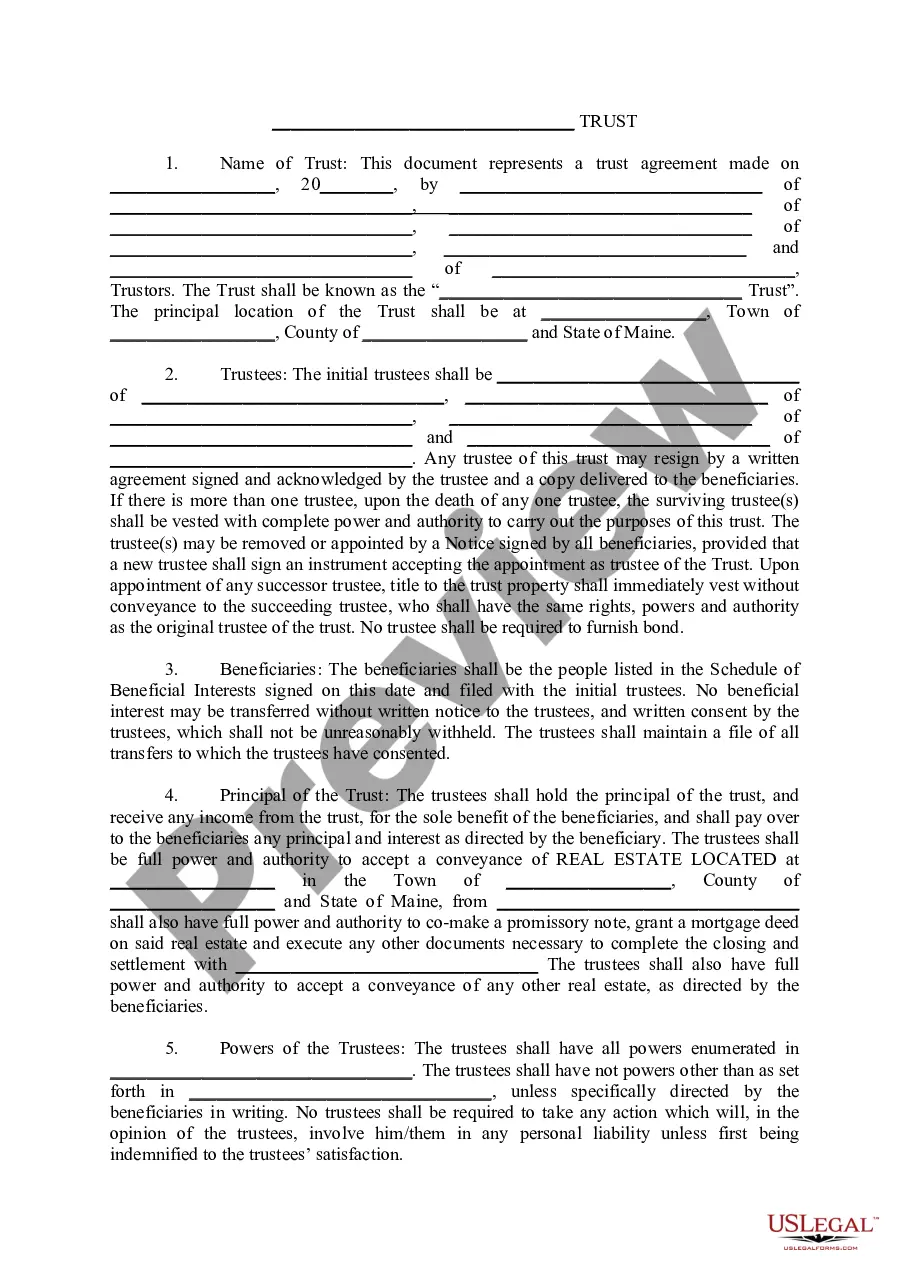
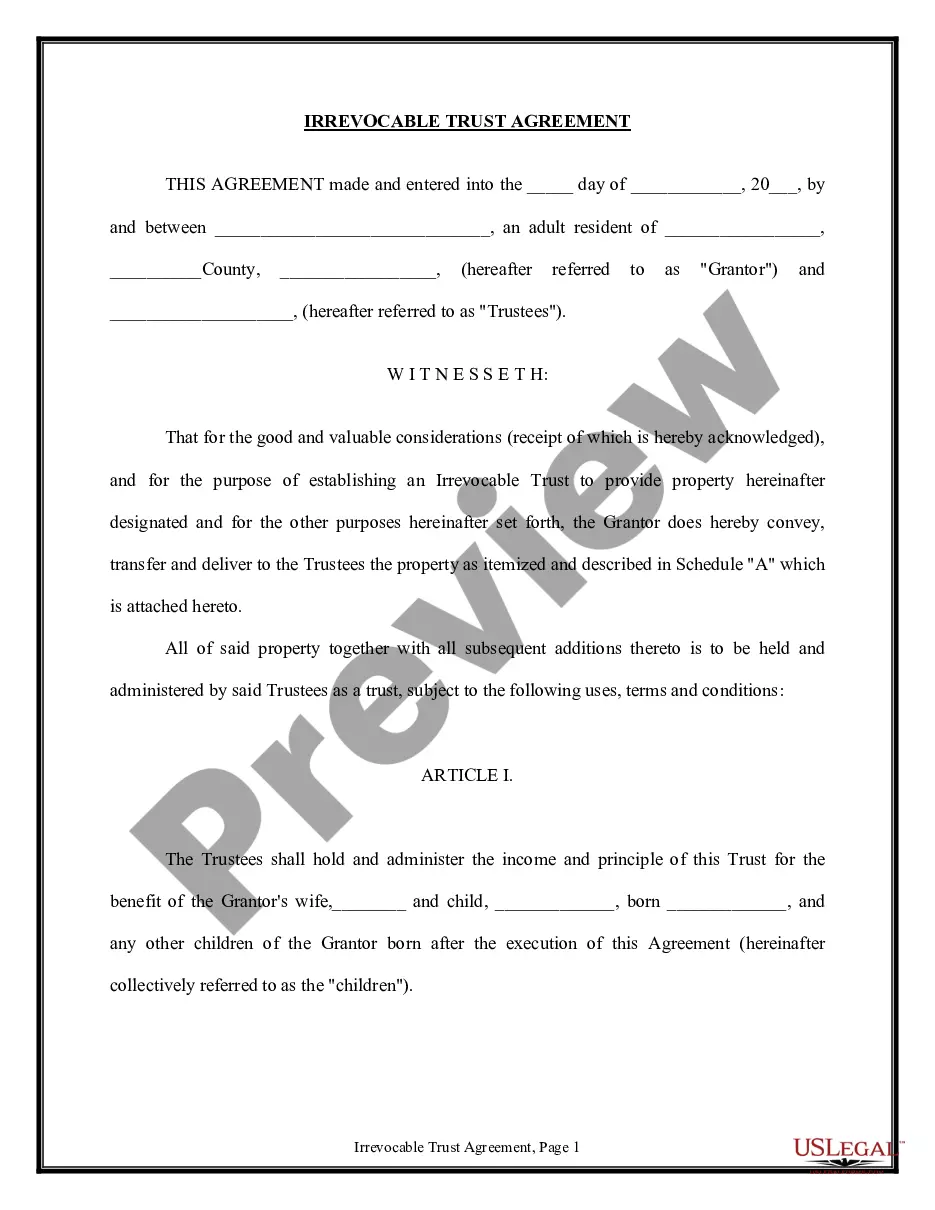
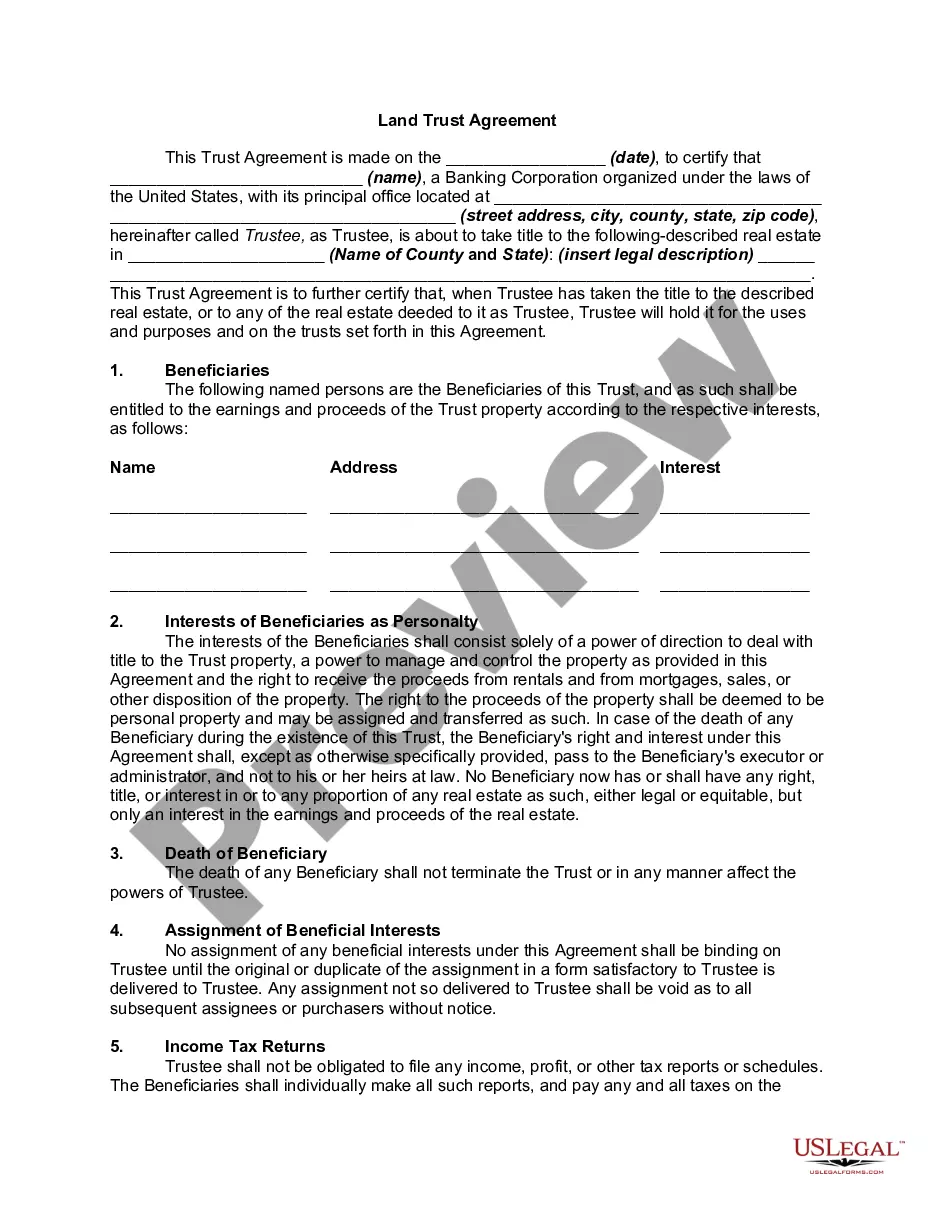
A Trust Agreement is a vital legal document that sets up a land trust. It defines the rights and responsibilities of the trustee and the beneficiaries. Unlike a deed in trust, which transfers real estate to a trustee, the Trust Agreement itself is not filed with the public records. This form serves as a framework for managing the trust's assets and guiding the actions of the trustees in accordance with the interests of the beneficiaries.
Key parts of this document
- Name of Trust: Identifies the trust and its principal location.
- Trustees: Specifies the initial trustees and their powers.
- Beneficiaries: Lists the individuals who benefit from the trust.
- Principal of the Trust: Outlines how trust property is managed and distributed.
- Powers of the Trustees: Details the authorities granted to trustees.
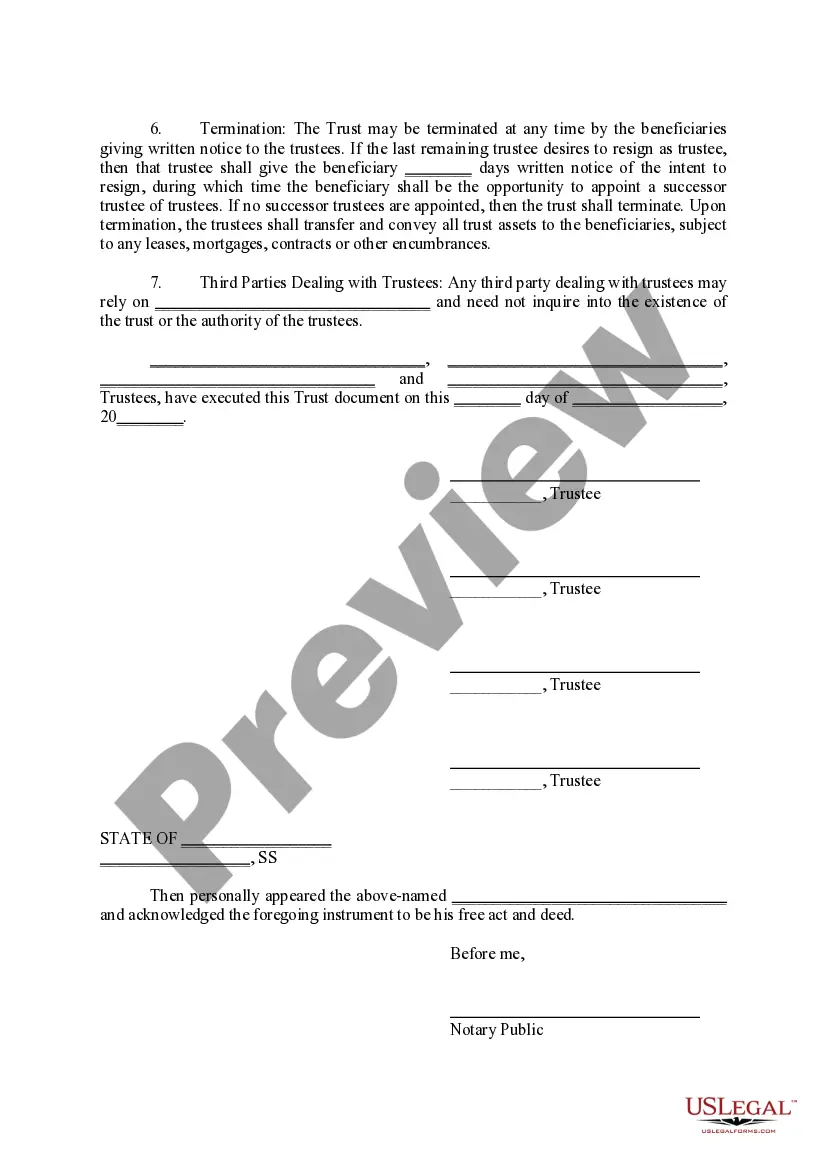
- Termination: Explains the process for dissolving the trust.
Situations where this form applies
This Trust Agreement is useful for individuals or organizations looking to establish a land trust. It is appropriate when you want to designate a trustee to manage certain assets on behalf of one or more beneficiaries, such as properties or investments. Efficiently managing assets in a trust can protect them from legal disputes or taxation issues and provide a clear structure for distributing benefits.
Who this form is for
- Individuals or families looking to manage their estate effectively.
- Parties wanting to minimize tax implications on inherited property.
- Business partners wishing to safeguard their partnership assets.
- Anyone seeking to maintain privacy regarding their estate planning.
Steps to complete this form
- Identify the parties involved: Enter the names of the trustors, trustees, and beneficiaries.
- Name the trust: Specify a unique name for your trust.
- Detail the trust property: Fill in the information regarding the real estate and other assets to be held in trust.
- Define trustee powers: Clearly outline the powers entrusted to the trustees.
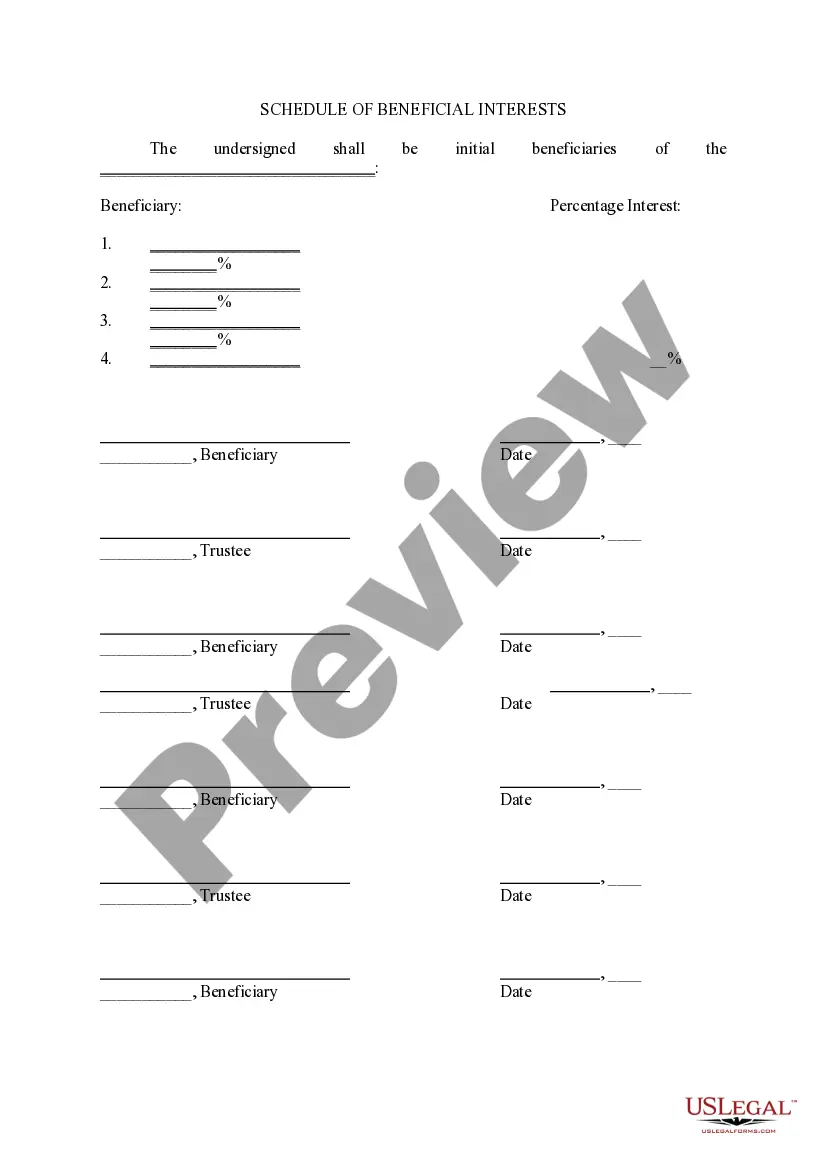
- List beneficiaries: Include the names and percentage interests of each beneficiary in the designated section.
- Provide signatures: Ensure that all parties sign and date the document, and consider notarization if required.
Does this form need to be notarized?
This form does not typically require notarization unless specified by local law. However, having the document notarized can provide an additional layer of authenticity and security.
Get your form ready online
Our built-in tools help you complete, sign, share, and store your documents in one place.
Make edits, fill in missing information, and update formatting in US Legal Forms—just like you would in MS Word.
Download a copy, print it, send it by email, or mail it via USPS—whatever works best for your next step.
Sign and collect signatures with our SignNow integration. Send to multiple recipients, set reminders, and more. Go Premium to unlock E-Sign.
If this form requires notarization, complete it online through a secure video call—no need to meet a notary in person or wait for an appointment.
We protect your documents and personal data by following strict security and privacy standards.

Make edits, fill in missing information, and update formatting in US Legal Forms—just like you would in MS Word.

Download a copy, print it, send it by email, or mail it via USPS—whatever works best for your next step.

Sign and collect signatures with our SignNow integration. Send to multiple recipients, set reminders, and more. Go Premium to unlock E-Sign.

If this form requires notarization, complete it online through a secure video call—no need to meet a notary in person or wait for an appointment.

We protect your documents and personal data by following strict security and privacy standards.
Common mistakes
- Failing to include all necessary parties in the agreement.
- Not clearly defining the powers of the trustees.
- Omitting specific property details that should be included in the trust.
- Leaving out required signatures or dates.
Why complete this form online
- Convenience: Easily downloadable and can be completed at your own pace.
- Editability: Fill in specific details directly in the document.
- Reliability: Instantly access professionally drafted legal documents.
Looking for another form?
Form popularity
FAQ
Personal trusts are further divided into either 1) Under Declaration of Trust (U/D/T) meaning the grantor and the trustee are the same person and the grantor controls the trust assets, and 2) Trust Under Agreement (U/A) meaning the grantor and the trustee are different persons and the trustee controls the trust assets.
A trust agreement is a document that allows you (the trustor) to legally transfer the ownership of specific assets to another person (trustee) to be held for the trustor's beneficiaries.Assets controlled in the trust. Powers and limitations for the trustee. Compensation for the trustee.
The trustee is the legal owner of the property in trust, as fiduciary for the beneficiary or beneficiaries who is/are the equitable owner(s) of the trust property. Trustees thus have a fiduciary duty to manage the trust to the benefit of the equitable owners.
Under California law (Probate Code section 16061.7) every Trust beneficiary, and every heir-at-law of the decedent, is entitled to receive a copy of the Trust document. So all you have to do once your parents are gone is request a copy of the Trust from whomever has it.
Paperwork. Setting up a living trust isn't difficult or expensive, but it requires some paperwork. Record Keeping. After a revocable living trust is created, little day-to-day record keeping is required. Transfer Taxes. Difficulty Refinancing Trust Property. No Cutoff of Creditors' Claims.
How to sign as a Trustee. When signing anything on behalf of the trust, always sign as John Smith, Trustee. By signing as Trustee, you will not be personally liable for that action as long as that action is within the scope of your authority under the trust.
As discussed above all trustees need to sign the trust deed for it to be valid. You should if you are trustee to sign as trustee following your name on all signature areas of the deed where required.The witness can not be a party to the trust either, meaning they can not be a beneficiary, settlor, or trustee.
To manage and control spending and investments to protect beneficiaries from poor judgment and waste; To avoid court-supervised probate of trust assets and be private; To protect trust assets from the beneficiaries' creditors;To reduce income taxes or shelter assets from estate and transfer taxes.
When they pass away, the assets are distributed to beneficiaries, or the individuals they have chosen to receive their assets. A settlor can change or terminate a revocable trust during their lifetime. Generally, once they die, it becomes irrevocable and is no longer modifiable.