Executive Bonus Plan
What this document covers
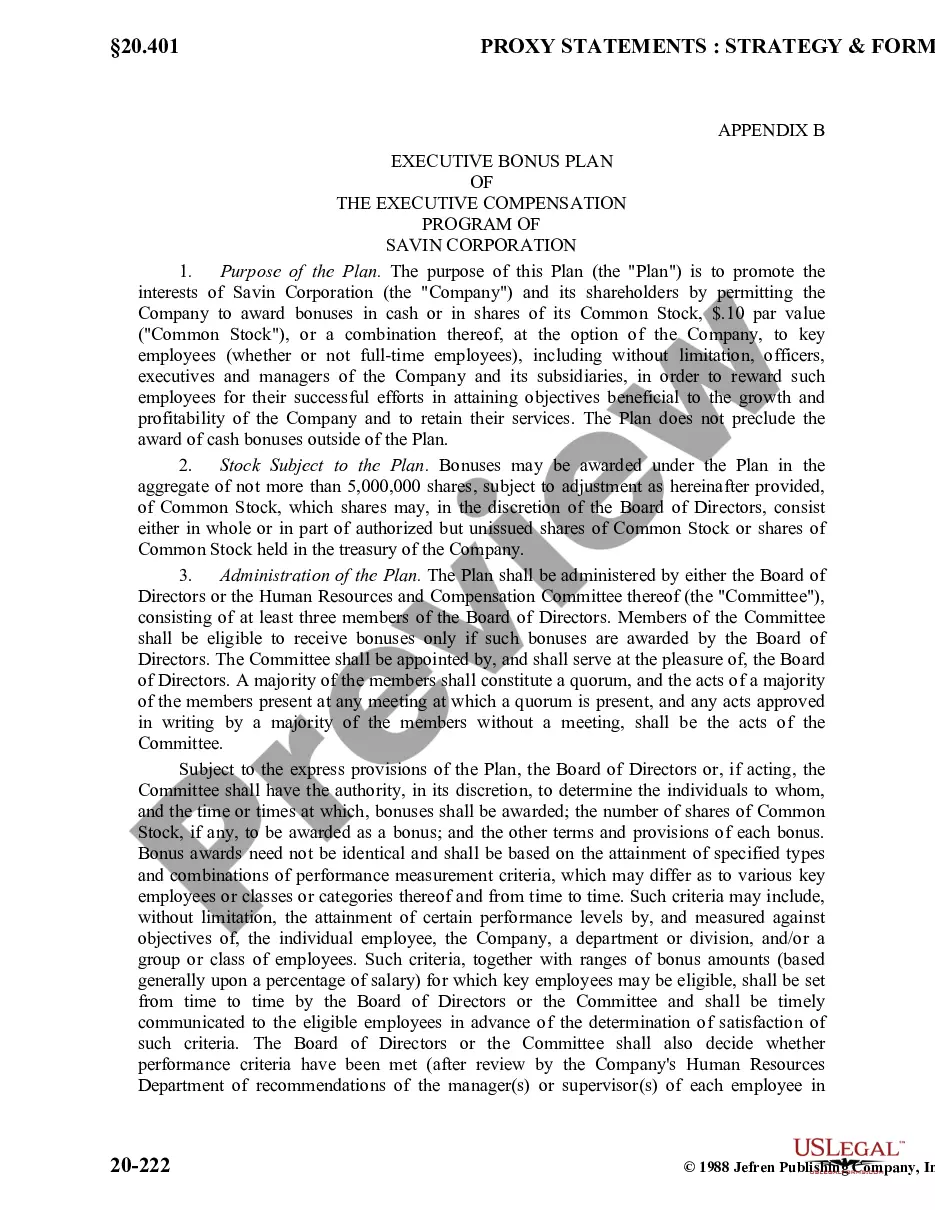
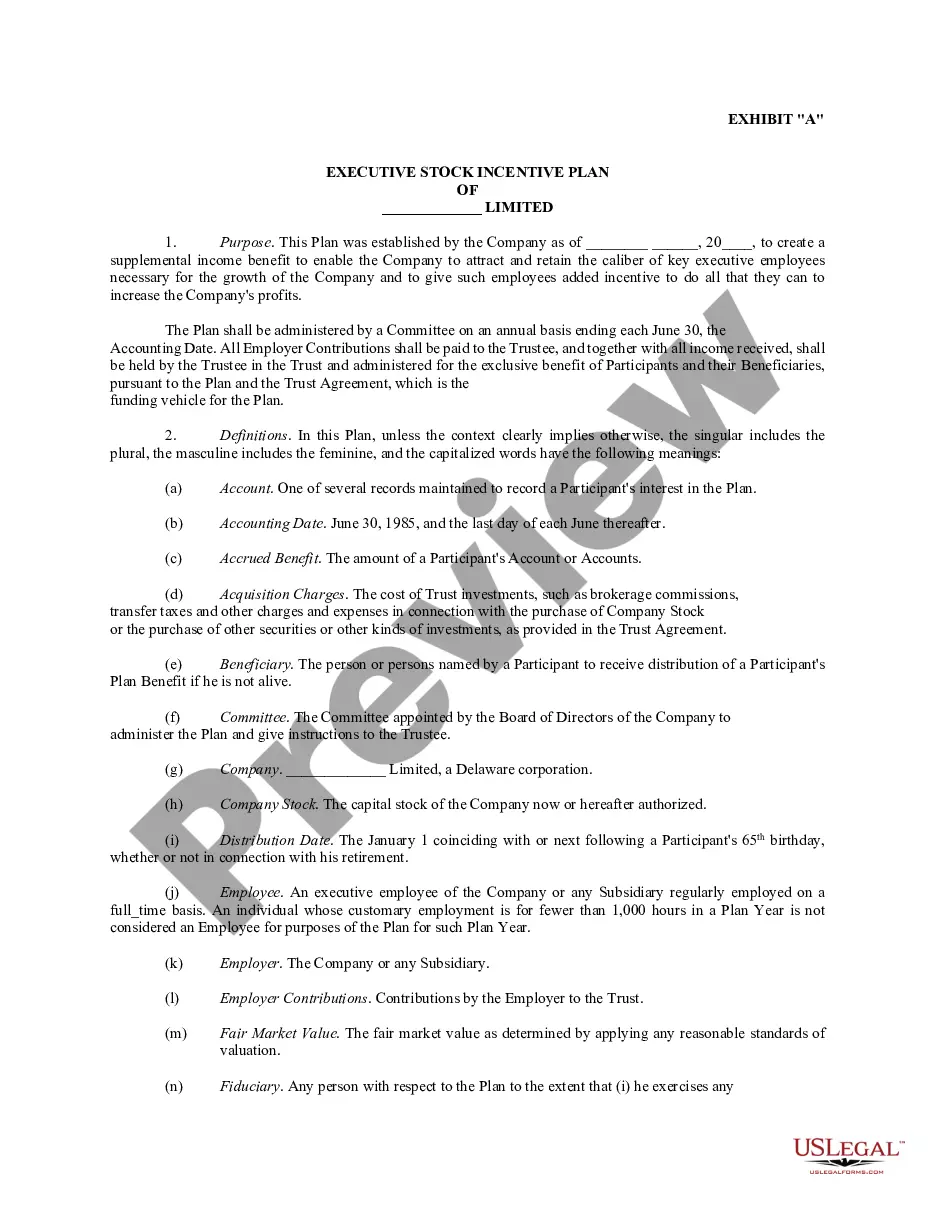
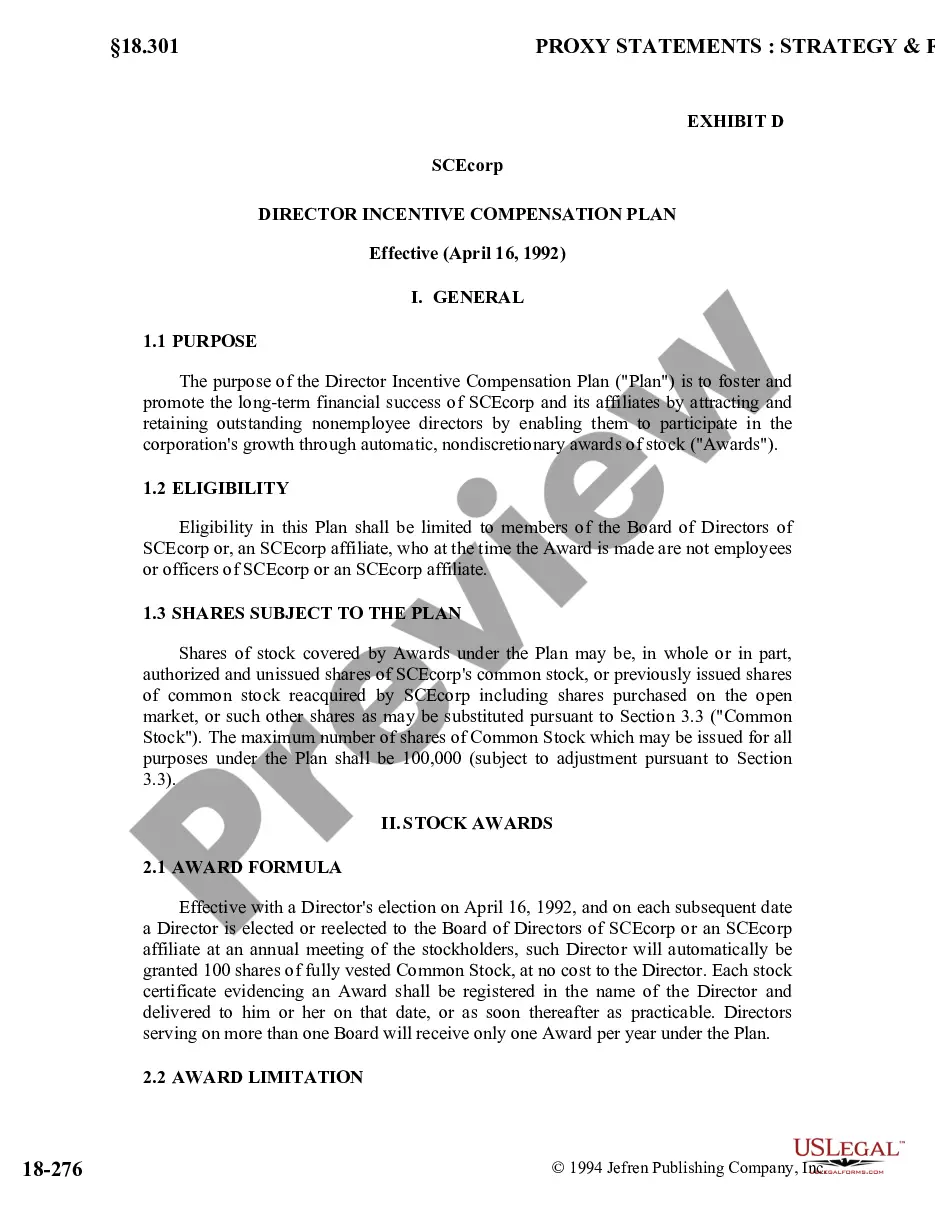
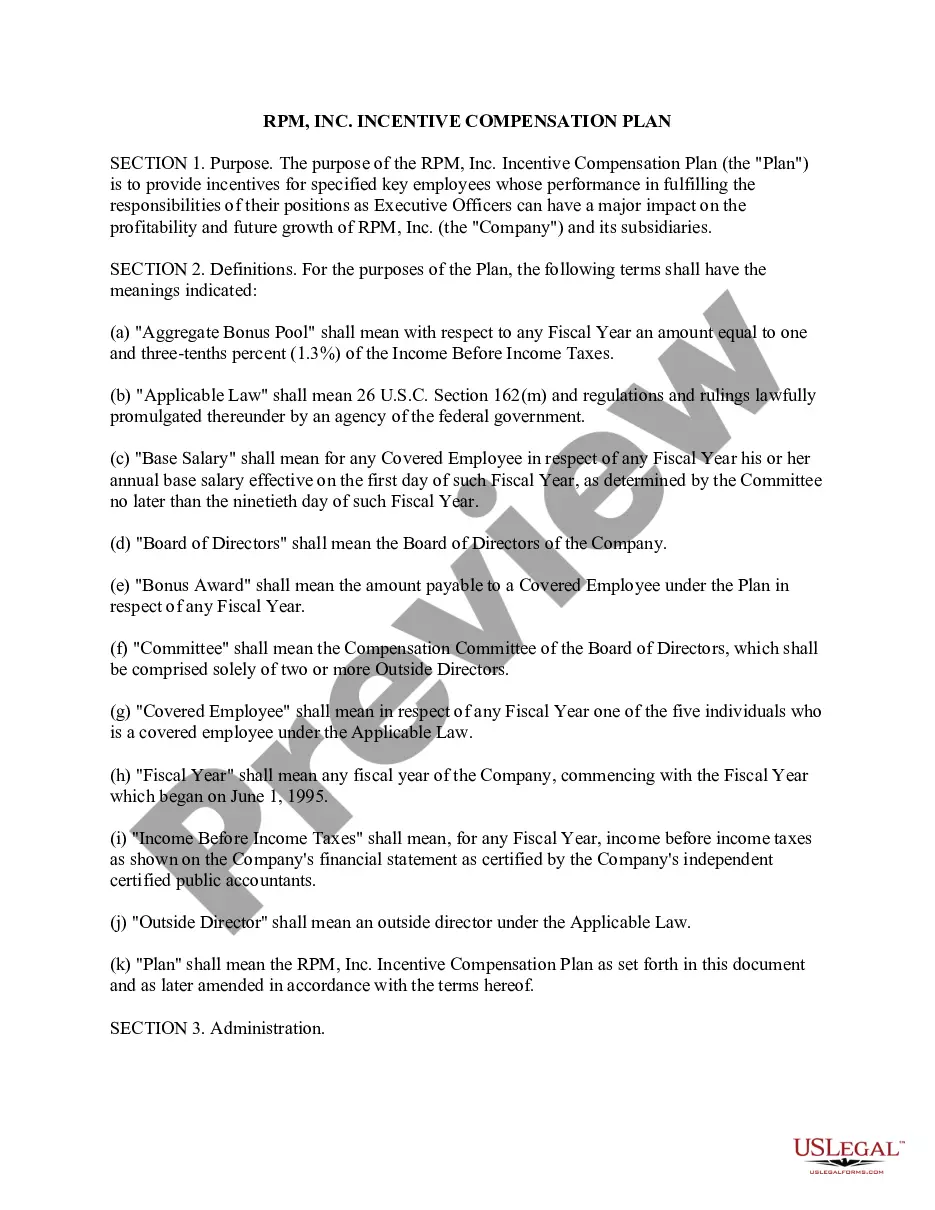
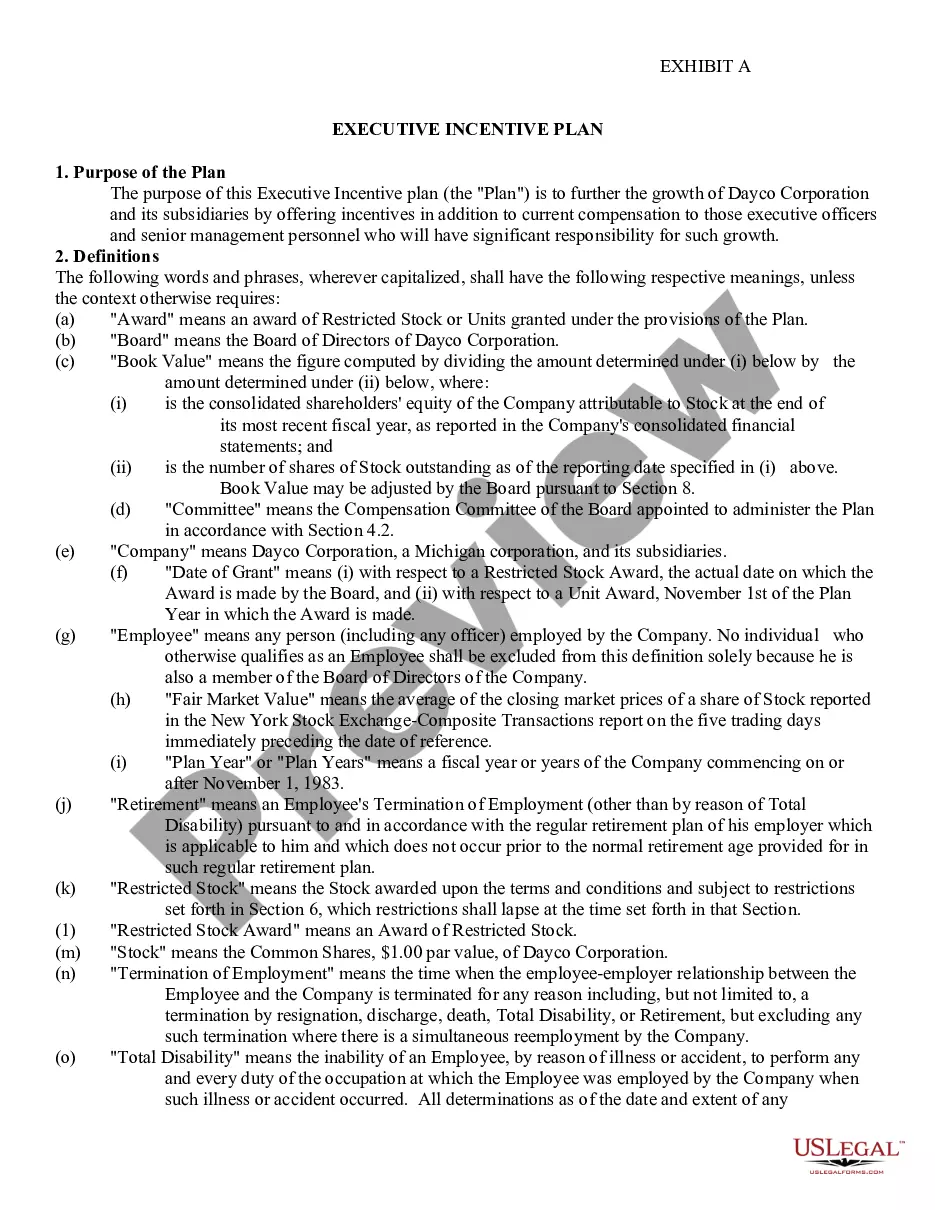
The Executive Bonus Plan is a legal document that outlines a structured bonus system for key employees of a corporation, typically including executives and managers. Its primary purpose is to incentivize performance by awarding bonuses in cash, shares of stock, or a combination of both, based on specific performance criteria. Unlike other compensation forms, this plan is tailored to align the interests of employees and shareholders, fostering long-term company growth and retention of talent.
What’s included in this form
- Purpose: Designed to reward key employees for achieving performance objectives.
- Stock Allocation: Allows up to 5,000,000 shares of Common Stock for bonus awards.
- Administration: Managed by the Board of Directors or a designated Committee.
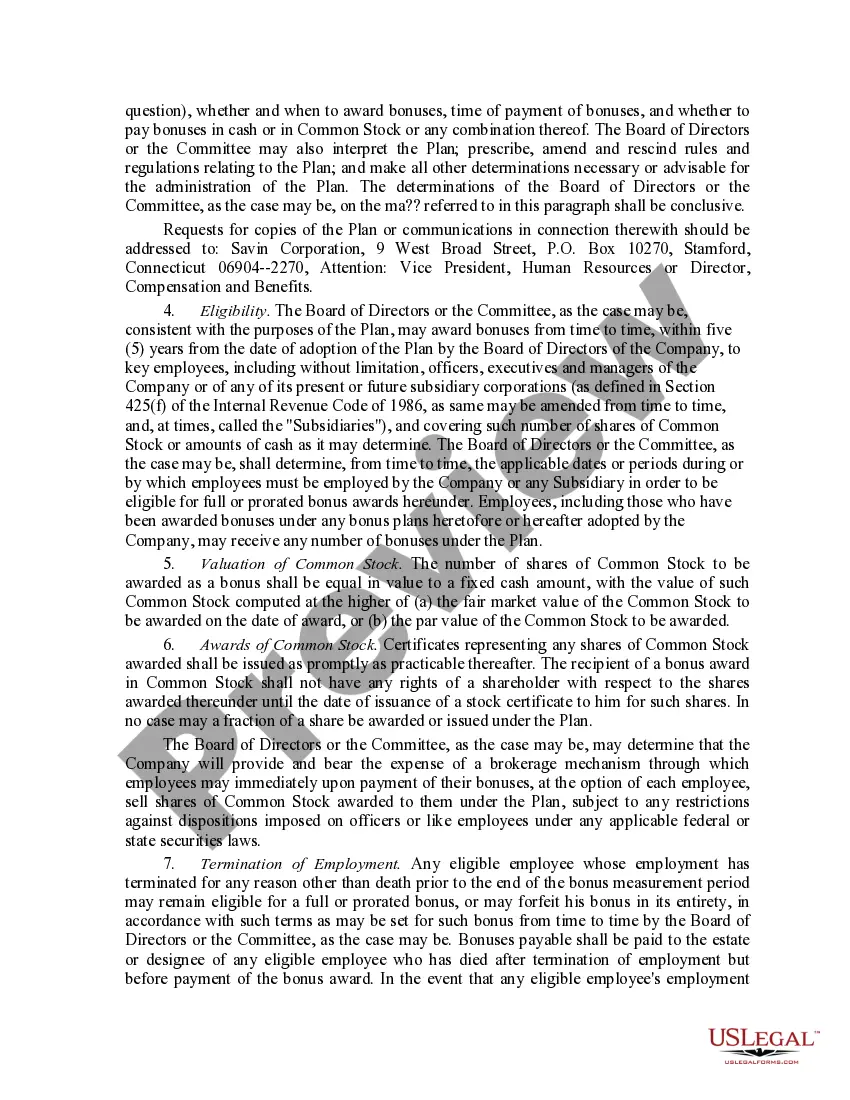
- Eligibility: Specifies criteria for which employees are eligible for bonuses.
- Bonus Valuation: Outlines how the value of stock bonuses is calculated.
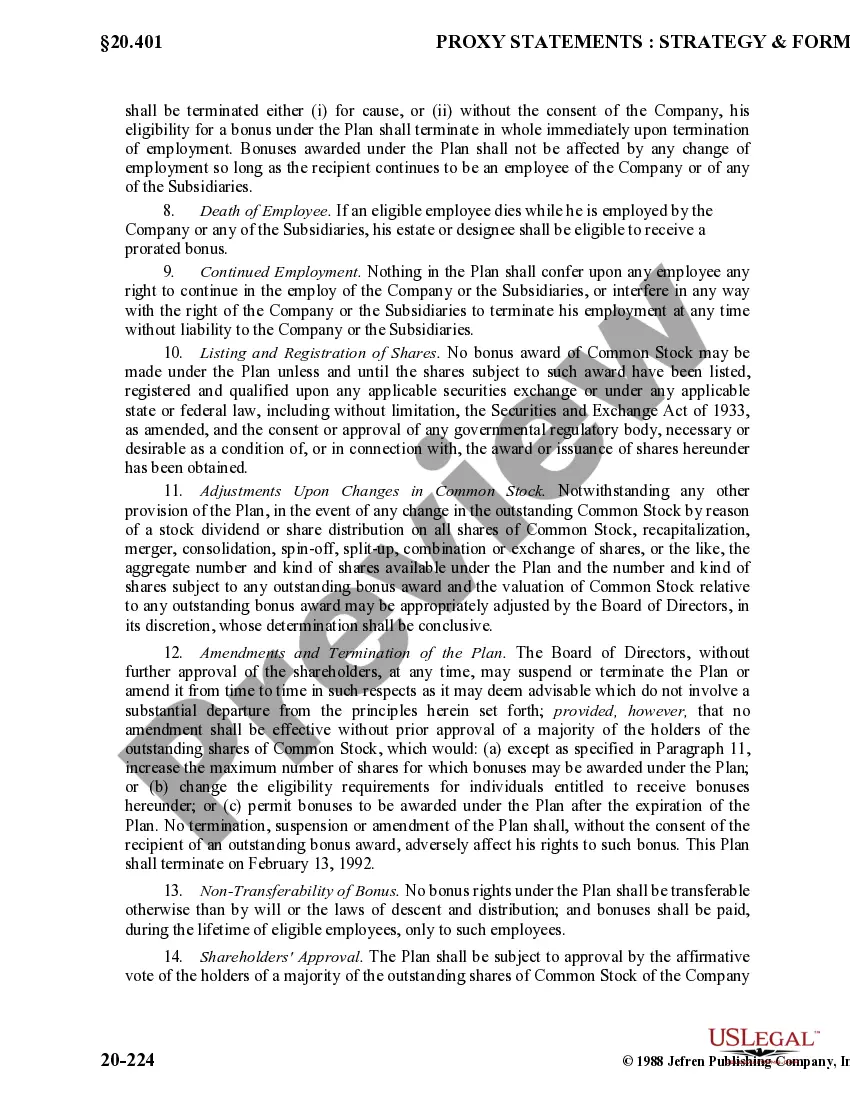
- Termination Conditions: Details treatment of bonuses upon employment termination.

When this form is needed
This form should be used when a corporation aims to implement a performance-based bonus system for its key employees. It is particularly useful for companies seeking to motivate staff towards specific financial or operational goals, where bonuses are dependent on measurable achievements. Consider using this form when establishing a new bonus program or revising an existing one to ensure it aligns with business objectives.
Who needs this form
- Corporation leaders who wish to incentivize their executives and managers.
- Human resources professionals responsible for employee compensation and benefits.
- Business owners who want to retain top talent through performance bonuses.
- Legal advisors involved in drafting corporate compensation agreements.
Steps to complete this form
- Identify the corporation: Clearly state the name and details of the company implementing the bonus plan.
- Define the eligibility criteria: Specify which employees qualify for the bonus based on their roles and performance metrics.
- Determine stock allocation: State the total number of shares available for bonuses and the method of distribution.
- Establish performance criteria: Outline the specific objectives employees must meet to earn a bonus.
- Outline governance: Designate the committee or board responsible for managing the plan and making bonus determinations.
- Include termination clauses: Address how bonuses will be treated in cases of an employee's termination.
Is notarization required?
This form does not typically require notarization unless specified by local law. However, it is advisable to consult legal counsel to ensure compliance with any jurisdiction-specific regulations regarding bonus plans.
Get your form ready online
Our built-in tools help you complete, sign, share, and store your documents in one place.
Make edits, fill in missing information, and update formatting in US Legal Forms—just like you would in MS Word.
Download a copy, print it, send it by email, or mail it via USPS—whatever works best for your next step.
Sign and collect signatures with our SignNow integration. Send to multiple recipients, set reminders, and more. Go Premium to unlock E-Sign.
If this form requires notarization, complete it online through a secure video call—no need to meet a notary in person or wait for an appointment.
We protect your documents and personal data by following strict security and privacy standards.

Make edits, fill in missing information, and update formatting in US Legal Forms—just like you would in MS Word.

Download a copy, print it, send it by email, or mail it via USPS—whatever works best for your next step.

Sign and collect signatures with our SignNow integration. Send to multiple recipients, set reminders, and more. Go Premium to unlock E-Sign.

If this form requires notarization, complete it online through a secure video call—no need to meet a notary in person or wait for an appointment.

We protect your documents and personal data by following strict security and privacy standards.
Mistakes to watch out for
- Failing to clearly define performance criteria, leading to confusion among employees.
- Not specifying eligibility requirements, which can cause disputes over who qualifies for bonuses.
- Ignoring local labor laws that may impact bonus structures or payment methods.
Why use this form online
- Convenience: Easily downloadable and customizable to fit specific corporate needs.
- Efficiency: Streamlined process saves time compared to drafting from scratch.
- Compliance: Form is created following legal standards, minimizing risk of issues in implementation.
What to keep in mind
- The Executive Bonus Plan is critical for incentivizing key employees based on performance.
- Clear eligibility and performance metrics are essential for the success of the plan.
- The form can facilitate rewarding employees effectively while aligning their goals with company success.
Looking for another form?


Form popularity
FAQ
According to the Center on Executive Compensation, "Executive pay arrangements typically consist of six distinct compensation components: salary, annual incentives, long-term incentives, benefits, perquisites and severance/change-in-control agreements."1 See High-Performing Companies Pay Executives Differently.
Generally, the plans use life insurance, funded by the employer's bonus payments, to provide the insured employee with access to policy cash value if needed for retirement or other purposes and death benefit protection for the employee's family.
An executive bonus plan (Section 162) is a way for business owners or companies to provide additional supplemental benefits to key employees or executives of their choice.With an executive bonus plan, the business can use tax deductible company funds to selectively provide valued benefits to key people.
An employee bonus plan provides compensation beyond annual salary to employees as an incentive or reward for reaching certain predetermined individual or team goals. The purpose of bonus plans is to provide recognition for employees who go above and beyond normal work obligations.
A bonus scheme is a reward tool that provides a lump sum payment in return for meeting agreed objectives. The way schemes are designed often means that the value of the bonus is included in the targets that are set, which makes the scheme self-financing.
The employee is the owner of the policy, and gets to determine the beneficiaries and manage the funds within the policy. The employer covers the cost of the policy by periodically giving the employee a bonus big enough to pay the policy premiums. The employee then pays the premiums to the insurance carrier.
The employee is the owner of the policy, and gets to determine the beneficiaries and manage the funds within the policy. The employer covers the cost of the policy by periodically giving the employee a bonus big enough to pay the policy premiums. The employee then pays the premiums to the insurance carrier.
In a Double Bonus design, the employer pays the premium amount, and provides a cash sum to the executive to cover the tax on the premium amount. This makes the entire bonus effectively tax-free to the executive.