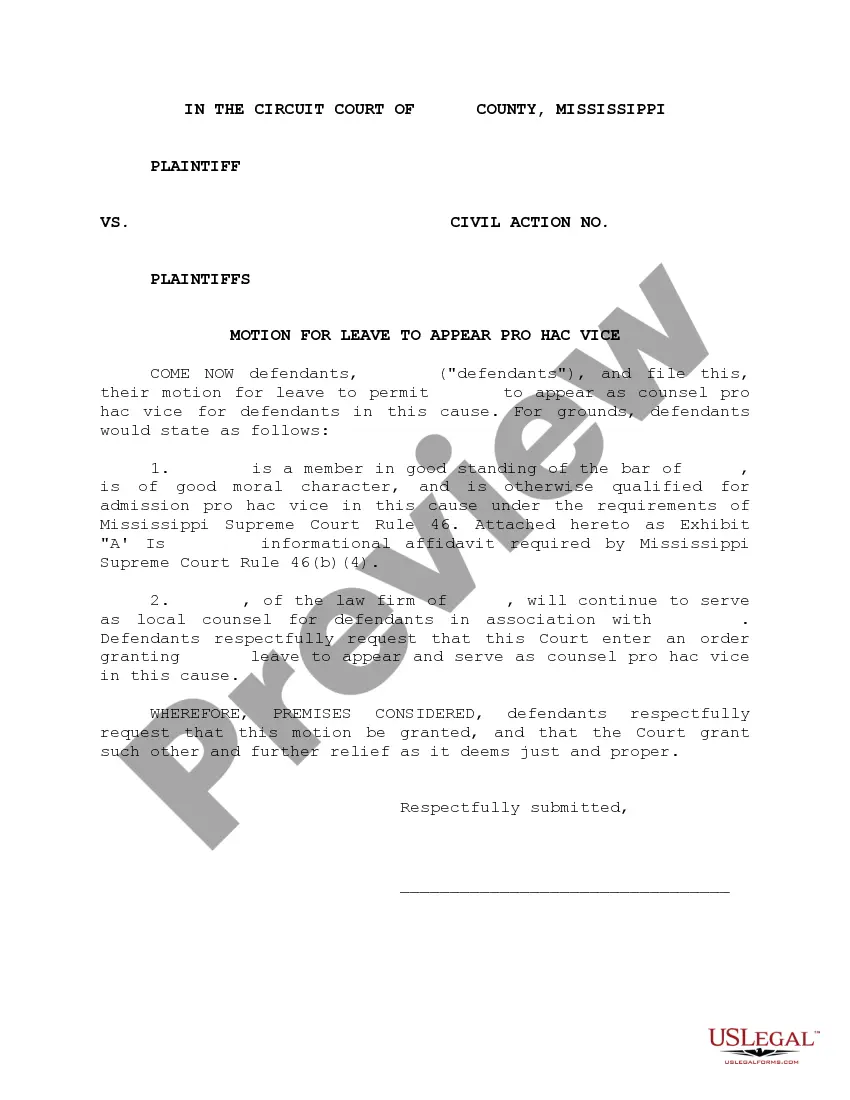
Indemnity Agreement Template
What this document covers
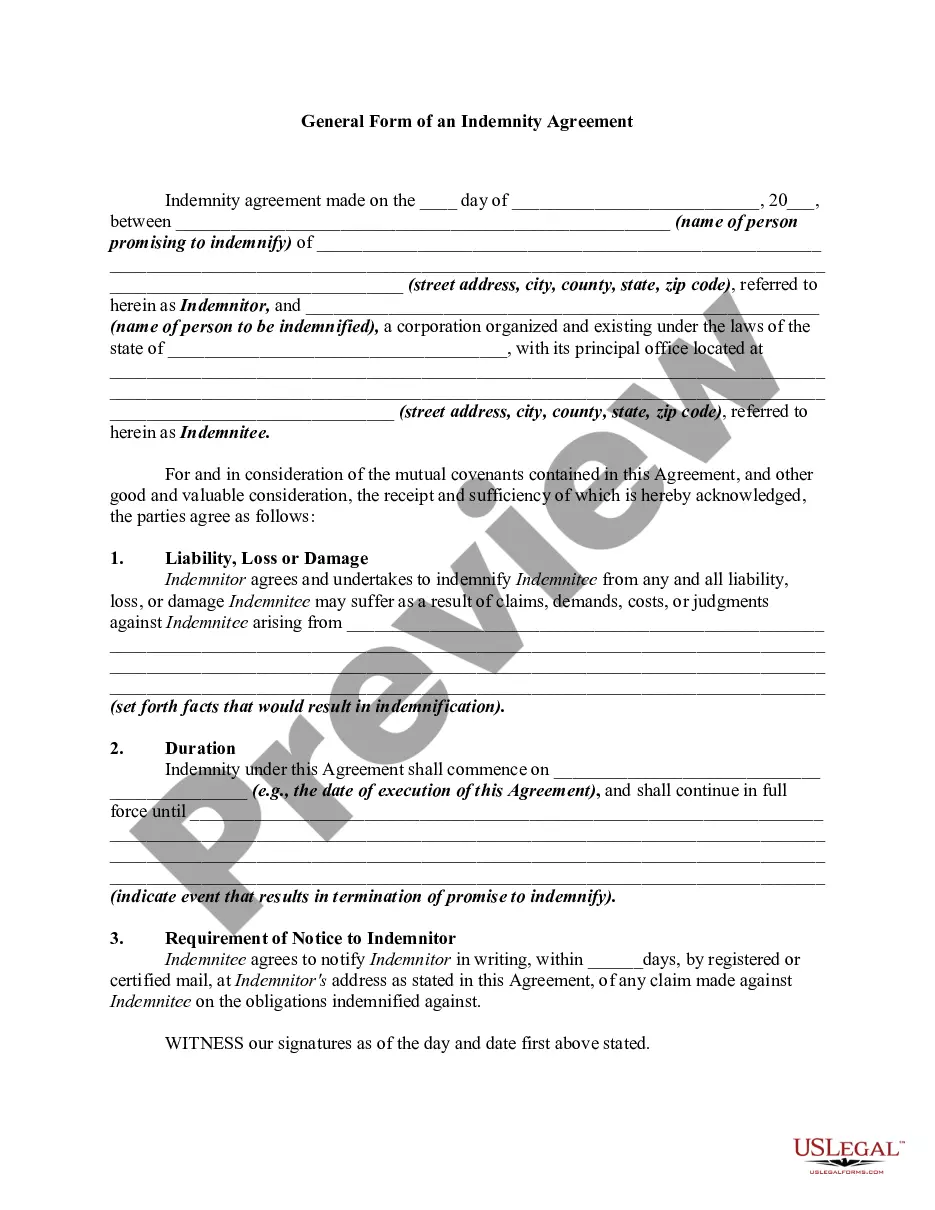
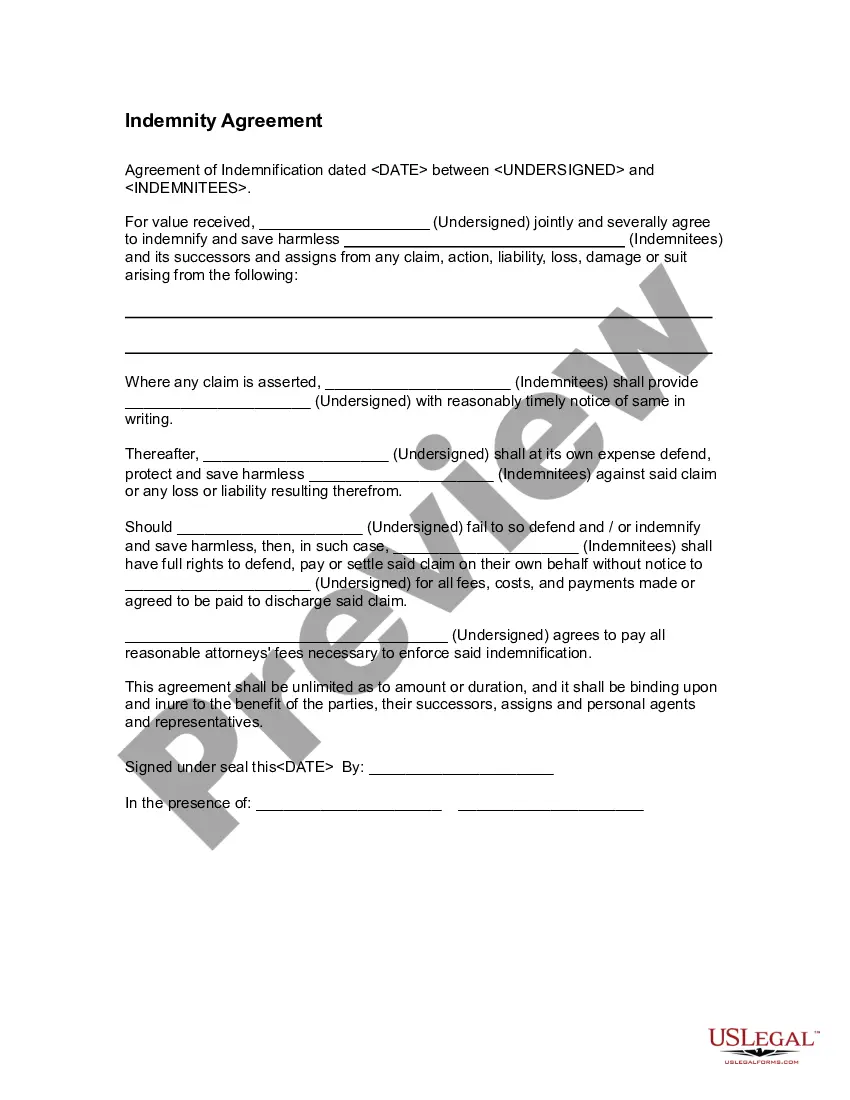
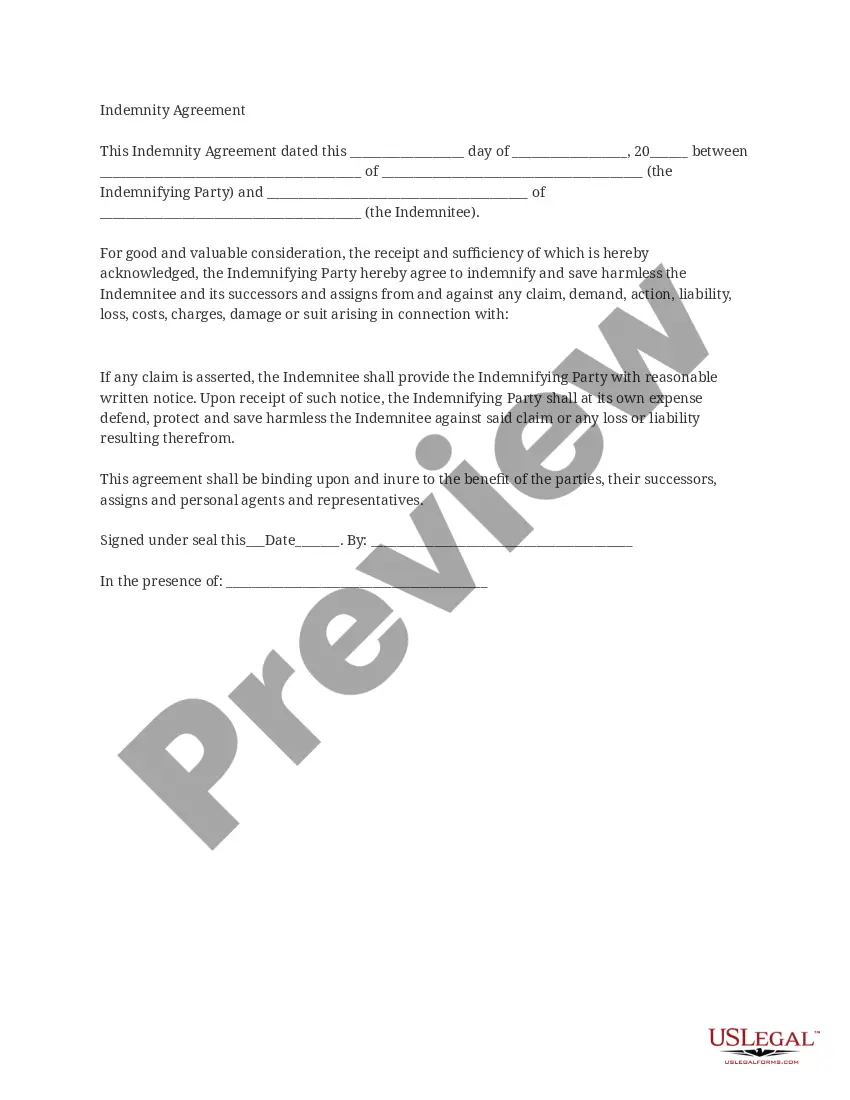
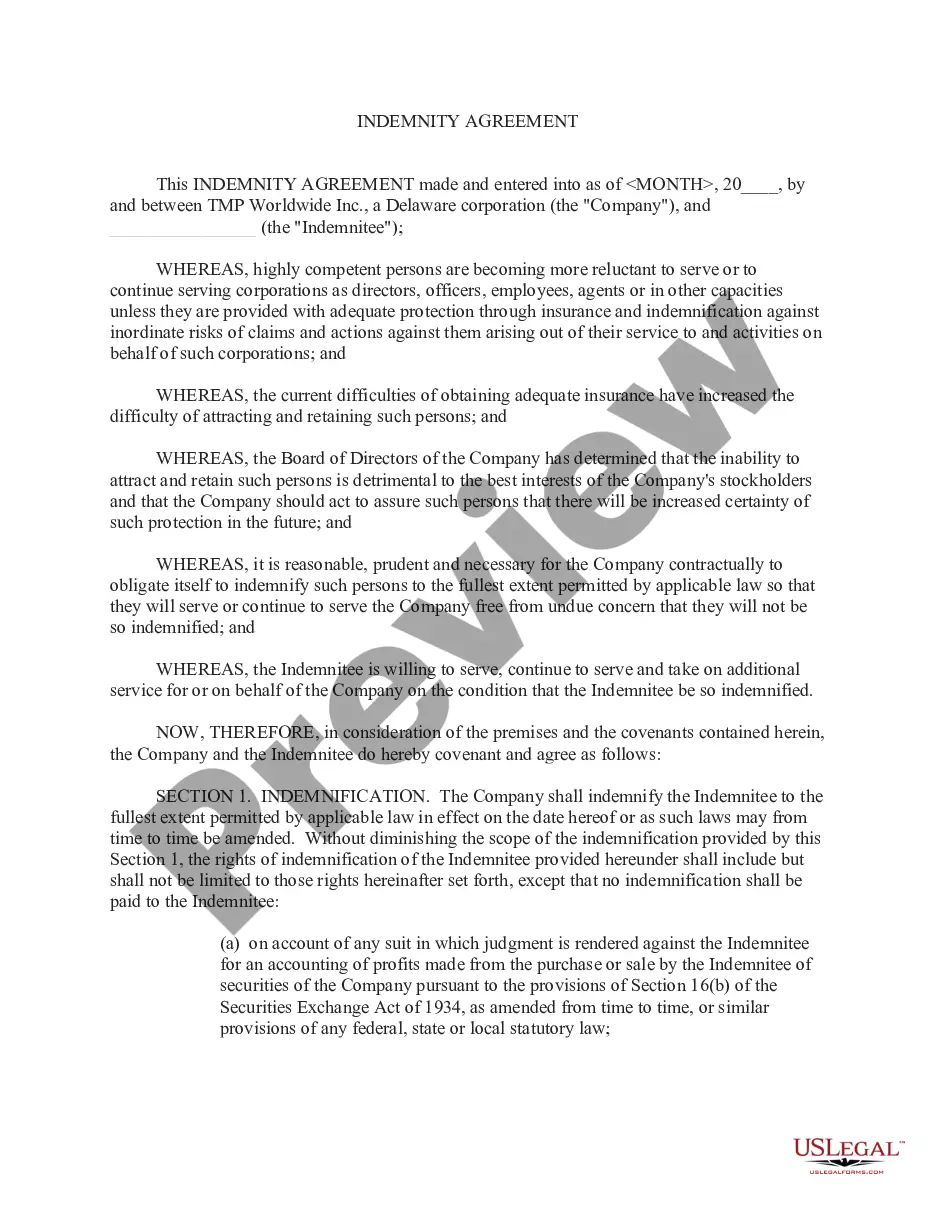
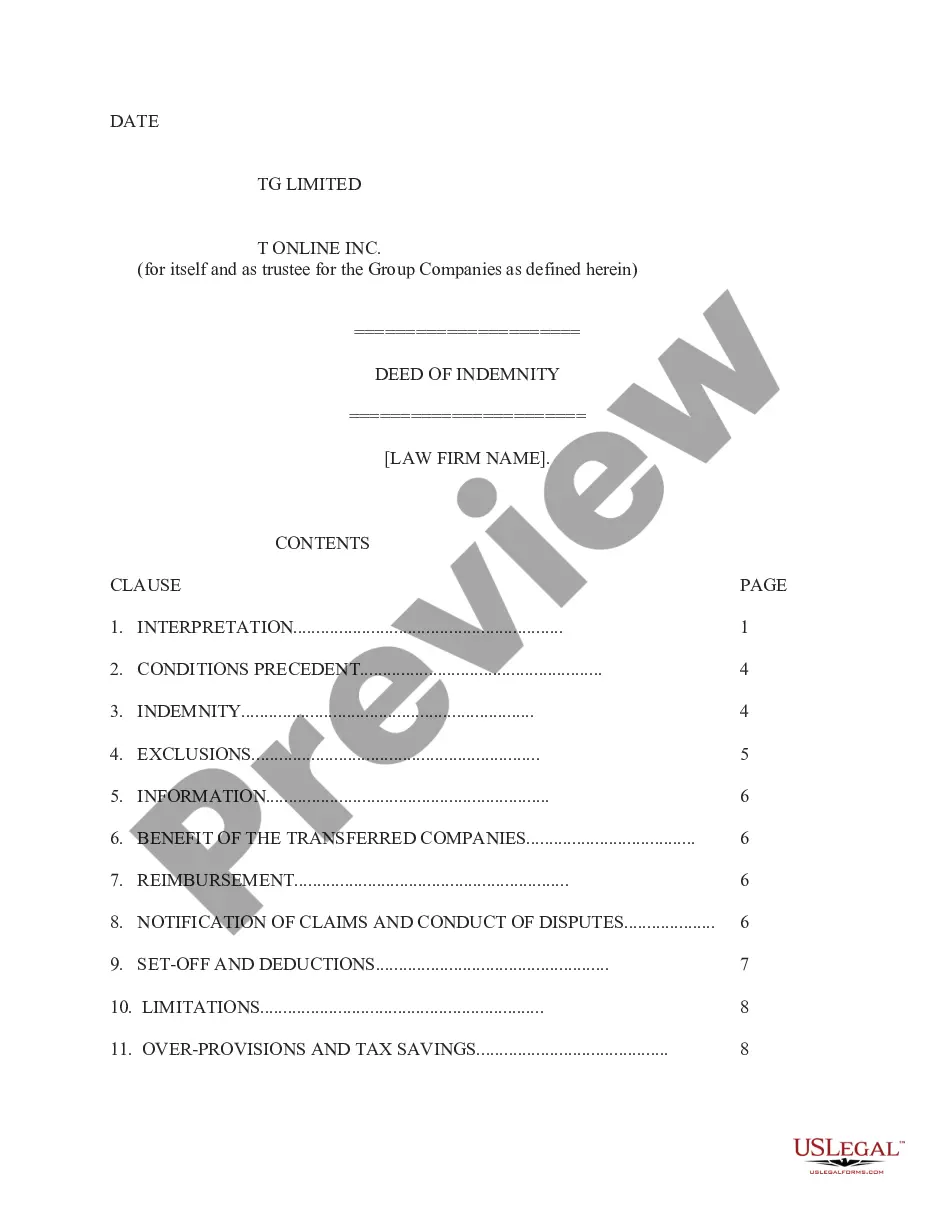
An Indemnity Agreement is a legal document designed to protect one party (the Promisee) from potential losses or claims that may arise from an agreement or activity undertaken by another party (the Promisor). Unlike insurance, this agreement explicitly outlines the obligation of the Promisor to cover the costs associated with these claims, including legal fees, ensuring that the Promisee is safeguarded from financial liability. This form is particularly important in contexts where risks are involved, such as business transactions, partnerships, and service agreements, making it distinct from other contract forms that may not address indemnification directly.
Form components explained
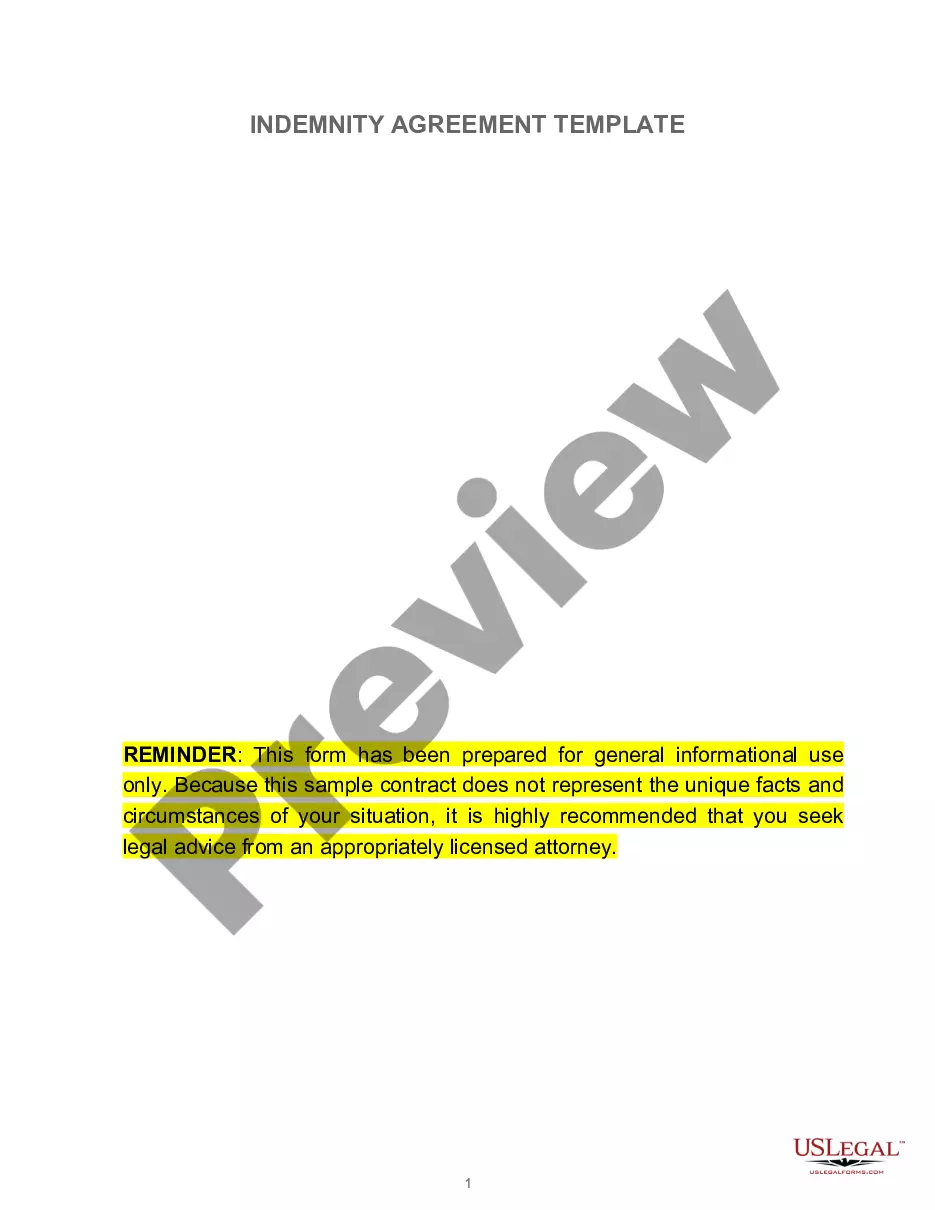
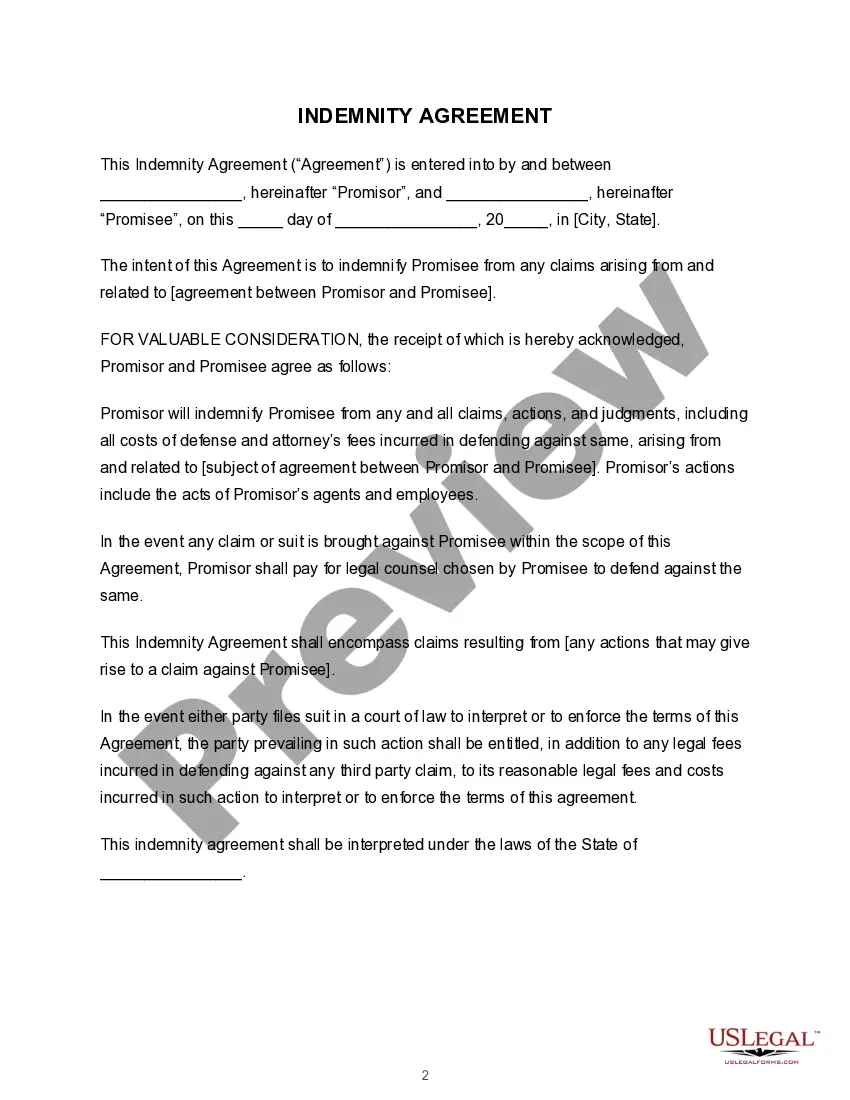
- Parties involved: Identification of the Promisor and Promisee.
- Indemnification clause: Specifies the scope of indemnity the Promisor agrees to provide to the Promisee.
- Legal defense costs: Outlines that the Promisor will cover legal fees if claims are made against the Promisee.
- Conditions for legal action: Details how any disputes regarding the agreement will be resolved.
- Governing law: States which jurisdiction's laws will apply to the agreement.

When this form is needed
This Indemnity Agreement should be used in various scenarios, such as when businesses enter contracts with vendors, service providers, or clients where there is a risk of liability. It is also applicable when one party agrees to take on specific risks that could potentially lead to financial claims against another party. Examples include construction contracts, event planning agreements, or any arrangement where liability may be shared or transferred between parties.
Who needs this form
- Businesses engaging in complex transactions where liability concerns exist.
- Service providers who need to limit their exposure to risks when working with clients.
- Individuals entering partnerships or agreements that involve potential liabilities.
- Any party looking to establish clear responsibilities in contractual relationships.
How to prepare this document
- Identify the parties: Enter the full names of the Promisor and Promisee in the designated spaces.
- Specify the indemnity purpose: Clearly state the specific claims or actions the indemnity covers.
- Enter a date and location: Fill in the date the agreement is being executed and the city and state where it is signed.
- Review legal counsel: Consider consulting with a licensed attorney to review the agreement before signing.
- Obtain signatures: Both parties must sign the agreement to make it legally binding.
Notarization requirements for this form
This form does not typically require notarization unless specified by local law. However, having it notarized may provide an extra layer of validation and protection.
Get your form ready online
Our built-in tools help you complete, sign, share, and store your documents in one place.
Make edits, fill in missing information, and update formatting in US Legal Forms—just like you would in MS Word.
Download a copy, print it, send it by email, or mail it via USPS—whatever works best for your next step.
Sign and collect signatures with our SignNow integration. Send to multiple recipients, set reminders, and more. Go Premium to unlock E-Sign.
If this form requires notarization, complete it online through a secure video call—no need to meet a notary in person or wait for an appointment.
We protect your documents and personal data by following strict security and privacy standards.

Make edits, fill in missing information, and update formatting in US Legal Forms—just like you would in MS Word.

Download a copy, print it, send it by email, or mail it via USPS—whatever works best for your next step.

Sign and collect signatures with our SignNow integration. Send to multiple recipients, set reminders, and more. Go Premium to unlock E-Sign.

If this form requires notarization, complete it online through a secure video call—no need to meet a notary in person or wait for an appointment.

We protect your documents and personal data by following strict security and privacy standards.
Common mistakes to avoid
- Failing to define the scope of indemnity, leading to ambiguity in coverage.
- Not including the governing law, which can create complications in legal interpretations.
- Overlooking the need for signatures from both parties, which invalidates the agreement.
Benefits of using this form online
- Convenient access to downloadable templates that can be tailored to your needs.
- Editable formats that allow customization for specific agreements or jurisdictions.
- Reliable legal language drafted by licensed attorneys, ensuring correctness and compliance.
Looking for another form?



Form popularity
FAQ
A typical indemnification clause consists of two separate and distinct obligations: an obligation to indemnify, and an obligation to defend.
There are 3 levels of indemnification: broad form, intermediate form, and limited form. This requires the indemnitor to pay not only for its liabilities but also for the indemnitee's liability whether the indemnitee is solely (i.e. 100%) at fault or partially at fault.
How to Write an Indemnity Agreement Consider the Indemnity Laws in Your Area.Draft the Indemnification Clause.Outline the Indemnification Period and Scope of Coverage.State the Indemnification Exceptions.Specify How the Indemnitee Notifies the Indemnitor About Claims.Write the Settlement and Consent Clause.
Although similar to a hold harmless agreement, an indemnity agreement is an arrangement whereby one party agrees to pay the other party for any damages regardless of who is at fault.
Often a letter of indemnity is written by a third party, often a bank or insurance company.
Insurance policies are a common example of one party indemnifying another. When you purchase an insurance policy, the company essentially agrees to indemnify the policy holder, or another party, against any damages that may occur.
For example, in the case of home insurance, the homeowner pays insurance premiums to the insurance company in exchange for the assurance that the homeowner will be indemnified if the house sustains damage from fire, natural disasters, or other perils specified in the insurance agreement.
The best example of indemnity would be insurance indemnification. Let's say the commercial property owner has consistently paid insurance premiums for the property. The money is paid to an insurance company that promises to take full responsibility for repaying any losses if any loss or damages ever occurs.