Cancelation of Erroneous Deed
What this document covers
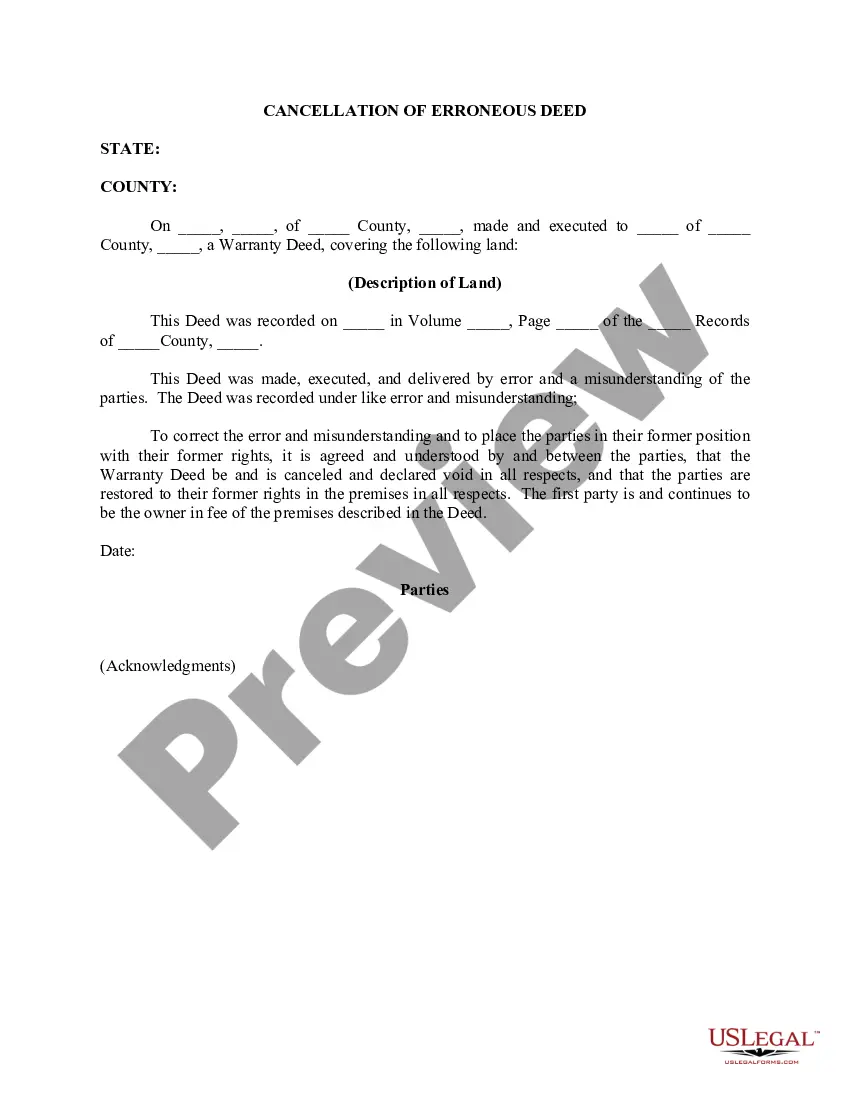
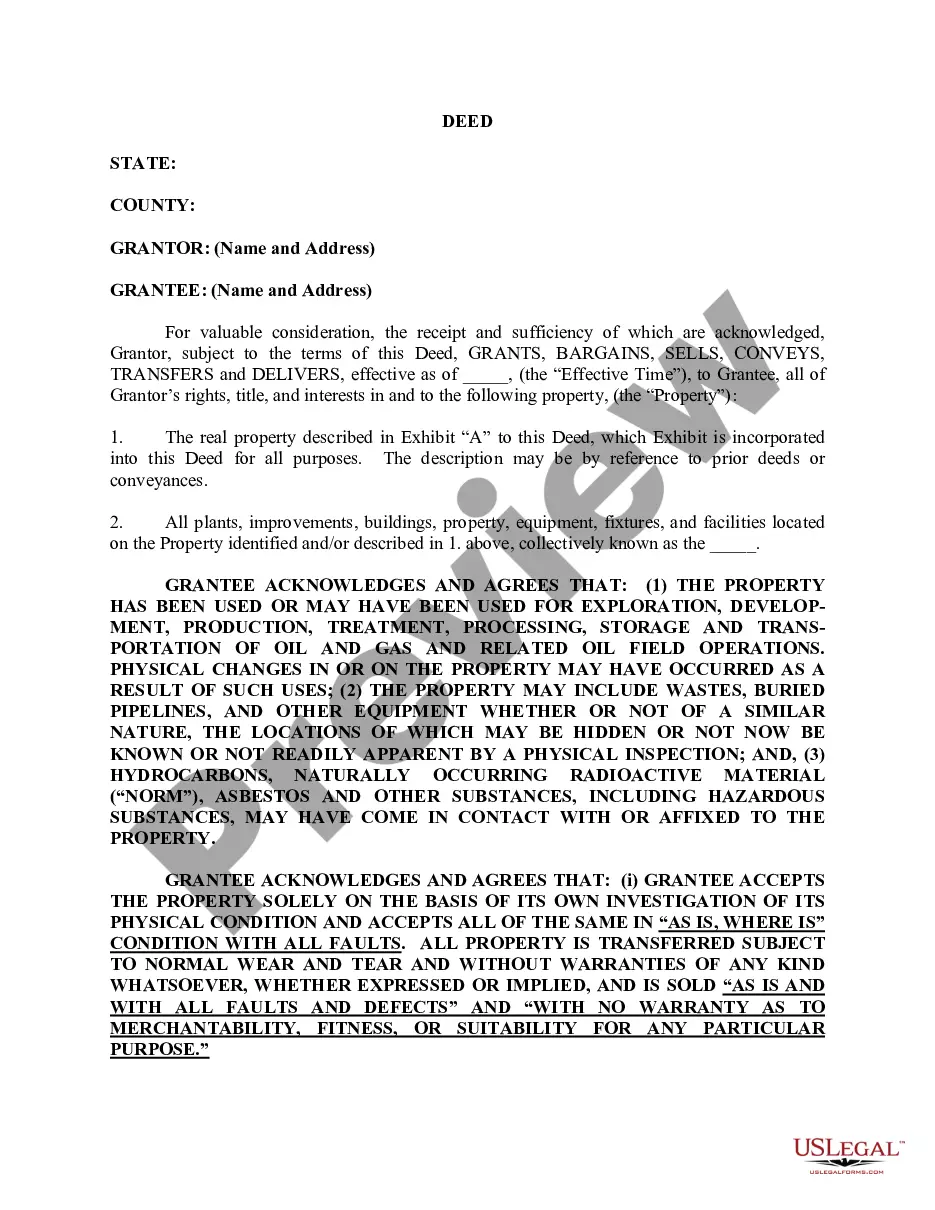
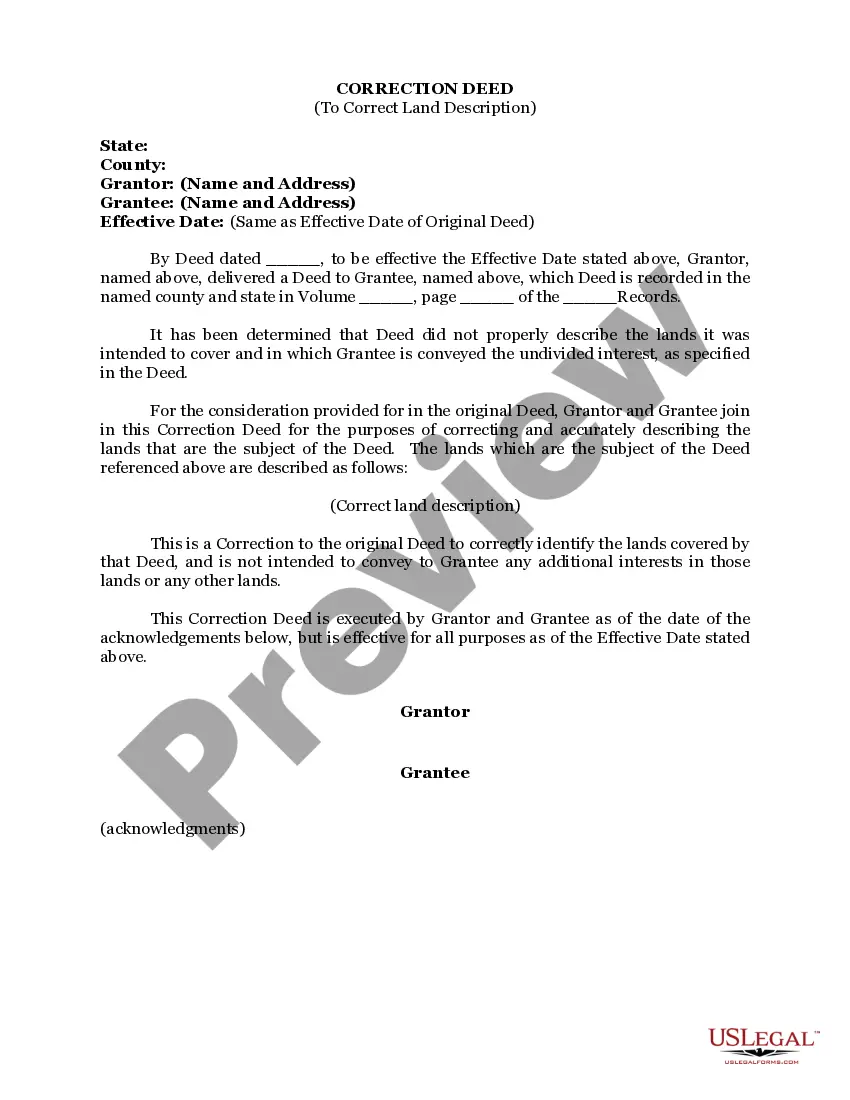
The Cancelation of Erroneous Deed is a legal document used to annul a deed that was executed due to a mistake or misunderstanding by the parties involved. Unlike other deeds that finalize property transfers, this form serves to restore the previous ownership rights, ensuring that both parties are returned to their original positions before the erroneous deed was recorded.
Form components explained
- Identification of the parties involved in the original deed
- Description of the property covered by the original deed
- Date the original deed was recorded
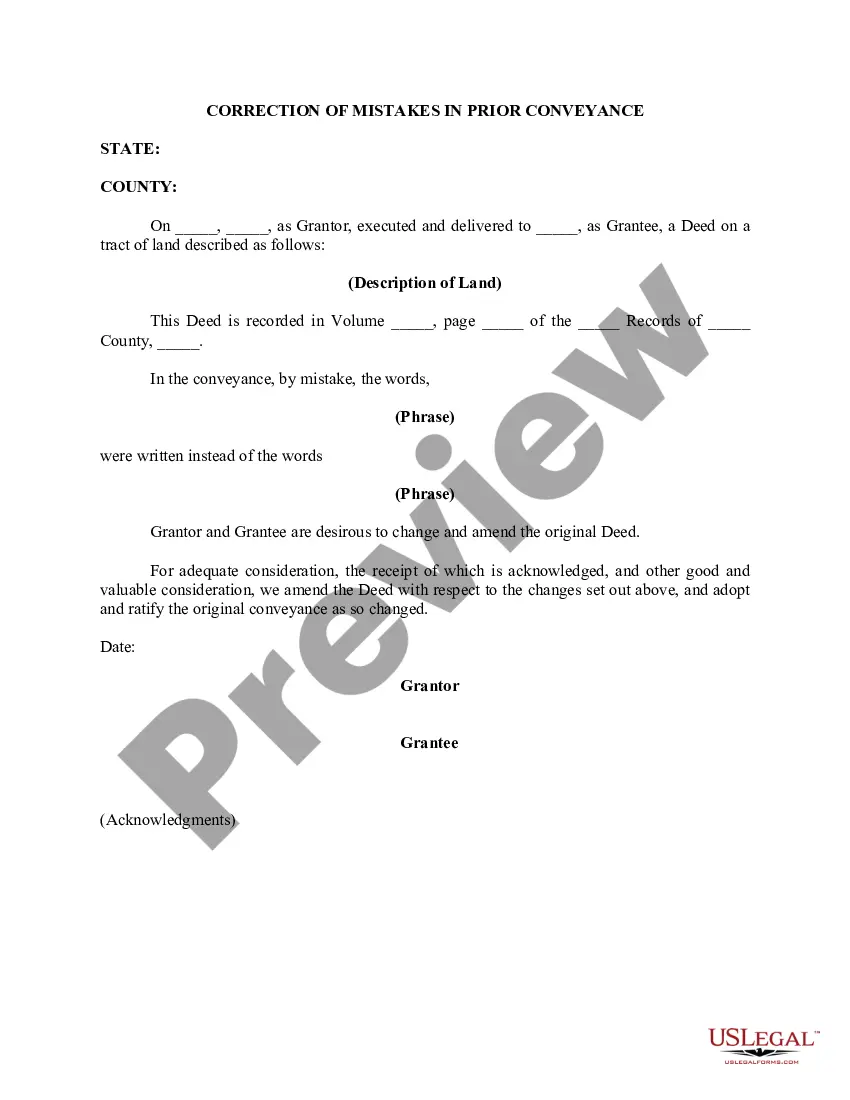
- Declaration of the error and misunderstanding that necessitates the cancellation
- Agreement that the original parties are returning to their former rights

When to use this document
This form should be used when a warranty deed has been executed in error, such as when there was a miscommunication about the property being transferred or other misunderstandings between the parties. It provides a legal basis to correct the records and restore property ownership rights as they existed prior to the faulty deed.
Intended users of this form
- Property owners who have mistakenly transferred property rights
- Individuals or parties involved in a miscommunication related to property transactions
- Legal representatives managing property disputes or corrections
How to prepare this document
- Identify the parties involved in the original deed.
- Describe the property being referenced in the erroneous deed.
- Enter the date the original deed was recorded and relevant volume and page numbers.
- Clearly state the error and misunderstanding leading to the need for cancellation.
- Ensure all parties sign and date the form to validate the cancellation.
Notarization guidance
This form does not typically require notarization unless specified by local law. However, it is recommended to check local regulations to ensure compliance.
Get your form ready online
Our built-in tools help you complete, sign, share, and store your documents in one place.
Make edits, fill in missing information, and update formatting in US Legal Forms—just like you would in MS Word.
Download a copy, print it, send it by email, or mail it via USPS—whatever works best for your next step.
Sign and collect signatures with our SignNow integration. Send to multiple recipients, set reminders, and more. Go Premium to unlock E-Sign.
If this form requires notarization, complete it online through a secure video call—no need to meet a notary in person or wait for an appointment.
We protect your documents and personal data by following strict security and privacy standards.

Make edits, fill in missing information, and update formatting in US Legal Forms—just like you would in MS Word.

Download a copy, print it, send it by email, or mail it via USPS—whatever works best for your next step.

Sign and collect signatures with our SignNow integration. Send to multiple recipients, set reminders, and more. Go Premium to unlock E-Sign.

If this form requires notarization, complete it online through a secure video call—no need to meet a notary in person or wait for an appointment.

We protect your documents and personal data by following strict security and privacy standards.
Mistakes to watch out for
- Failing to accurately describe the property in question.
- Not including all parties' signatures, leading to potential disputes.
- Neglecting to record the cancellation properly after completion.
Benefits of completing this form online
- Convenient access to the form anytime and from anywhere.
- Editable templates allow for customization based on individual needs.
- Drafted by licensed attorneys, ensuring legal accuracy and reliability.
Looking for another form?




Form popularity
FAQ
If a deed is to have any validity, it must be made voluntarily.If FRAUD is committed by either the grantor or grantee, a deed can be declared invalid. For example, a deed that is a forgery is completely ineffective. The exercise of UNDUE INFLUENCE also ordinarily serves to invalidate a deed.
Property cannot be conveyed to a grantee who does not exist. Thus, a deed to a grantee who is dead at the time of delivery is void. For example, a deed recorded by the grantor is presumed to have been delivered.For example, a deed is voidable if it was obtained by fraud in the inducement.
Generally speaking, no. Once a quit claim deed has been completed and filed with the County Clerk's Office, the title will officially pass from the grantor to the grantee. The only way to reverse a quit claim deed is to go to court and prove that the grantor was forced to sign the document under duress.
When you sign a deed transferring your interest in real property, you cannot reverse it simply because you regret your decision. Assuming you are on congenial terms with the person who was the grantee of your deed, he can sign a similar deed transferring the property interest back to you.
If FRAUD is committed by either the grantor or grantee, a deed can be declared invalid. For example, a deed that is a forgery is completely ineffective. The exercise of UNDUE INFLUENCE also ordinarily serves to invalidate a deed.
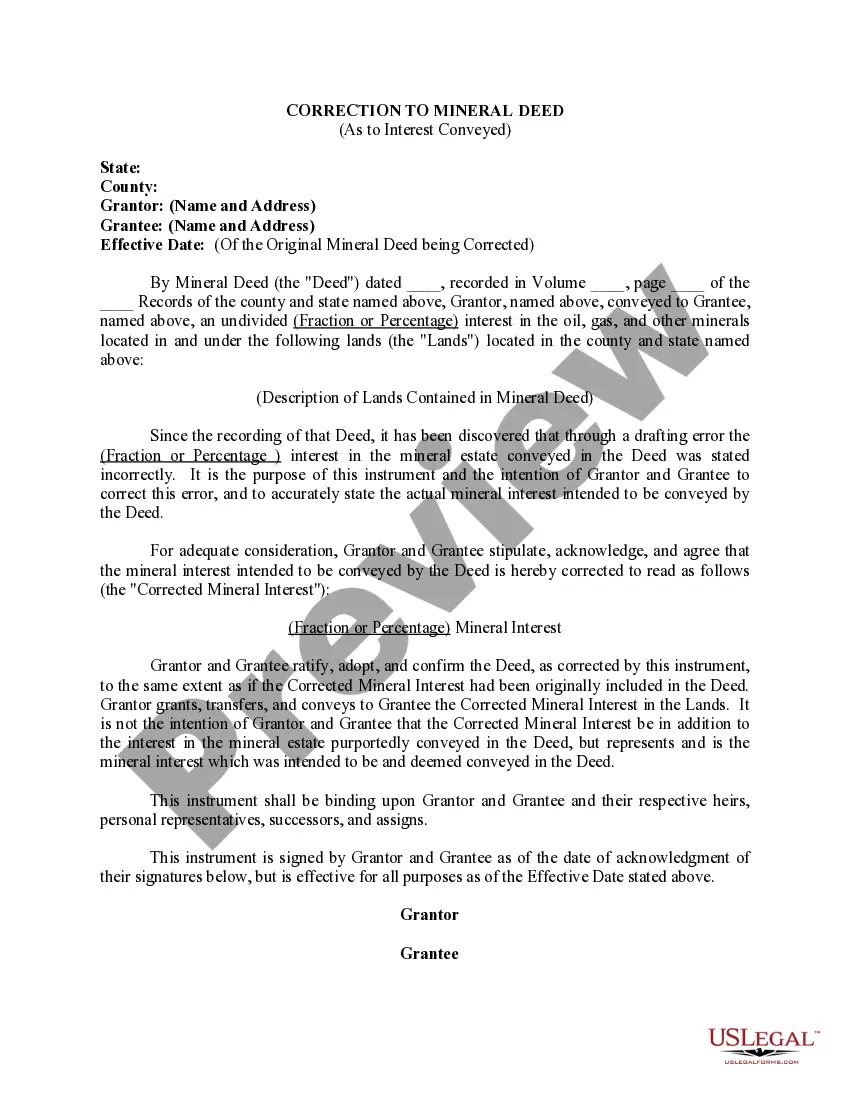
You can correct an error on a California deed through a Correction Deed or Corrective Deed. Usually deed errors are as a result of someone attempting to prepare a deed without proper knowledge or professional help.
Draw line through entry (thin pen line). Make sure that the inaccurate information is still legible. Initial and date the entry. State the reason for the error (i.e. in the margin or above the note if room). Document the correct information.
A rectification deed should be executed after mutual consent of all the parties to the main deed. All parties to the original deed should jointly execute the rectification deed as well. In case the original deed is registered, one should get the rectification deed also registered.
Determine if the error is harmless or fatal to the transfer of title. Decide what instrument is best suited to the error. Draft a corrective deed, affidavit, or new deed. Obtain the original signature(s) of the Grantor(s). Re-execute the deed with proper notarization and witnessing.