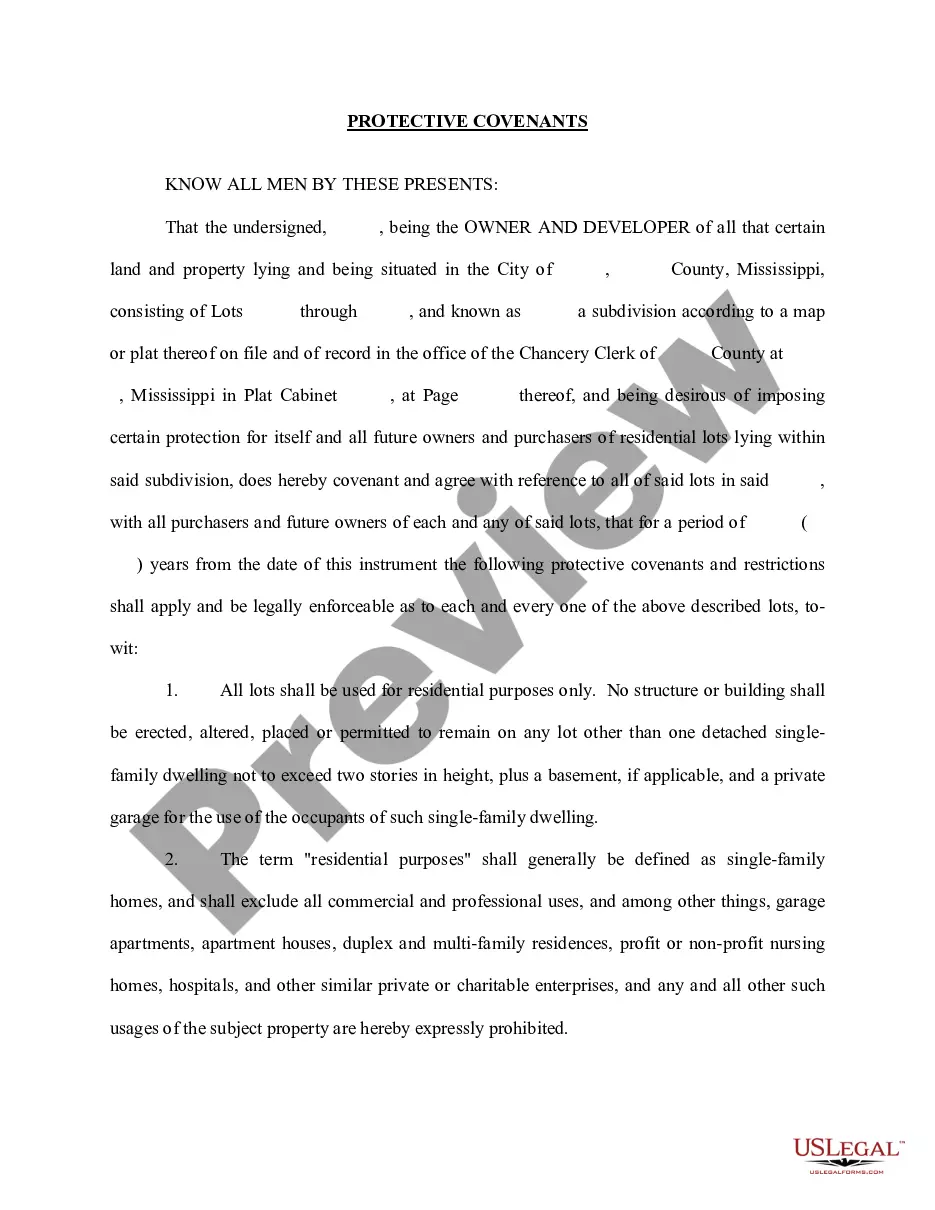
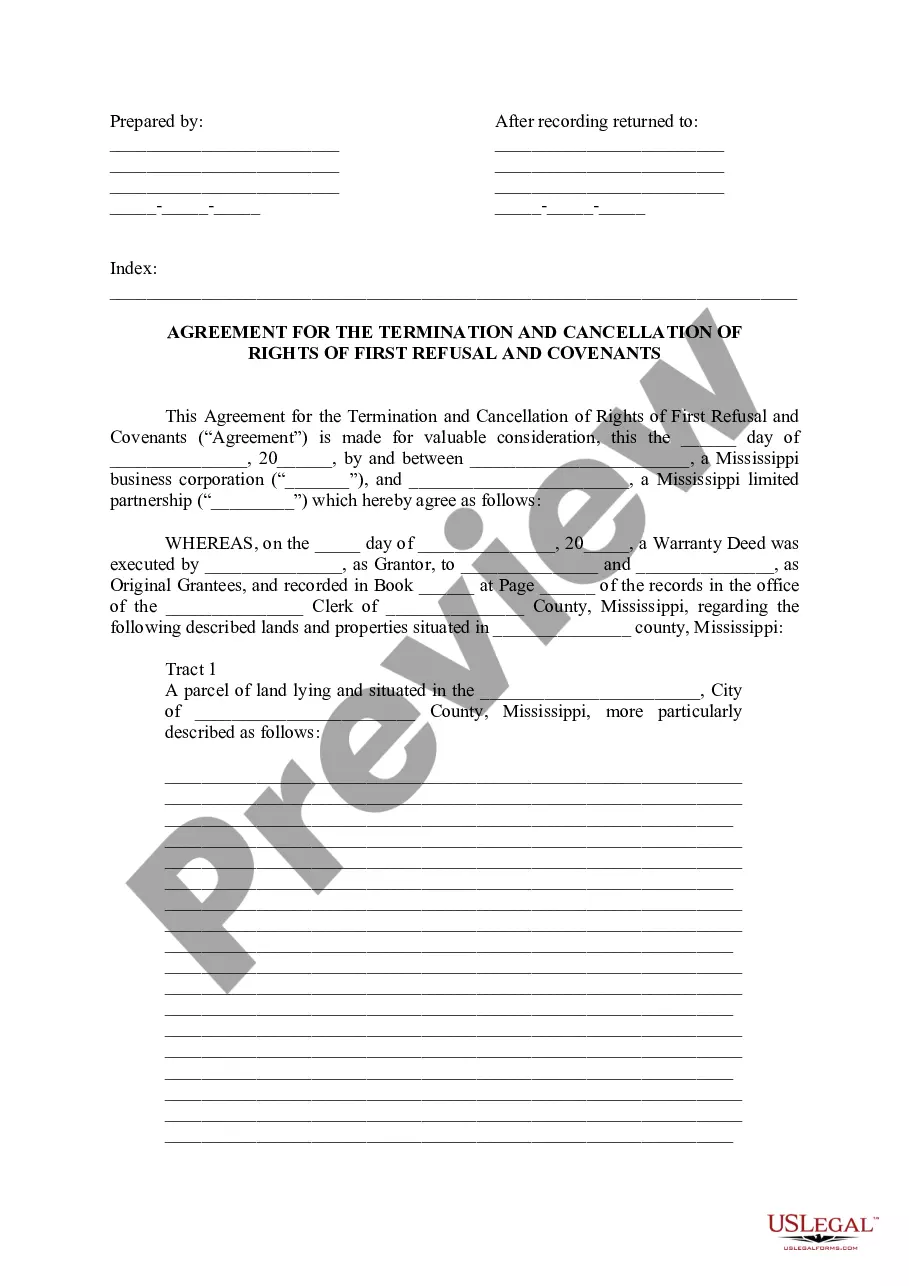
Motion for hardship discharge
Overview of this form
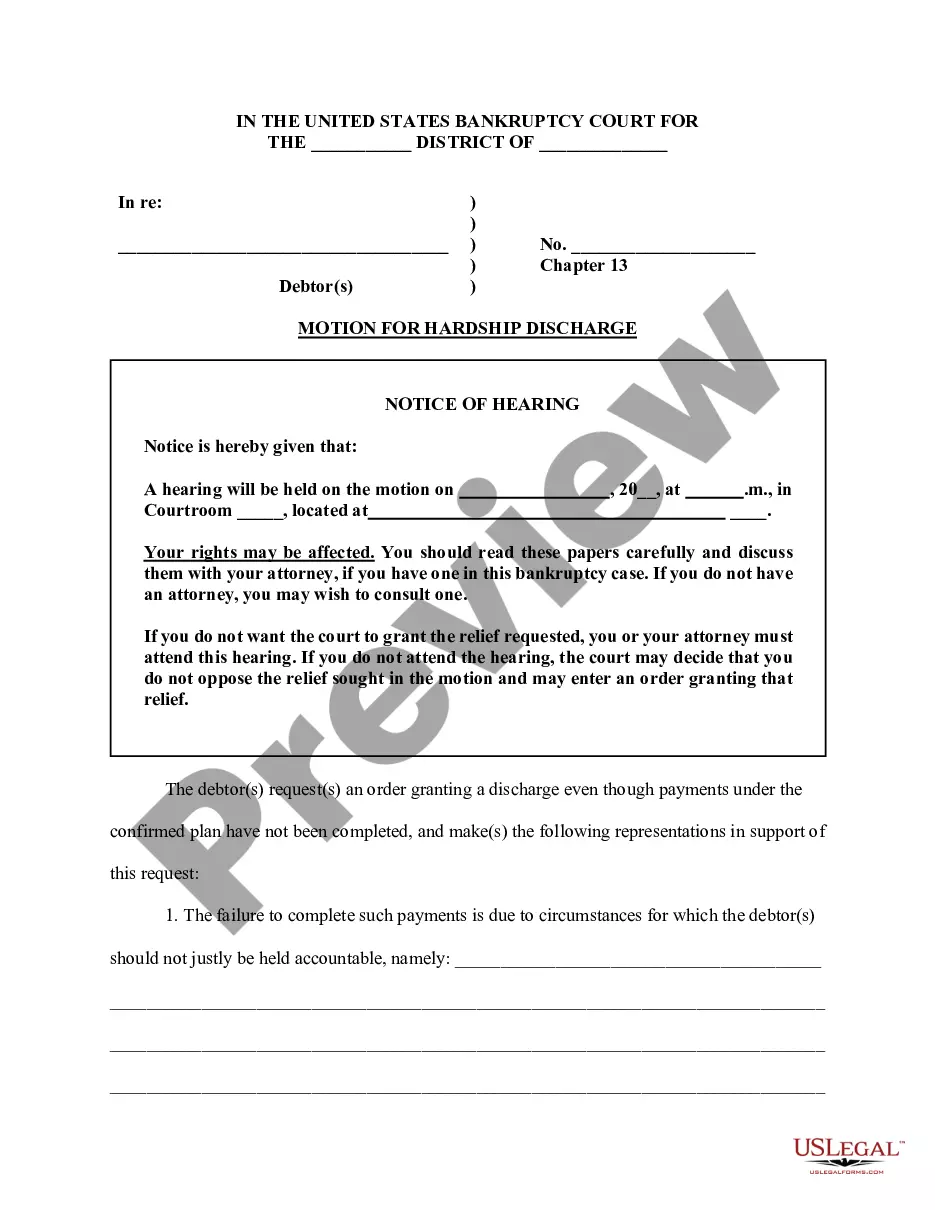
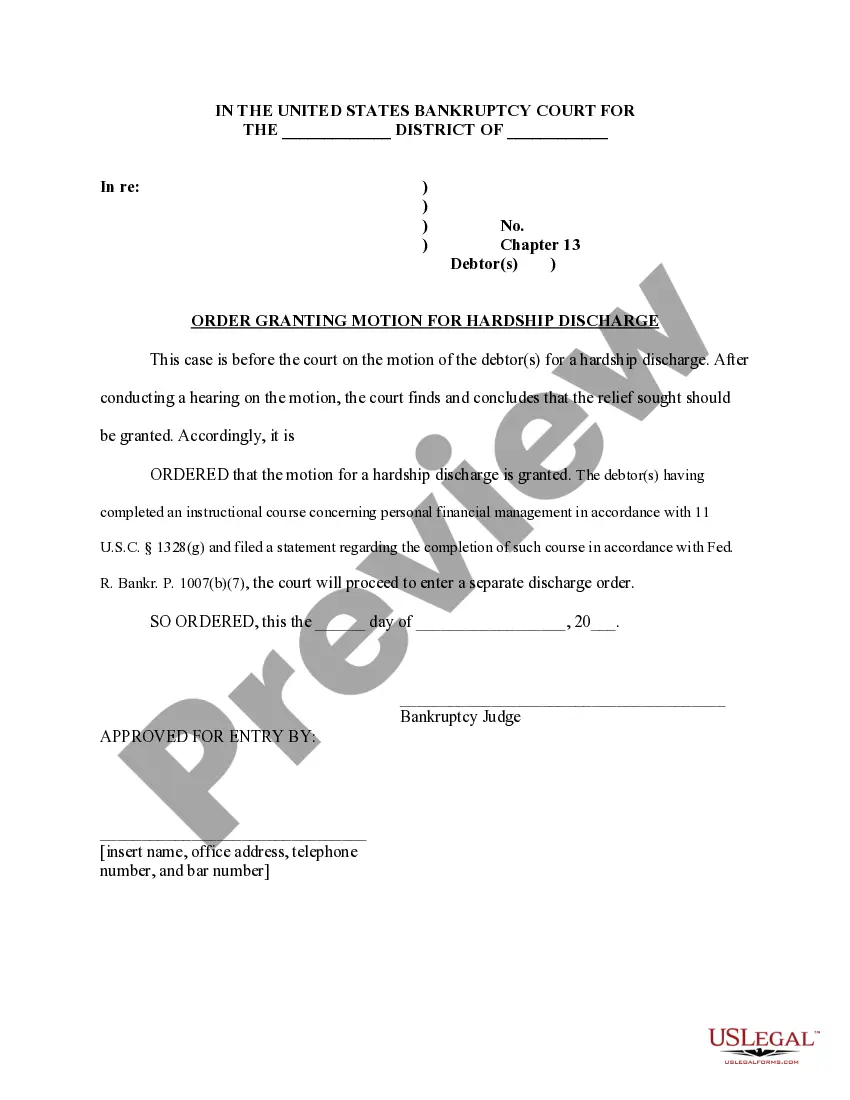
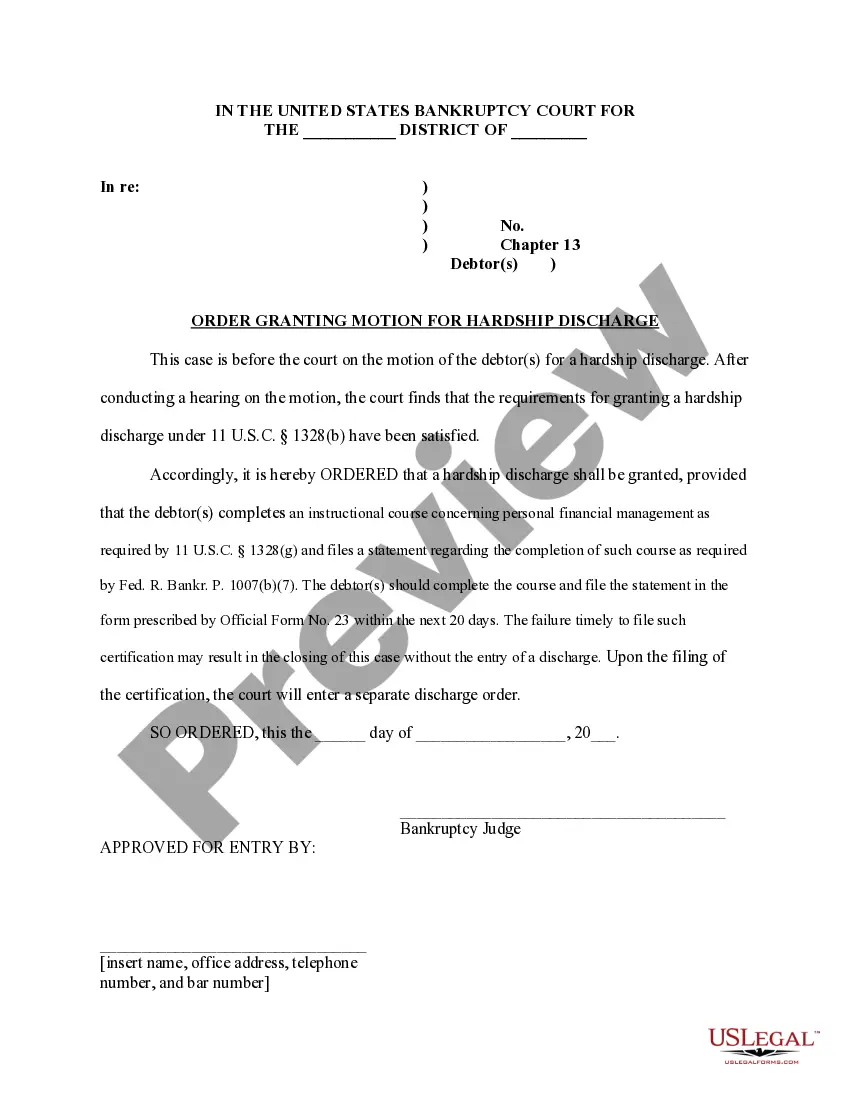
The Motion for Hardship Discharge is a legal document used in the bankruptcy process, specifically under Chapter 13. This form allows debtors to request a discharge of their remaining debts even if they have not completed all the payments required under their confirmed repayment plan. It is particularly useful for individuals facing unexpected financial hardships that hinder their ability to make payments. Unlike standard discharge motions, this form emphasizes the circumstances that led to the inability to complete payment plans, making it crucial for those experiencing genuine financial difficulties.
Form components explained
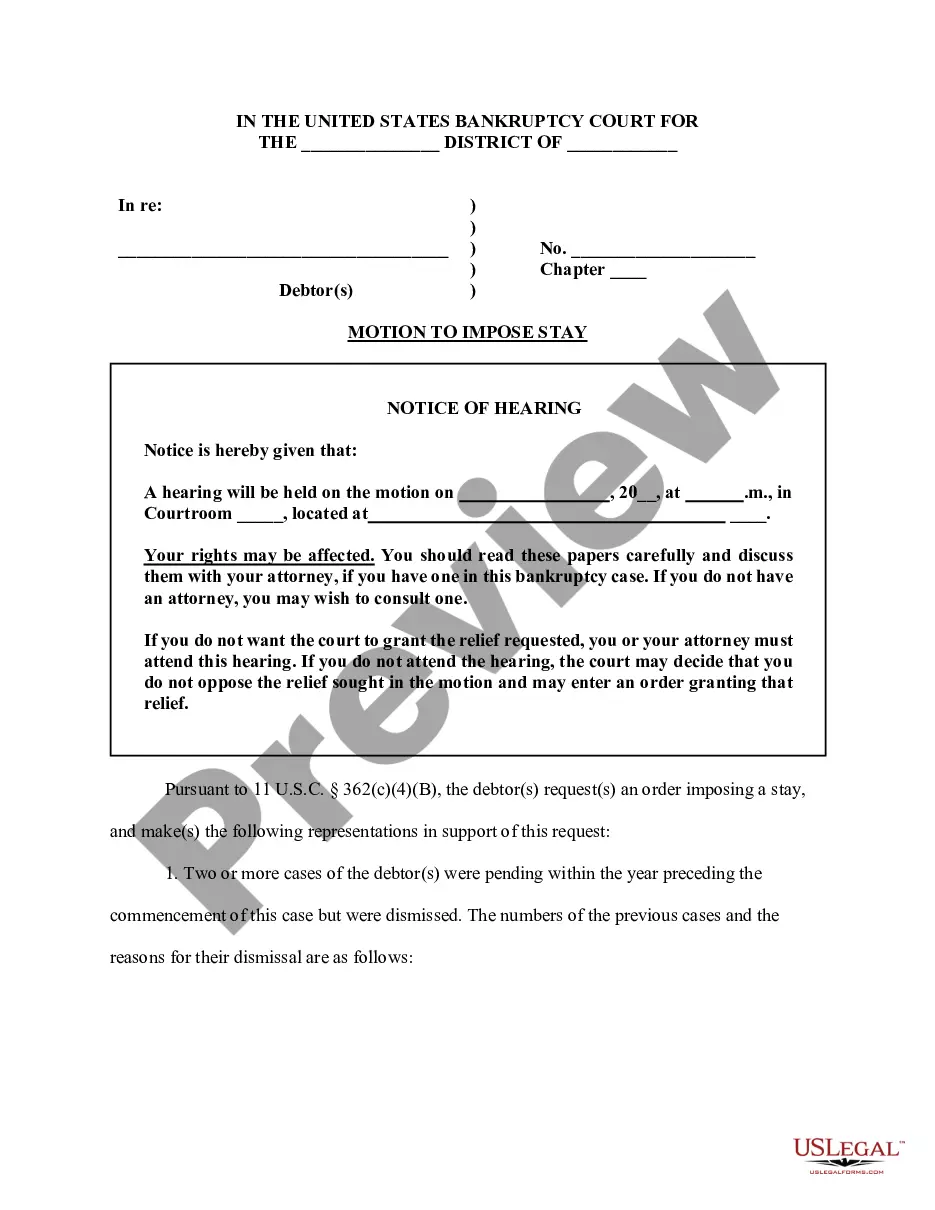
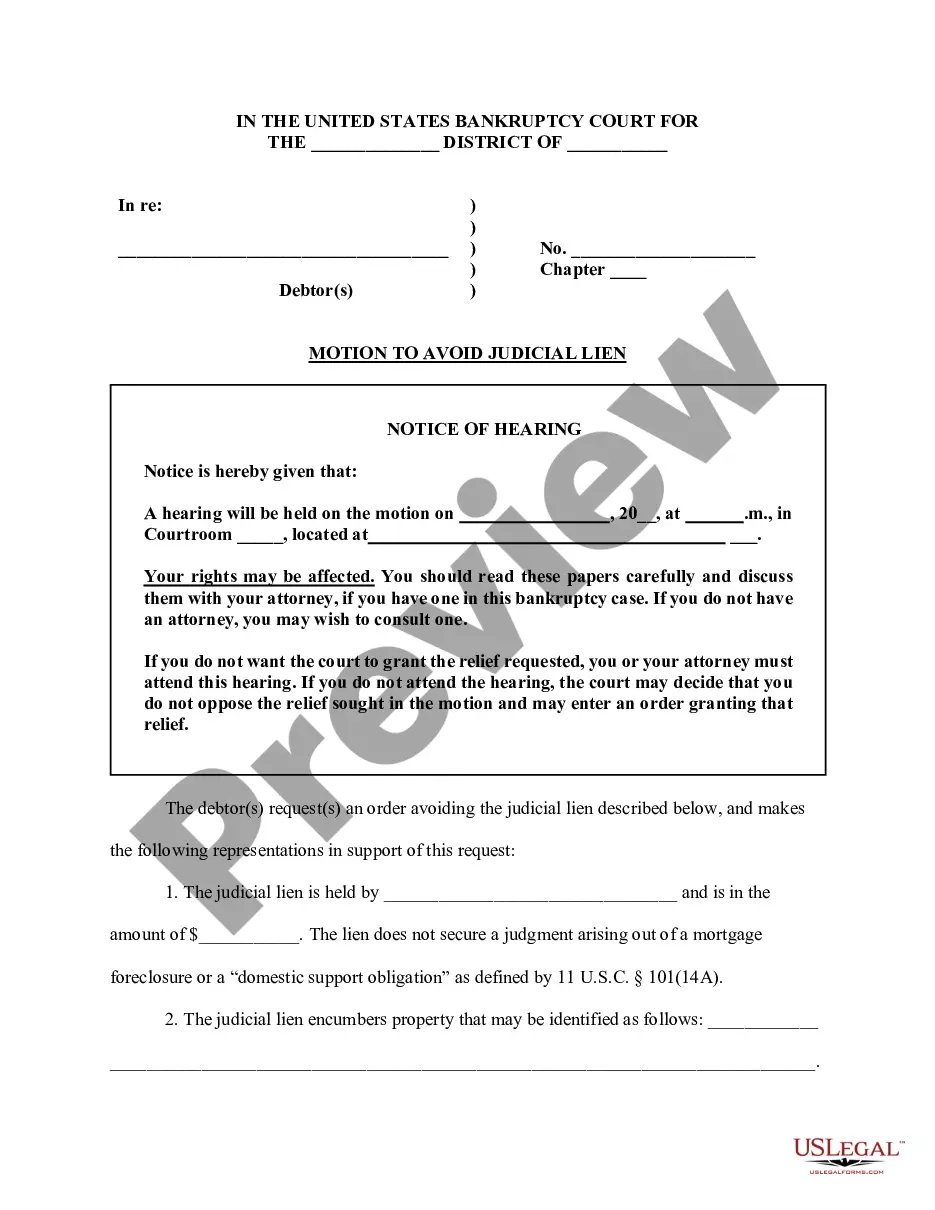
- Notice of Hearing: Information about the scheduled hearing related to the motion.
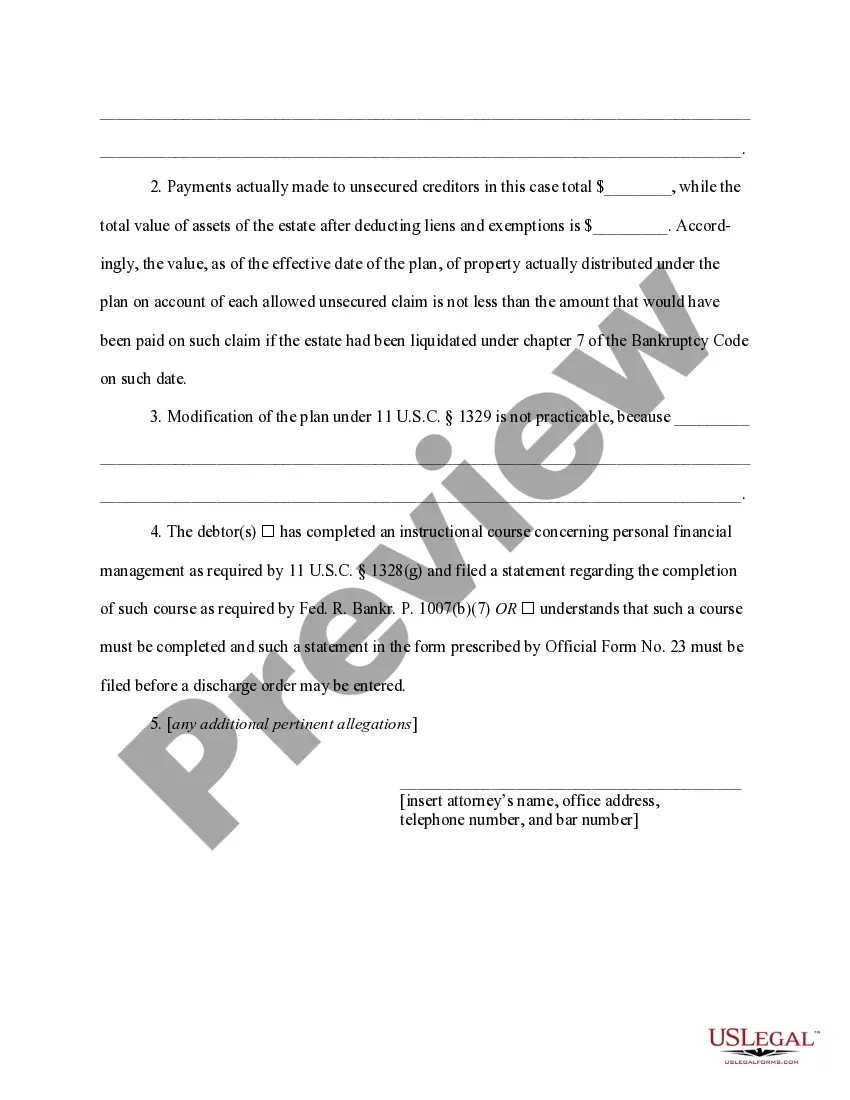
- Reason for Hardship: A section where debtors explain the circumstances preventing them from completing payments.
- Payment History: Details on payments made to unsecured creditors and the overall asset value.
- Modification Information: Explanation of why modifying the payment plan is impracticable.
- Financial Management Course: Confirmation of completion of a personal financial management course, as required.
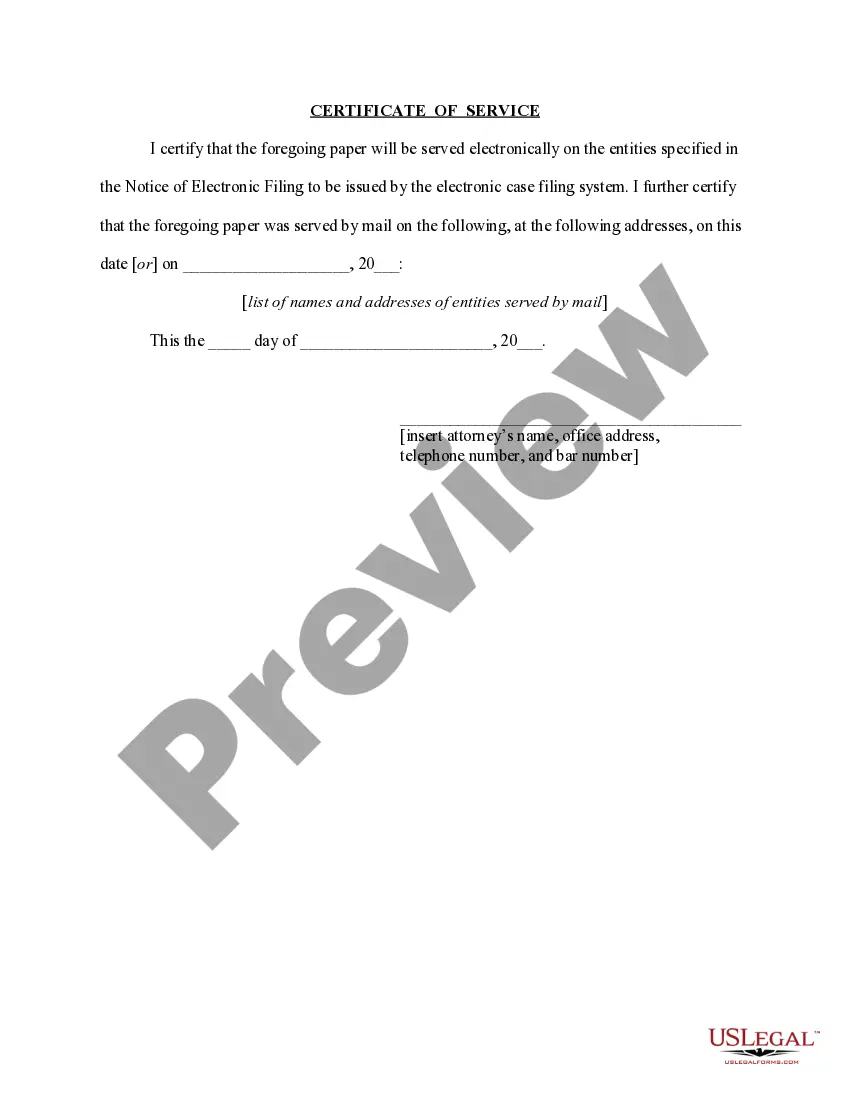
- Certificate of Service: A declaration confirming the proper service of the motion to relevant parties.
Situations where this form applies
This form should be used when a debtor in a Chapter 13 bankruptcy case can no longer afford to make payments and wishes to seek a discharge of their remaining debts. Common scenarios include unexpected medical expenses, loss of employment, divorce, or other financial emergencies that have severely impacted the debtor's ability to comply with the repayment plan. It is essential to submit this motion before the conclusion of the bankruptcy case to secure a potential discharge.
Who can use this document
This form is intended for:
- Debtors who have filed for Chapter 13 bankruptcy and are unable to complete their payment plans.
- Individuals facing unforeseen financial hardships that affect their repayment capabilities.
- Those who have made partial payments to creditors but require a discharge of the remaining debts.
Completing this form step by step
- Provide the debtors' names and the case number at the beginning of the form.
- Complete the Notice of Hearing section with the date, time, and courtroom location.
- Detail the hardships experienced that prevented completion of payments.
- List the total payments made to unsecured creditors and the total value of accessible assets.
- Include information on the completion of the financial management course if applicable.
- Sign and date the Certificate of Service, ensuring it is properly served to all relevant parties.
Notarization guidance
In most cases, this form does not require notarization. However, some jurisdictions or signing circumstances might. US Legal Forms offers online notarization powered by Notarize, accessible 24/7 for a quick, remote process.
Get your form ready online
Our built-in tools help you complete, sign, share, and store your documents in one place.
Make edits, fill in missing information, and update formatting in US Legal Forms—just like you would in MS Word.
Download a copy, print it, send it by email, or mail it via USPS—whatever works best for your next step.
Sign and collect signatures with our SignNow integration. Send to multiple recipients, set reminders, and more. Go Premium to unlock E-Sign.
If this form requires notarization, complete it online through a secure video call—no need to meet a notary in person or wait for an appointment.
We protect your documents and personal data by following strict security and privacy standards.

Make edits, fill in missing information, and update formatting in US Legal Forms—just like you would in MS Word.

Download a copy, print it, send it by email, or mail it via USPS—whatever works best for your next step.

Sign and collect signatures with our SignNow integration. Send to multiple recipients, set reminders, and more. Go Premium to unlock E-Sign.

If this form requires notarization, complete it online through a secure video call—no need to meet a notary in person or wait for an appointment.

We protect your documents and personal data by following strict security and privacy standards.
Mistakes to watch out for
- Failing to attend the hearing, which can result in the court granting relief without opposition.
- Inaccurately stating the reasons for hardship, which can undermine the motion.
- Not providing comprehensive details on payments made and assets available.
- Neglecting to include proof of completing the financial management course.
Why use this form online
- Convenience of accessing and downloading the form at any time.
- Ability to edit the form multiple times before final submission.
- Access to attorney-drafted templates that ensure compliance with legal requirements.
Looking for another form?



Form popularity
FAQ
The simplest way to get a discharge is to put in your time, receive an honorable discharge and walk away. It's also possible to leave the Army earlier if you fail to meet its military standards in some fashion. Contrary to popular legend, that doesn't mean your discharge must have been a dishonorable one.
You can apply for a discharge based on the ?genuine dependency or undue hardship? being a member of the military is causing if all of the following conditions are met: The hardship is severe and not temporary. It has developed or gotten worse since your entry into the military.
§ 1328(b) without completing all of the requirements under the chapter 13 plan. A discharge pursuant to § 1328(b) is referred to as a ?hardship discharge.? This order does not close or dismiss the case. This order means that no one may make any attempt to collect a discharged debt from the debtors personally.
The Chapter 13 Hardship Discharge After confirmation of a plan, circumstances may arise that prevent the debtor from completing the plan. In such situations, the debtor may ask the court to grant a "hardship discharge."
Counselors at the GI Rights Hotline have helped many people in the military get honorably discharged for hardship/dependency. Usually within 4-10 weeks after applying, people are free from their military obligations and able to help their family members.
An obvious benefit of a hardship Discharge is the ability to work through the hardship itself. Also, the discharge paperwork will have a discharge characterization, which means it is likely to either be Honorable or General under Honorable Conditions. Also, in most cases, service members receive their discharge.
Hardship vs Dependency. Terminology can get confusing because "hardship" and "dependency" discharges are often both loosely labeled "hardship." Specifically, a hardship discharge is when the financial needs of family member(s) require more than the military member can provide while remaining in the military.