Rating Scale
Understanding this form
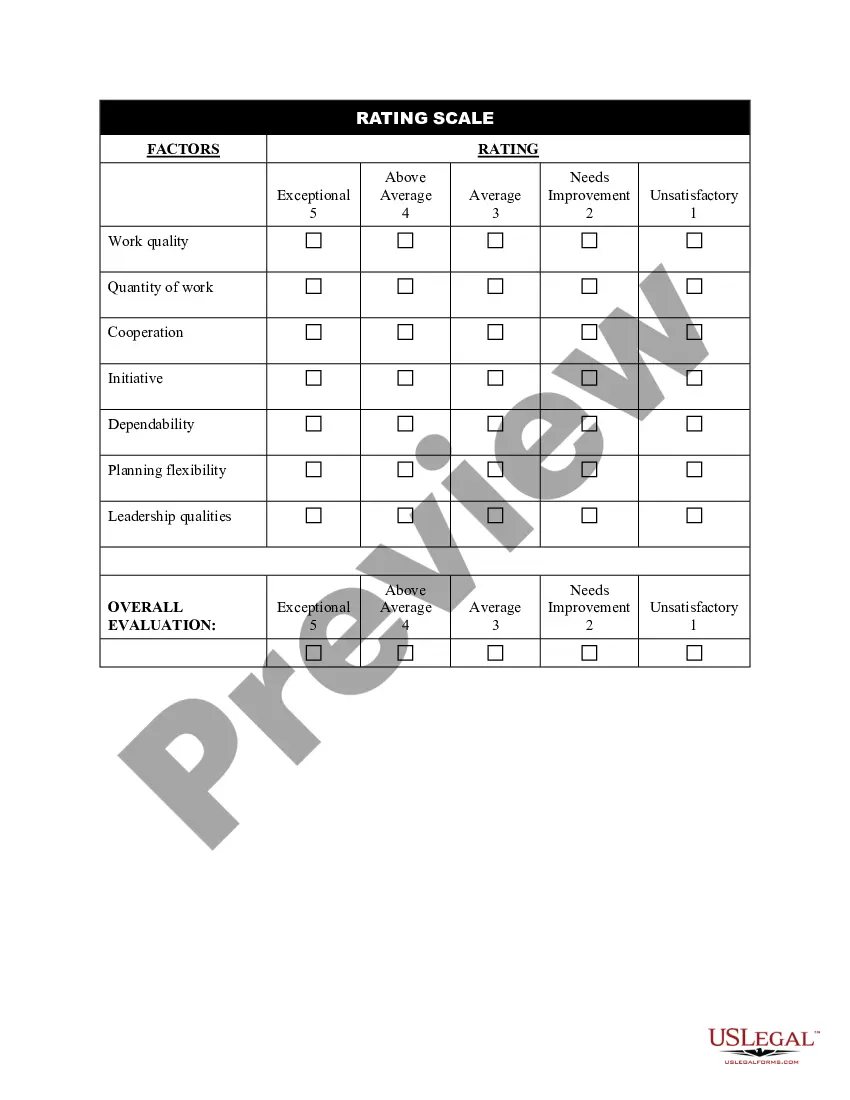
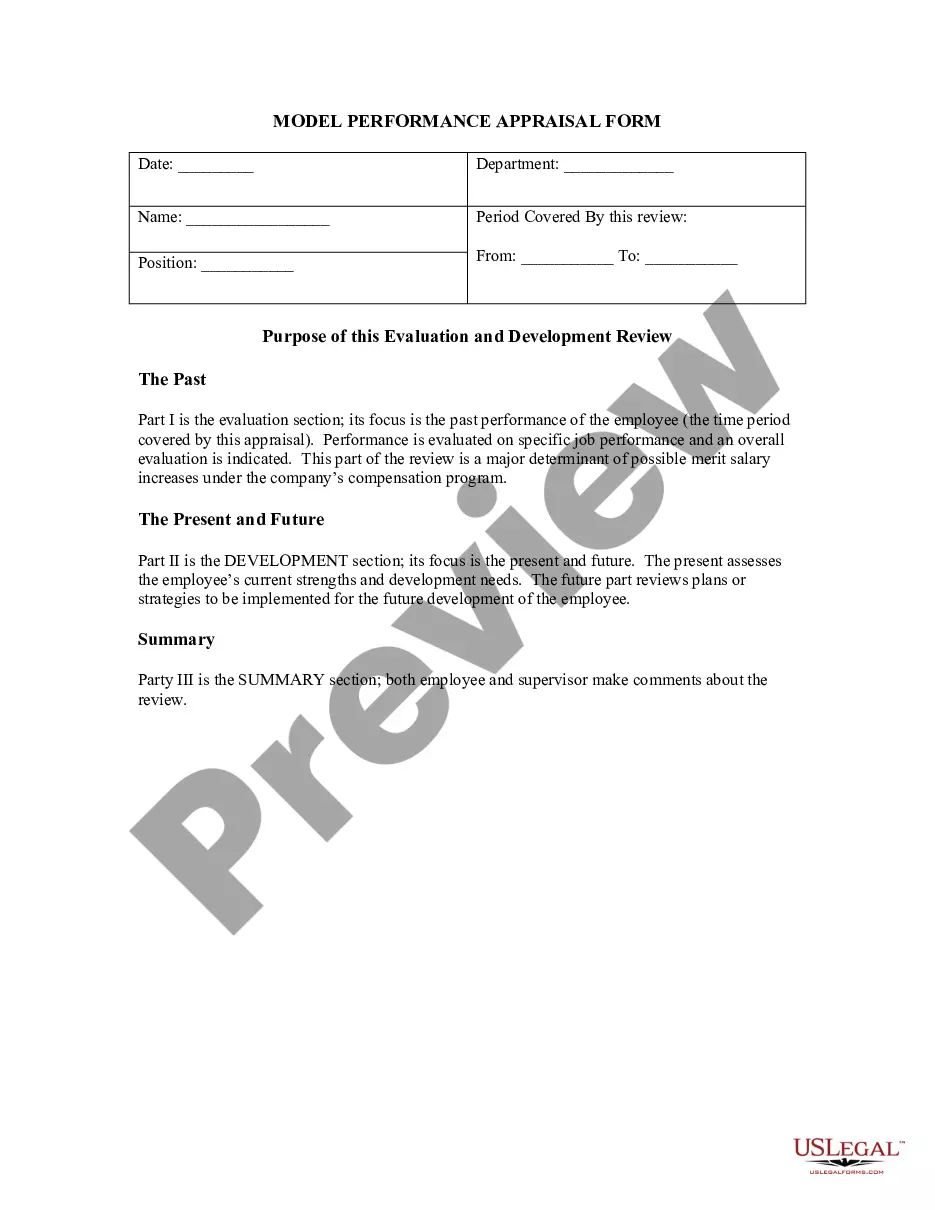
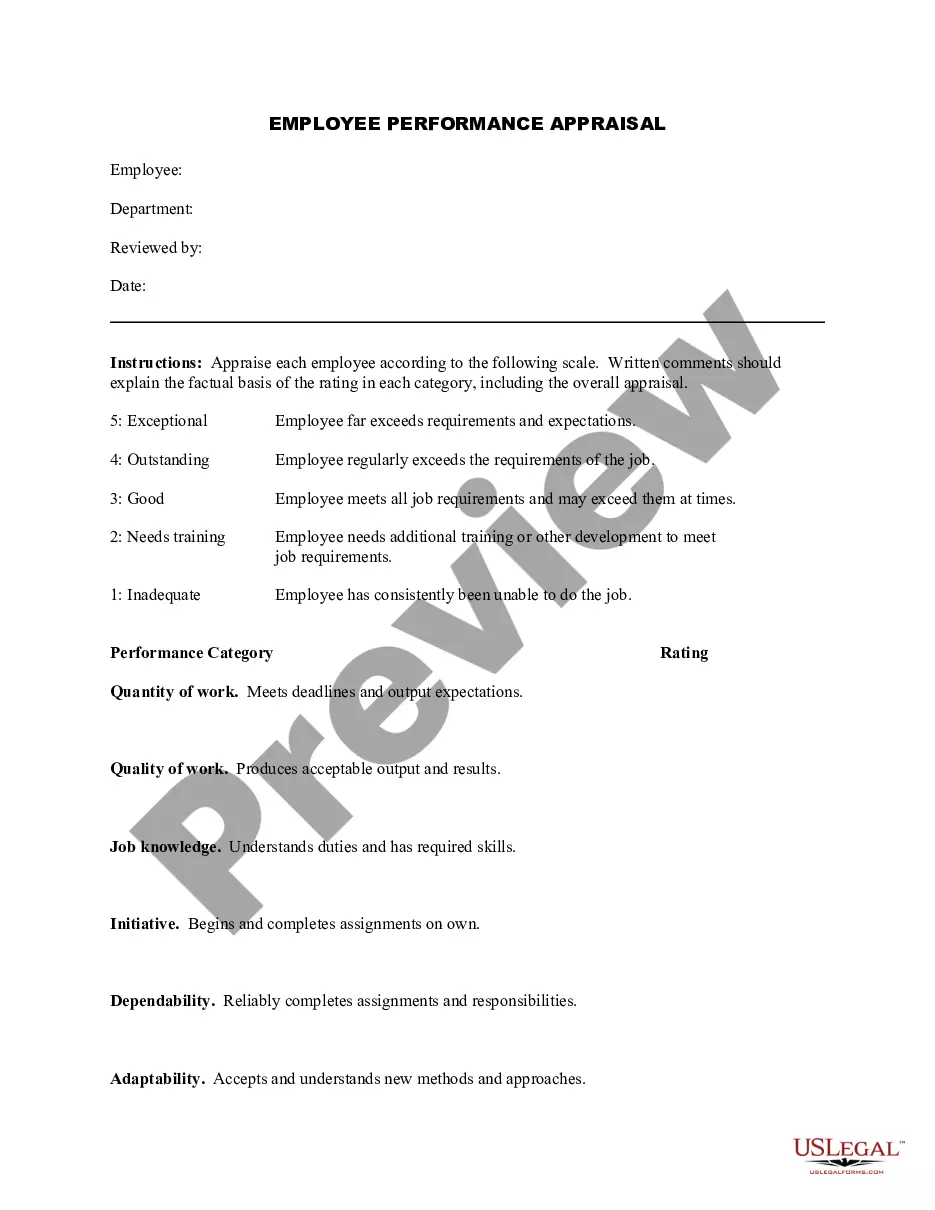
The Rating Scale form is a tool designed for employers to evaluate an employee's performance based on predefined criteria. This assessment instrument helps in creating structured feedback, differentiating performance levels, and promoting a fair evaluation process. Unlike generic performance reviews, this form provides clear metrics and a standardized format for rating various performance factors.
What’s included in this form
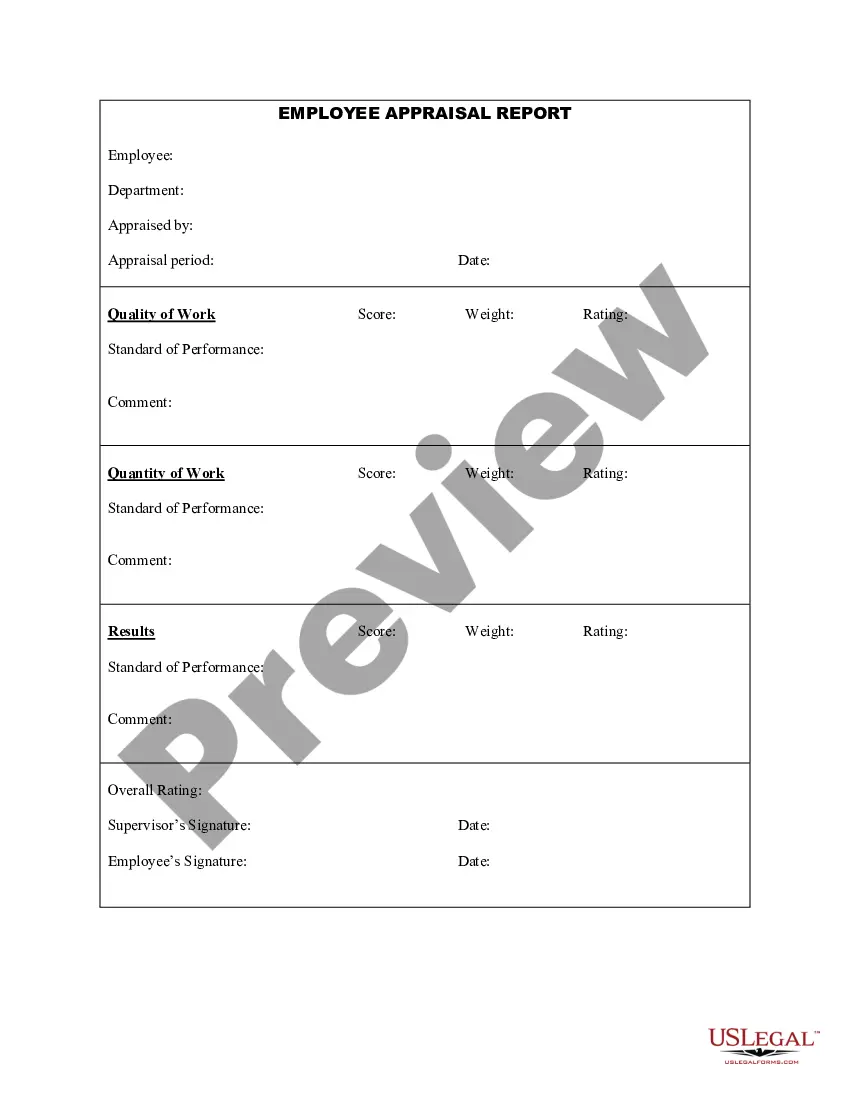
- Factors: Defines the areas of evaluation including work quality, quantity, cooperation, initiative, dependability, and leadership qualities.
- Rating System: Utilizes a scale from 1 to 5 where each number corresponds to a level of performance, ranging from Unsatisfactory (1) to Exceptional (5).
- Overall Evaluation: Includes a summary box for an overall rating based on the individual factors assessed.
When to use this document
Organizations should use the Rating Scale form during performance review periods to assess an employee's contributions effectively. It is particularly useful for annual evaluations, project feedback, or when considering promotions and raises. This standardized format ensures that all employees are evaluated consistently, making it an essential part of workforce management.
Who this form is for
This form is intended for:
- Managers and supervisors who are responsible for evaluating their team members' performance.
- HR professionals conducting employee assessments and providing feedback during annual reviews.
- Any organizational leaders involved in setting performance standards and expectations.
How to prepare this document
- Identify the employee being evaluated and the specific review period.
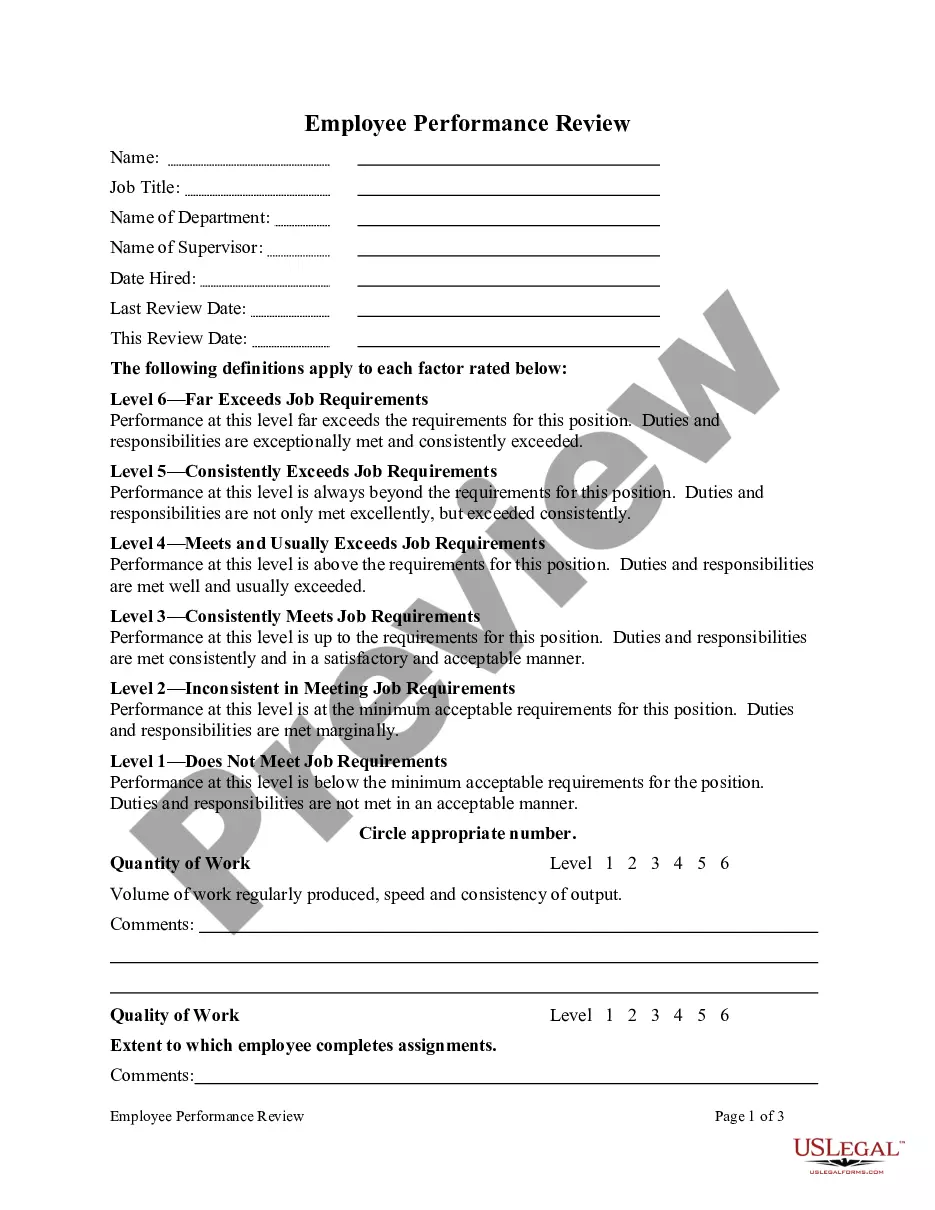
- Assess each performance factor listed in the form and assign a rating from 1 to 5 based on observed behavior and outcomes.
- Provide specific comments or examples to justify the ratings assigned, ensuring clarity and transparency.
- Summarize the overall assessment in the designated section, reflecting the performance across all rated factors.
- Discuss the evaluation with the employee, providing an opportunity for feedback or clarification.
Notarization guidance
This form usually doesn’t need to be notarized. However, local laws or specific transactions may require it. Our online notarization service, powered by Notarize, lets you complete it remotely through a secure video session, available 24/7.
Get your form ready online
Our built-in tools help you complete, sign, share, and store your documents in one place.
Make edits, fill in missing information, and update formatting in US Legal Forms—just like you would in MS Word.
Download a copy, print it, send it by email, or mail it via USPS—whatever works best for your next step.
Sign and collect signatures with our SignNow integration. Send to multiple recipients, set reminders, and more. Go Premium to unlock E-Sign.
If this form requires notarization, complete it online through a secure video call—no need to meet a notary in person or wait for an appointment.
We protect your documents and personal data by following strict security and privacy standards.

Make edits, fill in missing information, and update formatting in US Legal Forms—just like you would in MS Word.

Download a copy, print it, send it by email, or mail it via USPS—whatever works best for your next step.

Sign and collect signatures with our SignNow integration. Send to multiple recipients, set reminders, and more. Go Premium to unlock E-Sign.

If this form requires notarization, complete it online through a secure video call—no need to meet a notary in person or wait for an appointment.

We protect your documents and personal data by following strict security and privacy standards.
Common mistakes
- Failing to provide specific examples to support the ratings.
- Inconsistency in applying the rating criteria across different employees.
- Not scheduling enough time for discussion after evaluation completion.
Benefits of completing this form online
- Convenience of accessing and completing the form from any device.
- Easy to edit, ensuring that comments and ratings can be adjusted quickly.
- Reliability in storing evaluations securely, minimizing paperwork issues.
Looking for another form?

Form popularity
FAQ
Rating Scales allow teachers to indicate the degree or frequency of the behaviours, skills and strategies displayed by the learner.Rating scales also give students information for setting goals and improving performance. In a rating scale, the descriptive word is more important than the related number.
Rating scale is defined as a closed-ended survey question used to represent respondent feedback in a comparative form for specific particular features/products/services. It is one of the most established question types for online and offline surveys where survey respondents are expected to rate an attribute or feature.
Rating scale is defined as a closed-ended survey question used to represent respondent feedback in a comparative form for specific particular features/products/services.Researchers use a rating scale in research when they intend to associate a qualitative measure with the various aspects of a product or feature.
The purpose of the Early Learning Observation Rating Scale (ELORS) is to help teachers and parents gather and share information about young children with specific attention to characteristics that might be early signs of learning disabilities.
5 points (Pass) Excellent. Exceptional. Mastery. Much more than acceptable.
Examples include age, income, price, costs, sales revenue, sales volume and market share. More than one rating scale question is required to measure an attitude or perception due to the requirement for statistical comparisons between the categories in the polytomous Rasch model for ordered categories.
In rating scale questions (sometimes referred to as ordinal questions), the question displays a scale of answer options from any range (0 to 100, 1 to 10, etc.). The respondent selects the number that most accurately represents their response. Net Promoter Score® questions are a good example of rating scale questions.