Written Warning Form
Understanding this form
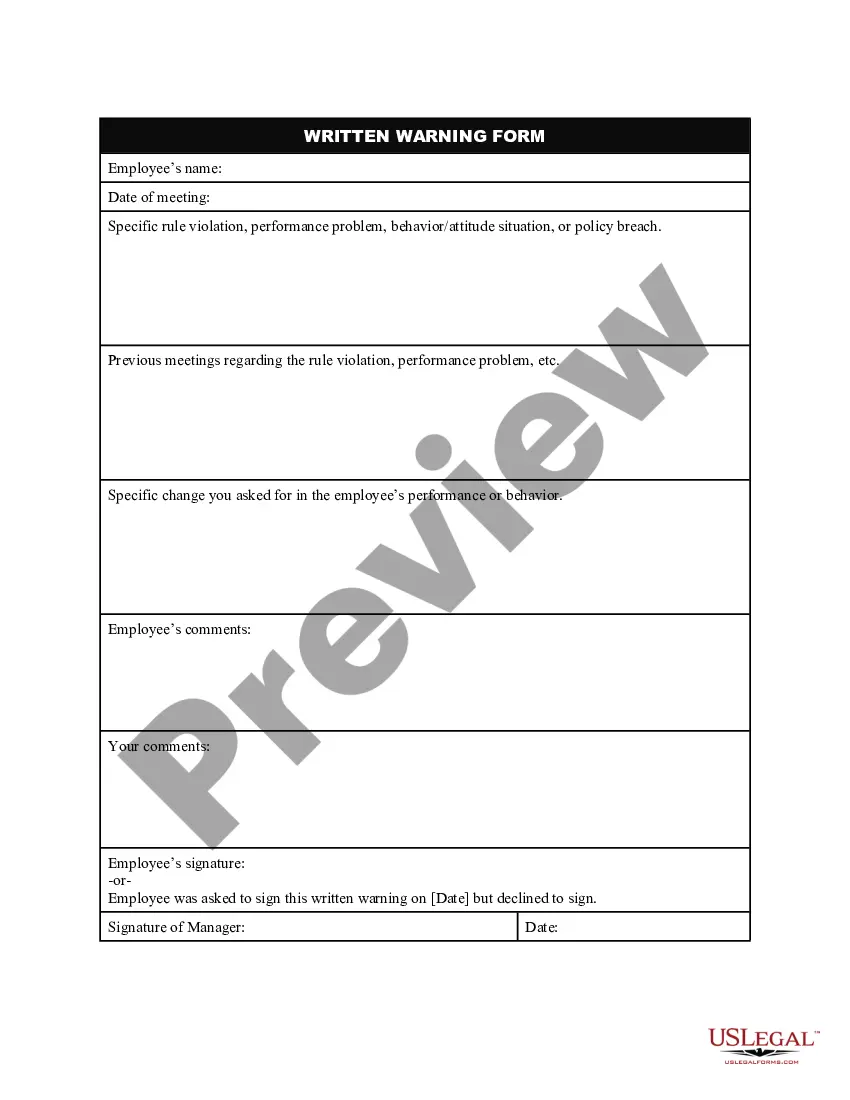
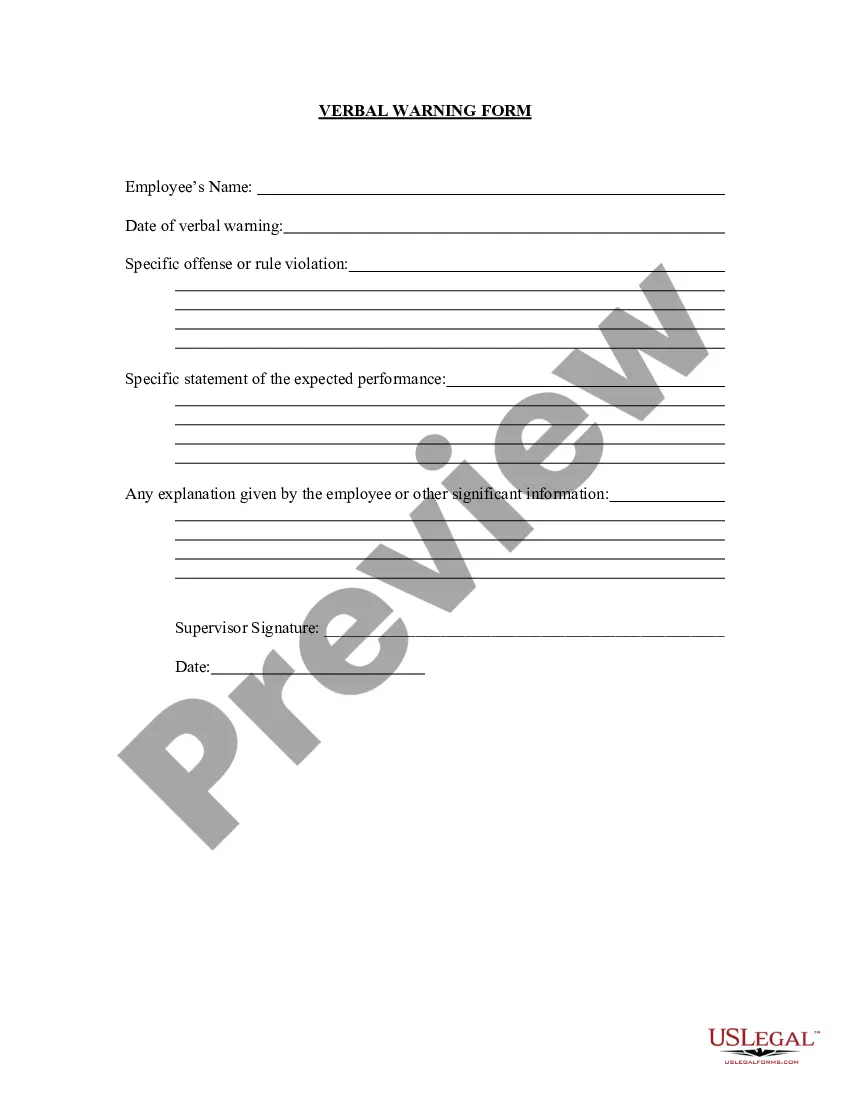
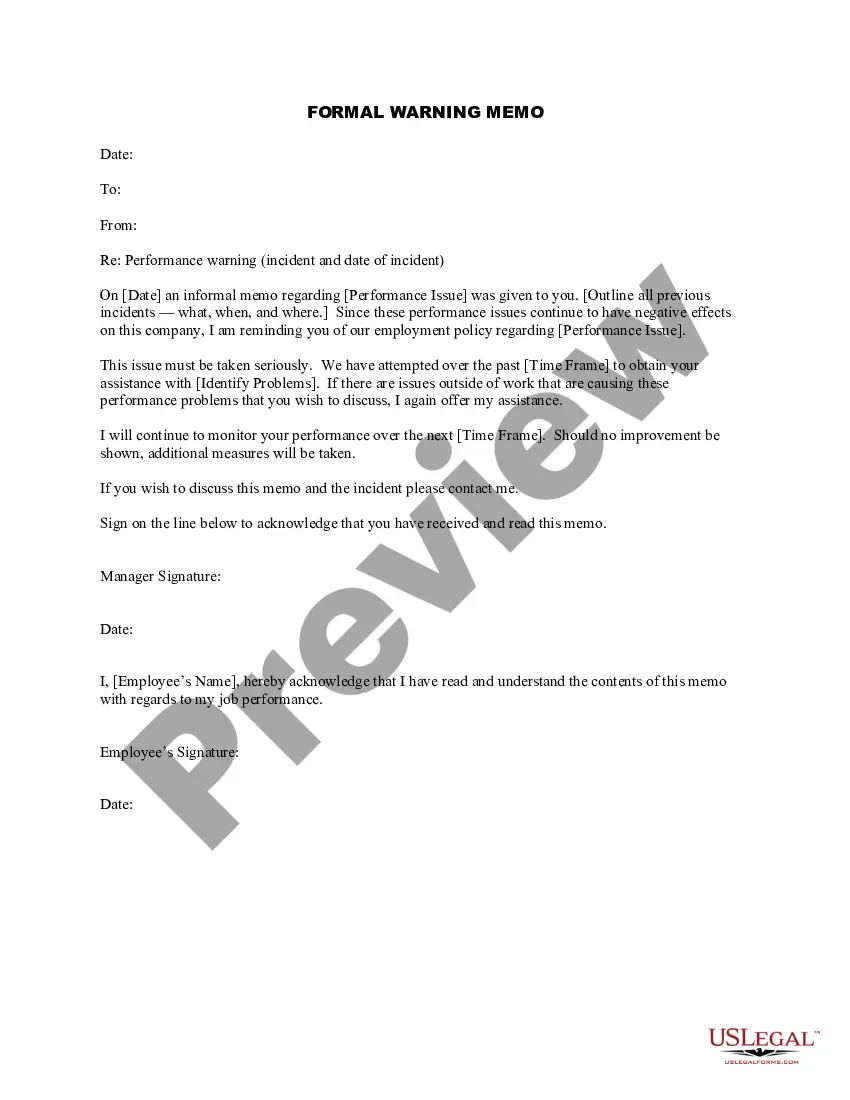
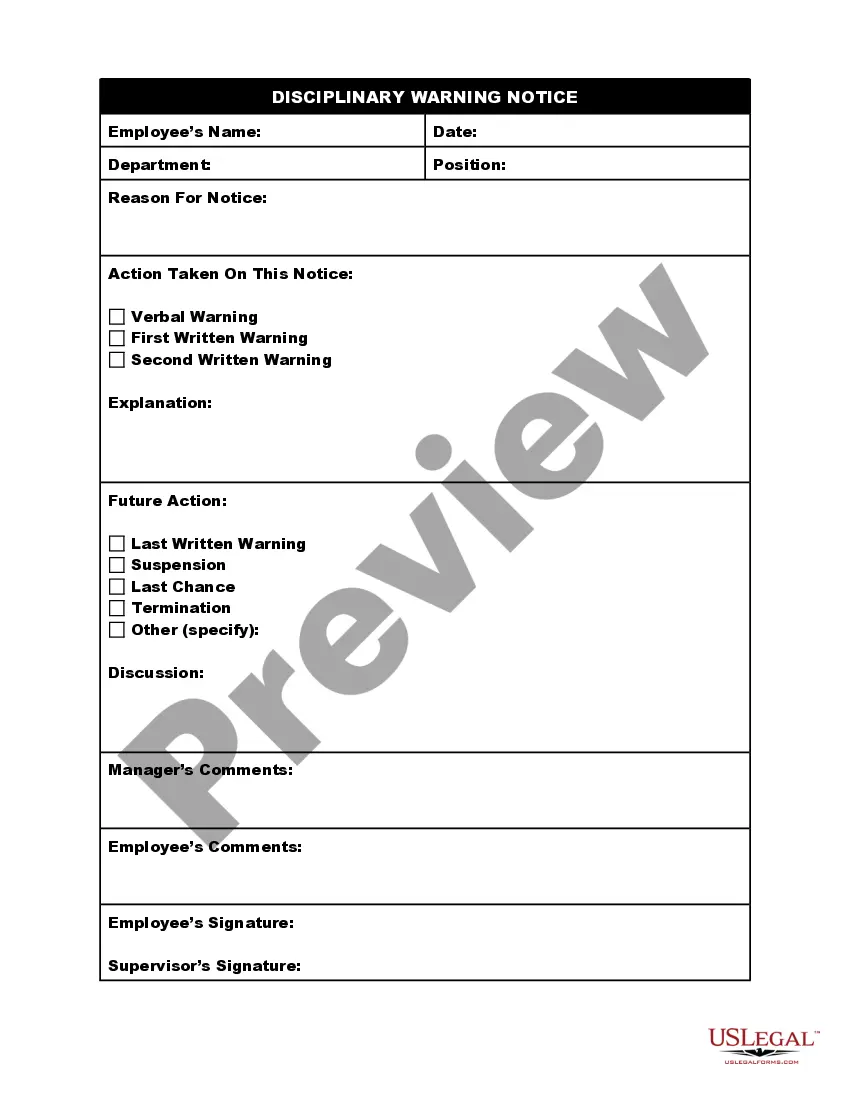
The Written Warning Form is a formal document used by employers to address employee performance issues or policy violations. This form serves as a record of the violation, previous discussions regarding the issue, and the specific changes required for improvement. Unlike generic warning letters, this form is structured to ensure clarity and compliance with workplace standards, making it easier for both employers and employees to understand expectations moving forward.
What’s included in this form
- Employee Name: Space to record the name of the employee receiving the warning.
- Date of Meeting: Section to document when the discussion took place.
- Violation Details: Description of the specific rule violation, performance issue, or behavior concern.
- Previous Meetings: Record of any past meetings regarding the issue.
- Required Changes: Clear instructions on what changes the employee needs to make.
- Employee Comments: Space for the employee to provide their input or remarks regarding the warning.
- Signature Fields: Areas for both the employee and the manager to sign the document.
When to use this document
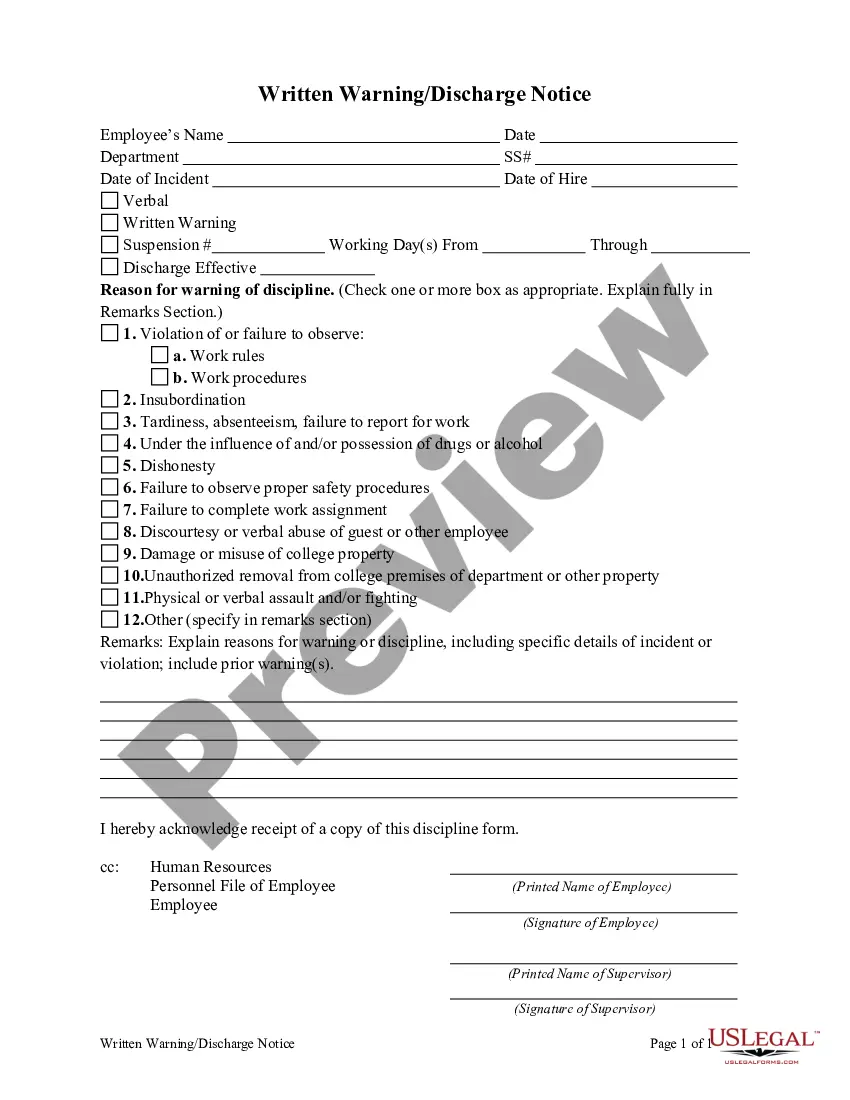
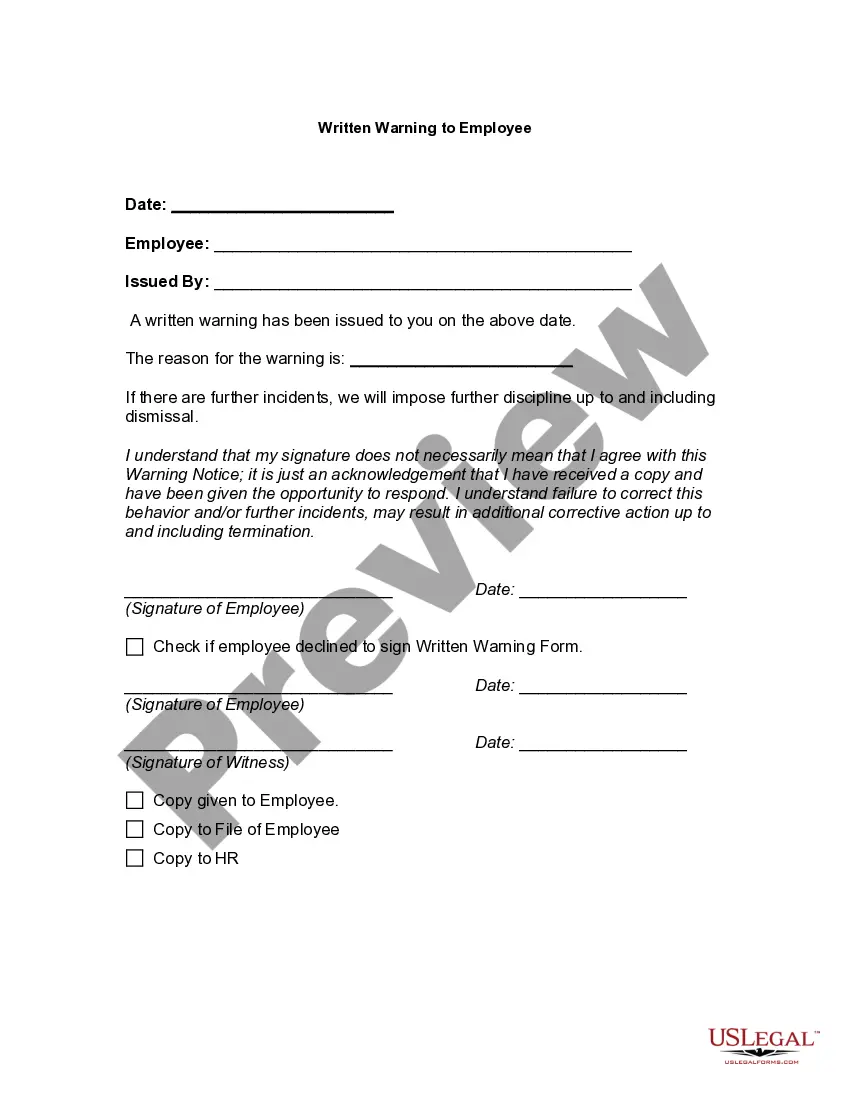
This form is essential when a supervisor needs to address persistent performance problems or behavioral issues with an employee. It is particularly useful in situations where the employee has been previously warned and failed to make necessary improvements. The Written Warning Form provides a formal record that can be referenced in future disciplinary actions, ensuring consistency and fairness in the workplace.
Who needs this form
This form should be used by:
- Human resources personnel looking to enforce company policies.
- Supervisors and managers who oversee employee performance and conduct.
- Any employee facing disciplinary action who needs clarity on their violations and expected improvements.
How to prepare this document
To complete the Written Warning Form, follow these steps:
- Identify the employee involved and enter their name and position.
- Record the date of the meeting with the employee regarding the warning.
- Clearly describe the specific violation or issue that prompted the warning.
- Detail any prior meetings or discussions about this issue.
- Specify the required changes the employee must make to rectify the situation.
- Provide space for both the employee's comments and signatures from both the employee and the manager.
Does this document require notarization?
This form does not typically require notarization unless specified by local law.
Get your form ready online
Our built-in tools help you complete, sign, share, and store your documents in one place.
Make edits, fill in missing information, and update formatting in US Legal Forms—just like you would in MS Word.
Download a copy, print it, send it by email, or mail it via USPS—whatever works best for your next step.
Sign and collect signatures with our SignNow integration. Send to multiple recipients, set reminders, and more. Go Premium to unlock E-Sign.
If this form requires notarization, complete it online through a secure video call—no need to meet a notary in person or wait for an appointment.
We protect your documents and personal data by following strict security and privacy standards.

Make edits, fill in missing information, and update formatting in US Legal Forms—just like you would in MS Word.

Download a copy, print it, send it by email, or mail it via USPS—whatever works best for your next step.

Sign and collect signatures with our SignNow integration. Send to multiple recipients, set reminders, and more. Go Premium to unlock E-Sign.

If this form requires notarization, complete it online through a secure video call—no need to meet a notary in person or wait for an appointment.

We protect your documents and personal data by following strict security and privacy standards.
Common mistakes to avoid
- Failing to document previous discussions or warnings.
- Leaving out specific details of the violation.
- Not obtaining the employeeâs signature, as this can impact enforceability.
- Being vague about required changes, which can lead to misunderstandings.
Advantages of online completion
- Easy to download and edit, allowing for quick customization per incident.
- Provides a clear record that can be used for future reference in disciplinary processes.
- Facilitates open communication regarding performance expectations.
- The Written Warning Form can serve as evidence in cases of wrongful termination or other disputes related to employment issues.
- Proper use of this form can help protect an employer from claims of unfair treatment.
What to keep in mind
- The Written Warning Form is a vital tool for addressing employee performance issues.
- Clear documentation is crucial for legal and procedural fairness.
- This form aids in the communication of expectations and performance improvements.
- Violation: A breach of company policy or expected workplace behavior.
- Disciplinary Action: Actions taken to correct or punish unacceptable behavior in the workplace.
- Signature: A person's name written in their own hand, which signifies agreement to the documented terms.
Looking for another form?


Form popularity
FAQ
Employees have to sign disciplinary documents. While it is a good policy to have some system that proves the employee was presented with the write-up, it is not required that the employee sign the document.
Document verbal warnings first. Track all verbal warnings and disciplinary measures in writing at the time they are given. Determine tone. Determine your reasons for writing the warning. Consult with manager. Formalities. State company policy. Describe what happened. State expectations. Outline consequences.
If an employee refuses to sign the disciplinary report or warning, you might ask him or her to submit a signed rebuttal document instead. The rebuttal should reference the concerns raised in the written warning. This shows that the employee was notified about the problem.
Your employer is allowed to give any type of warning that they think is appropriate.Your employer should always try to act consistently, so if they would give others a verbal warning in a particular situation they shouldn't give you a final warning unless there are good reasons for doing so.
You can send a written warning letter via mail or email, but either way, you should have the employee's supervisor notify the employee beforehand. Usually, the letter is given during a face-to-face meeting with a third party, such as a human resources representative, present.
In cases of serious misconduct or poor performance, the employer does not have to give a first written warning and can instead go straight to a final written warning. For example, where the employee's actions have, or could, cause serious harm to the business.The employer should make this clear to the employee.
Employees have to sign disciplinary documents. While it is a good policy to have some system that proves the employee was presented with the write-up, it is not required that the employee sign the document.
When writing the warning you should endeavour to be as specific as possible. Specify the issue in detail, including dates, people involved, and the nature of the offence. Also, include details of what will happen if the employee's behaviour doesn't alter their behaviour.
Does an employer have to give a verbal warning before a written warning? There are no written rules about how employers must give out warnings. While, typically, an employer will give you one verbal warning before giving you a written warning, they may dismiss the verbal warning if your misconduct is severe enough.