Informal Warning Memo
Overview of this form
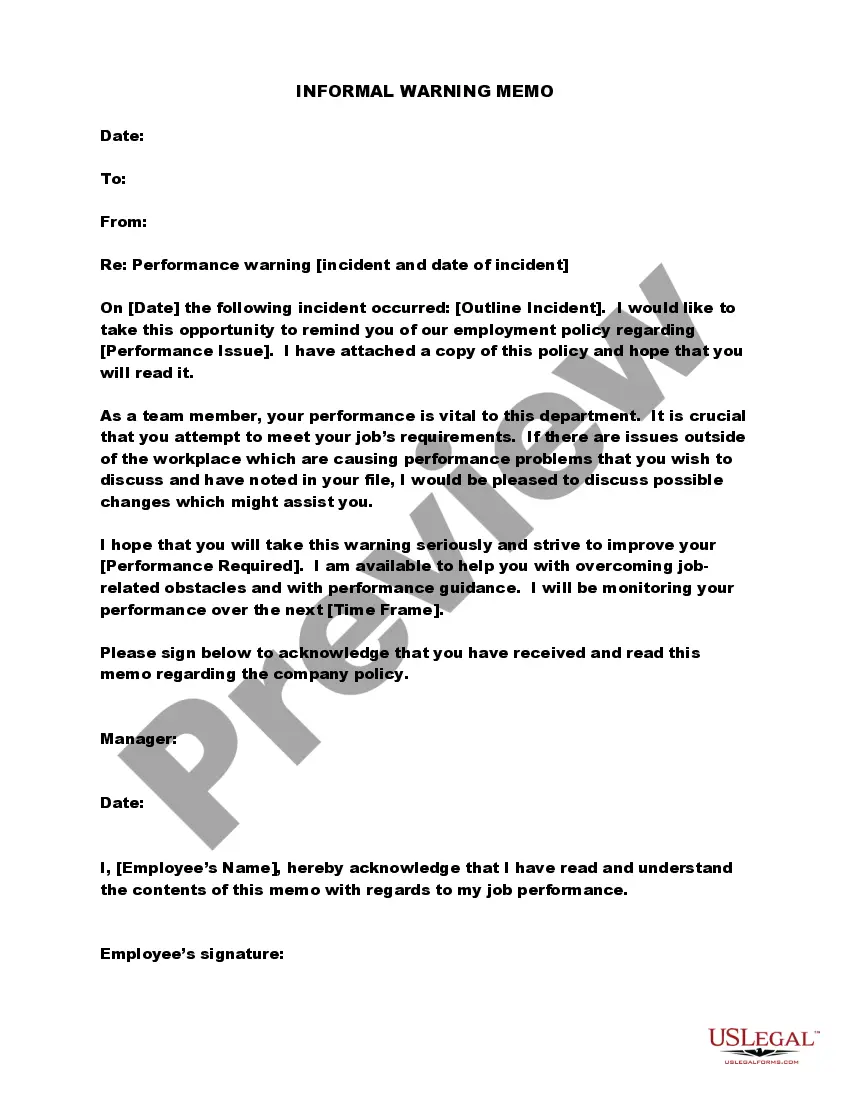
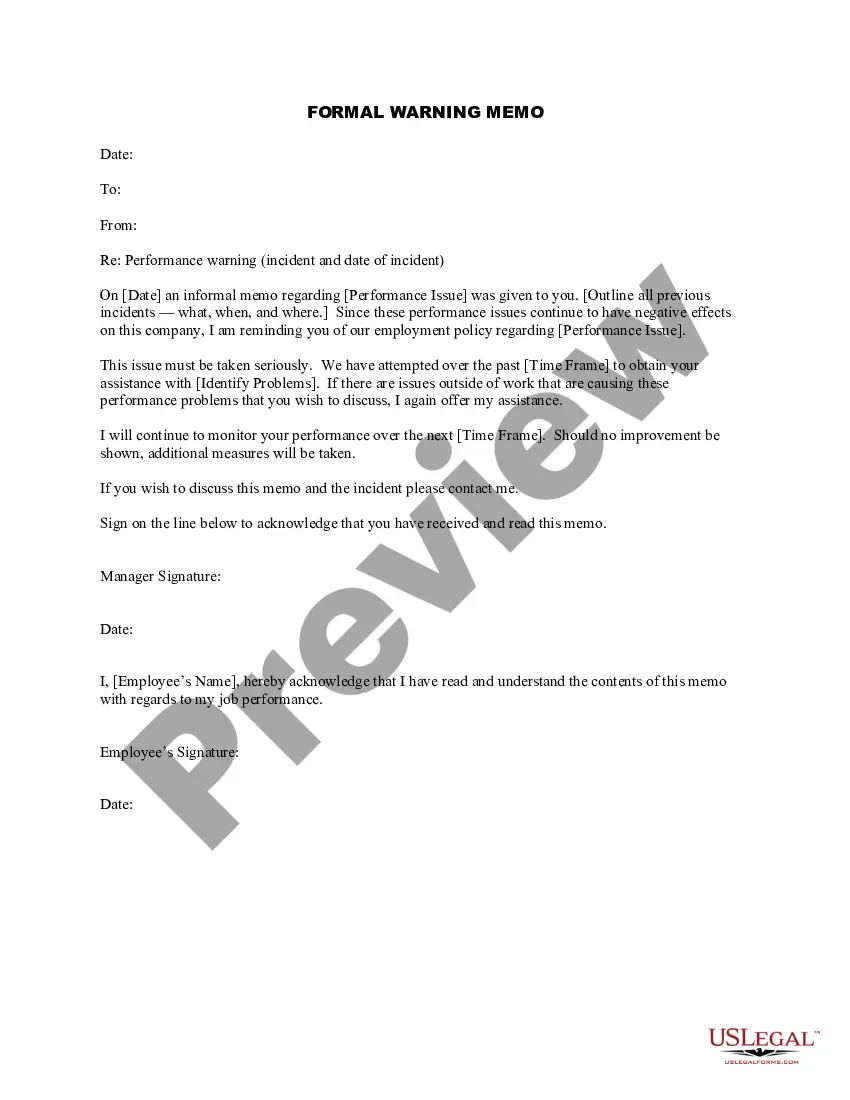
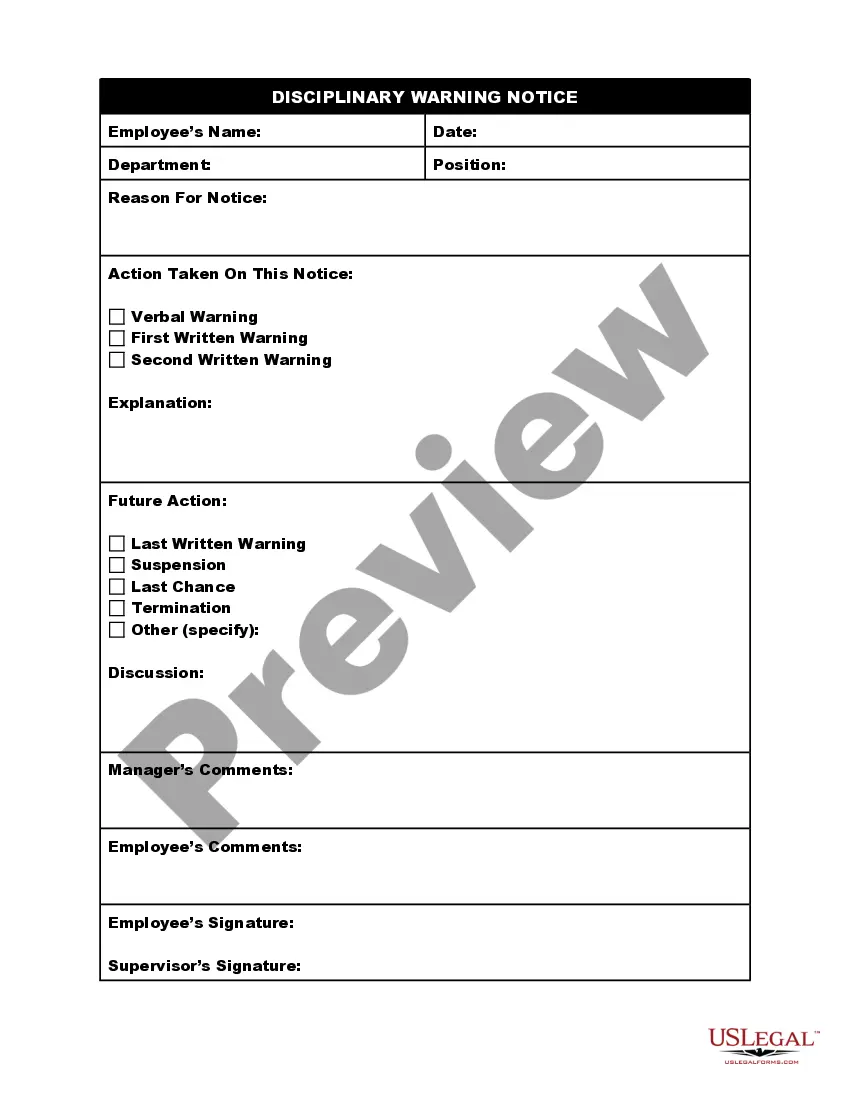
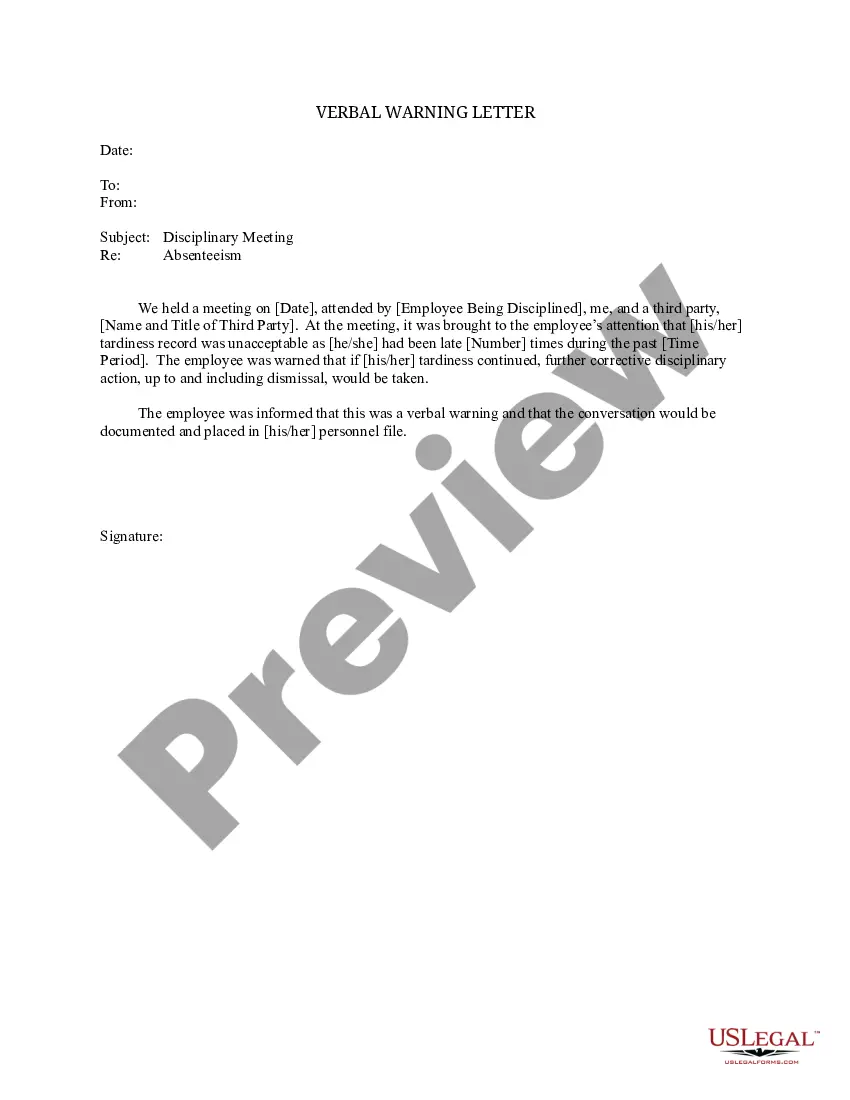
The Informal Warning Memo is a document used by employers to address ongoing performance issues with an employee. This memo serves as a preliminary warning before more serious actions, such as a formal warning memo, are issued. It outlines specific concerns in the employee's performance and encourages improvement, thus providing a supportive approach towards workplace accountability.
Key parts of this document
- Date: The date when the memo is issued.
- To: The employee receiving the warning.
- From: The manager or supervisor addressing the employee.
- Incident description: Details about the performance issues and the date when the incident occurred.
- Policy reference: Mention of the relevant employment policy regarding performance expectations.
- Signature section: Area for the employee to acknowledge receipt of the memo and indicate understanding of the content.
When to use this form
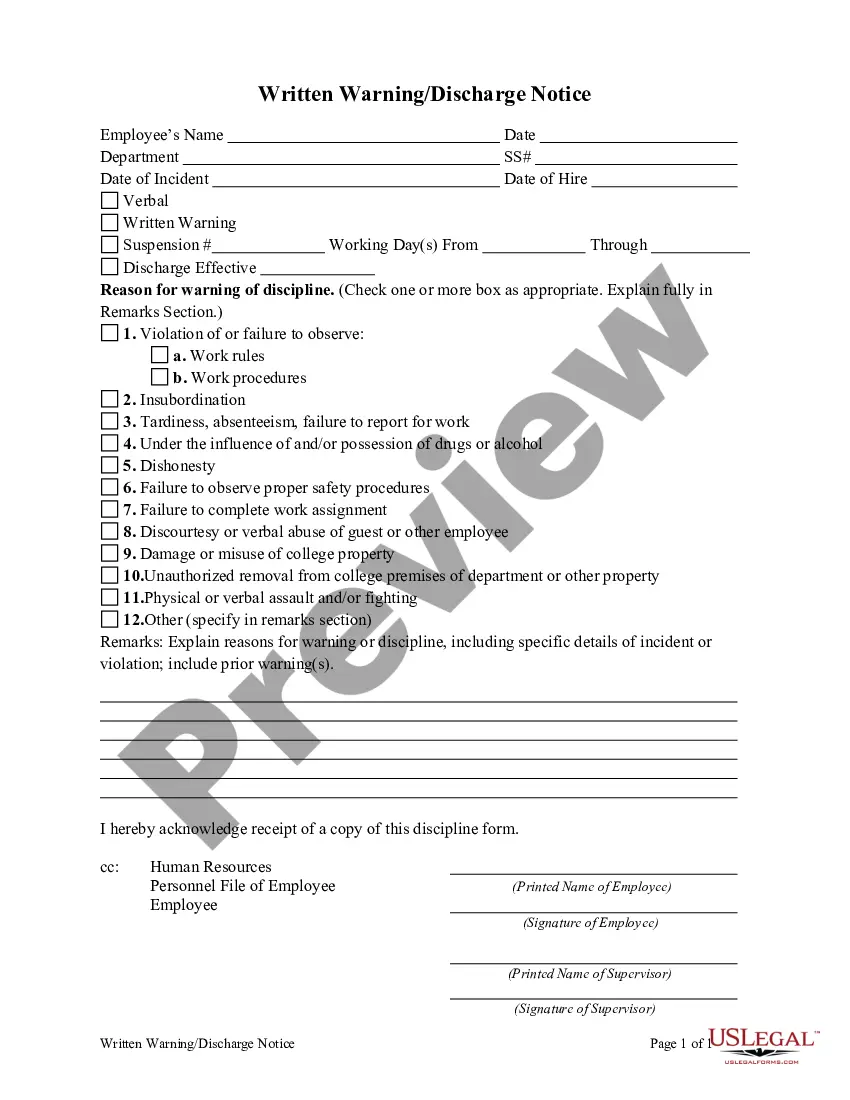
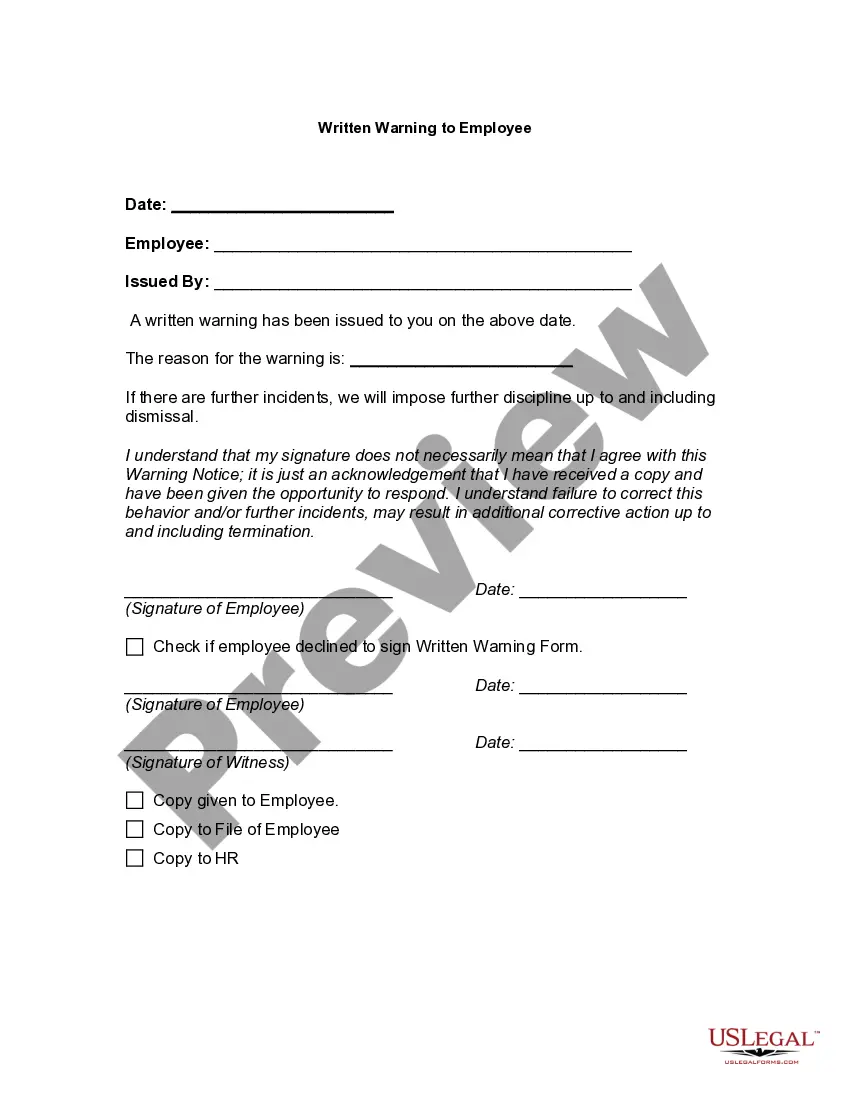
This form should be used when an employee has exhibited ongoing performance issues after prior discussions or verbal warnings. It provides a formal yet informal means to address the problems before escalating to a formal warning, making it essential in maintaining effective communication and expectations in the workplace.
Intended users of this form
- Managers and supervisors needing to document performance-related conversations with employees.
- Human resources professionals involved in employee performance management.
- Business owners looking to establish clear communication regarding employee expectations.
Completing this form step by step
- Fill in the date at the top of the memo.
- Enter the name of the employee in the "To" field.
- Complete the "From" field with your name as the manager.
- Describe the incident and specify the date it occurred in the appropriate sections.
- Attach a copy of the relevant performance policy for the employee to review.
- Have the employee sign and date the acknowledgment section to confirm receipt of the memo.
Notarization guidance
This form does not typically require notarization unless specified by local law. Ensure to check your stateâs regulations regarding employee documentation to confirm this is applicable in your jurisdiction.
Get your form ready online
Our built-in tools help you complete, sign, share, and store your documents in one place.
Make edits, fill in missing information, and update formatting in US Legal Forms—just like you would in MS Word.
Download a copy, print it, send it by email, or mail it via USPS—whatever works best for your next step.
Sign and collect signatures with our SignNow integration. Send to multiple recipients, set reminders, and more. Go Premium to unlock E-Sign.
If this form requires notarization, complete it online through a secure video call—no need to meet a notary in person or wait for an appointment.
We protect your documents and personal data by following strict security and privacy standards.

Make edits, fill in missing information, and update formatting in US Legal Forms—just like you would in MS Word.

Download a copy, print it, send it by email, or mail it via USPS—whatever works best for your next step.

Sign and collect signatures with our SignNow integration. Send to multiple recipients, set reminders, and more. Go Premium to unlock E-Sign.

If this form requires notarization, complete it online through a secure video call—no need to meet a notary in person or wait for an appointment.

We protect your documents and personal data by following strict security and privacy standards.
Avoid these common issues
- Failing to provide specific examples of the performance issues.
- Not obtaining the employee's signature, which can lead to disputes about acknowledgment.
- Neglecting to consider individual circumstances that may affect performance.
Benefits of using this form online
- Convenient access to a customizable template that meets your specific needs.
- Editability allows managers to tailor the memo to particular issues and employees.
- Provides legally reliable documentation for performance discussions.
- The Informal Warning Memo serves as a crucial tool for addressing performance issues before they escalate.
- Completing the memo correctly ensures clear communication and documentation of the issues at hand.
- This form is designed to foster improvement while maintaining a professional working environment.
Looking for another form?





Form popularity
FAQ
1Document verbal warnings first. Track all verbal warnings and disciplinary measures in writing at the time they are given.2Determine tone.3Consult with manager.4Formalities.5State company policy.6Describe what happened.7State expectations.8Outline consequences.10 Guidelines for Writing an Employee Warning\naghlc.com > resources > articles > writing-an-employee-warning-160906
Step 1: Identify and consider the problem. Clearly identify the performance or conduct issue. Step 2: Meet with the employee. Generally, meeting with the employee is important for: Step 3: Create your letter of warning. Step 4: Provide the employee with the letter of warning.
Identify the problem. Meet with the employee and clarify the issue. Create your warning letter and include all the performance issues you've considered. Give the employee the warning notice and make sure you receive a signature to confirm receipt.
Tell them what they need to improve (timekeeping, work standards, work rate, etc.). Give them the chance to explain why their work has been subpar or why their conduct has been below what you expect of them. Give them a plan to make their improvements.
The verbal warning is documented by the supervisor in their informal notes about the efforts provided to help the employee improve.These notes are not part of an employee's personnel file; they are private supervisory documentation of an employee's performance.
Document verbal warnings first. Track all verbal warnings and disciplinary measures in writing at the time they are given. Determine tone. Consult with manager. Formalities. State company policy. Describe what happened. State expectations. Outline consequences.
The non-statutory Acas guide: discipline and grievances at work, which accompanies the code, states that warnings should normally be live only for a set period, for example six months for a first written warning and 12 months for a final written warning.